

P0736 on 2018-2023 Ford Expedition: Reverse Gear Ratio Error Causes & Fixes
On a 2018-2023 Ford Expedition, code P0736 is most often caused by a known issue with the 10R80 transmission. A series of Ford Technical Service Bulletins, most recently TSB 24-2046, points to either a software problem, sticking valves in the main control valve body, or an internal hydraulic leak from a failed CDF clutch cylinder sleeve. The fix can range from a software update to a partial transmission overhaul to address the mechanical faults.
- P0736 on a 2018-2023 Expedition indicates a serious problem with the reverse gear in the 10R80 transmission.
- Do not immediately assume the worst. The first step should be checking for a software update as specified in Ford TSB 26-2046.
- A known mechanical weak point is the CDF clutch cylinder sleeve, which can cause hydraulic leaks. This is a known issue covered by a TSB and requires a partial transmission overhaul to fix.
- Due to the complexity of the 10R80 transmission and the specific nature of the common failures, professional diagnosis at a dealership or transmission shop is strongly recommended.
- Driving with this code is not advised, as you may lose the ability to reverse the vehicle at any time.
What's Unique About the 2018-2023 Ford EXPEDITION
The 2018-2023 Expedition uses Ford's 10-speed 10R80 automatic transmission, which is known for some specific, well-documented issues. Ford has issued multiple superseding Technical Service Bulletins (TSBs), with the latest being TSB 24-2046, that address a wide range of shifting problems including the P0736 code. 🎬 Watch: How to troubleshoot and clear the P0736 reverse gear code. These bulletins point to software glitches, sticking valves in the main control body, and a specific mechanical failure related to the CDF clutch cylinder sleeve, which can walk out of position and cause internal hydraulic leaks. This makes diagnosis unique, as the root cause could be electronic or a significant internal mechanical fault requiring a partial teardown.
Diagnostic Flowchart
Tap your situation to follow the diagnostic path that matches what you're seeing on this vehicle.
Symptoms You May Notice
- Check Engine Light is on
- Hesitation, delay, or failure to engage reverse gear.
- Harsh clunking or grinding when shifting into reverse.
- Vehicle won't move when in reverse.
- Harsh or delayed shifting in forward gears.
- Significant delay (2-5 seconds) when shifting from Drive to Reverse, with no throttle response initially.
- Replacing the entire transmission without first checking for software updates or the specific CDF clutch issue outlined in TSBs. Many issues with the 10R80 can be resolved with a partial overhaul (valve body and/or CDF drum) rather than a full replacement.
- Performing only a fluid change when the root cause is a mechanical failure like the CDF sleeve. The problem will quickly return.
Most Likely Causes
- PCM/TCM Software Issue 🔴 High Probability Ford has identified software and adaptive learning calibration issues in TSB 24-2046 that can cause this and many other transmission codes. A reflash is often the first step a dealer will take.
How to confirm: A Ford dealership or qualified shop with a high-level scan tool can check the current software version and see if an update is available per the latest TSBs.
Typical fix: Reprogramming the Powertrain Control Module (PCM) or Transmission Control Module (TCM) with the latest Ford software. In some cases, a transmission adaptive learning drive cycle must also be performed.
Est. part cost: $0-$250 - CDF Clutch Cylinder Sleeve Failure 🔴 High Probability TSB 24-2046 explicitly names "axial movement of the CDF clutch cylinder sleeve causing hydraulic circuit leaks" as a primary cause for a host of transmission issues on the 10R80. The sleeve can walk out of place, misaligning fluid passages and causing clutches to apply incorrectly or not at all. This is a widely known failure point.
How to confirm: This requires advanced diagnostics, often following the steps outlined in the TSB, which may involve a transmission pressure test or disassembly. A technician may find that the sleeve has physically moved within the drum.
Typical fix: Overhauling the main control valve body and replacing the CDF clutch drum/sleeve assembly. This is a partial transmission rebuild. Aftermarket companies like Sonnax offer an improved "CDF Drum Saver Kit" (Part No. 129910-01K) with a locking set screw to prevent the sleeve from moving again.
Est. part cost: $500-$1500 - Faulty Main Control Valve Body or Solenoids 🟡 Medium Probability Sticking valves within the main control valve body are another primary cause cited in TSB 24-2046. Debris from normal wear or from other failing components can cause solenoids and valves to stick, leading to incorrect hydraulic pressure and ratio errors.
How to confirm: A technician can perform electronic tests on the solenoids and pressure tests on the valve body using a specialized scan tool. Sometimes the only confirmation is removing the valve body and inspecting for stuck valves or debris.
Typical fix: Replacement of the faulty solenoid or, more commonly, replacement or overhaul of the entire valve body assembly.
Est. part cost: $400-$1200 - Low or Contaminated Transmission Fluid ⚪ Low Probability While not specific to the Expedition, low or dirty fluid is a common cause of shifting problems in any automatic transmission. The 10R80 is sensitive to fluid condition and level, and fluid can become contaminated with clutch material if the CDF sleeve has failed.
How to confirm: Check the transmission fluid level and condition. The 10R80 transmission does not have a traditional dipstick, so this must be done from under the vehicle by a technician following a specific temperature-dependent procedure.
Typical fix: Perform a transmission fluid service, which involves draining the old fluid, replacing the filter, and refilling with the correct Motorcraft MERCON ULV fluid. This is often done in conjunction with other repairs.
Est. part cost: $50-$150 (fluid and filter)
Rare But Worth Checking
- Internal Transmission Harness/Wiring Issues:
Diagnosis Steps
- Check for Technical Service Bulletins (TSBs). Specifically, search for the latest version, currently TSB 24-2046, which is highly relevant to this code on this vehicle.
- Scan the TCM for any other stored trouble codes. The presence of other gear ratio or solenoid codes is significant and points towards the common issues listed in the TSB.
- Have a professional check the transmission fluid level and condition. This requires lifting the vehicle and knowing the specific procedure for the 10R80 transmission.
- If fluid is okay, the next step is to check the PCM/TCM software version and update it if a newer version is available per the TSB. Perform the adaptive learn procedure.
- If the code persists after a software update, advanced diagnostics are needed to test for hydraulic leaks and sticking valves, which may lead to a valve body overhaul or replacement.
- If the issue continues, the final step is transmission disassembly to inspect the CDF clutch cylinder sleeve for axial movement, as described in TSB 24-2046.
Parts You'll Likely Need
- No Parts - PCM/TCM Software Update — TSB 24-2046 indicates that a software update may be the sole required fix, or is the first step in the diagnostic process.
OEM price range: $150-$250
Aftermarket price range: N/A - CDF Clutch Cylinder Assembly and Gaskets
(OEM #PC3Z-7B177-A (example part, verify with VIN))— This is the primary mechanical failure point identified in Ford's TSB for a wide range of 10R80 transmission issues.
Trusted brands: Motorcraft
OEM price range: $500-$1000
Aftermarket price range: N/A - CDF Drum Saver Kit (Aftermarket)
(OEM #129910-01K)— An aftermarket solution from Sonnax designed to permanently fix the OE design flaw of the walking CDF clutch sleeve by adding a locking mechanism.
Trusted brands: Sonnax
OEM price range: N/A
Aftermarket price range: $100-$200 - Transmission Fluid and Filter
(OEM #Motorcraft XT-12-QULV (Fluid))— Will be required for any internal transmission work or if the fluid is found to be low or contaminated. The correct fluid is Motorcraft MERCON ULV.
Trusted brands: Motorcraft
OEM price range: $100-$200
Aftermarket price range: $70-$150
Related Codes That Often Appear With This One
- P0729 - P0735 — These codes indicate incorrect gear ratios for other gears (1-6). TSB 24-2046 lists all of these codes as being potentially caused by the same software, valve body, or CDF clutch sleeve issue.
- P0751 - P2708 — This is a wide range of shift solenoid and clutch performance codes. TSB 24-2046 also groups these with P0736, pointing to a common root cause within the 10R80 transmission's hydraulic control system.
- P1701 — This is a Ford-specific code for "Reverse Engagement Error," which is a direct companion to the generic P0736 code and points to the same set of underlying issues.
Technical Service Bulletins (TSBs) & Recalls
- TSB 24-2046: The most current bulletin, which supersedes all previous versions. It addresses harsh/delayed engagement/shifts and a long list of DTCs including P0736, pointing to PCM software, a faulty main control valve body, or a faulty CDF clutch cylinder sleeve.
- TSB 22-2428: An earlier, widely-referenced version of the bulletin that first detailed the comprehensive repair procedure involving software, valve body, and CDF clutch sleeve inspection. Many forum discussions refer to this TSB.
Platform-Specific Known Issues
- TSB 24-2046: This is the latest in a series of bulletins (superseding TSB 23-2250, 22-2428, etc.) for 2018-2023 E
Mechanic-Grade Diagnostic Values
- Shift Solenoid (A-F) Resistance — expected: 5.0 - 5.4 Ohms at 68°F (20°C). Failure: Readings outside this range indicate a faulty solenoid coil.
- Transmission Fluid Temperature (TFT) Sensor Resistance — expected: 37k-16k Ohms at 69-104°F, 16k-5k Ohms at 105-158°F, 2.7k-1.5k Ohms at 195-230°F. Failure: Resistance values that do not correlate with the transmission temperature suggest a faulty sensor.
Hidden / Shadow Codes Worth Checking
- P163E: Transmission Characterization Not Programmed (see via This code can appear on a Ford IDS or compatible high-level scan tool after a valve body or transmission replacement if the new solenoid strategy is not correctly programmed into the TCM.)
Scan Tool Commands That Help
- Ford IDS, FORScan, or equivalent high-level scanner: Clear Transmission Adaptive Tables / Reset KAM — This function must be performed after any transmission repair, including software updates, fluid changes, or component replacement, to erase learned values and allow the TCM to relearn shift parameters.
- Ford IDS: Transmission Strategy Download — This is a mandatory procedure when replacing the main control valve body. It requires entering the 13-digit solenoid body strategy number from the new part into the TCM to ensure correct solenoid operation.
- Ford IDS, FORScan: Halt Transmission Adaptive Learning — Some users and technicians use this function to stop the transmission from making further adjustments, which can be a temporary diagnostic step or a user preference if they find the 'learned' shifting behavior undesirable. This should be used with caution.
- High-level scan tools (e.g., iCarsoft CR PRO S): Solenoid Activation Test — Used to command individual solenoids on and off to verify their electrical and mechanical function, helping to isolate a faulty solenoid within the valve body.
Wiring & Ground Locations
- G101 — Located at the left front of the engine, on the lower block.. This ground point serves the Engine Control Module (ECM) and Transmission Control Module (TCM). A poor connection here can cause a wide range of powertrain communication and control issues.
- G103 — Located at the left rear of the engine compartment on the cowl, above the brake booster.. This ground serves multiple modules including the BCM and the Data Link Connector (DLC). A fault here can disrupt communication between the TCM and other vehicle systems, or prevent proper scanner communication.
- Main Transmission Connector (C175B/T) — The main harness connector on the transmission case.. All electronic signals for solenoids and sensors pass through this connector. Checking for corrosion, bent pins, or damage here is a critical step in diagnosing any electronic transmission fault.
Real Owner Repair Stories
- Reddit user on r/f150 (2019 F-150 Lariat 2.7L (same 10R80 transmission)) — A 2-3 second delay when shifting from Park to Drive/Reverse or between Drive and Reverse. Also had previous harsh shifting issues.
❌ Tried (didn't work) A previous reflash and parts swap per a TSB for harsh shifting did not prevent the engagement delay issue from developing later.
✅ What actually fixed it The dealer performed a transmission "overhaul" and replaced the CDF drum. This fixed the engagement delay issues. However, the user later experienced hard shifts into 3rd gear, which then required a valve body replacement.
OEM Part Supersession History
Varies by production date→JL1Z-7A100-A (Example for 2018-2021 models, verify with VIN)— Superseded part for the main control valve body assembly. Replacements often incorporate updated components and require a 'Transmission Strategy Download' with the new 13-digit solenoid body ID to function correctly.
Heads up: Installing a new valve body without programming the new solenoid strategy into the TCM will result in DTC P163E and poor transmission function.
Model Year Variations Within This Range
- Pre-2021: Earlier versions of the 10R80 CDF drum used a press-fit sleeve that was prone to "walking" or moving out of position.
- Post-Summer 2021: Ford began using a CDF drum with a tighter press-fit tolerance for the sleeve. Later, an updated drum design was introduced with a machined lip that acts as a hard stop, permanently preventing the sleeve from moving and causing hydraulic leaks.
Helpful Videos

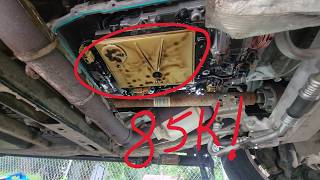
Used OEM Parts in Stock


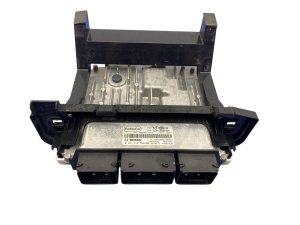

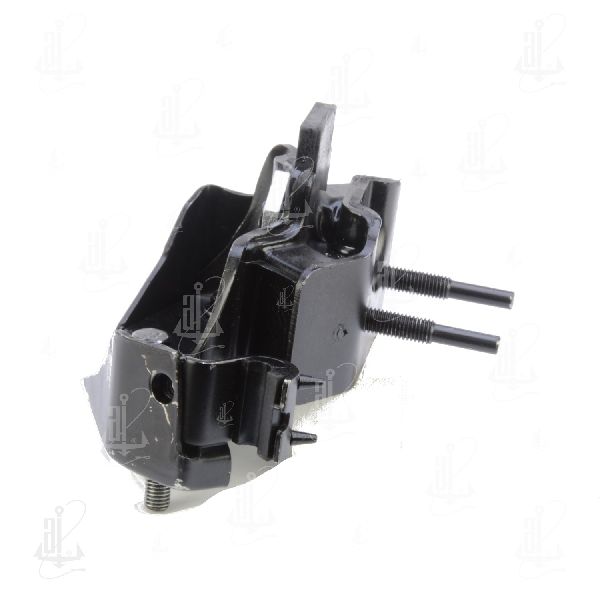
New Aftermarket Parts Available


The information in this article is provided for general reference and educational purposes only. Vehicle specifications, procedures, and part compatibility can vary by production date, trim level, and region. Always consult your vehicle's factory service manual and verify part numbers before purchasing or performing repairs. Safety-critical components such as airbags, seat belts, and braking systems should be installed by a qualified professional.
- Ford EXPEDITION:
- 🎬 Helpful Videos
- 🛍️ Shop This Part
- What's Unique About the 2018-2023 Ford EXPEDITION
- Diagnostic Flowchart
- Symptoms You May Notice
- Most Likely Causes
- Rare But Worth Checking
- Diagnosis Steps
- Parts You'll Likely Need
- Related Codes That Often Appear With This One
- Technical Service Bulletins (TSBs) & Recalls
- Platform-Specific Known Issues
- Mechanic-Grade Diagnostic Values
- Hidden / Shadow Codes Worth Checking
- Scan Tool Commands That Help
- Wiring & Ground Locations
- Real Owner Repair Stories
- OEM Part Supersession History
- Model Year Variations Within This Range
- 🎟️ Get 5% Off