

P0735 on 2017-2023 Ford F-150: Gear 5 Incorrect Ratio Causes and Fixes
On a 2017-2023 Ford F-150, code P0735 means the transmission is slipping in 5th gear. This is often caused by internal transmission issues like a faulty CDF clutch drum or valve body problems, which are known issues on the 10R80 transmission. A PCM software update or, in some cases, a full valve body or transmission repair may be required.
- P0735 on a 2017-2023 F-150 indicates a potentially serious transmission problem, not just a bad sensor.
- The most likely causes are internal to the 10R80 transmission, specifically a faulty valve body or a failed CDF clutch drum, both of which are known issues for this platform.
- Before authorizing expensive mechanical repairs, ensure the truck's PCM software is up to date, as Ford has issued software fixes for shifting problems.
- Due to the complexity of the 10R80 transmission, diagnosis and repair should be left to a qualified professional.
- Do not rule out engine performance issues; a misfire can trick the computer into setting a transmission slip code.
What's Unique About the 2017-2023 Ford F-150

The 2017-2023 F-150 primarily uses the 10R80 10-speed automatic transmission, which has several well-documented issues that can lead to a P0735 code. Ford has issued multiple Technical Service Bulletins (TSBs) addressing harsh shifting and internal component failures. A primary point of failure is the CDF clutch drum assembly, where a bushing can walk out of position, causing a hydraulic leak and leading to shifting problems and gear ratio codes. Another common issue is with the main valve body, which can cause a host of shifting problems. Therefore, this code on a 10R80-equipped F-150 is less likely to be a simple sensor issue and more often points toward a known mechanical or hydraulic fault within the transmission itself.
Diagnostic Flowchart
Tap your situation to follow the diagnostic path that matches what you're seeing on this vehicle.
Generation note: This range covers the end of the 13th generation (2017-2020) and the start of the 14th generation (2021-2023) F-150. Both generations use the 10R80 10-speed automatic transmission, and the common causes like valve body issues and CDF drum failures are relevant to both. TSB 23-2123 (superseding several others) addresses valve body overhauls for 2017-2020 models. A redesigned CDF drum was implemented in production after December 2022, but earlier models are prone to the original design's failure.
Symptoms You May Notice
- Check Engine Light is on
- Wrench light illuminated on the dashboard
- Harsh, jerky, or delayed shifts, especially the 4-5 upshift
- Engine RPMs flare up during shifts without an increase in vehicle speed (slipping)
- Vehicle enters 'limp mode,' getting stuck in a single gear
- Sudden, unexpected downshifts while driving
- Loss of power and poor acceleration
- Audible whining from the transmission
- Replacing a single shift solenoid when the entire valve body has internal wear or the separator plate is the issue.
- Assuming an internal mechanical failure without first checking for available PCM software updates, which is a less invasive first step.
- Overhauling the transmission for a slip that is actually being induced by an engine performance problem, such as an undetected misfire.
Most Likely Causes

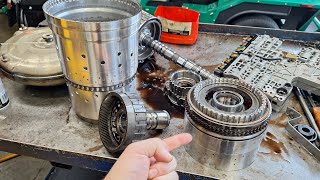
- Internal CDF Clutch Drum Failure 🔴 High Probability A widely recognized design flaw in early 10R80 transmissions involves a bushing in the CDF (Clutch C/D/F) drum that can slide out of place. This uncovers a fluid feed hole, causing a major hydraulic pressure loss to the clutches, particularly the 'E' clutch used for 5th gear. Ford has since released an updated drum with a lipped bushing to prevent this movement.
How to confirm: This requires transmission disassembly to physically inspect the CDF drum for a migrated bushing. A transmission technician may also identify a significant internal leak via pressure testing. The issue is so common that many shops will suspect it immediately with codes like P0735.
Typical fix: The transmission must be removed and disassembled to replace the CDF clutch drum assembly with the updated part. This is a major repair.
Est. part cost: $400-$700 for the drum assembly, plus seals and gaskets. - Main Valve Body Failure 🔴 High Probability The 10R80 transmission is known for valve body issues, including sticking solenoids, internal wear, and cross-leaks that cause hydraulic pressure loss and erratic shifting. TSB 23-2123 directly addresses this, recommending a valve body overhaul for vehicles with various shift quality complaints and DTCs, including P0735.
How to confirm: A technician will scan live data to monitor solenoid commands versus actual gear state and perform pressure tests. In many cases documented in TSBs, the presence of codes like P0735 is sufficient to warrant a valve body overhaul.
Typical fix: Overhaul or complete replacement of the main control valve body assembly. TSB 23-2123 provides a procedure for overhauling the existing unit. Many shops opt for full replacement.
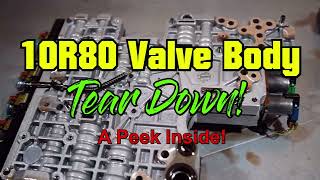
Est. part cost: $800-$1500 for a new OEM assembly. 🎬 Watch: A detailed look inside the 10R80 valve body
- Powertrain Control Module (PCM) Software Issue 🟡 Medium Probability Ford has released multiple TSBs for PCM software updates to correct shifting irregularities and adaptive learning problems. TSB 18-2274, for example, specifically calls for a PCM reprogram on 2018 models to fix harsh shifts. Outdated software can misinterpret sensor data or have poor shift strategies, leading to DTCs.
How to confirm: A Ford dealer or qualified shop with access to Ford's diagnostic software (FDRS) can check the current software calibration level against the latest available version for the vehicle's VIN.
Typical fix: Reprogramming the PCM with the latest Ford software calibration and performing a transmission adaptive learning drive cycle.
Est. part cost: $0 (if under warranty) - $250 - Low or Contaminated Transmission Fluid ⚪ Low Probability While possible, it's less common on these newer vehicles unless there is a leak or incorrect service was performed. The 10R80 is very sensitive to fluid level and condition, requiring Motorcraft MERCON ULV fluid. Incorrect fluid type or level can cause a variety of shifting problems.
How to confirm: Check the transmission fluid level and condition. This is a complex procedure on the 10R80 as it lacks a traditional dipstick and must be checked at a specific temperature. The fluid should be red and clear, not brown, black, or smelling burnt.
Typical fix: Perform a transmission fluid drain-and-fill or a full fluid exchange with the correct Motorcraft MERCON ULV fluid (Part # XT-12-QULV).
Est. part cost: $150-$350 for fluid and filter.
Rare But Worth Checking
- Engine Misfire: A detailed diagnostic case on a 2019 F-150 with P0735 and P2704 found that after a transmission rebuild and valve body replacement failed to fix the slip, the true cause was fouled spark plugs causing a misfire that was not severe enough to set a P030x code. The PCM misinterpreted the erratic engine speed data as a transmission slip. Replacing the spark plugs resolved the issue entirely. This should be investigated if transmission repairs do not solve the problem.
Diagnosis Steps
- Scan for all DTCs. Codes for engine misfires, speed sensors, or other transmission components can provide critical diagnostic clues. Address other transmission codes first.
- Check for Technical Service Bulletins (TSBs). Use the vehicle's VIN to see if it's covered by TSBs like 23-2123 (Valve Body) or 18-2274 (PCM Reprogram). This is a critical step for the 10R80.
- Check PCM Calibration. Have a dealer or qualified shop verify the PCM is running the latest software. If not, reprogram it and perform the adaptive learning drive cycle before proceeding with mechanical repairs.
- Check Transmission Fluid. Verify the fluid level and condition. This requires a specific procedure and temperature range. Dark or burnt fluid indicates internal damage.
- Scan Live Data. Monitor Transmission Input Speed Sensor (TSS) and Output Speed Sensor (OSS), commanded gear vs. actual gear, and solenoid duty cycles to confirm the slip is occurring in 5th gear.
- Perform a Transmission Pressure Test. This can help determine if the issue is caused by a hydraulic leak within the valve body or a specific clutch circuit, pointing towards either a valve body or CDF drum issue.
- Inspect the Valve Body. If pressures are low or TSB 23-2123 applies, the next step is to drop the pan and inspect/overhaul the valve body.
- Suspect Internal Mechanical Failure. If all other steps fail to resolve the issue, the most likely cause is the CDF clutch drum failure, requiring transmission removal and teardown for inspection and replacement.
Parts You'll Likely Need

- Transmission Valve Body Assembly
(OEM #JL3Z-7A100-B (example, verify by VIN))— A common failure point on the 10R80 transmission that causes a variety of shifting issues and gear ratio codes. TSB 23-2123 recommends an overhaul for these symptoms.
Trusted brands: Motorcraft
OEM price range: $800-$1500
Aftermarket price range: $600-$1200 - CDF Clutch Drum Assembly (Updated Design)
(OEM #HL3Z-7G383-F (example, verify by VIN))— The original CDF drum has a design flaw where a bushing can move and cause a hydraulic leak. The updated part has a lipped bushing to prevent this failure, which is a primary cause of gear ratio codes.
Trusted brands: Motorcraft
OEM price range: $400 - $700
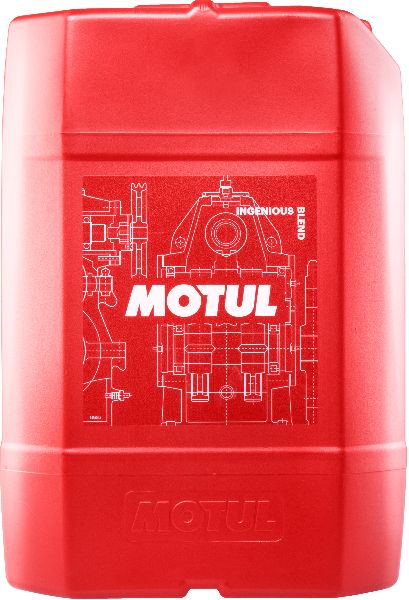
Aftermarket price range: $350 - $600 - Motorcraft MERCON ULV Automatic Transmission Fluid
(OEM #XT-12-QULV)— The 10R80 transmission requires this specific ultra-low viscosity fluid. Using any other fluid type can cause shifting problems, overheating, and internal damage.
Trusted brands: Motorcraft
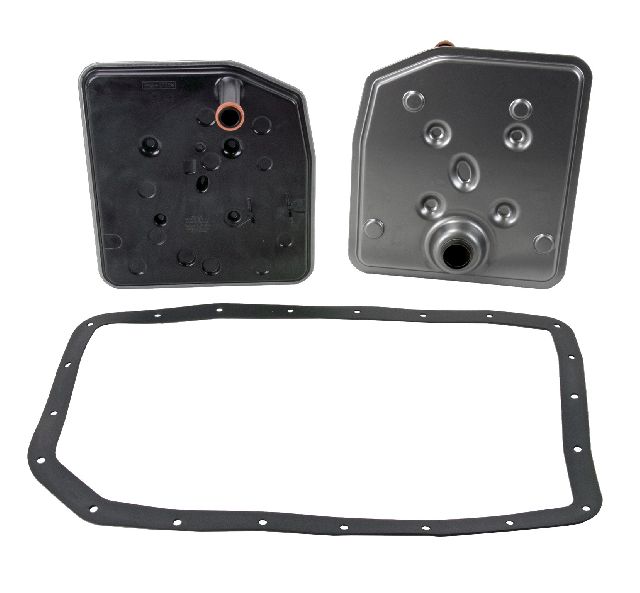
OEM price range: $15 - $25 per quart - Transmission Filter Kit
(OEM #FT215 (example, verify by VIN))— Should be replaced any time the transmission pan is removed for service, such as a fluid change or valve body replacement, to ensure contaminants are removed from the system.
Trusted brands: Motorcraft
OEM price range: $30 - $60
Aftermarket price range: $20 - $40
Related Codes That Often Appear With This One
- P2704 — This code for 'Transmission Friction Element 'E' Apply Time Range/Performance' is often seen with P0735 on the 10R80 transmission, as both point to a problem with the 'E' clutch, which is used to engage 5th gear.
- P0731, P0732, P0733, P0734 — These are incorrect gear ratio codes for gears 1 through 4. If multiple ratio codes are present, it strongly suggests a widespread hydraulic issue, such as a failing valve body, low fluid, or a major internal leak like the CDF drum, rather than a single clutch pack failure.
Technical Service Bulletins (TSBs) & Recalls

- TSB 23-2123: Supersedes multiple previous TSBs. Addresses harsh/delayed shifts and various DTCs (including P0735) on 2017-2020 F-150s and other models with the 10R80. The prescribed fix is to overhaul the main control valve body.
- TSB 18-2274: For 2018 F-150s with harsh/bumpy shifts. The fix is to reprogram the PCM with an updated calibration and perform an adaptive learning cycle. This highlights that software can be a primary cause.
- TSB 23-2250 (mentioned in video): A TSB discussed by a transmission specialist on YouTube that covers the CDF drum failure in 10R60 and 10R80 transmissions in multiple Ford vehicles from 2017 up to 2023.
Platform-Specific Known Issues
- TSB 25-2126 addresses harsh shifting and DTCs including P0735 on 2017-2020 models, pointing to a faulty CDF clutch cylinder that requires transmission removal to fix.
- TSB 18-2274 was issued for 2018 F-150s with the 10R80 for harsh/bumpy shifts, recommending a PCM reprogram.
- The 10R80 transmission has documented failures of the CDF drum sleeve walking out of position, causing internal pressure loss and shift quality issues.
Mechanic-Grade Diagnostic Values
- Shift Solenoid Resistance — expected: 5.0 - 5.4 Ohms at 68°F (20°C). Failure: A reading outside of this range indicates a faulty solenoid coil.
- Transmission Line Pressure at Idle (Park/Neutral) — expected: Approximately 75 PSI (Varies by calibration and temperature). Failure: Significantly low pressure at idle, or a major pressure drop when shifting into gear, can indicate a major internal hydraulic leak (e.g., CDF drum) or a failing pump. Do not perform a stall speed test if idle pressure is low.
Hidden / Shadow Codes Worth Checking
- Mode $06, TID $84: This refers to a non-continuous monitor test for gear ratio errors. A failure of Test ID (TID) $84 can indicate a slip in a specific gear, often before a continuous DTC like P0735 is set. Advanced scan tools can read this data to help pinpoint which gear circuit is failing. (see via An advanced scan tool capable of displaying Mode $06 test results.)
Scan Tool Commands That Help
- Ford IDS / FDRS: Clear Transmission Adaptive Tables — This function must be performed after replacing the transmission, valve body, or solenoids, or after reprogramming the TCM. It erases the old learned shift parameters, allowing the module to adapt to the new components correctly.
- Ford IDS / FDRS: Solenoid State & Pressure Control (PC) Duty Cycle PIDs — During a road test, a technician can monitor the commanded state (On/Off) and duty cycle of each solenoid in real-time. For P0735, they would watch the 'E' clutch solenoid command versus the actual gear and input/output speed sensor data to confirm the slip is happening when the solenoid is commanded on for the 4-5 shift.
Wiring & Ground Locations
- G108 — On the front right side of the engine block, often near the starter motor.. This is a primary ground point for the Powertrain Control Module (PCM). A corroded or loose connection here can cause erratic PCM behavior, leading to incorrect calculations and false transmission codes.
- Transmission Bulkhead Connector — A large, 20-pin connector located on the passenger side of the transmission case.. This is the main electrical interface for the entire transmission, including all solenoids and sensors. Water intrusion, corrosion, or backed-out pins in this connector can interrupt signals between the TCM and the valve body, causing various DTCs including P0735.
- Body-to-Frame Ground Strap — Underneath the passenger side of the cab, going from the body to the frame. The TCM on some models is mounted nearby.. These straps are known to corrode and fail, especially in salt-belt regions. A bad ground can affect the nearby TCM, causing a host of unpredictable electronic faults and communication errors that may manifest as transmission performance codes.
Real Owner Repair Stories
- f150forum.com user report (2018 Ford F-150) — P0735 and other gear ratio codes, harsh shifting.
❌ Tried (didn't work) Dealer replaced the main control valve body.
✅ What actually fixed it The problem persisted after the valve body replacement. A complete transmission replacement was required, and a teardown of the old unit confirmed a failed CDF clutch drum was the root cause. - Reddit r/MechanicAdvice user report (2017 Ford F-150) — P0735, slipping in 5th gear.
❌ Tried (didn't work) Shop replaced the valve body assembly.
✅ What actually fixed it The slip remained after the valve body was replaced. The transmission was then disassembled, and the technician found the CDF drum bushing had 'walked out' of position, causing the hydraulic leak. Replacing the CDF drum with the updated version resolved the code.
OEM Part Supersession History
HL3Z-7H351-A (and others)→JL3Z-7H351-B (example, always verify by VIN)— The original CDF clutch drum assembly used a press-fit bushing that could 'walk' out of position, uncovering hydraulic passages and causing pressure loss. The updated design features a 'lipped' or 'staked' drum that physically prevents the bushing from moving.
Heads up: Any replacement performed on a 2017-2022 vehicle should use the updated part number to prevent a repeat failure. A transmission replaced by a dealer in late 2022 or later should contain the updated drum.
Model Year Variations Within This Range
- 2017 - Mid-2022: These models were built with the original CDF clutch drum design, which is prone to bushing failure. A TSB from Ford indicates that vehicles built on or before August 15, 2022, may have the problematic part.
- Late 2022 - 2023: Vehicles built after August 15, 2022, should have the updated CDF clutch drum with the lipped bushing from the factory, making them significantly less susceptible to this specific, common cause of P0735.
- 2017-2020 vs 2021+: There are known differences in valve body designs and software strategies between these year groups. For example, a 'gain control valve' was eliminated in 2021 and later Ford valve bodies. It is critical to use the correct valve body part number for the specific vehicle year and VIN.
Helpful Videos
Used OEM Parts in Stock


New Aftermarket Parts Available


The information in this article is provided for general reference and educational purposes only. Vehicle specifications, procedures, and part compatibility can vary by production date, trim level, and region. Always consult your vehicle's factory service manual and verify part numbers before purchasing or performing repairs. Safety-critical components such as airbags, seat belts, and braking systems should be installed by a qualified professional.
- Ford F-150:
- 🎬 Helpful Videos
- 🛍️ Shop This Part
- What's Unique About the 2017-2023 Ford F-150
- Diagnostic Flowchart
- Symptoms You May Notice
- Most Likely Causes
- Rare But Worth Checking
- Diagnosis Steps
- Parts You'll Likely Need
- Related Codes That Often Appear With This One
- Technical Service Bulletins (TSBs) & Recalls
- Platform-Specific Known Issues
- Mechanic-Grade Diagnostic Values
- Hidden / Shadow Codes Worth Checking
- Scan Tool Commands That Help
- Wiring & Ground Locations
- Real Owner Repair Stories
- OEM Part Supersession History
- Model Year Variations Within This Range
- 🎟️ Get 5% Off