

P0734 on 2005-2010 Honda Odyssey: 4th Gear Incorrect Ratio Causes and Fixes
On a 2005-2010 Honda Odyssey, code P0734 indicates a 4th gear ratio error. The most common cause is low or burnt-out transmission fluid. However, this is often an early warning sign of internal transmission failure, a known issue for this generation, which can lead to a costly rebuild or replacement.
- P0734 on a 2005-2010 Odyssey means the transmission is slipping in 4th gear.
- The first and most important diagnostic step is to check the transmission fluid level and condition. Use only Honda genuine fluid.
- This code is a serious warning. On this specific vehicle, it is often a symptom of a failing transmission, a known weak point.
- A common, inexpensive part to try replacing is the 4th gear pressure switch, but be prepared for the possibility of a more expensive repair.
- Do not ignore this code. Driving with a slipping transmission will lead to complete failure, which is much more expensive to fix.
What's Unique About the 2005-2010 Honda Odyssey
The 2005-2010 Honda Odyssey (third generation) is equipped with a 5-speed automatic transmission (BYKA/BAYA family) that has a well-documented history of premature failures. Issues like torque converter failure, rapid fluid breakdown, and internal clutch pack wear are common. Furthermore, EX-L and Touring models feature a Variable Cylinder Management (VCM) system that is often linked to torque converter shudder and increased stress on the transmission. While P0734 points to a fourth gear problem, on this specific vehicle it is frequently a symptom of these larger, systemic transmission health issues rather than just an isolated component failure. Owners often experience this code as a precursor to more significant transmission problems that may require a complete rebuild or replacement.
Symptoms You May Notice
- Check Engine Light is on
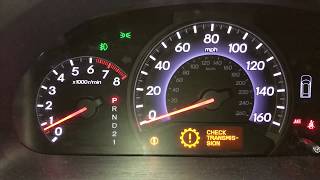
- Flashing "D" (Drive) indicator light on the dashboard
- Transmission slipping, especially when shifting into or cruising in 4th gear
- Harsh or delayed shifting
- Vehicle struggles to accelerate or has a loss of power
- Engine RPMs are higher than usual at highway speeds
- A decrease in fuel economy
- Vehicle feels like it's shuddering or vibrating when the issue occurs
- Replacing a single shift solenoid when the transmission fluid is completely degraded and burnt. The new solenoid will not fix the underlying hydraulic pressure issue caused by bad fluid or worn clutches.
- Assuming a simple fluid change will fix a transmission that already has significant internal mechanical wear. While fresh fluid is essential, it cannot repair a worn-out torque converter or burnt clutch friction material.
Most Likely Causes
- Low, Dirty, or Incorrect Transmission Fluid 🔴 High Probability These transmissions are known to be hard on their fluid, causing it to break down and burn. Many failures are linked to fluid service intervals being missed or the use of non-Honda ATF.
How to confirm: Check the transmission fluid dipstick (after running the engine to warm it up, then shutting it off). The fluid should be at the correct level, reddish-pink in color, and have no burnt smell. Dark, brown, or black fluid indicates a problem.
Typical fix: Perform a transmission fluid 'drain-and-fill' (typically 3.3 to 3.75 quarts per drain). Many owners and mechanics strongly recommend repeating this process three times (driving the vehicle briefly between each drain) to exchange most of the old fluid. Use only Honda Genuine ATF-DW1. 🎬 Watch: A step-by-step guide to changing your transmission fluid.
Est. part cost: $40-$120 - Failing 4th Gear Clutch Pressure Switch 🟡 Medium Probability Pressure switches are a very common failure point on this era of Honda automatic transmissions. They can fail electrically or get clogged with debris from deteriorating internal components, leading to incorrect pressure readings.
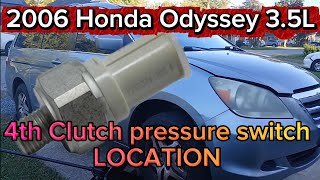
How to confirm: A mechanic can test the switch's operation, but due to its high failure rate and relatively low cost, it's often replaced as a primary diagnostic step. The switch is located on the side of the transmission housing, often requiring removal of the driver-side wheel and splash shield for access.
Typical fix: Replace the 4th gear clutch pressure switch. Many owners replace the 3rd gear switch at the same time as a preventative measure. The switch has a crush washer that should also be replaced. 🎬 See how to replace the 4th gear pressure switch yourself.
Est. part cost: $30-$60 - Internal Transmission Failure 🟡 Medium Probability The 5-speed automatic in this generation is known for premature wear of internal clutch packs (especially 3rd and 4th gear) and torque converter failure. Metal debris from a failing torque converter clutch can clog the internal filter and fluid passages, starving the clutches of pressure.
How to confirm: This is a diagnosis of exclusion. If fluid and external electronic components (solenoids, switches) are good, a transmission pressure test is performed. Low pressure in the 4th gear circuit points to an internal leak or worn clutch pack. Dropping the transmission pan and finding significant metal shavings or clutch material on the magnetic drain plug is a definitive sign.
Typical fix: A complete transmission rebuild or replacement with a remanufactured unit. A rebuild must include a new torque converter and internal filter.
Est. part cost: $2000-$4500
Rare But Worth Checking
- Failed Shift Solenoid or Valve Body Issue: A specific shift solenoid for 4th gear could be stuck or failing, or a valve in the valve body could be blocked by debris. This is less common than pressure switch failure but is a possible cause, especially if fluid is very dirty.
- Faulty Input/Output Speed Sensor: If one of the speed sensors that the TCM uses to calculate the gear ratio is sending erratic data, it can falsely trigger a P0734 code. This would typically be accompanied by other speed sensor-specific codes.
Diagnosis Steps
- Check the level and condition of the automatic transmission fluid. Note color and smell. If low, top off and check for leaks. If dark or burnt, perform a 3x drain and fill with Honda ATF-DW1.
- Use an OBD-II scanner to check for any other transmission-related codes, especially P0730 or P0741, which point to a more systemic issue.
- Inspect the wiring and connectors to the transmission, including pressure switches and solenoids, for any visible damage or corrosion.
- Test and/or replace the 4th gear clutch pressure switch (Part No. 28600-RAY-013). This is a very common failure point and is often replaced early in the diagnostic process. Consider replacing the 3rd gear switch at the same time.
- If the problem persists, have a professional mechanic perform a transmission line pressure test to check the hydraulic pressure in the 4th gear circuit.
- If pressures are low, the next step is to drop the transmission pan (if applicable) and inspect the drain plug magnet for excessive metal shavings, which would confirm internal mechanical failure.
- If all electronics and pressures test good, the issue could be an intermittent problem with the valve body or a rare failure of the Transmission Control Module (TCM).
Parts You'll Likely Need
- Automatic Transmission Fluid
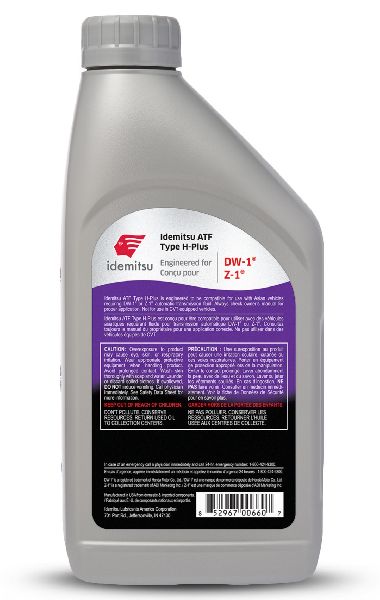
(OEM #08200-9008 (ATF-DW1))— The transmission is highly sensitive to fluid type and condition. Using genuine Honda fluid is critical. ATF-DW1 is the modern replacement for the older ATF-Z1 spec.
Trusted brands: Honda
OEM price range: $10-$15 per quart
Aftermarket price range: N/A - 4th Gear Clutch Transmission Pressure Switch
(OEM #28600-RAY-013)— These pressure switches are a very common failure point on this generation of Honda transmissions and can directly cause gear ratio codes. This part number supersedes 28600-RAY-003. 🎬 Watch: Where to find the 4th clutch pressure switch location.
Trusted brands: Honda (Genuine), Standard Motor Products
OEM price range: $40-$60
Aftermarket price range: $25-$45 - Remanufactured Automatic Transmission — Due to the high rate of internal failure, a complete replacement is a common final solution for this code on high-mileage vehicles or when metal is found in the fluid.
Trusted brands: Moveras, Jasper, Honda (Remanufactured)
OEM price range: N/A (Typically remanufactured)
Aftermarket price range: $2000-$3500
Related Codes That Often Appear With This One
- P0730 — P0730 is 'Incorrect Gear Ratio' (non-specific). It often appears with gear-specific codes like P0734 when the TCM detects a general slippage problem.
- P0740 / P0741 — These codes relate to the Torque Converter Clutch (TCC) circuit being stuck off. Since torque converter failure is a known weakness on this platform, it's very common to see TCC codes alongside gear ratio codes as the converter clutch material disintegrates and clogs the system.
Technical Service Bulletins (TSBs) & Recalls
- TSB 09-053: Addresses a potential software update for the Powertrain Control Module (PCM) to improve torque converter lock-up clutch function and reduce judder.
- TSB 03-020: A general document listing OBD-II codes, which defines P0734 as 'Problem in 4th Clutch and 4th Clutch Hydraulic Clutch'.
- TSB 12-029: Pertains to 2005-2006 EX-L and Touring models, offering a PCM software update to address torque converter lock-up clutch judder and extending the torque converter warranty.
Platform-Specific Known Issues
- The 5-speed automatic transmission used in the 2005-2010 Odyssey is widely known for having a shorter-than-average lifespan, with many owners needing to rebuild or replace them between 100,000 and 150,000 miles.
- Torque converter failure is a primary issue, where the lock-up clutch material disintegrates, contaminating the fluid and clogging the internal filter, leading to pressure loss and overheating.
Mechanic-Grade Diagnostic Values
- Shift Solenoid Resistance — expected: 12-25 Ohms. Failure: A reading outside this range indicates a faulty solenoid.
- Torque Converter Clutch (TCC) Solenoid Resistance — expected: 12-25 Ohms. Failure: Resistance outside of this range suggests the solenoid coil is failing.
- Transmission Line Pressure at Stall Speed (Engine Warmed Up) — expected: 130-140 psi. Failure: Pressure below the service limit of 120 psi can indicate a weak pump, clogged filter, or major internal leak.
- 4th Clutch Pressure at Stall Speed (Engine Warmed Up) — expected: 130-140 psi. Failure: Pressure below the service limit of 120 psi points directly to a leak in the 4th gear hydraulic circuit, a worn 4th gear clutch pack, or a failing seal.
Scan Tool Commands That Help
- Honda Diagnostic System (HDS): A/T System Snapshot — Used to capture transmission data (sensor readings, pressures, commands) at the exact moment a fault like a judder or slip occurs. This is critical for diagnosing intermittent issues, especially torque converter judder, as noted in Honda TSBs.
- Honda Diagnostic System (HDS): PGM-FI Software Update — Required to install updated software for the Powertrain Control Module (PCM) to change torque converter lock-up behavior and reduce judder, as specified in TSB 12-029.
- High-End Bidirectional Scanner (Autel/Snap-on): Solenoid Active Test — This function allows a technician to command individual shift solenoids on and off with the engine running to verify their mechanical operation (listening for a click) and see the effect on line pressure, helping to distinguish an electrical fault from a stuck solenoid.
Wiring & Ground Locations
- G101 — Located at the rear of the engine.. This is a primary ground for the Powertrain Control Module (PCM). A poor connection at G101 can cause erratic behavior from the PCM, leading to incorrect transmission commands and false sensor readings.
- G502 — Under the left side of the dash, near the kick panel.. This ground point serves several interior modules and is part of the data line system's ground path. A fault here could potentially interfere with communication between the gauge control module (flashing 'D' light) and the PCM.
- 4th Gear Pressure Switch Connector — On the side of the transmission, accessible after removing the driver's side front wheel and splash shield. It is marked with a '4' on the transmission case.. This is the direct electrical connection for the component most commonly associated with P0734. The single-pin connector and its wiring are exposed to road debris and corrosion, making it a key inspection point.
- PCM Connector E — The PCM is located on the right side of the engine compartment. Connector E is one of the large multi-pin connectors.. This connector contains the pins for the input/output speed sensors and pressure switches. For example, on some diagrams, the 4th clutch pressure switch signal (OP4 SW) is on pin E6. Verifying signal continuity from the switch to this pin is a key step in diagnosing a wiring fault.
Real Owner Repair Stories
- Odyclub.com forum user (2007 Honda Odyssey EX-L, ~135,000 miles) — Flashing 'D' light, Check Engine Light with codes P0734 and P0848 (3rd clutch pressure switch circuit high).
❌ Tried (didn't work) Initially suspected major transmission failure.
✅ What actually fixed it Replaced both the 3rd and 4th gear pressure switches. The user noted that after replacing the switches and clearing the codes, the transmission shifted perfectly and the issue was resolved. - Odyclub.com forum user (2005 Honda Odyssey Touring, 140,000 miles) — Check Engine Light with P0734 and P0741 (TCC Stuck Off). Transmission was slipping and shuddering.
❌ Tried (didn't work) Multiple (3x) transmission fluid drain and fills., Replacing the 3rd and 4th gear pressure switches., Replacing the TCC solenoid.
✅ What actually fixed it The problem was ultimately solved by having the transmission rebuilt. The mechanic found that the torque converter had failed and contaminated the entire system with debris, which was the root cause of the pressure and solenoid issues.
OEM Part Supersession History
28600-RAY-003→28600-RAY-013— Part revision and improvement by the manufacturer.
Heads up: The new part number (28600-RAY-013) is the correct and direct replacement for the original. Using old stock of the -003 part is not recommended.28600-P6H-003, 28600-P6H-013, 28600-PRP-003, 28600-PRP-013, 28600-RCL-003→28600-RCL-004— Consolidation of multiple similar pressure switches into a single revised part number for other clutch circuits (e.g., 2nd/3rd gear).
Heads up: This shows a common pattern for Honda pressure switches. It is critical to verify the correct part number for the specific clutch circuit (3rd vs 4th) as they are not always interchangeable despite looking identical. The 4th gear switch for this Odyssey is specifically 28600-RAY-013.
Model Year Variations Within This Range
- 2005-2006: These earlier years of the 3rd generation were specifically targeted by TSB 12-029 for a PCM software update to address torque converter judder. While later models also suffer from VCM-related issues, this bulletin was VIN-specific to the earlier models.
- 2007-2010: These models featured an updated version of Variable Cylinder Management (VCM-2). While intended to be an improvement, many owners still report issues with engine vibration and torque converter shudder, which can contribute to premature transmission fluid breakdown and subsequent failures. Disabling the VCM with an aftermarket device is a common modification owners perform to mitigate this.
Diagnostic Flowchart
Other Known Issues on This Vehicle
Issues unrelated to this code that are worth knowing about as an owner of this generation:
- Variable Cylinder Management (VCM) Related Problems 🔴 High — Extremely common on VCM-equipped models (EX-L/Touring). Issues like spark plug fouling, oil consumption, and engine vibration can appear after 60,000 miles. (Ref: TSB A13-080 / SB-10-060 (Warranty extension for spark plug fouling))
- Active Control Engine Mount Failure 🔴 High — Very common, especially on VCM models due to engine vibrations. Mounts can fail as early as 60,000-80,000 miles, causing excessive vibration at idle and during VCM operation. (Ref: TSB 06-083 (Addresses rear mount failure on 2005-06 models))
- Power Steering Pump Whine and Failure 🟠 Medium — Common across all trims. Often starts as a whine due to a failing O-ring on the inlet hose, but can progress to pump failure, causing stiff steering. (Ref: TSB 11-039 (Warranty extension); Recall on PS hose may also be relevant.)
- Electric Sliding Door Failures 🟠 Medium — A frequent complaint where doors may not open/close properly, often due to failing rollers, cables, or the center hinge.
Used vs. New Parts: Buying Guide for This Vehicle
When a used part is the smart pick: For this vehicle, sourcing a complete used transmission from a lower-mileage, later-model year donor (e.g., 2009-2010) can be a cost-effective alternative to a rebuild, especially if your current transmission has confirmed catastrophic internal failure. Exterior components like wiring harnesses or sensors can also be sourced used.
Donor-vehicle mileage cap: roughly under 80000 miles for the part to have meaningful remaining life.
What to inspect on the donor part:
- Check the VIN of the donor vehicle to ensure it's from a later model year in the generation (2008-2010), which may have had minor running production improvements.
- Ask for a service history if possible, specifically looking for regular ATF drain-and-fills.
- When inspecting the used transmission, pull the dipstick. The fluid should not be black or smell burnt. A dark brown color is acceptable, but a burnt odor is a major red flag.
- Check the drain plug magnet for excessive metal shavings. A fine metallic paste is normal wear, but large chips or flakes indicate severe internal damage.
OEM-only on this vehicle (don't cheap out):
- Automatic Transmission Fluid (ATF-DW1)
- Pressure Switches (3rd and 4th gear)
- Shift Solenoids
Aftermarket brands forum-validated for this vehicle:
- Standard Motor Products (for pressure switches, as a viable alternative to OEM)
Brands owners have reported issues with on this vehicle:
- Unbranded, no-name pressure switches and solenoids from online marketplaces are frequently reported to fail quickly or be dead-on-arrival.
Real Owner Stories
Aggregated from forums and TSBs cited above. Mileages and costs reflect what owners reported in those sources.
2005-2010 Honda Odyssey
Symptoms: Owner experienced P0734 code.
What fixed it: The owner performed a 3x drain and fill of ATF-DW1 and replaced the 3rd and 4th gear pressure switches, which resolved the code.
Source hint: Odyclub.com - 'P0734 Code - 4th Gear Ratio'
2007 Honda Odyssey EX-L — 105000 miles
Symptoms: A flashing D4 light and diagnostic codes appeared.
What fixed it: A dealer diagnosed the issue as an internal failure that required a full transmission replacement.
Source hint: Odyclub.com - 'Transmission Failure at 105K Miles - 2007 EX-L'
2005-2010 Honda Odyssey — ~125000 miles
Symptoms: Premature transmission failure requiring a complete overhaul.
What fixed it: A complete transmission rebuild or replacement with a remanufactured unit.
Source hint: Vehicle Specific Issue: Shorter-than-average transmission lifespan
Related OBD-II Codes
Frequently Asked Questions
What is the correct transmission fluid for my 2005-2010 Odyssey, and why is it so important?
My Odyssey has a P0734 code. Does this automatically mean I need a new transmission?
What is a '3x drain and fill' and why is it recommended for this van?
I'm replacing the 4th gear pressure switch. Is there anything else I should do at the same time?
My 2006 Odyssey EX-L is shuddering. Does a TSB apply to this problem?
How can I know for sure if my Odyssey's transmission has failed internally?
Helpful Videos
We Have This Part in Stock


The information in this article is provided for general reference and educational purposes only. Vehicle specifications, procedures, and part compatibility can vary by production date, trim level, and region. Always consult your vehicle's factory service manual and verify part numbers before purchasing or performing repairs. Safety-critical components such as airbags, seat belts, and braking systems should be installed by a qualified professional.
- Honda Odyssey:
- 🎬 Helpful Videos
- 🛍️ Shop This Part
- What's Unique About the 2005-2010 Honda Odyssey
- Symptoms You May Notice
- Most Likely Causes
- Rare But Worth Checking
- Diagnosis Steps
- Parts You'll Likely Need
- Related Codes That Often Appear With This One
- Technical Service Bulletins (TSBs) & Recalls
- Platform-Specific Known Issues
- Mechanic-Grade Diagnostic Values
- Scan Tool Commands That Help
- Wiring & Ground Locations
- Real Owner Repair Stories
- OEM Part Supersession History
- Model Year Variations Within This Range
- Diagnostic Flowchart
- Other Known Issues on This Vehicle
- Used vs. New Parts: Buying Guide for This Vehicle
- Real Owner Stories
- 2005-2010 Honda Odyssey
- 2007 Honda Odyssey EX-L — 105000 miles
- 2005-2010 Honda Odyssey — ~125000 miles
- Related OBD-II Codes
- Frequently Asked Questions
- 🎟️ Get 5% Off