

P0732 on 2009-2012 Ford Escape: Gear 2 Incorrect Ratio Causes and Fixes
P0732 on a 2009-2012 Ford Escape indicates a slip in 2nd gear, most often in the 6F35 transmission. The simplest cause is low or dirty transmission fluid, often due to a known leaking driver's side axle seal. If fluid is correct, the issue is likely internal, such as a faulty shift solenoid ('B'), a contaminated valve body, or mechanical clutch pack failure, typically requiring professional diagnosis and repair.
- P0732 means your Escape's transmission is slipping in 2nd gear.
- Always check the transmission fluid level and condition first; this is the easiest and a very common fix.
- Do not continue driving with this code. You risk turning a moderate repair into a catastrophic transmission failure requiring a full replacement.
- The problem is most likely low/dirty fluid, a bad shift solenoid, or a faulty valve body. It is rarely a bad speed sensor.
- Due to the complexity of transmission diagnostics, professional service is highly recommended.
What's Unique About the 2009-2012 Ford Escape
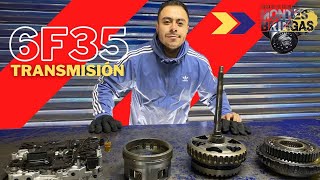
The 2009-2012 Ford Escape is part of the second generation and primarily uses the 6F35 automatic transmission, which was co-developed with General Motors. While the P0732 code is generic, these transmissions can be sensitive to fluid condition and level, and a class-action lawsuit was filed against Ford alleging known defects in the 6F35 🎬 Watch: Overview of common 6F35 transmission issues and defects. in Escapes and Fusions. Problems often progress from simple fluid issues, sometimes caused by a common driver's side axle seal leak, to more complex internal failures like faulty shift solenoids or contaminated valve bodies. Unlike the older CD4E transmission found in pre-2009 models which was known for band failures causing similar codes, the 6F35's issues are more commonly hydraulic and electronic in nature.
Symptoms You May Notice
- Check Engine Light or Transmission Warning Light is on
- Delayed, harsh, or jerky shifting into 2nd gear.
- Engine revs higher than usual before shifting into 2nd gear, sometimes hitting the rev limiter if acceleration is aggressive.
- Vehicle feels like it slips, shudders, or hesitates when shifting.
- Loss of acceleration or feeling like the transmission is in neutral.
- Reduced fuel economy.
- In some cases, the transmission may skip 2nd gear entirely, shifting from 1st to 3rd.
- Replacing the input or output speed sensors. While these sensors provide the data that triggers the code, they rarely fail. A faulty speed sensor will typically set its own specific trouble code, such as P0720 (Output Speed Sensor) or P0715 (Input Speed Sensor).
Most Likely Causes
- Low or Dirty Transmission Fluid 🔴 High Probability The 6F35 transmission is sensitive to fluid volume and quality for proper hydraulic pressure. A common failure point on 2009-2012 Escapes is a leaking driver's side transaxle seal, which leads to fluid loss and subsequent shifting problems. Fluid also degrades over time, losing its hydraulic properties.
How to confirm: Check the transmission fluid level and condition using the dipstick when the vehicle is warm and running in Park. The fluid should be at the correct level, bright red in color, and not smell burnt. Look for signs of a leak on the driver's side of the transmission, near the inner CV axle.
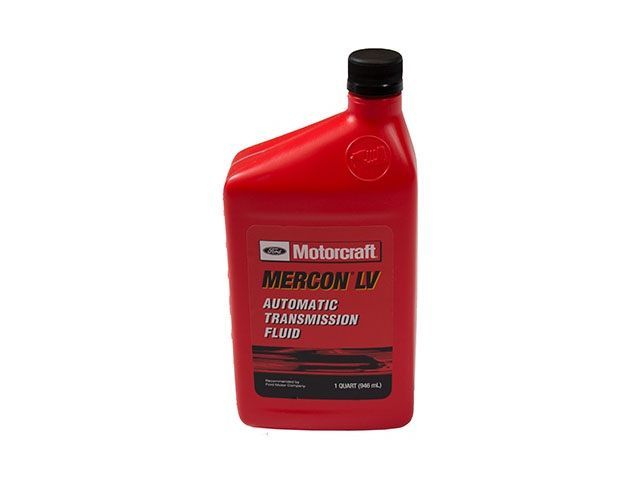
Typical fix: If low, top off the fluid and inspect for leaks. If dirty or old, perform a transmission fluid drain-and-fill or a complete fluid exchange. Use only fluid that meets Ford's MERCON LV specification (Motorcraft P/N XT-10-QLVC).
Est. part cost: $50-$150 - Faulty Shift Solenoid 🟡 Medium Probability Solenoids are electro-hydraulic valves that control shifts. They can fail electrically or become clogged with contaminated fluid, preventing proper gear engagement. The solenoid responsible for the 2nd gear shift is typically designated 'Shift Solenoid B' (SSB). Manufacturer records such as NHTSA ODI #10384249 confirm that code P0732 often appears alongside P0775, specifically indicating a solenoid B malfunction.
How to confirm: A professional technician can use a scan tool to command the solenoid on and off and check its circuit for resistance or shorts. An amp clamp can be used to measure current draw during activation to confirm mechanical function. Resistance should be checked against temperature-based specifications.
Typical fix: Replace the faulty shift solenoid. This is done by dropping the transmission pan and oil filter to access the valve body where the solenoids are mounted.
Est. part cost: $50-$100 for a single solenoid, or $80-$220 for a full kit. - Valve Body Issues 🟡 Medium Probability The valve body is the hydraulic brain of the transmission. Debris and sludge from old fluid can clog its intricate passages or cause spool valves to stick, leading to incorrect pressures and shifting errors. NHTSA ODI #10080122 notes that in some Ford powertrain configurations, a spacer plate issue within the transmission assembly can also lead to the P0732 code.
How to confirm: Diagnosis involves testing line pressures and inspecting the valve body for contamination or wear once the transmission pan is removed. Often diagnosed after fluid and individual solenoid checks fail to resolve the issue.
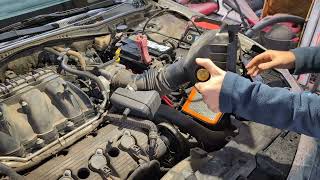
Typical fix: In some cases, the valve body can be cleaned and serviced. More often, it is replaced as an assembly with new solenoids 🎬 See this walkthrough for replacing the valve body and solenoids., which is a more reliable repair. Remanufactured units are widely available.
Est. part cost: $400-$800 - Internal Mechanical Failure ⚪ Low Probability If driven for a long time with low fluid or slipping, internal components like the 1-2-3-4 clutch pack can suffer permanent damage from excessive heat and wear. A cracked 2-6 brake piston is also a known, though less common, failure that can cause this code. NHTSA ODI #10468832 describes a scenario where P0732 was triggered by the 2nd gear direct clutch not locking.
How to confirm: This is a diagnosis of exclusion. If fluid, solenoids, and the valve body are confirmed to be good, the issue is likely a deeper mechanical problem. Dropping the pan and finding significant metal debris is a strong indicator of mechanical failure.
Typical fix: The transmission must be removed from the vehicle for a complete rebuild or replaced with a remanufactured unit.
Est. part cost: $2000-$4500
Rare But Worth Checking
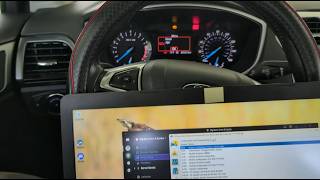
- Faulty Transmission Control Module (TCM): While rare, a software glitch or internal failure in the TCM can cause it to misinterpret sensor data or fail to command shifts correctly. A TCM reflash or replacement may be necessary. 🎬 Watch: How to program the transmission using ForScan after repairs.
- Damaged Wiring or Connectors: Corrosion or damage to the wiring harness between the TCM and the transmission can cause signal loss to sensors or solenoids, triggering the code. This includes the main transmission connector and wiring to the shift solenoids.
Diagnosis Steps
- Check the transmission fluid level and condition. Top off or replace as necessary. Use only MERCON LV fluid. This is the simplest and most common fix.
- Use an OBD-II scanner to check for any other transmission-related codes. This can help narrow down the problem (e.g., a specific solenoid circuit code).
- Inspect the transmission wiring harness and connectors for any visible signs of damage, corrosion, or loose connections. Pay close attention to the main harness connector (C175T) and grounds like G109 on the fender apron.
- Inspect for a fluid leak at the driver's side axle seal, a known issue on this platform.
- With a professional scan tool, monitor the live data for the transmission input speed sensor (ISS) and output speed sensor (OSS). Confirm that the PCM is seeing a slip (a large RPM difference between the two) when 2nd gear is commanded.
- If possible with the scan tool, command the shift solenoids to activate and listen for a click. Test the resistance of the 2nd gear shift solenoid (Solenoid B). At room temperature (68-86°F or 20-30°C), the resistance should be between 4.00 and 5.89 Ohms.
- Perform a transmission line pressure test to check for low hydraulic pressure, which could indicate a clogged filter, failing pump, or internal leaks.
- If other tests are inconclusive, drop the transmission pan to inspect the fluid for excessive metal debris (a sign of hard part failure) and to access the valve body and solenoids for inspection or replacement.
Parts You'll Likely Need
- Transmission Fluid
(OEM #XT-10-QLVC)— Low or degraded fluid is a primary cause of shifting problems and this code.
Trusted brands: Motorcraft (MERCON LV)
OEM price range: $10-$15 per quart
Aftermarket price range: $8-$12 per quart - Transmission Shift Solenoid Kit — The solenoid that controls the 2nd gear shift ('B') is a common failure point. Replacing all solenoids as a kit is often recommended when the valve body is accessed.
Trusted brands: Motorcraft, Bosch, Generic/Aftermarket Kits
OEM price range: $70-$120 (single)
Aftermarket price range: $80-$220 (kit) - Transmission Valve Body
(OEM #AL8Z-7A100-B (example, verify by VIN))— If multiple solenoids are faulty or passages are blocked, replacing the entire valve body assembly is often the most reliable repair.
Trusted brands: Motorcraft (Remanufactured), Cobra Transmission
OEM price range: $500-$900
Aftermarket price range: $350-$600
Related Codes That Often Appear With This One
- P0731 — Incorrect Ratio in 1st Gear. Multiple gear ratio codes often point to a widespread hydraulic issue, a failing valve body, or low fluid level affecting the entire transmission.
- P0733 — Incorrect Ratio in 3rd Gear. Seeing codes for multiple gears makes a single-point failure like one solenoid less likely, and points towards a systemic problem. NHTSA ODI #10158920 documents cases where P0732 and P0733 appeared together, resulting in transmission slips in both 2nd and 3rd gears.
- P0734 — Incorrect Ratio in 4th Gear. On older CD4E transmissions, P0732 and P0734 together almost always meant a broken 2-4 band. On the 6F35, it points to a shared hydraulic circuit or clutch pack issue.
Platform-Specific Known Issues
- Owner Experience with Multiple Ratio Codes: A user on a Reddit forum with a 2010 Escape (186k miles) reported the transmission dropping out of 2nd gear and lagging before re-engaging, a classic symptom of this code. They were quoted over $3,000 for a partial rebuild, highlighting the high cost if the issue is not addressed early.
- Hesitation and Slipping Leading to Valve Body Replacement: A Reddit user with a 6F35 transmission documented experiencing hesitation at highway speeds (40-60 MPH) which progressed to multiple gear ratio codes (P0731-P0736). Their planned repair was a complete valve body and solenoid assembly replacement, a common path for these widespread ratio errors.
- DIY Fluid Change as a First Step: Multiple forums and owner experiences emphasize that a simple drain-and-fill with the correct MERCON LV fluid should always be the first step. One user on Reddit advised against a high-pressure "flush" on higher mileage cars, recommending a simple drain and refill first to see if shift quality improves before moving to more expensive diagnostics.
Mechanic-Grade Diagnostic Values
- Shift Solenoid B (SSB) Resistance — expected: 4.00 - 5.89 Ω at 20-30°C (68-86°F). The resistance value is temperature-dependent and will vary.. Failure: A reading outside the specified range for a given temperature indicates a faulty solenoid coil.
Scan Tool Commands That Help
- FORScan, Ford IDS, or equivalent professional scanner: Clear Transmission Adaptive Tables — This must be performed after any transmission repair, including fluid changes, solenoid replacement, or valve body replacement, to reset the TCM's learned shift pressures and ensure smooth operation. A known 'trick' is to run this procedure three times, cycling the key between each attempt, to ensure it completes successfully on quirky PCMs.
- FORScan, Ford IDS: Solenoid Body Strategy Programming — This is required when replacing the transmission solenoid body or the entire valve body assembly. The technician must enter the 13-digit Solenoid Strategy ID and the 7-digit Solenoid Body ID from the new part into the PCM to ensure correct shift calibration.
Wiring & Ground Locations
- C175T — The main 52-pin connector at the Powertrain Control Module (PCM), typically located in the engine bay near the firewall.. This connector contains the circuits for the transmission range sensor, fluid temperature sensor, and all shift solenoids. Pin-point testing for voltage and continuity would be performed here to rule out wiring issues between the PCM and transmission.
- G109 — A ground point located on the left-hand (driver's side) fender apron in the engine bay.. A poor ground at this location can cause a variety of electrical issues for powertrain components, potentially leading to erratic sensor readings or improper solenoid function. It should be checked for corrosion and tightness.
- Starter Motor Ground — A ground wire is often attached to one of the starter motor mounting bolts.. This serves as a major ground point for the engine/transmission assembly. If loose or corroded, it can cause intermittent and hard-to-diagnose electrical faults within the transmission control system.
Real Owner Repair Stories
- Reddit user on r/fordescape (2017 Ford Escape 1.5L FWD with 147,500 miles (6F35 transmission)) — Hesitation at 40-60 MPH, severe slipping from a stop, RPMs bouncing at highway cruise, and eventually no acceleration. Threw codes P0731, P0732, P0733, P0735, and P0736.
❌ Tried (didn't work) Multiple drain and fills of transmission fluid over the last 60k miles (fluid was always dark gray/black)., Adding Lucas Oil transmission repair fluid after the initial major slip., Turning the car off and on to temporarily clear the issue.
✅ What actually fixed it The user was in the process of ordering a complete valve body with solenoids assembly, which is the next logical step after fluid-based fixes fail and multiple gear ratio codes are present, indicating a systemic hydraulic control failure rather than a single component. - NHTSA ODI #10340874 — An owner reported the transmission light coming on with fault code P0732. The transmission would hold 1st gear and would not shift unless forced to, noting the problem was intermittent.
OEM Part Supersession History
CV6Z-7A100-A→CV6Z-7A100-B— Likely an internal revision to improve reliability or address known failure points in the valve body or included solenoids.
Heads up: While the older part may fit, using the latest superseded part number is always recommended to get the most recent engineering updates.
Model Year Variations Within This Range
- 2009: Early 2009 models could still be equipped with the older 4-speed CD4E transmission instead of the 6-speed 6F35. For the CD4E, P0732 is very commonly caused by a broken 2-4 band, a mechanical failure requiring significant disassembly, which is a completely different diagnostic path than the solenoid/valve body issues on the 6F35.
Diagnostic Flowchart
Other Known Issues on This Vehicle
Issues unrelated to this code that are worth knowing about as an owner of this generation:
- Electronic Power Steering (EPAS) Failure 🔴 High — Very common. Can occur suddenly at any mileage. A recall (14S05) was issued, but many owners report failures even after the recall was performed. (Ref: Recall 14S05 / NHTSA 14V-284)
- Rear Shock Tower Rust 🔴 High — Extremely common in regions that use road salt. Rust perforates the upper shock mount area, particularly on the passenger side, causing the shock to detach.
- Fuel Delivery Module Crack (3.0L V6) 🔴 High — Common enough to warrant a recall. The fuel supply port on the module can crack, leading to a fuel leak. (Ref: Recall 16S41 / NHTSA 16V-777)
- Leaking Driver's Side Transaxle Seal 🟠 Medium — A widely reported issue on 6F35-equipped Escapes, causing transmission fluid loss which can lead to various shifting problems if not caught early.
- Throttle Body Failure 🟠 Medium — A common complaint around 70,000 miles, causing stalling or erratic engine behavior.
- Water Pump Failure (3.0L V6) 🟠 Medium — The externally-mounted water pump can fail, often due to impeller corrosion from neglected coolant. While not an engine-out service like on the later 3.5L, it can still cause overheating.
Used vs. New Parts: Buying Guide for This Vehicle
When a used part is the smart pick: For a complete transmission replacement, a used unit from a low-mileage, verified-running donor vehicle can be a cost-effective option, but it is a significant gamble. Given the 6F35's known reliability issues, a professionally remanufactured transmission with a warranty is a much safer, albeit more expensive, choice.
Donor-vehicle mileage cap: roughly under 70000 miles for the part to have meaningful remaining life.
What to inspect on the donor part:
- Verify the donor vehicle's mileage and check its history for accidents or flood damage.
- Ask for a video of the donor car running and driving, if possible.
- When pulled, inspect the fluid on the dipstick. If it's dark black, smells burnt, or has visible metal particles, avoid the part.
- Check the main electrical connector for corrosion or bent pins.
OEM-only on this vehicle (don't cheap out):
- Transmission Fluid (Motorcraft MERCON LV). Using non-specified fluid is a leading cause of failure.
Aftermarket brands forum-validated for this vehicle:
- Cobra Transmission (for remanufactured valve bodies)
Brands owners have reported issues with on this vehicle:
- Unbranded, generic solenoid kits from online marketplaces can have high failure rates. It's often better to buy a complete, tested, remanufactured valve body assembly than to use questionable individual solenoids.
Real Owner Stories
Aggregated from forums and TSBs cited above. Mileages and costs reflect what owners reported in those sources.
2010 Ford Escape — 186000 miles
Symptoms: The transmission was dropping out of 2nd gear and lagging before it would re-engage.
What fixed it: The owner was quoted over $3,000 for a partial rebuild to fix the issue.
Cost: $3000+
Source hint: Owner Experience with Multiple Ratio Codes
2009-2012 Ford Escape with 6F35 Transmission
Symptoms: Hesitation at highway speeds (40-60 MPH) that progressed to multiple gear ratio codes (P0731-P0736).
What fixed it: The owner planned to perform a complete valve body and solenoid assembly replacement.
Source hint: Reddit r/fordescape - 6F35 Transmission P0731 - P0736 Incorrect Ratio
2010 Ford Escape — ~150000 miles
Symptoms: Harsh shifting between gears.
What fixed it: A drain-and-refill with the correct OEM MERCON LV fluid was recommended as the first and cheapest diagnostic step before replacing parts.
Source hint: Reddit r/MechanicAdvice - 2010 Ford Escape - Kicks when changing gears
Related OBD-II Codes
Frequently Asked Questions
What is the correct transmission fluid for my 2009-2012 Ford Escape, and is a 'flush' a good idea?
I heard the driver's side axle seal leaks on these Escapes. Could that cause the P0732 code?
What is 'Shift Solenoid B' and how can it be tested on my Escape?
My mechanic says I need a new valve body. Is that a common repair for this issue?
What's the very first thing I should do if my Escape shows a P0732 code?
I dropped my transmission pan and found a lot of metal shavings. What does this mean?
Helpful Videos
We Have This Part in Stock


The information in this article is provided for general reference and educational purposes only. Vehicle specifications, procedures, and part compatibility can vary by production date, trim level, and region. Always consult your vehicle's factory service manual and verify part numbers before purchasing or performing repairs. Safety-critical components such as airbags, seat belts, and braking systems should be installed by a qualified professional.
- Ford Escape:
- 🎬 Helpful Videos
- 🛍️ Shop This Part
- What's Unique About the 2009-2012 Ford Escape
- Symptoms You May Notice
- Most Likely Causes
- Rare But Worth Checking
- Diagnosis Steps
- Parts You'll Likely Need
- Related Codes That Often Appear With This One
- Platform-Specific Known Issues
- Mechanic-Grade Diagnostic Values
- Scan Tool Commands That Help
- Wiring & Ground Locations
- Real Owner Repair Stories
- OEM Part Supersession History
- Model Year Variations Within This Range
- Diagnostic Flowchart
- Other Known Issues on This Vehicle
- Used vs. New Parts: Buying Guide for This Vehicle
- Real Owner Stories
- 2010 Ford Escape — 186000 miles
- 2009-2012 Ford Escape with 6F35 Transmission
- 2010 Ford Escape — ~150000 miles
- Related OBD-II Codes
- Frequently Asked Questions
- 🎟️ Get 5% Off