

OBD-II Code P0729: Incorrect 6th Gear Ratio
The Ultimate Guide to Understanding, Diagnosing, and Fixing P0729
- Code P0729 indicates a physical or hydraulic slip in 6th gear, requiring immediate diagnosis to prevent a $7,000+ transmission replacement.
- Check the transmission fluid level and color immediately, as low or burnt fluid is the number one cause of this $300-$500 repair.
- Ford 10R80, Ram 68RFE, and GM 6L80 transmissions have highly documented factory flaws—like the Ford CDF clutch drum—that trigger this specific code.
- Driving more than 50 miles with an active P0729 code overheats the transmission fluid, glazing the clutch packs and guaranteeing a complete transmission rebuild.
What Does P0729 Mean?

Your Transmission Control Module (TCM) detected a problem with 6th gear. It constantly compares engine speed to transmission output speed. When commanded into 6th gear, the speeds do not match the expected ratio, meaning the transmission is physically slipping or failing to engage the gear.
Technical definition: The SAE/OBD-II definition is 'Gear 6 Incorrect Ratio.' The TCM determined the ratio of the input speed sensor's RPM to the output speed sensor's RPM deviates from the manufacturer's specified ratio for sixth gear. A deviation of 5% or a 200 RPM difference triggers the code and illuminates the Check Engine Light.
Can I Drive With P0729?
yes_but_not_recommended. Drive only to a safe location or repair shop under 50 miles. The transmission will likely shift harshly, enter a protective 'limp mode' with limited gears, or get stuck in a lower gear. Continuing to drive causes slipping clutches to generate excessive heat, rapidly destroying internal seals and clutches. This turns a moderate $300-$1,300 solenoid repair into a catastrophic $7,000+ full transmission replacement.
Common Causes


- Low or Dirty Transmission Fluid (Very Common) — Low, old, burnt, or incorrect transmission fluid fails to provide the hydraulic pressure needed to engage 6th gear, causing clutches to slip.
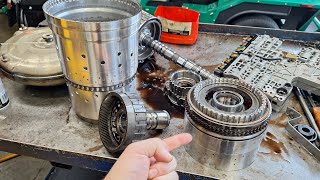
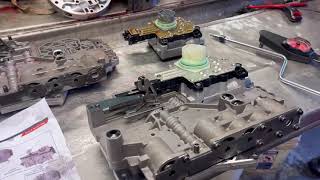
- Faulty Shift Solenoid or Solenoid Pack (Common) — Shift solenoids direct fluid to engage gears. A stuck, clogged, or electronically failed 6th gear solenoid prevents engagement. The entire solenoid pack is a known failure point on Ram 68RFE transmissions. 🎬 See how to replace the solenoid pack and valve body.
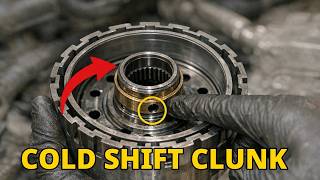
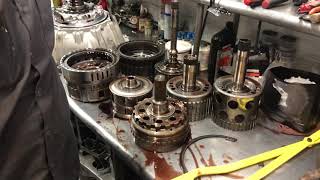
- Internal Mechanical Failure (Clutches or CDF Drum) (Common) — Worn clutches, damaged gears, or failed internal seals cause physical slipping. The CDF clutch drum bushing failure on Ford 10R80 transmissions is a highly documented root cause for this specific code. 🎬 Watch: How the CDF bushing failure causes harsh shifting.
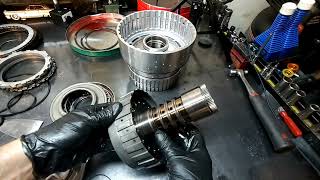
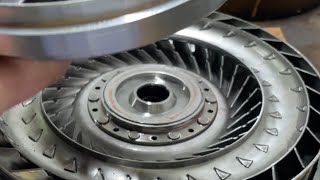
- Failing Torque Converter or Torque Converter Clutch (TCC) (Common) — The torque converter's internal lockup clutch wears out and sheds metallic debris. This debris contaminates the fluid and clogs valve body passages, leading to pressure loss. This is extremely common on GM 6L80 transmissions. 🎬 Watch: Why these torque converters fail and clog the system.
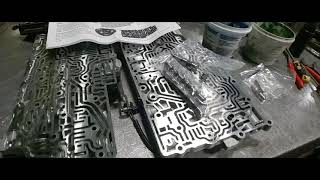
- Faulty Transmission Valve Body (Common) — The hydraulic control center develops internal leaks, stuck valves, or blockages from debris, causing incorrect fluid pressure routing to the 6th gear circuit.
- Faulty TCM or Software Issue (Less Common) — Outdated software or TCM glitches incorrectly trigger the code. Manufacturers frequently release software updates (TSBs) to fix shifting logic, notably on Dodge/Ram vehicles.
- Faulty Input or Output Speed Sensor (Rare) — Sensors provide speed data to the TCM. While they fail, technicians note replacing sensors for this code is a frequent misdiagnosis; the mechanical parts they monitor are usually the actual problem.
- Electrical Issues or Aftermarket Tunes (Rare) — A weak battery causes voltage drops that confuse the TCM. Alternatively, aggressive aftermarket engine tunes increase torque beyond stock clutch capacity, causing physical slip in overdrive gears.
Symptoms

- Check Engine Light is On — The computer illuminates the Malfunction Indicator Lamp (MIL) or a dedicated transmission warning light.
- Failure to Shift into 6th Gear — The transmission refuses to shift into 6th gear, remaining stuck in a lower gear at highway speeds.
- Harsh or Delayed Shifting — Noticeable clunks, long delays, or RPM flares occur when attempting to shift into 6th gear.
- Transmission Enters 'Limp Mode' — The transmission enters a fail-safe mode, locking into 2nd or 3rd gear to prevent further internal damage.
- Decreased Fuel Economy — Highway driving without overdrive (6th gear) forces the engine to run at higher RPMs, causing a 10-15% drop in fuel economy.
- Transmission Slipping (also visible on scanner) — Engine RPMs increase, but vehicle speed does not. This feels like a sudden loss of power when 6th gear is commanded.
Diagnostic Flowchart
Tap your situation to follow the diagnostic path that matches what you're seeing on this code.
Common Fixes & Costs
- Transmission Fluid and Filter Change — Parts: $75-$150, Labor: $150-$250, ~1.5 hr book time (DIY)
- Replace Shift Solenoid/Solenoid Pack — Parts: $250-$600, Labor: $200-$400, ~3.0 hr book time (Intermediate)
- Replace Transmission Valve Body — Parts: $600-$1500, Labor: $300-$600, ~4.0 hr book time (Professional)
- TCM Reprogramming or Replacement — Parts: $0-$800, Labor: $150-$300, ~2.0 hr book time (Professional)
- Transmission Rebuild or Replacement — Parts: $2000-$4500, Labor: $1500-$3500, ~22.0 hr book time (Professional)
DIY vs Professional
- Transmission Fluid and Filter Change — Beginner:
Tools: Socket set, drain pan, funnel, torque wrench, new fluid and filter/gasket. - Replace Shift Solenoid/Solenoid Pack — Beginner:
Tools: Socket set, drain pan, funnel, torque wrench, multimeter, snap-ring pliers, service manual. - TCM Reprogramming or Replacement — Beginner:
Tools: OEM-level diagnostic scan tool with programming capabilities, stable power supply. - Replace Transmission Valve Body — Beginner:
Tools: Full mechanic's toolset, transmission-specific tools, pressure gauges, service manual. - Transmission Rebuild or Replacement — Beginner:
Tools: Transmission jack, engine hoist, specialized rebuild tools, press, clean room environment.
Used vs. New Parts: Buying Guide
When a used part is worth it: For a common wear item like a shift solenoid pack, buying used is risky but considered on a high-mileage vehicle (>150k miles) where the owner has a very tight budget.
Donor-vehicle mileage cap: roughly under 60000 miles for the part to have meaningful remaining life.
Donor quality checklist:
- Verify the donor vehicle was not scrapped due to transmission failure.
- Match the part number and any connector colors/styles exactly.
- Source from a reputable recycler that offers at least a 90-day warranty.
Decision logic:
- If Vehicle is under 100K miles and the part is electronic (solenoid, sensor) → Buy new (OEM or quality aftermarket). The labor cost to replace it is too high to risk using a part with an unknown history.
- If Vehicle is over 150K miles and budget is the primary concern → A used part from a low-mileage donor is a viable option, but expect a significantly shorter lifespan.
- If The part is a known high-failure item (e.g., 68RFE solenoid pack) → Strongly favor a new or remanufactured unit, as even low-mileage used parts carry a high risk of premature failure.
Warranty tradeoff: Used parts typically come with a 30-90 day part-only warranty, meaning you are responsible for repeat labor costs if it fails. New aftermarket parts often carry a 1-year or longer warranty.
Worst-case if a used part fails: $400-800. If a used solenoid pack fails after installation, you pay for the repeat labor ($250-$600) plus the cost of another part.
What Happens If You Wait — Timeline
- 0-1 month: Code P0729 appears, Check Engine Light is on. Transmission occasionally hesitates or refuses to shift into 6th gear. Vehicle enters 'limp mode' intermittently. (MPG impact: 5-10%% · Added cost: $0-50 in wasted fuel. At this stage, the fix is a simple fluid change or a TCM software update ($200-$500).)
- 1-3 months: Slipping in 6th gear becomes frequent. The transmission fluid overheats, darkens, and acquires a burnt smell. Minor damage to clutch surfaces begins. (MPG impact: 10-15%% · Added cost: $500-1,400. The problem progresses beyond fluid and requires a solenoid or solenoid pack replacement.)
- 3-6 months: Sustained overheating damages internal seals and glazes the 6th gear clutches. Debris from failing clutches contaminates the valve body and torque converter. (MPG impact: 15-20%% · Added cost: $2,000-5,000. The repair involves replacing the valve body and/or torque converter in addition to addressing the initial failure.)
- 6+ months: Catastrophic failure. Debris contaminates the entire transmission, damaging other clutch packs, gears, and the pump. The transmission fails completely. (MPG impact: 20%+% · Added cost: $4,500-8,500+. A complete transmission rebuild or replacement is the only option.)
Cost of Not Fixing It
- 0-1 month: Noticeable 10-15% drop in fuel economy and the vehicle enters 'limp mode,' restricting speed and gear selection. (Added cost: Negligible, besides increased fuel cost.)
- 1-6 months: Continued slipping generates extreme heat, causing transmission fluid to burn and break down. This glazes clutches and damages internal seals. (Added cost: $1500-3000. A simple solenoid or fluid fix escalates into needing a valve body or torque converter replacement.)
- 6+ months: Catastrophic transmission failure. Debris from the initial failure contaminates the entire system, destroying other clutch packs, the valve body, and the torque converter. (Added cost: $4500-8500+. The cost of ignoring the issue results in the maximum possible repair expense for the transmission.)
Diagnosis Steps
- Check Transmission Fluid Level and Condition
Park on a level surface with the engine warm and running. Check the dipstick. Fluid must be at the 'Full' mark and bright red/pink. Low, brown, or burnt-smelling fluid indicates a severe problem.
Tools: Rag (Beginner) - Scan for Other Trouble Codes
Use an OBD-II scanner to check for related codes. Codes for other gear ratios (P0731-P0735), fluid pressure (P0868), or torque converter (P0741) pinpoint the root cause.
Tools: OBD-II Scanner (Beginner) - Analyze Live Data for Slippage
Graph 'Engine RPM', 'Input Speed Sensor RPM', 'Output Speed Sensor RPM', and 'Commanded Gear' during a test drive. If Input RPM flares while Output RPM stays flat when 6th gear is commanded, you have visually confirmed clutch slip.
Tools: Advanced OBD-II Scanner with graphing capability (Advanced) - Inspect Wiring and Connectors
Visually inspect the transmission wiring harness, speed sensors, and main connector for damage or corrosion. Check battery terminals; poor voltage causes erratic TCM behavior.
Tools: Flashlight (Intermediate) - Test Shift Solenoid Resistance
Remove the transmission pan, disconnect the suspected solenoid, and measure resistance across its pins. Compare to manufacturer specs (e.g., Ram 68RFE is ~1.3 Ohms). Infinite resistance means a failed solenoid.
Tools: Multimeter, Socket Set (Advanced) - Perform a Transmission Pressure Test
Connect pressure gauges to transmission test ports. Low pressure in the 6th gear circuit confirms a hydraulic fault (leak, bad solenoid, or valve body) rather than an electronic one. GM 6L80 idle pressure is 45-80 PSI.
Tools: Transmission Pressure Gauge Set (Professional) - Analyze Clutch Volume Index (CVI) Data
For Chrysler/Ram, read CVI data. High CVI indicates worn clutches; low CVI suggests warped clutches; zero CVI points to a major hydraulic leak.
Tools: Advanced OBD-II Scanner (Advanced) - Test Speed Sensor Voltage & Resistance
Disconnect passive speed sensors and measure resistance (e.g., 68RFE is ~535 Ohms). For active sensors, back-probe for a 5V or 12V reference voltage with the ignition ON.
Tools: Multimeter, Back-probe kit, Vehicle-specific service manual (Advanced) - Inspect Internal Components
Remove the transmission pan and valve body. Inspect for excessive metal shavings, stuck valves, or damaged internal seals. Stop DIY diagnosis here and take the vehicle to a transmission specialist.
Tools: Full Mechanic's Tool Set (Professional)
When This Code Triggers (Freeze-Frame Conditions)
- Engine Coolant Temp: 180-200°F (The code typically sets when the vehicle is fully warmed up and at operating temperature.)
- Engine RPM: 1500-2500 RPM (During steady-state highway cruising when the transmission commands 6th gear.)
- Engine Load: 30-60% (Under a steady, light-to-moderate throttle application, not during heavy acceleration or deceleration.)
- Vehicle Speed: 45-65 mph (The fault occurs at speeds where 6th gear (overdrive) is commanded to engage for fuel efficiency.)
Related Codes
- P0730 — P0730 means 'Incorrect Gear Ratio' in general. If you see P0729 and P0730 together, it confirms the problem is happening in 6th gear but affects overall transmission logic.
- P0731-P0735 — Incorrect ratio codes for gears 1 through 5. Seeing multiple gear ratio codes together strongly points to a widespread problem like low fluid, a failing valve body, or a major hydraulic leak.
- P0868 — 'Transmission Fluid Pressure Low.' Low hydraulic pressure prevents clutches from engaging properly, causing the gear ratio slip detected as P0729. Seeing them together confirms a hydraulic fault.
- P0741 — 'Torque Converter Clutch (TCC) Circuit Performance.' Common alongside P0729 in GM vehicles, indicating the torque converter is failing and shedding debris that clogs the valve body.
- P0700 — A general 'Transmission Control System Malfunction' code. It provides no specific information but is always present when a specific code like P0729 is logged.
Climate & Environmental Factors
- Extreme Heat: High ambient temperatures significantly increase the operating temperature of the transmission, accelerating fluid breakdown and wear on seals and electronic components.
- High Altitude: Thinner air reduces engine power, forcing the transmission to work harder, hold lower gears longer, and shift more frequently. This added strain exposes underlying transmission weaknesses.
- Cold Weather: In very cold temperatures, transmission fluid becomes thicker, causing delayed or harsh shifts until the vehicle warms up. If shifting problems persist after reaching operating temperature, it indicates a real fault.
How to Talk to a Mechanic About This Code
Say this: "I have a P0729 code, 'Incorrect 6th Gear Ratio,' and the transmission is slipping on the highway. I'd like to schedule a diagnostic. Please start by checking the fluid level and condition, and scan for any related codes like P0868 for low pressure or other gear ratio faults. Also, please check for any TSBs related to this code for my specific vehicle."
This signals you've done research and guides the technician toward a logical diagnostic process (fluid, codes, TSBs) rather than guessing. It shows you understand this is likely a hydraulic or mechanical issue, not a simple sensor swap.
Avoid saying:
- 'My check engine light is on, can you look at it?'
- 'My car is shifting weird.'
- 'Just fix whatever's wrong, I trust you.'
Questions to ask before authorizing the repair:
- What was the condition of the transmission fluid? Was there any metal debris in the pan?
- Did you find any other codes stored with P0729? Specifically, were there any for low pressure or the torque converter?
- Based on the live data, did you see the RPMs flare, confirming a slip, or did a speed sensor signal drop out?
- Is there a Technical Service Bulletin (TSB) for this issue on my vehicle?
- What is the warranty on this specific repair, covering both parts and labor?
Where to Take It: Dealer vs Independent vs Chain
- Dealer:
Recommended if your vehicle is under warranty or has a known, specific TSB that requires proprietary software or tools.
Best for: Vehicles under powertrain warranty., Vehicles with a known TSB for P0729 (e.g., Ford 10R80 CDF drum, Ram 68RFE software update)., Complex modern transmissions (8, 9, 10-speed) or European brands (VW/Audi, BMW).
Downsides: Highest labor rates., Defaults to full transmission replacement when a specialized repair is possible. (Typical cost: +50% vs. baseline) - Chain Shop:
AVOID for P0729 diagnosis and repair. The risk of misdiagnosis on a complex transmission code is very high. Use only for a basic fluid service.
Best for: Fluid and filter changes.
Downsides: Technician skill varies dramatically; they lack deep transmission expertise., High pressure to upsell services; misdiagnoses the issue, leading to unnecessary repairs. (Typical cost: -10% vs. baseline)
When to Walk Away From the Repair
If the estimated repair cost for P0729 exceeds 50% of your car's private-party value, seriously consider selling or trading in the vehicle instead of repairing it.
- Car worth $8000, fix is $4500: Walk away. The repair cost is over 50% of the car's value. A transmission rebuild is not a sound investment here.
- Car worth $25000, fix is $4000: Fix it. The repair is well below the 50% threshold and restores a significant amount of the vehicle's value and function.
- Car worth $5000, fix is $3000: Borderline, likely walk away. The repair is over 50% of the value. Unless the car is in otherwise perfect condition with low miles, it's not worth the investment.
What Scan Tool You Need for This Code

Minimum: A scanner that reads manufacturer-specific transmission codes and views live data PIDs (Parameter IDs) for the transmission.
A basic $20 code reader only shows the P0729 code. It cannot display the critical live data needed for diagnosis, such as Input/Output Speed Sensor RPMs, commanded vs. actual gear, and transmission fluid temperature.
Budget: BlueDriver Pro (~$100) — Reads and clears transmission codes, provides freeze frame data, and graphs live data for input/output speeds to help you visually confirm a slip.
Mid-range: Foxwell NT510 Elite (~$200) — Offers all features of the budget pick, plus OEM-level diagnostics for a specific brand. Performs bidirectional tests to command shift solenoids to click, isolating a bad solenoid.
Professional: Autel MaxiCOM MK808 / MK808S (~$450-550) — A full-featured diagnostic tablet providing all-system scanning, extensive live data graphing, and bidirectional controls for most vehicle makes. Accesses advanced data like Clutch Volume Index (CVI).
Rent vs buy: For a one-time diagnosis, auto parts stores rent out scanners for free with a deposit. However, their rental tools lack the live transmission data capabilities needed for P0729. Buying at least a budget pick like the BlueDriver is a worthwhile investment.
How to Clear the Code After You Fix It
- Use an OBD-II scan tool to clear the P0729 code.
- Perform a comprehensive transmission drive cycle to allow the TCM to relearn shift points.
- Check for pending codes after the drive cycle to confirm the fix.
Drive cycle (~30 minutes): Perform a drive cycle that includes a cold start, a few minutes of idling, mixed city driving with multiple upshifts and downshifts, and at least 5-10 minutes of steady driving at highway speeds (above 45 mph) to engage 6th gear.
Readiness monitors affected: Catalyst Monitor, Evaporative System Monitor, O2 Sensor Monitor
Before emissions retest: drive at least 100 miles to fully set monitors.
Watch out for:
- Clearing the code with a scanner without fixing the underlying mechanical or hydraulic problem causes the code to return almost immediately.
- Disconnecting the battery clears the code but also erases all OBD-II readiness monitors, causing an automatic failure at an emissions testing station.
Will This Fail Emissions / State Inspection?
Yes — this code typically fails an OBD-II emissions inspection.
- California: An illuminated Check Engine Light from code P0729 causes an automatic smog check failure. After repairs, a full drive cycle must be completed to set all readiness monitors.
- New York: NYS vehicle inspection includes an OBD-II scan. An active P0729 code and illuminated MIL is an automatic failure. Clearing the code right before the test results in a failure due to 'Not Ready' monitors.
- Texas: In the 17 counties requiring emissions testing, a vehicle with P0729 fails the OBD-II portion of the inspection.
Most Commonly Affected Vehicles
- Ford F-150, Mustang, Expedition, Ranger, Explorer (2017-2023) — Vehicles with the 10R80/10R60 10-speed automatic transmission have a design flaw with the CDF clutch drum bushing, which 'walks' out of place, causing internal hydraulic leaks. Documented in TSB 24-2254.
- Ram 2500/3500 (2007-2024) — Models with the 68RFE transmission frequently experience failure of the electronic solenoid pack. For 2021+ models, TSB 21-012-23 notes a software update fixes an erroneous P0729 code.
- Chevrolet / GMC Silverado, Sierra, Tahoe, Suburban (2011-2019) — On 6L80/6L90 transmissions, P0729 is caused by a failing torque converter clutch shedding debris that clogs the valve body separator plate. Detailed in TSB PIP5100A.
- Hyundai / Kia Santa Fe, Sonata, Elantra, Tucson, Sorento (2011-2022) — TSB 24-AT-002H indicates that if only incorrect ratio codes are present after initial checks, a full transmission replacement is the recommended repair due to internal durability issues.
- Nissan / Infiniti Navara, FX35, G37 (2009-2017) — Issues are linked to using incorrect transmission fluid or failure of the valve body assembly, which contains the TCM.
- Toyota / Lexus Sequoia, Tundra, GX460, IS350 (2008-2015) — On A760E/A760F transmissions, this code indicates a mechanically stuck sequence valve within the valve body, preventing the shift to 6th gear.
- Honda Accord, Odyssey (2008-2017) — Particularly on V6 versions, P0729 is linked to a failing 6th gear clutch pressure switch/solenoid or internal clutch pack wear.
- Volkswagen / Audi Jetta, Passat, Golf, A3 (2012-2018) — DSG transmissions experience issues with the Mechatronics unit (combined valve body and TCM) that lead to this code.
Manufacturer-Specific Notes
- Ford: On 10-speed (10R80/10R60) transmissions, P0729 is almost certainly caused by a faulty CDF clutch drum. A fluid change or solenoid replacement will not fix it. The transmission must be removed and a redesigned drum installed per TSB 24-2254.
- Dodge/Ram: On 68RFE transmissions, the electronic solenoid pack on the valve body is a very common failure item. For 2021+ models, TSB 21-012-23 notes a software update fixes an erroneous P0729 code.
- General Motors: On 6L80/6L90 transmissions, P0729 is frequently a symptom of a failing Torque Converter Clutch (TCC). TSB PIP5100A warns that a simple valve body cleaning is not enough; the torque converter must be replaced.
- Hyundai/Kia: Hyundai issued TSB 24-AT-002H for various incorrect ratio codes. The diagnostic procedure often leads to a full transmission replacement if no other obvious causes are found.
Real Owner Stories
2018 Ford F-150 with 10R80 at 75K miles
Check engine light came on with harsh shifting, especially into 6th gear. The truck felt like it was slipping on the highway.
What they tried:
- Checked fluid level and color, which were fine.
- A local shop suggested replacing the shift solenoids, but the owner was hesitant.
Outcome: The owner found TSB 24-2254 regarding the CDF clutch drum. A Ford dealer confirmed the issue. The transmission was removed to replace the faulty drum. The repair cost nearly $4,000.
Lesson: For Ford 10R80 transmissions, P0729 is frequently caused by the known CDF drum flaw. Insist on diagnosing for this issue before agreeing to less likely repairs like solenoid replacement.
2015 Ram 1500 5.7L at 84K miles
While towing a 5,000 lb trailer, the truck shifted hard from 7th to 6th gear, the check engine light came on, and the transmission went into limp mode.
What they tried:
- Pulled over and let the truck sit for 40 minutes. Upon restarting, the truck drove normally without the trailer.
- A mechanic checked the fluid and said it looked fine.
- The owner drove home manually limiting the transmission to 5th gear.
Outcome: The owner suspected an internal issue or a failing solenoid pack. The case highlights how overheating from towing triggers a latent problem. The next logical step was a professional diagnosis at a transmission shop.
Lesson: Towing or heavy loads expose underlying transmission problems. If P0729 appears under load, it is an early warning of solenoid or internal clutch failure. Letting the vehicle cool down temporarily restores function, but the root cause must be addressed.
2012 Honda Odyssey at 110K miles
P0729 code appeared along with noticeable slipping when the transmission tried to shift into 6th gear.
What they tried:
- Replaced the input and output speed sensors. The code returned immediately.
- Performed a 3x drain-and-fill of the transmission fluid. The problem persisted.
Outcome: The actual cause was a failed 6th gear clutch pressure switch (solenoid). After replacing the specific solenoid, the code cleared. The repair was inexpensive (under $100 for the part) but required correct diagnosis.
Lesson: Don't assume speed sensors are the cause for a ratio code. For many vehicles like Honda, specific pressure switches or shift solenoids are a more likely and targeted repair than a full solenoid pack.
How to Prevent This Code From Triggering
- Install an Auxiliary Transmission Cooler (Once, especially for vehicles used for towing or in hot climates) — Excess heat is the #1 cause of premature transmission failure. An auxiliary cooler helps dissipate heat, keeping fluid within its optimal 175-200°F range.
- Use Tow/Haul Mode When Loaded (Every time you tow or carry a heavy load) — This mode adjusts transmission shift points to hold lower gears longer, preventing constant shifting ('gear hunting') that generates excessive heat.
- Perform Periodic Transmission Fluid Analysis (Every 30,000 miles or every other year) — Sending a fluid sample to a lab identifies elevated wear metals, coolant contamination, or fluid degradation before a catastrophic failure occurs.
- Allow a Brief Warm-Up Period (Daily, especially in cold weather) — Cold transmission fluid is thick and does not lubricate effectively. Allowing the engine to idle for 30-60 seconds allows the fluid to circulate and warm up.
- Come to a Complete Stop Before Shifting from Drive to Reverse (Daily habit) — Shifting while the vehicle is still moving forces the transmission's internal components to absorb the directional change, putting significant stress on the geartrain.
Frequently Asked Questions
What is the most common misdiagnosis for code P0729?
Replacing the input or output speed sensors is the most common mistake. While these sensors provide ratio data, they rarely fail themselves. The code almost always indicates a real mechanical or hydraulic slip that the sensors are correctly reporting.
Will a transmission fluid change fix a P0729 code?
A fluid change only fixes P0729 if the root cause is low or severely degraded fluid. If the code stems from a mechanical failure, bad solenoid, or internal leak, new fluid will not solve the problem.
How serious is code P0729?
Code P0729 is extremely serious and requires immediate attention. Continuing to drive causes slipping clutches to overheat, leading to severe internal damage and a much more expensive repair.
Can I fix P0729 myself?
A DIYer can check and change the transmission fluid and filter. However, replacing solenoids, valve bodies, or internal components requires specialized tools and should be left to a professional transmission shop.
Can a weak battery cause P0729?
Yes, modern Transmission Control Modules (TCM) require stable voltage to function correctly. A weak battery or corroded connection causes erratic signals, leading the TCM to set false codes or enter limp mode.
Can an aftermarket engine tune cause P0729?
Yes, aggressive engine tunes increase horsepower and torque beyond what stock transmission clutches can handle. This causes the clutches to slip in higher gears, triggering the P0729 incorrect ratio code.
Will P0729 clear itself?
No, this code indicates a hard mechanical, hydraulic, or electrical fault that requires physical repair. Clearing the code with a scanner without fixing the underlying problem causes it to return immediately.
How much does it cost to fix P0729?
Costs range from $225 for a fluid change to $900 for a solenoid pack replacement. Major internal repairs, like fixing the Ford CDF drum or a full rebuild, cost between $3,000 and $7,500.
Key Takeaways
- Code P0729 indicates a physical or hydraulic slip in 6th gear, requiring immediate diagnosis to prevent a $7,000+ transmission replacement.
- Check the transmission fluid level and color immediately, as low or burnt fluid is the number one cause of this $300-$500 repair.
- Ford 10R80, Ram 68RFE, and GM 6L80 transmissions have highly documented factory flaws—like the Ford CDF clutch drum—that trigger this specific code.
- Driving more than 50 miles with an active P0729 code overheats the transmission fluid, glazing the clutch packs and guaranteeing a complete transmission rebuild.
Helpful Videos

The information in this article is provided for general reference and educational purposes only. Vehicle specifications, procedures, and part compatibility can vary by production date, trim level, and region. Always consult your vehicle's factory service manual and verify part numbers before purchasing or performing repairs. Safety-critical components such as airbags, seat belts, and braking systems should be installed by a qualified professional.
- 🎬 Helpful Videos
- What Does P0729 Mean?
- Can I Drive With P0729?
- Common Causes
- Symptoms
- Diagnostic Flowchart
- Common Fixes & Costs
- DIY vs Professional
- Used vs. New Parts: Buying Guide
- What Happens If You Wait — Timeline
- Cost of Not Fixing It
- Diagnosis Steps
- When This Code Triggers (Freeze-Frame Conditions)
- Related Codes
- Climate & Environmental Factors
- How to Talk to a Mechanic About This Code
- Where to Take It: Dealer vs Independent vs Chain
- When to Walk Away From the Repair
- What Scan Tool You Need for This Code
- How to Clear the Code After You Fix It
- Will This Fail Emissions / State Inspection?
- Most Commonly Affected Vehicles
- Manufacturer-Specific Notes
- Real Owner Stories
- 2018 Ford F-150 with 10R80 at 75K miles
- 2015 Ram 1500 5.7L at 84K miles
- 2012 Honda Odyssey at 110K miles
- How to Prevent This Code From Triggering
- Frequently Asked Questions
- What is the most common misdiagnosis for code P0729?
- Will a transmission fluid change fix a P0729 code?
- How serious is code P0729?
- Can I fix P0729 myself?
- Can a weak battery cause P0729?
- Can an aftermarket engine tune cause P0729?
- Will P0729 clear itself?
- How much does it cost to fix P0729?
- Key Takeaways
- 🎟️ Get 5% Off