

P0731 on 2011-2015 Honda Civic: Diagnosing and Fixing Gear 1 Incorrect Ratio
Code P0731 on a 2011-2015 Honda Civic most often points to low or dirty automatic transmission fluid. Start by checking and changing the fluid with Honda ATF DW-1. If this doesn't fix it, the problem could be a faulty shift solenoid, a failing sensor, or, in more serious cases, internal transmission failure requiring professional diagnosis.
- P0731 means the transmission is slipping in first gear.
- First, check your transmission fluid. Low or dirty fluid is the most common cause.
- Only use Honda-specific ATF DW-1 fluid; these transmissions are sensitive to the wrong type.
- If fluid is not the issue, the problem is likely a shift solenoid, sensor, or internal transmission damage.
- This code applies mainly to Civics with a traditional automatic transmission, not the CVT models common from 2013-2015.
What's Unique About the 2011-2015 Honda Civic
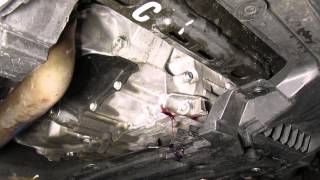
The 2011-2015 Honda Civic model years span two different generations and transmission types, which is key to understanding this code. The 2011 model is part of the 8th generation with a traditional 5-speed automatic transmission. The 9th generation (2012-2015) offered this same 5-speed automatic in its first year, but began phasing in a Continuously Variable Transmission (CVT) in 2013, which became standard on most non-Si models by 2014. 🎬 Watch: Common 9th Gen Civic problems and what to look for. This P0731 code is primarily relevant to the traditional 5-speed automatic, as a 'gear ratio' error is defined differently on a CVT, which doesn't have discrete gears. If you have a 2014-2015 Civic with a CVT, be aware of a separate recall (TSB 15-065) for input shaft pulley failure, which can also cause a loss of movement.
Generation note: This range covers the last year of the 8th generation (2011) and the 9th generation (2012-2015). The 8th gen and early 9th gen (2012-2013) used a traditional 5-speed automatic where this code is common. Later 9th gen models (2014-2015) increasingly used a CVT. While a P0731 is less likely on a CVT, transmission problems on those models often relate to other known issues, like shuddering or the input shaft pulley. Diagnosis and parts will differ significantly between the 5-speed automatic and the CVT.
Symptoms You May Notice
- Check Engine Light is on
- Sluggish, delayed, or no acceleration from a complete stop.
- Delayed or harsh engagement when shifting into Drive, sometimes with a clunk.
- Transmission seems to slip or engine RPMs are high for the given speed.
- Vehicle may enter 'limp mode,' getting stuck in 2nd or 3rd gear to protect the transmission.
- Reduced fuel economy.
- Unusual whining or whirring sounds from the transmission.
- Replacing the entire transmission without first checking the fluid level and condition, or testing the external solenoids and sensors.
- Using non-Honda ATF. Many owners and shops report that using universal or even 'DW-1 compatible' fluid can cause shifting problems that are resolved by switching back to genuine Honda ATF DW-1.
Most Likely Causes
- Low, Burnt, or Dirty Automatic Transmission Fluid (ATF) 🔴 High Probability Honda transmissions are known to be sensitive to fluid level and condition. The manufacturer specifies using only Honda ATF DW-1, as other fluids can cause shifting problems. Neglecting fluid changes is a common cause of failure.
How to confirm: Check the transmission fluid dipstick (if equipped) for level and color. The fluid should be at the correct level and red/pink in color, not dark brown or black. Smell for a burnt odor, which indicates overheating and fluid degradation.
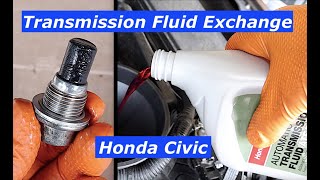
Typical fix: Perform a transmission fluid drain and fill using only Honda-specific ATF DW-1 (Part No. 08200-9008). Do NOT use a high-pressure flush system. 🎬 See how to properly drain and fill your transmission fluid. If the fluid is very dirty, performing 3-4 drain-and-fills is a common procedure to replace most of the old fluid.
Est. part cost: $40-$80 - Faulty Shift Solenoid 🟡 Medium Probability Solenoids can become clogged with debris from old fluid or fail electrically over time, preventing correct hydraulic pressure for gear engagement.
How to confirm: A professional mechanic can test the solenoids' resistance with a multimeter or use a diagnostic scanner to command the solenoid on and off to check its function. This may also set a specific solenoid-related trouble code (e.g., P0753 for Shift Solenoid 'A').
Typical fix: Replace the faulty shift solenoid. For the 9th Gen Civic, the dual linear shift solenoid assembly (OEM Part No. 28260-RG5-004) is a common replacement part. These are often located on the outside of the transmission or under a side cover.
Est. part cost: $70-$200 - Faulty Input/Output Speed Sensors ⚪ Low Probability
How to confirm: Use a scan tool to monitor the live data from the input and output speed sensors while driving. If one sensor shows an erratic, inconsistent, or zero reading while the vehicle is moving, it has likely failed.
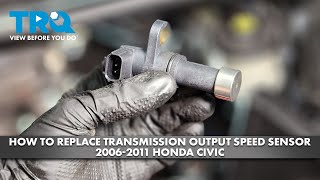
Typical fix: Replace the failed speed sensor. These are typically mounted on the exterior of the transmission housing, making them relatively accessible. 🎬 Watch: Step-by-step guide to replacing the transmission speed sensor.
Est. part cost: $60-$120 - Internal Transmission Failure ⚪ Low Probability Can be the result of long-term driving with low fluid or other untreated issues. Worn internal components like the 1st gear clutch pack or a failing internal oil pump can cause a loss of hydraulic pressure.
How to confirm: If fluid and solenoids are good, a transmission pressure test is needed. Low pressure in the 1st gear circuit points to a worn clutch pack, failing oil pump, or a problem in the valve body. Finding significant metal shavings in the transmission pan is a definitive sign of internal damage.
Typical fix: This requires a complete transmission rebuild or replacement, which is a major and expensive repair.
Est. part cost: $2000-$4000
Rare But Worth Checking
- Faulty Transmission Control Module (TCM) or software glitch: This is uncommon, but a possibility if all mechanical and electrical components check out. Sometimes a software update from the dealer can resolve false codes. Honda has issued TSBs for other models like the CR-V (TSB 15-086) for software updates to fix shifting issues, indicating software can be a factor.
- Clogged Transmission Filter: An internally clogged filter can restrict fluid flow, leading to pressure issues that mimic other failures. This is often a consequence of severely degraded fluid and is usually replaced during a major service or rebuild.
Diagnosis Steps
- Check the level and condition of the automatic transmission fluid. This is the most common cause and the easiest to check. Ensure the fluid is pink/red and doesn't smell burnt.
- If the fluid is low, top it off with Honda ATF DW-1 and check for leaks.
- If the fluid is dark, burnt, or has debris, perform a drain and fill (or several) to replace it. Only use Honda ATF DW-1 (Part No. 08200-9008).
- Scan the system for any other transmission-related codes, especially for shift solenoids (P0750-P0774 series) or speed sensors. Address those specific codes first.
- Use a scan tool to monitor live data from the input and output speed sensors to ensure they are providing plausible and consistent readings while driving.
- If solenoids are suspected, test their resistance with a multimeter against manufacturer specifications or use a bidirectional scanner to command them on and off.
- If external sensors and solenoids are functional, perform a transmission line pressure test to check for internal hydraulic issues in the 1st gear circuit.
- If pressure is low or significant metal debris is found in the fluid, the transmission likely has an internal failure (e.g., worn clutch pack, faulty valve body) requiring a rebuild or replacement.
Parts You'll Likely Need
- Automatic Transmission Fluid (Honda ATF DW-1)
(OEM #08200-9008)— The most common cause of this code is low or degraded fluid. Honda transmissions require this specific fluid type for proper operation.
Trusted brands: Honda (OEM), Aisin (often the OEM supplier)
OEM price range: $10-$15 per quart
Aftermarket price range: $8-$12 per quart - Transmission Dual Linear Shift Solenoid
(OEM #28260-RG5-004)— A faulty solenoid can fail to direct hydraulic pressure correctly, preventing 1st gear from engaging properly. This part is a common point of failure.
Trusted brands: Honda (OEM), Beck/Arnley, Rostra
OEM price range: $150-$250
Aftermarket price range: $70-$150
Related Codes That Often Appear With This One
- P0730 — P0730 is a general 'Incorrect Gear Ratio' code, which may accompany a more specific code like P0731, indicating a broader transmission slip issue.
- P0753, P0758 — These codes point to electrical failures in specific shift solenoids ('A' and 'B' respectively), which can be the root cause of the P0731 ratio error.
Technical Service Bulletins (TSBs) & Recalls
- 15-065 - Safety Recall: CVT Input Shaft Pulley (Relevant for 2014-15 CVT models, not a direct fix for P0731 but a related transmission issue in this year range).
- 15-086 - Vibration While Driving Under Light Acceleration (Affects 2012-14 CR-V with similar transmission architecture; co
Platform-Specific Known Issues
- Harsh Shifting Between Gears: Some owners of 9th generation Civics report harsh shifting, particularly between 1st and 2nd gear, which can sometimes be attributed to failing shift solenoids or old fluid.
Mechanic-Grade Diagnostic Values
- Shift Solenoid Resistance — expected: 10-30 Ohms. Failure: A reading of infinite resistance (OL) or zero resistance indicates a failed solenoid coil.
- Input/Output Speed Sensor Resistance — expected: 300-1500 Ohms (Varies by specific sensor, consult service manual). Failure: A reading outside the specified range, especially OL or zero, points to a faulty sensor.
- Shift Solenoid Functional Test — expected: An audible 'click' when power is applied.. Failure: No click indicates the solenoid is mechanically stuck or electrically dead.
- Transmission Line Pressure Test (1st Gear Circuit) — expected: 80-120 PSI (Varies by specific model, check manual). Failure: Pressure below 60 PSI strongly suggests an internal hydraulic leak, worn clutch pack, or failing oil pump.
- Honda HDS Fault Duplication Test — expected: After clearing the DTC, the HDS status should show 'PASSED' during a specific test drive.. Failure: If the HDS status shows 'FAILED', the fault has been duplicated, confirming a persistent internal issue likely requiring transmission replacement or rebuild.
Hidden / Shadow Codes Worth Checking
- Freeze Frame Data / On-Board Snapshot: While Honda does not use 'shadow codes' in the same way as some German brands, the HDS captures extensive 'Freeze Data' and 'On-Board Snapshots' when a DTC like P0731 is set. This data provides critical context, including engine speed, vehicle speed, throttle position, and fluid temperature at the exact moment of the fault, which is far more detailed than standard OBD-II freeze frames and essential for advanced diagnosis. (see via Honda Diagnostic System (HDS) or equivalent high-end professional scan tool.)
Scan Tool Commands That Help
- Honda Diagnostic System (HDS): DTC Status Check (in A/T Data List) — Used immediately after a test drive to verify if an intermittent P0731 fault has reoccurred. If the status shows 'FAILED', it confirms the slip condition is present and not a one-time glitch, pointing towards a hard mechanical or hydraulic failure.
- Bi-Directional Scan Tool: Shift Solenoid Active Test — To functionally test a specific shift solenoid without removing it from the transmission. The command attempts to actuate the solenoid, and the mechanic can often feel or hear it engage, confirming the solenoid's electrical circuit and mechanical plunger are working.
Wiring & Ground Locations
- G101 — On the thermostat housing for the 8th generation (2011 model).. This is a primary engine and transmission ground point. A corroded or loose G101 can cause erratic sensor readings and incorrect solenoid operation, potentially triggering false ratio codes. The wire for G101 can be found at pin 17 of the C101 cabin-to-engine harness connector.
- Main Transmission Connector — On the top or side of the automatic transmission housing.. This is the central connection point for all solenoids and sensors to the PCM/TCM. Fluid intrusion from a leaking seal or physical damage to this connector or its pigtail can cause shorts or open circuits for the speed sensors and shift solenoids, directly leading to a P0731 code. For 2009-2011 models, this is an 8-pin connector.
Model Year Variations Within This Range
- 2011-2013: These models primarily use a traditional 5-speed automatic transmission, which is a carryover from the 8th generation and is known for its reliability. The P0731 code is most directly applicable to this transmission type.
- 2014-2015: Most non-Si models switched to a Continuously Variable Transmission (CVT). While these can have transmission issues, they will not typically set a P0731 code in the same way. CVT problems on these years are more often related to shuddering, starting clutch issues, or the TSB-noted input shaft pulley.
Diagnostic Flowchart
Other Known Issues on This Vehicle
Issues unrelated to this code that are worth knowing about as an owner of this generation:
- Defective Paint / Clear Coat Peeling 🟠 Medium — Very common, especially on dark-colored cars. Often starts after 3-5 years. Honda issued a warranty extension (e.g., TSB 14-034) but many owners missed the window. (Ref: TSB 14-034 (Warranty Extension))
- Failed Engine/Transmission Mounts 🟠 Medium — The passenger-side hydraulic engine mount is a common failure point, leading to excessive vibration in the cabin at idle and clunking noises when shifting.
- Uncomfortable Front Seats 🟡 Low — A widespread subjective complaint, particularly for the 2012 model year, where owners report the seat design causes back and leg discomfort on longer drives.
- Cracked Intake Air Duct/Tube 🟡 Low — The rubber intake tube between the air filter box and the throttle body can become brittle and crack, causing unmetered air to enter the engine, which can lead to lean codes or rough idling.
- Faulty CV Axle/Joint Noise 🟠 Medium — Some owners report a grinding or clicking noise when accelerating while turning, caused by a faulty outer CV joint. Honda produced improved replacement parts.
- R18 Engine Block Porosity (8th Gen) 🔴 High — Primarily affects 2006-2009 models, including the 2011 which is the last year of the 8th gen. A manufacturing defect could cause a porous engine block to leak coolant, leading to overheating and engine failure. Honda had a warranty extension for this. (Ref: Warranty Extension)
Used vs. New Parts: Buying Guide for This Vehicle
When a used part is the smart pick: For a confirmed internal failure, sourcing a complete, low-mileage used transmission from a reputable salvage yard (e.g., from a rear-ended vehicle) is often the most cost-effective repair, as a rebuild can be more expensive and its quality depends heavily on the technician.
Donor-vehicle mileage cap: roughly under 100000 miles for the part to have meaningful remaining life.
What to inspect on the donor part:
- Verify the mileage of the donor vehicle through its VIN.
- If possible, check the transmission fluid from the donor unit. It should be pink/red and not smell burnt.
- Look for a donor vehicle that was taken off the road due to collision damage, not for a powertrain issue.
- Ensure the salvage yard offers a warranty (typically 30-90 days) on the part.
OEM-only on this vehicle (don't cheap out):
- Automatic Transmission Fluid (ATF): Only use Genuine Honda ATF DW-1. Aftermarket 'compatible' fluids are a known cause of shifting problems in these transmissions.
- Transmission Control Module (TCM): If the TCM is diagnosed as faulty, a new or correctly programmed OEM unit is required to ensure software compatibility.
Real Owner Stories
Aggregated from forums and TSBs cited above. Mileages and costs reflect what owners reported in those sources.
2011 Honda Civic LX — 138000 miles
Symptoms: Owner described bucking on shifts and a feeling of being pushed forward on downshifts.
What fixed it: A transmission fluid change did not resolve the issue, indicating the problem was likely a more serious internal failure or a faulty solenoid.
Source hint: Reddit r/Honda thread titled 'Transmission problems with Honda Civic LX 2011'
2012 Honda Civic
Symptoms: Owner noted that using fluids other than the genuine Honda brand can lead to transmission problems.
What fixed it: This was a preventative report; the owner emphasized the importance of exclusively using genuine Honda ATF DW-1 to avoid issues like P0731.
Source hint: Bob Is The Oil Guy forum thread titled 'What is so special about Honda DW-1 fluid?'
Related OBD-II Codes
Frequently Asked Questions
What is the exact transmission fluid I should use for my 2011-2015 Civic to fix or prevent P0731?
Can I use a high-pressure flush machine to change the transmission fluid on my Civic?
My Civic is shifting very harshly from 1st to 2nd gear. Is this related to the P0731 code?
I suspect a bad shift solenoid. Is there a specific part number I should look for?
I heard about a transmission recall for 2014-2015 Civics. Does that fix the P0731 code?
What other vehicles share this same P0731 transmission issue with the Honda Civic?
My mechanic found a lot of metal shavings in the transmission fluid. What does that mean?
Helpful Videos

We Have This Part in Stock



The information in this article is provided for general reference and educational purposes only. Vehicle specifications, procedures, and part compatibility can vary by production date, trim level, and region. Always consult your vehicle's factory service manual and verify part numbers before purchasing or performing repairs. Safety-critical components such as airbags, seat belts, and braking systems should be installed by a qualified professional.
- Honda Civic:
- 🎬 Helpful Videos
- 🛍️ Shop This Part
- What's Unique About the 2011-2015 Honda Civic
- Symptoms You May Notice
- Most Likely Causes
- Rare But Worth Checking
- Diagnosis Steps
- Parts You'll Likely Need
- Related Codes That Often Appear With This One
- Technical Service Bulletins (TSBs) & Recalls
- Platform-Specific Known Issues
- Mechanic-Grade Diagnostic Values
- Hidden / Shadow Codes Worth Checking
- Scan Tool Commands That Help
- Wiring & Ground Locations
- Model Year Variations Within This Range
- Diagnostic Flowchart
- Other Known Issues on This Vehicle
- Used vs. New Parts: Buying Guide for This Vehicle
- Real Owner Stories
- 2011 Honda Civic LX — 138000 miles
- 2012 Honda Civic
- Related OBD-II Codes
- Frequently Asked Questions
- 🎟️ Get 5% Off