

P0731 on 2011-2018 Ford F-150: Gear Ratio Fault Causes and Fixes
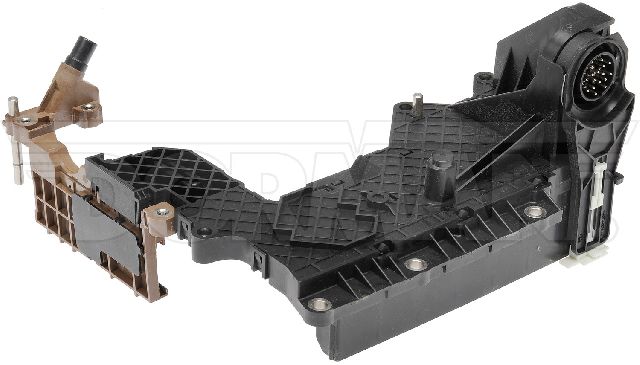
On 2011-2018 F-150s with the 6R80 6-speed transmission, code P0731 is most often caused by a faulty transmission molded leadframe. This part contains critical speed sensors. Ford issued a warranty extension for this part (10 years/150,000 miles) under program 19N01. Replacing the leadframe (Part No. AL3Z-7G276-D) is the most common fix.
- P0731 on a 2011-2018 F-150 with a 6-speed transmission is very frequently caused by a failed molded leadframe.
- Before paying for repairs, check with a Ford dealer using your VIN to see if your truck is covered by warranty extension 19N01.
- This code is often accompanied by speed sensor codes (P0720, P0722, P0715, P0717), which are a strong confirmation of a leadframe problem.
- Always check the simple things first: verify the transmission fluid level and condition.
- Driving with this issue can be unsafe due to the risk of sudden downshifts or getting stuck in gear.
What's Unique About the 2011-2018 Ford F-150

The 2011-2018 F-150 primarily used the 6-speed 6R80 automatic transmission, which is known for a specific, widespread failure of its molded leadframe assembly. This single component is a plastic frame with embedded metal conductors that houses the input (TSS) and output (OSS) speed sensors, the transmission range sensor, and the fluid temperature sensor. A failure of the solder joints or circuitry for the sensors on this leadframe is the root cause of many P0731 codes on this platform, often accompanied by other speed sensor codes. Ford acknowledged this issue through recalls and extended warranty programs.
Diagnostic Flowchart

Tap your situation to follow the diagnostic path that matches what you're seeing on this vehicle.
Generation note: This range covers the 12th generation (2011-2014) and the 13th generation (2015-2018) F-150. The most common cause, a faulty molded leadframe in the 6R80 6-speed transmission, affects both generations. The 10-speed 10R80 transmission was introduced in 2017; while it can still get a P0731 code, the leadframe issue is specific to the 6R80.
Symptoms You May Notice

- Check Engine Light or Wrench Light illuminated.
- Harsh or delayed shifting, especially into first gear.
- Vehicle enters "limp mode," sometimes stuck in a single gear.
- Sudden, unexpected downshifts into first gear, sometimes at speed.
- Poor or sluggish acceleration from a stop.
- Transmission slipping (engine RPMs rise without an increase in speed).
- "Return to Park" message displayed on the dash.
- Hesitation or complete failure to move from a stop.
- O/D (Overdrive) light flashing.
- Replacing the entire transmission when only the molded leadframe is needed. The leadframe is a serviceable part and is a known failure point that doesn't always require a full rebuild.
- Performing a transmission fluid flush to fix an electronic issue. If the cause is the leadframe, a fluid change will not solve the problem.
- Replacing the valve body when only the leadframe is faulty. While they are often replaced together, the leadframe can fail independently.
Most Likely Causes

- Faulty Transmission Molded Leadframe 🔴 High Probability The 6R80 transmission has a well-documented history of leadframe failures. The internal speed sensors (OSS and TSS) on the leadframe circuit board fail, often due to cracked solder joints, providing incorrect or no data to the TCM. This is the subject of Ford's Customer Satisfaction Program 19N01.
How to confirm: Scan for codes P0720, P0722, or P1500 appearing alongside P0731, as noted in TSB 19N01-S3 and Customer Satisfaction Program 19N01. These codes directly point to speed sensor failures. Use a scan tool with live data to monitor the Output Shaft Speed (OSS) PID; if it drops to zero or reads erratically while the vehicle is moving, the leadframe is almost certainly the cause.
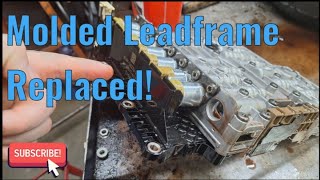
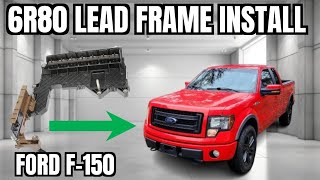
Typical fix: Replace the molded leadframe assembly inside the transmission oil pan. This involves draining the fluid, removing the pan, and detaching the valve body to access the leadframe. 🎬 Watch this DIY tutorial for a complete leadframe replacement walkthrough. It is also highly recommended to replace the valve body-to-case sleeve connector at the same time, as it is prone to leaking.
Est. part cost: $150-$350 - Low or Contaminated Transmission Fluid 🟡 Medium Probability Ford marketed the Mercon LV fluid as "filled for life," which can lead to owners neglecting fluid service. Over time, fluid breaks down and can't provide adequate hydraulic pressure, leading to slipping.
How to confirm: Check the transmission fluid level and condition using the dipstick (if equipped) or service plug. The fluid should be at the correct level and bright red (for Mercon LV). Dark, burnt-smelling fluid indicates a problem.
Typical fix: Top off the fluid if low and check for leaks. If the fluid is dirty or burnt, perform a fluid and filter change. A full flush may be needed for severe contamination.
Est. part cost: $75-$200 for fluid and filter - Faulty Valve Body or Shift Solenoid ⚪ Low Probability
How to confirm: This requires advanced diagnostics with a scan tool to command solenoids on and off and monitor transmission pressures. Significant debris in the pan is a strong indicator of valve body issues.
Typical fix: Replace the specific failing shift solenoid or the entire valve body assembly. The valve body is often replaced along with the leadframe as a preventative measure or because they are sold as a unit.
Est. part cost: $300-$800
Rare But Worth Checking
- Internal Mechanical Failure: Although less common than electronic issues, worn clutches, a broken snap ring, or other internal hard parts can cause slipping that triggers P0731. This is usually indicated by significant metal debris in the transmission pan.
- Powertrain Control Module (PCM) Software Issue: Ford issued recall 19S07 for 2011-2013 models to reprogram the PCM to prevent unintended downshifts caused by OSS sensor faults. TSB 13-1-7 also addresses various shift quality concerns with a PCM update for 2011-2012 models. Ensure your vehicle's software is up to date.
- Incorrect Aftermarket Transmission Filter: Some owners have reported that certain aftermarket transmission filters have a pickup tube that is too long, causing it to sit flush against the bottom of the pan. This starves the transmission of fluid, causing a loss of hydraulic pressure and triggering a P0731 code immediately after a fluid service.
Diagnosis Steps
- Check and verify the transmission fluid level and condition. Low or burnt fluid is the easiest thing to rule out.
- Use an OBD-II scanner to check for other transmission-related codes. Codes like P0720, P0722, P0715, P0717, or P1500 strongly suggest a molded leadframe failure.
- With a capable scan tool, monitor live data for the Output Shaft Speed (OSS) and Turbine/Input Shaft Speed (TSS) sensors. Watch for erratic readings or a signal that drops to zero from the OSS while the vehicle is moving. This is a definitive sign of a failing leadframe. 🎬 Watch how to diagnose the P0720 code and speed sensor issues.
- Check for any open recalls or customer satisfaction programs, such as recall 19S07 or warranty extension 19N01, by contacting a Ford dealer with your VIN.
- Inspect the transmission's main electrical connector for corrosion or damage.
- If no other codes are present and fluid is good, the next step is to drop the transmission pan to inspect for excessive metal debris.
- If debris is minimal, the most likely cause is the molded leadframe. This part is located on top of the valve body.
- If significant clutch material or metal chunks are found in the pan, it indicates a more serious internal mechanical failure requiring a transmission rebuild or replacement.
Parts You'll Likely Need
- Transmission Molded Leadframe Assembly
(OEM #AL3Z-7G276-D)— This is the most common point of failure for P0731 on the 6R80 transmission, as it contains the speed sensors that the computer uses to calculate gear ratios.
Trusted brands: Motorcraft
OEM price range: $200-$350
Aftermarket price range: $150-$250 - Transmission Fluid
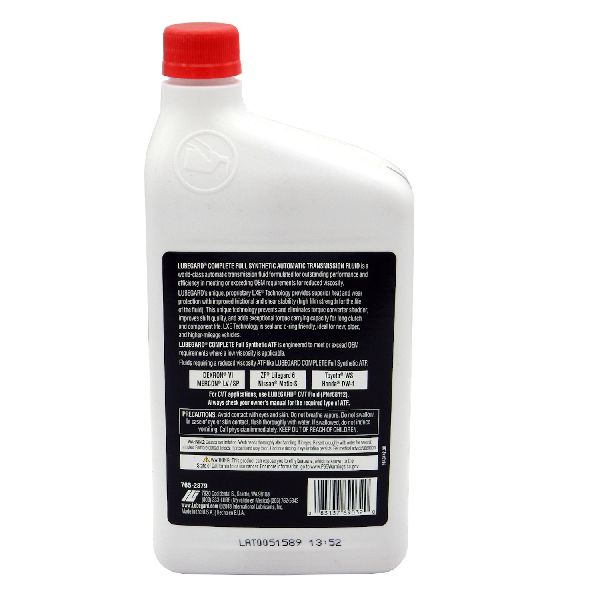
(OEM #XT-10-QLVC)— Fluid must be replaced when dropping the pan to service the leadframe or valve body. Approximately 7-8 quarts are needed for a pan drop.
Trusted brands: Motorcraft MERCON LV
OEM price range: $8-$12 per quart
Aftermarket price range: $6-$10 per quart - Transmission Filter
(OEM #BL3Z-7A098-A)— Should always be replaced whenever the transmission pan is removed. Using an OEM filter is recommended to avoid fitment issues.
Trusted brands: Motorcraft
OEM price range: $25-$40
Aftermarket price range: $15-$30 - Valve Body-to-Case Sleeve Connector
(OEM #AL3Z-7G276-A)— This seal for the main electrical connector is a common leak point and should be replaced whenever the leadframe or valve body is serviced.
Trusted brands: Motorcraft
OEM price range: $20-$40
Aftermarket price range: $15-$30
Related Codes That Often Appear With This One
- P0720 — This code indicates a fault in the Output Speed Sensor (OSS) circuit. The OSS is integrated into the molded leadframe, so a leadframe failure often triggers both codes.
- P0722 — This code means there is no signal from the Output Speed Sensor (OSS). Like P0720, it points directly to a failure of the sensor on the molded leadframe.
- P0715 / P0717 — These codes relate to the Turbine/Input Shaft Speed Sensor (TSS). This sensor is also part of the molded leadframe on the 6R80 transmission, and its failure can cause gear ratio codes.
- P1500 — This code indicates a Vehicle Speed Sensor intermittent failure. It is explicitly listed alongside P0720, P0722, and P0731 in Ford's Customer Satisfaction Program 19N01 for leadframe replacement.
Technical Service Bulletins (TSBs) & Recalls

- TSB 19N01-S3 / Customer Satisfaction Program 19N01: Addresses replacement of the molded leadframe due to OSS failure causing DTCs P0720, P0722, P0731 and/or P1500.
- Recall 19S07 (NHTSA #19V075): PCM software update to prevent sudden downshifts to first gear on 2011-2013 models.
- TSB 13-1-7: Addresses harsh/abrupt shift quality concerns on 2011-2012 F-150s with 3.5L and 3.7L engines by reprogramming the PCM.
- TSB 25-2475: A general diagnostic TSB for 6R80 and 10R80 transmissions that lists P0731 among many other codes related to hydraulic circuit leaks caused by a CDF clutch cylinder sleeve.
Platform-Specific Known Issues
- Customer Satisfaction Program 19N01: Ford extended the warranty on the transmission molded leadframe to 10 years or 150,000 miles for many 2011-2013 F-150s. This program specifically covers replacement if codes P0720, P0722, P0731, and/or P1500 are present.
- Safety Recall 19S07: This recall involved reprogramming the PCM on 2011-2013 F-150s to prevent an intermittent signal from the Output Speed Sensor (OSS) from causing an abrupt downshift to first gear.
- Incorrect Aftermarket Filter Fitment: A known issue where some aftermarket transmission filters have an incorrectly sized fluid pickup, causing them to seal against the transmission pan and starve the pump for fluid. This can cause a P0731 code and a no-move condition immediately after a filter change.
Mechanic-Grade Diagnostic Values
- Shift Solenoid A, B, C, D, and Pressure Control Solenoid A Resistance — expected: 5.5 Ohms. Failure: A reading significantly higher or lower than 5.5 Ohms, or an open circuit.
- Shift Solenoid E Resistance — expected: 18 Ohms. Failure: A reading significantly higher or lower than 18 Ohms, or an open circuit.
- Transmission Fluid Temperature (TFT) Sensor Resistance — expected: Approximately 30k Ohms at 68°F (20°C). Failure: Resistance should decrease as temperature increases. An open or shorted reading indicates a failed sensor.
Scan Tool Commands That Help
- Ford IDS (Integrated Diagnostic System): Powertrain -> Transmission -> Service Functions -> Reset Transmission Adaptive Tables — This should be performed after replacing the valve body, leadframe, or solenoids to clear the old learned shift strategies and allow the PCM to relearn with the new components.
- Ford IDS (Integrated Diagnostic System): Datalogger -> Transmission PIDs (TFT, OSS, TSS, TR, Solenoid Status) — Used during diagnosis to monitor live data from transmission sensors and solenoids to identify intermittent faults or incorrect readings that cause P0731.
- Ford IDS (Integrated Diagnostic System): Module Programming -> Programmable Parameters -> Transmission — Required if the valve body is replaced. The 13-digit calibration number from the new valve body must be programmed into the PCM for correct solenoid operation and shift adapts.
Wiring & Ground Locations
- C175T — The middle of three large inline connectors at the Powertrain Control Module (PCM), typically located on the passenger side firewall in the engine bay.. This connector contains the circuits for the transmission sensors and solenoids, including the Turbine Speed Sensor (TSS), Transmission Range Sensor (TR), and Transmission Fluid Temperature (TFT) sensor. A poor connection or corrosion at these pins can cause P0731 and other transmission codes.
- Body-to-Frame Ground — A braided ground strap typically located on the passenger side, connecting the aluminum cab body to the steel frame.. These grounds are notorious for corrosion, especially in salt-belt regions. A poor body ground can cause a host of electrical issues, including erratic transmission behavior and communication faults between modules, which could indirectly lead to a P0731 code.
- Bulkhead Connector Sleeve — The main electrical pass-through connector on the passenger side of the 6R80 transmission case.. This is the primary connection point for the entire internal transmission harness, including the leadframe. The internal and external seals can leak fluid, causing corrosion on the pins, or the connector itself can become loose, leading to intermittent signal loss from the OSS/TSS and triggering P0731.
Real Owner Repair Stories
- Ford Truck Enthusiasts Forum (2015 F-150 King Ranch, 72,000 miles) — After a DIY transmission filter change, the truck would not move in forward or reverse. A wrench light appeared on the dash and code P0731 was stored.
❌ Tried (didn't work) Re-checking the installation., Searching for a replacement molded leadframe, believing it had failed.
✅ What actually fixed it The aftermarket transmission filter from O'Reilly had a pickup tube that was too long, causing it to bottom out in the pan and starve the transmission of fluid. Replacing the aftermarket filter with a genuine Ford OEM filter resolved the no-move condition and the P0731 code. - Ford F150 Forum (2013 F-150 FX4, 137,000 miles) — Intermittent transmission faults, including limp mode and incorrect gear operation. P0731 was one of the codes present.
❌ Tried (didn't work) Initial diagnosis pointed towards internal failures.
✅ What actually fixed it The owner unplugged and re-plugged the main transmission control cable connectors (one at the transmission case, one at the passenger side firewall) several times. This action presumably cleaned slight oxidation off the connection pins and resolved the problem without replacing any parts.
OEM Part Supersession History
AL3Z-7G276-A, AL3Z-7G276-B→AL3Z-7G276-D— Revisions to improve the reliability of the embedded speed sensors and circuitry to prevent failures that cause codes like P0731, P0720, and P0722.
Heads up: For 2009-2010 models, some vehicles had the TCM integrated with the leadframe, making it a much more expensive part. The 2011-2018 F-150s have a separate PCM, so they use the non-TCM version of the leadframe.
Model Year Variations Within This Range
- 2011-2014 (12th Gen) vs 2015-2018 (13th Gen): The 2015 model year marked a major redesign with an aluminum body, but both generations heavily used the 6R80 6-speed automatic transmission, and both are susceptible to the same leadframe failure that causes P0731. The primary cause and fix are consistent across these years.
- 2017-2018: Starting in 2017, Ford began phasing in the 10-speed 10R80 transmission on some F-150 models. While a 10R80 can theoretically set a P0731 code, the common failure pattern of the molded leadframe is specific to the 6R80. It is crucial to identify which transmission the vehicle has.
Helpful Videos

Used OEM Parts in Stock


New Aftermarket Parts Available


The information in this article is provided for general reference and educational purposes only. Vehicle specifications, procedures, and part compatibility can vary by production date, trim level, and region. Always consult your vehicle's factory service manual and verify part numbers before purchasing or performing repairs. Safety-critical components such as airbags, seat belts, and braking systems should be installed by a qualified professional.
- Ford F-150:
- 🎬 Helpful Videos
- 🛍️ Shop This Part
- What's Unique About the 2011-2018 Ford F-150
- Diagnostic Flowchart
- Symptoms You May Notice
- Most Likely Causes
- Rare But Worth Checking
- Diagnosis Steps
- Parts You'll Likely Need
- Related Codes That Often Appear With This One
- Technical Service Bulletins (TSBs) & Recalls
- Platform-Specific Known Issues
- Mechanic-Grade Diagnostic Values
- Scan Tool Commands That Help
- Wiring & Ground Locations
- Real Owner Repair Stories
- OEM Part Supersession History
- Model Year Variations Within This Range
- 🎟️ Get 5% Off