

P0730 on 2014-2018 Subaru Forester: Incorrect Gear Ratio Causes and Fixes
On a 2014-2018 Subaru Forester, code P0730 is almost always caused by a failing CVT valve body. The correct fix is a full valve body replacement with an OEM part, costing roughly $1,500-$2,500 at a shop. Before paying for repairs, check with a Subaru dealer, as your vehicle may be covered under a 10-year/100,000-mile CVT warranty extension that was issued for all model years in this range.
- The first and most important step is to contact a Subaru dealer with your VIN to see if your vehicle is covered by the 10-year/100,000-mile CVT warranty extension.
- Code P0730 on this Forester is most likely caused by a failed CVT valve body.
- The only reliable repair is to replace the entire valve body with a new OEM part; do not use rebuilt units or replace individual solenoids.
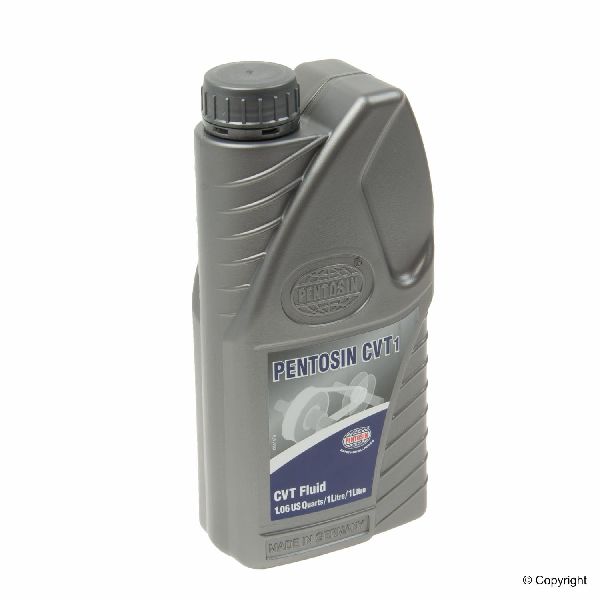
- Always use genuine Subaru High Torque CVT fluid when servicing the transmission.
- This is not a DIY-friendly repair; it requires specialized tools and procedures.
What's Unique About the 2014-2018 Subaru Forester

The 2014-2018 Forester uses a Subaru Lineartronic CVT (primarily the TR580 model), which is known for issues related to its valve body. The solenoids that control hydraulic pressure inside the valve body are a common failure point, often triggering the P0730 code. In response to widespread issues, Subaru issued significant warranty extensions for the CVT on many vehicles. TSB 16-107-17R covered 2014-2015 models, and subsequent TSBs (like 16-115-18 for other models) and policy updates extended this coverage to the entire 2014-2018 generation, increasing the warranty to 10 years or 100,000 miles. Therefore, a dealer visit to check for warranty coverage with your VIN is the most critical first step.
Symptoms You May Notice

- Check Engine Light is on
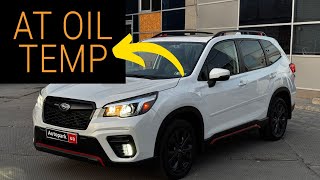
- AT OIL TEMP light flashing
- ABS and Vehicle Dynamic Control (VDC) warning lights may also illuminate
- Transmission may feel like it's slipping or hesitating
- Jerky or harsh shifting/acceleration, sometimes described as 'lurching'
- Vehicle may enter 'limp mode' with limited power
- In some cases, no noticeable change in drivability occurs initially
- Symptoms may appear intermittently, sometimes triggered by cold weather or hard turns where fluid sloshes away from the pickup.
- Replacing individual solenoids instead of the complete valve body assembly. While some DIYers have had success replacing just the TCC solenoid for code P2764, the general consensus for professional repair is that replacing the entire OEM valve body is more reliable.
- Assuming the entire transmission has failed without first diagnosing the valve body, which is a much more common and less expensive repair.
- Performing a fluid change on a transmission with a definitive valve body hardware failure. While a fluid change is a good first step for diagnosis, it will not fix a failed solenoid.
Most Likely Causes

- Failing CVT Valve Body / Solenoids 🔴 High Probability The control solenoids, particularly the torque converter lock-up solenoid, within the valve body are a well-documented weak point on this generation of Subaru's Lineartronic CVT, often failing and causing codes like P0730 and P2764.
How to confirm: A professional technician will use a scan tool to check for solenoid-specific trouble codes (e.g., P2764) that often accompany P0730. They will also monitor live data from the transmission sensors and solenoids to confirm malfunction, such as incorrect resistance readings from a specific solenoid.
Typical fix: Replace the entire CVT valve body assembly with a new, genuine Subaru part. Aftermarket or rebuilt units are known to fail prematurely and are not recommended. A transmission re-learn procedure is required after installation.
Est. part cost: $800-$1200 - Low or Degraded CVT Fluid 🟡 Medium Probability While not unique to this car, low fluid can cause pressure drops, leading to ratio errors. Some 2017 Foresters were subject to a recall (WTJ-70) for incorrect CVT fluid levels from the factory, making this a specific concern for that model year. For others, it can be due to slow leaks or improper service.
How to confirm: Check the CVT fluid level and condition. The fluid should be at the correct level and not appear dark, burnt, or contain excessive debris. Note: This transmission does not have a traditional dipstick and must be checked via a specific fill/overflow plug procedure at a specific temperature.
Typical fix: Perform a CVT fluid drain and fill using only genuine Subaru High Torque CVT fluid. A full flush may be recommended if the fluid is very dirty.
Est. part cost: $100-$250 - Faulty Torque Converter or Lock-Up Solenoid ⚪ Low Probability The torque converter lock-up solenoid is often the specific point of failure within the valve body assembly. While it can be replaced individually, most shops and Subaru recommend replacing the entire valve body for reliability.
How to confirm: A technician can perform a stall test and use a scan tool to monitor torque converter lock-up operation to identify slippage or malfunction. Code P2764 often points directly to this solenoid. 🎬 See how a technician diagnoses the P2764 solenoid code.
Typical fix: If the lock-up solenoid is the issue, it is typically replaced as part of the entire valve body assembly. If the torque converter itself has failed, it will need to be replaced.
Est. part cost: $500-$900 for the converter, plus labor
Rare But Worth Checking
- Internal CVT Failure: In some rare instances, a P0730 code can indicate a more severe internal problem with the CVT's chain or pulleys, requiring a full transmission replacement.
- TCM Software Issue: A Subaru TSB exists for reprogramming the TCM to help clear microscopic debris from the valve body, which could potentially resolve the code without parts replacement.
- Wiring or Connector Issues: Corroded pins or damaged wires between the TCM and the valve body can cause intermittent signal loss, triggering the P0730 code, sometimes during specific maneuvers like hard turns.
Diagnosis Steps

- Check for any Subaru Technical Service Bulletins (TSBs) related to the CVT. Crucially, contact a Subaru dealer with your VIN to check for eligibility under the CVT Warranty Extension program (10 years / 100,000 miles). This applies to all 2014-2018 models.
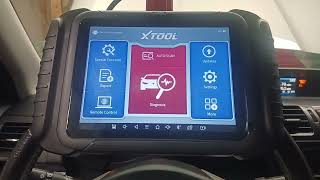
- Use a professional scan tool to read all codes from the TCM and ECM. Note any solenoid-specific codes like P2764, which strongly points to the valve body.
- Check for recalls. Some 2017 Foresters had a recall (WTJ-70) for incorrect factory CVT fluid levels, which could cause this code.
- Check the CVT fluid level and condition. This must be done following the specific Subaru procedure as there is no dipstick.
- If fluid is low or dirty, perform a drain and fill with genuine Subaru CVT fluid and re-evaluate.
- If the code returns, the next step is to diagnose the valve body. A technician will monitor live data from the transmission sensors during a test drive and check for correct resistance on the solenoid circuits.
- If live data confirms a valve body or solenoid malfunction, replace the entire valve body assembly with a new OEM part.
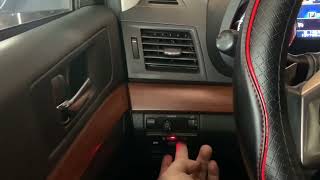
- After replacement, perform the transmission re-learn procedure using a compatible scan tool. 🎬 Watch: A walkthrough of the CVT fluid and relearn procedure.
- If the valve body is not the cause, further diagnosis of the torque converter or internal CVT components is necessary.
Parts You'll Likely Need
- CVT Valve Body Assembly
(OEM #31825AA050 / 31825AA051 / 31825AA052 (For TR580, 2.5L models); 31706AA033 / 31706AA331 (For TR690, 2.0XT models). Always confirm with VIN.)— This is the most common failure point on the Forester's CVT that causes code P0730. The entire assembly is replaced because individual aftermarket solenoids are unreliable.
Trusted brands: Subaru (OEM)
OEM price range: $800-$1200
Aftermarket price range: $350-$700 (Not Recommended) - Subaru High Torque CVT Fluid
(OEM #SOA427V1660)— The correct fluid is required for any service. Using non-specified fluid can cause damage or shifting problems.
Trusted brands: Subaru (OEM)
OEM price range: $20-$30 per quart
Related Codes That Often Appear With This One
- P0700 — P0700 is a generic Transmission Control System Malfunction code. It simply indicates that the TCM has stored a fault, such as P0730, and has requested the Check Engine Light to be turned on.
- P2764 — This code points specifically to a problem with the Torque Converter Clutch Pressure Control Solenoid Circuit ('Open' or 'Low'). This solenoid is part of the valve body, and P2764 is a very strong indicator that the valve body is the root cause of the P0730 code.
Technical Service Bulletins (TSBs) & Recalls

- 16-107-17R: CVT Warranty Extension - Extends warranty coverage for the CVT to 10 years/100,000 miles for 2014-2015 Forester models, among others.
- 16-115-18 / 16-115-20: CVT Warranty Extension / TCM Reprogramming - These TSBs relate to extending the warranty to later model years and providing software updates that can sometimes address issues caused by debris in the valve body.
- WTJ-70: Recall for some 2017 non-turbo models for incorrect CVT fluid level from the factory.
Platform-Specific Known Issues
- Subaru extended the warranty on the CVT for many vehicles, including all 2014-2018 Foresters, to 10 years or 100,000 miles due to known issues. If your vehicle falls within this range, this repair may be covered free of charge by a Subaru dealer.
Mechanic-Grade Diagnostic Values
- Lock-up Duty Solenoid Resistance (TR580/TR690) — expected: 10 - 13.5 Ohms at 68°F (20°C).. Failure: A significantly lower reading (e.g., 2.5 Ohms) or an open circuit (OL) indicates a failed solenoid. The circuit may also test good when cold but go open when heated to ~200°F with a heat gun.
- AWD Solenoid Resistance (TR580) — expected: ~15 Ohms.. Failure: A reading significantly lower than spec (e.g., 2 Ohms) indicates failure.
- Valve Body Cover Bolt Torque (TR580) — expected: 8 N·m (71 in-lbs).. Failure: N/A
- Valve Body to Transmission Case Bolt Torque (TR580) — expected: 9 N·m (80 in-lbs or 6.6 ft-lbs).. Failure: N/A
Hidden / Shadow Codes Worth Checking
- P2764 / P2763: These are not truly 'hidden' but are the critical companion codes to P0730. They point directly to an electrical fault (Low/Open or High circuit) in the Torque Converter Clutch Pressure Control Solenoid, which is inside the valve body. Seeing P2764 alongside P0730 is a near-certain confirmation that the valve body has failed. (see via Any standard OBD-II scanner capable of reading transmission control module codes.)
Scan Tool Commands That Help
- Subaru Select Monitor (SSM) or compatible aftermarket tool (e.g., VXDIAG): Clear AT Learning Data — This function must be used immediately after installing a new valve body or TCM, and before performing the relearn procedure. It erases the old adaptive values stored by the TCM.
- Subaru Select Monitor (SSM) or compatible aftermarket tool: Compulsory learning mode (or AT Learning Control) — This is a mandatory procedure after replacing the CVT valve body or the entire transmission. The TCM must relearn the hydraulic and clutch characteristics of the new components. Failure to perform this step will result in poor shifting, potential damage, and recurring codes.
Wiring & Ground Locations
- Transmission Harness Connector (on TR580) — Located on the top of the transmission case, under a protective cover.. This is the primary external test point for the valve body solenoids. The lock-up solenoid can be tested from this connector without removing the valve body.
- Lock-Up Solenoid Pin — On the main transmission harness connector, it is the 'bottom pin, three from the left' (often a red and white wire). Resistance is measured between this pin and chassis ground.. Allows for direct electrical testing of the most common failure component (the lock-up solenoid) to confirm a valve body fault before beginning the costly repair.
- Transmission Ground Terminal — A ground wire is typically attached from the transmission case to the vehicle's firewall or chassis.. A poor ground connection can cause erratic behavior from sensors and solenoids, potentially leading to incorrect ratio codes. Ensuring this ground is clean and tight is a crucial, often overlooked, diagnostic step.
Real Owner Repair Stories
- Reddit user in r/subaru (2016 Subaru with TR580 CVT, failure at ~175,000 miles) — Not specified, but implied solenoid failure codes.
❌ Tried (didn't work) Owner noted they had neglected CVT fluid changes, with the first one performed at 90k miles.
✅ What actually fixed it Owner replaced the failed solenoid(s) themselves and reported the transmission worked fine afterward. This highlights that high-mileage solenoid failure is common. - BobIsTheOilGuy forum user (Subaru with TR580 CVT) — Dashboard lit up with warning lights.
✅ What actually fixed it Replaced the individual lock-up solenoid with a Dorman aftermarket part. The user reported it was still working fine after 18 months, offering a counterpoint to the common advice of only replacing the entire OEM valve body. - eBay feedback review (Subaru Forester (year not specified)) — Multiple codes and dash lights.
❌ Tried (didn't work) Facing an $800+ quote for a dealer part.
✅ What actually fixed it Purchased and installed a remanufactured valve body from an online seller. The buyer reported the part worked perfectly and all codes were resolved, saving significant money.
"I Checked Everything" — The Actual Cause
- This code is not related to vacuum or EVAP leaks, so a smoke test is not a relevant diagnostic procedure. The equivalent pattern is 'Fluid level and condition are correct, but the code persists.' In this scenario, the cause is almost always an internal electronic failure of a solenoid within the sealed valve body. The fault cannot be visually identified and must be diagnosed by testing the solenoid's electrical resistance at the transmission connector.
OEM Part Supersession History
31825AA050, 31825AA051→31825AA052— The part was updated to improve reliability and address known failure modes. TSB 16-119-19 announced a new control valve assembly with redesigned internal circuits to prevent false DTCs caused by fluid aeration, suggesting this change is incorporated in later part numbers.
Heads up: Always use the latest available part number when replacing. Using an older, original part number may re-introduce the original design flaw.
Model Year Variations Within This Range
- 2014-2018: The 2.5L non-turbo Forester uses the TR580 CVT, while the 2.0L Turbo XT model uses the heavier-duty TR690 CVT. These transmissions have different valve bodies and part numbers. The TR580 valve body is located on top of the transmission, whereas the TR690 valve body is in the bottom pan, making the service procedure different.
- 2017-2018: A mid-cycle refresh for the 2017 model year brought cosmetic updates, thicker glass, and more sound insulation for a quieter cabin. However, the core powertrain components, including the TR580 CVT and its associated valve body issues, remained unchanged through 2018.
Diagnostic Flowchart
Other Known Issues on This Vehicle
Issues unrelated to this code that are worth knowing about as an owner of this generation:
- Excessive Oil Consumption (FB25 Engine) 🔴 High — Common in 2011-2015 models with the FB25 2.5L engine. Owners report adding a quart of oil every 1,000-2,000 miles. A class-action lawsuit led to a warranty extension and short block replacements for affected vehicles. (Ref: Class-action lawsuit settlement (not a formal recall) extended warranty for this issue.)
- Premature Wheel Bearing Failure 🟠 Medium — Reported frequently across the 2014-2018 generation, often failing between 50,000 and 100,000 miles. Owners describe a loud rumbling or humming noise from the rear of the vehicle. (Ref: Subaru has issued warranty extensions for wheel bearings on other models/years, but not consistently for this entire generation.)
- Catalytic Converter Failure (P0420) 🟠 Medium — Often fails prematurely, sometimes as a consequence of the excessive oil consumption issue which contaminates the catalyst.
Used vs. New Parts: Buying Guide for This Vehicle
When a used part is the smart pick: A used OEM valve body from a very low-mileage (ideally under 50,000 miles) wrecked vehicle could be a budget-conscious option, but it is a significant gamble. Given the high failure rate of this part, even a used one carries a substantial risk of premature failure. It only makes sense if the cost savings are very large and the buyer accepts the risk of having to do the labor twice.
Donor-vehicle mileage cap: roughly under 50000 miles for the part to have meaningful remaining life.
What to inspect on the donor part:
- Verify the donor vehicle's VIN to confirm it had a TR580 transmission.
- Obtain mileage documentation if possible.
- Visually inspect the connector pins for any corrosion or damage.
- There is no reliable way to bench-test the solenoids' long-term function, making any used purchase a risk.
OEM-only on this vehicle (don't cheap out):
- CVT Valve Body Assembly
Brands owners have reported issues with on this vehicle:
- Generic/unbranded rebuilt valve bodies from eBay or Amazon are strongly discouraged by mechanics. While some users report short-term success with individual Dorman solenoids, many others report they fail quickly, making the entire valve body replacement the more reliable repair.
Real Owner Stories
Aggregated from forums and TSBs cited above. Mileages and costs reflect what owners reported in those sources.
2018 Subaru Forester — 150000 miles
Symptoms: Check engine light with P0730 code appeared. No gear slip was felt. The light returned approximately 50 miles after being cleared.
What fixed it: The owner was contemplating a transmission fluid change; the final repair was not specified in the report.
Source hint: Reddit r/Cartalk
2015 Subaru Forester — ~115000 miles
Symptoms: P0730 code appeared along with a host of other warning lights on the dashboard.
What fixed it: Replacement of the entire CVT valve body assembly.
Source hint: subaruforester.org forum discussions
Related OBD-II Codes
Frequently Asked Questions
My 2015 Forester has a P0730 code and the AT OIL TEMP light is flashing. Is this covered by a warranty?
I have a 2017 Forester. Could my P0730 code be related to a recall?
My mechanic says the valve body failed. Can I use a cheaper aftermarket or rebuilt part?
What kind of transmission fluid should I use for my Forester's CVT?
How do I check the transmission fluid level on my 2016 Forester?
My scan tool shows code P2764 along with P0730. What does that mean?
Is any special procedure required after replacing the CVT valve body?
Helpful Videos
We Have This Part in Stock

The information in this article is provided for general reference and educational purposes only. Vehicle specifications, procedures, and part compatibility can vary by production date, trim level, and region. Always consult your vehicle's factory service manual and verify part numbers before purchasing or performing repairs. Safety-critical components such as airbags, seat belts, and braking systems should be installed by a qualified professional.
- Subaru Forester:
- 🎬 Helpful Videos
- 🛍️ Shop This Part
- What's Unique About the 2014-2018 Subaru Forester
- Symptoms You May Notice
- Most Likely Causes
- Rare But Worth Checking
- Diagnosis Steps
- Parts You'll Likely Need
- Related Codes That Often Appear With This One
- Technical Service Bulletins (TSBs) & Recalls
- Platform-Specific Known Issues
- Mechanic-Grade Diagnostic Values
- Hidden / Shadow Codes Worth Checking
- Scan Tool Commands That Help
- Wiring & Ground Locations
- Real Owner Repair Stories
- "I Checked Everything" — The Actual Cause
- OEM Part Supersession History
- Model Year Variations Within This Range
- Diagnostic Flowchart
- Other Known Issues on This Vehicle
- Used vs. New Parts: Buying Guide for This Vehicle
- Real Owner Stories
- 2018 Subaru Forester — 150000 miles
- 2015 Subaru Forester — ~115000 miles
- Related OBD-II Codes
- Frequently Asked Questions
- 🎟️ Get 5% Off