

P0722 on 2007-2013 Nissan Altima: Output Speed Sensor Failure Causes and Fixes
On a 2007-2013 Nissan Altima, code P0722 is most often caused by a failed transmission output speed sensor. This will likely put the CVT into 'limp mode.' Replacing the sensor, which is located under the battery tray, typically resolves the issue. Expect to pay $40-$90 for an aftermarket sensor or $120-$200 for an OEM part.
- P0722 on a 2007-2013 Altima almost always points to a bad output speed sensor.
- The car will likely enter 'limp mode,' which feels like a major failure but is a protective measure.
- The sensor is located under the battery and battery tray, making replacement a moderately involved DIY job.
- Always check the wiring and connector for damage before assuming the sensor is the only problem.
- Do not immediately assume the expensive CVT has failed; this code is usually caused by a relatively cheap part.
What's Unique About the 2007-2013 Nissan Altima
The 2007-2013 Altima uses a Jatco-supplied Continuously Variable Transmission (CVT), which is highly dependent on accurate speed sensor data to function correctly. Speed sensor failures are a prevalent issue on these early Nissan CVTs. When the P0722 code appears, the TCM's default protective response is often to force the vehicle into 'limp mode,' limiting power and keeping the transmission in a fixed ratio to prevent further damage. While the sensor itself is the most common culprit, it's important to remember that Nissan has issued numerous service bulletins for other models related to CVT judder and control module reprogramming, highlighting the sensitivity of these transmissions.
Symptoms You May Notice
- Transmission is stuck in 'limp mode' (fail-safe mode) with reduced power.
- Harsh or erratic shifting behavior.
- Vehicle hesitates or has a lack of power on acceleration.
- Check Engine Light is illuminated. 🎬 See this video for a breakdown of P0722 causes.
- Speedometer may work erratically or not at all (though it can still function correctly even with this code).
- Inability to accelerate past a certain RPM (e.g., 2,500 RPM).
- Cruise control is inoperative.
- Replacing the entire CVT assembly. The symptoms of a P0722 code (limp mode, no shifting) can mimic a catastrophic transmission failure, but it is very often just the inexpensive external sensor or its wiring.
- Replacing the Input Speed Sensor instead of the Output Speed Sensor. They are separate components, though they may use the same part number. The output sensor is typically the one associated with P0722.
Most Likely Causes
- Faulty Output Speed Sensor (OSS) 🔴 High Probability Speed sensor failures are a well-documented, common issue on this generation of Nissan CVTs. The sensors fail from age and heat cycles. The input and output sensors are often identical parts, leading to potential confusion during ordering and installation.
How to confirm: After confirming the wiring is intact, test the sensor's resistance with a multimeter or replace it, as it is the most likely point of failure. A professional scan tool can also monitor 🎬 Watch: How to test a transmission speed sensor yourself. the sensor's output in real-time. A complete lack of signal points directly to the sensor or its circuit.
Typical fix: Replace the output speed sensor. It is often recommended to replace both the input and output sensors at the same time since they are failure-prone and the labor to access them is similar.
Est. part cost: $40-$90 - Damaged Wiring or Corroded Connector 🟡 Medium Probability The wiring harness leading to the transmission is exposed to heat and vibration, which can cause wires to fray, break, or short circuit over time. The connector pins can also corrode, leading to a poor or lost connection.
How to confirm: Visually inspect the wiring harness from the sensor to the TCM for any signs of damage, melting, or corrosion at the connector pins. Perform a continuity test on the wires with a multimeter. In some cases, the connector may simply not be plugged in securely.
Typical fix: Repair the damaged section of the wiring harness or clean/replace the connector.
Est. part cost: $5-$50 - Low or Contaminated Transmission Fluid ⚪ Low Probability Very old fluid can break down, and if the transmission has internal wear, metal shavings can accumulate on the magnetic tip of the speed sensor, blocking its ability to get a reading. These CVTs are sensitive to fluid type and level.
How to confirm: Check the level and condition of the CVT fluid. If it is dark, burnt-smelling, or contains visible metallic particles, it indicates a problem. Note: Many of these transmissions do not have a traditional dipstick and require a specific procedure to check the fluid.
Typical fix: Drain and replace the CVT fluid with the correct Nissan-specific fluid (NS-2). If significant metal is found, the transmission may have internal damage requiring a rebuild or replacement.
Est. part cost: $100-$250 for fluid
Rare But Worth Checking
- Faulty Transmission Control Module (TCM): While rare, the TCM itself can fail. A software glitch or a failed input circuit within the module can prevent it from reading a perfectly good sensor signal. This should only be considered after the sensor and wiring have been definitively ruled out as the cause. This is an expensive last resort.
Diagnosis Steps
- Scan for Codes: Use an OBD-II scanner to confirm P0722 is the primary code. Note any other transmission-related codes like P0720, P0715, or P1722.
- Inspect Transmission Fluid: If possible, check the CVT fluid level and condition. Dark, burnt, or metallic fluid suggests a larger problem.
- Locate the Sensors: The input and output speed sensors are located on the transmission casing, underneath the battery and battery tray. The output sensor is typically closer to the driver's side of the engine bay. A video guide shows the process.
- Inspect Wiring: Carefully inspect the sensor's connector and wiring harness for any visible damage, corrosion, or loose connections. Ensure the connector is fully seated.
- Test the Circuit: If tools are available, use a multimeter to check for reference voltage at the connector and test the continuity of the wiring back to the TCM.
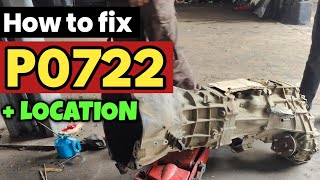
- Test or Replace the Sensor: Given the high failure rate and low part cost, the most practical step is often to replace the sensor. A video guide shows the process involves 🎬 Watch this walkthrough of the sensor replacement process. removing the negative battery terminal, positive terminal, battery hold-down, battery, and battery tray to gain access. The sensor is held by a 10mm bolt. It may be tight and require twisting and gentle prying to remove. It is wise to replace both input and output sensors at the same time.
- Install New Sensor: Lubricate the new sensor's O-ring with some fresh CVT fluid or silicone paste, install it, and tighten the bolt. Reconnect the electrical connector.
- Reassemble and Test: Reinstall the battery tray, battery, and terminals. Clear the trouble codes with a scanner and perform a test drive to ensure the transmission shifts correctly and limp mode does not return.
Parts You'll Likely Need
- Transmission Output Speed Sensor
(OEM #31935-1XF01 (also listed as 31935-1XF0D, 31935-X420B). Note: This often supersedes older numbers like 31935-8E006 or 31935-8E007 which may apply to earlier models but are often sold as compatible.)— This is the most common component to fail and trigger a P0722 code on this vehicle.
Trusted brands: Hitachi, NTK / NGK, Delphi, SKP
OEM price range: $120-$200
Aftermarket price range: $40-$90
Related Codes That Often Appear With This One
- P0720 — P0720 indicates an intermittent or erratic signal from the output speed sensor, while P0722 indicates no signal at all. They point to the same component failing.
- P0715 — This code relates to the Input Speed Sensor. Since the TCM compares input and output speeds, a fault in one can sometimes be flagged alongside a fault in the other, or indicate a broader transmission issue.
- P1722 — This Nissan-specific code for 'Vehicle Speed Signal' can sometimes appear alongside P0722, indicating a broader issue with how the TCM is receiving and interpreting speed data from various sources.
Technical Service Bulletins (TSBs) & Recalls
- NTB17-018 / PC516: While not for P0722, this is a critical TSB for 2009-2010 models regarding Electronic Steering Column Lock (ESCL) failure, a common no-start issue on this platform.
- NTB11-043: Provides diagnostic information for codes P0725 and P1722 on CVT-equipped Nissans, which are related to engine speed and vehicle speed signals and can be relevant when diagnosing P0722.
Platform-Specific Known Issues
- The Continuously Variable Transmission (CVT) in this Altima generation is known for being sensitive. A P0722 code will almost certainly put the car into a protective 'limp mode,' which can be alarming but is a designed safety feature.
- It is extremely common to confuse the input and output speed sensors. They are located near each other and often use the exact same part. P0722 specifically refers to the output sensor. Many DIY guides recommend replacing both at the same time to avoid repeat labor.
Mechanic-Grade Diagnostic Values
- Sensor Power Supply Voltage — expected: Approximately 5V. Failure: No voltage or significantly lower voltage indicates a wiring or TCM power supply issue.
- Sensor Ground Resistance — expected: Less than 5 Ω. Failure: Higher resistance indicates a poor ground connection, which can cause sensor signal issues.
- Continuity between Sensor Harness and TCM Connector — expected: Below 1 Ω. Failure: High resistance or no continuity (OL) indicates an open or broken wire in the harness.
- Resistance between Sensor Harness and Body Ground — expected: 10 kΩ or higher. Failure: Low resistance indicates a short to ground in the wiring harness.
Scan Tool Commands That Help
- Nissan CONSULT-III plus: Erase/Write Calibration Data — This function is required when replacing the entire CVT assembly or the valve body. It ensures the TCM has the correct calibration data for the new hardware.
- Nissan CONSULT-III plus: Save/Write Calibration Data — This function is required when only the TCM is being replaced. The calibration data from the old TCM must be saved and written to the new module to ensure proper CVT operation.
- Nissan CONSULT-III plus: Clutch Point Learning — This relearn procedure is required after replacing the valve body or the TCM. It allows the TCM to learn the engagement points of the CVT clutches.
Wiring & Ground Locations
- TCM Connector A19 — The TCM is located in the left front of the engine compartment.. This is the main connector for the Transmission Control Module. The output speed sensor signal wires terminate here. Specifically, for some models, SP2+ is pin 18 and SP2- is pin 7.
- Ground Point E15 — Located on the lower left side of the engine compartment.. This is a primary ground point for components in the engine bay. A corroded or loose E15 ground could potentially cause issues for the TCM or its sensors, leading to erratic behavior or fault codes.
- Output Speed Sensor Connector L3 — On the transmission case, connecting directly to the output speed sensor.. This is the first point of failure to check for corrosion or damage outside of the sensor itself. Pin 1 (SP2+) and Pin 2 (SP2-) are the signal wires that need to be tested for continuity back to the TCM.
Real Owner Repair Stories
- YouTube channel 'Pine Hollow Auto Diagnostics' (Vehicle with an electronic shift transmission (specific model not an Altima, but demonstrates identical P0722 limp-mode behavior and fix)) — Transmission locked in second gear (limp mode), low power from a stop, would not upshift.
❌ Tried (didn't work) Initial assumption might be internal transmission failure due to the severe symptoms.
✅ What actually fixed it The wiring harness leading to the output speed sensor was found to be faulty. Repairing the damaged wires in the harness with sealed crimp connectors restored the signal and fixed the shifting issue.
OEM Part Supersession History
31935-8E007→31935-1XF01, 31935-1XF0C— Part revision and consolidation for multiple models.
Heads up: The part numbers 31935-8E007, 31935-1XF01, and others are often sold as a compatible set for both input and output sensors across a wide range of Nissan vehicles from 2007-2015. While physically interchangeable, always verify the specific part number required for your VIN if possible, as internal electronics could differ slightly.
Model Year Variations Within This Range
- 2007-2009: Reports of CVT transmission problems and failures were more prevalent in the earlier years of this generation (2007-2009) compared to the 2010-2012 models. The 2013 model year marked the beginning of the next generation (L33) with a redesigned CVT.
Diagnostic Flowchart
Other Known Issues on This Vehicle
Issues unrelated to this code that are worth knowing about as an owner of this generation:
- CVT Failure / Longevity Concerns 🔴 High — Very common, especially on 2007-2010 models. Nissan extended the powertrain warranty to 10 years/120,000 miles for these models due to CVT issues. Problems include overheating, whining, and sudden failure. (Ref: Warranty Extension)
- Melting / Sticky Dashboard 🟠 Medium — Widespread on 2008-2009 models, especially in hot climates. The dash material degrades, becoming sticky and creating a dangerous glare on the windshield. Over 700 NHTSA complaints have been filed for this issue on 2007-2013 Altimas. (Ref: Class Action Lawsuit (Florida-only settlement in 2017))
- Electronic Steering Column Lock (ESCL) Failure 🔴 High — Common on 2009-2010 models. The ESCL module fails, preventing the car from starting. The steering wheel remains locked and the ignition will not respond. (Ref: Nissan Voluntary Service Campaign PC516 / NTB17-018)
- Cracked Catalytic Converter / P0420 Code 🟠 Medium — Common at higher mileage. The front catalytic converter (integrated with the exhaust manifold on the 2.5L) can fail, causing a P0420 code, lack of power, and an exhaust rattle.
- Fuel Starvation / Faulty Fuel Pump Module 🟡 Low — Some owners report issues with hesitation or no-start conditions due to a failing fuel pump or leaking O-rings at the top of the fuel tank assembly, which is located under the rear seat.
Used vs. New Parts: Buying Guide for This Vehicle
When a used part is the smart pick: For this repair, buying a used OEM sensor from a low-mileage donor vehicle is generally not recommended. The part is electronic, prone to failure from heat and age, and the cost of a new, reliable aftermarket sensor is very low. The labor to access the sensor is significant, so using a new part with a warranty is the smartest choice to avoid doing the job twice.
Donor-vehicle mileage cap: roughly under 80000 miles for the part to have meaningful remaining life.
What to inspect on the donor part:
- Verify the donor vehicle's mileage is low.
- Inspect the connector pins for any signs of corrosion or damage.
- Avoid parts from vehicles that show signs of major impact or flood damage.
OEM-only on this vehicle (don't cheap out):
- Transmission Control Module (TCM) - Due to programming and VIN-locking, a new or professionally refurbished and programmed unit is required.
- CVT Assembly - While used units are available, their history is unknown, and CVT failures are common. A remanufactured unit with a warranty is a much safer, albeit more expensive, investment. Internal parts for rebuilding are often not available.
Aftermarket brands forum-validated for this vehicle:
- Hitachi (often the Original Equipment Manufacturer)
- NTK/NGK
- Delphi
Brands owners have reported issues with on this vehicle:
- No-name, unbranded sensors from online marketplaces should be avoided. The price difference is minimal, but the risk of premature failure is high, forcing you to repeat the labor-intensive replacement process.
Related OBD-II Codes
Frequently Asked Questions
My 2009 Altima is stuck in 'limp mode' and won't go over 2,500 RPM. Is this a normal symptom for code P0722?
I'm replacing the output speed sensor for P0722. Should I replace the input sensor at the same time?
Where is the output speed sensor located on my 2007-2013 Altima?
My speedometer is working perfectly, but I have a P0722 code. Is that possible?
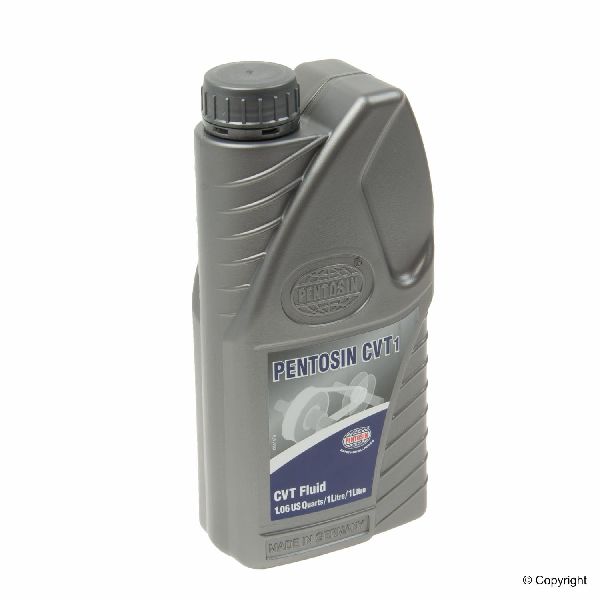
What type of transmission fluid should I use in my Altima's CVT if I suspect it's low or contaminated?
Does the TSB NTB11-043 apply directly to the P0722 code?
Is it easy to mix up the input and output speed sensors on this Altima?
Helpful Videos
We Have This Part in Stock

The information in this article is provided for general reference and educational purposes only. Vehicle specifications, procedures, and part compatibility can vary by production date, trim level, and region. Always consult your vehicle's factory service manual and verify part numbers before purchasing or performing repairs. Safety-critical components such as airbags, seat belts, and braking systems should be installed by a qualified professional.
- Nissan Altima:
- 🎬 Helpful Videos
- 🛍️ Shop This Part
- What's Unique About the 2007-2013 Nissan Altima
- Symptoms You May Notice
- Most Likely Causes
- Rare But Worth Checking
- Diagnosis Steps
- Parts You'll Likely Need
- Related Codes That Often Appear With This One
- Technical Service Bulletins (TSBs) & Recalls
- Platform-Specific Known Issues
- Mechanic-Grade Diagnostic Values
- Scan Tool Commands That Help
- Wiring & Ground Locations
- Real Owner Repair Stories
- OEM Part Supersession History
- Model Year Variations Within This Range
- Diagnostic Flowchart
- Other Known Issues on This Vehicle
- Used vs. New Parts: Buying Guide for This Vehicle
- Related OBD-II Codes
- Frequently Asked Questions
- 🎟️ Get 5% Off