

P0720 on 2010-2013 Mazda 3 2.0L: Output Speed Sensor or Faulty TCM?
On a 2010-2013 Mazda 3, code P0720 is most often caused by a failing Transmission Control Module (TCM), not the Output Speed Sensor itself. The TCM is mounted on the transmission, causing it to fail from heat and vibration. Before buying a sensor, test the sensor circuit voltage; an incorrect reading strongly points to the TCM. A remanufactured TCM costs around $250-$500, while a new one can exceed $850.
- For a 2010-2013 Mazda 3 with code P0720, a faulty Transmission Control Module (TCM) is the most probable cause.
- Do not replace the Output Speed Sensor without first performing electrical checks; incorrect voltage at the sensor often points to a bad TCM.
- Symptoms include the 'AT' light, harsh shifting, and getting stuck in gear.
- Repairing or replacing the TCM with a remanufactured unit is a common and cost-effective fix compared to a new OEM part.
- The correct OEM TCM part number for the 2.0L engine is LF8M-18-9E1H.
What's Unique About the 2010-2013 Mazda 3

For the second-generation Mazda 3 with the 4-speed FN4A-EL automatic transmission, the P0720 code has a notorious reputation for being caused by a faulty Transmission Control Module (TCM) rather than the sensor itself. The TCM is mounted directly on top of the transmission, under the battery tray, where it is exposed to significant heat and vibration. This poor location leads to a high failure rate of its internal electronics, specifically the solder joints and sensitive components. Many owners have spent money replacing the speed sensor only to find the problem persists, with the ultimate solution being the repair or replacement of the TCM. Some repair services even recommend relocating the repaired module to a cooler spot on the firewall to prevent future failures.
Symptoms You May Notice

- Check Engine Light is on
- AT (Automatic Transmission) warning light is on
- Harsh, erratic, or delayed gear shifts
- Transmission gets stuck in a single gear (often 3rd gear 'limp mode')
- Hard 'kick' when shifting from Park to Drive or Reverse
- Vehicle enters 'limp mode,' limiting speed and acceleration.
- Speedometer may work erratically or not at all
- Traction control/DSC light may illuminate simultaneously
- Replacing the Output Speed Sensor when the true fault is in the Transmission Control Module. Many owners report the P0720 code returning shortly after a sensor replacement, only to be permanently fixed by addressing the TCM.
Most Likely Causes
- Faulty Transmission Control Module (TCM) 🔴 High Probability The TCM is mounted on the transmission case, where it is subjected to constant thermal stress and vibration, leading to internal component and solder joint failure over time. This is a widely documented issue in owner forums for this specific vehicle generation.
How to confirm: After confirming the sensor and wiring are good, the TCM is the most likely culprit. A key diagnostic step is to back-probe the sensor connector's signal wire with the key on; if the voltage is significantly lower than the expected 5V (e.g., readings of 3.6V are commonly reported) or fluctuates when wiggling the TCM connector, it strongly points to a bad TCM.
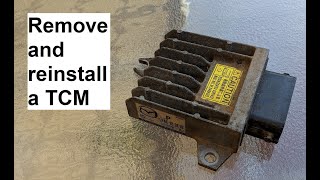
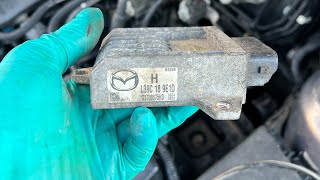
Typical fix: Replace the TCM with a new or remanufactured unit. Many companies offer repair/rebuild services or sell pre-programmed modules. Some guides recommend relocating the new/repaired TCM to a cooler location on the firewall to prevent a recurrence. 🎬 See how to repair and relocate your TCM to the firewall
Est. part cost: $250-$950 - Faulty Output Speed Sensor (OSS) 🟡 Medium Probability
How to confirm: Visually inspect the sensor for damage. Test the sensor's resistance with a multimeter (a typical value is around 500 Ω ± 10%). Monitor its signal with an advanced scan tool or oscilloscope while rotating the wheels; you should see a clean, regular pulse. If the signal is absent or erratic and the wiring/TCM voltage is good, the sensor has likely failed.
Typical fix: Replace the Output Speed Sensor. It is located on the exterior of the transmission case, held by a single 10mm bolt. Be prepared for some transmission fluid to leak out when the sensor is removed.
Est. part cost: $40-$150 - Damaged Wiring or Connectors ⚪ Low Probability
How to confirm: Visually inspect the wiring harness running from the OSS to the TCM for any signs of fraying, corrosion, or damage. Check the connectors at both the sensor and the TCM for loose pins or corrosion. Perform a continuity test on each wire between the sensor connector and the TCM connector to check for breaks or shorts.
Typical fix: Repair the damaged section of the wire or replace the faulty connector.
Est. part cost: $10-$50
Rare But Worth Checking
- Low or Degraded Transmission Fluid: While not a common cause for a circuit code, extremely low or contaminated fluid can cause erratic shifting that might, in some edge cases, be misinterpreted by the system. It's always a good first check for any transmission issue.
Diagnosis Steps
- Scan for Codes: Use an OBD-II scanner to confirm P0720 and check for any other related codes, especially communication codes like U0101 or other sensor codes like P0715.
- Check Transmission Fluid: Ensure the transmission fluid level is correct and the fluid is not burnt or heavily contaminated. This is a basic check for any transmission problem.
- Locate Components: The TCM is located under the battery and battery tray, mounted on top of the transmission. The Output Speed Sensor (OSS) is on the exterior of the transmission housing, usually accessible from underneath the vehicle.
- Test the Sensor Circuit at the Sensor: With the key on and engine off, unplug the OSS connector and test the terminals on the harness side. Check for reference voltage (should be ~5V) and ground. A reading significantly lower than 5V on the signal wire (e.g., 3.6V) points towards a TCM issue.
- Perform a Wiggle Test: If you can access the TCM connector, wiggle it while monitoring the voltage at the sensor connector. If the voltage fluctuates, it indicates a poor connection at or inside the TCM.
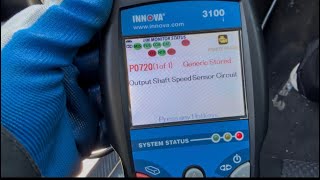
- Test the Sensor: If the wiring and voltages seem correct, test the sensor itself. 🎬 Watch: How to test a transmission speed sensor with a multimeter This can be done by checking its internal resistance with a multimeter (compare to spec, ~500 Ω) or by monitoring its output signal on a scan tool/oscilloscope while the drive wheels are spinning.
- Conclude on the TCM: If the sensor and wiring are confirmed to be good, and especially if the reference voltage was low in Step 4, the fault is highly likely with the Transmission Control Module (TCM). This is the most common failure point for this code on this vehicle.
Parts You'll Likely Need
- Transmission Control Module (TCM)
(OEM #LF8M-18-9E1H (and superseded versions LF8M-18-9E1A through G))— This is the most common point of failure for the P0720 code on this specific vehicle due to its mounting location causing heat-related stress.
Trusted brands: Mazda (OEM), UpFix (Repair Service), Module Repair Pro (Repair Service), Circuit Board Medics (Exchange Service), All Computer Resources (Repair Service)
OEM price range: $650-$950
Aftermarket price range: $250-$500 (for remanufactured/repair service) - Automatic Transmission Output Speed Sensor
(OEM #FN12-21-551A)— This is the sensor directly implicated by the code definition, and it is the second most likely part to fail after the TCM.
Trusted brands: Mazda (OEM), Standard Motor Products, Beck Arnley, NTK
OEM price range: $100-$150
Aftermarket price range: $40-$80
Related Codes That Often Appear With This One
- U0101 — This code means 'Lost Communication with TCM.' It often appears with P0720 because a failing TCM can cause both internal circuit faults (P0720) and broader communication failures on the vehicle's data bus as its internal electronics degrade.
- U0100 — This code means 'Lost Communication with ECM/PCM.' Similar to U0101, it can be triggered by a malfunctioning TCM disrupting network communications.
- P0715 — This code relates to the Input/Turbine Speed Sensor circuit. Since the TCM is responsible for processing signals from multiple speed sensors, a failing TCM can generate faults for both input and output sensor circuits simultaneously.
Technical Service Bulletins (TSBs) & Recalls
- While no TSB directly for P0720 on this model was found, Mazda has issued TSBs for similar models/years with TCM issues. For example, TSB 05-004/15 addresses a P0722 (Output Speed Sensor No Signal) on 2012-2013 Maz
Platform-Specific Known Issues
- The Transmission Control Module (TCM) for the 2010-2013 Mazda 3 (2.0L w/ 4-speed auto) is known to have a high failure rate, frequently causing the P0720 code. This often leads to the misdiagnosis and unnecessary replacement of the output speed sensor.
- The failure is directly linked to the TCM's location on top of the hot transmission, leading to thermal stress. Some repair shops recommend relocating the repaired/replaced TCM to the firewall to mitigate this design flaw.
Mechanic-Grade Diagnostic Values
- Output Speed Sensor (OSS) internal resistance — expected: 400-600 Ω, typically 500 Ω ± 10%. Failure: A reading of OL (open circuit), 0 Ω (short circuit), or significantly outside the specified range indicates a faulty sensor.
- Voltage at OSS harness connector (signal wire), Key On Engine Off — expected: Approximately 5.0V ± 0.5V. Failure: A significantly lower reading, such as 3.6V, is a classic indicator of an internal voltage drop within the TCM, even if the sensor itself is good.
- Ground resistance at TCM and sensor connectors — expected: Less than 0.1 Ω. Failure: Higher resistance indicates a poor ground connection, which can cause erratic sensor readings.
Scan Tool Commands That Help
- Professional Scan Tool (e.g., Mazda IDS, Autel, Snap-on): Live Data Monitoring for 'Output Speed Sensor' PID (OSS_V) — This is the primary method to observe the sensor's reported speed in real-time. While driving or with drive wheels spinning, watch the PID. If the reading is zero, erratic, or frozen despite the vehicle moving, it confirms a signal problem. This helps differentiate between an intermittent fault and a hard failure.
Wiring & Ground Locations
- TCM Connector Pins — On the large connector plugging into the TCM, located under the battery tray.. The two wires from the OSS terminate here. Based on common FN4A-EL wiring diagrams, the OSS signal wire often goes to pin 1J and the sensor ground to pin 1L. Probing these specific pins is the most direct way to test the circuit integrity right at the module.
- Transmission Case Ground — A bolt with one or more ground wires attached directly to the transmission housing, near the bell housing or on top of the case.. The TCM and its sensors rely on a solid chassis ground through the transmission case. Corrosion or a loose connection at this point can introduce electrical noise and cause a variety of transmission codes, including P0720.
Real Owner Repair Stories
- Reddit user fosterreichert (2008 Mazda 3 S 2.3L (Note: same TCM issue as 2010 2.0L)) — Car would jolt and downshift from 5th to 4th gear while cruising. AT light and P0720 code appeared.
❌ Tried (didn't work) Replacing the input speed sensor., Replacing the output speed sensor.
✅ What actually fixed it Replacing the Transmission Control Module (TCM) with a used unit from a local scrap yard solved all problems. - Mazda3Club.com user rcannon92 (2010 Mazda 3 2.0L) — Persistent P0720 code.
❌ Tried (didn't work) Initial diagnostics pointed to the sensor, but voltage tests were abnormal.
✅ What actually fixed it The user diagnosed a low voltage (3V) on the OSS signal wire. Sending the original TCM to 'Module Repair Pro' for a rebuild resolved the issue completely. - Mazdas247 user (2009 Mazda 5 (5-Speed Auto, shares components with Mazda 3)) — Hesitation, AT light, and P0720 code.
❌ Tried (didn't work) Replacing the sensor under the intake airbox (FN0121550)., Replacing the sensor under the battery (one of two FN1221551A).
✅ What actually fixed it After replacing all three speed sensors did not work, the final fix was replacing the Transmission Control Module (TCM) itself.
Documented NHTSA Reports
While the Mazda 3 is the primary focus, similar transmission control issues have been documented across the Mazda lineup. For instance, NHTSA ODI #10536611 describes a vehicle that would not go faster than 25 miles an hour after triggering error code P0720 for an output speed sensor circuit malfunction. Another report, NHTSA ODI #10536609, notes that a vehicle would not engage all gears and would not go in reverse while displaying the P0720 code. Furthermore, NHTSA ODI #10537207 details a situation where a vehicle would not go into reverse and experienced malfunctions at 30 miles an hour, with P0720 appearing alongside other transmission-related codes.
OEM Part Supersession History
LF8M-18-9E1A, B, C, D, E, F, G→LF8M-18-9E1H— Progressive hardware and firmware revisions by Mazda to improve reliability.
Heads up: All versions from A through H are generally interchangeable for the 2010-2011 2.0L non-Skyactiv models, but it is critical that the replacement module (whether new, used, or remanufactured) is programmed or verified for the vehicle's specific VIN and configuration.
Model Year Variations Within This Range
- 2012-2013: In 2012, Mazda introduced the 2.0L Skyactiv-G engine paired with a 6-speed automatic transmission. These models use a completely different powertrain and control system. The notorious P0720-TCM failure is specific to the non-Skyactiv 2.0L MZR engine with the 4-speed (FN4A-EL) automatic, which was standard in 2010-2011 and found in some base models thereafter.
Diagnostic Flowchart
Used vs. New Parts: Buying Guide for This Vehicle
When a used part is the smart pick: A used Output Speed Sensor (OSS) can be a viable, cheap option if pulled from a low-mileage vehicle, but given the low cost of a new aftermarket sensor, it's rarely worth the effort. A used TCM from a junkyard is a significant gamble; it carries the same inherent design flaw and may have a short remaining lifespan or require costly dealer programming.
Donor-vehicle mileage cap: roughly under 80000 miles for the part to have meaningful remaining life.
What to inspect on the donor part:
- For a TCM, check for a lack of heavy external corrosion.
- Ensure the connector pins are straight and clean.
- If possible, get the VIN of the donor car to verify compatibility.
- Ask about the donor vehicle's reason for being salvaged (collision damage is better than powertrain failure).
Aftermarket brands forum-validated for this vehicle:
- For TCMs, 'remanufactured' or 'rebuilt' is a distinct and better category than 'used'. Reputable rebuilders like UpFix, Circuit Board Medics, and Module Repair Pro are frequently cited in forums as providing reliable repairs that address the original design flaws.
Brands owners have reported issues with on this vehicle:
- Unbranded, no-name TCMs from online marketplaces are a high risk. Some owners report receiving units that are worse than their original failing part.
Real Owner Stories
Aggregated from forums and TSBs cited above. Mileages and costs reflect what owners reported in those sources.
2010 Mazda 3 2.0L
Symptoms: Check Engine Light and AT light on with code P0720. Diagnostic check revealed a low 3.6V signal voltage at the sensor.
What fixed it: The owner sent the original TCM to a specialist ('Module Repair Pro') for repair, which resolved the issue.
Source hint: Mazda3Club.com - Error Code P0720
2010 Mazda 3
Symptoms: Vehicle set a P0720 code due to a dead Transmission Control Module (TCM).
What fixed it: The P0720 code was resolved after sending the TCM to 'UpFix' for their reconditioning service.
Source hint: Reddit r/MechanicAdvice - 2010 Mazda 3 dead transmission control module (TCM)
2010-2013 Mazda 3
Symptoms: The car had the Engine light and AT light on, was in limp mode, and had code P0720.
What fixed it: A mechanic first replaced the speed sensor, but the problem returned within 24 hours. The issue was ultimately identified as the TCM, which was the next component to be replaced.
Source hint: Mazda Forum - DTC code P0720/ Engine light and AT light
2008 Mazda 3
Symptoms: Transmission problems manifesting as code P0720.
What fixed it: After unsuccessfully replacing both the input and output speed sensors, the problem was finally solved by replacing the TCM with a used unit from a scrapyard.
Source hint: Reddit r/mazda3 - Transmission Problems: P0720
Related OBD-II Codes
Frequently Asked Questions
My mechanic wants to replace the Output Speed Sensor for P0720. Is this the right fix for my 2010 Mazda 3?
Why does the TCM fail so often on this generation of Mazda 3?
I've been told my TCM is bad. Is there a way to prevent the replacement part from failing again?
How can I test whether the P0720 code is caused by the sensor or the TCM?
Where are the TCM and Output Speed Sensor located on my 2010-2013 Mazda 3?
Is there an official Mazda TSB for code P0720 on this car?
Helpful Videos

Used OEM Parts in Stock

New Aftermarket Parts Available

The information in this article is provided for general reference and educational purposes only. Vehicle specifications, procedures, and part compatibility can vary by production date, trim level, and region. Always consult your vehicle's factory service manual and verify part numbers before purchasing or performing repairs. Safety-critical components such as airbags, seat belts, and braking systems should be installed by a qualified professional.
- Mazda 3:
- 🎬 Helpful Videos
- 🛍️ Shop This Part
- What's Unique About the 2010-2013 Mazda 3
- Symptoms You May Notice
- Most Likely Causes
- Rare But Worth Checking
- Diagnosis Steps
- Parts You'll Likely Need
- Related Codes That Often Appear With This One
- Technical Service Bulletins (TSBs) & Recalls
- Platform-Specific Known Issues
- Mechanic-Grade Diagnostic Values
- Scan Tool Commands That Help
- Wiring & Ground Locations
- Real Owner Repair Stories
- Documented NHTSA Reports
- OEM Part Supersession History
- Model Year Variations Within This Range
- Diagnostic Flowchart
- Used vs. New Parts: Buying Guide for This Vehicle
- Real Owner Stories
- 2010 Mazda 3 2.0L
- 2010 Mazda 3
- 2010-2013 Mazda 3
- 2008 Mazda 3
- Related OBD-II Codes
- Frequently Asked Questions
- 🎟️ Get 5% Off