

P0720 on 2004-2012 Chevrolet Colorado: Output Speed Sensor Causes and Fixes
On a 2004-2012 Colorado, code P0720 is almost always caused by a failed Output Speed Sensor (OSS). This sensor is located externally on the transmission, making it an easy DIY fix. Expect to pay $20-$50 for a new sensor. Do not confuse it with the Input Speed Sensor (ISS) or ABS wheel speed sensors.
- P0720 on a 2004-2012 Colorado points to a problem with the Output Speed Sensor circuit.
- The most common symptoms are an erratic or dead speedometer and harsh or incorrect gear shifting.
- The most likely cause is a failed sensor, which is inexpensive and easy to replace on this specific truck because it is mounted externally on the transmission or transfer case.
- Before replacing parts, always check the sensor's wiring and connector for visible damage, as this is also a common cause.
- Due to the low cost of the sensor (ACDelco 213-4533) and ease of replacement, many DIYers choose to replace the sensor as a primary diagnostic step.
What's Unique About the 2004-2012 Chevrolet Colorado
The first-generation Chevrolet Colorado (2004-2012) and its platform mates use the 4L60-E automatic transmission. A key feature of this platform regarding code P0720 is that the Output Speed Sensor (OSS/VSS) is mounted externally on the transmission's tail housing (2WD models) or on the transfer case (4WD models). This makes it significantly easier to access and replace compared to later Colorado models where the sensor is located inside the transmission oil pan. This accessibility turns a potentially complex job into a straightforward, sub-1-hour task 🎬 Watch: A quick guide to P0720 causes and fixes for a DIY mechanic.
Symptoms You May Notice
- Check Engine Light is on
- Harsh, delayed, or erratic automatic shifting
- Speedometer is inaccurate, erratic, or not working at all
- Cruise control will not engage
- Vehicle may hesitate or stall, especially when coming to a stop
- Transmission may enter 'limp mode', stuck in a single gear (often 2nd or 3rd)
- Reduced fuel economy due to inefficient shifting
- Replacing the entire transmission when only the inexpensive external sensor is bad.
- Replacing the Vehicle Speed Sensors (VSS) located at the wheel hubs, which are for the ABS system, instead of the transmission Output Speed Sensor (OSS).
- Replacing the Input Speed Sensor (ISS) instead of the Output Speed Sensor. The ISS is a different part and will set different codes (like P0715).
Most Likely Causes
- Faulty Output Speed Sensor (OSS/VSS) 🔴 High Probability The sensor is an electronic component exposed to heat, vibration, and road debris at the back of the transmission, leading to eventual failure over time. It is the most common failure point for this code on this platform.
How to confirm: After checking wiring, test the sensor's output with a multimeter for proper resistance and voltage signal while spinning the wheels. An easier and common method is to simply replace it, as the part is inexpensive and the most likely culprit.
Typical fix: Replace the Output Speed Sensor. On 2WD models, it's on the driver's side of the transmission tail housing. On 4WD models, it's on the rear of the transfer case. It is held in by a single bolt (typically 10mm or 13mm).
Est. part cost: $20-$60 - Damaged Wiring or Connector 🟡 Medium Probability The wiring harness runs underneath the truck and is exposed to road debris, moisture, and heat from the exhaust system. Wires can break, fray, or corrode over time. The plastic connector itself can become brittle and fail.
How to confirm: Visually inspect the wiring harness and connector leading to the OSS for any signs of physical damage, corrosion in the pins, or loose connections. Wiggle the connector while the engine is running to see if it affects the speedometer or shifting. Use a multimeter to check for continuity and for shorts to ground between the PCM and the sensor connector. 🎬 See how to identify and fix common Chevy ground issues
Typical fix: Repair the damaged section of the wire or replace the connector pigtail. Sometimes the terminals inside the connector lose their tension and need to be replaced.
Est. part cost: $15-$40 for a new pigtail connector - Low or Dirty Transmission Fluid ⚪ Low Probability While not a direct cause of a circuit code, extremely low or contaminated fluid can cause erratic shifting, overheating, and other transmission issues that may be misdiagnosed or contribute to stress on electronic components.
How to confirm: Check the transmission fluid dipstick with the engine running and the transmission warm and in Park. The fluid should be at the correct level and bright reddish-pink, not brown, black, or smelling burnt.
Typical fix: Top off the fluid or perform a transmission fluid and filter change. Use fluid that meets DEXRON-VI specifications.
Est. part cost: $50-$150
Rare But Worth Checking
- Faulty Powertrain Control Module (PCM) or Transmission Control Module (TCM): This is very rare and should only be considered after all other possibilities (sensor, wiring) have been definitively ruled out. A faulty module will typically cause multiple other codes and more widespread issues. A PCM failure is a last-resort diagnosis.
- Metal Debris on Sensor: If there is a significant internal transmission failure, metal shavings can accumulate on the magnetic tip of the speed sensor, disrupting its signal. If you remove the sensor and it's covered in metal particles, it's a strong indicator of a serious internal transmission problem requiring a rebuild or replacement.
Diagnosis Steps
- Retrieve all stored trouble codes with an OBD-II scanner. Confirm P0720 is present.
- Check the transmission fluid level and condition with the engine running and warm. Top off or change if necessary.
- Locate the Output Speed Sensor. On 2WD models, it's on the driver's side of the transmission tail housing. On 4WD models, it's on the rear output of the transfer case.
- Visually inspect the sensor's connector and wiring harness for any obvious signs of damage, corrosion, melting from the exhaust, or loose connections.
- Given the high failure rate and low cost, the most common next step is to replace the Output Speed Sensor. It is held by a single bolt. Disconnect the connector, unbolt the sensor, and swap in the new one. Ensure the O-ring is properly seated.
- If the problem persists after replacing the sensor, the wiring is the next suspect. Disconnect the harness from the sensor and the PCM. Use a multimeter to check for continuity on both wires and ensure neither wire is shorted to ground or to each other.
- If the sensor and wiring are confirmed to be good, the issue may be with the Powertrain Control Module (PCM), which would require advanced diagnostics by a professional.
- When removing the old sensor, inspect its magnetic tip. A light coating of fine metallic dust is normal, but large metal shavings indicate a severe internal transmission problem.
Parts You'll Likely Need
- Output Speed Sensor (OSS/VSS)
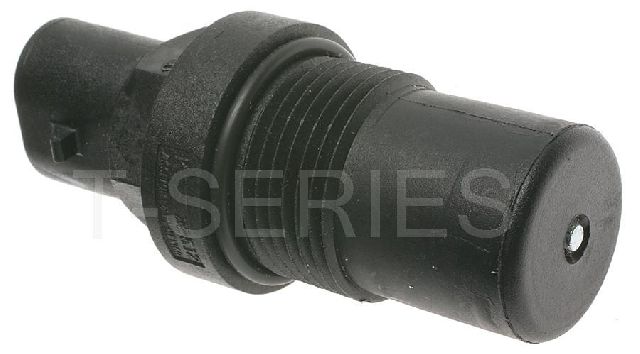
(OEM #ACDelco 213-4533 (GM 19302667))— This sensor is the most common point of failure for a P0720 code. On this vehicle, it is an inexpensive and easy part to replace.
Trusted brands: ACDelco (GM Genuine), Standard Motor Products (SMP), NGK/NTK
OEM price range: $40-$60
Aftermarket price range: $20-$40
Related Codes That Often Appear With This One
- P0500 — P0500 is a generic Vehicle Speed Sensor Malfunction code. Since the OSS data is used to calculate vehicle speed, a fault in the OSS circuit can trigger both codes, especially on certain scanner models.
- P0715 — This code relates to the Input Speed Sensor (ISS). If both input and output sensor codes appear, it could point to a more significant internal transmission problem, a shared wiring issue, or a PCM fault.
Technical Service Bulletins (TSBs) & Recalls
- While no TSBs directly address P0720 on this model, several exist for transmission shifting issues. For example, TSB 16-NA-019 and 16-NA-361 address harsh shifting, but are more relevant to later generations. Always check for the most current TSBs for your specific VIN.
Mechanic-Grade Diagnostic Values
- Vehicle Speed Sensor (VSS) Resistance — expected: 350 - 650 Ohms. Failure: A reading of 0 Ohms (short circuit) or infinite/OL (open circuit) indicates a failed sensor.
- VSS Signal Wire Voltage (at PCM) — expected: Alternating AC voltage that increases with wheel speed. On some digital sensors, it may be a square wave switching between low (e.g., 0.6V) and high (e.g., 1.8V) states.. Failure: No voltage or a static voltage that does not change as the wheels are spun indicates a problem with the sensor or wiring.
Wiring & Ground Locations
- VSS Connector (at Transmission) — On the driver's side of the transmission tail housing (2WD) or on the rear of the transfer case (4WD).. This is the primary connection point for the sensor. The VSS High Signal wire is typically Dark Green/White, and the VSS Low Signal wire is typically Purple/White. These wires run to the PCM.
- PCM Connector C2 (Blue) — The Powertrain Control Module (PCM) is located on the right rear corner of the engine compartment.. The VSS signals terminate here. The VSS High Signal (Dark Green/White) goes to Pin 21, and the VSS Low Signal (Purple/White) goes to Pin 20. Checking for signal at these pins can rule out the entire wiring harness at once.
- G105 and G106 (Ground Splice Packs) — G105 is on the driver's side of the engine compartment, near the EBCM. G106 is on the passenger side, behind the airbox.. These are notorious weak points on 1st Gen Colorados. While not directly for the VSS, a poor ground at G105 can affect the Transmission Control Module (TCM) and other critical systems, causing a variety of electrical faults that could mimic or contribute to a P0720 code.
Real Owner Repair Stories
- Synthesized from multiple forum reports on 355Nation and ColoradoFans (2005-2008 Chevrolet Colorado, various engines) — Speedometer dead or erratic, harsh shifting, P0720 code present. Sometimes accompanied by other seemingly unrelated electrical issues like blower fan problems or door lock issues.
❌ Tried (didn't work) Replacing the Output Speed Sensor (VSS) one or more times., Checking the VSS wiring for obvious breaks near the sensor.
✅ What actually fixed it The problem was a corroded main ground splice pack under the hood (typically G105 or G106). These splices are poorly sealed and prone to corrosion, causing poor grounding for multiple components, including the TCM. The fix was to cut open the splice pack, solder all the ground wires together directly, and re-establish a solid ground connection to the chassis.
Diagnostic Flowchart
Other Known Issues on This Vehicle
Issues unrelated to this code that are worth knowing about as an owner of this generation:
- Cylinder Head Valve Seat Failure (3.5L & 3.7L I5) 🔴 High — Very common on 2004-2007 3.5L L52 engines, less frequent but still present on 2007-2012 3.7L LLR engines. Often presents as a P0300 random misfire code. (Ref: TSB PIP4013D, Special Coverage #07123)
- PassLock Anti-Theft System Failure 🟠 Medium — Common across all years. The truck will crank but fail to start, with the security light flashing. Often requires a 10-minute 'relearn' procedure or component replacement to resolve.
- Blower Motor Resistor and Connector Failure 🟡 Low — Extremely common. The fan will only work on the highest setting, or work intermittently on lower settings. Caused by the resistor burning out, often melting the connector harness as well. (Ref: TSB PIT3688A)
- EVAP Canister Vent Valve Solenoid Failure 🟡 Low — Very common failure due to the solenoid's exposed location under the truck. Causes a Check Engine Light (P0446, P0449) and difficulty filling the gas tank.
- Faulty Fuel Level Sensor 🟠 Medium — Common issue where the fuel gauge reads inaccurately, typically showing more fuel (e.g., 1/4 tank) than is actually present, leading to running out of gas unexpectedly.
Used vs. New Parts: Buying Guide for This Vehicle
When a used part is the smart pick: For this specific repair, buying a used Output Speed Sensor is generally not recommended. The part is inexpensive new (often $20-$40 for a quality aftermarket brand) and is a common failure item. The labor to replace it is low, so the risk of a used part failing soon after installation outweighs the minimal cost savings.
Donor-vehicle mileage cap: roughly under 10000 miles for the part to have meaningful remaining life.
What to inspect on the donor part:
- If buying used is unavoidable, inspect the connector for any cracks or broken locking tabs.
- Ensure the O-ring is present and not flattened or brittle.
- Check the magnetic tip for any heavy metal shavings, which could indicate the donor vehicle had a severe transmission failure.
OEM-only on this vehicle (don't cheap out):
- Powertrain Control Module (PCM) - Due to VIN programming requirements, a used PCM is difficult to implement without specialized tools.
Aftermarket brands forum-validated for this vehicle:
- ACDelco (GM Genuine/Original)
- Standard Motor Products (SMP)
- NTK/NGK
Brands owners have reported issues with on this vehicle:
- Ultra-cheap, no-name sensors from online marketplaces. Forum users frequently report these parts are dead-on-arrival or fail within a few months.
Real Owner Stories
Aggregated from forums and TSBs cited above. Mileages and costs reflect what owners reported in those sources.
2005 Chevrolet Colorado
Symptoms: The speedometer quit working and the vehicle was throwing a P0720 code.
What fixed it: Replacement of the VSS/OSS sensor, which was described as an easy job on these first-generation trucks.
Source hint: ColoradoFans.com - "Speedometer quit and throwing P0720"
2004-2012 Chevrolet Colorado 4x4
Symptoms: Dead speedometer and P0720 trouble code.
What fixed it: Replacing the Output Speed Sensor located on the transfer case.
Source hint: 355Nation.net - "P0720 Output Speed Sensor"
Related OBD-II Codes
Frequently Asked Questions
Where is the Output Speed Sensor located on my 4WD 2004-2012 Chevrolet Colorado?
My speedometer stopped working and the truck is stuck in 2nd gear; is this related to P0720?
Does TSB 16-NA-019 or 16-NA-361 apply to my first-generation Colorado's shifting issues?
Can I use a used Output Speed Sensor from a junked GMC Canyon or Hummer H3?
Could my P0720 code be caused by the PassLock anti-theft system or a blower motor failure?
What transmission fluid should I use if I'm topping off during a P0720 repair?
Helpful Videos
We Have This Part in Stock


The information in this article is provided for general reference and educational purposes only. Vehicle specifications, procedures, and part compatibility can vary by production date, trim level, and region. Always consult your vehicle's factory service manual and verify part numbers before purchasing or performing repairs. Safety-critical components such as airbags, seat belts, and braking systems should be installed by a qualified professional.
- Chevrolet Colorado:
- 🎬 Helpful Videos
- 🛍️ Shop This Part
- What's Unique About the 2004-2012 Chevrolet Colorado
- Symptoms You May Notice
- Most Likely Causes
- Rare But Worth Checking
- Diagnosis Steps
- Parts You'll Likely Need
- Related Codes That Often Appear With This One
- Technical Service Bulletins (TSBs) & Recalls
- Mechanic-Grade Diagnostic Values
- Wiring & Ground Locations
- Real Owner Repair Stories
- Diagnostic Flowchart
- Other Known Issues on This Vehicle
- Used vs. New Parts: Buying Guide for This Vehicle
- Real Owner Stories
- 2005 Chevrolet Colorado
- 2004-2012 Chevrolet Colorado 4x4
- Related OBD-II Codes
- Frequently Asked Questions
- 🎟️ Get 5% Off