

P0716 on 2015-2022 Dodge Challenger: Input Speed Sensor Causes and Fixes
P0716 on a 2015-2022 Dodge Challenger indicates a problem with the transmission's Input/Turbine Speed Sensor signal. This often causes erratic shifting or limp mode. The fix often starts with a TCM software update (TSB 21-013-16). If that fails, the most common repair is replacing the internal transmission sensor bridge/lead frame assembly, which houses the input and output speed sensors.
- P0716 on a Dodge Challenger means the transmission input speed sensor is providing an unreliable signal, directly impacting shift quality.
- Symptoms are serious and include harsh shifting and the transmission entering a protective 'limp mode'.
- The most frequent cause is a faulty input speed sensor, followed by wiring issues.
- Repair is not typically a simple DIY job as it requires accessing internal transmission components.
- Always check for wiring damage before condemning the sensor or the more expensive Transmission Control Module (TCM).
What's Unique About the 2015-2022 Dodge CHALLENGER
The 2015-2022 Dodge Challenger primarily uses the ZF 8-speed automatic transmission (e.g., 8HP70). While robust, a key characteristic of these transmissions is that the input and output speed sensors are not simple, externally-mounted parts. Instead, they are integrated into a single component called a 'sensor bridge', 'lead frame', or 'internal harness assembly' which is attached to the valve body inside the transmission. A manufacturer Technical Service Bulletin (TSB 21-013-16 Rev A) acknowledges that P0716 can occur and often recommends a software update as the first step before replacing this internal hardware.
Diagnostic Flowchart
Tap your situation to follow the diagnostic path that matches what you're seeing on this vehicle.
Symptoms You May Notice
- Erratic, harsh, or delayed gear shifts.
- Transmission getting stuck in one gear (limp mode).
- Check Engine Light is on.
- Vehicle hesitates or has poor acceleration.
- An owner of a 2019 Challenger reported that codes including P0716 caused the vehicle to "shift between gear randomly".
- Inability to use paddle shifters or manual shift mode.
- A noticeable 'clunk' when shifting into Drive or Reverse.
- Replacing the entire valve body/mechatronic unit when only the less expensive sensor bridge/lead frame was faulty.
- Replacing hardware (sensor bridge, valve body) before performing the mandatory TCM software update specified in the TSB.
- Replacing the entire transmission when only an inexpensive sensor, wire, or software update is at fault.
Most Likely Causes
- Failed Transmission Sensor Bridge / Lead Frame 🔴 High Probability This internal electronic assembly, which contains both the input and output speed sensors, is submerged in hot transmission fluid. Over time, the electronics can fail, leading to erratic signals. This is the most common hardware failure for P0716 on the ZF 8-speed.
How to confirm: After ruling out a software issue, use a professional scan tool to monitor the live data for the input speed sensor RPM. If the reading is zero, erratic, or drops out while driving (while engine RPM is steady), the sensor bridge assembly is the likely culprit.
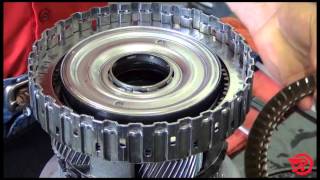
Typical fix: Replace the internal transmission sensor bridge/lead frame assembly. This requires draining the fluid, removing the transmission pan, and unbolting the assembly from the valve body. 🎬 Watch: A detailed teardown of the ZF8HP70 internal components.
Est. part cost: $150-$300 - TCM Software Requires Update 🔴 High Probability FCA issued TSB 21-013-16 Rev A because the original TCM software was too sensitive and could incorrectly set a P0716 code. The update adjusts the diagnostic parameters to prevent false positives.
How to confirm: A dealership or a properly equipped independent shop can check your vehicle's VIN against the TSB and see if the software update has been performed.
Typical fix: Flash the Transmission Control Module (TCM) with the latest software version using a tool like wiTECH. This is often the very first step a dealer will take.
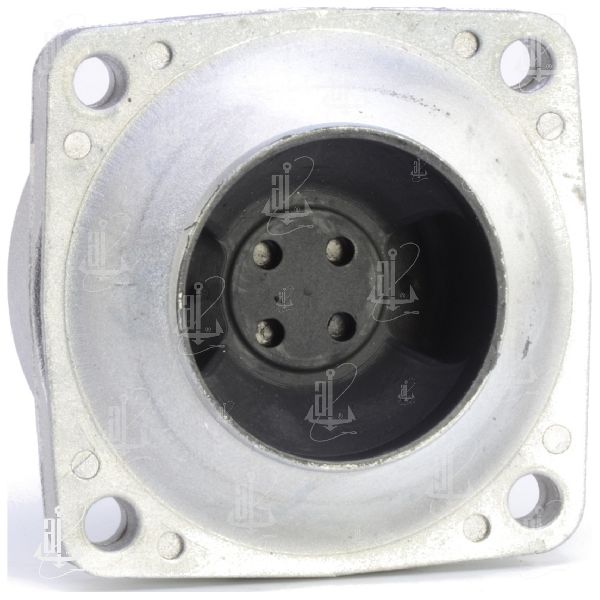
Est. part cost: $0-$200 (Labor for the flash) - Wiring or Connector Issue 🟡 Medium Probability The main transmission wiring harness connector (a large, round twist-lock connector) can become contaminated with fluid or corrode. The harness itself is exposed to road debris and engine heat, which can cause breaks in the wires.
How to confirm: Visually inspect the main transmission wiring harness and the connector for any signs of damage, corrosion, or fluid contamination. Perform a continuity test on the sensor circuit wires from the TCM to the transmission connector.
Typical fix: Repair the damaged section of the wiring harness or clean/replace the main transmission connector.
Est. part cost: $50-$200 - Low or Contaminated Transmission Fluid ⚪ Low Probability While the ZF 8-speed is a 'filled for life' unit, leaks can occur from the pan gasket or cooler lines. Low fluid levels can cause a variety of performance issues, while fluid contaminated with excessive metal particles can interfere with the magnetic speed sensors.
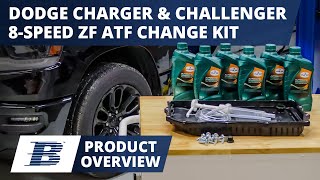
How to confirm: Check the transmission fluid level and condition. This is complex on the 8-speed as it has no dipstick and must be checked with a scan tool 🎬 See this walkthrough for a ZF8HP fluid and filter service. to monitor fluid temperature while the engine is running.
Typical fix: Correct the fluid level or perform a transmission service, which includes replacing the pan/filter assembly and refilling with the correct fluid.
Est. part cost: $300-$500
Rare But Worth Checking
- Faulty Transmission Control Module (TCM): The TCM is integrated into the valve body on these transmissions, making it a 'mechatronic' unit. While an internal failure of the module's processing can cause it to misinterpret a good sensor signal, this is rare and should be considered a last resort after all other causes are eliminated.
- Internal Mechanical Transmission Failure: Excessive metal debris from a failing clutch pack or other internal component can stick to the magnetic sensor tips on the lead frame, causing erratic readings. This would usually be accompanied by other serious symptoms like loud noises, severe slipping, and heavily contaminated fluid.
Diagnosis Steps
- Check for Technical Service Bulletins (TSBs). Specifically, check if TSB 21-013-16 Rev A applies and has been performed. This involves a TCM software update and is the first step.
- Use a scan tool to confirm P0716 is present and check for any other transmission or communication codes.
- Monitor the Input Speed Sensor data stream. While driving, compare Input RPM to Engine RPM. The readings should be logical and not drop to zero or jump erratically.
- Inspect the main transmission wiring harness and the large, round connector for any visible damage, corrosion, or fluid intrusion.
- If TSBs are complete and wiring is good, the next step is to check the transmission fluid level and condition. This must be done at a specific temperature (usually 30-50°C) and is best left to a professional.
- If the signal is confirmed faulty and all external factors are ruled out, the next step is to replace the internal transmission sensor bridge/lead frame assembly.
- If a new sensor bridge does not resolve the issue, further diagnosis of the valve body (mechatronic unit) or an internal mechanical fault is required.
Parts You'll Likely Need
- Transmission Sensor Bridge / Lead Frame
(OEM #68233701AA)— This is the most common hardware component to fail. It is an assembly inside the transmission that houses both the input and output speed sensors.
Trusted brands: Mopar
OEM price range: $200-$300
Aftermarket price range: $150-$250 - Transmission Pan with Integrated Filter
(OEM #68225344AA, 52854834AB, 68261170AA)— The ZF 8-speed uses a plastic pan with a built-in filter that must be replaced as a unit during any service that requires dropping the pan.
Trusted brands: Mopar/ZF
OEM price range: $150-$300
Aftermarket price range: $100-$200 - Mopar ZF 8 & 9 Speed ATF
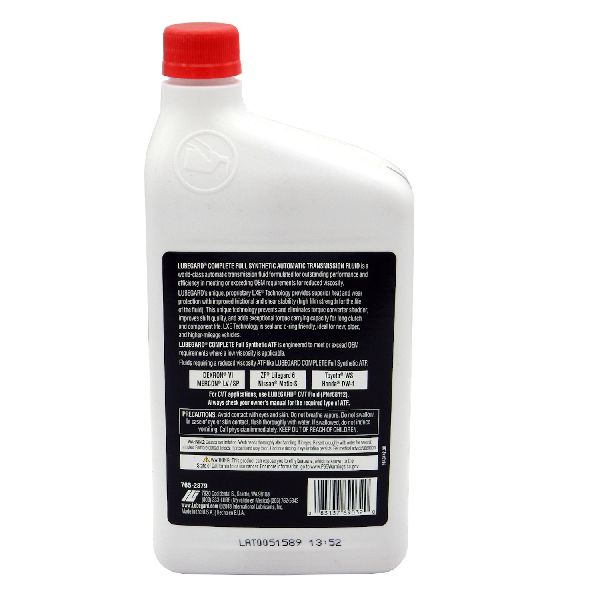
(OEM #68218925AB)— The correct fluid must be used to refill the transmission after dropping the pan. Approximately 5-6 quarts are needed for a pan drop and sensor replacement.
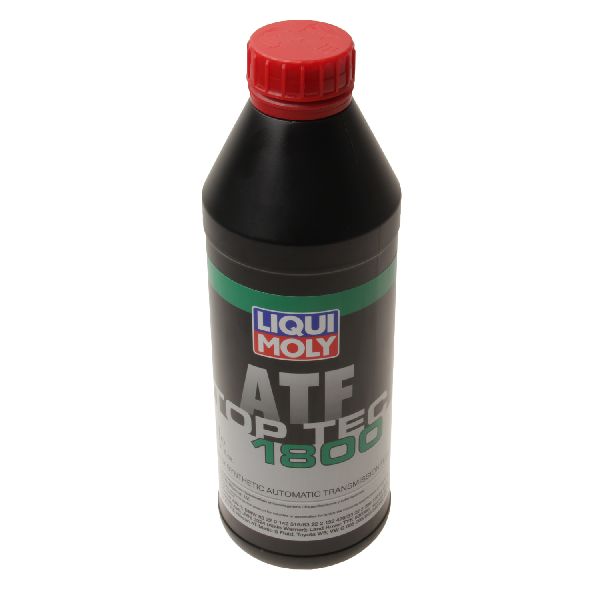
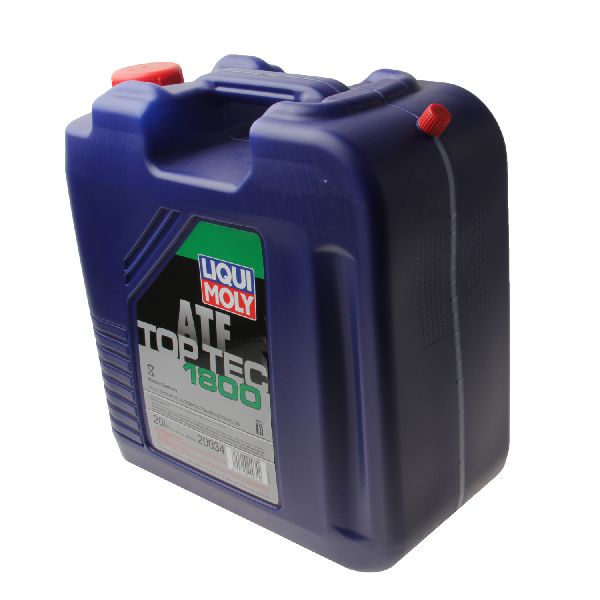
Trusted brands: Mopar, ZF Lifeguard 8, Liqui Moly Top Tec 1800
OEM price range: $30-$50 per quart
Aftermarket price range: $20-$35 per quart
Related Codes That Often Appear With This One
- P0717 — This code indicates 'No Signal' from the same sensor, often appearing with P0716 if the sensor fails completely or has an intermittent connection.
- P0733 — This indicates 'Gear 3 Incorrect Ratio'. The TCM may set this code if the input speed doesn't match the expected speed for that gear, which can be a direct result of a bad P0716 sensor reading.
- U0402 — This code means 'Implausible Data Received From TCM'. It can be set in the PCM when the transmission is behaving erratically due to the P0716 fault, causing a communication breakdown between the modules.
- U1412, P1DAB-00 — A 2019 Challenger owner reported these codes alongside P0716, indicating other powertrain and network communication faults can be triggered by the erratic transmission behavior.
Technical Service Bulletins (TSBs) & Recalls
- TSB 21-013-16 Rev A: Supersedes earlier versions and is the primary TSB for this issue. It instructs technicians to perform a TCM software update to change the sensitivity of the diagnostic logic for P0716 and other codes. This should be the first step in diagnosis.
- S2621000003 REV.A: An internal FCA reference number for the same issue, noting that transmissions like the 8HP70 may exhibit diagnostic code P0716.
Platform-Specific Known Issues
- A Technical Service Bulletin (TSB 21-013-16 Rev A) was issued for multiple Dodge/Chrysler/Jeep vehicles with 8-speed transmissions that may exhibit code P0716. The primary fix is a TCM software update.
- An owner of a 2019 Dodge Challenger filed a complaint with the NHTSA (ODI #11386328) detailing how codes P0716, P1DAB-00, and U1412 caused random and erratic shifting for several months.
- On ChallengerTalk.com, in a thread titled 'Limp Mode P0716', a 2015 R/T owner described the dealer replacing the 'internal transmission harness' (the sensor bridge) to resolve the code after a software flash did not work.
Mechanic-Grade Diagnostic Values
- Input Speed Sensor Signal Voltage (Live Data) — expected: ~0.5 V at idle, rising proportionally with engine speed to 4.0-4.5 V at wide-open throttle.. Failure: Readings that are static, zero, erratic, or outside the 0.5-4.5V range.
- Sensor Circuit Continuity — expected: 0.5 Ω or lower resistance.. Failure: Higher resistance indicates a problem in the wiring harness.
- Sensor 5V Reference at Connector — expected: 5V (±0.2V) with key on, engine off.. Failure: No voltage or voltage outside the specified range points to a TCM or wiring issue.
- Solenoid Resistance (General ZF8HP) — expected: Approximately 5.5 ohms for Variable Force Solenoids (VFS).. Failure: A significant deviation from this value can indicate a faulty solenoid on the valve body.
Scan Tool Commands That Help
- wiTECH or AlfaOBD: QUICK LEARN / STATIC ADAPTATION (STADA) — This procedure must be performed after replacing the valve body, sensor bridge/lead frame, or the entire transmission. It allows the TCM to learn the fill times and pressures for the new components to ensure smooth shifting.
- wiTECH or AlfaOBD: RESET ADAPTIVE VALUES — Used before performing a Quick Learn. This clears the old learned information from the TCM memory cells. It should only be done when a physical repair has been made, not for troubleshooting poor shift quality on its own.
Wiring & Ground Locations
- Main Transmission Connector — The large, round, twist-lock connector on the passenger side of the transmission case.. This is the single point of connection for all electronics inside the transmission, including the input speed sensor. It is a common location for fluid intrusion, corrosion, or pin damage that can cause a P0716 code.
- Main Engine/Transmission Ground Strap — Typically runs from the engine block or bell housing area to the chassis/frame rail. For example, on some Dodge platforms, a key ground is located on the dash, rear of the right shock tower (G103).. A poor ground connection for the powertrain can cause electrical noise and voltage fluctuations, leading to erratic sensor readings and incorrect diagnostic codes. The TCM and its sensors rely on a clean ground path.
Real Owner Repair Stories
- ChallengerTalk Forum Member (2016 Dodge Challenger) — Car went into limp mode, stuck in 4th gear, with codes P0716 and others.
❌ Tried (didn't work) Initial diagnosis pointed towards the valve body.
✅ What actually fixed it The dealership replaced the 'transmission lead frame connector' (another term for the sensor bridge/lead frame assembly) and performed a fluid service. This resolved the limp mode and cleared the codes.
OEM Part Supersession History
Not specified, but early versions existed.→68233701AA— Likely an update to improve the reliability of the integrated sensor electronics and protect against heat and fluid-related failures.
Model Year Variations Within This Range
- 2014: According to FCA documentation for the 845RE (a related 8-speed), 2014 model year vehicles require a TCM software update to enable the 'Quick Learn' procedure. 2015 and newer models already have this capability in their factory software. This may also apply to the Challenger's 8HP series transmissions.
Helpful Videos
Used OEM Parts in Stock


New Aftermarket Parts Available


The information in this article is provided for general reference and educational purposes only. Vehicle specifications, procedures, and part compatibility can vary by production date, trim level, and region. Always consult your vehicle's factory service manual and verify part numbers before purchasing or performing repairs. Safety-critical components such as airbags, seat belts, and braking systems should be installed by a qualified professional.
- Dodge CHALLENGER:
- 🎬 Helpful Videos
- 🛍️ Shop This Part
- What's Unique About the 2015-2022 Dodge CHALLENGER
- Diagnostic Flowchart
- Symptoms You May Notice
- Most Likely Causes
- Rare But Worth Checking
- Diagnosis Steps
- Parts You'll Likely Need
- Related Codes That Often Appear With This One
- Technical Service Bulletins (TSBs) & Recalls
- Platform-Specific Known Issues
- Mechanic-Grade Diagnostic Values
- Scan Tool Commands That Help
- Wiring & Ground Locations
- Real Owner Repair Stories
- OEM Part Supersession History
- Model Year Variations Within This Range
- 🎟️ Get 5% Off