

P0715 on 2006-2010 Hummer H3: Input Speed Sensor Failure Causes and Fixes
On a 2006-2010 Hummer H3, code P0715 is almost always a failed Input Speed Sensor (ISS) located inside the transmission oil pan. This causes harsh, erratic shifting or getting stuck in gear, often 3rd gear. The fix requires replacing the sensor, which involves dropping the pan and changing the fluid and filter. This is a common issue on the GM 4L60-E transmission.
- P0715 on a Hummer H3 points to the Input Speed Sensor (ISS) inside the transmission, not the sensor for the speedometer.
- Symptoms will be poor shifting or being stuck in gear; your speedometer will still work.
- The most likely fix is replacing the sensor itself, which requires removing the transmission pan.
- Always replace the transmission filter and use fresh DEXRON-VI fluid during this repair.
- Due to the complexity and potential for mess, professional service is recommended.
What's Unique About the 2006-2010 Hummer H3
The Hummer H3 from this era uses the GM 4L60-E automatic transmission. A common point of confusion for owners is mistaking the Input Speed Sensor (ISS) for the Vehicle Speed Sensor (VSS). The VSS is on the transfer case and a failure causes the speedometer to stop working. The P0715 code, however, points specifically to the ISS, which is located inside the transmission and requires removing the oil pan to access. The symptoms are strictly related to shifting performance, not the speedometer. Owners report the transmission often defaults to 3rd gear (limp mode) when this fault occurs.
Symptoms You May Notice
- Check Engine Light is on
- Transmission shifts harshly or erratically
- Vehicle gets stuck in one gear (often reported as 2nd or 3rd)
- Delayed engagement when shifting from Park to Drive
- Decreased fuel economy
- Engine may stall when coming to a stop
- Transmission may refuse to shift into overdrive
- Transmission-related warning lamp may be illuminated on the dash
- Replacing the Vehicle Speed Sensor (VSS). The VSS is located externally on the transfer case and its failure causes the speedometer to stop working. P0715 is for the internal Input Speed Sensor and does not affect the speedometer.
- Replacing the Neutral Safety Switch (Range Sensor). This sensor is located on the side of the transmission and typically causes no-start conditions or an incorrect gear display on the dashboard, not P0715.
- Replacing the Throttle Body. While throttle body issues can cause limp mode, they typically set different codes (like P2138) and are unrelated to the transmission speed sensor circuit.
Most Likely Causes
- Failed Input Speed Sensor (ISS) 🔴 High Probability The sensor operates in a high-temperature fluid environment and its internal electronics or coil can fail over time, which is the most common cause of P0715.
How to confirm: Use a scan tool to monitor the 'Input Shaft Speed' data PID. If the reading is 0 RPM or is erratic while the vehicle is in gear and the engine is revving, the sensor or its circuit has failed. The sensor can also be tested with a multimeter for resistance once removed.
Typical fix: Replace the Input Speed Sensor. This requires draining the transmission fluid, removing the oil pan, and replacing the sensor which is located on or near the valve body. The sensor is typically held in by a single bolt.
Est. part cost: $40-$80 - Damaged Internal Wiring or Connector 🟡 Medium Probability The internal transmission wiring harness is submerged in hot fluid, which can make wires and connectors brittle over time. The plastic connector locking tabs can break, or wires can fray, causing an intermittent connection to the ISS.
How to confirm: After dropping the transmission pan, visually inspect the wiring leading to the Input Speed Sensor for breaks, chafing, or a loose/damaged connector. Test for continuity from the sensor connector back to the main harness plug at the transmission case.
Typical fix: Repair the damaged wire or replace the internal transmission wiring harness assembly. Ensure the connector is securely seated on the new sensor.
Est. part cost: $60-$150 - Low or Dirty Transmission Fluid ⚪ Low Probability Neglected maintenance can lead to fluid breakdown and contamination with clutch material or metal shavings. This debris can interfere with the magnetic pickup of the speed sensor.
How to confirm: Check the transmission fluid level and condition using the dipstick. If the fluid is dark brown, black, or has a burnt smell, it is contaminated. If it's low, there is a leak that needs to be addressed.
Typical fix: Perform a transmission fluid and filter change. If the fluid was very low, identify and repair the source of the leak. If the fluid is heavily contaminated with metal, it may indicate a more severe internal transmission failure.
Est. part cost: $75-$150 for fluid and filter
Rare But Worth Checking
- Faulty Powertrain Control Module (PCM): This is very rare. The PCM should only be considered after the sensor and wiring have been thoroughly tested and confirmed to be good.
- Damaged Reluctor Ring: The toothed ring that the sensor reads can be damaged by other internal transmission failures, but this is uncommon and would typically be accompanied by other serious symptoms, metallic debris in the pan, and other codes.
- External Wiring Harness Issues: GM TSB 08-07-30-021H points to issues with the main 16-way transmission connector where terminals can back out, causing a loss of communication. While this TSB doesn't specifically call out P0715, it addresses related communication codes (U-codes) and shifting problems on the same vehicle family. Inspecting this external connector for backed-out pins or corrosion is a valid step before dropping the pan.
Diagnosis Steps
- Check the transmission fluid level and condition. Address if low or dirty.
- Connect an OBD-II scanner and check for any other codes, particularly P0700 or any U-codes (communication codes).
- Use the scanner's live data function to monitor the Input/Turbine Speed Sensor. The reading should increase with engine RPM when in gear. A reading of 0 or an erratic signal points to a fault.
- Visually inspect the main external transmission electrical connector for corrosion, moisture, or pushed-out pins, as noted in GM TSB 08-07-30-021H.
- If the external wiring is okay, the next step is to drain the transmission fluid and remove the oil pan.
- Visually inspect the internal wiring harness and the sensor itself for any obvious damage, such as broken wires or a cracked connector.
- Remove the Input Speed Sensor (typically held by one bolt) and inspect its tip for metallic debris.
- Test the sensor's resistance with a multimeter (if specifications are available) and check for continuity in the wiring harness from the sensor plug to the case connector.
- If the sensor or wiring tests bad, replace the faulty component.
Parts You'll Likely Need
- Input Speed Sensor (ISS)
(OEM #24244544)— This is the most common failure point for the P0715 code on the 4L60-E transmission. The GM part 24244544 has been superseded multiple times but remains the correct service part number. The ACDelco equivalent is 213-4336.
Trusted brands: ACDelco, Rostra, ATP
OEM price range: $60-$90
Aftermarket price range: $40-$70 - Transmission Filter and Pan Gasket Kit — This must be replaced whenever the transmission pan is removed for service.
Trusted brands: ACDelco, ATP, Wix
OEM price range: $30-$50
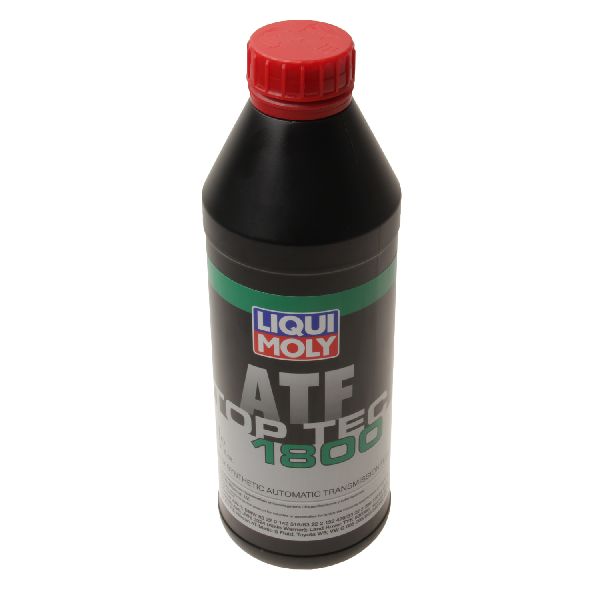
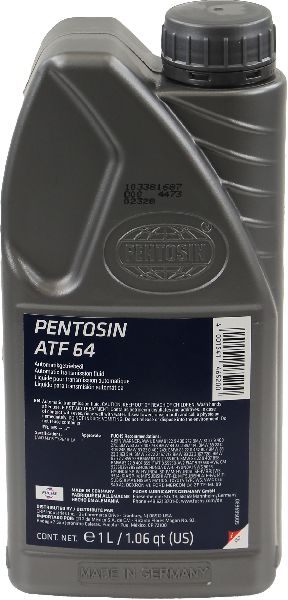
Aftermarket price range: $15-$30 - DEXRON-VI Automatic Transmission Fluid — The correct fluid must be used to refill the transmission after the repair. A pan drop requires approximately 5-6 quarts.
Trusted brands: ACDelco, Valvoline, Castrol
OEM price range: $10-$15 per quart
Aftermarket price range: $8-$12 per quart
Related Codes That Often Appear With This One
- P0700 — P0700 is a generic code indicating the Transmission Control Module (TCM) has stored a fault. It frequently appears alongside specific transmission codes like P0715 to signal a transmission-related issue to the main engine computer.
Technical Service Bulletins (TSBs) & Recalls
- GM TSB 08-07-30-021H: While not for P0715 specifically, this bulletin is highly relevant as it details widespread issues with GMLAN communication loss on this vehicle platform, often caused by backed-out terminals in the 16-way transmission connector. Symptoms include no-shifting, which overlaps with P0715. Checking this connector is a wise diagnostic step.
Mechanic-Grade Diagnostic Values
- Input Speed Sensor (ISS) Resistance — expected: The ISS on the 4L60-E is a Hall effect sensor, and while some sources advise against resistance testing, others provide specs. If tested, it should be between 1,100 - 1,600 Ohms when measured across the two signal pins.. Failure: A reading of infinite Ohms (open circuit) or near zero Ohms (short circuit) indicates a failed sensor.
- ISS Signal Voltage at Main Connector — expected: Using a voltmeter with the key on, engine off, you should see a power supply voltage (typically 5V or 12V depending on the specific model year) at Pin E (Pink wire). The signal wire, Pin K, should show a fluctuating voltage or square wave on an oscilloscope when the engine is running and the input shaft is turning.. Failure: No voltage on the power pin, or a flat/zero voltage reading on the signal pin while the engine is running, points to a wiring or sensor fault.
Scan Tool Commands That Help
- Tech2 / GDS2: Input Shaft Speed (RPM) Live Data — This is the primary diagnostic step. Monitor this PID while in Drive with the engine running. The RPM should rise smoothly with engine RPM. If it reads 0, is erratic, or doesn't change, it confirms a fault in the sensor or its circuit. This avoids having to drop the pan for an initial diagnosis.
Wiring & Ground Locations
- Transmission Case Connector — The main round electrical connector on the passenger side of the 4L60-E transmission case.. This is the access point for testing the ISS circuit externally. Pin K (often a Brown/White or Light Green wire) is the sensor signal, and Pin V (often a Yellow/Black wire) is the sensor low reference/ground. Pin E (Pink wire) is the 12V power supply. Testing here can differentiate between an internal (sensor, internal harness) and external (main harness, TCM) fault.
- G110 — On the left side of the engine block, forward of the main engine ground G103.. A poor engine or chassis ground can introduce electrical noise or cause incorrect readings from various sensors, including the transmission sensors. While not a direct cause, checking major grounds like G110 for corrosion or looseness is a crucial step when diagnosing any electronic fault code, especially if the issue is intermittent.
- TCM (Transmission Control Module) — For 2008 and newer models, the TCM is a separate module located under the hood near the firewall on the driver's side. On 2006-2007 models, the transmission control functions are integrated into the PCM.. This is the destination for the ISS signal. A failure of the TCM itself is rare, but checking for corrosion at its connector is important, especially if communication codes like U0101 are also present.
Real Owner Repair Stories
- YouTube - FSP Transmissions (2007 Hummer H3) — No 2nd, 3rd, or 4th gear, multiple transmission codes.
❌ Tried (didn't work) A previous shop had attempted a minor service, but the transmission was too far gone.
✅ What actually fixed it A complete transmission rebuild was required due to severe overheating. During the teardown, the technician noted the internal wiring harness was extremely brittle and broke upon removal, a common issue in overheated 4L60-E units. The fix included replacing all electronics, including the internal harness and the input speed sensor. - Hummer Forums (2008 Hummer H3) — Transmission slipping, high RPMs, coming out of gear.
❌ Tried (didn't work) Replacing the TCM with a 'plug and play' unit did not work; the vehicle would not shift out of Park, indicating programming was required.
✅ What actually fixed it The owner's initial diagnosis pointed towards a faulty TCM. The forum discussion highlights that for a 2008 H3, the TCM is a separate unit near the firewall and that replacing it is not always a simple plug-and-play operation, often requiring programming to the vehicle.
OEM Part Supersession History
24230675, 24235714, 24237866, 24240149→24244544— Part consolidation and design updates by GM.
Heads up: GM Part 24244544 is the most recent direct replacement for the earlier numbers and should be used for service.24244544→24259852— Manufacturing revision.
Heads up: Both 24244544 and 24259852 are considered correct service parts for this application and are interchangeable. The ACDelco equivalent is typically 213-4336.
Model Year Variations Within This Range
- 2006-2007 vs 2008-2010: The internal wiring harness design may differ. Some earlier models used a harness where the ISS wiring was more separate, while later models integrated it more fully with other solenoid wiring. Additionally, the Transmission Control Module (TCM) is integrated with the PCM on 2006-2007 models, but is a separate, standalone module on 2008-2010 models. This is critical for diagnosis if a module fault is suspected.
Diagnostic Flowchart
Other Known Issues on This Vehicle
Issues unrelated to this code that are worth knowing about as an owner of this generation:
- Cracked Radiator 🔴 High — Very common, especially on 2008 models, but affects all years. The plastic end tanks crack, causing coolant leaks. In severe cases, the internal transmission cooler can also fail, mixing coolant and transmission fluid, which destroys the transmission.
- GM Passlock Anti-Theft System Failure 🟠 Medium — A widespread and highly frustrating issue where the security system fails to recognize the key, resulting in a no-start condition for a mandatory 10-minute waiting period.
- Clogged Sunroof Drains 🟠 Medium — The front and rear sunroof drain tubes have small check valves at the ends that easily clog with debris, causing water to back up and leak into the cabin, often through the A-pillar handles or OnStar microphone, soaking the carpets and potentially damaging electronics.
- Blower Motor Resistor/Harness Failure 🟡 Low — The blower motor resistor and its wiring harness connector are prone to overheating and melting, causing the fan to only work on the highest setting or not at all.
- Cylinder Head Valve Seat Issues (2006 I5) 🔴 High — Early 2006 models with the 3.5L I5 engine were known to have issues with soft valve seats, leading to loss of compression, misfires, and requiring a cylinder head replacement.
Used vs. New Parts: Buying Guide for This Vehicle
When a used part is the smart pick: For this repair, using used parts is generally not recommended. However, if the internal wiring harness is confirmed to be the only fault and a new one is cost-prohibitive or unavailable, a used harness from a low-mileage, non-overheated donor vehicle could be a viable option after careful inspection.
Donor-vehicle mileage cap: roughly under 80000 miles for the part to have meaningful remaining life.
What to inspect on the donor part:
- For a used wiring harness, check that the plastic is still flexible and not brittle.
- Ensure all connector locking tabs are intact and not broken.
- Inspect for any signs of overheating, such as discolored or melted connectors.
- Perform a continuity test on each wire before installation.
OEM-only on this vehicle (don't cheap out):
- Input Speed Sensor (ISS): Given its high failure rate and critical function, using an OEM (GM) or OES (ACDelco) part is strongly recommended for reliability.
- Transmission Fluid: Must be DEXRON-VI certified. Using a non-certified fluid can cause shift problems and long-term damage.
Aftermarket brands forum-validated for this vehicle:
- Rostra: Frequently cited in forums as a reliable aftermarket manufacturer for transmission solenoids and sensors.
- ATP (Automatic Transmission Parts): A common and generally accepted brand for transmission hard parts, filters, and electronics.
Related OBD-II Codes
Frequently Asked Questions
My 2008 Hummer H3 is stuck in one gear. Is this definitely the Input Speed Sensor?
How do I access the Input Speed Sensor on my H3 to replace it?
Can low or dirty transmission fluid really cause a P0715 code?
I saw TSB 08-07-30-021H mentioned. Does this TSB apply to the P0715 code?
What's the very first thing I should check if my H3 throws a P0715 code?
My Chevy Colorado has a P0715 code. Is the repair the same as for the Hummer H3?
Used OEM Parts in Stock

New Aftermarket Parts Available


The information in this article is provided for general reference and educational purposes only. Vehicle specifications, procedures, and part compatibility can vary by production date, trim level, and region. Always consult your vehicle's factory service manual and verify part numbers before purchasing or performing repairs. Safety-critical components such as airbags, seat belts, and braking systems should be installed by a qualified professional.
- Hummer H3:
- 🛍️ Shop This Part
- What's Unique About the 2006-2010 Hummer H3
- Symptoms You May Notice
- Most Likely Causes
- Rare But Worth Checking
- Diagnosis Steps
- Parts You'll Likely Need
- Related Codes That Often Appear With This One
- Technical Service Bulletins (TSBs) & Recalls
- Mechanic-Grade Diagnostic Values
- Scan Tool Commands That Help
- Wiring & Ground Locations
- Real Owner Repair Stories
- OEM Part Supersession History
- Model Year Variations Within This Range
- Diagnostic Flowchart
- Other Known Issues on This Vehicle
- Used vs. New Parts: Buying Guide for This Vehicle
- Related OBD-II Codes
- Frequently Asked Questions
- 🎟️ Get 5% Off