

P0707 on 2006-2018 Ram 2500: Transmission Range Sensor Causes and Fixes
On a 2006-2018 Ram 2500, P0707 most often means the Transmission Range Sensor (TRS) or its wiring is faulty. For 6.7L Cummins trucks with the 68RFE transmission, this is an internal solenoid pack costing $400-$600+ for the part. For older 5.9L Cummins with the 48RE, it's a cheaper, external switch ($30-$70). A primary suspect in all cases is the main transmission wiring harness connector, which is prone to corrosion.
- First, you MUST identify your truck's transmission (48RE, 68RFE, etc.) as the repair path is completely different.
- Always inspect and clean the main transmission wiring harness connector before buying expensive parts, as corrosion is a very common cause.
- If you have a 2007.5 or newer Ram 2500 with a 6.7L Cummins, the faulty sensor is likely inside the transmission, making the repair more complex and costly.
- Do not drive the vehicle with this code. A no-start condition can leave you stranded, and erratic shifting is a safety hazard.
What's Unique About the 2006-2018 Ram 2500

The fix for P0707 on a Ram 2500 depends entirely on which automatic transmission the truck is equipped with. The 2006-2018 model years span different generations and engine/transmission pairings. Trucks with the 6.7L Cummins diesel (2007.5-2018) use a 68RFE transmission where the range sensor is integrated into the solenoid pack inside the transmission pan, making it a more complex and expensive repair. In contrast, older trucks with the 5.9L Cummins (2006-2007) and the 48RE transmission have a simple, externally mounted, and easily accessible neutral safety switch. Gas engine models with the 545RFE or 66RFE also use an internal sensor design similar to the 68RFE. This guide does not apply to trucks with a manual transmission.
Generation note: This guide covers the end of the 3rd Generation (2006-2009) and the entire 4th Generation (2010-2018) Ram 2500. The most critical difference is the transmission used: the 4-speed 48RE in early 3rd Gen 5.9L Cummins trucks has an external sensor. The 6-speed 68RFE in later 3rd Gen and all 4th Gen 6.7L Cummins trucks has an internal sensor assembly. Hemi-powered trucks of this era typically use the 545RFE or 66RFE, which also feature an internal range sensor integrated with the solenoid pack.
Symptoms You May Notice
- Engine will not crank or start
- Check Engine Light is on
- Transmission may be stuck in 'limp mode' (a single gear, often 3rd or 4th)
- Harsh, erratic, or delayed gear shifting
- Reverse lights may not work
- Gear indicator on the dashboard may be incorrect, blank, or have all positions lit up
- Truck may stall when shifting from Park to Drive or Reverse
- Replacing the battery or starter when the root cause is a no-start signal from the faulty TRS.
- Condemning the entire transmission when the issue is only a faulty solenoid pack or external wiring.
- Replacing the internal solenoid pack (on a 68RFE) when the problem is a simple corroded external connector. Always inspect the external harness first.
Most Likely Causes

- Damaged or Corroded Wiring Harness/Connector 🔴 High Probability The main transmission harness connector, located on the driver's side of the transmission, is highly exposed to road debris, moisture, and road salt. This leads to corrosion on the pins (often called 'green crusties'), causing a low or no voltage signal. Fluid leaks from above can also wick into the connector. Corrosion can also occur at the pins on the Totally Integrated Power Module (TIPM).
How to confirm: Visually inspect the main electrical connector on the transmission case. Disconnect it and look for bent pins, corrosion, or signs of fluid. A continuity test using a multimeter on the TRS signal wires from the transmission connector to the PCM/TCM connector is the definitive test to rule out a broken wire. If pins are corroded, they may need to be carefully cleaned or replaced.
Typical fix: Thoroughly clean the connector pins with an electrical contact cleaner and a small brush. Apply dielectric grease upon reassembly to prevent future moisture intrusion. If corrosion is severe or wires are broken, the connector pigtail or a section of the harness may need to be replaced.
Est. part cost: $10-$100 - Faulty Internal Transmission Range Sensor / Solenoid Pack (68RFE/545RFE/66RFE) 🔴 High Probability This is the standard design for the 6-speed automatic transmissions used from 2007.5 onward. The solenoid pack is a known failure point due to heat, vibration, and internal wear over time. Debris from normal wear can contaminate the solenoids and internal passages, leading to failure.
How to confirm: After confirming wiring is intact, the vehicle will show P0707 and likely have a no-start or limp-mode condition. Diagnosis requires dropping the transmission pan to access the component. A professional may use a scan tool to monitor TRS data directly. Failure is confirmed when wiring is good but the signal is still low or absent.
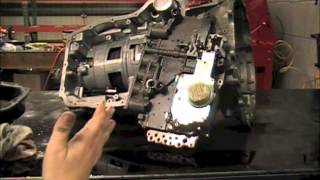
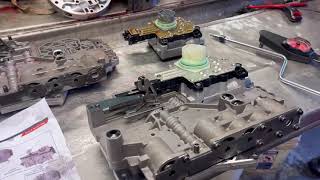
Typical fix: Replace the entire transmission solenoid pack assembly, which includes the integrated range sensor. This requires draining the transmission fluid, dropping the pan, and removing the valve body to access the pack. 🎬 See this walkthrough for replacing the internal solenoid pack.
Est. part cost: $375-$650 - Faulty External Neutral Safety Switch (48RE) 🟡 Medium Probability This applies specifically to 2006-2007 models with the 5.9L Cummins and 48RE 4-speed automatic. The external switch is exposed to the elements and can fail from moisture intrusion or internal wear from the shift linkage.
How to confirm: The switch is located on the driver's side of the transmission where the shift lever attaches. Test for correct voltage on the signal wires corresponding to each gear position using a multimeter and a wiring diagram. An incorrect or absent voltage reading confirms failure.
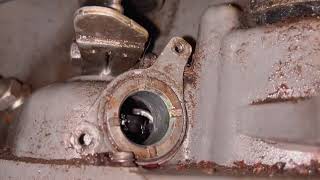
Typical fix: Unbolt the old switch from the transmission case, disconnect the electrical plug, and install a new one. Proper alignment is critical; ensure the truck is in neutral and the switch is aligned with the neutral markings before tightening. 🎬 Watch: How to replace the external sensor on a 48RE transmission.
Est. part cost: $30-$70
Rare But Worth Checking
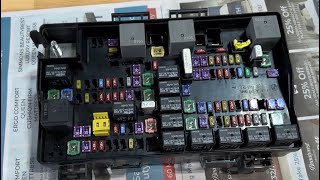
- Faulty Powertrain Control Module (PCM) or Totally Integrated Power Module (TIPM): This is rare. The module itself can fail, but all other possibilities, especially wiring and the sensor itself, should be exhaustively ruled out first. TIPM failure is a known issue on these trucks for other electrical problems, but it's less commonly the root cause for a specific P0707 code. 🎬 Learn how to clean your TIPM for better electrical performance. A faulty TIPM can cause low voltage on various circuits.
- Misadjusted or Damaged Shift Linkage: If the physical cable from the shifter to the transmission is stretched, loose, or damaged, it may not be moving the selector shaft into the correct detent for the sensor to read accurately. This is more common on high-mileage trucks or those used for heavy work. Check for excessive play in the shifter.
Diagnosis Steps
- Identify Your Transmission: First, determine if you have the 4-speed 48RE (typically 2006-2007 5.9L) or the 6-speed 68RFE (2007.5+ 6.7L). This is the most critical step as it dictates the sensor's location (external vs. internal).
- Check for Other Codes: Use a quality OBD-II scanner to check for any other transmission-related codes that could provide more context, such as P0706 or P0708.
- Inspect the External Connector (ALL MODELS): Locate the main transmission harness connector on the driver's side. Disconnect it and inspect thoroughly for green or white corrosion, moisture, or bent pins. This is a very common failure point. Clean with electrical contact cleaner and a small brush as a first step, then apply dielectric grease.
- Test Wiring: If the connector is clean, perform a continuity test on the TRS signal wires between the transmission connector and the TCM/PCM connector to rule out a break in the harness. Check for shorts to ground on the signal wire.
- Test/Replace External Switch (48RE only): If you have a 48RE, test the voltage output of the external switch. If it fails to send the correct voltage for each gear, replace it. Ensure the new switch is properly aligned in the neutral position during installation.
- Inspect Internal Solenoid Pack (68RFE/545RFE/66RFE): If wiring is good, the next step is to inspect the internal solenoid pack. This requires draining the fluid and dropping the transmission pan. Visually inspect the internal connector and the pack itself for any signs of damage or burning.
- Replace Solenoid Pack: If all other steps fail to resolve the issue on a 68RFE-equipped truck, the solenoid pack/TRS assembly is the most likely culprit and should be replaced. It is highly recommended to also replace the spin-on and pan filters at the same time.
Parts You'll Likely Need

- Transmission Solenoid Pack / Valve Body Solenoid
(OEM #68353383AB (supersedes older numbers))— For 68RFE and similar transmissions (2007.5+), the TRS is integrated into this assembly. It is the most common part replaced to fix P0707 on these models after wiring issues are ruled out.
Trusted brands: Mopar, RevMax, Sonnax, Rostra
OEM price range: $450-$650
Aftermarket price range: $350-$550 - Neutral Safety Switch / Transmission Range Sensor (External)
(OEM #56045489AC (supersedes 56045489AB))— This is the correct part for the 48RE transmission found in 2006-2007 Ram 2500s with the 5.9L Cummins. It's an external switch that is relatively easy to replace.
Related Codes That Often Appear With This One
- P0708 — This code means 'Transmission Range Sensor Circuit High Input,' which is the opposite of P0707. Seeing both intermittently could point to a severe wiring issue, a connector full of water causing shorts, or a failing sensor sending erratic signals.
- P0706 — This code means 'Transmission Range Sensor Circuit Range/Performance.' It indicates the sensor signal is illogical or 'in between' gears, often pointing to a misadjusted sensor, bad wiring, or internal sensor failure.
Mechanic-Grade Diagnostic Values
- Transmission Range Sensor 'A' Circuit Voltage — expected: Typically 5V or 12V reference, depending on manufacturer specs.. Failure: A voltage reading below 0.5V confirms a low-circuit condition.
- Line Pressure Sensor Voltage (68RFE) — expected: Above 0.35V and below 4.75V.. Failure: Voltage below 0.35V will set a P0934 (low circuit) code, while voltage above 4.75V will set a P0935 (high circuit) code. These often appear with other transmission codes.
- Battery Voltage at PCM for Transmission Circuits — expected: Above 10.0 volts.. Failure: If the battery voltage supplied to the transmission output circuits at the PCM is less than 10.0 volts for 15 seconds, a P0562 (System Voltage Low) code can be set, which may accompany the P0707.
Scan Tool Commands That Help
- wiTECH (or equivalent professional scanner): Shift Lever Position Test — This test, found under the transmission control module diagnostics, actively displays the gear position (PRNDL) being reported to the computer. It is used to verify if the computer's reading matches the physical gear selection, helping to distinguish between a sensor/wiring fault and a mechanical linkage problem.
- wiTECH (or equivalent professional scanner): TIPM Actuation Test for Transmission Control Output — This allows a technician to command the TIPM to send power to the transmission solenoid assembly. Using a test light at the transmission connector while running this test can confirm if the TIPM and wiring are successfully delivering power, isolating the fault to the transmission itself if power is present.
Wiring & Ground Locations

- Main Transmission Connector (All Models) — On the driver's side of the transmission case, where the main vehicle harness connects to the transmission.. This is the single most common point of failure for P0707. Its exposed location makes it highly susceptible to corrosion from road salt and moisture, which directly causes the 'circuit low' condition.
- 68RFE Solenoid/TRS Assembly Connector Pin 22 — This is the pin for Sensor Ground within the main transmission connector going to the internal solenoid pack.. A bad ground on this specific pin can cause erratic readings and trigger P0707 or other sensor-related codes. A continuity check from this pin to a known good chassis ground is a key diagnostic step.
- 68RFE Solenoid/TRS Assembly Connector Pin 23 — This is the pin for the Transmission Temperature Sensor Signal.. While not the direct cause of P0707, damage or corrosion to this adjacent pin can sometimes short to the range sensor circuits, causing erratic behavior. It's important to inspect all pins in the connector, not just the TRS-specific ones.
- TIPM (Totally Integrated Power Module) Connectors — Under the hood, typically a large fuse and relay box near the battery.. The underside connectors of the TIPM are also known to corrode, especially in salt-belt regions. A rotted pin on a power or communication circuit leaving the TIPM can cause a P0707 code and other electrical faults.
Real Owner Repair Stories
- Cummins Forum user (2013 Ram 2500 with 6.7L Cummins and 68RFE) — P0706 (Range/Performance) and limp mode. The owner kept clearing the code and driving.
❌ Tried (didn't work) Clearing the code repeatedly.
✅ What actually fixed it The fluid was found to be black, indicating internal transmission failure. The ultimate fix required a complete transmission removal and rebuild, as the root cause was a mechanical failure within the transmission that damaged the range sensor function. - YouTube video by 'Codeman's Auto' (Dodge Ram with 48RE transmission) — No-start condition unless the gear shifter was wiggled. The gear indicator would not light up for 'P' or 'N' consistently.
❌ Tried (didn't work) Initial inspection showed a zip tie holding the connector on, but this was not the root cause.
✅ What actually fixed it Replacing the external neutral safety switch (TRS) on the driver's side of the 48RE transmission. The old switch was sticky and worn internally. Proper alignment of the new switch was critical for the fix.
OEM Part Supersession History
Various older Mopar numbers for 68RFE Solenoid Pack→68353383AB, then 68353383AC— Revisions to improve reliability and address common failure modes.
Heads up: White connector solenoid packs (common on 2007.5-2010) are generally considered universal and will fit all 2007.5-2018 models. Later models introduced gray and then blue connectors (2019+), which are not backward compatible without modification. For the 2006-2018 range, a white connector pack is the correct service replacement.56045489AB (48RE Neutral Safety Switch)→56045489AC— Minor revision to the component.
Model Year Variations Within This Range
- 2006-2007 (5.9L Cummins): These trucks use the 48RE 4-speed automatic with an easily accessible, external neutral safety switch/TRS. The repair is simpler and cheaper.
- 2007.5-2018 (6.7L Cummins): These trucks use the 68RFE 6-speed automatic. The TRS is integrated into the solenoid pack, located inside the transmission pan, requiring removal of the valve body for replacement.
- 2012-2018 (Gas Engines): Gas-powered Ram 2500s in this range often use the 66RFE transmission. While it shares some internal components and gear ratios with the 68RFE, its case is designed to bolt to a Hemi engine, and it uses some different clutch packs and a different torque converter. However, for the purpose of P0707, it also uses an internal solenoid pack with an integrated TRS, similar to the 68RFE.
Diagnostic Flowchart
Other Known Issues on This Vehicle
Issues unrelated to this code that are worth knowing about as an owner of this generation:
- Front End 'Death Wobble' 🔴 High — Common on 3rd and 4th gen trucks, especially after hitting a bump at highway speeds (45-65 mph). Can occur on stock trucks but is more frequent on trucks with worn components, lifts, or larger tires. (Ref: Multiple TSBs exist related to steering components, but no single recall covers the entire issue. The root cause is a culmination of worn parts like the track bar, ball joints, and steering damper.)
- TIPM (Totally Integrated Power Module) Failure 🔴 High — Very common on 2006-2009 and 2011-2012 models. Symptoms are varied and erratic, including fuel pump issues, lights turning on/off, wipers activating randomly, and no-start conditions. (Ref: While no universal recall was issued, it was the subject of class-action lawsuits. TSBs exist for specific symptoms.)
- 6.7L Cummins Emissions System Problems (EGR/DPF) 🟠 Medium — Frequent issue, particularly on 2007.5-2012 models. The EGR valve and cooler can clog with soot, and the Diesel Particulate Filter (DPF) can become clogged, leading to frequent regeneration cycles, reduced power, and check engine lights. (Ref: Numerous TSBs have been released to update software and address specific component failures within the emissions system.)
- 68RFE Transmission Weaknesses 🟠 Medium — While generally reliable under stock power, the 68RFE is known for having weak points that surface with high mileage, heavy towing, or increased power from tuners. Common failures include torque converter shudder, valve body issues, and burnt overdrive clutches. (Ref: TSB 21-016-16 and others were issued to update transmission software for shift quality, but do not address mechanical weak points.)
- 5.9L Cummins Common Issues (2006-2007) 🟠 Medium — These later 5.9L engines are very reliable, but can suffer from injector failure after 150k miles, and potential issues with the fuel lift pump.
- Heater Core Failure / Blend Door Actuator Failure 🟠 Medium — A common issue across Ram trucks of this era. The heater core can clog, leading to poor heat on the driver's side. Blend door actuators also fail, causing an inability to control temperature or airflow direction. Heater core replacement is very labor-intensive, often requiring full dashboard removal.
Used vs. New Parts: Buying Guide for This Vehicle
When a used part is the smart pick: For this specific repair, sourcing used parts is generally not recommended. The external 48RE switch is inexpensive new, making a used part's risk not worth the small savings. The internal 68RFE solenoid pack is a high-failure item due to wear and contamination, so a used part from a junkyard carries a very high risk of being faulty or having limited life remaining.
Donor-vehicle mileage cap: roughly under 50000 miles for the part to have meaningful remaining life.
What to inspect on the donor part:
- For a 68RFE solenoid pack, there are no reliable external cues. The part fails internally.
- If considering a used part, insist on a clear return policy or warranty.
- Ask for the donor vehicle's VIN to check for a history of transmission problems.
OEM-only on this vehicle (don't cheap out):
- Transmission Solenoid Pack (68RFE/66RFE)
Aftermarket brands forum-validated for this vehicle:
- Sonnax (Offers remanufactured and upgraded solenoid blocks and valve body components)
- RevMax (Offers new OEM and performance-upgraded solenoid packs)
- ATS Diesel (Offers new OEM solenoid packs and performance valve bodies)
Brands owners have reported issues with on this vehicle:
- Unbranded, no-name solenoid packs from online marketplaces. Many forum users report these fail quickly. The labor involved in replacement is too high to risk using a part of unknown quality.
Real Owner Stories
Aggregated from forums and TSBs cited above. Mileages and costs reflect what owners reported in those sources.
2012 Ram 2500 with 68RFE
Symptoms: Owner experienced both P0707 and P0708 codes.
What fixed it: The issue was traced to a faulty solenoid pack, which contains the Transmission Range Sensor.
Source hint: Cummins Forum thread titled '2012 Ram 2500 P0707 and P0708 - Cummins Forum'
2006 Ram 2500 with 5.9L Cummins (48RE)
Symptoms: The truck was in a no-start condition.
What fixed it: The issue was resolved by replacing the external Neutral Safety Switch.
Source hint: DodgeTalk Forum thread titled 'P0707 code on 06 2500 - DodgeTalk Forum'
Ram 2500 with 68RFE
Symptoms: The transmission went into limp mode.
What fixed it: The problem was caused by a solenoid issue within the transmission.
Source hint: Reddit r/ram_trucks thread titled 'Is the 68RFE really that bad?'
Related OBD-II Codes
Frequently Asked Questions
I have a 2007 Ram 2500. How do I know if my P0707 code is from an external switch or an internal sensor?
My truck won't start and is showing P0707. What is the very first thing I should check?
What are the 'green crusties' people mention when talking about P0707 on these trucks?
Is the part to fix P0707 on my 5.9L Cummins with the 48RE transmission expensive?
My truck has the 68RFE transmission. If the wiring is good, what is the likely cause of P0707?
I cleaned the corroded main transmission connector, but the code is still there. What's the next diagnostic step?
Does the Ram 3500 have the same P0707 problem?
Helpful Videos
We Have This Part in Stock


The information in this article is provided for general reference and educational purposes only. Vehicle specifications, procedures, and part compatibility can vary by production date, trim level, and region. Always consult your vehicle's factory service manual and verify part numbers before purchasing or performing repairs. Safety-critical components such as airbags, seat belts, and braking systems should be installed by a qualified professional.
- Ram 2500:
- 🎬 Helpful Videos
- 🛍️ Shop This Part
- What's Unique About the 2006-2018 Ram 2500
- Symptoms You May Notice
- Most Likely Causes
- Rare But Worth Checking
- Diagnosis Steps
- Parts You'll Likely Need
- Related Codes That Often Appear With This One
- Mechanic-Grade Diagnostic Values
- Scan Tool Commands That Help
- Wiring & Ground Locations
- Real Owner Repair Stories
- OEM Part Supersession History
- Model Year Variations Within This Range
- Diagnostic Flowchart
- Other Known Issues on This Vehicle
- Used vs. New Parts: Buying Guide for This Vehicle
- Real Owner Stories
- 2012 Ram 2500 with 68RFE
- 2006 Ram 2500 with 5.9L Cummins (48RE)
- Ram 2500 with 68RFE
- Related OBD-II Codes
- Frequently Asked Questions
- 🎟️ Get 5% Off