

P0707 on 2016-2017 Kia Sportage: Transmission Range Sensor Causes and Fixes
For a 2016-2017 Kia Sportage, code P0707 almost always points to a faulty Transmission Range Sensor, also known as an Inhibitor Switch. This can cause harsh shifting, a no-start condition, or an incorrect gear display. This component is a known failure point, with Kia issuing a service action (SA317A) for the 2017 model year that addresses the same part. Replacing the switch is the most common and effective fix.
- P0707 on a 2016-2017 Kia Sportage is most likely caused by a failing inhibitor switch, a known issue for this platform.
- Kia issued a Service Action (SA317A) for the 2017 model year to replace this exact switch due to related problems.
- Symptoms include a no-start condition, harsh shifting, and incorrect gear display.
- The repair involves replacing the switch located on the transmission and ensuring the new one is properly aligned.
- While wiring can be a cause, the switch itself is the primary suspect and should be diagnosed first.
What's Unique About the 2016-2017 Kia Sportage
The 2016-2017 Kia Sportage (QL generation) is subject to a Kia service action (SA317A) for faulty inhibitor switches on 2017 models produced between June 7, 2016, and March 6, 2017. While the bulletin specifically mentions code P0705, the underlying component failure—an inhibitor switch that sends an incorrect gear position signal—is the same one that causes P0707. This makes the inhibitor switch a very high-probability cause for this code on this specific vehicle, more so than on other cars where wiring or other issues might be more common. Owners often experience harsh shifting or a no-start condition directly related to this known issue.
Symptoms You May Notice
- Check Engine Light (Malfunction Indicator Lamp) is on
- Harsh or erratic shifting between gears
- Vehicle may not start, or only starts in Park or Neutral
- Intermittent no-crank/no-start condition, especially after the vehicle is warm (heat soak)
- Incorrect gear position displayed on the instrument cluster (e.g., 'D' doesn't light up, or 'P' position is not indicated)
- Transmission defaults to 'limp mode' (stuck in one gear, often 4th)
- Reverse lights may not work
- Inability to shift out of Park
- Slight engine stumble when shifting into Park after a long drive
- Replacing the entire transmission valve body
- Replacing the Powertrain Control Module (PCM) without proper diagnosis
- Replacing the transmission without first diagnosing the external switch and wiring
Most Likely Causes
- Faulty Transmission Range Sensor (Inhibitor Switch) 🔴 High Probability There is a known issue with this part, as documented in Kia Service Action SA317A for the 2017 model year, which also affects the 2016 model. The switch can fail internally, preventing it from sending the correct gear position signal, especially after heat soak.
How to confirm: Use a scan tool to monitor the transmission range sensor data while moving the gear selector. If the reading does not change, is erratic, or shows a voltage below 0.5V, the sensor is likely faulty. A technician can also backprobe the sensor's electrical connector to test for correct voltage signals at the switch itself.
Typical fix: Replace the inhibitor switch on the transmission and ensure the new switch is properly adjusted.
Est. part cost: $25-$75 - Damaged Wiring or Corroded Connector 🟡 Medium Probability The sensor and its wiring are located on the transmission, exposed to road debris, moisture, and heat, which can cause corrosion or damage over time. The connector pins can develop a green tinge indicating corrosion.
How to confirm: Visually inspect the wiring harness and the connector going to the inhibitor switch for any signs of chafing, breaks, or corrosion on the pins. Perform a continuity test on the wires between the sensor and the TCM.
Typical fix: Repair the damaged section of the wire or clean the connector terminals with electrical contact cleaner and apply dielectric grease.
Est. part cost: $5-$30 - Misadjusted Inhibitor Switch or Shift Linkage ⚪ Low Probability While less common than outright failure, an improperly adjusted switch or loose shift cable can cause incorrect signal readings. This might happen after previous transmission work.
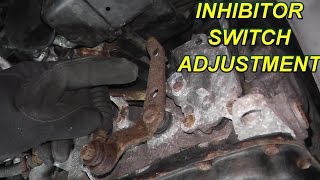
How to confirm: A technician can check the alignment of the inhibitor switch. There is typically an alignment hole on the switch body and lever that must line up when the transmission is in Neutral.
Typical fix: Loosen the switch mounting bolts, align it correctly in the Neutral position, and retighten. Adjust the shift cable if necessary.
Est. part cost: $0 (labor only)
Rare But Worth Checking
- Blown Fuse: In some cases, a fuse related to the transmission control circuit (e.g., TCU2 fuse in the engine bay fuse box) can be the cause. A technician found a missing backup light fuse caused a P0707 on a Sportage. Always check the simple things first.
- Faulty Powertrain Control Module (PCM) or Transmission Control Module (TCM): This is very rare. The control module should only be considered after all other possibilities, including the sensor, wiring, and adjustment, have been exhaustively tested and ruled out.
Diagnosis Steps
- Connect a professional OBD-II scanner to read the code and view live data. Note any other codes present.
- Observe the transmission range sensor PID on the scan tool (e.g., 'Current Gear Shift Lever Switch'). Shift the lever through all positions (P, R, N, D). The display should match the gear lever position. A low voltage reading (e.g., <0.5V) or a signal that doesn't change confirms the condition.
- If the data is incorrect or doesn't change, the problem is likely the sensor or its circuit.
- Visually inspect the inhibitor switch connector (C301) and wiring harness for any signs of damage, corrosion, or loose connections. The connector is on the top/front of the transmission.
- Check relevant fuses, such as the 'TCU2' fuse in the engine bay fuse box.
- If wiring and fuses are good, test the sensor itself. Using a multimeter and wiring diagram, check for reference voltage at the connector. Pin 3 (Pink wire) should have battery voltage with the ignition on.
- Test the switch outputs by backprobing the connector. Check for battery voltage on the corresponding signal pin when a gear is selected: Pin 8 (Brown wire) for Park, Pin 4 (Red wire) for Reverse, Pin 7 (Green wire) for Neutral, and Pin 9 (Pink wire) for Drive. A missing voltage indicates a fault.
- If the sensor is removed, perform a continuity test. Check for continuity (near 0 ohms) between the power input pin and the specific gear output pin as the switch is manually rotated. An open circuit (infinite resistance) indicates a bad switch.
- As an edge case, check the ground bolt for the rear combination lamp harness, as a poor ground there has been linked to inhibitor switch issues in a Kia TSB.
- If the sensor and its direct wiring test good, a more in-depth diagnosis of the wiring harness back to the TCM is required to check for an open or short circuit.
- As a last resort, if the sensor and wiring are confirmed to be good, the TCM may be at fault.
Parts You'll Likely Need
- Inhibitor Switch (Transmission Range Sensor)
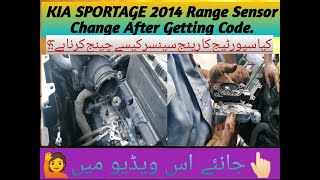
(OEM #42700-3B700)— This is the most common failure part for this code on this specific vehicle, with a history of service actions for related issues. This part has been superseded by updated versions. 🎬 See how to replace the Kia inhibitor switch step by step
Trusted brands: Kia (Genuine), Hyundai (Genuine), Standard Motor Products (Aftermarket), Dorman (Aftermarket)
OEM price range: $40-$80
Aftermarket price range: $25-$60
Related Codes That Often Appear With This One
- P0705 — P0705 indicates a general malfunction in the transmission range sensor circuit, while P0707 is specific to a low input. They are often caused by the same failing component. 🎬 Watch this guide on P0705 causes and fixes Kia Technical Service Bulletin SA317A directly links P0705 to a faulty inhibitor switch.
- P0706 — P0706 indicates a range/performance issue with the sensor circuit. It can appear alongside P0707 if the sensor's signal is erratic.
- P0708 — P0708 indicates a high circuit input from the same sensor. Seeing both P0707 and P0708 might suggest an intermittent wiring problem or a sensor that is failing erratically.
Technical Service Bulletins (TSBs) & Recalls
- SA317A: Service Action for Inhibitor Switch Replacement on various 2017 Kia models, including the Sportage, due to incorrect gear position signals.
- Hyundai TSB 17-AT-005: A related bulletin for Hyundai vehicles that provides detailed diagnostic steps for codes P0705, P0706, P0707, and P0708, confirming the shared nature of this problem.
- Kia TSB TRA 055: Provides a diagnostic flowchart for inhibitor switch issues, noting that problems are more common after heat soak and suggests checking the TCU2 fuse and the rear combination lamp ground bolt.
Platform-Specific Known Issues
- Kia issued Service Action SA317A to replace the inhibitor switch on some 2017 Sportage models (production dates June 7, 2016 to March 6, 2017) for symptoms including MIL illumination with DTC P0705, erratic shifting, and no-start conditions, all of which are related to the failure that can also cause P0707.
Mechanic-Grade Diagnostic Values
- Inhibitor Switch Power Supply Voltage — expected: Battery Voltage (approx. 12V). Failure: 0V or significantly low voltage
- Inhibitor Switch Signal Voltage (Park) — expected: Battery Voltage (approx. 12V). Failure: 0V when in Park
- Inhibitor Switch Signal Voltage (Reverse) — expected: Battery Voltage (approx. 12V). Failure: 0V when in Reverse
- Inhibitor Switch Signal Voltage (Neutral) — expected: Battery Voltage (approx. 12V). Failure: 0V when in Neutral
- Inhibitor Switch Signal Voltage (Drive) — expected: Battery Voltage (approx. 12V). Failure: 0V when in Drive
- Inhibitor Switch Continuity (Bench Test) — expected: Continuity (near 0 Ω). Failure: No continuity / Open circuit (infinite resistance)
Scan Tool Commands That Help
- Kia GDS / Professional Scan Tool: Live Data / Data Stream - 'Current Gear Shift Lever Switch' — This is the primary first step to confirm the fault. It allows you to see the gear position the TCM is receiving from the sensor in real-time as you move the shifter. An incorrect or unchanging reading points directly to a problem in the sensor circuit.
- Kia GDS: Flight Recorder — For intermittent no-start or shifting issues that are hard to replicate in the shop. The flight recorder can capture data leading up to the fault event while the customer is driving, which is especially useful for heat-soak related failures.
Wiring & Ground Locations
- C301 — On top of the transmission housing, where the shift linkage connects.. This is the main electrical connector for the inhibitor switch. All voltage and signal tests are performed here. Corrosion or damage to this connector is a common cause of P0707.
- TCU2 Fuse — In the engine compartment fuse/relay box.. This fuse supplies power to the transmission control circuits, including the inhibitor switch. A blown fuse will cause a loss of signal and trigger a low circuit code like P0707.
- Rear Combination Lamp Harness Ground — In the rear of the vehicle, likely in the trunk area near the tail light assemblies.. Kia TSB TRA 055 identifies a poor ground at this location as a potential, non-obvious cause of inhibitor switch-related DTCs. A bad ground here can introduce electrical noise or voltage drops on shared circuits, confusing the TCM.
When the Usual Fixes Don't Work
- While replacing the inhibitor switch is the most common fix, it's not a guaranteed solution. There are owner reports of issues persisting or changing after a replacement. For example, a new switch may be faulty out of the box, leading to new symptoms like transmission shuddering even if the original P0707 code is resolved. This underscores the importance of using a quality part and verifying the repair by checking live data and test driving.
OEM Part Supersession History
42700-3B700→42700-3B710— Part revision to improve reliability and address failures noted in service campaigns.42700-3B710→42700-26700— Further part revision and consolidation for broader vehicle application.
Heads up: This is the latest version and should be used for all repairs, replacing all previous part numbers.
Diagnostic Flowchart
Other Known Issues on This Vehicle
Issues unrelated to this code that are worth knowing about as an owner of this generation:
- Engine Failure (Theta II GDI) 🔴 High — Widespread across multiple model years, leading to major recalls. Can occur at various mileages. (Ref: NHTSA Recalls 17V224, SC172. Involves potential for engine seizure and fire risk due to debris from connecting rod bearing wear.)
- High Pressure Fuel Pipe Leak 🔴 High — Affects vehicles that had engines replaced under previous recalls. The fuel pipe may have been misaligned or improperly torqued. (Ref: NHTSA Recall SC172. A fuel leak in the presence of an ignition source increases fire risk.)
- Excessive Oil Consumption 🟠 Medium — Common complaint for the 2.4L GDI engine, often starting after 60,000 miles. Can lead to engine damage if not monitored. (Ref: While not a specific recall for this issue alone, it is often a symptom related to the larger engine problems covered by recalls and warranty extensions.)
- Trailer Hitch Wiring Harness Malfunction 🟡 Low — Affects vehicles equipped with the accessory tow hitch wiring harness. (Ref: NHTSA Recall SC142. The tow hitch module can malfunction, causing the trailer brake lights to stay illuminated, which can confuse other drivers.)
- Fickle Electrics and Electronics 🟡 Low — Some owners report intermittent issues with multimedia systems, lighting, and various control modules generating errors. (Ref: No specific recall, but noted in general reliability reviews and owner complaints.)
Used vs. New Parts: Buying Guide for This Vehicle
When a used part is the smart pick: For this specific repair, a used part from a salvage yard is NOT recommended. The original part is a known high-failure item, as evidenced by Kia's own service action (SA317A). The risk of installing a used part that is already near the end of its service life is very high.
What to inspect on the donor part:
- Not applicable, as used parts are not advised for this component.
OEM-only on this vehicle (don't cheap out):
- While not strictly 'OEM-only', using a new Genuine Kia/Hyundai part (specifically the latest superseded number, 42700-26700) is the safest choice to ensure you get the most updated and reliable version. The cost difference between OEM and aftermarket is often minimal.
Aftermarket brands forum-validated for this vehicle:
- Standard Motor Products (SMP)
- Dorman
Brands owners have reported issues with on this vehicle:
- No-name, unbranded parts from online marketplaces should be avoided due to the critical function of this sensor and reports of new parts being faulty out of the box.
Real Owner Stories
Aggregated from forums and TSBs cited above. Mileages and costs reflect what owners reported in those sources.
2017 Kia Sportage
Symptoms: MIL illumination, erratic shifting, and no-start conditions.
What fixed it: Replacement of the inhibitor switch as part of Service Action SA317A.
Source hint: Service Action SA317A
2010 Hyundai Accent
Symptoms: P0707 code appearing; vehicle would not crank if the replacement switch was not properly adjusted.
What fixed it: Replacement and proper alignment of the inhibitor/range switch.
Source hint: Hyundai-Forums.com - 'cel code p0707' (2010)
Related OBD-II Codes
Frequently Asked Questions
Is there a specific service action for the 2017 Kia Sportage regarding the P0707 code?
Why does my Sportage only fail to start after I've been driving it for a while?
Can a blown fuse cause a P0707 code on my Kia?
My instrument cluster isn't showing 'D' when I shift; is this related to P0707?
Could a problem with my taillights be related to this transmission code?
What is the typical cost for the part needed to fix P0707 on a Sportage?
Helpful Videos

Used OEM Parts in Stock


New Aftermarket Parts Available




The information in this article is provided for general reference and educational purposes only. Vehicle specifications, procedures, and part compatibility can vary by production date, trim level, and region. Always consult your vehicle's factory service manual and verify part numbers before purchasing or performing repairs. Safety-critical components such as airbags, seat belts, and braking systems should be installed by a qualified professional.
- Kia Sportage:
- 🎬 Helpful Videos
- 🛍️ Shop This Part
- What's Unique About the 2016-2017 Kia Sportage
- Symptoms You May Notice
- Most Likely Causes
- Rare But Worth Checking
- Diagnosis Steps
- Parts You'll Likely Need
- Related Codes That Often Appear With This One
- Technical Service Bulletins (TSBs) & Recalls
- Platform-Specific Known Issues
- Mechanic-Grade Diagnostic Values
- Scan Tool Commands That Help
- Wiring & Ground Locations
- When the Usual Fixes Don't Work
- OEM Part Supersession History
- Diagnostic Flowchart
- Other Known Issues on This Vehicle
- Used vs. New Parts: Buying Guide for This Vehicle
- Real Owner Stories
- 2017 Kia Sportage
- 2010 Hyundai Accent
- Related OBD-II Codes
- Frequently Asked Questions
- 🎟️ Get 5% Off