

P0707 on 2016-2017 Kia Forte: Transmission Range Sensor Circuit Low Causes and Fixes
On a 2016-2017 Kia Forte, code P0707 is most often caused by a faulty transmission inhibitor switch. Kia issued a service action (SA317) for this known issue on 2017 models. Replacing the switch is the common fix, costing around $50-$70 for the part and 1-2 hours of labor.
- P0707 on a 2016-2017 Forte is almost always caused by a faulty inhibitor switch (also called a transmission range sensor).
- Kia issued a service action (SA317) for this exact problem on 2017 models, making it a well-documented issue.
- Symptoms include a no-start condition, harsh shifting, and an incorrect gear display.
- The fix is to replace the inhibitor switch on top of the transmission with the updated part (OEM P/N: 42700-3B700QQK).
- While DIY is possible, professional repair is recommended to ensure correct alignment and prevent safety issues.
What's Unique About the 2016-2017 Kia Forte
The 2016-2017 Kia Forte is specifically affected by a known issue with its transmission inhibitor switch. Kia acknowledged this by issuing Service Action SA317 for certain 2017 Forte models produced from June 28, 2016, to March 7, 2017. This campaign was created to address a higher-than-normal failure rate of this specific part, which can cause erratic shifting, a no-start condition, and trigger fault codes like P0707 and P0705. While wiring or other issues can cause this code, the faulty switch itself is a documented weak point on this platform and many other Kia/Hyundai vehicles from the same era that use the A6 family of transmissions.
Symptoms You May Notice
- Check Engine Light is on
- Vehicle will not start, or will only start in Neutral
- Harsh, erratic, or delayed gear shifting
- Gear position indicator on the dashboard is incorrect or does not display
- Vehicle may enter 'limp mode' (stuck in a single gear)
- Reverse lights may not work
- Slight engine stumble when shifting into Park after a long drive
- Replacing the transmission valve body or solenoids. Internal transmission problems are unlikely to cause a specific 'circuit low' code like P0707 without other accompanying codes related to pressure or gear ratios.
- Replacing the battery or starter when a no-start condition is present. The root cause is the inhibitor switch preventing the starting circuit from engaging because it cannot confirm the vehicle is in Park or Neutral.
Most Likely Causes
- Faulty Inhibitor Switch (Transmission Range Sensor) 🔴 High Probability A known issue acknowledged by Kia through Service Action SA317 for 2017 models, indicating a component defect. This part is a common failure point across multiple Hyundai and Kia models sharing the 6-speed automatic transmission.
How to confirm: Check if the vehicle's VIN falls under the SA317 service action. A technician can also test the sensor's voltage output at the connector with a multimeter while shifting through the gears. An incorrect or missing voltage reading (e.g., below 0.5V) points to a bad sensor. A scan tool can also read the live data from the sensor.
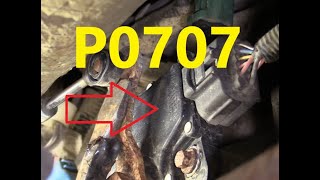
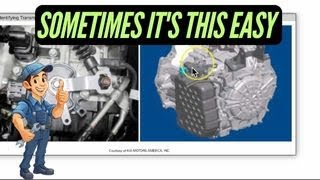
Typical fix: Replace the inhibitor switch located on the top of the transmission. 🎬 Watch this step-by-step transmission range sensor DIY replacement tutorial The new part must be correctly aligned in the Neutral position.
Est. part cost: $45-$70 - Damaged Wiring or Corroded Connector 🟡 Medium Probability The sensor and its wiring are located on top of the transmission, where they are exposed to heat, moisture, and vibration which can lead to corrosion or wire damage over time.
How to confirm: Visually inspect the wiring harness and connector for the inhibitor switch. Look for green/white corrosion on the pins, chafed or broken wires, or a loose connection. Perform a continuity test on the wires between the switch and the control module.
Typical fix: Clean the connector terminals with an electrical contact cleaner. Repair or replace any damaged sections of the wiring harness. Ensure the connector is securely seated.
Est. part cost: $5-$50 - Misadjusted Inhibitor Switch or Shift Linkage ⚪ Low Probability
How to confirm: Check if the alignment marks on the inhibitor switch line up correctly when the transmission is in Neutral. If the shift cable is loose or the switch has been previously replaced incorrectly, it can send the wrong signal. This is a common error during installation.
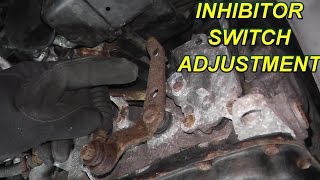
Typical fix: Loosen the switch's mounting bolts and rotate it until the alignment marks are correct, then retighten the bolts. Adjust the shift linkage cable if necessary. 🎬 See how to properly align and adjust an inhibitor switch
Est. part cost: $0
Rare But Worth Checking
- Faulty Powertrain Control Module (PCM): This is very uncommon. The PCM should only be considered after the sensor, wiring, and adjustment have all been confirmed to be good. A PCM failure would likely be accompanied by other trouble codes and is the last item to check.
Diagnosis Steps
- Read the fault codes with an OBD-II scanner to confirm P0707 is present and note any other codes like P0705 or P0708.
- Check if your vehicle's VIN is covered by Kia Service Action SA317A, SA317B, or SA317C. If so, the inhibitor switch is the most likely cause. The campaign covers 2017 Forte models made between June 28, 2016, and March 7, 2017.
- Visually inspect the inhibitor switch connector and wiring harness on top of the transmission. Look for any signs of corrosion, water intrusion, or physical damage to the wires.
- With the transmission in Neutral, check the alignment of the inhibitor switch. Ensure the alignment marks on the switch body and lever are lined up. Incorrect adjustment is a common issue.
- Using a multimeter, test the sensor's output signals at the connector. You should see voltage changes as you move the shifter through each gear. A constant low or no voltage reading (below 0.5V) indicates a failed sensor or a wiring issue.
- If the sensor tests good, check for continuity and voltage on the wiring harness between the sensor and the PCM to rule out a wiring fault, short to ground, or power supply issue.
- If the sensor and wiring are confirmed to be good, the issue may be with the Powertrain Control Module (PCM), though this is rare.
Parts You'll Likely Need
- Inhibitor Switch (Transmission Range Sensor)
(OEM #42700-3B700QQK)— This is the known failing part for this code on this vehicle, as identified in Kia's own service action SA317A.
Trusted brands: Kia (Genuine), Hyundai (Genuine)
OEM price range: $45-$70
Aftermarket price range: $30-$60
Related Codes That Often Appear With This One
- P0705 — P0705 indicates a general 'Transmission Range Sensor Circuit Malfunction'. This code is explicitly mentioned in Kia Service Action SA317 and is often triggered by the same faulty inhibitor switch that causes P0707.
- P0708 — This code means 'Transmission Range Sensor Circuit High Input'. It's the opposite of P0707 but can be caused by the same failing sensor or wiring harness, depending on the nature of the electrical fault (short to ground vs. short to power).
- P0706 — This code means 'Transmission Range Sensor Circuit Range/Performance'. It indicates the sensor signal is erratic or not plausible, which can happen as the inhibitor switch begins to fail intermittently before a complete circuit low or high fault occurs.
Technical Service Bulletins (TSBs) & Recalls
- SA317A / SA317B / SA317C: Service Action: Inhibitor Switch Replacement. This TSB confirms a known defect with the inhibitor switch on certain 2017 Forte models and provides the procedure for replacement. It also lists other affected models like the Optima, Sorento, and Sportage, confirming a widespread issue with this part.
Platform-Specific Known Issues
- Kia Service Action SA317 (revisions A, B, C) was issued for 2017 Kia Forte models (produced June 28, 2016 - March 7, 2017) to replace a faulty inhibitor switch that causes shifting problems, no-start conditions, and sets trouble codes like P0705 and P0707.
- Owner forums for Hyundai and Kia vehicles frequently discuss this P0707 code, with the overwhelming consensus pointing to the inhibitor switch as the cause. Many owners report successfully fixing the issue by replacing this part themselves or at a dealership.
Mechanic-Grade Diagnostic Values
- Inhibitor Switch Power Supply Voltage — expected: Battery Voltage (approx. 12V) with ignition ON. Failure: No voltage indicates a wiring or fuse issue before the switch.
- Inhibitor Switch Signal 1 (Park) Voltage — expected: Approx. 12V when in Park, 0V in other gears.. Failure: No voltage in Park or voltage in other gears indicates a faulty switch.
- Inhibitor Switch Signal 2 (Reverse) Voltage — expected: Approx. 12V when in Reverse, 0V in other gears.. Failure: No voltage in Reverse or voltage in other gears indicates a faulty switch.
- Inhibitor Switch Signal 3 (Neutral) Voltage — expected: Approx. 12V when in Neutral, 0V in other gears.. Failure: No voltage in Neutral or voltage in other gears indicates a faulty switch.
- Inhibitor Switch Signal 4 (Drive) Voltage — expected: Approx. 12V when in Drive, 0V in other gears.. Failure: No voltage in Drive or voltage in other gears indicates a faulty switch.
Scan Tool Commands That Help
- Kia GDS (Global Diagnostic System): Current Data / Data Analysis — To view the live data parameter for 'Current Gear Shift Lever Switch'. This allows a technician to see the gear position the TCM is reading in real-time as the shifter is moved, confirming if the signal is being received correctly.
- Kia GDS (Global Diagnostic System): Resetting Auto Trans Adaptive Values — After replacing the inhibitor switch or other transmission components, this function should be used to clear the learned values from the TCM, which can help resolve shifting issues.
Wiring & Ground Locations
- Transmission Ground — A ground bolt located on the transmission case itself. The main harness ground is typically on the chassis near the driver's side strut tower.. A poor ground connection at the transmission can cause a voltage drop in sensor circuits, including the inhibitor switch, potentially leading to a P0707 code even if the switch and wiring are good. Ensuring this ground is clean and tight is a critical diagnostic step.
- Inhibitor Switch Connector — On top of the transmission, where the shift linkage connects.. This is the primary point for testing voltage and continuity. It is exposed to heat and moisture, making it a common point of failure due to corrosion or damaged pins.
- TCU2 Fuse — In the engine room fuse box.. A Kia TSB for inhibitor switch diagnosis suggests checking the TCU2 fuse, which may supply power to the switch circuit. A blown fuse would cause a loss of signal and trigger a P0707.
Real Owner Repair Stories
- Reddit user in r/AskAMechanic (2017 Kia Niro (shares similar components)) — Check engine light with code P0705 (often seen with P0707).
✅ What actually fixed it The user was quoted $677 for a repair, which they identified as the inhibitor switch replacement. This aligns with the known common cause for these related codes.
OEM Part Supersession History
42700-3B700QQK→42700-26700— Part consolidation and potential design revision.
Heads up: The new part number 42700-26700 replaces multiple older numbers including 427003B700, 427003B100, and 427003B500, indicating broad compatibility.42700-3B700→42700-26700— Part update/revision.
Model Year Variations Within This Range
- 2017: The 2017 Kia Forte is specifically named in Service Action SA317 for a defective batch of inhibitor switches. While the 2016 model uses a similar (or identical) part and can suffer the same failure, it was not included in this specific service campaign, meaning repairs would not be covered under the action.
Diagnostic Flowchart
Other Known Issues on This Vehicle
Issues unrelated to this code that are worth knowing about as an owner of this generation:
- Engine Failure / Excessive Oil Consumption (2.0L Nu Engine) 🔴 High — Widespread issue leading to class-action lawsuits and recalls. Problems can appear at relatively low mileage (e.g., 40,000 miles) but are common across the vehicle's lifespan. (Ref: Recall SC210 (NHTSA 21V-260) for 2017-2018 models due to oil pump failure risk. Broader engine issues are covered under various legal settlements.)
- Air Bag Control Unit (ACU) Malfunction 🔴 High — A recall was issued for a significant number of vehicles where the ACU cover could damage the circuit board, preventing airbags from deploying. (Ref: NHTSA Recall 22V-021 covers 2017-2018 Forte models.)
- Failing Ignition Coils 🟠 Medium — A common problem reported by owners, typically occurring between 20,000 and 40,000 miles, leading to engine misfires, shaking, and stalling.
- Internal Trunk Latch Failure 🟡 Low — The trunk latch may become damaged, preventing the trunk from being opened from the inside, which is a safety compliance failure. (Ref: NHTSA Recall 21V-594 covers 2016-2018 Forte models.)
Used vs. New Parts: Buying Guide for This Vehicle
When a used part is the smart pick: For this specific repair, buying a used inhibitor switch is NOT recommended. The part is a known high-failure item due to a design or manufacturing defect, as acknowledged by Kia's service action (SA317). A used part from a junkyard is highly likely to have the same defect and could fail shortly after installation, wasting time and money.
What to inspect on the donor part:
- Not applicable, as a used part is not advised.
OEM-only on this vehicle (don't cheap out):
- Inhibitor Switch (Transmission Range Sensor)
Brands owners have reported issues with on this vehicle:
- Unbranded or 'white-box' aftermarket switches should be avoided. While they may be cheaper, their internal components may not meet OEM specifications for durability and resistance to heat/vibration, leading to premature failure. Given the critical safety function of this switch, sticking with a genuine Kia/Hyundai part is the most reliable choice.
Real Owner Stories
Aggregated from forums and TSBs cited above. Mileages and costs reflect what owners reported in those sources.
2017 Kia Forte
Symptoms: Shifting problems, no-start conditions, and the Check Engine Light triggered codes P0705 and P0707.
What fixed it: Replacement of the faulty inhibitor switch as part of Service Action SA317.
Source hint: Kia Service Action SA317 (revisions A, B, C)
2010 Hyundai Accent
Symptoms: Check engine light on with code P0707.
What fixed it: Checking the switch adjustment before proceeding with replacement.
Source hint: Hyundai-Forums.com: Thread 'cel code p0707'
2009 Hyundai Elantra
Symptoms: P0707 fault code present.
What fixed it: Re-adjusting the range switch following detailed step-by-step instructions from the service manual.
Source hint: Hyundai-Forums.com: Thread 'Please help..p0707'
Related OBD-II Codes
Frequently Asked Questions
Is there a specific service action for the 2017 Kia Forte regarding the P0707 code?
Why does my Kia Forte only start when the shifter is in Neutral?
Can I adjust the inhibitor switch myself on my Kia Forte to fix P0707?
What other Kia models share this inhibitor switch issue?
How much does the replacement part for the P0707 code typically cost?
Could my P0707 code be related to the engine recalls on the 2017 Forte?
Helpful Videos

Used OEM Parts in Stock

New Aftermarket Parts Available


The information in this article is provided for general reference and educational purposes only. Vehicle specifications, procedures, and part compatibility can vary by production date, trim level, and region. Always consult your vehicle's factory service manual and verify part numbers before purchasing or performing repairs. Safety-critical components such as airbags, seat belts, and braking systems should be installed by a qualified professional.
- Kia Forte:
- 🎬 Helpful Videos
- 🛍️ Shop This Part
- What's Unique About the 2016-2017 Kia Forte
- Symptoms You May Notice
- Most Likely Causes
- Rare But Worth Checking
- Diagnosis Steps
- Parts You'll Likely Need
- Related Codes That Often Appear With This One
- Technical Service Bulletins (TSBs) & Recalls
- Platform-Specific Known Issues
- Mechanic-Grade Diagnostic Values
- Scan Tool Commands That Help
- Wiring & Ground Locations
- Real Owner Repair Stories
- OEM Part Supersession History
- Model Year Variations Within This Range
- Diagnostic Flowchart
- Other Known Issues on This Vehicle
- Used vs. New Parts: Buying Guide for This Vehicle
- Real Owner Stories
- 2017 Kia Forte
- 2010 Hyundai Accent
- 2009 Hyundai Elantra
- Related OBD-II Codes
- Frequently Asked Questions
- 🎟️ Get 5% Off