

P0706 on 2002-2013 Nissan Altima: Transmission Range Sensor Causes and Fixes
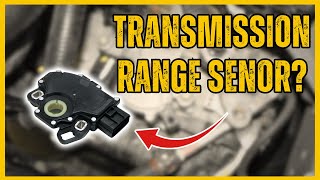
This code indicates a problem with the Transmission Range Sensor (TRS) circuit. The most common fix is replacing the sensor, also known as an inhibitor switch or neutral safety switch. On 4th gen (CVT) models, the OEM part number is often 31918-1XG0B. Expect to pay around $30-$100 for an aftermarket part and $100-$200 for an OEM part. It's a manageable DIY job for those with some experience as the sensor is external to the transmission.
- P0706 on a 2002-2013 Altima almost always points to a problem with the Transmission Range Sensor (also called an inhibitor switch).
- Key symptoms include the car not starting, starting only in Neutral, or harsh/erratic shifting.
- The most likely fix is replacing the sensor itself, which is located on the outside of the transmission.
- Before replacing the sensor, check its electrical connector for corrosion and ensure the sensor is properly aligned.
- This is a moderately difficult DIY repair, but professional diagnosis is wise to avoid replacing the wrong part.
What's Unique About the 2002-2013 Nissan Altima
For the 2002-2013 Nissan Altima, this code spans two distinct generations: the 3rd gen (2002-2006, L31) with a conventional 4-speed or 5-speed automatic transmission and the 4th gen (2007-2013, L32) which primarily uses a Continuously Variable Transmission (CVT). While the cause is almost always the same—a faulty Transmission Range Sensor (TRS)—the part itself and its location on the transmission can differ. On these Altimas, the part is also commonly called an 'inhibitor switch' or 'neutral safety switch'. The failure is typically the sensor itself or its external wiring, rather than a more complex internal transmission issue like a failed valve body.
Generation note: This guide covers the 3rd generation (2002-2006, L31) and 4th generation (2007-2013, L32) Nissan Altima. The 3rd gen used a conventional 4-speed (RE4F04B) or 5-speed automatic, while the 4th gen moved to a CVT (e.g., RE0F09A/JF010E). The function of the Transmission Range Sensor is the same for both, but the specific part number and location on the transmission housing will differ. Always verify the part with your vehicle's VIN. For the 4th gen, a common OEM part number is 31918-1XG0B.
Symptoms You May Notice
- Check Engine Light is on.
- Engine will not start, or only starts in Neutral but not Park (or vice-versa).
- Shifter is difficult to move out of Park.
- Harsh or delayed gear engagement.
- Transmission may be stuck in one gear (limp mode).
- Incorrect gear position displayed on the dashboard.
- Reverse lights do not work.
- Decreased fuel economy.
- Replacing the starter when the vehicle has a no-crank symptom. The root cause is often the range sensor not telling the computer it's safe to start.
- Assuming the entire transmission has failed. This code points to a specific, relatively inexpensive sensor circuit, not a major internal mechanical failure.
- Replacing the valve body. While valve body issues are common on some CVTs, they typically present with different codes (like pressure solenoid codes) and symptoms, such as shuddering or slipping.
Most Likely Causes
- Faulty Transmission Range Sensor (Inhibitor Switch) 🔴 High Probability The sensor is mounted externally on the transmission, making it susceptible to moisture, dirt, and corrosion over time, leading to internal wear and signal failure. This is the most frequent point of failure for this code.
How to confirm: Use a scan tool to monitor the sensor's live data while shifting; the reading should match the gear selected. A professional scanner can read the specific voltage parameter for Range Sensor A, which should change predictably as you move the shifter (e.g., Park ≈ 0V, Reverse ≈ 5V, Neutral ≈ 2.5V). A multimeter can also be used to test for continuity across the sensor's pins for each gear position, as specified in the factory service manual.
Typical fix: Replace the Transmission Range Sensor. This involves disconnecting the battery, removing the shift linkage from the sensor, unplugging the electrical connector, unbolting the old sensor, and installing the new one. Proper alignment during installation is critical; this is often done by aligning marks on the sensor with the transmission in Neutral.
Est. part cost: $30 - $150 - Damaged Wiring or Corroded Connector 🟡 Medium Probability The wiring harness leading to the sensor is exposed to road debris, water, and heat, which can cause wires to break or the connector pins to corrode, especially at the connector itself.
How to confirm: Visually inspect the entire length of the wiring harness for cracks, fraying, or signs of heat damage. Unplug the connector and check for green or white corrosion on the pins. A multimeter can be used to check for continuity and shorts between the sensor connector and the TCM connector.
Typical fix: Repair the damaged section of wire or clean the connector terminals with an electrical contact cleaner. If the connector itself is damaged, it will need to be replaced.
Est. part cost: $5 - $50 - Misaligned Transmission Range Sensor ⚪ Low Probability This can happen after a previous repair if the sensor was not correctly aligned with the neutral position during installation. It can also occur if the shift linkage itself is worn or loose.
How to confirm: If the car only starts in Neutral, or you have to jiggle the shifter to get it to start, the sensor's alignment is likely off. A scan tool may show a gear position that is slightly off from the selected gear.
Typical fix: Loosen the sensor's mounting bolts and rotate it slightly until the alignment marks (often a line or a pinhole) line up correctly when the transmission is in Neutral. Then, retighten the bolts.
Est. part cost: $0
Rare But Worth Checking
- Faulty Transmission Control Module (TCM) or Powertrain Control Module (PCM): This is very rare. Before suspecting the TCM/PCM, all other possibilities (sensor, wiring, adjustment) must be exhaustively ruled out. A dealership-level scan tool may be needed for a definitive diagnosis. On some 2013 models, a faulty TCM was subject to a recall as it could cause other CVT issues.
- Dirty or Low Transmission Fluid: While not a direct cause of a P0706 electrical fault, very old, low, or contaminated fluid can cause erratic transmission behavior, pressure issues, and shifting problems that might be misinterpreted by the vehicle's computers. It's a simple and important maintenance item to check first.
Diagnosis Steps
- Read the trouble codes with an OBD-II scanner and note any other codes present, especially P0705.
- Check the transmission fluid level and condition. Top off or change if necessary. Note that many CVTs do not have a traditional dipstick.
- Attempt to start the vehicle in both Park and Neutral. If it only starts in one, this strongly suggests a sensor alignment or failure issue.
- Visually inspect the Transmission Range Sensor, its connector, and wiring harness for any obvious signs of damage, corrosion, or loose connections.
- With the ignition on (engine off), use a scan tool to view the live data for the transmission range sensor. Shift through all gears (P, R, N, D, etc.) and verify that the sensor's reported position on the scanner matches the physical gear selection.
- If the live data is incorrect or erratic, perform a continuity test on the sensor itself using a multimeter, following the procedure in your vehicle's service manual.
- If the sensor tests good, check the wiring between the sensor and the TCM for continuity and shorts to power or ground.
- If both the sensor and wiring are confirmed to be good, the issue may be with the TCM, which requires professional diagnosis.
Parts You'll Likely Need
- Transmission Range Sensor / Inhibitor Switch
(OEM #31918-1XG0B (4th Gen CVT, supersedes 31918-1XG0A), 31918-80X02 (Common for 3rd Gen))— This is the component that fails most frequently, causing the P0706 code. It is a combined electronic sensor and switch that wears out over time.
Trusted brands: Hitachi, Dorman, Rostra, Delphi, ACDelco
OEM price range: $100-$200
Aftermarket price range: $30-$100
Related Codes That Often Appear With This One
- P0705 — P0705 indicates a general malfunction in the same Transmission Range Sensor circuit, whereas P0706 points specifically to a range/performance problem. They often appear together and point to the same faulty component.
Platform-Specific Known Issues
- CVT vs. Conventional Automatic: The 3rd generation (2002-2006) uses a conventional automatic transmission (RE4F04B), while the 4th generation (2007-2013) uses a CVT (like the RE0F09A/JF010E). The range sensor is external and replaceable on both, but part numbers differ. It's crucial to get the correct part for your specific transmission type.
Mechanic-Grade Diagnostic Values
- Transmission Range Sensor (TRS) Input Voltage — expected: Should be 12V or 5V depending on the specific model year and system design when tested at the sensor connector with key on, engine off.. Failure: No voltage or significantly low voltage indicates a problem with the power supply from the TCM/PCM or a wiring issue upstream.
- Transmission Range Sensor (TRS) Signal Voltage (Live Data) — expected: Voltage should change predictably as the shifter is moved. Generic example: Park ≈ 0V, Reverse ≈ 5V, Neutral ≈ 2.5V, Drive ≈ 4V. Deviations greater than ±0.5V are suspect.. Failure: Voltage does not change, is stuck at one value, or is erratic while moving the shifter.
- Transmission Range Sensor (TRS) Pin-to-Ground Resistance — expected: Resistance should vary for each gear position. For example, it might be 100Ω in Park and 500Ω in Drive. The exact values must be referenced from the vehicle's specific Factory Service Manual (FSM).. Failure: An open circuit (infinite resistance) or a reading that doesn't change with gear selection points to a faulty sensor.
Scan Tool Commands That Help
- Nissan CONSULT: Work Support > Save/Write Calibration Data — This function is critical if the Transmission Control Module (TCM) is replaced. The calibration data from the old TCM must be saved and written to the new one. Failure to do this can cause shifting issues even with a new, functional TCM.
- Nissan CONSULT: Work Support > Erase/Write Calibration Data — This is required when the entire CVT assembly or the valve body is replaced. A disc with the calibration file is typically provided with the new part, and this data must be written to the TCM.
Wiring & Ground Locations
- Main Battery Ground Cable — Connects from the negative battery terminal to the vehicle chassis and then to a bolt on top of the transmission housing.. A corroded or loose ground connection at the transmission can cause a host of electrical issues, including erratic sensor readings. The TRS relies on a stable ground reference. On 4th gen Altimas, the OEM ground cable part number is often 24080-JA10A.
- TCM Connector (4th Gen CVT) — The TCM is located in the left front of the engine compartment. It has a large, multi-pin connector (often 40+ pins).. The wiring from the Transmission Range Sensor terminates at this connector. A visual inspection for corrosion or backed-out pins at the TCM connector is a crucial diagnostic step if the sensor and its local connector test good.
- Ground Point E15 — Located on the lower left side of the engine compartment, per wiring diagrams for 2009 models.. This is a key engine bay ground point. While not directly for the TRS, a poor connection here can introduce electrical noise that affects various sensors, including the TRS.
Real Owner Repair Stories
- YouTube Diagnosis Video (2004 Chrysler (demonstrates a universal diagnostic process for P0706)) — All gear indicator lights on the dash were lit up, transmission in fail-safe (limp mode), P0706 code stored.
❌ Tried (didn't work) A previous shop had replaced the Intelligent Power Module (IPM) with no success., The technician in the video replaced the transmission range sensor (solenoid pack on this model), which also did not fix the issue.
✅ What actually fixed it After verifying the sensor and wiring were good, the technician diagnosed a faulty Powertrain Control Module (PCM). The PCM was not correctly processing the signal from the C3 switch input from the range sensor, even though the signal was present at the PCM connector.
OEM Part Supersession History
31918-1XG0A→31918-1XG0B— Part revision or supplier change.
Heads up: 31918-1XG0B is the current replacement for 31918-1XG0A for many 4th generation Altimas with a CVT. They should be interchangeable.31918-X420A, 31918-3XX0A→31918-1XK0A— Part consolidation and revision for newer models.
Heads up: Part number 31918-1XK0A is primarily for newer Nissan models (2013+) but sometimes shows up in catalogs for the L32 Altima. Always verify fitment with VIN, as connector or internal logic may differ.
Model Year Variations Within This Range
- 2002-2006 (3rd Gen / L31): These models use a conventional 4-speed (RE4F04B) or 5-speed automatic. The range sensor is still external but will have a different part number (e.g., 31918-80X02) and may have a different diagnostic procedure compared to the CVT models. The valve body and solenoids are a more common failure point for shifting issues on these transmissions, though P0706 still points to the sensor circuit.
- 2007-2013 (4th Gen / L32): Primarily uses a CVT. The TCM is more integrated and complex. After replacing the sensor, a TCM relearn or calibration may be needed in some cases, especially if other components like the valve body or TCM itself are disturbed or replaced.
Diagnostic Flowchart
Other Known Issues on This Vehicle
Issues unrelated to this code that are worth knowing about as an owner of this generation:
- Rusted Front Floor Pans (3rd Gen) 🔴 High — Very common on 2002-2006 models, especially in rust belt states. A design flaw traps moisture. (Ref: TSB NTB15-059 provides a repair plate procedure. A class-action lawsuit also addressed this.)
- Premature CVT Failure (4th Gen) 🔴 High — Widespread on 2007-2013 models, often manifesting as shuddering, hesitation, or complete failure before 100,000 miles. Issues were more frequent in 2007-2009 models. (Ref: Nissan extended the CVT warranty to 10 years/120,000 miles for many 2007-2010 models due to high failure rates.)
- Cracked Exhaust Manifold / Pre-Catalyst Failure (QR25DE Engine) 🔴 High — Common on the 2.5L 4-cylinder engine. The pre-catalyst material can break apart and get sucked into the engine, causing catastrophic failure. A crack often forms causing an exhaust leak. (Ref: A recall was issued for early models (2002-2003) for the pre-catalyst issue. TSB NTB19-006a addresses cracks on later models.)
- Crankshaft and Camshaft Position Sensor Failure 🟠 Medium — Extremely common across many Nissan models of this era, including the Altima. Causes stalling, no-start conditions, and rough running. (Ref: Recalls were issued for this problem on some model years.)
- Excessive Oil Consumption (QR25DE Engine) 🟠 Medium — Particularly noted on 2002-2006 models with the 2.5L engine. Can lead to engine damage if not monitored closely.
- Melting Dashboards 🟡 Low — On 2007-2009 models, the dashboard material can become sticky and melt in high heat and sun exposure, causing a glare on the windshield. (Ref: A class-action lawsuit was filed regarding this issue for various Nissan and Infiniti models.)
Used vs. New Parts: Buying Guide for This Vehicle
When a used part is the smart pick: A used part is a reasonable choice for the wiring harness connector (pigtail) if yours is damaged. A complete used sensor is risky due to unknown wear and exposure, but can be a low-cost gamble if sourced from a very low-mileage donor.
Donor-vehicle mileage cap: roughly under 75000 miles for the part to have meaningful remaining life.
What to inspect on the donor part:
- For a used sensor, check for physical cracks in the housing.
- Inspect the connector pins for any signs of corrosion (green/white powder) or being bent.
- Ensure the lever arm moves smoothly without binding.
- If buying a pigtail, ensure there is at least 6 inches of wire and that the insulation is not brittle or cracked.
OEM-only on this vehicle (don't cheap out):
- Transmission Control Module (TCM) - Used TCMs may be locked to a different vehicle's VIN and can be impossible to reprogram. It is highly recommended to use a new or professionally remanufactured OEM unit.
Aftermarket brands forum-validated for this vehicle:
- Hitachi (often the OEM supplier)
- Delphi
- ACDelco Professional
Brands owners have reported issues with on this vehicle:
- Unbranded, 'white box' parts from online marketplaces can have high failure rates. While the initial cost is low, they may not last, leading to repeat labor.
Related OBD-II Codes
Frequently Asked Questions
My 2009 Altima won't start in Park but starts in Neutral. Is this the P0706 code issue?
Is the transmission range sensor for a 2005 Altima the same as for a 2010 model?
I'm replacing the range sensor myself. What is the most critical step for a 2002-2013 Altima?
Why is the P0706 code so common on these Altimas?
Could the common CVT issues on my 2011 Altima be related to the P0706 code?
My mechanic checked the sensor and it's fine. What else could cause P0706?
Helpful Videos


We Have This Part in Stock

The information in this article is provided for general reference and educational purposes only. Vehicle specifications, procedures, and part compatibility can vary by production date, trim level, and region. Always consult your vehicle's factory service manual and verify part numbers before purchasing or performing repairs. Safety-critical components such as airbags, seat belts, and braking systems should be installed by a qualified professional.
- Nissan Altima:
- 🎬 Helpful Videos
- 🛍️ Shop This Part
- What's Unique About the 2002-2013 Nissan Altima
- Symptoms You May Notice
- Most Likely Causes
- Rare But Worth Checking
- Diagnosis Steps
- Parts You'll Likely Need
- Related Codes That Often Appear With This One
- Platform-Specific Known Issues
- Mechanic-Grade Diagnostic Values
- Scan Tool Commands That Help
- Wiring & Ground Locations
- Real Owner Repair Stories
- OEM Part Supersession History
- Model Year Variations Within This Range
- Diagnostic Flowchart
- Other Known Issues on This Vehicle
- Used vs. New Parts: Buying Guide for This Vehicle
- Related OBD-II Codes
- Frequently Asked Questions
- 🎟️ Get 5% Off