

P0706 on 2008-2017 Audi Q5: Transmission Range Sensor Fault Causes and Fixes
On a 2008-2017 Audi Q5, especially those with the 7-speed S-Tronic (DL501) transmission, P0706 almost always indicates a failure of the internal range sensor module (part of the F125 sensor assembly), which is integrated into the Mechatronic unit's circuit board. The most common and reliable fix is installing an OEM Mechatronic repair kit or sending the unit for rebuild, costing $900-$2,500 at a specialist shop. This is not a simple external sensor replacement.
- P0706 on a 2008-2017 Audi Q5 is a serious code that points to an internal transmission fault.
- The cause is almost always the sensor module inside the Mechatronic unit, not an external part.
- Do not replace the entire transmission. The fix is to repair or replace the Mechatronic unit or its internal circuit board.
- This is not a DIY job. Seek a qualified independent Audi specialist or a dealership for diagnosis and repair.
- Symptoms include a flashing PRNDS light, limp mode, and potentially a no-start condition.
What's Unique About the 2008-2017 Audi Q5
Unlike many vehicles where the range sensor is a simple, external bolt-on switch, on the Audi Q5 with the 7-speed S-Tronic DL501 (0B5) transmission, this sensor (F125) is integrated into a complex printed circuit board inside the transmission's Mechatronic unit. This design means a simple sensor swap is not possible. The failure of this specific circuit board is a well-documented, high-frequency issue with this transmission, often requiring specialized internal repair of the Mechatronic unit rather than a simple external part replacement.
Symptoms You May Notice
- "Gearbox malfunction: you can continue driving" warning message on the instrument cluster.
- Flashing PRNDS gear position indicator on the dashboard.
- Vehicle enters 'limp mode,' often getting stuck in a single gear.
- Harsh clunk or delayed engagement when shifting out of Park or into Reverse.
- Engine will not start because the vehicle cannot confirm it is in Park or Neutral.
- Reverse lights may not work.
- Key may become stuck in the ignition.
- Car jerks or RPMs pulse between 1500-2000 RPM as the TCM struggles with an invalid gear position signal.
- Replacing the entire transmission. This is almost never necessary, as the fault is isolated to the serviceable Mechatronic unit.
- Replacing the external gear shifter assembly. The problem is rarely in the cabin shifter; it's in how the transmission interprets the position.
Most Likely Causes
- Internal Mechatronic Sensor Module Failure 🔴 High Probability The range sensor (F125) is integrated into a circuit board within the S-Tronic DL501 Mechatronic unit. This board is a known high-failure item due to heat, vibration, and potential degradation from transmission fluid, as noted in Audi TSBs. The circuit traces or the sensor itself can fail, sending implausible signals.
How to confirm: After confirming external wiring is intact, a diagnostic scan tool (like VCDS) showing fault code 17090 (P0706) and erratic or implausible signals from the F125 sensor in the live data measuring blocks while moving the shifter points to an internal fault.
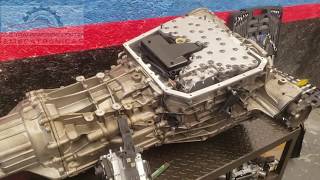
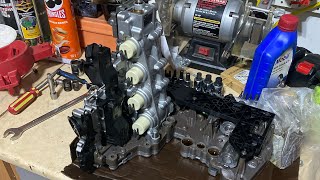
Typical fix: Install a Mechatronic repair kit 🎬 See how to rebuild the unit using a repair kit (which replaces the faulty internal circuit board and solenoids) or remove the entire Mechatronic unit and send it to a specialist for rebuilding. Full Mechatronic replacement is a more expensive option.
Est. part cost: $400-$900 for a repair kit or rebuild service. - Damaged Wiring or Connector ⚪ Low Probability The main transmission harness connector is exposed to the elements under the vehicle and can be susceptible to corrosion, moisture intrusion, or physical damage from road debris.
How to confirm: Visually inspect the large, circular main electrical connector at the transmission for green/white corrosion, bent pins, or damaged wires. Perform a continuity test on the relevant wires from the TCM to the transmission connector.
Typical fix: Clean the connector pins with a contact cleaner and apply dielectric grease. If the connector or wiring is damaged, a new connector pigtail or wire repair is needed.
Est. part cost: $20-$100 - Dirty or Low Transmission Fluid ⚪ Low Probability While less common as a direct cause for P0706, extremely degraded or low fluid can cause erratic hydraulic pressure and shifting, potentially exacerbating sensor issues. The DL501 has two separate fluid circuits, and wear particles from the clutch side can contaminate the Mechatronic side. An Audi TSB for similar models suggests a fluid change as a preliminary step.
How to confirm: Check the transmission fluid level and condition according to the manufacturer's procedure. This is difficult without a lift and scan tool and is best left to a professional. Service interval is typically every 40,000 miles.
Typical fix: Perform a full transmission fluid and filter service using the correct OEM-spec fluid (e.g., G 052 529 A2).
Est. part cost: $200-$400 for fluid and filter.
Rare But Worth Checking
- Cracked Magnets on Selector Fork: Inside the transmission, small magnets on the gear selector forks work with the Hall effect sensors on the Mechatronic board. In rare cases, these magnets can crack or chip, causing an implausible signal and triggering P0706. This requires a more intensive mechanical repair inside the transmission, beyond a Mechatronic unit swap.
Diagnosis Steps
- Connect a diagnostic scanner capable of reading Audi-specific codes (e.g., VCDS by Ross-Tech) and check for faults in the Transmission Control Module (02-Auto Trans).
- Note P0706 (VAG 17090) and any other related codes.
- Use the scanner to monitor the live data for the Transmission Range Sensor (F125). In VCDS, go to 'Measuring Blocks' for the transmission module. While the specific group can vary, look for labels related to 'Selector Lever Position' or 'F125'. On many VAG models, this is in Measuring Value Block (MVB) 002. Observe the readings as you slowly move the gear selector through P, R, N, and D. Look for dropouts, incorrect readings, or a signal that doesn't change with the shifter.
- Safely raise the vehicle and perform a thorough visual inspection of the main transmission wiring harness and its large circular connector. Check for any signs of corrosion, fluid leaks, or physical damage.
- If the external wiring appears intact and the sensor data is erratic or implausible, the fault is almost certainly internal to the transmission's Mechatronic unit.
- As a preliminary step, especially if service history is unknown, consider a transmission fluid and filter change. If the fluid is dark or contains debris, it confirms internal wear.
Parts You'll Likely Need
- Mechatronic Repair Kit (Sensor Module/Circuit Board)
(OEM #0B5398009F (latest revision, 🎬 Watch this step-by-step Mechatronic repair kit installation supersedes A, B, C, D, and E versions))— This is the direct fix for the most common cause of the P0706 fault in S-Tronic transmissions. The kit contains the replacement circuit board with the integrated range sensor, solenoids, and new wiring.
Trusted brands: Audi Genuine, Hamburg Technic
OEM price range: $600-$900
Aftermarket price range: $450-$650 - S-Tronic Transmission Fluid (ATF) and Filter Kit
(OEM #Fluid: G052529A2, Filter: 0B5325330A)— Fluid must be drained to access the Mechatronic unit and should always be replaced with new, correct-specification fluid and a new filter during the repair. The DL501 requires approximately 7 liters for a service.
Trusted brands: Audi Genuine, Pentosin FFL-2, Liqui Moly 8100, Motul DCTF
OEM price range: $250-$350
Aftermarket price range: $150-$250
Related Codes That Often Appear With This One
- P0700 — P0700 is a generic code indicating that the Transmission Control Module (TCM) has stored a fault. It will almost always be present alongside a specific transmission code like P0706.
- 17090 (VAG Specific) — This is the VAG-specific (Volkswagen Auto Group) equivalent of the generic OBD-II code P0706, and points directly to an 'Implausible Signal' from the Transmission Range Sensor (F125).
Technical Service Bulletins (TSBs) & Recalls
- TSB 2034863 / 37 13 10: Addresses 'Gearbox malfunction message in cluster (DTC P0706)' on certain 2012-2013 models, recommending TCM replacement and ATF flush due to an internal reaction. This bulletin is a key piece of evidence pointing to an internal, known defect.
Platform-Specific Known Issues
- A known Audi Technical Service Bulletin (TSB 2034863 / 37 13 10) exists for some 2012-2013 models where a reaction between the TCM and transmission fluid causes P0706, mandating a TCM replacement and fluid flush. This TSB confirms the internal nature of the fault.
- Early production DL501 transmissions (approx. 2009-2013) are generally considered more prone to Mechatronic issues.
Mechanic-Grade Diagnostic Values
- Resistance of VFS Solenoids (N436, N440) — expected: 4.8 Ω ± 0.1 Ω at 25°C (77°F). Failure: Readings significantly outside this range indicate a faulty solenoid coil.
- Resistance of Clutch Oil Pressure Solenoids (N435, N439) — expected: 14.2 Ω ± 0.1 Ω at 25°C (77°F) for Generation 2 valve bodies.. Failure: An open circuit (infinite resistance) or a reading far from the specification suggests an internal failure.
- Resistance of VBS Solenoids (N471, N472) — expected: 4.2 Ω ± 0.1 Ω at 25°C (77°F). Failure: A significant deviation from this value points to a failing solenoid.
- Resistance of Gear Actuator Solenoids (N433, N434, N437, N438) — expected: 4.8 Ω ± 0.1 Ω at 25°C (77°F). Failure: Values outside of the specified tolerance can indicate a problem with the shift fork solenoid.
Hidden / Shadow Codes Worth Checking
- P179E / P179F: Sensor for driving mode, electric fault/malfunction. These codes are more specific and often accompany P0706, pointing directly to the sensor module on the Mechatronic board. (see via Audi-specific scanners like VCDS or ODIS will show these in the 02-Auto Trans module.)
- P280500: Transmission Range Sensor 'A'/'B' Correlation. This is another specific VAG code that can be stored with symptom code 20779, indicating a mismatch between the expected and actual gear position signals, pointing to the G676 drive position sensor or the TCM. (see via )
Scan Tool Commands That Help
- VCDS or ODIS: Basic Settings - Group 060 / IDE02903 — This is the 'Basic Settings' or 'Transmission Tolerances' procedure required after reinstalling or replacing the Mechatronic unit. It calibrates the transmission's mechanical tolerances and synchronization points. It must be performed before the clutch adaptation can be run successfully.
- VCDS or ODIS: Clutch Valve Calibration — After replacing the Mechatronic repair kit, this function calibrates the new clutch control solenoid valves. It's a critical step in the adaptation process.
- VCDS or ODIS: Distance Sensor Calibration — Following a Mechatronic repair, this calibrates the sensors that measure the travel of the gear selector forks. You will hear the transmission making noises as it cycles through the gears during this procedure.
- VCDS or ODIS: Clutch Engagement Point Adaptation — This is one of the final steps, where the TCM learns the 'kiss points' of the two clutches for smooth engagement. It often requires a specific driving cycle after the static, in-shop procedures are completed.
- ODIS: Component Protection Removal — This is an online, dealer-level function required if a complete used Mechatronic unit (with its integrated TCM) is installed. It adapts the used module to the vehicle's VIN. Without this, the unit will not function correctly.
Wiring & Ground Locations
- TCM Ground — The Mechatronic unit (J743), which houses the TCM, is grounded through its main housing bolted inside the transmission. A key external ground point is located in the engine compartment on the left side, between the shock absorber strut and the water drainage box.. While the fault is almost always internal to the Mechatronic, a poor main ground to the transmission casing could theoretically cause erratic electronic behavior. Verifying the main chassis-to-transmission ground strap is secure and free of corrosion is a worthwhile quick check.
- Main Transmission Connector (16-Pin) — Located on the side of the transmission housing, this large, circular connector is the primary electrical interface to the Mechatronic unit.. This is the only external wiring point that can cause this code. Corrosion or damage to the pins within this connector can mimic an internal Mechatronic fault, though it is a much less common cause.
Real Owner Repair Stories
- DIY repair blog comment by user Mike Dixon (2011 Audi Q5 3.0 TDI with 7-Speed S-Tronic) — Lumpy gear changes, lag when pulling away, jumping gears when coming to a stop (sometimes stalling), occasional 'Gearbox malfunction' message. No fault codes were ever logged in the TCM via VCDS.
❌ Tried (didn't work) Audi main dealer diagnostic (no fault found, recommended transmission replacement)., Sending the Mechatronic unit to a specialist for repair (cost £500), which did not solve the issues.
✅ What actually fixed it The owner performed a DIY installation of a full Mechatronic repair kit following a detailed online guide, which finally resolved all symptoms after years of issues. - AudiWorld Forums user (2017 Audi Q5 Premium Plus, new with less than 200 miles) — "Transmission Malfunction" error on the dash.
❌ Tried (didn't work) N/A, failure occurred on a brand new vehicle.
✅ What actually fixed it Dealer diagnosis confirmed a faulty Mechatronic unit, which was replaced under warranty. This story highlights that the failure is due to a part defect, not just age or mileage.
OEM Part Supersession History
0B5398009A, 0B5398009B, 0B5398009C, 0B5398009D, 0B5398009E→0B5398009F— Revisions to improve reliability of the circuit boards and solenoids. Early versions were more prone to failure.
Heads up: Always use the latest revision (F) for repairs. While older versions may physically fit, they carry the original design flaws.
Model Year Variations Within This Range
- 2009-2012: The first-generation DL501 units in pre-facelift (B8) models are considered more susceptible to Mechatronic failure. Audi made revisions to the unit starting around 2012 to improve reliability.
- 2013-2017: Post-facelift (B8.5) models generally have a more reliable version of the DL501 transmission, but are still prone to the same Mechatronic failure, just often at higher mileage. The repair procedure and parts remain the same.
Diagnostic Flowchart
Other Known Issues on This Vehicle
Issues unrelated to this code that are worth knowing about as an owner of this generation:
- 2.0T TFSI Excessive Oil Consumption 🔴 High — Very common, especially on 2009-2012 models with the CAEB engine code. Often appears between 50,000 and 100,000 miles, with consumption rates as high as 1 quart every 350-500 miles. (Ref: Multiple TSBs issued for a two-stage repair: Stage 1 is an oil consumption test, Stage 2 involves replacing pistons and rings. A class-action lawsuit also addressed this issue.)
- Timing Chain Tensioner Failure 🔴 High — Affects both 2.0T and 3.0T engines. The primary symptom is a metallic rattle for 1-3 seconds on a cold start. Failure can occur at any mileage, but becomes more common after 60,000 miles. If ignored, it can lead to catastrophic engine failure. (Ref: Audi issued TSBs (e.g., for the 3.0T) recommending the replacement of original tensioners with improved parts if the startup rattle is confirmed.)
- 3.0T Supercharged Water Pump Failure 🟠 Medium — Common on 3.0T engines used in the Q5, typically between 60,000 and 100,000 miles. Failure often starts as a slow coolant leak from the pump's weep hole or thermostat housing, which can lead to overheating if not addressed. (Ref: Subject of a class-action lawsuit alleging premature failure. No recall, but a known weak point.)
- Carbon Buildup on Intake Valves 🟠 Medium — A systemic issue for all direct-injection (FSI/TFSI) engines. Symptoms like misfires, rough idle, and reduced performance typically appear after 50,000-80,000 miles. Requires periodic manual cleaning (walnut blasting).
Used vs. New Parts: Buying Guide for This Vehicle
When a used part is the smart pick: For this specific repair, a used part is almost never a smart choice. A complete used Mechatronic unit from a salvage yard carries a very high risk of either being already faulty or failing shortly after installation, as it has been subjected to the same stresses as the original failed part. Furthermore, it will trigger 'Component Protection'.
Donor-vehicle mileage cap: roughly under 10000 miles for the part to have meaningful remaining life.
What to inspect on the donor part:
- Not applicable. The failure is due to an inherent design flaw, not just wear, so even a low-mileage used unit is a significant gamble.
OEM-only on this vehicle (don't cheap out):
- Mechatronic Repair Kit (0B5398009F). While some aftermarket kits exist, many are of questionable quality. One technician noted that kits sourced from China had a 1-in-5 failure rate. Using the Genuine Audi kit is the most reliable way to ensure a lasting repair.
- Complete Mechatronic Unit. If replacing the entire unit, only a new OEM part avoids the Component Protection issue. A used unit requires online dealer coding to pair it with the vehicle's VIN, which can be costly and sometimes unsuccessful.
Brands owners have reported issues with on this vehicle:
- Unbranded or generic Mechatronic repair kits from online marketplaces. These often use lower-quality components that fail prematurely. It is better to use a reputable rebuilder or purchase the OEM repair kit.
Real Owner Stories
Aggregated from forums and TSBs cited above. Mileages and costs reflect what owners reported in those sources.
2006 Audi A4 2.0T FSI
Symptoms: The PRNDS gear position indicator was flashing on the dashboard and the car was experiencing jerking sensations.
What fixed it: The TCM (Transmission Control Module) was identified as the likely culprit for the invalid gear position signal.
Source hint: AudiWorld Forums: Trouble with transmission P0706
2012 Audi Q5 DL501
Symptoms: Gearbox malfunction message in the cluster and DTC P0706 stored in the system.
What fixed it: Replacement of the TCM and a full ATF flush as per the manufacturer's technical instructions.
Source hint: TSB 2034863 / 37 13 10
Related OBD-II Codes
Frequently Asked Questions
My 2012 Audi Q5 is showing a 'Gearbox malfunction' message and code P0706. Is there a specific technical service bulletin for this?
Can I just replace the circuit board in my DL501 Mechatronic unit to fix the P0706 code?
Why won't my Audi Q5 start when the P0706 code is present?
Is the P0706 issue on the Q5 shared with other Audi models?
How often should I change the transmission fluid on my DL501-equipped Q5 to prevent sensor issues?
What diagnostic tool should I use to check the F125 sensor readings on my Audi?
Helpful Videos
We Have This Part in Stock




The information in this article is provided for general reference and educational purposes only. Vehicle specifications, procedures, and part compatibility can vary by production date, trim level, and region. Always consult your vehicle's factory service manual and verify part numbers before purchasing or performing repairs. Safety-critical components such as airbags, seat belts, and braking systems should be installed by a qualified professional.
- Audi Q5:
- 🎬 Helpful Videos
- 🛍️ Shop This Part
- What's Unique About the 2008-2017 Audi Q5
- Symptoms You May Notice
- Most Likely Causes
- Rare But Worth Checking
- Diagnosis Steps
- Parts You'll Likely Need
- Related Codes That Often Appear With This One
- Technical Service Bulletins (TSBs) & Recalls
- Platform-Specific Known Issues
- Mechanic-Grade Diagnostic Values
- Hidden / Shadow Codes Worth Checking
- Scan Tool Commands That Help
- Wiring & Ground Locations
- Real Owner Repair Stories
- OEM Part Supersession History
- Model Year Variations Within This Range
- Diagnostic Flowchart
- Other Known Issues on This Vehicle
- Used vs. New Parts: Buying Guide for This Vehicle
- Real Owner Stories
- 2006 Audi A4 2.0T FSI
- 2012 Audi Q5 DL501
- Related OBD-II Codes
- Frequently Asked Questions
- 🎟️ Get 5% Off