

P0705 on 2009-2020 Dodge Journey: Transmission Range Sensor Causes and Fixes
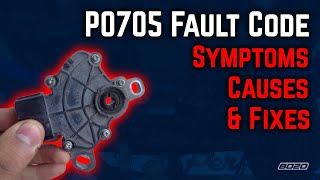
On a Dodge Journey, P0705 almost always means the Transmission Range Sensor (TRS) has failed. For V6 models with the 6-speed 62TE automatic, the sensor is inside the transmission, making for a costly repair ($500-$800). On 4-cylinder models with the 4-speed, the sensor is usually external and much cheaper to replace ($150-$250).
- P0705 indicates a problem with the sensor that tells the car what gear it's in.
- Before buying parts, determine if you have the 4-cylinder/4-speed (likely external sensor) or V6/6-speed (internal sensor), as the repair difficulty and cost vary dramatically.
- Symptoms like a no-start condition or the transmission being stuck in gear are common and mean the vehicle should be repaired promptly.
- Always check the wiring and connector to the sensor before replacing it, as a simple wiring fix can sometimes solve the problem.
- Due to the complexity of the repair on V6 models, professional service is highly recommended.
What's Unique About the 2009-2020 Dodge Journey
The key challenge with this code on a Dodge Journey is the location of the Transmission Range Sensor (TRS), which depends on the transmission. Journeys with the 3.5L or 3.6L V6 engine use the 62TE 6-speed automatic, where the sensor is located *inside* the transmission side case, attached to the valve body. This transmission was an adaptation of an older 4-speed, and this internal sensor design is a known weak point. Replacement is a complex job requiring significant labor. In contrast, models with the 2.4L 4-cylinder engine often have a 4-speed automatic (40TES/41TES) where the sensor is mounted *externally* on the transmission case, making it far easier to access and replace. Correctly identifying the transmission is the first step to a successful repair.
Symptoms You May Notice
- Check Engine Light is on
- Vehicle will not start, or will only start in Neutral instead of Park.
- Transmission is stuck in 'limp mode' (usually 2nd or 3rd gear).
- The gear indicator (PRNDL) on the dashboard is blank, incorrect, or has all segments lit up.
- Reverse lights do not turn on when in Reverse.
- Backup camera activates when not in Reverse, or fails to activate when in Reverse.
- Harsh, erratic, or delayed shifting between gears.
- Reduced fuel economy.
- Replacing the transmission valve body or solenoid pack when only the range sensor is bad. On the 62TE transmission, the sensor is near the valve body, but is a separate, and much cheaper, component.
- Replacing the PCM/TCM without first diagnosing the sensor and wiring circuit.
- Replacing the transmission itself when the issue is a simple external wiring problem or a misadjusted shifter cable.
Most Likely Causes
- Faulty Transmission Range Sensor (TRS) 🔴 High Probability On the 6-speed 62TE transmission, the sensor is internal and bathed in transmission fluid. Over time, fluid can intrude into the sensor's electronics, or the sensor itself can fail from heat cycles, causing a short or open circuit. On all models, the external wiring is exposed to the elements.
How to confirm: Use a scan tool to monitor the TRS data stream while moving the shifter. If the displayed gear position does not match the shifter's actual position, or the signal is erratic, the sensor or its circuit is faulty. You can also back-probe the sensor connector with a multimeter to check for correct voltage changes as the gear is selected.
Typical fix: Replace the Transmission Range Sensor. This is a complex job on the 6-speed transmission, requiring removal of the transmission side pan. It is much simpler on the 4-speed where the sensor is external.
Est. part cost: $40-$90 - Damaged Wiring or Corroded Connector 🟡 Medium Probability The wiring harness runs underneath the vehicle and is exposed to road debris, moisture, and heat from the exhaust, which can cause wires to break, chafe, or the connector pins to corrode.
How to confirm: Visually inspect the wiring harness leading to the transmission range sensor for any signs of chafing, breaks, melting, or corrosion at the connector. Perform a continuity test on the wires with a multimeter if no visible damage is found.
Typical fix: Repair the damaged section of the wiring harness or clean/replace the corroded connector.
Est. part cost: $10-$50 - Misadjusted or Damaged Shifter Cable ⚪ Low Probability Over time, the cable linking the gear shifter inside the car to the transmission can stretch or its bushings can wear out. This causes a mismatch between the selected gear and the position of the manual lever on the transmission, leading the sensor to report the wrong gear.
How to confirm: Check for excessive play in the shifter. Have an assistant move the shifter while you observe the lever on the transmission to see if it is moving through its full range of motion correctly and isn't loose.
Typical fix: Adjust the shifter cable at the transmission lever or replace the cable and/or its bushings if worn.
Est. part cost: $30-$100
Rare But Worth Checking
- Faulty Powertrain Control Module (PCM) or Transmission Control Module (TCM): This is very rare and should only be considered after the sensor, wiring, and shifter linkage have been thoroughly tested and ruled out. A faulty module will typically be accompanied by other trouble codes and widespread electrical issues.
Diagnosis Steps
- Use an OBD-II scanner to confirm the P0705 code and check for any other related codes like P0700 or P0706.
- Check the level and condition of the transmission fluid. Burnt or low fluid can cause a host of transmission issues, though it's not a direct cause of P0705.
- Visually inspect the transmission range sensor's electrical connector and wiring harness for any visible damage, corrosion, or loose connections. Pay close attention to areas near the exhaust or where the harness might rub against the chassis.
- Check the shifter cable linkage at the transmission to ensure it is secure, not damaged, and properly adjusted.
- With a capable scan tool, view the live data for the Transmission Range Sensor. Move the shifter slowly through each gear (P, R, N, D, L) and verify that the sensor's reading on the scan tool matches the shifter position instantly and without glitches.
- If the reading is erratic, incorrect, or does not change, the sensor is the most likely cause. If the reading is absent, test the circuit for power and ground at the sensor connector using a multimeter. You should see a reference voltage (often 5V) and a good ground.
- If the sensor and wiring test good, the issue may be a misadjusted shift cable or, in rare cases, the PCM/TCM.
Parts You'll Likely Need
- Transmission Range Sensor / Neutral Safety Switch
(OEM #68060438AA (For 62TE 6-Speed), 4659676AD (For 41TE/40TES 4-Speed))— This sensor is the primary component in the circuit and is the most common point of failure for this code.
Trusted brands: Mopar, Duralast, Rostra Precision Controls, Standard Motor Products (SMP)
OEM price range: $70-$120
Aftermarket price range: $40-$90
Related Codes That Often Appear With This One
- P0700 — P0700 is a generic code indicating that the Transmission Control Module (TCM) has requested the Check Engine Light to be turned on. It is a general fault code that will almost always appear alongside a more specific transmission code like P0705.
- P0706 — This code indicates 'Transmission Range Sensor 'A' Circuit Range/Performance'. While P0705 indicates a circuit malfunction (like an open or short), P0706 suggests the sensor's signal is irrational or out of its expected performance range. They often point to the same root causes.
Technical Service Bulletins (TSBs) & Recalls
- Chrysler TSBs for 2009-2010 models extend the warranty on brake pads and rotors to 3 years/36,000 miles due to premature wear, a common platform issue.
Platform-Specific Known Issues
- The most significant issue for the 2009-2020 Dodge Journey is the internal location of the Transmission Range Sensor on the 6-speed 62TE automatic transmission used with V6 engines. This turns a simple sensor replacement into a 3-5 hour job that requires draining fluid and removing the transmission side pan 🎬 Watch this step-by-step 62TE range sensor replacement guide and other components for access.
- Owners on forums report that when this sensor fails, a common symptom is the car refusing to start in Park but starting correctly when shifted to Neutral. Another is the reverse camera coming on when the car is started, even though the shifter is in Park.
Mechanic-Grade Diagnostic Values
- 62TE Transmission Range Sensor (TRS) Circuit Logic — expected: The TRS uses four signal circuits (T41, T42, T3, T1) to create a unique open/closed combination for each gear. For example, in Park, T41 and T42 are closed (grounded) while T3 and T41 are open. In Reverse, T41 and T42 are closed, T3 is open, and T41 is open. A scan tool should show these state changes.. Failure: If any of the four circuits shows an incorrect state for a given gear selection (e.g., a circuit is stuck open or closed), or if the combination of signals is illogical (not matching any valid gear), the sensor or its wiring is faulty.
- 62TE TRS Circuit Resistance Test — expected: When testing between the TRS sense circuit pins (T41, T42, T3, T1) and any other circuit in the transmission solenoid harness connector, the resistance should be high (over 100k Ohms).. Failure: A resistance reading below 100k Ohms indicates a short circuit between the TRS sense circuit and another circuit within the transmission harness or solenoid block.
Scan Tool Commands That Help
- wiTECH, Autel, or other professional scanner: Transmission Quick Learn — After replacing major transmission components like the valve body, solenoid pack, or the entire transmission, a 'Quick Learn' procedure is recommended. This function resets and relearns adaptive values for clutch timing and pressure, which can resolve harsh or delayed shifting that might otherwise be misdiagnosed as a new fault. While not always required for just a TRS replacement, it's a good practice if shift quality is poor after the repair.
- wiTECH, Autel, or other professional scanner: TCM/PCM Reset — A simple reset of the Transmission Control Module (TCM) can sometimes clear temporary glitches caused by voltage spikes or intermittent data. This can be done via a scanner command or by disconnecting the battery and touching the cable ends together for several minutes to dissipate residual charge. This is a good first step if symptoms are intermittent and no hard faults are found.
Wiring & Ground Locations
- 62TE Main Connector (Solenoid/TRS Assembly) — On the front side of the 62TE transmission, behind a black insulated cover. Access requires removing the battery and battery tray on most Journey models.. This is the main connection point for all transmission electronics, including the four TRS signal circuits. The pins for the TRS are T41 (Pin 5), T42 (Pin 8), T3 (Pin 9), and T1 (Pin 14). This connector is a primary point for checking for corrosion or performing circuit tests back to the PCM.
- G105 (Engine/Transmission Ground) — A primary ground point is located on a stud on the engine block, near the starter motor. It often has a black braided ground strap connecting from this stud to the chassis near the battery tray or engine mount.. A poor ground connection at this point can cause a wide range of electrical issues, including no-start conditions and erratic sensor readings. Forum users have reported that cleaning this ground connection or adding a supplementary ground wire from the engine block to the negative battery terminal can resolve intermittent electrical problems that mimic sensor failures.
Real Owner Repair Stories
- Dodge Journey Forum user (2009 Dodge Journey SXT) — No-start or very slow crank, intermittent.
❌ Tried (didn't work) Checking battery (tested good), Checking alternator (tested good)
✅ What actually fixed it The user identified a common issue with a corroded engine block ground. Instead of just cleaning it, they added a new 4-foot battery cable directly from the main chassis ground point near the battery to the engine block ground stud, ensuring a solid connection. This permanently fixed the intermittent no-start/slow crank issue. - MotorCity Mechanic (YouTube) (Chrysler/Dodge Minivan with 62TE (same as Journey V6)) — P0705/P0706 codes, limp mode.
✅ What actually fixed it The video provides a detailed, step-by-step guide for replacing the internal Transmission Range Sensor on a 62TE without removing the valve body, contrary to official service information. The fix involves removing the side pan, driving out a roll pin on the shift mechanism, and carefully extracting the sensor. This confirms the sensor itself is the failure point and demonstrates a time-saving repair method.
OEM Part Supersession History
5078930AA→68055955AA, 68060438AA— Part revision and consolidation by Mopar over the years for the 62TE Transmission Range Sensor.
Heads up: While multiple part numbers exist and are often sold as compatible, it's crucial to use the latest revision (e.g., 68060438AA) for the best reliability. Some sources indicate the older numbers are prone to failure.
Model Year Variations Within This Range
- 2009-2010: Early model year Journeys with the 3.5L V6 and 62TE transmission were among the first applications. These early builds may be more prone to the TRS failure and issues with corroded engine ground straps mentioned in TSBs for other Chrysler vehicles of the same era.
- 2011-2020: Models from 2011 onward with the V6 used the 3.6L Pentastar engine, but retained the 62TE transmission. While the transmission is fundamentally the same, minor revisions to the PCM software and wiring harnesses may have occurred throughout the production run.
Diagnostic Flowchart
Other Known Issues on This Vehicle
Issues unrelated to this code that are worth knowing about as an owner of this generation:
- Premature Brake and Rotor Wear 🔴 High — Very common on 2009-2012 models, with owners reporting replacement needed as early as 12,000-20,000 miles. Less frequent on later models but still a complaint. (Ref: Chrysler issued TSBs for 2009-2010 models extending the warranty on brake components to 3 years/36,000 miles.)
- Cracked Oil Filter Housing / Oil Cooler Leaks (3.6L V6) 🔴 High — Extremely common issue on the 3.6L Pentastar engine, typically occurring after 80,000 miles. The plastic housing cracks from heat cycles, causing significant oil and/or coolant leaks into the engine valley.
- Uconnect Infotainment System Glitches 🟠 Medium — Widespread complaints of screens freezing, ghost touches, Bluetooth connectivity failures, and delamination (bubbling). (Ref: Stellantis has internal 'Star Cases' (like S2108000130) advising dealers on diagnosis, but no official recall.)
- Engine Overheating (2.4L and 3.6L) 🟠 Medium — Reported on 2009-2016 models, often linked to debris in coolant ports or failing thermostats.
- Interior Water Leaks 🟡 Low — Owners of 2009-2018 models report water leaking into the cabin, often around windows, headliners, or vents, soaking the floor carpets.
- Hidden Battery Location 🟡 Low — A common owner frustration is that the battery is located inside the front driver's side wheel well, requiring removal of the wheel and fender liner for access, complicating replacement.
Used vs. New Parts: Buying Guide for This Vehicle
When a used part is the smart pick: For the 4-cylinder models with an EXTERNAL range sensor, a used OEM sensor from a low-mileage donor vehicle is a reasonable choice, as the replacement is simple. For the V6 with the INTERNAL sensor, using a used part is NOT recommended due to the high labor cost of replacement; if the used part fails, you pay the labor all over again.
Donor-vehicle mileage cap: roughly under 75000 miles for the part to have meaningful remaining life.
What to inspect on the donor part:
- Check for a clean, corrosion-free connector.
- Ensure the plastic housing is not cracked or brittle.
- If possible, verify the donor vehicle did not have transmission-related trouble codes.
- For external sensors, ensure the manual lever arm is not bent or excessively worn.
OEM-only on this vehicle (don't cheap out):
- Transmission Range Sensor (for 62TE internal replacement). The labor cost is too high to risk an aftermarket part failing prematurely.
Aftermarket brands forum-validated for this vehicle:
- Standard Motor Products (SMP) is often considered a high-quality aftermarket alternative, sometimes even being the original equipment manufacturer in a different box.
- Rostra Precision Controls is another well-regarded brand in the transmission parts industry.
Brands owners have reported issues with on this vehicle:
- Avoid unbranded, 'white-box' parts from online marketplaces for this repair, especially for the internal 62TE sensor. The risk of premature failure and repeated labor costs is too high.
Real Owner Stories
Aggregated from forums and TSBs cited above. Mileages and costs reflect what owners reported in those sources.
2014 Dodge Journey 3.6L V6 — 200000 miles
Symptoms: Owner discussed general platform reliability including a leaking oil filter housing; symptoms for P0705/P0706 on this platform include the reverse camera coming on at startup.
What fixed it: Replacement of the internal Transmission Range Sensor (62TE transmission).
Source hint: Dodge Journey Forum (dodgejourneyforum.com) thread titled 'P0706 Transmission Range Sensor' and '2014 Dodge Journey oil filter housing'
2009-2020 Dodge Journey (V6)
Symptoms: The car refuses to start in Park but starts correctly when shifted to Neutral; the reverse camera activates when the car is started even though the shifter is in Park.
What fixed it: Replacement of the internal Transmission Range Sensor, requiring removal of the transmission side pan.
Source hint: vehicle_specific_issues
Related OBD-II Codes
Frequently Asked Questions
Is the Transmission Range Sensor easy to replace on my Dodge Journey with the V6 engine?
Why does my backup camera turn on when I start my Journey in Park?
Can a P0705 code cause my Dodge Journey to not start?
Does the warranty extension for brake pads and rotors cover my P0705 transmission issue?
Could a loose shifter cable be causing my P0705 code?
Helpful Videos
We Have This Part in Stock


The information in this article is provided for general reference and educational purposes only. Vehicle specifications, procedures, and part compatibility can vary by production date, trim level, and region. Always consult your vehicle's factory service manual and verify part numbers before purchasing or performing repairs. Safety-critical components such as airbags, seat belts, and braking systems should be installed by a qualified professional.
- Dodge Journey:
- 🎬 Helpful Videos
- 🛍️ Shop This Part
- What's Unique About the 2009-2020 Dodge Journey
- Symptoms You May Notice
- Most Likely Causes
- Rare But Worth Checking
- Diagnosis Steps
- Parts You'll Likely Need
- Related Codes That Often Appear With This One
- Technical Service Bulletins (TSBs) & Recalls
- Platform-Specific Known Issues
- Mechanic-Grade Diagnostic Values
- Scan Tool Commands That Help
- Wiring & Ground Locations
- Real Owner Repair Stories
- OEM Part Supersession History
- Model Year Variations Within This Range
- Diagnostic Flowchart
- Other Known Issues on This Vehicle
- Used vs. New Parts: Buying Guide for This Vehicle
- Real Owner Stories
- 2014 Dodge Journey 3.6L V6 — 200000 miles
- 2009-2020 Dodge Journey (V6)
- Related OBD-II Codes
- Frequently Asked Questions
- 🎟️ Get 5% Off