

P0700 on 2003-2010 Pontiac Vibe: Transmission Control System Fault Guide
P0700 on a Pontiac Vibe means the transmission has a problem. It's a general alert, not a specific diagnosis. You must scan the Transmission Control Module (TCM) for more detailed codes. Common underlying issues include faulty shift solenoids or, on 2003-2008 models, a failing Powertrain Control Module (PCM). This PCM failure is a well-known issue for this platform.
- P0700 is a general alert from your transmission; it is not the root cause.
- You MUST use a scan tool that can read codes from the Transmission Control Module (TCM) to find the specific problem.
- For 2003-2008 Vibe models, a faulty PCM is a very common cause of transmission codes and should be investigated before considering a transmission replacement.
- Always start diagnosis by checking the transmission fluid level and condition.
- Ensure you use the correct transmission fluid (Toyota Type T-IV) for service; using the wrong fluid can cause damage.
What's Unique About the 2003-2010 Pontiac Vibe
The Pontiac Vibe is a mechanical twin to the Toyota Matrix, sharing its Toyota-sourced engine and transmission. For the first generation (2003-2008), a very common and well-documented issue is the failure of the Powertrain Control Module (PCM), which can cause harsh shifting and trigger the P0700 code along with other transmission codes like P2716. Owners and forums frequently report that replacing the transmission is a common misdiagnosis when the actual fault lies with the computer. The second generation (2009-2010) had a different ECM that was subject to a recall (GM Recall ZKA) for internal cracks, which could also lead to shifting problems and engine stalling.
Generation note: This guide covers two generations of the Pontiac Vibe: - 1st Generation (2003-2008): Known for a high rate of PCM (Powertrain Control Module) failures causing transmission problems, often presenting with code P2716 alongside P0700. - 2nd Generation (2009-2010): Less prone to the specific PCM failure of the first gen, but had its own ECM recall that could cause harsh shifting and other issues. Also known for significant oil consumption issues with the 2.4L 2AZ-FE engine.
Symptoms You May Notice
- Check Engine Light is on
- Harsh or erratic shifting
- Vehicle gets stuck in one gear (limp mode)
- Delayed engagement when shifting into Drive or Reverse
- Transmission slipping
- Decreased fuel economy
- Vehicle may stall or run poorly
- Sudden forward surge while braking (reported on 2nd gen)
- Replacing the entire transmission when the actual fault is the PCM (especially on 2003-2008 models).
- Replacing individual solenoids without checking for a systemic issue like a faulty PCM or contaminated fluid.
- Clearing the P0700 code without reading the underlying, more specific codes from the Transmission Control Module.
Most Likely Causes
- Powertrain Control Module (PCM) Failure 🔴 High Probability This is a widely documented failure point specifically on 2003-2008 Vibe and Toyota Matrix models. Internal solder joints or components within the PCM fail, leading to incorrect signals being sent to the transmission solenoids. This is frequently discussed in owner forums as the true culprit after shops recommend a full transmission replacement.
How to confirm: After ruling out other causes, a technician can test the PCM's outputs. This is often diagnosed when transmission codes (like P2716 for a pressure control solenoid) persist after the solenoid itself has been tested or replaced. Many owners report sending their PCM to a specialized repair service for testing and rebuilding.
Typical fix: Replacement or repair of the Powertrain Control Module (PCM). Several online services specialize in repairing these specific units.
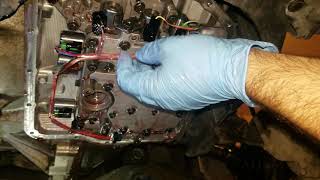
Est. part cost: $150-$300 for a repair service, $200-$600 for a remanufactured unit. - Failed Shift or Pressure Control Solenoid 🟡 Medium Probability Solenoids are electro-mechanical valves that control fluid flow to change gears. They can fail electrically or get stuck due to contaminated fluid or age. A video of a solenoid replacement on a 2009 Vibe shows the process.
How to confirm: Scan the TCM for specific solenoid codes (e.g., P0746, P0750, P2716). A mechanic can then test the resistance of the specific solenoid and check its wiring. If P2716 is present on a 1st-gen model, suspect the PCM first.
Typical fix: Drop the transmission oil pan and replace the identified solenoid or solenoid pack.
Est. part cost: $50-$250 - Low or Dirty Transmission Fluid 🟡 Medium Probability Low fluid levels prevent proper hydraulic pressure, while old, burnt, or contaminated fluid can cause solenoids to stick and clutches to slip. It is critical to use the correct fluid, as using a generic or incorrect type can cause shifting problems.
How to confirm: Check the transmission fluid dipstick for level and condition. The fluid should be bright red and not smell burnt. Note that some models require the engine to be running to get an accurate reading.
Typical fix: Perform a transmission fluid drain-and-fill using the correct fluid type. For 1st gen (2003-2008), this is Toyota Type T-IV. Mobil ATF 3309 is a compatible equivalent. For 2nd gen (2009-2010), it is Toyota Type WS. If the fluid is very dirty, replacing the transmission filter is also recommended. 🎬 Watch: Step-by-step transmission fluid and filter change guide.
Est. part cost: $60-$120 for fluid and filter. - Damaged Wiring Harness ⚪ Low Probability
How to confirm: Visually inspect the wiring harness between the PCM/ECM and the transmission for any signs of chafing, corrosion, or damage from heat or rodents. Test for continuity on suspect wires with a multimeter.
Typical fix: Repair or replace the damaged section of the wiring harness.
Est. part cost: $10-$300 depending on the extent of the damage.
Rare But Worth Checking
- Internal Transmission Failure: If the transmission fluid contains a large amount of metal shavings, it's a strong indicator of mechanical wear or failure of internal components like clutches or bands. This is a worst-case scenario, and is less common than PCM failure on this platform.
- Faulty Input/Output Speed Sensors: Failure of these sensors can cause the TCM to receive incorrect data about shaft speeds, leading to erratic shifting and setting a P0700 code.
Diagnosis Steps
- Scan for Codes: Use an OBD-II scanner capable of communicating with the Transmission Control Module (TCM) to retrieve all stored codes. Do not rely on a basic scanner that only reads engine codes. The P0700 is just a flag; the real codes are in the TCM.
- Check Transmission Fluid: Inspect the transmission fluid level and condition. Ensure it is full and clean. For 2003-2008 models, it should be red (Toyota T-IV). For 2009-2010, it's Toyota WS fluid. Burnt or dark fluid indicates a problem.
- Analyze the Codes: The specific codes found in the TCM will guide the diagnosis. If P2716 is present on a 2003-2008 model, the PCM becomes the primary suspect.
- Inspect Wiring: Visually inspect the wiring harness connecting the PCM/ECM to the transmission for any visible damage, corrosion, or loose connections.
- Test Components: Based on the specific codes, test the suspected components. This may involve checking the electrical resistance of a solenoid, testing the signal from a speed sensor, or verifying power and ground at the TCM.
- Investigate PCM (2003-2008 models): If a solenoid code like P2716 is present and the solenoid/wiring tests good, the PCM is the primary suspect. This is a very common failure pattern discussed extensively in owner forums.
Parts You'll Likely Need
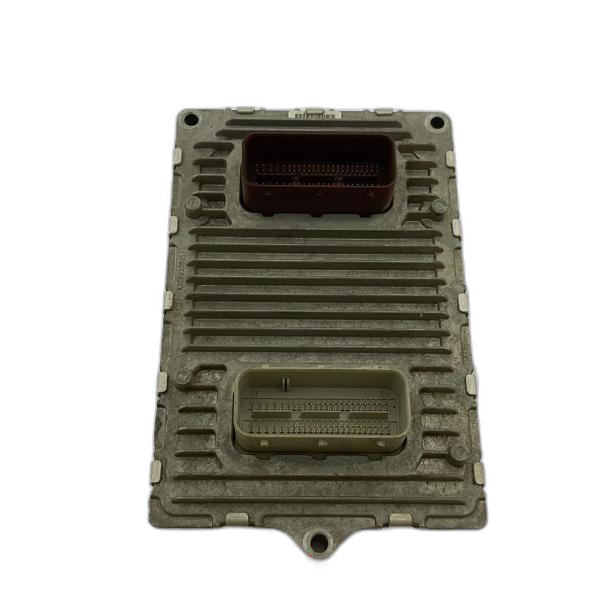
- Powertrain Control Module (PCM) — A very common failure on 2003-2008 models that causes various transmission codes and drivability issues. Often misdiagnosed as a bad transmission.
Trusted brands: ACDelco (Remanufactured), Cardone, Specialized repair services like SIA Electronics or Module Experts
OEM price range: $400-$800
Aftermarket price range: $200-$600 - Automatic Transmission Shift Solenoid — These solenoids control gear changes and are a common failure point. A specific code in the TCM will identify which solenoid has failed.
Trusted brands: Aisin, Rostra, Carquest
OEM price range: $100-$250
Aftermarket price range: $50-$150 - Automatic Transmission Fluid (Toyota Type T-IV)
(OEM #00279-000T4)— Correct, clean fluid is essential for transmission health. A drain-and-fill is often the first step. Using the wrong fluid type can cause damage. This is for 2003-2008 models.
Trusted brands: Toyota/Aisin, Idemitsu, Mobil ATF 3309
OEM price range: $10-$15 per quart - Automatic Transmission Fluid (Toyota Type WS)
(OEM #00289-ATFWS)— Correct fluid for 2009-2010 models. Do not mix with T-IV.
Trusted brands: Toyota/Aisin, Valvoline MaxLife ATF (check compatibility)
OEM price range: $12-$18 per quart
Related Codes That Often Appear With This One
- P2716 — Pressure Control Solenoid 'D' Performance or Stuck Off. This code is very commonly associated with the PCM failure on 2003-2008 models.
- P0741 — Torque Converter Clutch Circuit Performance or Stuck Off. This can indicate an issue with the TCC solenoid or the torque converter itself.
- P0750 - P0774 — These are a range of codes related to specific shift solenoid (A, B, C, D, E) circuit malfunctions.
Technical Service Bulletins (TSBs) & Recalls
- GM Safety Recall 09199 / NHTSA 09V-384: Pertains to 2009-2010 models for potential brake vacuum loss in extreme cold, not directly P0700 but a notable powertrain-related issue.
- Toyota TSB T-SB-0094-11: Details the repair for excessive oil consumption on 2AZ-FE engines, which were used in 2009-2010 Vibe models.
- While many TSBs exist for the Vibe, a specific, widely-circulated TSB for the P0700/PCM failure on 2003-2008 models is not readily found; the issue is primarily documented through owner forums and repair shop experience.
Platform-Specific Known Issues
- 1st Gen (2003-2008) PCM Failure: The most significant issue related to P0700 on this platform. The Powertrain Control Module (PCM) is known to fail, causing erratic shifting and transmission codes, most notably P2716. This is often misdiagnosed as a failed transmission. The fix is to repair or replace the PCM, not the transmission.
- Toyota Drivetrain: As a joint venture with Toyota, the Vibe uses Toyota engines and transmissions (A246E for FWD models). This means parts and fluids are often sourced from Toyota. For example, 1st gen models use Toyota Type T-IV fluid, not GM Dexron. This also means it shares common problems with the Toyota Matrix and Corolla.
- 2nd Gen (2009-2010) ECM Recall: While not the same PCM issue as the first generation, the 2009-2010 models had an Engine Control Module (ECM) that was recalled for potential cracks in the circuitry, which could cause harsh shifting, stalling, or failure to start.
Mechanic-Grade Diagnostic Values
- Shift Solenoid (S1, S2) Resistance (U341E Transmission) — expected: 11 to 15 ohms at 68°F (20°C). Failure: A reading outside this range, or an open (infinite) or shorted (zero) circuit, indicates a failed solenoid coil.
- Pressure Control Solenoid (SLT) Resistance (U341E Transmission) — expected: 5.0 to 5.6 ohms at 68°F (20°C). Failure: Resistance outside this range points to a faulty solenoid. However, with code P2716, the PCM is the primary suspect even if the solenoid tests good.
- Torque Converter Clutch (TCC) Solenoid (SL) Resistance (U341E Transmission) — expected: 11 to 15 ohms at 68°F (20°C). Failure: An out-of-spec reading indicates a problem with the TCC solenoid, often related to code P0741.
- Pressure Control Solenoid (SL3) Resistance (2nd Gen, U241E/U250E) — expected: 5.8 ohms. Failure: A YouTube repair video for a 2009 Vibe showed a reading of 5.8 ohms on a new solenoid, which was considered within the acceptable range. The old solenoid was bad despite also being in range, indicating that resistance tests are not always conclusive.
Scan Tool Commands That Help
- Toyota Techstream: Active Test: Control the Shift Position — This allows a technician to command individual gear shifts (1st, 2nd, 3rd, 4th) manually while the vehicle is stopped or moving slowly. It helps confirm if the solenoids and mechanical parts of the transmission can execute a shift when commanded directly by the scan tool, bypassing the PCM's normal logic. If the transmission shifts correctly during the active test but not during normal driving, it strongly points to a PCM or sensor input issue rather than a mechanical failure.
- Toyota Techstream: Utility: Reset Memory (ECU/TCM) — After replacing a transmission, valve body, or PCM, the learned shift adaptations must be reset. This forces the TCM to relearn the clutch fill times and shift pressures with the new components. Failing to do this can result in harsh shifting or persistent codes even after the repair is complete.
- Toyota Techstream / Advanced OBD-II Scanners: Read Transmission Data List — To monitor live data from transmission sensors, such as input/output speed sensor RPM, ATF temperature, and the commanded state of each solenoid. This is critical for diagnosing intermittent issues or verifying if sensor readings are logical before condemning a part.
Wiring & Ground Locations
- PCM Location (2003-2008) — Located behind the glove box.. This is the primary location for testing PCM-related circuits and is the component that is replaced to fix the common P2716 issue.
- G104 (2003-2008) — On the rear of the cylinder head.. This is a primary engine and sensor ground. A poor connection here can cause erratic sensor readings and phantom electrical issues that could be misdiagnosed as PCM failure.
- G102 (2003-2008) — On the right inner fender, near the underhood fuse block.. This is a key chassis ground point. Verifying it is clean and tight is a fundamental step in diagnosing any complex electrical fault, including transmission control issues.
- G102 (2009-2010) — Located on the left front of the engine compartment.. This ground is part of the transmission control system wiring on the second-generation models. A loose or corroded connection can interrupt communication or power to transmission components.
Real Owner Repair Stories
- GenVibe forum user 'nygiantzz1' (Pontiac Vibe, year not specified but within 2005-2008 range based on bulletin) — Check Engine Light on, hard shifting.
✅ What actually fixed it The dealer diagnosed a P2716 code and referenced GM bulletin #PIP4154. They replaced and reflashed the PCM under the 8yr/80k mile emissions warranty, which solved the problem. - GenVibe forum user 'joserobl' (2005 Pontiac Vibe, 28,000 miles) — CEL on with code P2716, harsh shifting, banging into gear from Park.
❌ Tried (didn't work) Initially concerned about paying a $115 diagnostic fee at the dealer.
✅ What actually fixed it Despite the CEL turning off just before the appointment, the dealer found the stored P2716 code. They diagnosed a faulty PCM and replaced it free of charge under warranty, resolving all issues. - GenVibe forum user 'hammerdown' (2006 Pontiac Vibe, 78,000 miles) — Check engine light on, jerky/not smooth shifting, code P2716.
❌ Tried (didn't work) Initially thought it was a pressure control solenoid and that the car was out of warranty.
✅ What actually fixed it Took it to a Pontiac dealership who found service bulletin 41554a. The bulletin directed them to replace the PCM for code P2716, which was covered under the 8 year/100k (or 80k) federal emissions warranty. The PCM replacement fixed the issue at no cost to the owner. - BAT Auto Technical forum user 'Vibe025' (2006 Pontiac Vibe) — Check engine light with code P2716, auto trans not shifting good.
❌ Tried (didn't work) Calling a Pontiac dealer who initially claimed to know nothing about a TSB or extended warranty on the PCM.
✅ What actually fixed it Took the car to the dealer anyway. The PCM was identified as the problem per GM document #PIP4154A. It was replaced for free under the 8 year, 80,000 mile warranty, correcting the P2716 code.
OEM Part Supersession History
89661-02C0x, 89661-02C1x, 89661-0113x, 89661-0112x→Various updated and remanufactured part numbers.— Internal component failure leading to transmission control issues, specifically code P2716.
Heads up: When replacing the PCM, the part number must be an exact match or a verified cross-reference for the vehicle's specific year, engine, and transmission (FWD/AWD). A remanufactured unit must be programmed with the vehicle's VIN.
Model Year Variations Within This Range
- 2003-2008: These models use the Toyota U341E transmission and are highly susceptible to the PCM failure that causes P0700 with P2716. The PCM is covered by an 8-year/80,000-mile federal emissions warranty.
- 2009-2010: These models use different transmissions (U241E/U250E) and a different ECM that is not prone to the same P2716 failure mode. However, they were subject to GM Service Bulletin #09-07-30-010 for a harsh 2-1 downshift, fixed by a PCM reprogram. They also had a separate recall for potential ECM circuit board cracks.
Diagnostic Flowchart
Other Known Issues on This Vehicle
Issues unrelated to this code that are worth knowing about as an owner of this generation:
- Excessive Oil Consumption (1ZZ-FE & 2AZ-FE engines) 🔴 High — Common on 2003-2005 1.8L (1ZZ-FE) due to piston ring design. Very common on 2.4L (2AZ-FE) in 2009-2010 models, subject of a Toyota warranty enhancement (ZE7) that didn't extend to Pontiac. (Ref: Toyota TSB T-SB-0094-11 (for 2AZ-FE))
- Sunroof Drain Leaks 🟠 Medium — Common across all years with a sunroof. Drain tubes become clogged with debris, causing water to overflow and leak into the cabin, typically down the A-pillars or into the footwells.
- Premature Brake Rotor Wear 🟡 Low — Frequently reported issue causing a pulsating brake pedal and squeaking noises, even after parts replacement.
- Intake Manifold Gasket Leak (1st Gen) 🟠 Medium — A common cause for a P0171 'System Too Lean' code on 2003-2008 models. The gasket fails, creating a vacuum leak.
- Brake Vacuum Loss in Extreme Cold (2nd Gen) 🔴 High — Affects 2009-2010 models with the 1.8L engine in cold climates. Condensation can freeze in the brake vacuum port, increasing stopping distance. (Ref: GM Safety Recall 09199)
- Sticking Accelerator Pedal (2nd Gen) 🔴 High — Part of the massive Toyota floor mat and sticky pedal recalls. The pedal could become trapped by a floor mat or stick internally. (Ref: NHTSA Recall 10V017000)
Used vs. New Parts: Buying Guide for This Vehicle
When a used part is the smart pick: For the 2003-2008 models, a used PCM from a junkyard is a very common and cost-effective repair, provided you can match the part number exactly. Since the primary failure is electronic and not wear-related, a used unit from a non-symptomatic vehicle is often a reliable fix.
Donor-vehicle mileage cap: roughly under 150000 miles for the part to have meaningful remaining life.
What to inspect on the donor part:
- Verify the donor vehicle was not in a major front-end collision.
- Match the OEM part number on the PCM case EXACTLY. There are many variations.
- If possible, get the VIN of the donor car to verify its configuration (engine, transmission, FWD/AWD).
- Purchase from a reputable salvage yard that offers a short warranty or return period in case the unit is also faulty.
OEM-only on this vehicle (don't cheap out):
- There are no strict OEM-only parts for this repair, as the core issue is often the OEM PCM itself. The decision is more between OEM, used OEM, remanufactured, or a repair service for your original unit.
Aftermarket brands forum-validated for this vehicle:
- For PCM Repair/Remanufacturing: Module Repair Pro, SIA Electronics, Flagship One (FS1), Flashmasters are frequently mentioned in forums for providing repaired or pre-programmed PCMs.
- For Solenoids: Aisin (the OEM supplier), Rostra.
Brands owners have reported issues with on this vehicle:
- Unbranded, no-name solenoids or PCMs from marketplaces like eBay or Amazon without a lifetime warranty and strong positive reviews can be risky.
Real Owner Stories
Aggregated from forums and TSBs cited above. Mileages and costs reflect what owners reported in those sources.
2003 Pontiac Vibe 1.8L 1ZZ-FE
Symptoms: Owner performed a full teardown to address significant oil consumption issues common to the 1ZZ-FE engine.
What fixed it: Detailed engine teardown and fix for oil consumption.
Source hint: GenVibe Forum - '2003 Vibe oil consumption teardown and fix'
2009 Pontiac Vibe 2.4L 2AZ-FE
Symptoms: Excessive oil consumption, a known issue for the 2.4L engine in the 2nd generation models.
What fixed it: Repair procedure outlined in Toyota TSB T-SB-0094-11.
Source hint: GenVibe Forum - '2009 Toyota 2.4L Engine 2AZ-FE Excessive Oil Consumption'
Related OBD-II Codes
Frequently Asked Questions
My 2005 Vibe has a P0700 and P2716 code; do I need a new transmission?
Which transmission fluid should I use for my 2007 Pontiac Vibe to avoid shifting issues?
Is there a recall for shifting issues on the 2009-2010 Pontiac Vibe?
My 2nd gen Vibe is surging forward while I'm braking; is this related to P0700?
Can I use Toyota WS fluid in my 2005 Pontiac Vibe?
How can I confirm if my P0700 is actually a PCM failure on my 2006 Vibe?
Helpful Videos
Used OEM Parts in Stock


New Aftermarket Parts Available

The information in this article is provided for general reference and educational purposes only. Vehicle specifications, procedures, and part compatibility can vary by production date, trim level, and region. Always consult your vehicle's factory service manual and verify part numbers before purchasing or performing repairs. Safety-critical components such as airbags, seat belts, and braking systems should be installed by a qualified professional.
- Pontiac Vibe:
- 🎬 Helpful Videos
- 🛍️ Shop This Part
- What's Unique About the 2003-2010 Pontiac Vibe
- Symptoms You May Notice
- Most Likely Causes
- Rare But Worth Checking
- Diagnosis Steps
- Parts You'll Likely Need
- Related Codes That Often Appear With This One
- Technical Service Bulletins (TSBs) & Recalls
- Platform-Specific Known Issues
- Mechanic-Grade Diagnostic Values
- Scan Tool Commands That Help
- Wiring & Ground Locations
- Real Owner Repair Stories
- OEM Part Supersession History
- Model Year Variations Within This Range
- Diagnostic Flowchart
- Other Known Issues on This Vehicle
- Used vs. New Parts: Buying Guide for This Vehicle
- Real Owner Stories
- 2003 Pontiac Vibe 1.8L 1ZZ-FE
- 2009 Pontiac Vibe 2.4L 2AZ-FE
- Related OBD-II Codes
- Frequently Asked Questions
- 🎟️ Get 5% Off