

OBD-II Code P2716: Pressure Control Solenoid 'D' Performance or Stuck Off
The Ultimate 2026 Guide to What P2716 Means, Why It Triggers, and Exactly How to Fix It
- Diagnose P2716 as a specific electrical fault in the 'D' pressure control solenoid circuit, not a general mechanical transmission failure.
- Test the external transmission wiring harness and connector pins for 12V power and ground before dropping the transmission pan to replace the solenoid.
- Check for Technical Service Bulletins (TSBs) like Toyota's TC015-07, which identifies a faulty Engine Control Module (ECM) as the root cause for 2005-2008 Corolla and Matrix models.
- Stop driving the vehicle immediately; driving more than 50 miles with maximum line pressure causes harsh shifts that destroy clutch packs and escalate a $400 repair into a $4,000 rebuild.
- Verify solenoid resistance using a multimeter; a healthy Toyota SLT solenoid measures between 5.0 and 5.6 Ohms at 68°F, while an 'OL' reading confirms internal failure.
What Does P2716 Mean?

P2716 means your vehicle's Powertrain Control Module (PCM) or Transmission Control Module (TCM) detected an electrical fault in the 'D' pressure control solenoid circuit. This solenoid is an electronically controlled valve that manages hydraulic fluid pressure for smooth gear shifts. When the computer detects an open wire, a short to ground, or abnormal resistance, it loses control of fluid pressure, causing severe shifting problems and potential transmission damage.
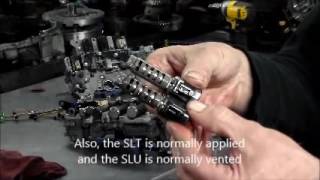
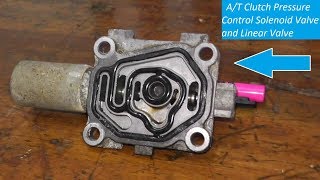
Technical definition: The official SAE/ISO definition for P2716 is "Pressure Control Solenoid 'D' Electrical". This code sets when the PCM or TCM detects an open circuit, a short to ground, a short to power, or an out-of-range resistance value in the 'D' solenoid's coil or wiring. On many Toyota, Lexus, and Scion vehicles, this specific solenoid is called the 'SLT' (Solenoid Linear-Type) solenoid, which directly controls main line pressure.
Can I Drive With P2716?
Yes, But With Caution. You can drive for very short distances, but it is strongly discouraged. The transmission defaults to maximum line pressure, causing harsh, damaging shifts that stress clutch drums and engine mounts. Continued driving past 50 miles generates extreme heat, burning the fluid and rapidly escalating a sub-$500 solenoid fix into a catastrophic $3,000-$5,000+ transmission rebuild.
Common Causes

- Faulty Pressure Control Solenoid 'D' (Very Common) — The solenoid's internal coil windings fail due to heat and vibration, creating an open or short circuit. Alternatively, the internal valve seizes mechanically, which the TCM interprets as an electrical fault.
- Damaged Wiring or Corroded Connectors (Common) — The external transmission connector is a primary failure point. Water intrusion and road salt cause corrosion on the pins, leading to high resistance or short circuits in the wiring harness.
- Faulty Powertrain Control Module (PCM) or Transmission Control Module (TCM) (Common) — The internal driver circuit within the computer that controls the solenoid fails. This is a highly documented pattern failure on 2005-2008 Toyota Corolla, Matrix, and Pontiac Vibe models. 🎬 Watch: Diagnosing hard shifting and P2716 on a Toyota Matrix.
- Contaminated Transmission Fluid or Clogged Filter (Less Common) — While P2716 is an electrical code, severely contaminated fluid containing metal shavings shorts the solenoid's internal electronics or causes the plunger to seize, triggering the code.
- Low System Voltage (Weak Battery/Alternator) (Less Common) — Solenoids require a stable voltage supply (above 11V). A failing battery or bad alternator drops system voltage below the operating threshold, preventing solenoid operation and triggering the code.
- Internal Mechanical Failure (Rare) — In GM 6T40/6T45 transmissions, a broken wave plate generates massive debris. This debris contaminates the valve body and causes multiple solenoids to malfunction, logging P2716 alongside performance codes.
Symptoms

- Harsh or Jerky Shifting — The transmission 'bangs' or 'jerks' into gear because the solenoid fault causes hydraulic pressure to default to its maximum setting as a fail-safe.
- Check Engine Light or Transmission Warning Light is On — The PCM/TCM illuminates a warning light on the dashboard immediately after detecting the electrical fault.
- Vehicle Enters 'Limp Mode' — The transmission locks itself into a single gear (often 2nd or 3rd) to prevent further damage, severely limiting vehicle speed and acceleration.
- Transmission Slipping and Poor Fuel Economy — The engine revs up between shifts without a corresponding increase in vehicle speed. Inefficient shifting and lack of torque converter lockup cause a noticeable drop in gas mileage.
- Delayed Gear Engagement — A noticeable 1-3 second delay or a hard 'clunk' occurs when shifting from Park into Drive or Reverse.
- Transmission Overheating — Slipping clutches generate excessive friction and heat, causing the transmission fluid to overheat and emit a burnt smell.
Diagnostic Flowchart

Tap your situation to follow the diagnostic path that matches what you're seeing on this code.
Common Fixes & Costs
- Replace Pressure Control Solenoid 'D' — Parts: $75-$200, Labor: $250-$450, ~2.5 hr book time (Intermediate)
- Repair or Replace Damaged Wiring/Connector — Parts: $20-$150, Labor: $150-$400, ~2 hr book time (Intermediate)
- Replace or Reprogram Powertrain/Transmission Control Module (PCM/TCM) — Parts: $400-$1200, Labor: $150-$300, ~2 hr book time (Professional)
- Transmission Fluid and Filter Change — Parts: $70-$180, Labor: $150-$300, ~1.5 hr book time (DIY)
- Replace Transmission Valve Body — Parts: $500-$1500, Labor: $300-$700, ~4 hr book time (Professional)
Used vs. New Parts: Buying Guide
When a used part is worth it: For a high-mileage vehicle (>150k miles) where budget is the primary concern, a used solenoid from a reputable salvage yard with a 30-90 day warranty is a viable option. Source it from a wrecked vehicle, not one scrapped for transmission failure.
Donor-vehicle mileage cap: roughly under 80000 miles for the part to have meaningful remaining life.
Donor quality checklist:
- Verify the donor vehicle's reason for salvage (accident damage is ideal).
- Match the part number exactly; similar-looking solenoids are rarely interchangeable.
- Avoid parts from flood-damaged or rust-belt vehicles due to internal corrosion.
- Demand a minimum 30-day warranty to protect against dead-on-arrival parts.
Decision logic:
- If Vehicle is under 100K miles and you plan to keep it long-term → Buy a new OEM or high-quality aftermarket (Denso, Rostra, Sonnax) solenoid. The reliability justifies the extra cost.
- If Vehicle is over 150K miles and the budget is extremely tight → A tested, warranted used part is acceptable, but carries a shorter expected lifespan.
- If The part is a known high-failure item for your specific vehicle → Buy new. A used part likely has the same inherent wear as your broken one.
Warranty tradeoff: Used parts offer a 30-90 day functional warranty. New aftermarket parts include a 1-year to limited lifetime warranty. New OEM parts carry a 12-month/12,000-mile warranty.
Worst-case if a used part fails: $400-$600 if a used solenoid fails shortly after installation, representing repeated labor costs plus a new replacement part.
What Happens If You Wait — Timeline
- 0-1 week: Check Engine Light illuminates with code P2716. Driver notices intermittent harsh shifts, especially when the transmission is warm. A slight 1-2 second delay occurs when shifting from Park to Drive. (MPG impact: 0-5%% · Added cost: $0)
- 1 week - 2 months: Harsh 'banging' shifts become consistent on every gear change as the transmission defaults to maximum line pressure. The torque converter fails to lock up, causing higher RPMs at highway speeds. (MPG impact: 5-15%% · Added cost: $50-$150 in wasted fuel and increased stress on engine/transmission mounts.)
- 2-6 months: Constant slipping generates extreme heat, causing the transmission fluid to burn. This heat accelerates wear on internal clutch packs. The vehicle unexpectedly enters 'Limp Mode,' locking it in a single gear. (MPG impact: 15-25%% · Added cost: $1,200-$2,500 (Damage extends beyond the solenoid to clutch packs and potentially the valve body).)
- 6+ months: Catastrophic internal failure. Debris from destroyed clutches contaminates the entire hydraulic system, clogging the valve body, pump, and filter. The transmission fails to engage gears, rendering the vehicle undrivable. (MPG impact: >25%% · Added cost: $3,000-$5,000+ (A complete transmission rebuild or replacement is required).)
Cost of Not Fixing It
- 0-1 Month: Harsh, banging shifts cause excessive stress on engine/transmission mounts and driveline components. Fuel economy drops by 5-10%. (Added cost: Negligible, but risk of further damage is high.)
- 1-6 Months: Continued harsh shifting and slipping generates extreme heat, burning the transmission fluid and accelerating wear on internal clutch packs. This turns a simple solenoid repair into a valve body or clutch pack replacement. (Added cost: $1,200-$2,500)
- 6+ Months: Catastrophic internal failure. Burnt fluid and debris from worn clutches clog the valve body and damage the pump, requiring a complete transmission rebuild or replacement. (Added cost: $3,000-$5,000+)
Diagnosis Steps
- Scan for All Trouble Codes
Use an OBD-II scanner to read all codes from the engine and transmission modules. Multiple solenoid codes (e.g., P0748, P0751) point to a shared wiring problem or a failing module, not multiple bad solenoids.
Tools: OBD-II Scanner (Beginner) - Check Transmission Fluid Level and Condition
With the vehicle warm and on level ground, check the transmission fluid. It should be bright red and not smell burnt. Dark, brown fluid full of debris indicates internal wear that requires more than a solenoid replacement.
Tools: Rag or paper towel (Beginner) - Visually Inspect Wiring and Connectors
Inspect the wiring harness going to the transmission. Unplug the main external transmission connector and check for corroded (green crust), bent, or pushed-out pins. Water and road salt intrusion is a primary cause of this code.
Tools: Flashlight, mirror (Intermediate) - Test the Circuit from the TCM/PCM Connector (Pro Tip)
Before dropping the transmission pan, disconnect the TCM/PCM connector and measure resistance through the wiring and the solenoid itself. A reading of infinite resistance (OL) indicates an open circuit, while near zero indicates a short. This confirms if the solenoid coil and wiring are intact.
Tools: Multimeter, vehicle-specific wiring diagram (Advanced) - Test Solenoid Resistance (Quantitative)
With the transmission pan removed, test the solenoid directly. Disconnect its connector and use a multimeter set to Ohms. For Toyota/Lexus models, the 'SLT' solenoid measures between 5.0 and 5.6 Ohms at 68°F. A reading outside this range confirms a failed solenoid.
Tools: Multimeter, vehicle-specific service manual (Advanced) - Test for Shorts to Ground (Quantitative)
Measure the resistance from each of the solenoid's pins at the harness connector to a clean, bare metal ground on the chassis. The reading must be very high (typically >10,000 Ohms). A low reading indicates a short circuit to ground in the wiring.
Tools: Multimeter, vehicle-specific wiring diagram (Advanced) - Check for Power and Ground at the Solenoid Connector
With the key on, one pin at the solenoid harness connector must have 12V power supplied by the TCM. The other pin is the ground, which the TCM pulses to activate the solenoid. A lack of power points to a wiring issue between the main connector and the solenoid.
Tools: Multimeter (Advanced) - Perform a Solenoid 'Click Test' (Functional Check)
Using jumper wires, briefly apply a 12V power source and a ground to the removed solenoid's terminals. You must hear a distinct 'click' as the internal plunger actuates. No click indicates the solenoid is mechanically stuck or electrically failed.
Tools: 12V power source, jumper wires (Advanced) - Analyze Live Data with a Bi-Directional Scanner
Monitor live data PIDs like 'Line Pressure Solenoid Command' and 'Transmission Fluid Pressure'. Compare commanded values from the TCM to actual values. If the TCM commands a change but pressure doesn't respond (and wiring tests good), suspect a hydraulic blockage.
Tools: Advanced Bi-Directional Scan Tool (Professional) - Analyze Solenoid Command with an Oscilloscope (Definitive Test)
Connect an oscilloscope to the solenoid's command wire. With the engine running, you must see a square wave (duty cycle signal) as the TCM commands the solenoid. No signal with good power/ground confirms the TCM's driver has failed.
Tools: Oscilloscope, wiring diagram (Professional)
When This Code Triggers (Freeze-Frame Conditions)
- Engine Coolant Temp: 175-210°F (80-99°C) (The code typically sets once the engine reaches full operating temperature.)
- Engine RPM: 1500-2500 RPM (The fault is detected during steady-state cruising, not during hard acceleration.)
- Vehicle Speed: 40-70 mph (64-113 km/h) (The TCM continuously monitors the circuit and flags faults during steady highway driving.)
- Transmission Gear: 3rd, 4th, or 5th gear (The fault registers while the transmission is in a higher gear under a stable load.)
Related Codes
- P2714 — The sister code to P2716. P2716 indicates an electrical fault (open/short circuit), while P2714 indicates a performance fault (solenoid is stuck on/off mechanically). They share root causes, but P2716 points directly to electrical failure.
- P0748 — Pressure Control Solenoid 'A' Electrical. Seeing it together with P2716 makes it highly unlikely two separate solenoids failed simultaneously. Focus immediately on a shared wiring problem, bad ground, or failing TCM.
- P0751, P0756 — Codes for on/off shift solenoids. If present with P2716, it strongly suggests widespread fluid contamination, a major wiring harness issue, or a failing TCM affecting multiple circuits.
- P0894 — Transmission Component Slipping. This is a direct symptom of P2716. The electrical fault causes incorrect line pressure, preventing clutches from holding and resulting in the P0894 slipping code.
- P0700 — A generic informational code stored in the PCM. It simply means the TCM detected a fault and requested the Check Engine Light. P0700 is always accompanied by a specific code like P2716.
Climate & Environmental Factors
- Road Salt (Winter Climates): Salt spray from treated roads mixes with water to create a powerful electrolyte that attacks external transmission connectors. This accelerates corrosion, creating high resistance or short circuits that directly trigger P2716.
- High Humidity / Coastal Regions: Constant exposure to moist, salty air degrades connector seals and promotes oxidation on electrical pins, leading to intermittent or permanent electrical faults.
- Extreme Temperature Cycles: Repeated cycling from very cold to hot causes plastic connectors and wire insulation to become brittle and crack. This allows moisture to penetrate the wiring, leading to corrosion and shorts.
How to Talk to a Mechanic About This Code
Say this: "I have an OBD-II code P2716 for the 'Pressure Control Solenoid D Electrical' circuit and I'm experiencing harsh shifting. I'd like to schedule a diagnostic appointment. Please start by testing the solenoid circuit, including the external wiring and connectors, before recommending major component replacement."
This signals you understand the code is electrical, not necessarily a catastrophic mechanical failure. It directs the technician to follow a logical, cost-effective diagnostic path (wiring/solenoid first) and prevents an immediate, expensive recommendation to replace the entire transmission.
Avoid saying:
- 'My transmission is shot.'
- 'My check engine light is on, can you look at it?'
- 'Just replace the transmission.'
- 'Do whatever you think is best.'
Questions to ask before authorizing the repair:
- Did you test the resistance of the solenoid itself? What was the reading?
- Did you inspect the external transmission connector and wiring harness for corrosion or damage?
- Can you confirm there is power and a command signal to the solenoid?
- What is the warranty on this specific repair, covering both parts and labor?
Where to Take It: Dealer vs Independent vs Chain
- Dealer:
Recommended only if the vehicle is under warranty or has a known PCM/TCM issue that requires proprietary software for programming.
Best for: Vehicles under powertrain warranty., Complex manufacturer-specific issues (e.g., VW/Audi mechatronics, PCM/TCM replacement and programming)., When a Technical Service Bulletin (TSB) points to a known issue requiring specific OEM procedures.
Downsides: Highest labor rates., Quicker to recommend replacing a larger assembly (valve body, entire transmission) rather than repairing a smaller component. (Typical cost: +50% vs. baseline) - Independent Shop:
Best fit for most P2716 scenarios. A reputable independent shop, especially a transmission specialist, is well-equipped to handle the common causes of this code cost-effectively.
Best for: Out-of-warranty vehicles where the cause is likely a common failure (solenoid, wiring)., Shops specializing in transmission repair often have more experience diagnosing and repairing internal components than dealers., Cost-effective diagnosis and repair for the most common P2716 causes.
Downsides: Quality and diagnostic capabilities vary widely. Ensure the shop has experience with modern transmission electronics., Lacks access to the latest manufacturer-specific programming software for rare TCM/PCM failures. (Typical cost: +0% vs. baseline) - Chain Shop:
AVOID for P2716 diagnosis and repair. This code requires diagnostic skill beyond the scope of most chain shops.
Best for: Simple, routine maintenance like oil changes and tire rotations.
Downsides: Technicians lack the specialized training for in-depth transmission diagnostics., High pressure to meet sales quotas leads to misdiagnosis and unnecessary upselling., Unlikely to perform required electrical circuit testing; recommends a transmission flush, which will not fix an electrical fault. (Typical cost: -10% vs. baseline)
When to Walk Away From the Repair
If the estimated repair cost exceeds 50% of the car's private-party value, seriously consider selling or trading it in instead of repairing.
- Car worth $4500, fix is $700: Fix it. The repair cost is only ~15% of the car's value and is a common, well-understood repair.
- Car worth $4500, fix is $1800: Borderline. This suggests a more complex issue like a faulty PCM or valve body. Get a second opinion before authorizing, as the cost is approaching 40% of the car's value.
- Car worth $4500, fix is $3500: Walk away. A quote this high for P2716 implies a full transmission replacement. The cost is over 75% of the car's value. It is not a financially sound repair.
What Scan Tool You Need for This Code

Minimum: A scanner that reads manufacturer-specific transmission codes and displays live transmission data, such as solenoid command status and transmission fluid temperature.
A basic $20 code reader only shows the P2716 code. It cannot access the transmission control module to see if the computer is commanding the solenoid to work or monitor the live data needed to confirm if the problem is electrical, mechanical, or hydraulic.
Budget: BlueDriver Pro (~$119) — Reads and clears enhanced transmission codes, provides freeze frame data, and graphs some live data PIDs. It is a great starting point for confirming the code and seeing basic operational data.
Mid-range: Foxwell NT510 Elite (~$150) — Offers OE-level diagnostics for a specific car brand. It reads and clears codes from all modules, views live sensor data in detail, and performs bi-directional tests to command solenoids, helping distinguish a wiring issue from a failed solenoid.
Professional: Autel MaxiCOM MK808 / MK808S (~$450-550) — Provides full system diagnostics with extensive bi-directional control. You can perform active tests on individual solenoids, access advanced transmission adaptation resets after a repair, and view comprehensive live data streams.
Rent vs buy: For a one-time diagnosis, AutoZone's Loan-A-Tool program allows you to 'rent' a scanner for free by paying a refundable deposit. If you plan to do your own maintenance regularly, buying a mid-range scanner is a worthwhile investment.
How to Clear the Code After You Fix It
- Use an OBD-II scan tool to clear all diagnostic trouble codes.
- Perform a complete transmission drive cycle to allow readiness monitors to run.
- Rescan the vehicle to ensure the P2716 code has not returned.
Drive cycle (~30 minutes): Start with a cold engine. Idle for 3 minutes with the A/C and rear defroster on. Turn A/C off and drive at a steady 55-60 mph for 10 minutes. Perform 15 minutes of mixed stop-and-go city driving. Allow the vehicle to cool completely.
Readiness monitors affected: Comprehensive Component Monitor, Catalyst Monitor, EVAP System Monitor, Oxygen Sensor Monitor
Before emissions retest: drive at least 50 miles to fully set monitors.
Watch out for:
- Disconnecting the battery clears the code but resets all readiness monitors to 'Not Ready', causing an automatic emissions test failure.
- The code returns immediately upon shifting into gear if the underlying electrical fault remains.
- Fuel tank levels outside the 15%-85% range prevent the EVAP readiness monitor from running.
Will This Fail Emissions / State Inspection?
Yes — this code typically fails an OBD-II emissions inspection.
- California: An illuminated Check Engine Light is an automatic smog check failure. After repair, 2001+ vehicles cannot have more than one readiness monitor 'Incomplete'.
- New York: The NYS DMV inspection includes an OBD-II scan. An active P2716 code and illuminated MIL automatically fails the emissions portion.
- Texas: In the 17 counties requiring emissions testing, an active check engine light results in a failed OBD-II test. Clearing the code right before the test leads to a failure due to 'Not Ready' monitors.
Most Commonly Affected Vehicles
- Toyota Camry, Corolla, Matrix, RAV4, Highlander, Sienna (2002-2015) — Extremely common. The solenoid is called the 'SLT' solenoid. For 2005-2007 Corolla/Matrix, a faulty PCM is a frequent cause covered by TSB TC015-07.
- Lexus ES300, ES330, RX330, ES350 (2002-2016) — These models use Toyota U-series transmissions (e.g., U151E, U660E) and are prone to the same SLT solenoid failures leading to P2716.
- Pontiac Vibe (2003-2008) — A rebadged Toyota Matrix, the Vibe suffers from the same issues. TSB PIP4154A points to a failed PCM in some cases, which was covered under a federal emissions warranty.
- Chevrolet / Pontiac / Saturn Malibu, Equinox, G6, Aura, Torrent (2008-2017) — These log P2716 secondary to a major mechanical failure (broken 3-5-R wave plate) in the 6T40/6T45/6T70 transmissions. GM issued Special Coverage 14404B for this issue.
- Volkswagen / Audi Golf, Tiguan, A3, Q3 (2017-2024) — On models with the DQ381 7-speed DSG, P2716 points to an electrical fault with 'Pressure control valve 4'. This requires expensive repair of the entire mechatronics unit.
- Ford Focus, Fusion, Escape (2010-2018) — Diagnosis is tricky, often pointing to issues within the molded lead frame connector inside the transmission rather than the solenoid itself.
- Volvo S60, XC70, XC90 (2001-2009) — Models using Aisin-Warner transmissions (like the AW55-50) log P2716 due to a failed linear solenoid within the valve body, a common wear item.
Manufacturer-Specific Notes
- Toyota/Lexus: Toyota refers to the Pressure Control Solenoid 'D' as the 'SLT' Solenoid. For 2005-2007 Corolla and Matrix models, TSB TC015-07 identifies a faulty Engine Control Module (ECM/PCM) as a primary cause for P2716.
- General Motors (GM): On 6T40/6T45/6T70 transmissions, a fractured 3-5-R wave plate is a common mechanical failure. The resulting metal debris floods the valve body and causes secondary electrical faults in any solenoid, triggering P2716.
- Volkswagen/Audi: In modern DSG transmissions, P2716 points to a fault within the complex mechatronics unit. Repair almost always involves replacing this entire assembly, requiring specialized tools and programming.
- Ford: On platforms like the Focus and Fusion, the issue is often not the solenoid itself but the internal 'molded lead frame' connector. These develop cracks in their solder joints, causing intermittent open circuits.
Real Owner Stories
2005 Pontiac Vibe with P2716
Check engine light came on, accompanied by harsh, jerky shifting between gears.
Outcome: The TSB indicated the Powertrain Control Module (PCM) was the likely cause. The PCM was replaced for free under the 8-year/80,000-mile federal emissions warranty, resolving the issue.
Lesson: Always check for Technical Service Bulletins (TSBs) related to your specific code and vehicle. A known issue, especially with a computer module, might be covered by a special warranty extension.
2010 Toyota Corolla Altis with P2716
Car experienced harsh shifts and jerking. Scanned and found code P2716. Mechanic quoted a full transmission rebuild for ~$700 USD.
Outcome: The owner pursued a much cheaper solenoid replacement. The initial diagnosis of a leaky transmission pump O-ring was not sufficient to justify a full rebuild.
Lesson: Be wary of shops that immediately recommend a full transmission rebuild for a specific electrical code like P2716. The problem is almost always a single component that costs a fraction of a rebuild.
2005 Toyota Corolla with P2716
Check engine light appeared with slight shuddering when shifting and accelerating. Owner checked transmission fluid and found it was brown.
Outcome: Forum members advised that it was unlikely to fix a purely electrical code. The root cause was more likely the solenoid or wiring. Another user pointed out the known PCM issue on these models.
Lesson: Dirty fluid causes performance issues, but it will not fix an electrical fault. If your fluid is burnt, it is a symptom that must be addressed, but the electrical component cited by the code must still be tested.
2004 Toyota Camry with multiple codes including P2716
Vehicle had multiple transmission solenoid electrical codes (P0748, P0778, P2716) and a camshaft code (P0010).
Outcome: Tightening the 10mm ground bolt resolved all of the electrical codes simultaneously.
Lesson: When multiple, seemingly unrelated electrical codes appear at once, the root cause is often a shared power or ground issue. Inspect main engine and transmission ground connections before testing individual components.
How to Prevent This Code From Triggering
- Regular Transmission Fluid and Filter Changes (Every 50,000-60,000 miles (or per manufacturer schedule)) — Clean fluid prevents abrasive particles and sludge from clogging or damaging the delicate internal passages and plungers of the solenoids.
- Use ONLY Manufacturer-Specified Transmission Fluid (Every fluid change) — Incorrect fluids have the wrong viscosity or chemical properties, leading to poor shifting, overheating, and degradation of internal seals within the solenoids.
- Apply Dielectric Grease to External Connectors (During any under-vehicle service or once every few years) — Applying a non-conductive dielectric grease to the weather pack seal of the main transmission connector blocks moisture and road salt from entering and causing corrosion.
- Regularly Wash Vehicle Undercarriage in Winter (Frequently in snow-belt regions) — Washing away road salt prevents it from accumulating on and corroding the external transmission housing, wiring harnesses, and connectors.
- Avoid Aggressive Driving and Heavy Towing Beyond Limits (Daily habit) — These activities significantly increase transmission heat, which accelerates fluid breakdown and puts extra stress on the solenoid's electrical coils.
Frequently Asked Questions
My mechanic wants to replace the whole transmission for P2716. Is this necessary?
Almost never. P2716 is an electrical code for a specific circuit, and replacing an entire transmission without proper diagnosis is a classic sign of misdiagnosis. Over 95% of the time, the fix is a single solenoid, a wiring repair, or a connector.
What is the difference between code P2716 and P2714?
P2716 is an electrical fault, meaning the computer detects an open circuit, short circuit, or invalid resistance in the solenoid's wiring or coil. P2714 is a performance fault, meaning the solenoid is not responding mechanically as commanded, even if the circuit is electrically intact.
Will changing the transmission fluid fix a P2716 code?
No, changing fluid will not fix a purely electrical code like P2716. While dirty fluid causes performance codes (P2714), it cannot repair a broken wire or a failed solenoid coil. However, it is good practice to change the fluid and filter when replacing the internal solenoid.
Can a weak car battery cause transmission code P2716?
Yes. Transmission solenoids rely on a steady voltage (typically above 11V) to operate. A weak battery or failing alternator causes low system voltage, preventing the solenoid from activating correctly and triggering P2716.
How much does it really cost to fix P2716?
A DIY solenoid replacement costs $150-$300 for parts and fluid, while a repair shop charges $350-$650 for the same job. A wiring repair ranges from $200-$500. The most expensive repair is a failed PCM/TCM, costing $800-$2,000+ after parts, labor, and required programming.
Is the Pressure Control Solenoid 'D' inside or outside the transmission?
The solenoid is located inside the transmission. It is bolted to the valve body, which is accessible only after draining the transmission fluid and removing the transmission oil pan.
What are the most common mistakes when diagnosing P2716?
The biggest mistake is replacing expensive parts like the PCM/TCM or transmission without testing the wiring first. Another common error is assuming a transmission flush will fix an electrical open or short, which wastes money.
Can I clear the code to fix the problem?
No. Clearing the code with a scanner only turns the check engine light off temporarily. Because P2716 indicates a hard electrical fault, the computer re-detects the problem immediately upon starting the car, and the code returns.
Key Takeaways
- Diagnose P2716 as a specific electrical fault in the 'D' pressure control solenoid circuit, not a general mechanical transmission failure.
- Test the external transmission wiring harness and connector pins for 12V power and ground before dropping the transmission pan to replace the solenoid.
- Check for Technical Service Bulletins (TSBs) like Toyota's TC015-07, which identifies a faulty Engine Control Module (ECM) as the root cause for 2005-2008 Corolla and Matrix models.
- Stop driving the vehicle immediately; driving more than 50 miles with maximum line pressure causes harsh shifts that destroy clutch packs and escalate a $400 repair into a $4,000 rebuild.
- Verify solenoid resistance using a multimeter; a healthy Toyota SLT solenoid measures between 5.0 and 5.6 Ohms at 68°F, while an 'OL' reading confirms internal failure.
Helpful Videos

The information in this article is provided for general reference and educational purposes only. Vehicle specifications, procedures, and part compatibility can vary by production date, trim level, and region. Always consult your vehicle's factory service manual and verify part numbers before purchasing or performing repairs. Safety-critical components such as airbags, seat belts, and braking systems should be installed by a qualified professional.
- 🎬 Helpful Videos
- What Does P2716 Mean?
- Can I Drive With P2716?
- Common Causes
- Symptoms
- Diagnostic Flowchart
- Common Fixes & Costs
- Used vs. New Parts: Buying Guide
- What Happens If You Wait — Timeline
- Cost of Not Fixing It
- Diagnosis Steps
- When This Code Triggers (Freeze-Frame Conditions)
- Related Codes
- Climate & Environmental Factors
- How to Talk to a Mechanic About This Code
- Where to Take It: Dealer vs Independent vs Chain
- When to Walk Away From the Repair
- What Scan Tool You Need for This Code
- How to Clear the Code After You Fix It
- Will This Fail Emissions / State Inspection?
- Most Commonly Affected Vehicles
- Manufacturer-Specific Notes
- Real Owner Stories
- 2005 Pontiac Vibe with P2716
- 2010 Toyota Corolla Altis with P2716
- 2005 Toyota Corolla with P2716
- 2004 Toyota Camry with multiple codes including P2716
- How to Prevent This Code From Triggering
- Frequently Asked Questions
- My mechanic wants to replace the whole transmission for P2716. Is this necessary?
- What is the difference between code P2716 and P2714?
- Will changing the transmission fluid fix a P2716 code?
- Can a weak car battery cause transmission code P2716?
- How much does it really cost to fix P2716?
- Is the Pressure Control Solenoid 'D' inside or outside the transmission?
- What are the most common mistakes when diagnosing P2716?
- Can I clear the code to fix the problem?
- Key Takeaways
- 🎟️ Get 5% Off