

P0700 on 1996-2004 Nissan Pathfinder: Transmission Control System Fault Guide
Code P0700 on a 1996-2004 Pathfinder means the transmission computer (TCM) has detected a fault. It's a general alert, not the root cause. You must scan the TCM with a capable scanner for more specific codes (like P0720 for a speed sensor) to find the actual problem, which could be anything from low fluid to a bad sensor or solenoid.
- P0700 is a general alert from your transmission; it is not the specific problem.
- You MUST use a scan tool that can read transmission codes to find the real issue.
- The most common first step is to check the transmission fluid level and condition. Low or burnt fluid is a major red flag.
- Likely culprits for the underlying code include failed speed sensors or shift solenoids, which are replaceable without a full transmission rebuild.
- Do not replace any parts until you have retrieved the specific codes from the Transmission Control Module (TCM).
What's Unique About the 1996-2004 Nissan Pathfinder
For the second-generation (R50) Nissan Pathfinder, equipped with the robust RE4R01A 4-speed automatic transmission, the P0700 code serves as a universal flag for any transmission-related electronic fault. While this transmission is generally durable, its electronic controls, including the vehicle speed sensor (VSS), shift solenoids, and their wiring, are common failure points with age. Unlike later models with complex CVTs, the diagnostic approach for this Pathfinder generation is more straightforward, focusing on fundamental checks once the specific TCM codes are retrieved. The most common underlying code is often P0720, pointing to the output speed sensor.
Symptoms You May Notice
- Check Engine Light is on
- Harsh or erratic gear shifts
- Transmission slipping between gears
- Vehicle is stuck in one gear (fail-safe or 'limp' mode)
- Delayed engagement when shifting into Drive or Reverse
- Noticeable decrease in fuel economy
- Engine stalling or running poorly
- Speedometer may behave erratically or not work at all (if the output speed sensor is the cause)
- Replacing the Engine Control Module (ECM) instead of investigating the Transmission Control Module (TCM).
- Replacing random transmission sensors or solenoids without first scanning the TCM for specific fault codes.
- Assuming the transmission needs to be rebuilt immediately without performing electronic diagnostics first.
- Replacing the output speed sensor for a P0720 without first checking the wiring and connector for damage.
Most Likely Causes
- Low or Dirty Transmission Fluid 🔴 High Probability Over 20+ years, transmission pan gaskets and seals can develop slow leaks, and fluid naturally degrades. This is a common issue on any aging vehicle and a primary check for any transmission fault.
How to confirm: With the engine warm and running in Park, check the transmission fluid dipstick for level and condition. The fluid should be bright red and not smell burnt. If it's dark brown/black or has metal particles, there may be internal damage.
Typical fix: Perform a transmission fluid drain-and-fill and replace the filter. Use a Nissan-compatible fluid like Matic D or a suitable Dexron III/Mercon equivalent.
Est. part cost: $50-$100 - Faulty Output Speed Sensor (VSS) 🔴 High Probability The output speed sensor is a very common failure point on the R50 Pathfinder and is frequently the root cause of a P0700 code, often accompanied by a P0720. Its location on the transmission exposes it to heat and debris.
How to confirm: A TCM scan will almost always show a specific code P0720 (Output Speed Sensor Circuit Malfunction). Symptoms often include an erratic or non-functional speedometer. The sensor's resistance can be tested with a multimeter against factory specifications found in the service manual.
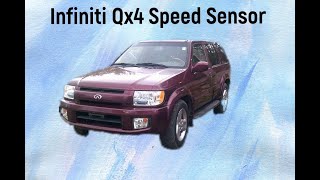
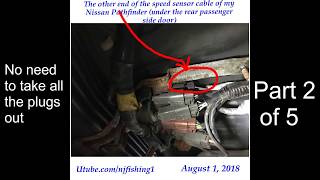
Typical fix: Replace the faulty output speed sensor. It is mounted on the exterior of the transmission case, making it relatively easy to access and replace. 🎬 Watch this walkthrough on removing the speed sensor.
Est. part cost: $40-$120 - Failed Shift Solenoid or Solenoid Pack 🟡 Medium Probability The RE4R01A transmission's solenoids cycle thousands of times and can fail electrically or become clogged with debris from aging fluid over many miles. This will trigger a specific solenoid code (e.g., P0750 for Shift Solenoid A).
How to confirm: The TCM will store a specific code pointing to a particular solenoid (e.g., P0750, P0751, etc.). A technician can test the solenoid's resistance or perform a functional test using a capable scan tool.
Typical fix: Drop the transmission oil pan to access and replace the specific solenoid or the entire solenoid pack. This is always done along with a fluid and filter change.
Est. part cost: $100-$300 - Damaged Wiring Harness or Connectors ⚪ Low Probability The harness leading to the transmission is exposed to heat, oil, and road debris, which can cause wires to become brittle, corroded, or shorted over 20+ years. The main connector on the transmission is a key inspection point.
How to confirm: Visually inspect the wiring harness for any signs of damage, chafing, or corrosion at the connectors. A multimeter can be used to check for continuity and shorts between the TCM and transmission connectors.
Typical fix: Repair the damaged section of the wire or clean/replace the corroded connector. Sometimes the internal harness, which is submerged in fluid, can also fail.
Est. part cost: $10-$150
Rare But Worth Checking
- Failed Transmission Control Module (TCM): While uncommon, the TCM itself can fail. This should only be considered after all other possibilities (sensors, solenoids, wiring) have been thoroughly ruled out. If a capable scan tool cannot communicate with the TCM at all, it points towards a faulty module or a power/ground issue to the module itself.
- Internal Mechanical Failure: If the transmission fluid contains significant metal shavings, it points to a severe internal problem like worn clutch packs, a failing valve body, or a damaged torque converter. In this case, P0700 is a symptom of a much larger mechanical issue requiring a transmission rebuild or replacement.
Diagnosis Steps
- Scan for TCM Codes: Use an OBD-II scanner that can read transmission-specific codes. The P0700 code only tells you to look here; the other codes (like P0720) will guide your diagnosis.
- Check Transmission Fluid: With the engine warm and in Park, check the fluid level and condition. Low, burnt, or contaminated fluid can cause numerous issues. Top off or replace as needed using Matic D or a Dexron III equivalent.
- Analyze Specific TCM Codes: Research the specific codes found in step 1. If you have a P0720, focus on the Output Speed Sensor. If you have a P0750, focus on Shift Solenoid A.
- Inspect Wiring: Visually inspect the main wiring harness going to the transmission. Pay close attention to the main round connector for corrosion or pushed-out pins. Check for chafing near the exhaust or driveshaft.
- Test Specific Components: Based on the TCM codes, test the suspected sensor or solenoid. For a speed sensor, this usually involves checking its resistance with a multimeter and comparing it to the vehicle's service manual specifications. For a solenoid, resistance can also be checked, or it can be activated with a capable scan tool.
- Check Power and Ground to TCM: Verify that the TCM has a stable power supply and a solid ground connection, as voltage issues can cause erratic behavior and false codes.
- Professional Diagnosis: If the issue points to an internal component like a valve body, the TCM itself, or requires dropping the transmission pan, it is best to seek professional service for confirmation before replacing expensive parts.
Parts You'll Likely Need
- Transmission Output Speed Sensor (VSS)
(OEM #31935-8E006 (or superseded numbers))— This is the most frequent cause for a P0700/P0720 combination on the R50 Pathfinder. It's critical for shift commands and speedometer function. 🎬 See how to change the vehicle speed sensor yourself.
Trusted brands: Hitachi, NGK/NTK, Standard Motor Products (SC374)
OEM price range: $90-$160
Aftermarket price range: $30-$80 - Transmission Shift Solenoid
(OEM #Part of valve body assembly, individual solenoids often serviced aftermarket.)— A specific solenoid failing to actuate is a common cause of shifting problems and will set a dedicated code in the TCM. The RE4R01A transmission uses several.
Trusted brands: Rostra, Duralast
OEM price range: $100-$200 (per solenoid, if available separately)
Aftermarket price range: $40-$100 (per solenoid)
Related Codes That Often Appear With This One
- P0720 — This is the specific code for an Output Speed Sensor circuit malfunction. It is one of the most common companion codes to P0700 on this platform and directly points to the VSS as the likely culprit.
- P0750, P0755, P0760 — These codes correspond to Shift Solenoid 'A', 'B', and 'C' respectively. Finding one of these alongside P0700 pinpoints the issue to a specific solenoid inside the transmission valve body.
- P07xx — P0700 is a general code. It will almost always be accompanied by more specific P07xx codes that pinpoint the actual fault within the transmission system.
Platform-Specific Known Issues
- Output Speed Sensor (P0720) is the Most Common Culprit: Forum discussions and mechanic reports overwhelmingly point to the output speed sensor (VSS) as the primary trigger for a P0700 code on the R50 Pathfinder. Symptoms often include a non-functional or erratic speedometer in addition to the shifting problems. The fix is typically a straightforward replacement of the sensor located on the transfer case (4WD) or transmission housing (2WD).
- Corrosion on Main Transmission Connector: The main electrical connector to the transmission can accumulate moisture and corrosion over time, leading to poor signals for sensors and solenoids. Before replacing any parts, it's a common diagnostic step to disconnect, inspect, and clean this connector with electrical contact cleaner.
Mechanic-Grade Diagnostic Values
- Shift Solenoid A & B Resistance — expected: 20 - 40 Ohms. Failure: A reading outside this range indicates a failed solenoid coil.
- Line Pressure Solenoid Resistance — expected: 2.5 - 5 Ohms. Failure: A reading outside this range indicates a failed solenoid coil.
- Torque Converter Clutch (Lock-up) Solenoid Resistance — expected: 10 - 20 Ohms. Failure: A reading outside this range indicates a failed solenoid coil.
- Output Speed Sensor Resistance (typical 2-wire sensor) — expected: 560 - 680 Ohms. Failure: A reading significantly outside this range suggests a faulty sensor. Always confirm with the specific vehicle's service manual.
Scan Tool Commands That Help
- Nissan DataScan II (or similar CONSULT II software): TCM Self Diagnostics — To read and clear the specific P07xx codes stored in the Transmission Control Module, which are the root cause behind the generic P0700 code.
- Nissan DataScan II (or similar CONSULT II software): Active Test — Allows for manually activating individual shift solenoids to confirm their mechanical operation (listen for a click) after electrical tests are performed.
- Manual Procedure (No Scan Tool): TCM Self-Diagnosis via O/D OFF Light — For owners without a capable scan tool, a specific sequence of key turns and shifter movements can make the 'O/D OFF' light flash out the stored transmission codes. This is a built-in diagnostic feature on many Nissans of this era.
Wiring & Ground Locations
- E72 (Ground Strap) — A short, braided strap running from the passenger-side exhaust manifold heat shield to the firewall flange, visible above the right valve cover.. This ground is a common failure point due to fraying. It is critical for stabilizing sensor grounds, including those used by the transmission system. A poor ground here can cause erratic sensor readings and trigger false codes.
- E105 (Ground Stud) — A 10mm stud on the passenger side of the transfer case tail housing, with a short wire going to the frame cross-member.. This ground is essential for the 4WD shift motor and neutral switch harness. While not directly part of the core transmission shifting, a fault here can confuse the TCM about the vehicle's state (e.g., 4-Low engagement), leading to shifting problems and codes.
- Main Transmission Harness Connector — A large, typically round connector on the side of the transmission case where the main vehicle harness connects to the transmission's internal wiring.. This is the single point of failure for all electronic communication to the transmission. Corrosion from water intrusion or pushed-out pins are common issues that can interrupt signals for multiple sensors and solenoids at once, causing a P0700.
Real Owner Repair Stories
- YouTube user comment section (Nissan Quest (vehicle uses similar components)) — Erratic speedometer, stalling, hesitation, loss of power, and codes P0700 and P0720.
❌ Tried (didn't work) Hours of research, considering transmission replacement.
✅ What actually fixed it Replacing the output speed sensor (VSS). The user noted the fix was simple and inexpensive, and resolved all symptoms immediately.
OEM Part Supersession History
31935-43X12→31935-8E002, 31935-8E004, 31935-8E006— Standard part evolution and supplier changes over time.
Heads up: While later part numbers supersede earlier ones, it is critical to verify fitment by VIN. There can be subtle differences in connector shape or sensor length between model years, especially between 2WD and 4WD models.
Model Year Variations Within This Range
- 1996-2000: These models were equipped with the 3.3L VG33E V6 engine, producing around 170 hp. The diagnostic approach is consistent across these years.
- 2001-2004: These models received the significantly more powerful 3.5L VQ35DE V6 engine (240-250 hp). While they use the same RE4R01A automatic transmission, the TCM programming and some sensor inputs (like crank/cam sensors for engine speed) are different due to the new engine. Some VQ35DE models also had issues with power valve screws in the intake manifold coming loose, which could cause engine performance issues that might be confused with transmission problems if not diagnosed carefully.
- 1999.5-2000: This is a transitional period. The vehicle received the post-facelift exterior styling but retained the older 3.3L VG33E engine and drivetrain from the pre-facelift models.
Documented NHTSA Reports
While the R50 Pathfinder is the primary focus, similar Nissan platforms provide insight into how the P0700 manifests. For instance, NHTSA ODI #11142343 describes a situation where a vehicle would jolt forward when starting from an idle or stopped position, returning a P0700 code alongside additional shifting error codes. Furthermore, NHTSA ODI #10622368 notes a case where a P0700 "Transmission Control System TCS Malfunction" was accompanied by the Over Drive indicator light staying on, resulting in the transmission being unable to use 1st, 2nd, or 3rd gears.
Diagnostic Flowchart
Used vs. New Parts: Buying Guide for This Vehicle
When a used part is the smart pick: For major electronic components like the Transmission Control Module (TCM), a used part from a reputable salvage yard can be a cost-effective option, especially since new OEM units may be discontinued. Ensure the donor vehicle has similar mileage and the part comes with a warranty.
Donor-vehicle mileage cap: roughly under 150000 miles for the part to have meaningful remaining life.
What to inspect on the donor part:
- For a TCM, check that the part number is an exact match.
- For a used speed sensor or solenoid, inspect the connector for corrosion or damage and the plastic for cracks.
- Ask for the mileage of the donor vehicle; lower is always better.
- Ensure there is no visible damage to the part or its wiring pigtail.
OEM-only on this vehicle (don't cheap out):
- Transmission Control Module (TCM) - While a used OEM part is viable, avoid unproven aftermarket TCMs. Programming issues can be a major headache.
Aftermarket brands forum-validated for this vehicle:
- Hitachi (often the original OEM supplier for sensors)
- NTK / NGK (for sensors)
- Rostra (for solenoids)
Brands owners have reported issues with on this vehicle:
- Generic, no-name 'white box' sensors from online marketplaces. These are notorious for having incorrect resistance values, failing quickly, or having poor-fitting connectors, often causing the same code to return.
Real Owner Stories
Aggregated from forums and TSBs cited above. Mileages and costs reflect what owners reported in those sources.
1996-2004 Nissan Pathfinder
Symptoms: Check Engine Light was on with codes P0700 and P0720, and the speedometer was dead (not working).
What fixed it: The issue was resolved by replacing the vehicle speed sensor (VSS).
Source hint: nissanpathfinders.net forum topic 'p0700-and-p0720-codes-and-speedo-not-working/'
Related OBD-II Codes
Frequently Asked Questions
My Pathfinder's speedometer stopped working and the Check Engine Light is on. Is this related to the P0700 code?
What specific transmission fluid should I use for my 1996-2004 Pathfinder when addressing a P0700 code?
My scanner only shows P0700. How do I find the real problem with my Pathfinder's transmission?
Before I start replacing expensive parts, is there a common, simple electrical check I should perform?
I have a 4WD Pathfinder. Where is the output speed sensor located?
Can I use parts from an Infiniti QX4 to fix the P0700 issue on my Pathfinder?
Helpful Videos

We Have This Part in Stock

The information in this article is provided for general reference and educational purposes only. Vehicle specifications, procedures, and part compatibility can vary by production date, trim level, and region. Always consult your vehicle's factory service manual and verify part numbers before purchasing or performing repairs. Safety-critical components such as airbags, seat belts, and braking systems should be installed by a qualified professional.
- Nissan Pathfinder:
- 🎬 Helpful Videos
- 🛍️ Shop This Part
- What's Unique About the 1996-2004 Nissan Pathfinder
- Symptoms You May Notice
- Most Likely Causes
- Rare But Worth Checking
- Diagnosis Steps
- Parts You'll Likely Need
- Related Codes That Often Appear With This One
- Platform-Specific Known Issues
- Mechanic-Grade Diagnostic Values
- Scan Tool Commands That Help
- Wiring & Ground Locations
- Real Owner Repair Stories
- OEM Part Supersession History
- Model Year Variations Within This Range
- Documented NHTSA Reports
- Diagnostic Flowchart
- Used vs. New Parts: Buying Guide for This Vehicle
- Real Owner Stories
- 1996-2004 Nissan Pathfinder
- Related OBD-II Codes
- Frequently Asked Questions
- 🎟️ Get 5% Off