

P0700 on 2001-2006 Hyundai Santa Fe: Transmission Fault Guide
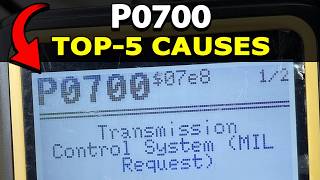
P0700 is a general transmission alert. On the 2001-2006 Santa Fe, this almost always points to a failed Input or Output Speed Sensor. Expect to find codes like P0715 or P0720 alongside P0700. Replacing the faulty sensor is a common, affordable DIY fix that resolves limp mode and erratic speedometer issues.
- P0700 is just a warning light trigger; you MUST get the specific codes from the Transmission Control Module (TCM).
- The most likely cause for a P0700 on a 2001-2006 Santa Fe is a bad Input Speed Sensor (P0715) or Output Speed Sensor (P0720).
- Symptoms like harsh shifting, getting stuck in gear, and a faulty speedometer strongly point to a speed sensor failure.
- Replacing the speed sensors is an affordable and accessible DIY repair for many owners.
- Always check the simple things first: transmission fluid level/condition and wiring, before assuming a major repair is needed.
What's Unique About the 2001-2006 Hyundai Santa Fe
For the first-generation Hyundai Santa Fe (2001-2006), the P0700 code is very frequently a precursor to finding codes related to the input and/or output speed sensors (P0715, P0720). These sensors are a known weak point on this platform's 4-speed automatic transmission, which is a Mitsubishi-designed F4A42 or F4A51 depending on the engine. Owners often experience sudden harsh shifting, getting stuck in 3rd gear (limp mode), and an erratic speedometer, all pointing directly to the failure of these easily replaceable external sensors.
Symptoms You May Notice
- Check Engine Light is on
- Transmission gets stuck in one gear (usually 2nd or 3rd), also known as 'limp mode' or 'fail-safe' 🎬 See this guide on limp mode symptoms and quick fixes
- Harsh, jerky, or erratic shifting, especially a hard 'thunk' when shifting from Park to Drive
- Vehicle feels like it has a sudden loss of power
- Speedometer works erratically or drops to zero while driving
- Delayed engagement when shifting from Park to Drive or Reverse
- ABS and/or Traction Control (TCS/ESC) lights may also illuminate, as these systems rely on speed sensor data
- Replacing the entire transmission without first checking the inexpensive input/output speed sensors.
- Replacing the Transmission Control Module (TCM) before thoroughly inspecting the wiring harness for damage.
- Performing a full transmission flush on a high-mileage vehicle that has never had its fluid changed, which can sometimes dislodge debris and cause new problems.
Most Likely Causes
- Faulty Input Speed Sensor (ISS) / Turbine Speed Sensor (TSS) 🔴 High Probability This is a very common failure point on the F4A42/F4A51 transmission. The sensor provides critical data for shift timing.
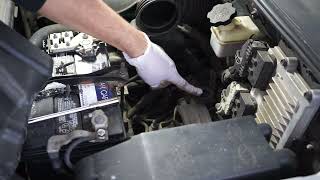
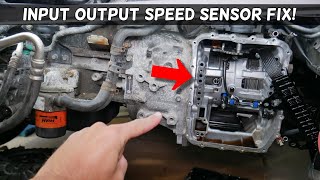
How to confirm: Scan the TCM for code P0715. The sensor is located on top of the transmission case. A detailed guide on Hyundai-Forums describes removing the airbox and a 12mm bracket 🎬 Watch: Step-by-step input and output speed sensor replacement walkthrough to access it.
Typical fix: Replace the Input Speed Sensor. It is located on the top of the transmission case, often requiring removal of the air filter box and a shift cable bracket for access.
Est. part cost: $25-$60 - Faulty Output Speed Sensor (OSS) 🔴 High Probability Like the input sensor, the output speed sensor is a frequent failure item on this platform and directly affects the speedometer reading.
How to confirm: Scan the TCM for code P0720. A faulty OSS is the primary cause of an erratic or non-functional speedometer.
Typical fix: Replace the Output Speed Sensor. It is also located on the transmission case, typically near the input sensor and accessible from the top.
Est. part cost: $25-$60 - Low or Dirty Transmission Fluid 🟡 Medium Probability
How to confirm: Check the transmission fluid level and condition using the dipstick with the engine warm and running in Park. The fluid should be bright red and not smell burnt. Dark, brown, or fluid with metallic flecks indicates a more serious internal problem.
Typical fix: Perform a transmission fluid and filter change. Use only Hyundai-specified fluid (Hyundai/Kia SP-III). A drain and fill is often sufficient if the fluid is just old.
Est. part cost: $50-$100 for fluid and filter - Damaged Wiring or Connectors ⚪ Low Probability The wiring harness to the sensors is exposed to engine heat and vibration, which can cause it to become brittle over time.
How to confirm: Visually inspect the wiring harnesses going to the input/output speed sensors and the main connector on the transmission. Look for chafed wires, corrosion in connectors, or loose pins. A user on 2CarPros noted their harness was brittle and needed replacement. Resistance can be checked with a multimeter; more than 1 ohm suggests a wiring issue.
Typical fix: Repair the damaged section of the harness or replace the faulty connector.
Est. part cost: $10-$50
Rare But Worth Checking
- Failing Transmission Control Module (TCM): This is rare. Suspect the TCM only after all sensors, wiring, and fluid have been confirmed to be good. A key symptom can be the presence of multiple, seemingly unrelated sensor codes at once, or if P0700 appears with no other codes after a reset. The TCM is located behind the glovebox.
- Internal Transmission Failure (e.g., Solenoids, Clutches): While possible, this is less common than sensor failures for this specific code. This would typically be accompanied by specific solenoid codes (e.g., P0750-P0798) or gear ratio error codes (e.g., P0731, P0732) in addition to P0700.
Diagnosis Steps
- Use an OBD-II scanner capable of reading Transmission Control Module (TCM) codes to retrieve all stored codes. Do not proceed with only the P0700 code.
- If P0715 (Input Speed Sensor) or P0720 (Output Speed Sensor) are present, this is your most likely problem area.
- Check the transmission fluid level and condition. Ensure the fluid is at the correct level, is reddish in color, and does not smell burnt. Use only SP-III compatible fluid.
- Inspect the wiring and connectors for the input and output speed sensors on top of the transmission. Look for any signs of damage, corrosion, or loose connections. Pay close attention to the harness where it might rub or be exposed to heat.
- If speed sensor codes are present, the most common fix is to replace the corresponding sensor. They are held in by a single 10mm bolt and are accessible after removing the air filter housing and sometimes a shift cable bracket.
- If there are no speed sensor codes, but there are solenoid or gear ratio codes, the problem is likely internal to the transmission or related to fluid quality/level.
- If only P0700 is present with no other codes (which is rare), or if multiple sensor codes appear simultaneously, investigate the TCM's power (fuses) and ground connections before condemning the module itself.
Parts You'll Likely Need
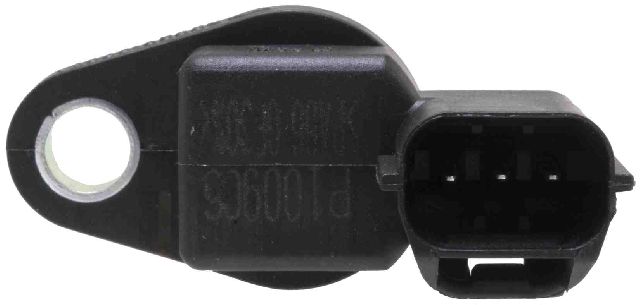
- Input Speed Sensor / Turbine Speed Sensor
(OEM #42620-39051)— This is one of the most common failure points on the 2001-2006 Santa Fe that will trigger a P0700 code, usually accompanied by P0715.
Trusted brands: Hyundai OE, NGK, Standard Motor Products
OEM price range: $45-$70
Aftermarket price range: $25-$50 - Output Speed Sensor
(OEM #42621-39052)— This sensor fails almost as frequently as the input sensor and is the primary cause of speedometer issues along with the P0700 code (and P0720).
Trusted brands: Hyundai OE, Delphi, WVE
OEM price range: $45-$70
Aftermarket price range: $25-$50
Related Codes That Often Appear With This One
- P0715 — This code directly indicates a fault in the Input/Turbine Speed Sensor circuit, a very common cause for P0700 on this vehicle.
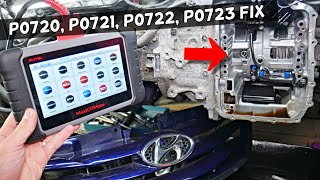
- P0720 — This code points to a fault in the Output Speed Sensor circuit, another highly common failure point that also affects the speedometer.
- P0731, P0732, P0733, P0734 — These are 'Incorrect Gear Ratio' codes. They can be triggered by faulty speed sensor data causing the TCM to detect a mismatch between expected and actual gear ratios, or they can indicate actual internal slipping.
- P1529 — This is a Hyundai-specific code that means the TCM has sent a request to the ECM to turn on the check engine light. It almost always appears with other transmission codes and confirms the fault is transmission-related.
Technical Service Bulletins (TSBs) & Recalls
- TSB 09-AT-011 (related but for newer models, indicates Hyundai's awareness of solenoid issues)
- TSB 04-40-015 (referenced in other documents regarding harness replacement inside the oil pan)
- TSB 05-40-003: A relevant TSB for 2001 models (Santa Fe, Elantra, Sonata, XG300) specifically addresses harsh engagement and fail-safe mode caused by faulty input/output speed sensors, triggering codes P0715, P0720, and P1529. The repair procedure is to replace the faulty sensor.
Platform-Specific Known Issues
- source — A user named 'Hyundaitech' on Hyundai-Forums.com provided a detailed step-by-step guide for replacing the input speed sensor. The process involves removing the air intake box (held by three 10mm bolts), then removing two 12mm bolts holding the shift cable bracket to gain access to the sensor itself, which is secured by a single 10mm bolt. This post has been referenced by many owners as the go-to guide for this repair.
- source — A very common owner experience reported across multiple forums is that the first sign of trouble is the speedometer needle suddenly dropping to zero while driving. Shortly after, the Check Engine Light illuminates, and the transmission forces itself into 3rd gear (limp mode). This specific sequence of events almost always points to a failed Output Speed Sensor (P0720).
- Multiple Codes (P0715, P0720, P1529) Point to Wiring or TCM: In a diagnostic thread on 2CarPros, an owner replaced both speed sensors and a brittle wiring harness, but the codes P0715, P0720, and P1529 persisted and the speedometer remained dead. The advising technician suggested that with all three codes present simultaneously after parts replacement, the next logical step is to check the TCM's power fuses and ground connections, and if those are good, suspect a faulty TCM.
Mechanic-Grade Diagnostic Values
- Input/Output Speed Sensor Resistance — expected: 500–1,200 Ω. Failure: A reading of OL (open circuit) or a value significantly outside the specified range indicates a faulty sensor.
- Input/Output Speed Sensor Bench Test (Hall Effect Type) — expected: The signal wire should toggle between ~0V and ~5V as the sensor's gear is manually spun.. Failure: No voltage change or a constant voltage indicates a failed sensor.
- Wiring Harness Continuity — expected: Less than 1.0 Ω. Failure: Resistance greater than 1.0 Ω indicates high resistance in the wire. An OL (open circuit) reading means the wire is broken.
Scan Tool Commands That Help
- Hyundai GDS or Hi-Scan Pro: Data Analysis for Input/Output Speed Sensor — Use a professional scanner to view live data from the input and output speed sensors while driving. A flat or erratic reading that doesn't correspond to vehicle speed confirms a sensor or circuit problem. This is the first step before component testing.
Wiring & Ground Locations
- TCM Location (2.7L) — Below the center of the dash.. Knowing the TCM's location is critical for checking its connectors for corrosion or damage and for testing power and ground circuits, especially if multiple sensor codes appear at once.
- G02 / G03 — Under the center console, near the SRS control module.. These are the primary ground points for the Transmission Control Module (TCM) on 2.7L models. A loose or corroded ground at these locations can cause erratic TCM behavior and trigger various transmission codes, including P0700.
- Harness Chafe Point — The main engine harness can rub against the ECM/TCM bracket, upper control arm, and shock tower.. Although more commonly reported on other models, harness chafing is a known issue that can cause shorts in circuits for transmission sensors. A visual inspection of these areas is warranted if electrical issues are suspected.
Real Owner Repair Stories
- 2CarPros Forum (2004 Hyundai Santa Fe) — Hard jerk when starting out, speedometer not working, codes P0715, P0720, and P1529 present.
❌ Tried (didn't work) Replaced input speed sensor, Replaced output speed sensor, Replaced turbine speed sensor, Replaced a brittle section of the input speed sensor wiring harness
✅ What actually fixed it The final advice from the technician, after all common parts were replaced, was to check the TCM's power and ground sources. If those were confirmed good, the next step was to replace the Transmission Control Module (TCM) itself, as the combination of multiple persistent sensor codes pointed to a failure of the control unit. - Hyundai-Forums.com (2001 Hyundai Santa Fe V6) — Car would seize hard, sudden loss of power, Check Engine Light with code P0715.
❌ Tried (didn't work) Initial difficulty locating the correct sensor due to a confusing Haynes manual and crowded engine bay.
✅ What actually fixed it The owner successfully replaced the Input Speed Sensor (P/N 42620-39051) after getting forum advice. The fix required removing the air filter box to access the sensor, which was located on top of the transmission next to the bell housing. This resolved the P0715 code and associated symptoms.
OEM Part Supersession History
42620-39050, 42620-39100→42620-39051— Part revision/update by manufacturer.
Heads up: The latest part number, 42620-39051, is the correct replacement for the Input Speed Sensor for this vehicle range.42621-39100→42621-39052— Part revision/update by manufacturer.
Heads up: The current OEM part number for the Output Speed Sensor is 42621-39052. Some aftermarket parts may also reference 42621-39200.
Diagnostic Flowchart
Real Owner Stories
Aggregated from forums and TSBs cited above. Mileages and costs reflect what owners reported in those sources.
2001-2006 Hyundai Santa Fe
Symptoms: The speedometer needle suddenly dropped to zero while driving. Shortly after, the Check Engine Light illuminated, and the transmission forced itself into 3rd gear (limp mode).
What fixed it: Replaced the Output Speed Sensor (OSS) to resolve the P0720 code.
Source hint: Vehicle-specific issues section: 'Speedometer Drops to Zero, Then Limp Mode'
2004 Hyundai Santa Fe
Symptoms: Codes P0715, P0720, and P1529 were present, and the speedometer remained dead even after replacing parts.
What fixed it: Replaced both speed sensors and a brittle wiring harness. When codes persisted, the diagnostic path shifted to checking the TCM's power fuses, ground connections, and suspecting a faulty TCM.
Source hint: 2CarPros.com discussion about a 2004 Hyundai Santa Fe
2001-2006 Hyundai Santa Fe
Symptoms: Speedometer issue persisted despite replacing multiple components.
What fixed it: Replaced both speed sensors and the instrument cluster without fixing the issue, leading to a diagnosis of a deeper CAN bus network problem.
Source hint: Reddit (r/MechanicAdvice)
2001-2006 Hyundai Santa Fe
Symptoms: Input speed sensor failure causing transmission shifting issues.
What fixed it: Replaced the input speed sensor by removing the air intake box (three 10mm bolts) and shift cable bracket (two 12mm bolts) to access the 10mm sensor bolt.
Source hint: DIY Sensor Replacement on Hyundai-Forums
Documented NHTSA Reports
Hyundai Transmission Diagnostic Record
Symptoms: A manufacturer service invoice noted a failed transmission range switch and failed transmission pulse generators. Diagnostic scanning revealed codes P0700 (range switch short) and P0722 (output speed sensor open/short).
What fixed it: NHTSA ODI #10143151 describes a case where these failures were documented alongside reports on the transmission fluid level and condition.
Related OBD-II Codes
Frequently Asked Questions
Is there a specific TSB for the 2001 Hyundai Santa Fe regarding harsh shifting and limp mode?
My speedometer suddenly dropped to zero and the transmission is stuck in 3rd gear. What does this mean for my Santa Fe?
How hard is it to replace the Input Speed Sensor on the F4A51 transmission myself?
I replaced both speed sensors on my 2004 Santa Fe but codes P0715, P0720, and P1529 are still there. What's next?
What kind of transmission fluid should I use if I'm doing a drain and fill to fix a P0700 code?
Why are my ABS and Traction Control lights on along with the Check Engine Light?
Helpful Videos
We Have This Part in Stock


The information in this article is provided for general reference and educational purposes only. Vehicle specifications, procedures, and part compatibility can vary by production date, trim level, and region. Always consult your vehicle's factory service manual and verify part numbers before purchasing or performing repairs. Safety-critical components such as airbags, seat belts, and braking systems should be installed by a qualified professional.
- Hyundai Santa Fe:
- 🎬 Helpful Videos
- 🛍️ Shop This Part
- What's Unique About the 2001-2006 Hyundai Santa Fe
- Symptoms You May Notice
- Most Likely Causes
- Rare But Worth Checking
- Diagnosis Steps
- Parts You'll Likely Need
- Related Codes That Often Appear With This One
- Technical Service Bulletins (TSBs) & Recalls
- Platform-Specific Known Issues
- Mechanic-Grade Diagnostic Values
- Scan Tool Commands That Help
- Wiring & Ground Locations
- Real Owner Repair Stories
- OEM Part Supersession History
- Diagnostic Flowchart
- Real Owner Stories
- 2001-2006 Hyundai Santa Fe
- 2004 Hyundai Santa Fe
- 2001-2006 Hyundai Santa Fe
- 2001-2006 Hyundai Santa Fe
- Documented NHTSA Reports
- Hyundai Transmission Diagnostic Record
- Related OBD-II Codes
- Frequently Asked Questions
- 🎟️ Get 5% Off