

OBD-II Code P1529: TCM Request to Turn On Check Engine Light
The Ultimate Guide to What P1529 Means, Why It Triggers, and How to Fix It for Good
- P1529 is strictly a messenger code indicating the Transmission Control Module (TCM) has requested the Check Engine Light; you must scan the TCM to find the actual P07xx fault code.
- On Hyundai and Kia vehicles, over 80% of P1529 codes stem from a failed input or output speed sensor (codes P0715 or P0720), causing the transmission to lock into 3rd gear limp mode.
- Never replace parts based solely on a P1529 code; use an advanced OBD-II scanner capable of reading TCM data to pinpoint the root cause.
- For European brands like BMW and VW, P1529 completely changes meaning to indicate a camshaft control circuit fault, requiring engine rather than transmission diagnostics.
- Driving in limp mode for more than a few days accelerates internal clutch wear, turning a $150 sensor replacement into a $3,000 transmission rebuild.
What Does P1529 Mean?

Code P1529 means the Transmission Control Module (TCM) detected a critical fault and commanded the Engine Control Module (ECM) to illuminate the Check Engine Light. This code is strictly a messenger. It confirms a specific transmission-related code (like P0715 or P0720) is stored in the TCM, which you must retrieve to diagnose the actual failure.
🎬 Watch: Why your scanner might be hiding the real fault.Technical definition: On Hyundai and Kia vehicles, P1529 is defined as 'TCM Request for MIL ON'. The TCM sends a signal over the Controller Area Network (CAN) bus to the ECM to activate the Malfunction Indicator Lamp. Manufacturer context is critical: on BMW, VW, or Mercedes-Benz, P1529 indicates a camshaft control circuit fault, completely unrelated to the transmission.
Can I Drive With P1529?
Yes, But With Caution. You can drive short distances, but continuing risks severe damage. The transmission often shifts harshly, unpredictably, or locks into 3rd gear (limp mode), causing poor acceleration and high RPMs. Ignoring this turns a $150 sensor replacement into a $3,000 transmission rebuild.
Common Causes

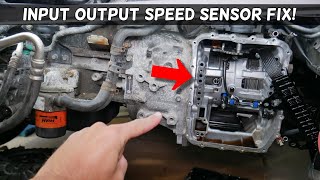
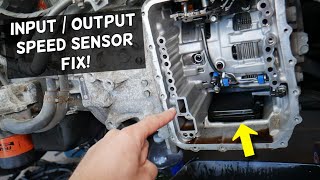
- Faulty Transmission Input or Output Speed Sensor (Very Common) — These sensors provide crucial shaft speed data. If one fails, the TCM loses critical information, causing erratic shifting, limp mode, and triggering the P1529 request. 🎬 See how to locate and replace Hyundai speed sensors.
- Damaged Wiring, Corroded Connectors, or Poor Grounds (Common) — The wiring harness is exposed to heat, moisture, and vibration. Frayed wires, corroded connectors, and loose grounds interrupt the signal and cause this code.
- Low, Burnt, or Contaminated Transmission Fluid (Common) — Low fluid causes overheating and pressure issues. Old fluid full of clutch material interferes with sensor operation and clogs solenoid valves.
- Faulty Transmission Solenoid (Uncommon) — Shift solenoids direct fluid flow to change gears. If a solenoid sticks or fails electrically, the transmission won't shift correctly, prompting a code.
- Failing Transmission Control Module (TCM) (Less Common) — Internal circuit failure from heat or voltage spikes causes the TCM to lose communication, send false error signals, or fail to control the transmission.
- Faulty Brake Light Switch (Uncommon) — The brake light switch signals the TCM to unlock the torque converter. A faulty switch sends erratic signals, confusing the TCM.
- Internal Transmission Mechanical Failure (Rare) — A worn-out clutch pack, failing torque converter, or valve body problem causes performance faults that the TCM flags with a P1529 code.
- CAN Bus Communication Failure (Rare) — A short in the CAN bus wiring corrupts the message from the TCM to the ECM, logging a P1529 or similar communication codes.
Symptoms
- Check Engine Light is On — The sole purpose of the P1529 code is for the TCM to command the ECM to illuminate the Check Engine Light.
- Transmission Stuck in 'Limp Mode' — The TCM forces the transmission into a single gear (usually 3rd) to prevent damage, resulting in poor acceleration and high RPMs at speed.
- Harsh, Erratic, or Delayed Shifting — The vehicle slams into gear, hesitates between shifts, or slips, indicating the TCM lacks accurate speed sensor data.
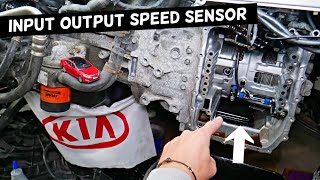
- Inaccurate or Malfunctioning Speedometer — If the fault is the Output Speed Sensor (P0720), the speedometer behaves erratically or stops working entirely. 🎬 Watch this walkthrough for Kia input and output sensor replacement.
- Cruise Control Inoperative — Cruise control relies on a steady output speed sensor signal. If lost, the system disables as a safety measure.
Diagnostic Flowchart

Tap your situation to follow the diagnostic path that matches what you're seeing on this code.
Common Fixes & Costs
- Replace Transmission Input/Output Speed Sensor — Parts: $25 - $120, Labor: $100 - $250, ~1.5 hr book time (Intermediate)
- Repair Damaged Wiring or Replace Connector — Parts: $10 - $60, Labor: $150 - $400, ~2.5 hr book time (Intermediate)
- Transmission Fluid and Filter Change — Parts: $60 - $180, Labor: $125 - $300, ~1.2 hr book time (DIY)
- Replace Transmission Valve Body Solenoid — Parts: $50 - $200, Labor: $250 - $600, ~3 hr book time (Professional)
- Replace Transmission Control Module (TCM) — Parts: $300 - $1,000+, Labor: $150 - $350, ~2.5 hr book time (Professional)
Used vs. New Parts: Buying Guide
When a used part is worth it: Buying a used transmission speed sensor is not recommended. It is a sensitive electronic part exposed to high heat and vibration. The low cost of a new aftermarket part makes it a more practical choice.
Donor-vehicle mileage cap: roughly under 40000 miles for the part to have meaningful remaining life.
Donor quality checklist:
- Verify the exact OEM part number matches.
- Avoid parts from vehicles with high mileage or known transmission problems.
- Inspect the connector pins for any signs of corrosion or damage.
Decision logic:
- If The cost of a new OEM or reputable aftermarket sensor is under $100. → Always buy new. The labor cost to replace it again if a used part fails outweighs any initial savings.
- If The vehicle is very old and has low value, and a used part is available for a fraction of the new price. → A used part is a budget-conscious option, but accept the risk of premature failure.
- If The part is a simple electronic component like a sensor. → Favor new aftermarket or OEM over used due to the high risk of electronic failure.
Warranty tradeoff: Used parts from a salvage yard typically have a 30-90 day warranty covering only the part. New aftermarket parts often come with a 1-year to limited lifetime warranty. New OEM parts carry a 12-month manufacturer warranty.
Worst-case if a used part fails: $150-300 if a used sensor fails after installation, primarily due to repeated labor costs.
What Happens If You Wait — Timeline
- 0-1 month: Intermittent harsh shifts or delayed engagement. The Check Engine Light illuminates. Limp mode occurs sporadically but resets after restarting the car. (MPG impact: 0-5%% · Added cost: $0-25 in wasted fuel.)
- 1-3 months: Limp mode becomes frequent and persistent. Harsh, slamming shifts are common. The car is unreliable and unsafe in traffic. (MPG impact: 10-20%% · Added cost: $50-150 in wasted fuel. Accelerated wear on clutch packs begins.)
- 3-6 months: Constant harsh shifting causes significant wear on transmission clutches and solenoids. Fluid overheats and burns, losing protective qualities. (MPG impact: 15-25%% · Added cost: $800 - $2,000. Damage progresses beyond a sensor, requiring solenoid or valve body work.)
- 6+ months: Catastrophic internal damage. The initial sensor fault destroys clutch packs. The transmission slips severely, grinds, or fails to engage any gear. (MPG impact: N/A (Vehicle is likely undrivable)% · Added cost: $2,500 - $5,000+. The $150 sensor repair now requires a complete transmission rebuild.)
Cost of Not Fixing It
- Short-Term (0-1 month): Continued harsh shifting, poor acceleration, and a 5-15% drop in fuel economy due to inefficient gear selection or limp mode. Unsafe driving conditions. (Added cost: Negligible, besides increased fuel cost.)
- Medium-Term (1-6 months): Accelerated wear on transmission clutches, bands, and solenoids from repeated harsh shifts. Overheating transmission fluid degrades protective properties and damages seals. (Added cost: $800 - $2,000 for potential valve body or solenoid pack replacement.)
- Long-Term (6+ months): Catastrophic internal transmission damage. Cumulative stress from operating without correct speed data destroys hard parts like gears and clutch packs. (Added cost: $2,500 - $5,000+ for a rebuilt or replacement transmission.)
Diagnosis Steps
- Scan for All Trouble Codes (ECM & TCM)
P1529 is an informational flag. You MUST use an OBD-II scanner that reads manufacturer-specific codes from the Transmission Control Module (TCM). A basic reader only shows P1529. The actionable code (e.g., P0715, P0720) is in the TCM.
Tools: Advanced OBD-II Scanner (TCM compatible) (Beginner) - Check Transmission Fluid Level and Condition
With the engine warm and running in Park or Neutral, check the fluid. It must be at the 'Full' mark, appear pink/red, and not smell burnt. Dark, burnt-smelling fluid with metal particles indicates serious internal wear.
Tools: Rag, Gloves (Beginner) - Inspect Wiring and Connectors
Visually inspect the wiring harness going to the transmission. Look for chafed wires, melted loom, corrosion on pins, and broken connector clips. Wiggle the harness while the engine runs to see if it triggers symptoms.
Tools: Flashlight, Inspection Mirror (Intermediate) - Monitor Live Data PIDs
Using an advanced scan tool, monitor 'Input Shaft Speed' and 'Output Shaft Speed'. Both values must increase smoothly when driving. A PID that reads 0, is erratic, or drops out points directly to a fault in that sensor's circuit.
Tools: Advanced OBD-II Scanner with Live Data (Advanced) - Test Sensor Resistance and Circuit Voltage
Unplug the suspect sensor and measure its internal resistance with a multimeter (e.g., 215-275 Ohms for some Hyundais at 68°F). Next, turn the key 'On' and test the harness connector for a 5V reference and solid ground. No voltage points to a wiring or TCM problem.
Tools: Multimeter, Service Manual with specifications (Intermediate) - Analyze the Sensor's Waveform with an Oscilloscope
Back-probe the sensor's signal wire. A healthy magnetic sensor produces a clean AC sine wave that increases in frequency with speed. Gaps, noise, or a flat-line signal indicates a faulty sensor or damaged reluctor wheel.
Tools: Oscilloscope, Back-probe Kit (Advanced) - Check CAN Bus Integrity with a Multimeter
If you have 'U' codes, perform a static test on the CAN bus. With the battery disconnected, measure resistance between Pin 6 and Pin 14 on the OBD-II port. A healthy network reads ~60 Ohms. 120 Ohms indicates a broken wire.
Tools: Multimeter (Advanced) - Diagnose the Transmission Control Module (TCM)
If all sensors, wiring, and the CAN network test perfectly, the TCM itself is the culprit. Confirming a bad TCM requires a professional-grade scan tool to check for internal module faults.
Tools: Professional Diagnostic Scan Tool, Service Manual (Professional)
When This Code Triggers (Freeze-Frame Conditions)
- Engine Coolant Temp: 180-205°F (The fault often occurs when the vehicle is fully warmed up and the transmission fluid is at normal operating temperature.)
- Engine RPM: 1200-2800 RPM (The code sets during steady-state cruising or during a gear shift when the TCM expects a predictable change in shaft speeds.)
- Vehicle Speed: 25-60 mph (Faults with speed sensors are most apparent at city and highway speeds, where sensor dropouts are easily detected by the TCM.)
- Transmission Gear: 2nd, 3rd, or 4th gear (The problem manifests as the transmission attempts to shift or while holding a specific gear, where a loss of speed signal becomes critical.)
Related Codes
- P0715 — Input/Turbine Speed Sensor 'A' Circuit Malfunction. A primary cause. The TCM detects a fault with this sensor and sends the P1529 request.
- P0720 — Output Speed Sensor Circuit Malfunction. A primary cause. A P0720 fault causes limp mode, an inoperative speedometer, and the P1529 code.
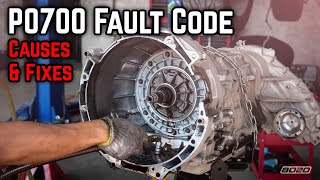
- P0700 — Transmission Control System (MIL Request). The generic equivalent of P1529 used by Chrysler, Dodge, Jeep, and GM. Functionally identical.
- P0727 — Engine Speed Input Circuit No Signal. Appears with P1529 if the TCM is not receiving a valid engine RPM signal from the ECM.
Climate & Environmental Factors
- Cold Weather: Low temperatures thicken transmission fluid, causing delayed or harsh shifting. Rubber seals contract and harden, increasing leak risks. Abnormal operation in cold causes sensors to report erroneous data.
- High Humidity & Road Salt: Moisture and salt accelerate corrosion on electrical connectors, pins, and wiring grounds. This corrosion creates unwanted resistance, corrupting the speed sensor signal.
How to Talk to a Mechanic About This Code
Say this: "I have a check engine light on and my basic scanner is showing code P1529. I understand this is a generic request from the Transmission Control Module. I need to schedule a diagnostic to pull the specific P07xx trouble codes from the TCM to find the actual problem."
This signals you are an informed customer. It directs them to the correct diagnostic path (scanning the TCM), prevents wasted time on engine diagnostics, and makes it clear you will not pay for parts replaced based on P1529 alone.
Avoid saying:
- My transmission is acting weird, can you fix it?
- My check engine light is on, I think it's the transmission.
- Just fix whatever is wrong with it.
Questions to ask before authorizing the repair:
- What specific P07xx code did you find in the transmission module?
- What is the diagnostic fee to find the specific code?
- If the code points to a sensor, will you test the wiring and connector before replacing the part?
- Can you provide a written estimate with a breakdown of parts and labor?
- What is the warranty on the proposed repair, for both parts and labor?
Where to Take It: Dealer vs Independent vs Chain
- Dealer:
A safe, but expensive, option. Best if you suspect a complex wiring or module issue, or if your car is still under its powertrain warranty.
Best for: Vehicles under warranty., Complex electrical issues or suspected TCM failure., Repairs requiring manufacturer-specific programming (like a TCM replacement).
Downsides: Highest labor rates and part costs., Defaults to replacing larger assemblies instead of repairing smaller components. (Typical cost: +50% vs. baseline) - Independent Shop:
Best fit for most situations. Look for a trusted local shop with ASE-certified technicians. They handle the diagnosis and common fixes for P1529 effectively and at a lower cost than a dealer.
Best for: Out-of-warranty vehicles., Common, well-documented issues like speed sensor replacements., Customers seeking a balance between cost and expertise.
Downsides: Quality and diagnostic capabilities vary greatly from shop to shop., Lacks access to the very latest manufacturer software updates. (Typical cost: +0% vs. baseline) - Chain Shop:
AVOID for diagnosis. They misdiagnose the problem or recommend a full transmission replacement for a simple sensor fault.
Best for: Simple maintenance like oil changes or tire rotations.
Downsides: Technician skill varies dramatically; they are rarely equipped for in-depth transmission diagnostics., High pressure to upsell services like unnecessary transmission flushes., Their solution to a transmission problem is often recommending a costly replacement. (Typical cost: -10% vs. baseline)
When to Walk Away From the Repair
If the estimated repair cost exceeds 50% of the car's private-party value, strongly consider selling or trading it in instead of repairing it.
- Car worth $4000, fix is $450: Fix it. A common speed sensor replacement is a small fraction of the car's value.
- Car worth $4000, fix is $2200: Walk away. The repair cost is over 50% of the car's value. It is not a sound investment.
- Car worth $2500, fix is $3000: Walk away. The repair costs more than the car is worth. Sell as a 'mechanic's special' or to a junkyard.
What Scan Tool You Need for This Code
Minimum: A scanner that reads manufacturer-specific codes from the Transmission Control Module (TCM).
A basic $20 code reader only shows the generic P1529 code from the engine computer (ECM). It CANNOT see the specific P07xx code stored in the transmission computer (TCM), making it useless for finding the actual cause.
Budget: BlueDriver Pro (~$119) — Reads and clears 'Enhanced Codes' which includes transmission codes for many major manufacturers. It connects via Bluetooth to a smartphone app.
Mid-range: Foxwell NT510 Elite (~$150) — Provides all-system diagnostics, including reading TCM codes. It displays live data for transmission PIDs, allowing you to watch input and output speed sensor readings in real-time.
Professional: Autel MaxiCOM MK808 (~$500) — Offers full OEM-level diagnostics for all systems, including the TCM. It provides robust live data, graphing, and bidirectional control to reset transmission adaptations after a repair.
Rent vs buy: Auto parts stores loan scanners for free, but you must verify their specific loaner model reads transmission (TCM) codes. If you do your own maintenance, buying a scanner like the BlueDriver or Foxwell NT510 is a worthwhile investment.
How to Clear the Code After You Fix It
- Ensure the repair is complete (e.g., new sensor installed, wiring repaired).
- Reconnect the battery if it was disconnected.
- Use an OBD-II scan tool to erase the trouble codes from both the ECM and the TCM.
- Perform a complete transmission drive cycle to allow the readiness monitors to reset.
Drive cycle (~20 minutes): From a cold start, idle for 2-3 minutes. Drive in stop-and-go traffic with several light accelerations. Drive for at least 5 minutes at a steady speed between 40-55 mph. Come to a stop and idle for a minute. This helps the TCM relearn shift points.
Readiness monitors affected: Comprehensive Component Monitor (CCM), Transmission-related monitors
Before emissions retest: drive at least 50 miles to fully set monitors.
Watch out for:
- Only clearing the code from the ECM but not the TCM.
- Not performing a complete drive cycle, resulting in a failed emissions test due to 'Not Ready' monitors.
- The code returning immediately because the underlying wiring issue was not fixed along with the sensor.
Will This Fail Emissions / State Inspection?
Yes — this code typically fails an OBD-II emissions inspection.
- California: An illuminated Check Engine Light is an automatic failure. After repairs, a full drive cycle must be completed to set the readiness monitors before a retest.
- New York: Any active Check Engine Light causes an automatic failure. Clearing the code right before the test results in failure because readiness monitors will not be 'Ready'.
- Texas: In the 17 counties requiring emissions testing, an active Check Engine Light results in an automatic failure during the OBD-II scan.
Most Commonly Affected Vehicles
- Hyundai Elantra (2001-2012) — Extremely common issue, often due to failure of the input (pulse generator A) or output (pulse generator B) speed sensor.
- Hyundai Santa Fe (2001-2012) — Frequently experiences limp mode with P1529 and underlying speed sensor codes (P0715/P0720). TSB 14-AT-003 addresses related solenoid issues.
- Hyundai Sonata (1999-2010) — Prone to speed sensor failures. On later models in this range, sensors are inside the transmission, requiring valve body removal.
- Kia Sportage (2005-2010) — Often sees P1529 due to sensor failures or wiring harness problems. A faulty brake light switch recall indirectly causes TCM faults.
- Hyundai Accent (2000-2011) — Code appears during stop-and-go traffic, pointing to a speed sensor. Some aftermarket sensors have incorrect wire orientation.
- Kia Optima (2001-2010) — Shares powertrain components with the Sonata and suffers from the same speed sensor and wiring harness vulnerabilities.
- Dodge Caravan / Grand Caravan (2001-2007) — Presents with the equivalent P0700 code. Input/output speed sensors are a very common failure point, causing 2nd gear limp mode.
- Chrysler Town & Country (2001-2007) — Shares the A604/41TE transmission with the Dodge Caravan and experiences identical failures of the input/output speed sensor pack.
Manufacturer-Specific Notes

- Hyundai / Kia: P1529 is exclusively an informational 'messenger' code. An advanced scanner is mandatory to read the specific P07xx code from the TCM. TSBs like 12-AT-008 and 14-AT-003 address known wiring and solenoid issues.
- BMW: On BMWs, P1529 is a completely different fault, typically 'Camshaft Position Actuator Control Circuit Signal Low'. It is not related to the transmission.
- Volkswagen / Audi: P1529 on VW and Audi vehicles points to a fault in the variable valve timing system, such as 'Camshaft Control Circuit Short to B+'. It has nothing to do with the transmission.
- Mercedes-Benz: For some Mercedes models, P1529 indicates a fault with the secondary air injection system's 'atmospheric balance air control valve'. This is an emissions component.
Real Owner Stories
2002 Hyundai Elantra at 117K miles
Car intermittently refused to shift out of 1st gear until 5000 RPM, then slammed into 3rd gear and got stuck (limp mode). Check Engine Light illuminated with code P1529.
What they tried:
- Researched symptoms online.
- Scanned the TCM to reveal a hidden P0715 code.
Outcome: Replacing the input speed sensor fixed the problem completely. The symptoms of being stuck in 3rd gear combined with P1529 are a textbook indicator of a failed speed sensor on older Hyundais.
Lesson: Limp mode plus P1529 almost always points to a failed input or output speed sensor. It is the most common and straightforward fix for this code.
2011 Hyundai Santa Fe with jerking transmission
Car jerked violently. A mechanic read code P1529, diagnosed a 'gear box problem', and recommended unrelated tune-up work.
What they tried:
- Replaced spark plugs, fuel filter, and air filter.
- Changed transmission fluid.
- Cleaned the throttle body.
Outcome: None of the repairs fixed the jerking. The owner wasted money because P1529 is just a messenger. The car required a TCM-capable scanner to find the actual solenoid fault causing the jerking.
Lesson: Never replace parts based on P1529 alone. You will waste money on unrelated repairs until you retrieve the specific P07xx code stored in the TCM.
2009 Hyundai Elantra with intermittent limp mode
Car entered limp mode with codes P0700 and P0760 (shift solenoid). The problem temporarily fixed itself after a car wash or during rain.
What they tried:
- Changed transmission fluid.
- Considered replacing the solenoid.
Outcome: The owner deduced the issue was electrical, not mechanical. Moisture temporarily resolved the issue, pointing to a bad ground or frayed wire in the harness where water completed the circuit.
Lesson: Pay attention to when the problem occurs. If symptoms change with weather or moisture, meticulously inspect the wiring harness for corrosion or damage before replacing sensors.
How to Prevent This Code From Triggering
- Change transmission fluid periodically. (Every 30,000-60,000 miles, or per owner's manual.) — Old fluid breaks down, loses cooling ability, and becomes contaminated with metal particles, leading to overheating and clogged sensors.
- Use the exact OEM-specified transmission fluid. (Every fluid change.) — Transmissions require specific fluid viscosity and friction modifiers. Wrong fluid causes shifting problems, overheating, and accelerated wear.
- Allow the vehicle to warm up for 30-60 seconds in cold weather. (On cold start days.) — Cold transmission fluid thickens. A brief warm-up allows fluid to circulate and thin out, ensuring proper lubrication before driving.
- Apply dielectric grease to electrical connectors during repairs. (Once per repair.) — Dielectric grease seals out moisture and oxygen, preventing the corrosion that causes sensor circuit failures.
Frequently Asked Questions
What is the most common misdiagnosis for a P1529 code?
The biggest mistake is replacing parts based only on P1529, often leading to an unnecessary TCM replacement. The second most common error is replacing a speed sensor but failing to inspect the connector and wiring harness for damage. This causes the code to return immediately.
Can I just clear the P1529 code and keep driving?
You can clear the code, but it returns as soon as the TCM redetects the underlying fault, often within minutes. Clearing the code does not fix the problem. Ignoring it leads to worsening driveability and severe transmission damage.
Why did my car go into 'limp mode'?
Limp mode is a self-preservation strategy for the transmission. When the TCM detects a critical fault like a lost speed signal, it locks the transmission in a single safe gear (usually 3rd). This prevents further internal damage and allows you to drive slowly to a repair shop.
My code reader only shows P1529. How do I find the other codes?
You need a more capable OBD-II scanner that specifically accesses and reads codes from the Transmission Control Module (TCM). Basic, inexpensive readers only see generic codes from the Engine Control Module (ECM).
I replaced the speed sensor, but the code came back. What now?
If a new sensor fails to fix the issue, the problem lies in the circuit or the TCM. Re-inspect the wiring harness for damage, check for connector corrosion, and use a multimeter to verify proper voltage and ground. If the wiring is perfect, you have a faulty replacement sensor or a failing TCM.
Is replacing a transmission speed sensor a DIY job?
On many older Hyundai/Kia models, the sensors sit on the outside of the transmission case, making it a manageable DIY job for intermediate skill levels. On other vehicles, sensors are located inside the transmission, requiring oil pan and valve body removal—a job strictly for professionals.
Can a bad battery cause a P1529 code?
Yes, a weak or failing battery causes low system voltage, leading to erratic behavior from electronic modules including the TCM. This triggers communication errors or false sensor readings, resulting in a P1529 request.
Key Takeaways
- P1529 is strictly a messenger code indicating the Transmission Control Module (TCM) has requested the Check Engine Light; you must scan the TCM to find the actual P07xx fault code.
- On Hyundai and Kia vehicles, over 80% of P1529 codes stem from a failed input or output speed sensor (codes P0715 or P0720), causing the transmission to lock into 3rd gear limp mode.
- Never replace parts based solely on a P1529 code; use an advanced OBD-II scanner capable of reading TCM data to pinpoint the root cause.
- For European brands like BMW and VW, P1529 completely changes meaning to indicate a camshaft control circuit fault, requiring engine rather than transmission diagnostics.
- Driving in limp mode for more than a few days accelerates internal clutch wear, turning a $150 sensor replacement into a $3,000 transmission rebuild.
Helpful Videos


The information in this article is provided for general reference and educational purposes only. Vehicle specifications, procedures, and part compatibility can vary by production date, trim level, and region. Always consult your vehicle's factory service manual and verify part numbers before purchasing or performing repairs. Safety-critical components such as airbags, seat belts, and braking systems should be installed by a qualified professional.
- 🎬 Helpful Videos
- What Does P1529 Mean?
- Can I Drive With P1529?
- Common Causes
- Symptoms
- Diagnostic Flowchart
- Common Fixes & Costs
- Used vs. New Parts: Buying Guide
- What Happens If You Wait — Timeline
- Cost of Not Fixing It
- Diagnosis Steps
- When This Code Triggers (Freeze-Frame Conditions)
- Related Codes
- Climate & Environmental Factors
- How to Talk to a Mechanic About This Code
- Where to Take It: Dealer vs Independent vs Chain
- When to Walk Away From the Repair
- What Scan Tool You Need for This Code
- How to Clear the Code After You Fix It
- Will This Fail Emissions / State Inspection?
- Most Commonly Affected Vehicles
- Manufacturer-Specific Notes
- Real Owner Stories
- 2002 Hyundai Elantra at 117K miles
- 2011 Hyundai Santa Fe with jerking transmission
- 2009 Hyundai Elantra with intermittent limp mode
- How to Prevent This Code From Triggering
- Frequently Asked Questions
- What is the most common misdiagnosis for a P1529 code?
- Can I just clear the P1529 code and keep driving?
- Why did my car go into 'limp mode'?
- My code reader only shows P1529. How do I find the other codes?
- I replaced the speed sensor, but the code came back. What now?
- Is replacing a transmission speed sensor a DIY job?
- Can a bad battery cause a P1529 code?
- Key Takeaways
- 🎟️ Get 5% Off