

P0700 on 2007-2013 GMC Sierra 1500: Transmission Control System Malfunction Guide
P0700 on a 2007-2013 GMC Sierra 1500 is a general alert from the transmission. It means you must scan the Transmission Control Module (TCM) for more specific codes. Common causes include a faulty internal TCM (TEHCM) on 6L80 models, faulty shift solenoids, wiring issues at known chafe points, or low/burnt fluid.
- P0700 is not a diagnosis; it's a starting point. You MUST use a proper scan tool to read the specific codes stored in the Transmission Control Module (TCM).
- Always check the transmission fluid level and condition first. It's a simple check that can sometimes solve the problem or indicate a more serious issue.
- For Sierra models in this year range with the 6-speed (6L80) transmission, the TCM itself is a very common failure point due to its location inside the transmission pan.
- Do not ignore this code. Driving with a P0700 can lead to the vehicle entering a 'limp mode' and can cause expensive, permanent damage to the transmission.
- The problem could be electrical. Thoroughly inspect wiring and connectors to the transmission before replacing expensive components like the TCM or valve body.
What's Unique About the 2007-2013 GMC Sierra 1500
The 2007-2013 GMC Sierra 1500 (GMT900 generation) used two primary automatic transmissions: the 4-speed 4L60-E and the 6-speed 6L80, introduced around 2009. The root cause of a P0700 code can differ significantly between them. On 6L80-equipped trucks, the control module is an integrated unit called the TEHCM (Transmission Electro-Hydraulic Control Module), which combines the TCM, valve body, and solenoids. It is located inside the transmission oil pan, making it highly susceptible to failure from heat and vibration. In contrast, the 4L60-E uses an externally mounted TCM, which is less prone to heat-related failure but can still suffer from wiring or internal electronic issues.
Symptoms You May Notice
- Check Engine Light illuminated
- Harsh, erratic, or delayed shifting
- Transmission stuck in one gear (limp mode)
- Vehicle hesitation or stalling
- Reduced fuel economy
- Transmission warning light on (if equipped)
- Loss of gear indicator on the dashboard
- Replacing the Engine Control Module (ECM) because it's where the P0700 is stored. The P0700 is just a message; the actual problem is in the transmission system.
- Replacing a single shift solenoid on a 6L80 transmission when the entire TEHCM assembly is faulty, leading to the problem returning.
- Guessing at the cause without using a scanner that can read manufacturer-specific TCM codes. This can lead to replacing unnecessary parts.
Most Likely Causes
- Low or Burnt Transmission Fluid 🔴 High Probability Neglected maintenance or leaks from cooler lines or pan gaskets can lead to low fluid levels, causing overheating and poor hydraulic pressure.
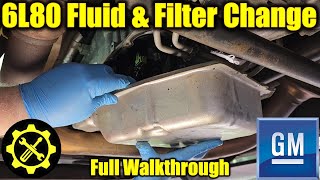
How to confirm: Check the transmission fluid dipstick (if equipped on 4L60-E) for level and condition. The 6L80 lacks a dipstick and must be checked via a fill plug on a level lift at a specific temperature. 🎬 Watch: How to check 6L80 fluid without a dipstick. The fluid should be bright red and translucent. Dark brown or burnt-smelling fluid indicates internal wear or degradation.
Typical fix: Top off fluid if low. If fluid is burnt, perform a fluid and filter change. Note that significant metal shavings in the pan indicate a more serious mechanical failure requiring a rebuild.
Est. part cost: $50-$150 for fluid and filter kit - Failed Transmission Control Module (TCM/TEHCM) 🔴 High Probability On models with the 6L80 transmission, the TEHCM (TCM integrated with the valve body) is located inside the hot oil pan, leading to a very high failure rate from thermal stress and vibration. This is the most common cause of P0700 on 6L80-equipped trucks.
How to confirm: Often accompanied by codes like U0100 (Loss of Communication) or specific solenoid performance codes (P0751, P0756). A technician will test power, ground, and communication lines to the module. If power and ground are good but communication is lost, the TEHCM has failed.
Typical fix: Replace the TEHCM assembly. This is a complex job that requires dropping the valve body from inside the transmission. The new module must be programmed to the vehicle's VIN.
Est. part cost: $400-$900 for the part, with programming adding extra cost. - Faulty Shift Solenoids or Valve Body 🟡 Medium Probability Solenoids are electro-mechanical valves that wear out. Debris from a failing torque converter or normal wear can cause them to stick or fail, which is a common issue on both 4L60-E and 6L80 transmissions.
How to confirm: Specific TCM codes (e.g., P0751 for Shift Solenoid 'A', P0756 for 'B') will point to a particular solenoid circuit. A technician can test the solenoid's resistance or command it on/off with a bi-directional scan tool.
Typical fix: On the 4L60-E, individual solenoids can be replaced. 🎬 Watch: How to replace all 4L60-E shift solenoids. On the 6L80, the solenoids are part of the TEHCM, so the entire unit is typically replaced. NHTSA ODI #11723417 describes a case where P0700 and P0747 were present, and the recommended correction involved replacing the spacer plate, check balls, and valve.
Est. part cost: $150-$500 for a 4L60-E solenoid kit or a complete 6L80 TEHCM assembly - Damaged Wiring Harness or Connectors ⚪ Low Probability GM has issued bulletins (like #21-NA-149) regarding engine harness chafing at specific points, such as against the ECM/TCM bracket, upper control arm, or shock tower. This can cause shorts or open circuits, leading to P0700 and other communication codes.
How to confirm: Visually inspect the wiring harness leading to the transmission, paying close attention to the known chafe points near the driver's side wheel well and around the engine. Check the main transmission connector for corrosion or pushed-out pins. NHTSA ODI #11497501 notes a situation where a GMC service shop identified codes P0700 and P0711 and recommended replacing the transmission harnesses.
Typical fix: Repair the damaged section of wire and protect it with anti-abrasion tape or conduit. Replace the connector if damaged.
Est. part cost: $20-$400 depending on the extent of damage
Rare But Worth Checking
- Internal Mechanical Failure: If the transmission fluid contains a significant amount of metal shavings or clutch material, it points to a failure of hard parts like clutch packs, torque converter, or gears, which requires a transmission rebuild or replacement.
- Weak Battery or Poor Grounds: Low system voltage from a failing battery or alternator can cause communication errors and erratic behavior from control modules, including the TCM. GM bulletins also point to checking specific chassis grounds (G103, G110) as a diagnostic step for communication codes.
Diagnosis Steps
- Connect a professional scan tool capable of reading transmission-specific codes to the OBD-II port.
- Retrieve and document all codes from both the ECM (will show P0700) and, most importantly, the TCM (will show the specific P07xx or U-codes).
- Check the level and condition of the transmission fluid. For 6L80 models, this must be done at the correct operating temperature. Look for signs of burning or metal contamination.
- Inspect the main electrical connector and wiring harness going to the transmission for any visible damage, corrosion, or loose pins. Pay special attention to known chafe points near the driver-side shock tower and control arm.
- If communication with the TCM is not possible (U0100 code), test the power and ground circuits to the TCM, including chassis grounds G103 and G110, before condemning the module.
- Using the specific TCM codes as a guide, follow the manufacturer's diagnostic procedures to test the implicated component (e.g., solenoid resistance, sensor voltage).
- If a TEHCM (internal TCM) failure is suspected on a 6L80, confirm power and ground are good to the transmission connector. If they are, the TEHCM has likely failed internally.
Parts You'll Likely Need
- Transmission Control Module (TEHCM for 6L80)
(OEM #ACDelco 24256861 (Note: This part number has been superseded and may be on backorder. Always verify with VIN.))— A very common failure point on 6L80 transmissions where it's located inside the oil pan. It contains the TCM, valve body, and solenoids in one unit.
Trusted brands: ACDelco (OEM), Dorman (Remanufactured), Sonnax (Remanufactured)
OEM price range: $600-$900
Aftermarket price range: $400-$700 - Transmission Shift Solenoid Kit (for 4L60-E) — Solenoids are a frequent cause of shifting issues on the 4L60-E and will be identified by specific TCM codes (e.g., P0751, P0756). Often replaced as a set.
Trusted brands: ACDelco, Bosch, ATP
OEM price range: $200-$400
Aftermarket price range: $100-$250 - Transmission Filter and Gasket Kit
(OEM #ACDelco 24236933 (for 6L80); ACDelco 24208576 (for 4L60-E shallow pan))— Required for any repair that involves dropping the transmission oil pan, such as replacing solenoids or the TEHCM (on 6L80 models).
Related Codes That Often Appear With This One
- P07xx — P0700 is a gateway code. It will almost always be accompanied by other P07xx codes (e.g., P0741 TCC Stuck Off, P0751 Shift Solenoid 'A' Stuck Off) stored in the TCM that specify the exact nature of the fault.
- U0100 — This code indicates 'Lost Communication With TCM'. If seen with P0700, it strongly suggests a wiring problem, a poor ground connection, or a complete failure of the Transmission Control Module (TEHCM on 6L80 models).
Technical Service Bulletins (TSBs) & Recalls
- PI0544A: Addresses DTC P0700 accompanied by communication codes like U0100. It advises technicians to inspect specific ground locations (G103, G110) and the main 14-way transmission connector for integrity before condemning the TCM.
- 16-NA-019: While this TSB is for harsh shifts and TCC shudder on 8-speed transmissions, the principles apply. It discusses how fluid degradation impacts transmission performance and can lead to fault codes, reinforcing the importance of fluid condition in a P0700 diagnosis.
- 21-NA-149: Details multiple engine wiring harness chafe points on various GM trucks that can cause a wide range of DTCs, including P0700 and U0100, due to shorts in critical circuits.
Platform-Specific Known Issues
- On models equipped with the 6L80 6-speed transmission, the internal location of the TEHCM (TCM/Valve Body assembly) makes it a very common point of failure due to constant heat and vibration. This is the number one suspect for a P0700 code, especially when paired with U0100 or solenoid performance codes.
- The 6L80 transmission does not have a traditional dipstick. Checking the fluid level is a specific procedure that requires the vehicle to be level and the transmission fluid to be at a certain temperature, which can lead to incorrect fluid levels if not done properly.
- Engine wiring harness chafing is a known issue on the GMT900 platform. The harness can rub against the driver's side upper control arm or the ECM/TCM mounting bracket, causing shorts that can trigger P0700 and U0100 codes.
Mechanic-Grade Diagnostic Values
- 4L60-E Shift Solenoid (A/B) Resistance — expected: 20 - 40 Ohms. Failure: A reading outside this range indicates a failed solenoid coil.
- 4L60-E Pressure Control (EPC) Solenoid Resistance — expected: 3.5 - 8.0 Ohms. Failure: A reading outside this range indicates a failed solenoid coil.
- 6L80 On/Off Shift Solenoid (SS1/SS2) Resistance — expected: 20 - 40 Ohms. Failure: A reading outside this range indicates a failed solenoid coil within the TEHCM.
- 6L80 PWM Pressure Control Solenoids Resistance — expected: 3 - 8 Ohms. Failure: A reading outside this range indicates a failed solenoid coil within the TEHCM.
- TCM/TEHCM Power Supply Voltage (Key On, Engine Off) — expected: ~12.0 - 12.6 Volts (Battery Voltage). Failure: Low or no voltage indicates a problem with the power supply wire, fuse, or relay, not necessarily the module itself.
- TCM/TEHCM Ground Connection — expected: Near 0 Ohms of resistance between the TCM/TEHCM ground pin and chassis ground.. Failure: High resistance (more than a few ohms) indicates a corroded or loose ground connection, which can cause erratic module behavior.
Hidden / Shadow Codes Worth Checking
- P07xx / U-codes (e.g., U0100): While not 'shadow codes' in the European vehicle sense, the P0700 code is a generic request from the TCM. The true, actionable fault codes (like P0751 for a shift solenoid or U0100 for communication loss) are stored only in the Transmission Control Module. These codes are 'hidden' from basic OBD-II scanners and require a more advanced tool like a GM Tech2, GDS2, or equivalent professional scanner to be read. (see via GM Tech2, GDS2, or other professional-grade scan tool with manufacturer-specific software.)
Scan Tool Commands That Help
- GDS2 / Tech2: Solenoid Valve State / Command — After retrieving a specific solenoid code (e.g., P0751), this function allows a technician to manually command the suspect solenoid on and off to verify its mechanical operation. This helps distinguish between an electrical fault and a stuck valve.
- GDS2 / Tech2: Solenoid Cleaning Procedure — If shifting issues are intermittent or suspected to be caused by debris, this function cycles all solenoids in a specific sequence to dislodge and flush contaminants from the valve body and solenoids.
- GM SPS2 (Techline Connect) with J2534 Interface: Replace and Reprogram ECU — This is a mandatory step when replacing the 6L80 TEHCM. The new module must be flashed with the correct VIN-specific calibration file from GM's servers to ensure it communicates correctly with the ECM and operates the transmission properly.
- GDS2 / Tech2: Transmission Service Fast Learn / Adaptive Procedure — Immediately after programming a new TEHCM or performing major transmission work, this procedure must be run. It allows the TCM to learn the hydraulic characteristics and clutch fill volumes of the specific transmission, ensuring smooth shifts and preventing damage.
Wiring & Ground Locations
- G103 — On the front of the right-side (passenger side) cylinder head on most V8 gas engines for this generation.. This is a major engine harness ground. A poor connection here can cause erratic signals and communication issues for multiple components, including potentially the ECM/TCM, leading to various codes including P0700.
- G104 — On the left-rear (driver's side) of the engine block.. Another critical engine harness ground point. Like G103, corrosion or looseness here can cause unpredictable electronic behavior and communication faults between control modules.
- Transmission Main Connector (X185 on 4L60-E / X108 on 6L80) — Large, round connector on the passenger side of the transmission case.. This is the single point of connection for all power, ground, and communication signals to the transmission. It is a primary place to test for power/ground at the TCM/TEHCM and check for pin corrosion, damage, or poor fitment that could cause intermittent faults.
- CAN Bus Wires — A twisted pair of wires (often Tan and Tan/Black) within the harness running between the ECM and the TCM/TEHCM.. These wires carry all communication data. Damage to this specific pair, even if other wires are intact, will cause a U0100 (Lost Communication with TCM) code and trigger a P0700. The fault could be anywhere along the harness, not just at the connector.
Real Owner Repair Stories
- YouTube channel 'TheShopWorldWide' (2007-2011 GMC Sierra 1500 (4L60-E implied by external TCM)) — Transmission in limp mode, no gear position indicator on the dashboard.
❌ Tried (didn't work) Visual inspection of transmission wiring harness., Checking ground connections., Clearing codes with a scanner (code returned immediately).
✅ What actually fixed it The problem was resolved by replacing the external Transmission Control Module (TCM) with a remanufactured unit from 'All Computer Resources'. After installation and a battery disconnect reset procedure, the gear indicator returned and the truck functioned normally. - NHTSA ODI #11698192 — An owner reported that their truck went into first gear and would not exceed 5 MPH on the highway. Diagnostic codes retrieved were P0700 from the ECM and U0073 from the TCM.
- NHTSA ODI #11494299 — A driver experienced the truck entering limp mode where it would not recognize what gear it was in, accompanied by codes P0700 and P182E. The vehicle had to be shut down for 10 minutes before restarting.
- NHTSA ODI #11517297 — An owner reported losing engine power with codes P2138 and P0700. Despite changing the accelerator and knock sensors, the issue persisted.
"I Checked Everything" — The Actual Cause
- A common scenario for P0700 is when a technician checks for specific solenoid or sensor codes but finds none, only the generic P0700. The transmission may still exhibit symptoms like harsh shifting. This often points to an early-stage failure of the internal TEHCM (on 6L80 models) where the module's overall processing is compromised by heat or vibration, but it hasn't yet failed in a way that flags a specific component. The fix, after verifying wiring and grounds are good, is often replacing the TEHCM.
OEM Part Supersession History
ACDelco 24256861 (and others)→Multiple newer part numbers (e.g., 24275871, 24251029, etc.)— GM made several hardware and software revisions to the 6L80 TEHCM to improve reliability, particularly addressing failures in the internal pressure switches and solenoids.
Heads up: Crucially, different TEHCM hardware versions (identified by a 4-digit tag ID) are not always interchangeable, even if they physically fit. Installing a TEHCM with the wrong hardware/software for the vehicle's VIN can result in a no-start condition, immediate limp mode, or communication failure. The replacement part MUST be compatible and then programmed with the vehicle's specific calibration file.
Model Year Variations Within This Range
- 2007-~2009: These models were more likely to be equipped with the 4-speed 4L60-E transmission. It uses an external TCM, and its solenoids can be replaced individually within the pan.
- ~2009-2013: These models predominantly use the 6-speed 6L80 transmission. The key difference is the internal TEHCM, which integrates the TCM, valve body, and solenoids into one unit inside the pan. This entire unit must be replaced if the TCM or any solenoid fails.
- 2009-2010 (6L80 models): Early 6L80 TEHCMs are known to be more susceptible to failures of the internal pressure switch membranes and issues with the TCC apply solenoid, leading to harsh shifts and converter problems. Later revisions offered improved durability.
Diagnostic Flowchart
Used vs. New Parts: Buying Guide for This Vehicle
When a used part is the smart pick: For trucks with the 4L60-E transmission, a used external TCM from a reputable salvage yard can be a cost-effective solution, as can a used wiring harness. For the 6L80, a complete used valve body/TEHCM assembly is very risky due to high failure rates and programming requirements.
Donor-vehicle mileage cap: roughly under 100000 miles for the part to have meaningful remaining life.
What to inspect on the donor part:
- Check for any signs of corrosion on connector pins.
- Inspect the wiring harness for brittle, cracked, or melted insulation.
- Ask for the donor vehicle's VIN to verify compatibility if possible.
- Avoid parts from vehicles that show signs of flood or fire damage.
OEM-only on this vehicle (don't cheap out):
- 6L80 Transmission Electro-Hydraulic Control Module (TEHCM): Due to the extremely high failure rate and critical programming requirements, a new ACDelco part or a high-quality remanufactured unit from a specialist (like Sonnax, XeMODeX) is strongly recommended over a used part or a cheap, no-name aftermarket unit.
Aftermarket brands forum-validated for this vehicle:
- Sonnax (Remanufactured TEHCMs and valve body components)
- Dorman (Remanufactured TEHCMs)
- XeMODeX (Remanufactured TEHCMs)
- Bosch (4L60-E Solenoids)
Brands owners have reported issues with on this vehicle:
- Unnamed or generic TEHCMs from online marketplaces like eBay or Amazon are a significant gamble. Many are simply cleaned used units that have not been properly tested or rebuilt and may fail quickly or be impossible to program.
Real Owner Stories
Aggregated from forums and TSBs cited above. Mileages and costs reflect what owners reported in those sources.
2008 GMC Sierra 1500
Symptoms: The dashboard lit up with warnings and the P0700 code was set.
What fixed it: The problem was a worn-through speed sensor cable that was making contact with the wheel.
Source hint: GM-Trucks.com
2011 GMC Sierra 1500
Symptoms: The truck went into limp mode and was shifting hard.
What fixed it: The TEHCM (internal valve body/TCM assembly) was replaced. The root cause was a torque converter failure that sent debris through the transmission, damaging the TEHCM.
Source hint: silveradosierra.com - Thread 'P0700 and P0751'
2007-2013 GMC Sierra 1500
Symptoms: A no-start condition occurred along with Stabilitrak warnings and codes P0700 and U0100.
What fixed it: The issue pointed towards a complete loss of communication, likely caused by a failed TCM or a significant wiring/ground issue.
Source hint: gm-trucks.com - Thread 'Code U0100 and P0700'
Related OBD-II Codes
Frequently Asked Questions
My 2011 Sierra has the 6-speed 6L80 transmission. What is the most likely cause of a P0700 code?
I can't find the transmission dipstick on my truck. How do I check the fluid level?
My scanner is showing P0700 and U0100. Does this automatically mean my TCM is bad?
The mechanic said the TEHCM needs to be replaced. Is this a simple part swap?
I heard about wiring issues on these trucks. Where should I look for damage related to P0700?
My truck is stuck in one gear and shifting very hard. Is this a symptom of P0700?
Helpful Videos




Used OEM Parts in Stock

New Aftermarket Parts Available




The information in this article is provided for general reference and educational purposes only. Vehicle specifications, procedures, and part compatibility can vary by production date, trim level, and region. Always consult your vehicle's factory service manual and verify part numbers before purchasing or performing repairs. Safety-critical components such as airbags, seat belts, and braking systems should be installed by a qualified professional.
- GMC Sierra 1500:
- 🎬 Helpful Videos
- 🛍️ Shop This Part
- What's Unique About the 2007-2013 GMC Sierra 1500
- Symptoms You May Notice
- Most Likely Causes
- Rare But Worth Checking
- Diagnosis Steps
- Parts You'll Likely Need
- Related Codes That Often Appear With This One
- Technical Service Bulletins (TSBs) & Recalls
- Platform-Specific Known Issues
- Mechanic-Grade Diagnostic Values
- Hidden / Shadow Codes Worth Checking
- Scan Tool Commands That Help
- Wiring & Ground Locations
- Real Owner Repair Stories
- "I Checked Everything" — The Actual Cause
- OEM Part Supersession History
- Model Year Variations Within This Range
- Diagnostic Flowchart
- Used vs. New Parts: Buying Guide for This Vehicle
- Real Owner Stories
- 2008 GMC Sierra 1500
- 2011 GMC Sierra 1500
- 2007-2013 GMC Sierra 1500
- Related OBD-II Codes
- Frequently Asked Questions
- 🎟️ Get 5% Off