

P0700 on 2000-2003 Dodge Durango 4.7L: Transmission Fault Causes and Fixes
This code means your transmission has a problem. On this Durango, the most likely cause is a failed transmission solenoid pack, putting the truck in 'limp mode'. Replacing the solenoid pack, fluid, and filters costs around $250-$500 in parts and is a moderately difficult DIY job. A scan tool that can read transmission-specific codes is required for proper diagnosis.
- P0700 means 'check the transmission computer for more codes.' You need a scanner that can read TCM codes to find the real problem.
- The most likely cause on a 2000-2003 Durango 4.7L is a bad transmission solenoid pack, which will put the truck in 'limp mode'.
- Always check the transmission fluid level and condition first; it must be clean, red, and at the correct level. Use only ATF+4 fluid.
- Also consider the input and output speed sensors, which are another common and easier-to-fix cause of shifting problems.
- Do not assume you need a new transmission. The fix is often a replaceable component inside or on the transmission.
What's Unique About the 2000-2003 Dodge Durango
The 2000-2003 Durango with the 4.7L V8 uses the 45RFE (4-speed, later 5-speed with programming) or 545RFE (5-speed) automatic transmission. These transmissions are well-known for failures of the solenoid pack, which is bolted to the valve body. This is by far the most common reason for a P0700 code on this specific vehicle, often causing the transmission to get stuck in a single gear, a condition known as 'limp mode'.
Symptoms You May Notice
- Check Engine Light is on
- Transmission is stuck in one gear (typically 2nd or 3rd), also known as 'limp mode'
- Harsh or clunking shifts between gears
- Delayed engagement when shifting from Park to Drive or Reverse
- Vehicle accelerates very slowly from a stop
- Transmission may seem to slip or refuse to shift
- In some cases, a false 'Transmission Overtemp' warning may appear on the dash.
- Replacing the entire transmission without first diagnosing the specific codes stored in the TCM. Often, a much cheaper component like a solenoid pack or sensor is the actual cause.
- Replacing engine sensors like the crankshaft position sensor based on drivability issues before confirming the fault is transmission-related.
- Simply clearing the P0700 code without reading the underlying transmission-specific codes. The P0700 will return until the root cause is fixed.
Most Likely Causes
- Failed Transmission Solenoid Pack 🔴 High Probability The solenoid pack on the 45RFE/545RFE transmission is a known common failure point due to heat and electrical stress over time. A specific batch of solenoid packs manufactured between late 2001 and early 2003 had a high failure rate due to an internal PCB trace issue, as noted in TSB 21-008-04.
How to confirm: Scan the TCM for codes. A code like P0750 (Shift Solenoid 'A' Malfunction) or P1776 strongly points to a bad pack. Visually inspect the date code on the solenoid pack if accessible; date codes between 3001 (300th day of 2001) and 0603 (60th day of 2003) are highly suspect.
Typical fix: Replace the entire transmission solenoid pack. This part is a single block assembly. It's recommended to also replace the transmission fluid (ATF+4 ONLY) and both transmission filters (spin-on and pan filter) at the same time. Some owners replace the valve body at the same time as a preventative measure.
Est. part cost: $150-$400 - Failed Input or Output Speed Sensor 🟡 Medium Probability These sensors are exposed to heat and vibration on the outside of the transmission case and can fail electronically over time. They are a common failure point leading to erratic shifting and limp mode.
How to confirm: Scan the TCM for codes like P0715 (Input Speed Sensor Circuit) or P0720 (Output Speed Sensor Circuit). The sensors can be tested for resistance with a multimeter, though replacement upon code confirmation is common.
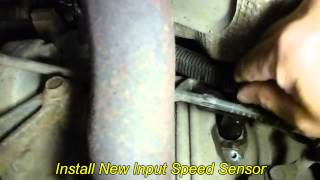
Typical fix: Replace the faulty sensor. On the 45RFE/545RFE, there are two separate sensors mounted externally on the driver's side of the transmission case, making them relatively easy to access and replace with a single bolt. 🎬 Watch: How to replace the input and output speed sensors. The input and output sensors are often identical parts.
Est. part cost: $20-$60 per sensor - Low or Burnt Transmission Fluid ⚪ Low Probability Leaks can develop over time from pan gaskets or cooler lines, and fluid degrades from heat and mileage, causing pressure issues. Using any fluid other than ATF+4 can also cause shifting problems and codes.
How to confirm: Check the transmission fluid dipstick with the engine running and transmission in neutral. The fluid should be at the correct level and bright red. If it's low, brown, or smells burnt, it indicates a problem.
Typical fix: If low, top off with Mopar ATF+4 fluid and inspect for leaks. If the fluid is dirty or burnt, perform a transmission fluid and filter change. Note that severely burnt fluid may indicate a more serious internal transmission failure requiring a rebuild.
Est. part cost: $50-$100 for fluid and filters
Rare But Worth Checking
- Damaged Wiring Harness or Connectors: The main 20-way connector to the transmission solenoid pack or the wiring to the speed sensors can get damaged, corroded, or filled with moisture, causing intermittent connection issues. A visual inspection is always worthwhile.
- Faulty Transmission Control Module (TCM): While possible, the TCM itself is not a common failure. This should only be considered after all other possibilities (solenoids, sensors, fluid, wiring) have been ruled out. Sometimes, a low battery voltage can cause the TCM to behave erratically and set false codes.
Diagnosis Steps
- Check the transmission fluid level and condition. Ensure the fluid is at the proper level, red in color, and does not smell burnt. Use only ATF+4 fluid.
- Use an OBD-II scanner capable of reading transmission codes to retrieve the specific DTCs from the TCM. The P0700 code is just a general alert. 🎬 Watch: Why your scanner might be hiding the real problem.
- Analyze the specific transmission codes. A P0750-P0770 range points to a solenoid issue, while P0715-P0720 points to speed sensors.
- Inspect the main wiring harness connector at the transmission for corrosion, damage, or loose pins.
- If a speed sensor code is present, locate the sensor on the driver's side of the transmission and test its resistance with a multimeter before replacing.
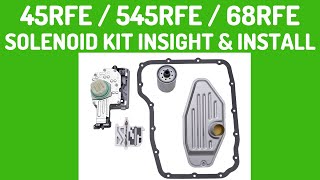
- If a solenoid code (like P0750 or P1776) is present, the most likely fix is replacing the solenoid pack. Check the date code on the original pack if possible, as units made between late 2001 and early 2003 are known to be faulty. This repair requires draining the fluid, dropping the transmission pan, and removing the valve body. 🎬 See this walkthrough for installing a new solenoid block kit.
Parts You'll Likely Need
- Transmission Solenoid Pack
(OEM #52119435AF (Updated Mopar Part Number))— This is the most common failure on the 45RFE/545RFE transmission that causes a P0700 code and limp mode.
Trusted brands: Mopar, Rostra, Dorman
OEM price range: $300-$450
Aftermarket price range: $150-$300 - Transmission Input/Output Speed Sensor
(OEM #4799061AB (Mopar))— A frequent cause of shifting problems and limp mode. Both sensors are often replaced together as a preventative measure. The input and output sensors are typically the same part number for this transmission.
Trusted brands: Mopar, NGK/NTK, Standard Motor Products (SMP)
OEM price range: $40-$70
Aftermarket price range: $20-$50 - Transmission Filter Kit and ATF+4 Fluid
(OEM #5013458AA (Filter Kit))— Required for any repair that involves dropping the transmission pan, such as replacing the solenoid pack. Using the correct Mopar ATF+4 fluid is critical for the longevity and performance of the transmission.
Trusted brands: Mopar, Wix, ATP
OEM price range: $100-$150
Aftermarket price range: $50-$80
Related Codes That Often Appear With This One
- P0750 — This code for 'Shift Solenoid A Malfunction' is very common with a failed solenoid pack on this transmission.
- P0715 — This code for 'Input Speed Sensor Circuit Malfunction' points directly to a faulty input speed sensor.
- P0720 — This code for 'Output Speed Sensor Circuit Malfunction' points directly to a faulty output speed sensor.
- P1776 — This Dodge-specific code for 'Solenoid Switch Valve Latched in LR Position' is another strong indicator of an internal valve body or solenoid pack issue. It often appears with P0700 and points to a mechanical or hydraulic jam within the solenoid/valve body assembly.
Technical Service Bulletins (TSBs) & Recalls
- TSB 21-008-04: Addresses a known issue with solenoid packs manufactured within a specific date range (300th day of 2001 to 6
Platform-Specific Known Issues
- Solenoid Pack Date Code: A Technical Service Bulletin (TSB 21-008-04) was issued for solenoid packs built between the 300th day of 2001 and the 60th day of 2003. These are known to have a high failure rate. If replacing, ensure the new pack is not a new-old-stock unit from this period.
- ATF+4 Fluid Requirement: The 45RFE/545RFE transmission is extremely sensitive to fluid type. Failure to use a licensed ATF+4 fluid can cause torque converter clutch shudder, poor shifting, and eventual transmission failure. Do not use generic 'universal' ATF.
- False Overtemp Warning: A failing temperature sensor within the solenoid pack can cause a 'Transmission Overtemp' warning light and force the radiator fan to high speed, even when the transmission is not actually overheating. This is a direct symptom of a failing solenoid pack.
Mechanic-Grade Diagnostic Values
- Shift Solenoid Resistance (LR, UD, OD, 2C, 4C, Multi-Select) — expected: 1.0 - 3.0 Ohms at room temperature. Some sources state a more precise 1.3 Ohms.. Failure: A reading of OL (open loop) or a value significantly outside the 1-3 Ohm range indicates a failed solenoid coil.
- Pressure Control Solenoid Resistance — expected: 2.5 - 5.0 Ohms. Some sources state a more precise 4.9 Ohms.. Failure: A reading outside this range indicates a faulty pressure control solenoid.
- TCM Power Supply Voltage at Transmission Connector Pin 10 (Transmission Control Relay Output) — expected: Battery Voltage (approx. 12.6V with key on, engine off; ~14V with engine running).. Failure: Low or no voltage indicates a problem with the transmission control relay, fuse, or wiring from the relay to the TCM.
- Sensor Ground at Transmission Connector Pin 22 — expected: Near 0 Ohms resistance to a known good chassis ground.. Failure: High resistance (more than 1-2 Ohms) indicates a poor ground connection, which can cause erratic sensor readings and solenoid operation.
Scan Tool Commands That Help
- Chrysler DRB III or equivalent (Autel, Snap-on): Quick Learn Procedure — This function must be performed after replacing the valve body, solenoid pack, or the entire transmission. It resets and relearns adaptive values for clutch volumes and shift timing. Failure to perform a Quick Learn can result in poor shift quality, harsh engagements, and may shorten the life of the new components.
- Chrysler DRB III or equivalent: Solenoid Actuation Test — To individually test the electrical circuit and mechanical function of each shift solenoid. The scanner commands a specific solenoid on or off, and the technician can listen for the click of the solenoid and monitor for a corresponding change in system pressure or state, confirming the TCM and wiring to the solenoid are functional.
Wiring & Ground Locations
- Transmission Main Connector (C1 / 20-way) — On the driver's side of the transmission case, where the main vehicle harness connects to the solenoid pack/TRS assembly.. This is the single point of connection for all solenoids, pressure switches, and the temperature sensor. Corrosion or damage to pins like Pin 10 (TCM Power) or Pin 22 (Sensor Ground) can cause P0700 and various other transmission codes.
- G113 — On the left inner fender, near the frame.. This is a major ground point for several components on the left side of the engine bay. While not the direct ground for the TCM in all configurations, a poor connection here can introduce electrical noise and voltage issues that may affect module behavior.
- G200 — In the cabin, at the left kick panel.. This is a primary interior ground point. The Transmission Control Module (TCM) for the 4.7L engine is located inside the cabin and may use this or a nearby ground point. A loose or corroded G200 can cause intermittent TCM power loss or erratic behavior.
- TCM Power and Ground Pins — At the Transmission Control Module (TCM) connector, which is separate from the PCM on 2000-2002 models.. Before condemning the TCM, it's critical to verify it has proper power and ground directly at its connector. Intermittent power or ground loss due to wiring issues is more common than internal TCM failure.
Real Owner Repair Stories
- DodgeForum.com user (2006 Dodge Durango 4.7L (Note: slightly newer but same 545RFE transmission and similar issues)) — Transmission goes into limp mode (P0700) consistently when making a specific left turn. Feels like a wheel loses traction, followed by a thump and the check engine light.
❌ Tried (didn't work) Replaced Throttle Position Sensor (TPS) 3 times, Replaced TCM, Replaced solenoid pack twice, Changed fluid and filter twice, Checked and tightened grounds and connectors
✅ What actually fixed it The user reported the final fix was replacing the TCM again, suggesting the first replacement TCM was also faulty or an incorrect part. The issue was resolved after the second TCM replacement.
OEM Part Supersession History
52119435AB, 5170877AA→52119435AF (White Connector)— Updated design to address internal circuit board and solenoid failures noted in TSB 21-008-04. The white connector version is considered more robust.
Heads up: The white connector solenoid pack (52119435AF) is generally considered backward compatible with earlier models that may have had a black connector pack. However, it's critical to ensure the correct pack is used for the vehicle's specific year and programming.52119435AF→68353383AC— Further revision and consolidation of part numbers for later model year applications.
Heads up: While 68353383AC is the latest number, for a 2000-2003 Durango, the 52119435AF is the most commonly cited and correct replacement part.
Model Year Variations Within This Range
- 2000-2002: These years were originally equipped with the 45RFE transmission, programmed as a 4-speed. The PCM and TCM are separate modules. Some late 2002 models may have received the 5-speed programming.
- 2003: The 2003 model year came standard with the 545RFE, which is mechanically identical to the 45RFE but uses different TCM programming to enable a second, taller overdrive gear, making it a 5-speed. On these models, the PCM and TCM functions are often integrated into a single module.
- 2002 (Upgrade Path): Owners of 2002 models with the 4.7L engine can often upgrade their 4-speed 45RFE to a 5-speed 545RFE by swapping their stock TCM with a specific TCM from a 2002 Jeep Grand Cherokee (Part No. 56041905AD). This is a direct plug-and-play swap that enables the fifth gear.
Diagnostic Flowchart
Real Owner Stories
Aggregated from forums and TSBs cited above. Mileages and costs reflect what owners reported in those sources.
2001 Dodge Durango, 4.7L
Symptoms: Check engine light came on intermittently. The vehicle was still drivable, and the light later went off on its own.
What fixed it: User was asking for advice, no fix was reported in the thread.
Source hint: P0700 code - DodgeForum.com
2003 Dodge Durango SLT 4.7L
Symptoms: Vehicle experienced a no-start condition accompanied by a P0700 Automatic Transmission code. Another owner reported that multiple warning lights were illuminated, and a mechanic retrieved DTC P0700, suggesting a transfer case motor and possibly a snap ring failure (NHTSA ODI #11492165).
What fixed it: No fix reported in the provided snippet. In a separate case, an owner noted that the P0700 code appeared alongside P2074 and P0440, resulting in significant hesitation while driving (NHTSA ODI #10212134).
Source hint: iATN / NHTSA ODI #11492165 / NHTSA ODI #10212134
2000-2004 Dodge Dakota 4.7L (Platform Mate)
Symptoms: Received a P0750 code and the transmission went into limp mode.
What fixed it: Fixed by replacing the transmission solenoid pack.
Source hint: Reddit (r/DodgeDakota) - Anyone have experience with shift solenoid A? (2023)
Related OBD-II Codes
Frequently Asked Questions
Does TSB 21-008-04 apply to my 2000-2003 Dodge Durango?
Can I use a universal transmission fluid to top off my Durango if I have a P0700 code?
My Durango has a P0700 code and a 'Transmission Overtemp' warning, but the transmission isn't actually hot. What causes this?
My scanner shows P0700 along with P1776. What is the most likely fix for my 4.7L V8?
Where are the transmission speed sensors located on the 4.7L Durango?
Why is my Durango stuck in 2nd or 3rd gear with the P0700 code?
Helpful Videos
We Have This Part in Stock



The information in this article is provided for general reference and educational purposes only. Vehicle specifications, procedures, and part compatibility can vary by production date, trim level, and region. Always consult your vehicle's factory service manual and verify part numbers before purchasing or performing repairs. Safety-critical components such as airbags, seat belts, and braking systems should be installed by a qualified professional.
- Dodge Durango:
- 🎬 Helpful Videos
- 🛍️ Shop This Part
- What's Unique About the 2000-2003 Dodge Durango
- Symptoms You May Notice
- Most Likely Causes
- Rare But Worth Checking
- Diagnosis Steps
- Parts You'll Likely Need
- Related Codes That Often Appear With This One
- Technical Service Bulletins (TSBs) & Recalls
- Platform-Specific Known Issues
- Mechanic-Grade Diagnostic Values
- Scan Tool Commands That Help
- Wiring & Ground Locations
- Real Owner Repair Stories
- OEM Part Supersession History
- Model Year Variations Within This Range
- Diagnostic Flowchart
- Real Owner Stories
- 2001 Dodge Durango, 4.7L
- 2003 Dodge Durango SLT 4.7L
- 2000-2004 Dodge Dakota 4.7L (Platform Mate)
- Related OBD-II Codes
- Frequently Asked Questions
- 🎟️ Get 5% Off