

P0700 on 2008-2014 Dodge Challenger: Transmission System Fault Causes and Fixes
P0700 on a Dodge Challenger is a general fault code from the transmission control module (TCM). It means a more specific code is stored in the TCM, often related to a faulty valve body, conductor plate, or shift solenoids. Diagnosis requires a scanner that can read transmission codes to find the true source of the problem. The most common culprits are a failed conductor plate or a leaking 13-pin electrical connector on the NAG1 transmission.
- P0700 is a general alert from your transmission; you MUST use an advanced scanner to read the specific codes stored in the Transmission Control Module (TCM).
- On a 2008-2014 Challenger, the most likely causes are a faulty conductor plate or a leaking 13-pin electrical connector inside the NAG1 transmission.
- Always check the 13-pin connector for fluid leaks before assuming the more expensive conductor plate has failed.
- Always use the correct transmission fluid (Mopar P/N 05127382AB or equivalent), NOT ATF+4, to avoid damage and shifting problems.
What's Unique About the 2008-2014 Dodge Challenger
The 2008-2014 Dodge Challenger (LC generation) often uses the Mercedes-Benz designed NAG1 (also called W5A580 or 722.6) 5-speed automatic transmission. A very common point of failure on these transmissions is the conductor plate, which houses the speed sensors and other electronics. This part can fail, leading to a P0700 code accompanied by more specific sensor or communication codes. Another extremely common issue is a leak from the 13-pin electrical connector sleeve, where fluid wicks up the wiring harness and causes communication errors that can mimic conductor plate failure.
Symptoms You May Notice
- Check Engine Light is on
- Vehicle stuck in 'limp mode' (often stuck in one gear)
- Harsh or erratic shifting
- Delayed engagement when shifting into gear
- Shuddering during light acceleration or between gears
- Hesitation during acceleration
- Decreased fuel economy
- "Service Transmission" message illumination on the dashboard
- Replacing the entire transmission when only the conductor plate or 13-pin connector has failed.
- Replacing the conductor plate when the actual cause is a cheaper, easier-to-fix leak at the 13-pin electrical connector.
- Replacing only the TCM without diagnosing the underlying sensor, wiring, or fluid leak issue that may have damaged the original TCM.
Most Likely Causes
- Faulty Conductor Plate / Valve Body Assembly 🔴 High Probability The NAG1 transmission's conductor plate, which contains the input and output speed sensors and electrical pathways, is a known high-failure item. The plastic and electronics degrade over time from constant heat cycles, causing sensor failure or internal circuit breaks.
How to confirm: Scan the TCM for specific codes related to speed sensors (e.g., P0717, P0721, P2767) or solenoid circuits. A professional may test the electrical signals from the conductor plate. This is the most likely cause if speed sensor codes are present.
Typical fix: Replace the conductor plate. This requires draining the fluid, dropping the pan, and removing the valve body. It is highly recommended to also replace the 13-pin connector, filter, and pan gasket at the same time.
Est. part cost: $150-$400 - Leaking 13-Pin Electrical Connector 🔴 High Probability The O-rings on the 13-pin connector sleeve that plugs into the transmission case frequently fail, allowing transmission fluid to leak. This fluid can wick up the wiring harness into the TCM, causing short circuits and communication errors that trigger P0700.
How to confirm: Visually inspect the round electrical connector on the front right side of the transmission. If it is wet with red transmission fluid, the connector sleeve needs to be replaced. This should be the first check before suspecting the conductor plate.
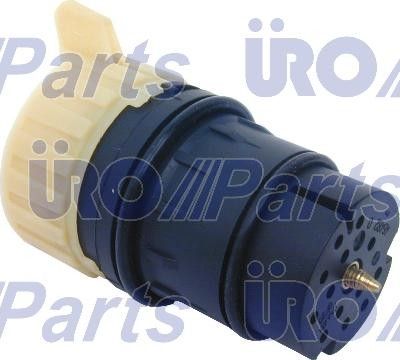
Typical fix: Replace the electrical connector sleeve (guide bushing). This is a relatively inexpensive part and can be replaced from outside the transmission after disconnecting the harness. The part number is typically Mopar 68021352AA.
Est. part cost: $15-$50 - Low or Incorrect Transmission Fluid 🟡 Medium Probability The NAG1 transmission has no dipstick from the factory, requiring a special tool to check the level, so owners often neglect it. Leaks from the 13-pin connector are common. Using the wrong fluid (like ATF+4 instead of the required MB 236.10/236.14 spec fluid) can cause shuddering and codes.
How to confirm: Using a special service dipstick tool, check the fluid level with the transmission at operating temperature. The fluid should be bright red and clear. The correct fluid is specified as Mopar P/N 05127382AB or an equivalent like Shell ATF 3403/134 or Valvoline MaxLife ATF.
Typical fix: Top off with the correct fluid and repair any leaks (usually the 13-pin connector). If fluid is contaminated or incorrect, perform a full fluid and filter change.
Est. part cost: $50-$150 - Failed Shift Solenoid 🟡 Medium Probability
How to confirm: Scan the TCM for solenoid-specific codes (e.g., P0750, P0755). A mechanic can test the resistance of the individual solenoids, often from the TCM connector without dropping the pan.
Typical fix: Replace the faulty shift solenoid. Solenoids are located on the valve body, so this repair is often done at the same time as a conductor plate replacement.
Est. part cost: $50-$200 - Faulty Transmission Control Module (TCM) ⚪ Low Probability
How to confirm: This is a diagnosis of exclusion. If all sensors, wiring, and mechanical components test good, the TCM itself may be the issue. A scan tool may show a loss of communication (e.g., U0101) with the TCM, sometimes caused by fluid wicking from the 13-pin connector.
Typical fix: Replace and reprogram the Transmission Control Module. First, ensure the connector is free of fluid contamination.
Est. part cost: $200-$600
Rare But Worth Checking
- Damaged Wiring Harness: The wiring harness connecting the TCM to the transmission can be damaged by road debris, heat, or corrosion, leading to intermittent signals and faults. Fluid from a leaking 13-pin connector can also saturate the harness and cause issues far from the transmission itself.
- Torque Converter Clutch (TCC) Failure: A mechanical failure within the torque converter or a problem with the TCC solenoid (part of the conductor plate) can cause shuddering and trigger codes like P0740 along with P0700.
- Transfer Case Motor/Snap Ring: In some Dodge powertrain configurations, P0700 has been associated with transfer case motor or snap ring failure (Ref: NHTSA ODI #11492165).
Diagnosis Steps
- Use an advanced scan tool capable of reading transmission codes to retrieve all codes from the TCM. P0700 is just the messenger.
- Inspect the 13-pin electrical connector on the transmission's right side for any signs of fluid leakage. This is a critical first step.
- Check the transmission fluid level and condition using the correct special tool and procedure. Ensure the fluid is the correct type (Mopar P/N 05127382AB or equivalent, NOT ATF+4).
- Inspect the transmission wiring harness and connectors for any visible damage, corrosion, or loose connections, especially near the 13-pin plug.
- Based on the specific codes found, test the related components. For speed sensor codes (P0717, P0721, P2767), the conductor plate is the primary suspect.
- If communication codes like U0101 are present, thoroughly check for fluid contamination in the harness and at the TCM connector itself.
Parts You'll Likely Need
- Transmission Conductor Plate
(OEM #52108308AC)— This is the most common internal failure point on the NAG1 transmission that leads to a P0700 code, as it houses the failure-prone speed sensors.
Trusted brands: Mopar, Bosch, Dorman
OEM price range: $250-$400
Aftermarket price range: $150-$250 - Transmission Electrical Connector Plug
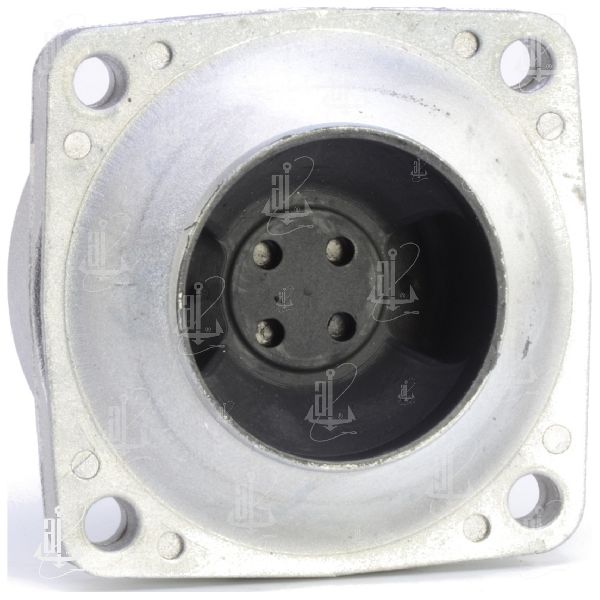
(OEM #68021352AA)— This 13-pin connector's O-rings are a notorious leak point. It should be replaced preventatively during any conductor plate service, or as the primary repair if it's found to be leaking.
Trusted brands: Mopar, Febi Bilstein
OEM price range: $25-$40
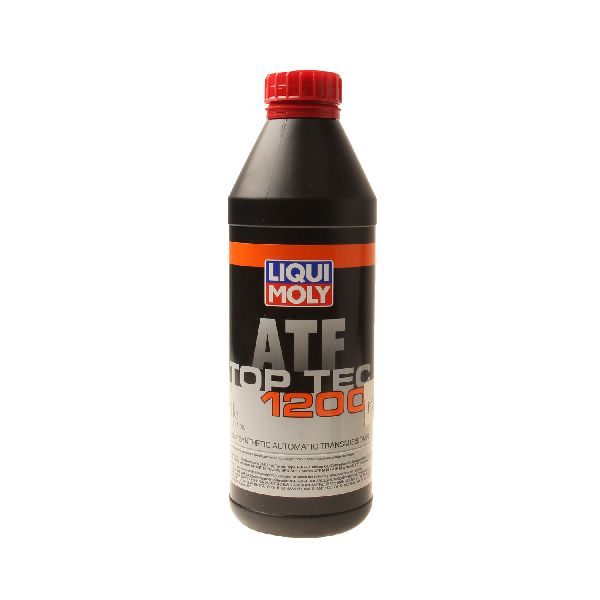
Aftermarket price range: $15-$30 - Transmission Fluid and Filter Kit — Required for any service involving the valve body or conductor plate. Using the correct fluid (Shell ATF 134 / Mopar 05127382AB spec) is critical for NAG1 transmission health.
Trusted brands: Mopar, Valvoline, Pentosin
OEM price range: $100-$150
Aftermarket price range: $50-$90
Related Codes That Often Appear With This One
- P0717 — Indicates a fault with the Input Speed Sensor circuit, which is integrated into the conductor plate assembly.
- P0721 — Indicates a fault with the Output Speed Sensor circuit, which is also located on the conductor plate.
- P2767 — Indicates an issue with the Input/Turbine Speed Sensor 'B' Circuit, directly pointing to a failure of the conductor plate.
- P0740 — Points to a problem with the Torque Converter Clutch (TCC) circuit. On the NAG1, this is often caused by a faulty TCC solenoid, which is part of the conductor plate.
- U0101 — Indicates 'Lost Communication with TCM'. This can be caused by fluid from a leaking 13-pin connector wicking up the harness and shorting out the TCM or its connections.
Technical Service Bulletins (TSBs) & Recalls
- TSB 21-002-05 Rev. A: Addresses automatic transmission fluid (ATF) weepage from the 13-pin electrical connector guide bushing on NAG1 transmissions.
- TSB 21-003-06: Details diagnosis and repair for a transmission shudder when the torque converter clutch engages, often caused by water contamination in the fluid.
- Bulletin #S2321000006: Notes that a "Service Transmission" message and P0700-E4 may set in the Transmission Control System.
Platform-Specific Known Issues
- NAG1 Conductor Plate Failure: The integrated speed sensors on the conductor plate are a common failure point, leading to limp mode and speed sensor-related fault codes.
Mechanic-Grade Diagnostic Values
- Shift Solenoid Resistance (all six) — expected: 4.0 - 5.0 Ohms. Failure: A reading outside this range indicates a faulty solenoid coil.
- Torque Converter Lock-Up (TCC) Solenoid Resistance — expected: 2.5 - 3.5 Ohms. Failure: A reading outside this range points to a failure in the TCC solenoid, which is part of the solenoid pack.
- Input/Output Speed Sensor (Y3/6n2, Y3/6n3) Test — expected: The sensors are Hall-effect and cannot be reliably tested with a simple multimeter. Diagnosis requires an oscilloscope to check for a square wave signal or a capable scan tool to monitor live data.. Failure: Scan tool data showing erratic or zero RPM from one sensor while the other reads normally indicates a failed sensor, pointing to conductor plate failure.
Scan Tool Commands That Help
- wiTECH or JScan: Reset Learned Adaptives (NAG1) / Reset Adaptive Values — This function should be used after replacing the conductor plate, valve body, or entire transmission to clear the old shift timing data and force the TCM to relearn.
- wiTECH or JScan: Quick Learn Procedure / Transmission Adaptation Drive Learn — After resetting adaptives, this guided procedure must be performed. It involves a specific drive cycle to allow the TCM to re-calibrate clutch fill times and pressures for smooth shifting. Failure to perform this can result in harsh or erratic shifting even with new parts.
- wiTECH or JScan: Store learned adaptives — The TCM normally stores new adaptive values every 10 minutes of operation. This command forces an immediate save of the learned values after completing the drive cycle, ensuring the new data is not lost if the vehicle is shut off too soon.
Wiring & Ground Locations
- Transmission Control Module (TCM) — Located inside the cabin, under the driver's side dashboard, beneath the steering column.. This is the brain of the transmission. If the 13-pin connector leaks, fluid can wick all the way up the harness and contaminate the TCM connectors or the module itself, causing communication errors (U-codes) and P0700.
- 13-Pin Transmission Connector — On the right (passenger) side of the transmission case, towards the front.. This is the single point of connection for all electronic signals to and from the transmission. It is the most common leak point, and its pinout is required for any external electrical testing of solenoids or sensors.
- G101 / G102 — Main engine compartment grounds, typically located on the right front or right side of the engine compartment.. A poor ground connection for the powertrain can cause erratic behavior and phantom codes. While not a primary cause for P0700, checking major grounds is a good practice if electrical issues are suspected.
- TCM Fuses — Power for the TCM is supplied through fuses in both the front Power Distribution Center (under the hood) and the rear fuse box (in the trunk).. A loss of power to the TCM will cause a P0700 and a no-communication error. Checking these fuses is a basic but critical step.
Real Owner Repair Stories
- ChallengerTalk Forum User (2010 Dodge Challenger R/T) — Car went into limp mode, stuck in one gear. P0700 code present along with a code for the output speed sensor.
❌ Tried (didn't work) Clearing the codes (they returned immediately).
✅ What actually fixed it The owner replaced the transmission conductor plate, the 13-pin connector plug, the filter, and the fluid. This resolved the limp mode and cleared all transmission-related codes. - LXForums User (Dodge Charger with NAG1) — P0700 code and limp mode, especially when the transmission was hot.
❌ Tried (didn't work) Initial diagnosis was uncertain.
✅ What actually fixed it The final repair was replacing the conductor plate. The user noted that the problem was heat-related, which is a classic symptom of failing electronics or solder joints on the plate.
Documented NHTSA Reports
- An owner reported in NHTSA ODI #11085068 that P0700 appeared alongside P0717 (input speed sensor 1 circuit no signal), U1146 (communication error), and P0712 (transmission fluid temperature sensor low input).
- NHTSA ODI #11655418 describes a vehicle that failed to restart and was towed; the dealer retrieved codes U0100 and P0700 and attempted to flash the computer, but the failure persisted.
- In NHTSA ODI #10846349, an owner experienced P0700 and P0760 at approximately 64,000 miles, which eventually required a transmission overhaul including fluid and filter changes.
OEM Part Supersession History
52108323AA, 52108324AB, 5166827AB, and others→68021352AA— Part consolidation and design updates for the 13-pin electrical connector plug.
Heads up: The latest part number, 68021352AA, is the correct replacement for most 2008-2014 Challengers with the NAG1 transmission, but always verify with VIN.
Diagnostic Flowchart
Other Known Issues on This Vehicle
Issues unrelated to this code that are worth knowing about as an owner of this generation:
- HEMI Tick (MDS Lifter/Camshaft Failure) 🔴 High — Common on 5.7L HEMI engines, especially 2009-2016 models. Can occur at various mileages, often starting as a light tick at idle and progressing to misfires (P0300 codes) and catastrophic engine damage if ignored.
- Alternator Failure 🔴 High — Particularly common on 2011-2014 models. The alternator can fail suddenly, sometimes leading to a no-charge condition, stalling, or even a risk of fire, which prompted a recall. (Ref: NHTSA Recall 14V-634)
- Totally Integrated Power Module (TIPM) Failure 🟠 Medium — Widespread across many Chrysler/Dodge vehicles of this era. Symptoms are erratic and widespread, including the fuel pump running continuously, engine stalling, horn honking randomly, and power windows/locks acting on their own.
- Broken Exhaust Manifold Bolts 🟡 Low — A common issue on HEMI V8s, causing an exhaust leak that presents as a ticking noise, especially when the engine is cold. Often mistaken for the more serious 'HEMI tick'.
- Sagging Headliner 🟡 Low — Frequently reported on earlier models (2008-2012), where the headliner fabric detaches from the backing board, especially around the sunroof and windows.
Used vs. New Parts: Buying Guide for This Vehicle
When a used part is the smart pick: A complete, low-mileage used transmission assembly can be a cost-effective alternative to a full rebuild if a major internal hard part has failed. A used TCM can also be an option, but it must be the exact same part number and may require programming or a 'Reset Learned Adaptives' procedure to work correctly with your vehicle's valve body.
Donor-vehicle mileage cap: roughly under 70000 miles for the part to have meaningful remaining life.
What to inspect on the donor part:
- Check the 13-pin connector on the donor transmission; if it's leaking, assume the conductor plate may have issues.
- Ask for the VIN of the donor car to verify mileage and check for reported accidents.
- If possible, inspect the transmission fluid color and smell. It should be bright red and not smell burnt.
- For a used TCM, ensure the part numbers match exactly and there is no physical damage or corrosion on the pins.
OEM-only on this vehicle (don't cheap out):
- Transmission Electrical Connector Plug (Mopar 68021352AA): The cost is low and the part is so critical to preventing leaks that using a genuine OEM part is highly recommended.
Aftermarket brands forum-validated for this vehicle:
- Conductor Plate: Bosch is the Original Equipment Supplier (OES) for the conductor plate. A Bosch-branded part is equivalent to Mopar.
- Transmission Fluid: Valvoline MaxLife ATF is widely reported on forums as a compatible and high-quality fluid for the NAG1/722.6 transmission, meeting the required specifications.
- Filter/Gasket Kit: Brands like Febi Bilstein, Mahle, and Pentosin are reputable OES/OEM suppliers for European applications and are a good choice for the Mercedes-designed NAG1.
Brands owners have reported issues with on this vehicle:
- Unbranded/No-Name Conductor Plates: Very cheap conductor plates from online marketplaces are known to have high failure rates, sometimes failing immediately or within a few months. Reviews for some Dorman conductor plates for this application have been mixed, with some users reporting fitment issues.
Real Owner Stories
Aggregated from forums and TSBs cited above. Mileages and costs reflect what owners reported in those sources.
2010 Dodge Challenger (NAG1 Transmission)
Symptoms: Vehicle entered limp mode and was stuck in gear; P0700 was present. Users on forums emphasized checking the connector for leaks before ordering parts.
What fixed it: Replacing the conductor plate and the 13-pin connector resolved the limp mode and cleared the P0700 code.
Source hint: ChallengerTalk Forum
2008 Dodge Challenger (LX Platform)
Symptoms: Limp mode and P0700 code. Owner followed DIY documentation shared by Charger and Magnum owners regarding the W5A580 transmission.
What fixed it: DIY replacement of the conductor plate, solenoids, and connector plug.
Source hint: LXForums.com
Related OBD-II Codes
Frequently Asked Questions
My 2008-2014 Challenger is stuck in one gear and the Check Engine Light is on. What is likely happening?
Is there a TSB for transmission fluid leaks on the NAG1 transmission?
Can I use standard ATF+4 fluid in my 2008-2014 Dodge Challenger's NAG1 transmission?
What should I check first if I see code P0700 on my Challenger?
I have a transmission shudder when the torque converter engages; is this a known issue?
Can a bad alternator cause transmission communication issues on 2011-2014 models?
Helpful Videos

Used OEM Parts in Stock

New Aftermarket Parts Available

The information in this article is provided for general reference and educational purposes only. Vehicle specifications, procedures, and part compatibility can vary by production date, trim level, and region. Always consult your vehicle's factory service manual and verify part numbers before purchasing or performing repairs. Safety-critical components such as airbags, seat belts, and braking systems should be installed by a qualified professional.
- Dodge Challenger:
- 🎬 Helpful Videos
- 🛍️ Shop This Part
- What's Unique About the 2008-2014 Dodge Challenger
- Symptoms You May Notice
- Most Likely Causes
- Rare But Worth Checking
- Diagnosis Steps
- Parts You'll Likely Need
- Related Codes That Often Appear With This One
- Technical Service Bulletins (TSBs) & Recalls
- Platform-Specific Known Issues
- Mechanic-Grade Diagnostic Values
- Scan Tool Commands That Help
- Wiring & Ground Locations
- Real Owner Repair Stories
- Documented NHTSA Reports
- OEM Part Supersession History
- Diagnostic Flowchart
- Other Known Issues on This Vehicle
- Used vs. New Parts: Buying Guide for This Vehicle
- Real Owner Stories
- 2010 Dodge Challenger (NAG1 Transmission)
- 2008 Dodge Challenger (LX Platform)
- Related OBD-II Codes
- Frequently Asked Questions
- 🎟️ Get 5% Off