

P0627 on 2000-2004 Dodge Dakota 4.7L: Fuel Pump Control Circuit Causes and Fixes
This code usually means a bad fuel pump or a faulty fuel pump relay on your Dakota. The most likely fix is replacing the in-tank fuel pump assembly, which can cost between $150-$300 for the part. A much cheaper first step is to swap the fuel pump relay in the engine bay fuse box.
- P0627 means there's an electrical problem in the fuel pump circuit, which will likely prevent your truck from starting.
- Before buying any parts, perform the easiest check first: swap the fuel pump relay in the under-hood fuse box with an identical one. This costs nothing and can solve the problem in minutes.
- If the relay is good, the most likely culprit is a failed in-tank fuel pump assembly.
- Always check the simple things like fuses before moving on to more complex diagnostics.
- While possible, wiring and PCM issues are less common than a failed relay or pump.
What's Unique About the 2000-2004 Dodge Dakota
On this generation of Dodge Dakota, the fuel pump is controlled by a conventional, replaceable relay located in the Power Distribution Center (PDC) under the hood, not a complex, integrated module like the Totally Integrated Power Module (TIPM) found in later Chrysler products which have the relay soldered internally. This makes diagnostics simpler, as swapping the relay is an easy first step. However, like many trucks of this era, the fuel pump itself is a common failure item, and the wiring harness leading to the tank is susceptible to damage from road debris and corrosion over time.
Symptoms You May Notice
- Engine cranks but will not start
- Engine stalls intermittently, especially after starting
- No humming or whirring sound from the fuel tank when the key is first turned to the 'ON' position
- Check Engine Light is illuminated
- Replacing the fuel filter. The fuel filter on this truck is integrated into the fuel pump module assembly and is not a separate, serviceable part. While a clogged filter can cause fuel pressure issues, it will not cause an open circuit code like P0627.
Most Likely Causes
- Failed Fuel Pump Assembly 🔴 High Probability The in-tank fuel pumps on these trucks are a common wear-and-tear item that can fail with age and mileage. The internal electric motor simply wears out.
How to confirm: After confirming the relay and wiring have power, check for voltage at the fuel pump connector when the key is turned. If power is present but the pump doesn't run, it has failed. A common temporary test is to bang on the bottom of the fuel tank with a rubber mallet; if the truck starts, the pump motor is failing 🎬 Watch: A quick way to test your fuel pump. and stuck.
Typical fix: Replace the entire fuel pump module assembly inside the fuel tank. This requires dropping the fuel tank for access. 🎬 See this walkthrough on how to install the pump assembly. It is recommended to replace the entire module, which includes the pump, sending unit, and filter sock.
Est. part cost: $150-$300 - Defective Fuel Pump Relay 🟡 Medium Probability Relays are electromechanical switches that can fail from heat cycles and repeated use. It is one of the most common causes for a P0627 code.
How to confirm: The fuel pump relay is in the Power Distribution Center (PDC) in the engine bay. Swap it with an identical relay from a non-critical circuit, such as the fog lamps or A/C clutch. If the truck starts, the relay is bad.
Typical fix: Replace the faulty relay with a new one. This is a simple plug-and-play replacement.
Est. part cost: $10-$25 - Damaged Wiring or Connectors ⚪ Low Probability The wiring harness running along the frame to the fuel tank is exposed to moisture, salt, and road debris, which can cause corrosion or physical breaks in the wires. The connector on top of the fuel pump module is also a common point for corrosion.
How to confirm: Visually inspect the wiring harness from the PDC to the fuel tank for any signs of damage, corrosion, or melting. Pay close attention to the connector at the fuel pump. Use a multimeter to check for continuity and voltage at the fuel pump connector.
Typical fix: Repair the damaged section of the wire and protect it with heat-shrink tubing or electrical tape. Replace corroded connectors. Sometimes the connector pigtail on the harness side needs to be replaced.
Est. part cost: $5-$50
Rare But Worth Checking
- Faulty Powertrain Control Module (PCM): This is the least likely cause. The internal driver circuit in the PCM that controls the fuel pump relay can fail. This should only be considered after the pump, relay, and all wiring have been thoroughly tested and confirmed to be good.
Diagnosis Steps
- Turn the ignition key to the 'ON' position (without cranking the engine) and listen for a 2-3 second humming sound from the rear of the truck. If there is no sound, the fuel pump is not priming. 🎬 Watch: A pro mechanic tests for no fuel pressure.
- Check the fuel pump fuse. For 2001-2004 models, this is typically Fuse #10 (20A) in the interior panel (Junction Block) and may involve a fuse in the under-hood PDC.
- Locate the fuel pump relay in the Power Distribution Center (PDC) under the hood. It is often labeled on the underside of the PDC cover.
- Swap the fuel pump relay with an identical relay from another circuit (e.g., A/C or fog lamp) and try to start the engine. If it starts, the relay was the problem. This is the most effective initial diagnostic step.
- If the relay swap does not work, use a multimeter or test light to verify that the relay socket is receiving power on the correct terminals when the key is turned.
- If the relay circuit is receiving power, the next step is to check for power at the fuel pump itself. This requires accessing the electrical connector on top of the fuel tank.
- Test for voltage at the fuel pump connector for a few seconds after the key is turned to 'ON'. If voltage is present but the pump does not run, the fuel pump has failed.
- If no voltage is present at the fuel pump connector, inspect the entire length of the wiring harness between the PDC and the fuel tank for visible damage, corrosion, or breaks.
- If the wiring is intact and all other components are good, the PCM may have a faulty driver circuit, which is a rare failure.
Parts You'll Likely Need
- Fuel Pump Module Assembly
(OEM #Mopar 05014884AA (for 2000-2003 Quad Cab w/ 24 gal tank, example only, verify by VIN))— This is the most common cause of P0627 when accompanied by a no-start condition. The electric motor inside the pump wears out over time.
Trusted brands: Bosch, Delphi, Denso, Spectra Premium, TRQ
OEM price range: $250-$400
Aftermarket price range: $150-$300 - Fuel Pump Relay
(OEM #Mopar 56006707 (or superseding part numbers like 68223712AA))— A common and inexpensive failure point that is easy to diagnose by swapping with another relay.
Trusted brands: Standard Motor Products, Mopar, Bosch, Duralast
OEM price range: $15-$30
Aftermarket price range: $10-$25
Mechanic-Grade Diagnostic Values
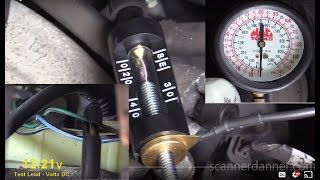
- Fuel Pressure (Key On, Engine Off or Cranking) — expected: 44-54 PSI for 2000-2002 models; 47-51 PSI for 2003 models.. Failure: 0 PSI indicates the pump is not running or there is a major leak. Pressure significantly below the specified range indicates a weak pump or clogged filter sock.
- Fuel Pump Relay Voltage Drop (across switched contacts) — expected: Less than 0.2 Volts when the pump is running.. Failure: A voltage drop of 0.5V or higher (some reports show drops of 2-5V) indicates high internal resistance in the relay contacts, meaning the relay is failing and needs replacement.
- Voltage at Fuel Pump Connector (Power Wire to Ground) — expected: Should see full battery voltage (~12V) for 2-3 seconds after the ignition is turned to 'ON', then 0V. Should show constant battery voltage while cranking.. Failure: 0V at all times indicates an open circuit in the wiring, a bad relay, or a faulty PCM driver. Constant low voltage (e.g., 7-10V) can indicate a corroded wire or failing relay.
- Fuel Pump Motor Resistance — expected: A low resistance value, which will vary by pump manufacturer. A voltage drop test across the pump motor should show a very low voltage reading (e.g., 0.07V), indicating some resistance.. Failure: A reading of near-zero resistance (or 0.00V on a voltage drop test) indicates a shorted motor. A reading of infinite resistance (OL on a multimeter, or full battery voltage on a voltage drop test) indicates an open motor circuit.
Scan Tool Commands That Help
- Chrysler DRB III: Actuator Test / Fuel Pump Relay Actuation — This bidirectional command allows a technician to manually turn the fuel pump relay on and off directly from the scan tool. This is used to verify if the PCM driver, the relay, and the wiring to the pump are all capable of functioning, bypassing the ignition switch and normal prime cycle. If the pump runs with this command, the issue is likely related to the PCM not commanding it on during startup.
- Professional Aftermarket Scan Tool (Autel, Snap-on): Fuel Pump Driver Test / PCM Communication Diagnostics — Similar to the DRB III function, this commands the fuel pump on and monitors the PCM's response. It's a definitive way to test the entire control side of the circuit from the PCM outwards.
Wiring & Ground Locations
- Fuel Pump Relay Power Output Pin — In the Power Distribution Center (PDC), it is the pin on the fuel pump relay socket that is oriented horizontally and closest to the top of the PDC when viewing from the driver's side fender.. This is the pin to test for output voltage from the relay or to jump 12V power to for testing the rest of the circuit to the pump.
- Fuel Pump Power Wire — Runs from the PDC, along the driver's side frame rail, to the top of the fuel tank. The wire is typically Dark Green with a Black tracer.. This is the wire that must be inspected for breaks, shorts, or corrosion. Knowing the color helps isolate it in the harness for continuity testing.
- Powertrain Control Module (PCM) — Located in the engine compartment, on the right (passenger side) inner fender wall.. This is the source of the control signal for the fuel pump relay. The wiring between the PCM and the PDC should be checked if the relay is not being activated.
- Main Chassis Ground (Example: G113) — A common ground point is located near the battery. The fuel pump circuit's ground is at the rear of the vehicle, typically connected to the frame near the tank.. A poor ground connection for the fuel pump itself can prevent it from running even if it receives 12V power, though this typically does not set an 'open circuit' code. However, a bad ground for the PCM or PDC can cause a wide range of electrical issues, including P0627.
Real Owner Repair Stories
- DodgeForum.com user 'polar3us' (2003 Dodge Dakota Quad Cab 4.7L) — Parked the truck, came back an hour later and it would only crank but not stay running. Pulled code P0627. Did not hear the fuel pump run when the key was turned to 'ON'.
❌ Tried (didn't work) Swapped the fuel pump relay with the identical fog lamp relay; the truck still would not start.
✅ What actually fixed it The user's next step was to trace the wiring harness for a bad wire or ground, which is the correct next step after a relay swap fails. The thread does not have a final resolution post, but it serves as a real-world example of the relay not being the fix, forcing a deeper diagnosis of the wiring.
Model Year Variations Within This Range
- 2000-2003: Fuel pressure specifications vary slightly. 2000-2002 models require 44-54 PSI, while 2003 models specify 47-51 PSI.
- 2000-2004: The fuel pump module's electrical connector may differ. Forum posts indicate that some trucks use a square-shaped 'Walbro' style connector, while others use a flatter, rectangular 'Carter' style connector. It is critical to visually inspect the existing connector before ordering a replacement pump assembly to ensure compatibility.
Diagnostic Flowchart
Other Known Issues on This Vehicle
Issues unrelated to this code that are worth knowing about as an owner of this generation:
- Cracked Dashboard 🟠 Medium — Extremely common across 1998-2004 Dodge trucks and SUVs, often starting after 5-10 years. The plastic becomes brittle and large chunks can break away. (Ref: No official recall was issued, with Dodge generally classifying it as a cosmetic issue outside of the standard warranty.)
- Premature Ball Joint Wear 🔴 High — Common failure item, often requiring replacement before 100,000 miles. Symptoms include clunking noises from the front suspension and uneven tire wear. (Ref: Factory lower ball joints are riveted in place, requiring drilling or grinding for removal, which complicates the first replacement. Aftermarket replacements are typically bolt-in.)
- Heater Core Failure 🔴 High — A very common issue where the heater core clogs or leaks. A key symptom is a lack of heat from the vents. The repair is extremely labor-intensive, requiring the removal of the entire dashboard assembly.
- Oil Sludge / Milky Condensation in Oil Filler Neck 🟡 Low — Commonly seen in colder climates due to the long oil filler tube design, which allows condensation to mix with oil vapor, creating a yellowish, milky substance. This is generally considered harmless and not indicative of a head gasket failure, though true engine sludge can occur from neglected oil changes. (Ref: An early TSB provided an insulating baffle and a new cap to mitigate the condensation.)
- Blower Motor Resistor Failure 🟡 Low — Frequently fails, causing the HVAC fan to only work on the highest setting. It's a cheap and easy part to replace, located in the passenger footwell.
Used vs. New Parts: Buying Guide for This Vehicle
When a used part is the smart pick: A used fuel pump relay from a junkyard is a good, inexpensive part for diagnosis (by swapping) or as a temporary replacement. A complete used fuel pump assembly is generally not recommended as it is a primary wear item with an unknown history, and the labor to replace it is significant.
Donor-vehicle mileage cap: roughly under 100000 miles for the part to have meaningful remaining life.
What to inspect on the donor part:
- For a relay, ensure the pins are not corroded or burnt.
- For a fuel pump assembly, check that the plastic is not brittle or cracked.
- Inspect the electrical connector on the donor pump for any signs of melting or corrosion.
- If possible, look inside the donor tank for signs of excessive rust or sediment, which would suggest the pump operated in a harsh environment.
OEM-only on this vehicle (don't cheap out):
- No parts for this repair are strictly 'OEM-only', but using a quality aftermarket fuel pump is highly advised over generic, no-name brands.
Aftermarket brands forum-validated for this vehicle:
- Bosch
- Delphi
- Denso
Brands owners have reported issues with on this vehicle:
- Unbranded, 'white-box' fuel pump assemblies sold on marketplaces like eBay and Amazon are known to have high premature failure rates according to general forum consensus.
Real Owner Stories
Aggregated from forums and TSBs cited above. Mileages and costs reflect what owners reported in those sources.
2003 Dodge Dakota 4.7L
Symptoms: Owner experienced a crank-no-start condition and the vehicle set a P0627 trouble code.
What fixed it: The problem was resolved by swapping the fuel pump relay with another one in the fuse box, which confirmed the original relay had failed.
Source hint: DodgeForum.com: Code P0627
Related OBD-II Codes
Frequently Asked Questions
I don't hear the 2-second humming sound from my fuel tank when I turn the key. Is the fuel pump definitely bad?
What's the fastest way to test the fuel pump relay on my Dakota?
I hit the bottom of my gas tank with a mallet and my truck started. What does this mean?
To replace the fuel pump on my 2002 Dakota, do I have to drop the entire fuel tank?
Is the P0627 code a common problem on other vehicles with the 4.7L V8?
I found a milky, yellowish sludge under my oil cap. Is this related to my engine's no-start problem?
My mechanic says the wiring to the fuel pump is corroded. Is this a known issue?
Helpful Videos
Used OEM Parts in Stock

New Aftermarket Parts Available


The information in this article is provided for general reference and educational purposes only. Vehicle specifications, procedures, and part compatibility can vary by production date, trim level, and region. Always consult your vehicle's factory service manual and verify part numbers before purchasing or performing repairs. Safety-critical components such as airbags, seat belts, and braking systems should be installed by a qualified professional.
- Dodge Dakota:
- 🎬 Helpful Videos
- 🛍️ Shop This Part
- What's Unique About the 2000-2004 Dodge Dakota
- Symptoms You May Notice
- Most Likely Causes
- Rare But Worth Checking
- Diagnosis Steps
- Parts You'll Likely Need
- Mechanic-Grade Diagnostic Values
- Scan Tool Commands That Help
- Wiring & Ground Locations
- Real Owner Repair Stories
- Model Year Variations Within This Range
- Diagnostic Flowchart
- Other Known Issues on This Vehicle
- Used vs. New Parts: Buying Guide for This Vehicle
- Real Owner Stories
- 2003 Dodge Dakota 4.7L
- Related OBD-II Codes
- Frequently Asked Questions
- 🎟️ Get 5% Off