

P0627 on 2004-2008 Acura TL: Fuel Pump Control Circuit Causes and Fixes
On a 2004-2008 Acura TL, code P0627 is almost always caused by a faulty PGM-FI Main Relay (also called the fuel pump relay). This is a very common failure due to internal cracks in the solder joints. Replacing it is a simple DIY fix with an OEM part costing around $25-$40. Do not replace the fuel pump before testing or replacing this relay.
- P0627 on a 2004-2008 TL almost always points to the PGM-FI Main Relay, not the fuel pump itself.
- A key symptom is an intermittent no-start condition, especially when hot, where you do not hear the fuel pump prime for 2 seconds.
- Before buying any parts, listen for the fuel pump prime. No sound strongly suggests the relay is bad.
- Replacing the relay is a simple, 15-minute DIY job that can save you hundreds of dollars over a shop diagnosis or unnecessary fuel pump replacement.
- Ensure you purchase the correct updated OEM relay, part number 39794-SDA-A05.
What's Unique About the 2004-2008 Acura TL
The third-generation Acura TL, like many Hondas from this era, is known for premature failure of the PGM-FI Main Relay, which controls the fuel pump. The original relays, often made by Mitsuba, are prone to developing cracked solder joints on the internal circuit board from years of heat cycles and vibration. This creates an intermittent open circuit that triggers P0627 and causes no-start or stalling issues, particularly when the cabin is hot. Acura later used an updated relay (part number 39794-SDA-A05) to address this common problem.
Symptoms You May Notice
- Engine cranks but will not start
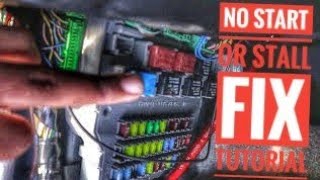
- Intermittent no-start, especially when the vehicle is hot or has been sitting in the sun. 🎬 Watch: How to fix no-starts caused by hot weather.
- Engine starts but stalls shortly after
- Engine stalls while driving
- Check Engine Light is on
- No audible 'buzz' or 'hum' from the fuel pump (in the rear seat area) for 2 seconds when the key is turned to the 'ON' position.
- Car starts normally after cooling down for 15-20 minutes.
- Replacing the fuel pump before checking the PGM-FI main relay. The relay is a much more common failure point, cheaper, and easier to replace. Many owners have unnecessarily replaced the fuel pump only to find the P0627 code and no-start issue persist.
Most Likely Causes
- Faulty PGM-FI Main Relay (Fuel Pump Relay) 🔴 High Probability The original relays are known to develop cracked solder joints over time from heat and vibration, causing an intermittent open circuit. This is a widely documented failure on this platform and many other Honda/Acura models of the era.
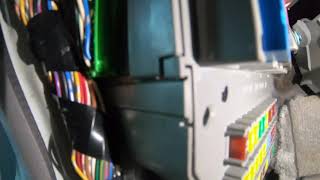
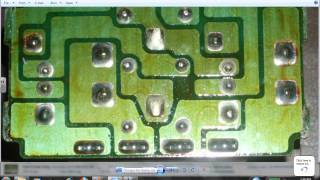
How to confirm: Listen for the fuel pump to prime when the key is turned to 'ON'. If you don't hear a 2-second buzz from the fuel tank area, the relay is the most likely cause. You can also try starting the car after it has cooled down; if it starts, the relay is highly suspect. For a definitive test, you can tap on the relay while trying to start the car or remove it and inspect the internal circuit board for visible cracks in the solder points. 🎬 See this guide on testing and repairing the main relay.
Typical fix: Replace the PGM-FI Main Relay with a new OEM unit, part number 39794-SDA-A05.
Est. part cost: $25-$40 - Failed Fuel Pump ⚪ Low Probability
How to confirm: If the PGM-FI relay is confirmed to be working (it 'clicks' and sends power), but the pump does not run, the pump itself may have failed. This can be confirmed by applying direct 12V power to the fuel pump terminals and seeing if it runs. This should only be done after ruling out the relay.
Typical fix: Replace the in-tank fuel pump assembly.
Est. part cost: $150-$300 - Damaged Wiring or Connectors ⚪ Low Probability
How to confirm: Visually inspect the wiring harness to the PGM-FI relay and the fuel pump for any signs of damage, corrosion, or loose connections. Use a multimeter to check for continuity and proper voltage between the PCM, the relay, and the fuel pump connector.
Typical fix: Repair the damaged section of the wiring harness or clean/replace the faulty connector.
Est. part cost: $5-$50
Rare But Worth Checking
- Blown Fuel Pump Fuse: Always a simple first check. The fuse for the fuel pump (typically a 15A fuse labeled 'FUEL PUMP' in the under-dash fuse box, check owner's manual for exact location) could be blown, though this usually indicates a deeper short circuit problem.
- Faulty Powertrain Control Module (PCM): In very rare cases, the driver circuit within the PCM that controls the relay can fail. This should only be considered after all other possibilities (relay, pump, wiring, fuses) have been definitively ruled out.
Diagnosis Steps
- Turn the ignition key to the 'ON' (II) position without starting the engine. Listen carefully for a faint 2-second 'buzz' or 'hum' from the rear seat area. This is the sound of the fuel pump priming. If you do not hear this sound, the PGM-FI main relay is the primary suspect.
- If the pump does not prime, locate the under-dash fuse box and check the fuse labeled for the fuel pump (often a 15A fuse, check your owner's manual for the exact fuse number). If the fuse is blown, replace it and see if the problem returns. If it blows again, there is a short circuit that needs to be found.
- If the fuse is good, the next step is to replace the PGM-FI Main Relay. It is located under the driver's side dash, typically a gray or blue relay mounted to a bracket near the steering column.
- To access the relay, you will need to remove the plastic lower dashboard cover under the steering wheel (usually held by clips and a couple of screws).
- The relay is often mounted on a metal bracket with a 10mm bolt. It is easier to remove the entire bracket with the relay attached than to try and slide the relay off the bracket while under the dash.
- Disconnect the electrical connector from the relay, unbolt the bracket, and remove the assembly. 🎬 Watch this quick walkthrough of the relay replacement process. Install the new relay onto the bracket, reinstall the bracket, reconnect the connector, and test for fuel pump priming again.
- If a new relay does not solve the problem, you must perform electrical checks. Use a multimeter to verify that the relay socket is receiving power from the ignition switch and that the PCM is sending the ground signal to activate the relay.
- If the relay is working and sending power out, check for voltage at the fuel pump connector itself (located under the rear seat cushion). If voltage is present at the pump but it doesn't run, the fuel pump has failed.
- If no voltage is reaching the fuel pump connector, inspect the wiring harness between the relay and the pump for any breaks or shorts.
Parts You'll Likely Need
- PGM-FI Main Relay (Fuel Pump Relay)
(OEM #39794-SDA-A05)— This is the most common failure point for the P0627 code on this vehicle due to a known issue with cracked internal solder joints. This part number is the updated, more reliable version that supersedes previous versions like 39794-SDA-A01 and 39794-SDA-A03.
Trusted brands: Acura (OEM - Mitsuba or Denso)
OEM price range: $25-$40
Aftermarket price range: $15-$30
Platform-Specific Known Issues
- The original PGM-FI main relays (often Mitsuba brand) are known to fail due to cracked solder joints, causing intermittent loss of power to the fuel pump. This issue is more likely to occur in hot weather or when the vehicle's interior is hot.
- A Reddit user with a no-start issue confirmed that replacing the relay immediately solved the problem, even after being told the relay was likely not the cause.
Mechanic-Grade Diagnostic Values
- PGM-FI Main Relay 2 (Fuel Pump) Coil Resistance — expected: 40 - 120 Ohms. Failure: Infinite resistance (open circuit) or a reading significantly outside the expected range.
- PGM-FI Main Relay Connector - Terminal 7 Voltage — expected: Battery voltage (approx. 12V). Failure: No voltage indicates a problem with the power feed to the relay or the relay itself.
- PGM-FI Main Relay Connector - Terminal 3 to Chassis Ground — expected: Continuity (less than 1.0 Ohm). Failure: No continuity indicates a bad ground wire (open circuit).
- Fuel Pump Motor Resistance — expected: 0.2 - 5.0 Ohms (general estimate). Failure: Infinite resistance (open circuit) indicates a failed pump motor.
Scan Tool Commands That Help
- Honda Diagnostic System (HDS) or equivalent professional scanner: Clear DTCs / Check for Temporary DTCs — Used after a repair to clear the code and then re-check to see if the fault is intermittent or has been resolved.
- Professional Scan Tool: Output Diagnostic Test Mode / Actuator Test — To manually command the PCM to trigger the fuel pump relay. This helps isolate whether the fault is in the control side (PCM, wiring) or the load side (relay, pump) of the circuit.
Wiring & Ground Locations
- PGM-FI Main Relay — Under the driver's side dashboard, typically to the left of the steering column, mounted on a bracket.. This is the primary control relay for the fuel pump and the most common failure point for P0627.
- G101 — On the left side of the engine.. This is a key ground point. A diagnostic procedure for the PGM-FI main relay circuit references checking the wire to G101 for an open, indicating it is part of the relay's ground path.
- G501 — Under the left side of the dash.. This is a major ground point for interior components. A poor connection here could potentially affect the PGM-FI relay or PCM, which are located nearby.
- Fuel Pump Connector — Under the rear seat cushion, on top of the fuel tank assembly.. This is the final point to test for voltage before the fuel pump motor. If voltage is present here but the pump doesn't run, the pump is bad. If voltage is absent, the problem is upstream (wiring, relay, PCM).
Real Owner Repair Stories
- AcuraZine user '05ACURATL' (2005 Acura TL) — Crank no start, no fuel pump prime, flashing immobilizer key, OBD2 scanner cannot communicate with ECM.
❌ Tried (didn't work) Replacing the fuel pump relay, Replacing nearly every other relay and fuse in both fuse boxes, Hard reset by disconnecting battery for days
✅ What actually fixed it The thread details deep electrical diagnosis, including jumping the relay to test the pump and checking for PCM ground signals. While the user doesn't post a single 'it was X' follow-up, the evidence points toward a complex issue involving either the PCM, the immobilizer system, or a break in the wiring harness that was preventing the PCM from grounding the relay, a scenario far beyond a simple relay swap. - AcuraZine user 'paolo' (2008 Acura TL Base with a 6-speed manual Type-S engine, transmission, harness, and computer swap.) — Check Engine Light on with code P0627. The car runs perfectly fine.
✅ What actually fixed it This is an unresolved diagnostic case. The user asks if installing a Type-S fuel pump would fix the code, as the original Base model pump is still in use. The code is likely being set because the Type-S computer expects a different electrical load or feedback from a Type-S fuel pump assembly that isn't present with the Base pump, even if the pump provides adequate fuel flow. This highlights a compatibility issue in non-standard swaps.
OEM Part Supersession History
39794-SDA-A01, 39794-SDA-A04→39794-SDA-A05— Likely improvements to the internal circuit board and solder joints to increase reliability and prevent the common heat-related failures.
Model Year Variations Within This Range
- 2006: A new SAE testing procedure for horsepower was implemented. The 2006 model's J32A3 engine is rated at 258 hp, while the 2004-2005 models were rated at 270 hp. There was no actual change to the engine's output; only the rating method changed. This does not affect the P0627 diagnosis.
- 2007-2008: The TL received a mid-model refresh. Changes included new front/rear bumpers, moving fog lights to the lower bumper, and a new steering wheel. The Type-S model was introduced with the 3.5L J35A8 engine. While the PGM-FI relay issue is common to all years, the fuse box layout and some wiring may have minor differences from the 2004-2006 models.
Diagnostic Flowchart
Other Known Issues on This Vehicle
Issues unrelated to this code that are worth knowing about as an owner of this generation:
- Automatic Transmission Failure/Rough Shifting 🔴 High — Very common, especially on 2004-2006 models. Issues can appear around 100,000 miles. Problems include torque converter shudder, slipping, and harsh shifts. (Ref: A recall was issued for some 2003-2004 models for overheating second gears. Replacing 3rd/4th gear pressure switches is a common preventative measure.)
- Cracked Dashboard 🟠 Medium — Extremely common across all years (2004-2008). Cracks typically start near the passenger airbag or instrument cluster due to defective materials, not just sun exposure. (Ref: No recall, but Acura has offered "goodwill" assistance in the past, covering a portion of the expensive replacement cost for some owners who complained.)
- HandsFreeLink (HFL) Bluetooth Module Failure 🟠 Medium — Very common. The HFL module, located in the overhead console, fails to shut down with the ignition, causing a parasitic battery drain that kills the battery overnight or in a few days. (Ref: No recall. The standard fix is to simply unplug the module, which is a simple DIY job.)
- Lower Control Arm Compliance Bushing Failure 🟠 Medium — Common failure item. The large, fluid-filled rubber bushings on the front lower control arms tear prematurely, sometimes as early as 40,000-60,000 miles, causing clunking noises, poor alignment, and vague steering.
- Power Steering Pump Whine / Hose Leaks 🟡 Low — A common issue is a whining noise from the power steering pump caused by air entering the system via a hardened O-ring on the pump's inlet hose. The high-pressure hose is also known to leak over time.
Used vs. New Parts: Buying Guide for This Vehicle
When a used part is the smart pick: For this specific repair, buying a used PGM-FI Main Relay is strongly discouraged. The part is a known common failure item due to internal degradation over time. A used relay from a salvage yard is likely near the end of its life or already faulty.
What to inspect on the donor part:
- Not applicable for the relay. Do not buy used.
OEM-only on this vehicle (don't cheap out):
- PGM-FI Main Relay: While some aftermarket versions exist, the OEM relay (part no. 39794-SDA-A05) is the most proven and reliable fix. Given the low cost of the OEM part, it is the highly recommended choice.
Aftermarket brands forum-validated for this vehicle:
- For the PGM-FI relay, Mitsuba and Denso are OEM suppliers, so parts from these brands are considered equivalent to genuine Acura parts.
Brands owners have reported issues with on this vehicle:
- Avoid generic, unbranded relays from online marketplaces. Many have high failure rates and may not meet OEM specifications for coil resistance and current handling, potentially causing further issues.
Real Owner Stories
Aggregated from forums and TSBs cited above. Mileages and costs reflect what owners reported in those sources.
Acura TL (2004-2008)
Symptoms: A no-start issue where the owner suspected a bad main relay.
What fixed it: Replacing the main relay fixed the car instantly.
Source hint: Reddit r/AcuraTL: Bad Main Relay???
Acura (similar platform)
Symptoms: Classic hot-weather, no-start symptoms tied to the PGM-FI relay.
What fixed it: The problem was identified as the common PGM-FI relay failure.
Source hint: AcuraZine: Fuel Pump Relay Problem...
2008 Acura RDX
Symptoms: Experienced crank-no-start symptoms with code P0627.
What fixed it: The issue was diagnosed as an open/short in the fuel pump relay circuit, which was then addressed.
Source hint: AcuraZine: P0627 cel
Honda (similar platform)
Symptoms: No-start when hot, car starts after cooling down, and no fuel pump hum when the key is turned.
What fixed it: The symptoms were identified as being caused by a failing main relay.
Source hint: Honda-Tech: what are the symptoms if my main relay is going bad?
Related OBD-II Codes
Frequently Asked Questions
My 2006 Acura TL won't start when it's hot outside, but it's fine in the morning. Is this a common problem?
I don't hear the 'buzz' from the back of my TL when I turn the key. What part should I check first for a P0627 code?
What is the exact part number for the fuel pump relay on a 2004-2008 Acura TL?
Where is the PGM-FI Main Relay located on my Acura TL?
Is it difficult to replace the main relay myself?
My mechanic says the relay is fine, but my car still won't start. What else could it be?
Does this P0627 fuel pump relay issue affect other Honda or Acura models?
Helpful Videos
Used OEM Parts in Stock

New Aftermarket Parts Available


The information in this article is provided for general reference and educational purposes only. Vehicle specifications, procedures, and part compatibility can vary by production date, trim level, and region. Always consult your vehicle's factory service manual and verify part numbers before purchasing or performing repairs. Safety-critical components such as airbags, seat belts, and braking systems should be installed by a qualified professional.
- Acura TL:
- 🎬 Helpful Videos
- 🛍️ Shop This Part
- What's Unique About the 2004-2008 Acura TL
- Symptoms You May Notice
- Most Likely Causes
- Rare But Worth Checking
- Diagnosis Steps
- Parts You'll Likely Need
- Platform-Specific Known Issues
- Mechanic-Grade Diagnostic Values
- Scan Tool Commands That Help
- Wiring & Ground Locations
- Real Owner Repair Stories
- OEM Part Supersession History
- Model Year Variations Within This Range
- Diagnostic Flowchart
- Other Known Issues on This Vehicle
- Used vs. New Parts: Buying Guide for This Vehicle
- Real Owner Stories
- Acura TL (2004-2008)
- Acura (similar platform)
- 2008 Acura RDX
- Honda (similar platform)
- Related OBD-II Codes
- Frequently Asked Questions
- 🎟️ Get 5% Off