

OBD-II Code P0629: Fuel Pump 'A' Control Circuit High
What P0629 means, why it triggers, and how to fix it
- P0629 indicates a high-voltage short in the fuel pump control circuit, which often causes the pump to run continuously and drain the 12V battery overnight.
- Never replace the $500+ fuel pump without first testing the $20 fuel pump relay and inspecting the wiring harness for shorts to power.
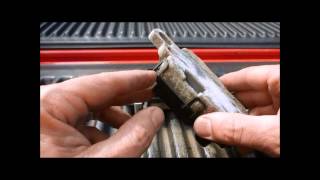
- On 2004-2014 Ford and GM trucks, inspect the frame-mounted Fuel Pump Driver Module (FPDM) for cracked aluminum and heavy corrosion before testing other components.
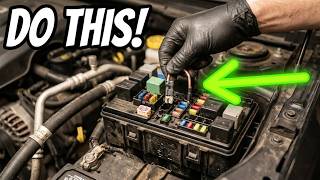
- For 2008-2016 Chrysler, Dodge, and Jeep vehicles, a P0629 code is frequently solved by installing a $40 TIPM bypass kit to route around a failed internal fuel pump relay.
What Does P0629 Mean?

Code P0629 means the Powertrain Control Module (PCM) detects voltage in the fuel pump control circuit that is higher than the specified range. This gives the fuel pump incorrect instructions, causing it to run continuously when the key is off or fail to run at all, leading to severe drivability issues or a no-start condition.
Technical definition: The SAE/OBD-II definition is "Fuel Pump 'A' Control Circuit High". The PCM or Fuel Pump Control Module (FPCM) detects voltage in the primary control circuit above its specified threshold. This fault sets when the PCM commands the circuit 'OFF' (low voltage) but senses high voltage instead, indicating a short to power or a failed component.
Can I Drive With P0629?
Yes, But With Caution. You can drive short distances, but it is a significant gamble. The engine stalls without warning, creating a serious safety hazard in traffic. A 'circuit high' fault often causes the fuel pump to run continuously, draining your battery and overheating the pump. Prolonged driving (over 50 miles) with a lean running condition causes engine misfires that destroy the catalytic converter, adding $800-$2500 to the repair bill. Diagnose and repair the issue immediately to avoid being stranded.
Common Causes

- Faulty or Damaged Wiring (Very Common) — Wires in the fuel pump circuit corrode, fray, or short to a power source. This frequently occurs in harnesses located under the vehicle near the fuel tank, which are exposed to moisture, salt, and road debris.
- Defective Fuel Pump Relay (Common) — The fuel pump relay is an electro-mechanical switch. The internal contacts weld together or stick in the 'closed' (on) position, causing continuous high voltage in the control circuit even when the PCM commands it off.
- Failing Fuel Pump Control Module (FPCM/FPDM) (Common) — Modern vehicles use a separate FPCM to precisely control pump speed. Frame-mounted modules are highly prone to corrosion and internal failure, causing them to send incorrect voltage or short out.
- Poor or Corroded Ground Connection (Common) — The fuel pump circuit requires a solid chassis ground. A loose or corroded ground strap at the control module or fuel pump causes high resistance, making the control circuit voltage appear artificially high to the PCM.
- Faulty Totally Integrated Power Module (TIPM) (Less Common) — On many Chrysler, Dodge, and Jeep vehicles, the fuel pump relay is integrated directly into the TIPM and cannot be serviced separately. Internal relay failure triggers P0629 and requires a TIPM bypass or replacement. 🎬 See this step-by-step guide for a permanent TIPM relay bypass.
- Defective Fuel Pump (Less Common) — An internal short circuit within the pump motor causes it to draw excessive current and feed voltage back into the control circuit. Suspect this only after ruling out wiring and relays.
- CAN Bus Communication Failure (Rare) — Damaged or corroded Controller Area Network (CAN) bus wiring leads to erroneous signals between the FPCM and the PCM, triggering the code.
- Faulty Powertrain Control Module (PCM) (Rare) — The PCM's internal driver circuit that controls the fuel pump relay fails. Consider this only after exhaustively eliminating wiring, grounds, and relays.
Symptoms

- Fuel Pump Runs Continuously / Drains Battery — A distinct humming from the fuel tank area continues even when the ignition is off, draining the battery overnight.
- Engine Stalls Intermittently — The engine starts and runs normally, then suddenly stalls while driving, creating a major safety hazard.
- Engine Won't Start or is Hard to Start — The engine cranks but fails to start, or takes much longer than usual to fire up due to incorrect fuel delivery during priming.
- Check Engine Light is On — The PCM illuminates the Malfunction Indicator Lamp immediately upon detecting the circuit high fault.
- Reduced Engine Power and Hesitation — The vehicle feels sluggish and hesitates under acceleration because the engine lacks a consistent fuel supply.
- Strong Fuel Smell — Excessive pump operation over-pressurizes the system, overwhelming the EVAP charcoal canister and venting raw fuel odors.
Diagnostic Flowchart
Tap your situation to follow the diagnostic path that matches what you're seeing on this code.
Common Fixes & Costs

- Replace Fuel Pump Relay — Parts: $15-$30, Labor: $0-$50, ~0.5 hr book time (DIY)
- Repair or Replace Damaged Wiring/Connectors — Parts: $10-$50, Labor: $150-$350, ~2.5 hr book time (Intermediate)
- Replace Fuel Pump Control Module (FPCM/FPDM) — Parts: $100-$300, Labor: $100-$200, ~1.0 hr book time (Intermediate)
- Clean or Repair Ground Connection — Parts: $5-$20, Labor: $50-$150, ~1.0 hr book time (DIY)
- Install TIPM Relay Bypass Kit — Parts: $25-$50, Labor: $50-$150, ~1.5 hr book time (Intermediate)
- Replace Fuel Pump Assembly — Parts: $300-$800, Labor: $250-$500, ~3.5 hr book time (Professional)
Used vs. New Parts: Buying Guide
When a used part is worth it: For expensive electronic modules like a TIPM on an older vehicle, a used part from a reputable salvage yard saves money. Never buy a used fuel pump or relay.
Donor-vehicle mileage cap: roughly under 100000 miles for the part to have meaningful remaining life.
Donor quality checklist:
- Verify the exact OEM part number matches perfectly.
- Inspect frame-mounted FPDMs for any signs of water damage, corrosion, or cracked housings.
- Choose parts from vehicles in dry climates to minimize pre-existing corrosion.
Decision logic:
- If The part is a fuel pump relay or wiring connector → Always buy new; the cost is low and reliability is critical.
- If The part is a Fuel Pump Driver Module (FPDM) on a Ford or GM truck → Buy a new OEM or high-quality aftermarket part. Used modules likely have hidden corrosion.
- If The part is an entire TIPM and the vehicle is over 10 years old → A used TIPM is reasonable if it includes a 90-day warranty and saves over 50% versus new.
Warranty tradeoff: Used parts offer 30-90 day warranties. New aftermarket parts range from 1 year to lifetime. New OEM parts carry a 1-2 year warranty.
Worst-case if a used part fails: $400-$800 if a used module fails, due to repeated labor charges and replacement costs.
What Happens If You Wait — Timeline
- 0-1 week: Code P0629 sets. The fuel pump runs continuously after shutoff, or the engine stalls intermittently. (MPG impact: 0-5%% · Added cost: $50-$150 (Dead battery and diagnostic fee))
- 1 week - 2 months: A continuously running fuel pump overheats. Constant high voltage stresses the Fuel Pump Control Module (FPCM), causing it to fail. (MPG impact: 5-10%% · Added cost: $200-$600 (Cost of a new FPCM or burned-out fuel pump))
- 2-6 months: The fuel pump fails completely, resulting in a no-start condition requiring a tow. (MPG impact: 10-15%% · Added cost: $700-$1500 (Towing, plus replacement of the fuel pump and original failed component))
- 6+ months: Prolonged lean conditions from inconsistent fuel delivery cause severe internal engine damage or destroy the catalytic converter. (MPG impact: 15-25%% · Added cost: $2000-$4000+ (Catalytic converter or internal engine repairs))
Cost of Not Fixing It
- Immediate: High risk of engine stalling in traffic. The fuel pump runs continuously, draining the battery and leaving you stranded. (Added cost: $100-$250 (Towing and battery replacement))
- 1-3 months: A continuously running fuel pump overheats and fails prematurely. Intermittent fuel delivery causes engine misfires. (Added cost: $550-$1300 (Fuel pump assembly replacement))
- 3+ months: Prolonged driving with misfires or a lean fuel mixture overheats and destroys the catalytic converter. (Added cost: $1200-$3500 (Catalytic converter replacement))
Diagnosis Steps

- Scan for Codes and Review Freeze Frame Data
Use an OBD-II scanner to confirm P0629 and check for related codes (e.g., P0628, U-codes). Review freeze frame data to identify the exact engine conditions when the fault triggered. Monitor live PIDs for 'Fuel Pump Commanded Status' and 'Battery Voltage'.
Tools: OBD-II Scanner (Beginner) - Swap the Fuel Pump Relay
Locate the fuel pump relay in the fuse box. Swap it with an identical relay from a non-critical system (like the horn). If the fuel pump stops running continuously or the vehicle starts normally, the original relay is stuck closed and must be replaced.
Tools: Owner's Manual, Fuse Puller (Beginner) - Perform a Detailed Visual Inspection
Inspect all wiring and connectors between the PCM, fuel pump relay, and the fuel pump/FPCM. Look for burnt wires, melted plastic housings, or green corrosion on connector pins. Pay close attention to harnesses under the vehicle near the fuel tank.
Tools: Flashlight, Inspection Mirror (Intermediate) - Test the Control Circuit Voltage
Using a digital multimeter and a wiring diagram, back-probe the fuel pump control circuit at the relay socket and fuel pump connector. A reading near battery voltage (12.5V+) when the circuit is commanded off confirms a short to power.
Tools: Digital Multimeter, Vehicle-specific Wiring Diagram (Advanced) - Perform a Voltage Drop Test on the Ground Circuit
Connect the positive multimeter lead to the ground pin at the fuel pump connector and the negative lead to the battery's negative terminal. With the pump commanded on, a reading above 0.5 volts indicates excessive ground resistance that must be repaired.
Tools: Digital Multimeter (Advanced) - Isolate the Circuit to Find the Short
If high voltage is present on the control wire, disconnect connectors one by one (Relay, FPCM, Fuel Pump) while monitoring voltage. The component you unplug right before the high voltage disappears is the source of the short.
Tools: Digital Multimeter (Advanced) - Test Fuel Pressure
Connect a fuel pressure gauge to the fuel rail service port. With Key On, Engine Off (KOEO), compare the priming pressure to manufacturer specs (typically 40-65 PSI). Excessively high pressure confirms a continuously running pump.
Tools: Fuel Pressure Gauge (Advanced) - Test the Fuel Pump Control Module (FPCM)
Use a bidirectional scan tool to command the pump on/off or to a specific duty cycle. If the module is unresponsive or the pump draws excessive amperage (over 12 amps for an in-tank pump), the module or pump requires replacement.
Tools: Advanced Scan Tool, Amp Clamp (Professional)
When This Code Triggers (Freeze-Frame Conditions)
- Engine Coolant Temp: 175-210°F (80-99°C) (Typically logged when the engine is fully warmed up and operating in closed-loop fuel control.)
- RPM: 1500-3000 RPM (Occurs during steady-state cruising when fuel demand is stable and the PCM expects predictable voltage readings.)
- Engine Load: 25-60% (Frequently sets under light to moderate engine load, rarely at idle or full throttle.)
- Vehicle Speed: 30-65 mph (48-105 kph) (Triggered during city or highway driving when the fuel pump's duty cycle is actively managed.)
Related Codes
- P0628 — Indicates 'Fuel Pump A Control Circuit Low'. P0629 is a short to power, while P0628 is a short to ground or an open circuit on the power feed side.
- P0627 — Indicates 'Fuel Pump A Control Circuit / Open'. This is a complete break in the circuit wiring. P0629 shows high voltage; P0627 shows 0 volts.
- U0109 — Indicates 'Lost Communication with Fuel Pump Control Module'. Seeing this alongside P0629 strongly suggests the FPCM, its power/ground supply, or the CAN bus wiring has failed.
Climate & Environmental Factors
- Road Salt and Humidity: Road salt and coastal humidity accelerate corrosion. This directly causes failures in frame-mounted components like Ford/GM Fuel Pump Driver Modules, their wiring connectors, and chassis ground points.
- Extreme Heat: High ambient temperatures increase electrical resistance in wiring and stress electronic components. A borderline FPCM or fuel pump motor often fails completely during a heatwave.
- Cold Weather: Cold weather exposes pre-existing voltage issues. A weak fuel pump struggling with a voltage drop fails to provide adequate pressure for a cold start, making symptoms obvious.
How to Talk to a Mechanic About This Code
Say this: "I have a P0629 code, and the main symptom is [a dead battery/pump running with key off, OR intermittent stalling, OR crank-no-start]. Please start by testing the fuel pump relay, checking for a short-to-power in the control circuit, and inspecting the FPDM or TIPM before quoting a full fuel pump replacement."
This signals that you understand the most common causes of P0629 are electrical. It directs the shop to perform a logical diagnosis instead of jumping to the most expensive conclusion.
Avoid saying:
- My car won't start, I think it's the fuel pump.
- My check engine light is on, can you just fix it?
- Just replace the fuel pump.
Questions to ask before authorizing the repair:
- What were the voltage readings on the fuel pump control circuit with the key on and off?
- Did you perform a voltage drop test on the ground circuit for the pump/module?
- Can you confirm the fuel pump relay was tested or swapped?
- If you recommend a fuel pump replacement, can you show me proof that the wiring, relay, and control module function correctly?
Where to Take It: Dealer vs Independent vs Chain
- Dealer:
A safe but expensive choice. Recommended if you suspect a known module failure specific to your vehicle's brand.
Best for: Vehicles under warranty, Known manufacturer-specific issues like a Chrysler TIPM or a GM FPFCM covered by a special policy, Complex electrical issues requiring module programming
Downsides: Highest labor rates, typically 1.5-2x more than independent shops., Dealers prefer replacing large assemblies (like a TIPM) rather than performing nuanced repairs. (Typical cost: +60% vs. baseline) - Independent Shop:
Best fit for most cases. An experienced independent technician efficiently diagnoses and repairs common causes (wiring, relay, FPDM) for a reasonable price.
Best for: Out-of-warranty vehicles where cost is a major factor., Common electrical faults like wiring shorts, bad grounds, or relay failures.
Downsides: Diagnostic skill varies greatly. You must find a shop with strong electrical diagnostic reviews., May lack access to manufacturer-specific software for module programming. (Typical cost: +0% vs. baseline) - Chain Shop:
AVOID for P0629 diagnosis. They are ill-equipped to accurately diagnose the root cause of a 'Circuit High' fault, making an expensive misdiagnosis highly likely.
Best for: Simple maintenance like oil changes or tire rotations.
Downsides: Technicians often lack advanced diagnostic tools and experience for complex electrical faults., High pressure to sell parts leads to misdiagnosis, like selling a fuel pump when only a relay is needed. (Typical cost: -10% vs. baseline)
When to Walk Away From the Repair
If the estimated repair cost for the P0629 fault exceeds 40-50% of your car's current private-party market value, seriously consider your options.
- Car worth $4000, fix is $1800: Walk away. The repair cost is 45% of the vehicle's value. It is not economically sound to invest this much into an older car for a single repair.
- Car worth $12000, fix is $1200: Fix it. The repair is only 10% of the car's value. This is a reasonable cost to maintain a more valuable vehicle.
- Car worth $7000, fix is $3000: Walk away. At 43% of the vehicle's value, this repair is too expensive. Put the money towards a down payment on a reliable car.
What Scan Tool You Need for This Code
Minimum: A scanner that reads codes, clears codes, and displays live data streams to view fuel pump control circuit voltage.
A basic $20 code reader only confirms the P0629 code exists. It cannot show live voltage data essential to determine if you have a short to power, a bad ground, or a faulty module.
Budget: BlueDriver Pro (~$100) — Connects to your smartphone and provides live data graphing. This allows you to visually track the fuel pump control circuit voltage to see if it is stuck high.
Mid-range: Foxwell NT604 Elite / XTOOL Anyscan A30M (~$150) — Includes basic bidirectional controls. You can command the fuel pump relay on and off directly from the tool to quickly test the relay and pump motor.
Professional: Autel MaxiCOM MK808S (~$500) — Offers full bidirectional control to command the fuel pump on/off and control its duty cycle. This lets you actively test every component in the circuit from the driver's seat.
Rent vs buy: For a one-time diagnosis, use an auto parts store Loan-A-Tool program for a free rental. Buy a scanner only if you perform diagnostics more than once a year.
How to Clear the Code After You Fix It
- Use an OBD-II scan tool to clear the P0629 code.
- Ensure the fuel tank is between 30% and 70% full.
- Perform a complete OBD-II drive cycle to allow readiness monitors to run.
Drive cycle (~30 minutes): A generic drive cycle includes: 1) Cold start (engine off for 8+ hours). 2) Idle for 2-3 minutes with electrical loads on. 3) Accelerate to 55 mph at a moderate, steady throttle. 4) Hold 55 mph for 5 minutes. 5) Decelerate to 20 mph without braking. 6) Repeat acceleration and steady cruise.
Readiness monitors affected: Catalyst Monitor, Oxygen (O2) Sensor Monitor, Evaporative (EVAP) System Monitor
Before emissions retest: drive at least 100 miles to fully set monitors.
Watch out for:
- Clearing the code just before an emissions test results in a 'Not Ready' failure.
- The code returns immediately if the root electrical fault was not properly repaired.
- The EVAP monitor requires specific fuel levels (30-70%) and ambient temperatures to run.
Will This Fail Emissions / State Inspection?
Yes — this code typically fails an OBD-II emissions inspection.
- California: An active P0629 code causes an automatic smog check failure. All required readiness monitors must be 'Ready'.
- New York: An illuminated Check Engine Light and stored P0629 code is an automatic failure during the OBD-II scan.
- Texas: Vehicles fail if the Malfunction Indicator Lamp (MIL) is commanded on. After repair, at most one monitor can be 'Not Ready'.
Most Commonly Affected Vehicles
- Ford F-150, Expedition, Explorer (2004-2011) — Notorious for Fuel Pump Driver Module (FPDM) failure. The aluminum module corrodes against the steel frame near the spare tire, cracking the housing. Replacements include standoffs to prevent recurrence.
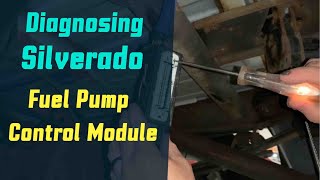
- Chevrolet / GMC Silverado, Sierra, Tahoe, Suburban (2007-2014) — Commonly caused by a failed Fuel Pump Flow Control Module on the frame rail. It is highly exposed to the elements, leading to corrosion and water damage in the module and harness connector.
- Jeep / Dodge / Chrysler Grand Cherokee, Durango, Town & Country, Grand Caravan (2008-2016) — The internal, non-serviceable fuel pump relay inside the Totally Integrated Power Module (TIPM) fails and sticks 'on'. This requires a TIPM replacement or an external relay bypass kit.
- Dodge / Ram Ram 2500/3500 with Cummins Diesel (2005-2009) — This code frequently points to a failing in-tank fuel lift pump or damaged wiring harness running to the tank.
- Hyundai / Kia Sonata, Optima, Sorento (2011-2018) — Triggered by failures in the fuel pump relay, which is sometimes integrated into the Intelligent Power Module (IPM), or by wiring shorts between the relay and the pump.
Manufacturer-Specific Notes
- Ford: The Fuel Pump Driver Module (FPDM) is a primary failure point. Mounted near the spare tire, its aluminum body corrodes against the steel frame, cracking the module. Updated replacement parts include spacers to create an air gap.
- General Motors (Chevy/GMC): The Fuel Pump Flow Control Module (FPFCM) is highly susceptible to corrosion. Water intrusion into the frame-mounted module or its connector is the leading cause of P0629 on GM trucks.
- Dodge / Ram / Chrysler / Jeep: These vehicles use a Totally Integrated Power Module (TIPM) with a non-serviceable internal fuel pump relay. When it sticks 'on', it causes P0629. Mopar offers an official bypass kit (CBWPR091AA) to fix this without replacing the entire TIPM.
Real Owner Stories
2008 Ford F-150 at 155K miles
Truck cranked but wouldn't start. After sitting, it started but stalled miles later. The fuel pump ran continuously with the key out.
What they tried:
- Initially suspected a bad fuel pump.
- Inspected the Fuel Pump Driver Module (FPDM) mounted to the frame rail above the spare tire.
- Found the FPDM heavily corroded with a crack in the aluminum housing.
Outcome: Replaced the FPDM with a Dorman part (590-001) that included rubber standoffs. The truck started immediately and the code cleared. Total cost: $70.
Lesson: On Ford trucks, always inspect the FPDM for corrosion before condemning the fuel pump. It is a well-known, cheap fix.
2011 Dodge Grand Caravan at 110K miles
Check engine light came on with P0629, and the battery died overnight. A humming noise came from the fuel tank area constantly.
What they tried:
- Swapped the fuel pump relay with the horn relay, but the problem persisted.
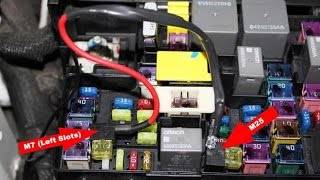
- Confirmed the fuel pump circuit was stuck on by pulling the M25 fuse in the TIPM, which stopped the pump.
Outcome: Installed an external relay bypass kit for $40 instead of a $1,000 TIPM replacement. This permanently fixed the battery drain and cleared the code.
Lesson: For Chrysler/Dodge/Jeep vehicles with a continuously running fuel pump, a faulty TIPM is the likely cause. A bypass kit is a permanent, cost-effective solution.
2009 Chevy Silverado at 180K miles
Experienced intermittent no-start conditions and stalling. P0629 was present alongside U0109 (Lost Communication with Fuel Pump Control Module).
What they tried:
- Replaced the fuel pump relay with no change.
- Inspected the Fuel Pump Driver Module (FPDM) on the frame rail and found the connector filled with green corrosion.
Outcome: Replaced both the FPDM and the pigtail connector. Replacing the corroded connector along with the module resolved the communication and circuit high faults.
Lesson: When P0629 pairs with a U-code like U0109, inspect the control module and its wiring. Always replace a corroded harness connector alongside the module.
How to Prevent This Code From Triggering
- Inspect and Clean Frame-Mounted Modules Annually (Once per year, especially before winter) — For Ford/GM vehicles, visually inspect the FPDM/FPCM. Clean the mounting surface and apply dielectric grease to the back of the module to create a moisture barrier.
- Apply Dielectric Grease to Connectors (Whenever a relevant connector is disconnected) — Apply a thin layer of dielectric grease to connector seals and pins. This seals out moisture and prevents corrosion that leads to high resistance.
- Regularly Wash the Vehicle's Undercarriage (Frequently during winter in 'Salt Belt' regions) — Road salt and brines corrode wiring, grounds, and modules. Washing the underbody removes corrosive agents and slows degradation.
Frequently Asked Questions
What is the most common mistake when diagnosing P0629?
The single biggest mistake is immediately replacing the fuel pump without performing a full electrical diagnosis. Many owners condemn the expensive pump when the actual fault is a $20 relay, a corroded ground wire, or a damaged connector. Always test the simple electrical components first.
My fuel pump keeps running and draining my battery. Is this P0629?
Yes, this is a classic symptom of a P0629 fault. The 'Circuit High' condition means voltage is applied to the fuel pump control circuit when it shouldn't be. This is most often caused by a fuel pump relay stuck in the 'on' position or a control wire shorted to a power source.
Can a bad gas cap cause a P0629 code?
No, a bad or loose gas cap will not cause a P0629 code. That issue relates to the evaporative emissions (EVAP) system. It triggers different codes, such as P0455 or P0457.
Is it safe to clear the P0629 code and keep driving?
You can clear the code, but it returns immediately if the underlying electrical problem isn't fixed. Ignoring it is risky because the engine stalls at any time, creating a dangerous traffic hazard. A continuous high voltage condition also burns out the fuel pump or control module, turning a simple fix into an expensive repair.
I just replaced my fuel pump and now I have a P0629, what happened?
First, re-check all electrical connectors to ensure they are fully seated, clean, and not damaged. Second, verify the wiring harness wasn't accidentally pinched or damaged during installation. Finally, the new pump might be defective out of the box or the incorrect part for your specific vehicle.
What does the 'A' in 'Fuel Pump A' mean?
The 'A' designates the primary fuel pump circuit. Some vehicles have multiple fuel pumps, such as a low-pressure lift pump in the tank and a high-pressure injection pump on the engine. The letter helps technicians identify exactly which circuit has the fault.
Why do I smell fuel with a P0629 code?
A strong fuel smell occurs if the 'circuit high' fault causes the fuel pump to run continuously while the engine is off. This over-pressurizes the fuel system and overwhelms the EVAP system's charcoal canister. The excess pressure forces raw fuel vapors to vent directly into the atmosphere.
How much does it cost to diagnose a P0629 code?
Most repair shops charge a diagnostic fee ranging from $125 to $200. This fee covers the technician's time to scan the vehicle, inspect the circuit, and perform electrical tests. It pinpoints the exact cause of the problem before replacing parts.
Key Takeaways
- P0629 indicates a high-voltage short in the fuel pump control circuit, which often causes the pump to run continuously and drain the 12V battery overnight.
- Never replace the $500+ fuel pump without first testing the $20 fuel pump relay and inspecting the wiring harness for shorts to power.
- On 2004-2014 Ford and GM trucks, inspect the frame-mounted Fuel Pump Driver Module (FPDM) for cracked aluminum and heavy corrosion before testing other components.
- For 2008-2016 Chrysler, Dodge, and Jeep vehicles, a P0629 code is frequently solved by installing a $40 TIPM bypass kit to route around a failed internal fuel pump relay.
Helpful Videos

The information in this article is provided for general reference and educational purposes only. Vehicle specifications, procedures, and part compatibility can vary by production date, trim level, and region. Always consult your vehicle's factory service manual and verify part numbers before purchasing or performing repairs. Safety-critical components such as airbags, seat belts, and braking systems should be installed by a qualified professional.
- 🎬 Helpful Videos
- What Does P0629 Mean?
- Can I Drive With P0629?
- Common Causes
- Symptoms
- Diagnostic Flowchart
- Common Fixes & Costs
- Used vs. New Parts: Buying Guide
- What Happens If You Wait — Timeline
- Cost of Not Fixing It
- Diagnosis Steps
- When This Code Triggers (Freeze-Frame Conditions)
- Related Codes
- Climate & Environmental Factors
- How to Talk to a Mechanic About This Code
- Where to Take It: Dealer vs Independent vs Chain
- When to Walk Away From the Repair
- What Scan Tool You Need for This Code
- How to Clear the Code After You Fix It
- Will This Fail Emissions / State Inspection?
- Most Commonly Affected Vehicles
- Manufacturer-Specific Notes
- Real Owner Stories
- 2008 Ford F-150 at 155K miles
- 2011 Dodge Grand Caravan at 110K miles
- 2009 Chevy Silverado at 180K miles
- How to Prevent This Code From Triggering
- Frequently Asked Questions
- What is the most common mistake when diagnosing P0629?
- My fuel pump keeps running and draining my battery. Is this P0629?
- Can a bad gas cap cause a P0629 code?
- Is it safe to clear the P0629 code and keep driving?
- I just replaced my fuel pump and now I have a P0629, what happened?
- What does the 'A' in 'Fuel Pump A' mean?
- Why do I smell fuel with a P0629 code?
- How much does it cost to diagnose a P0629 code?
- Key Takeaways
- 🎟️ Get 5% Off