

P0615 on 2012-2017 Honda Accord: Starter Relay Circuit Malfunction Causes and Fixes
This code indicates a problem in the starter control circuit. On a 2012-2017 Accord, this is most often caused by a failing starter motor or a bad starter cut relay. A failing starter is very common on these models, especially V6s which have a related TSB. Always test the battery and relay first, as they are cheaper and easier fixes than the starter.
- P0615 means there's a fault in the starting system's electrical circuit.
- Before buying an expensive starter, always check the simple things first: battery health, fuses, and the starter relay.
- On a 2012 Accord, you can easily swap the starter relay in the interior fuse box to test it.
- Be aware that starter motors are a known weak point on these cars and are a very likely cause of this code.
- If your car doesn't start, you will be stranded. Address this issue promptly.
What's Unique About the 2012-2017 Honda Accord

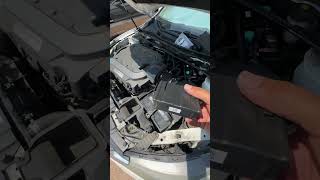
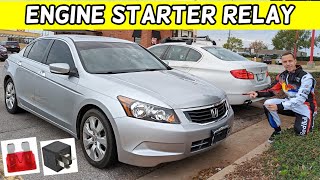
The 2012-2017 Accord spans two different generations with distinct starting systems. The 2012 model (8th generation) uses a single, standard 4-pin starter cut relay located in the interior fuse box, which is easy to swap. 🎬 Watch: How to find the 2012 starter relay location. The 2013-2017 models (9th generation) use a more complex system involving a 'Relay Module' or 'Relay Circuit Board' (Part No. 38830-T2A-A01) which integrates relays and is located under the dash. Furthermore, starters on this platform are a known high-failure item, often needing replacement. V6 models from 2013-2016 are subject to Technical Service Bulletin (TSB) 16-002 for a grinding noise and no-start condition caused by poor clearance between the starter and torque converter ring gear.
Generation note: This range covers the end of the 8th generation (2012) and the entire 9th generation (2013-2017). The location and type of starter relay are different. The 2012 model has a standard relay in the interior fuse box. The 2013-2017 models use a non-swappable 'Relay Module' (Part No. 38830-T2A-A01) that requires more involved testing. The starter replacement procedure also differs between the 2.4L and 3.5L engines, with the V6 models having a specific TSB (16-002) related to starter engagement.
Symptoms You May Notice
- Engine will not crank (no sound or a single click).
- Intermittent no-start condition, requiring multiple attempts.
- A single, audible click from the engine bay or interior fuse box when trying to start.
- Check Engine Light is on.
- Starter grinds or spins without engaging the engine (especially on V6 models).
- Replacing the starter motor without first testing the starter relay and checking fuses. The relay is a much cheaper and easier part to replace.
- Replacing the battery without performing a load test. A battery can show 12.6V but still be too weak to crank the engine under load.
- Assuming the PCM is bad. PCM failure is extremely rare and should only be considered after every other possibility is exhausted.
- On V6 models, replacing the starter without rotating the torque converter as specified in TSB 16-002, which can lead to a repeat failure.
Most Likely Causes

- Failing Starter Motor / Solenoid 🔴 High Probability Starters are a very common failure point on this generation of Honda Accord. For V6 models (2013-2016), Honda issued TSB 16-002 due to poor clearance between the starter gear and torque converter, causing grinding and no-starts. The engine has a tendency to stop in the same position, causing wear on one section of the torque converter's ring gear, which can damage the new starter if not addressed.
How to confirm: After confirming the relay and its circuit are good, perform a voltage drop test on the starter cables. A more direct method is to supply 12V directly to the starter's solenoid signal terminal; if the starter doesn't engage, it has failed. For V6 models, a grinding noise is a strong indicator of the TSB-related issue.
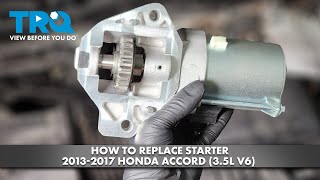
Typical fix: Replace the starter motor assembly. For V6 models, the fix per TSB 16-002 is to replace the starter (Part No. 31200-5G0-A04) and rotate the torque converter by one bolt hole to provide a fresh surface for the new starter gear. 🎬 Watch: How to replace the V6 starter per TSB 16-002.
Est. part cost: $150-$550 - Faulty Starter Cut Relay / Relay Module 🟡 Medium Probability Relays are electromechanical switches that wear out. This is the primary component the P0615 code is designed to monitor.
How to confirm: For the 2012 model, swap the starter relay (located in the interior fuse panel) with an identical relay from a non-critical circuit (like the horn or accessory power). If the car starts, the relay is bad. For 2013-2017 models, the relay is part of a circuit board (module), so a simple swap isn't possible. You must test for voltage at the module's connectors per the service manual.
Typical fix: For 2012, replace the faulty relay (e.g., Omron or Denso brand). For 2013-2017, replace the entire Relay Module (Part No. 38830-T2A-A01).
Est. part cost: $15-$130 - Weak Battery or Corroded Terminals 🟡 Medium Probability The 4-cylinder models are noted for having an undersized battery that may not last long. A recall was also issued for the battery management sensor on 2013-2016 models which could cause issues.
How to confirm: Test the battery voltage at rest (should be ~12.6V). Have a parts store perform a load test. Inspect the battery terminals and cable ends for any white or green corrosion. Clean them thoroughly with a wire brush.
Typical fix: Clean battery terminals and cable ends. If the battery fails a load test, replace it.
Est. part cost: $0-$310 - Blown Fuse ⚪ Low Probability
How to confirm: Check the fuses related to the starting system. This includes a main ignition fuse in the under-hood fuse box and a smaller control fuse, such as the 7.5A 'STARTER SIGNAL' fuse (No. 23) in the under-dash fuse panel. Visually inspect them or test for continuity with a multimeter.
Typical fix: Replace the blown fuse with one of the exact same amperage.
Est. part cost: $1-$5 - Wiring or Connector Issue ⚪ Low Probability
How to confirm: Visually inspect the wiring harness between the battery, fuse boxes, starter relay/module, and starter motor. Look for any signs of corrosion, chafing, or loose connections, especially at the starter solenoid signal wire connector and ground straps.
Typical fix: Repair the damaged section of wire or clean/replace the corroded connector.
Est. part cost: $5-$50
Rare But Worth Checking
- Faulty Powertrain Control Module (PCM): This is very rare. The PCM is the last component to suspect after all other parts of the circuit—wiring, fuses, relay, and starter—have been proven to be good.
- Faulty Ignition Switch: While possible, this is less common than a relay or starter failure. A failing ignition switch often presents other electrical issues as well and may not send the correct signal to the relay.
Diagnosis Steps

- Check the battery. Ensure it has a full charge (~12.6V) and that the terminals are clean and tight. Perform a load test.
- Inspect the relevant fuses. Check the 7.5A 'STARTER SIGNAL' fuse in the interior fuse box and the main starter/ignition fuses in the under-hood box.
- Locate the starter cut relay/module. For a 2012 model, it's in the interior fuse box. Try swapping it with a known-good, identical relay (e.g., horn relay).
- For 2013-2017 models, the relay is part of the under-dash Relay Module (38830-T2A-A01). Diagnosis is more complex and requires a multimeter to check for correct command voltage at the module's connectors when the ignition is turned to 'START'.
- Listen for a 'click' from the starter solenoid when trying to start. If the relay/module clicks but the starter doesn't (or just grinds), the problem is likely the starter or the main power cable to it.
- If the relay and fuses are good, inspect the wiring to the starter motor, especially the small signal wire, for corrosion or damage.
- If voltage is confirmed at the starter's signal wire and main power cable during a start attempt but the starter does not spin correctly, the starter motor has failed and needs to be replaced. If it's a V6, follow the TSB 16-002 procedure.
Parts You'll Likely Need
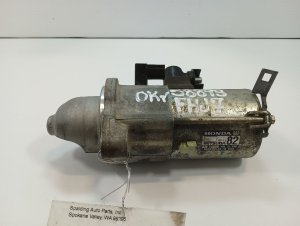
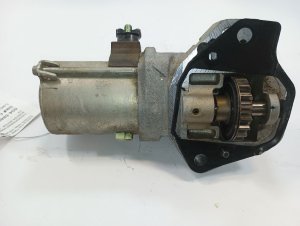
- Starter Motor
(OEM #31200-5G0-A04 (for V6 models per TSB 16-002))— This is a very common failure item on the 2012-2017 Accord and a primary cause of no-start conditions that can trigger P0615.
Trusted brands: Denso (OEM supplier), Bosch, Mitsuba, TRQ
OEM price range: $390-$550
Aftermarket price range: $130-$350 - Starter Cut Relay / Relay Module
(OEM #38830-T2A-A01 (for 2013-2017 models))— This is the component directly monitored by the P0615 code. For 2013-2017 models, it's an integrated module rather than a simple relay.
Trusted brands: Honda (OEM), Denso, Standard Motor Products, API
OEM price range: $40-$95
Aftermarket price range: $15-$50
Technical Service Bulletins (TSBs) & Recalls

- TSB 16-002: Addresses starter grinding or spinning at startup on 2013-2016 V6 models by replacing the starter and rotating the torque converter.
- TSB APAS03272017901: A dealer message noting an investigation into no-start conditions on 2016-2017 V6 models requiring battery replacement.
- TSB DLR MSG - RFP - (NHTSA ID: #10107306): Dealer message from July 2015 investigating 2013-2015 V6 Accords with no-start or grinding noise complaints.
Platform-Specific Known Issues
- TSB 16-002: Starter Grinds or Spins at Startup (V6 Models): For 2013-2016 V6 automatic models, Honda issued a TSB for an intermittent no-start or grinding noise. The cause is poor clearance between the starter gear and the torque converter ring gear. The fix requires replacing the starter and rotating the torque converter one bolt hole to create a new wear surface. This is a very common real-world cause for starter-related issues on these cars.
- 8th Gen (2012) vs. 9th Gen (2013-2017) Relay Differences: The 2012 model uses a simple, swappable 4-pin relay in the interior fuse box. The 2013-2017 models use a more complex, non-swappable 'Relay Module' (Part No. 38830-T2A-A01) under the dash that integrates multiple relays onto a circuit board, making diagnosis more involved.
Mechanic-Grade Diagnostic Values
- Starter Cut Relay Diagnosis Line (ST_RLY_1_TO_2) Voltage — expected: 2.3V - 2.7V for more than 300 milliseconds when the starter is activated.. Failure: Voltage outside of this range indicates an open, short, or improper signal in the starter cut relay circuit.
- Ground continuity at relay control circuit — expected: < 0.1 Ω. Failure: Higher resistance indicates a poor ground connection, which can prevent the relay from activating correctly.
- Torque Converter Bolt Torque (for TSB 16-002) — expected: 12 Nm (9 lb-ft). Failure: Incorrect torque can lead to flexplate or converter issues.
Scan Tool Commands That Help
- Honda HDS (Honda Diagnostic System): Clear DTCs / Reset ECM — This should be used after a repair is completed to clear the P0615 code and reset the ECM's learned values. An idle learn procedure may be required afterward.
- Honda HDS (Honda Diagnostic System): Jump SCS Line — This is a diagnostic step used to facilitate communication with the system to test circuit continuity between the PCM and the relay module.
Wiring & Ground Locations
- G101 — Mounted on the driver's side of the intake manifold, often under a bolt for the vacuum 'T'.. This is the main engine harness ground for the ECU/PCM and sensors. A poor connection here can cause a wide range of electrical issues, including problems with the starter control circuit.
- G501 — Behind the driver's side kick panel, near the A-pillar. It is a ring terminal bolted to the chassis.. This is a primary chassis ground. Many interior components, including parts of the starting and security systems, rely on this ground point. A loose or corroded G501 can cause intermittent electrical faults.
- Main Battery Ground Strap — Connects the negative battery terminal to the vehicle's frame/body, often under the battery tray, and also to the transmission case or engine block.. Corrosion or a break in this main ground is a very common cause of no-start conditions that can be misdiagnosed as a bad starter or relay. The section under the battery tray is particularly susceptible to corrosion.
- Relay Module Connector A (18P) / C (22P) - 2013+ models — Connected to the under-dash Relay Module (Part No. 38830-T2A-A01).. These connectors contain the specific pins for testing the starter cut relay circuits, such as the IG1 starter cut line and the START_DIAG wire, which must be checked for continuity and voltage during diagnosis.
Real Owner Repair Stories
- DriveAccord.net forum user (2014 Honda Accord EX-L V6) — Intermittent no-start condition. Sometimes it would start fine, other times it would take multiple attempts. The user would hear a click but the engine would not crank. The P0615 code was present.
❌ Tried (didn't work) Replacing the battery., Testing the starter relay module (it tested good).
✅ What actually fixed it The starter motor was failing intermittently. After replacing the starter motor, the no-start issue and the P0615 code were resolved. The user noted that since it was a V6, they also performed the TSB 16-002 procedure to rotate the torque converter as a preventative measure.
OEM Part Supersession History
31200-5G0-A02→31200-5G0-A04— This is the updated starter motor specified in TSB 16-002 to address the clearance issue with the torque converter ring gear on V6 models.
Heads up: While the older part may physically fit, using it is likely to result in a repeat failure (grinding, no-start) if the TSB procedure is not followed. The A04 part is the required corrective action.38830-T2A-A01→None found
Heads up: This Relay Module appears to be the consistent part number for all 2013-2017 Accord models. No supersessions were noted in searches.
Model Year Variations Within This Range
- 2013-2016 V6 A/T: These specific models are covered by TSB 16-002 for a starter-to-torque-converter clearance issue. The fix requires not only a new starter (31200-5G0-A04) but also rotating the torque converter one bolt hole. Failure to do so can cause a repeat failure.
Diagnostic Flowchart
Other Known Issues on This Vehicle
Issues unrelated to this code that are worth knowing about as an owner of this generation:
- VTC Actuator Rattle at Cold Start (K24 Engine) 🟠 Medium — Very common on 4-cylinder models. A loud, brief rattle (~2 seconds) occurs at startup, especially in cold weather. Can lead to timing chain issues if ignored. (Ref: TSB 16-012 (supersedes 09-010).)
- Excessive Oil Consumption (K24 'Earth Dreams' Engine) 🟠 Medium — Common on 2013-2015 4-cylinder models. Caused by carbon buildup on oil control rings, leading to oil burning at a rate of 1qt per 1,000-2,000 miles. (Ref: TSB 17-089 (and earlier versions) details the oil consumption test and piston/ring replacement procedure.)
- Starter Grinding / Failure (J35 V6 Engine) 🔴 High — Very common on 2013-2016 V6 models. Presents as a grinding noise or intermittent no-start. This is a distinct issue from the P0615 circuit fault but often leads to starter replacement. (Ref: TSB 16-002.)
- LED Daytime Running Light (DRL) Burnout 🟡 Low — Common on 2016-2017 models. The LED strip in the headlight assembly fails prematurely. It is an aesthetic issue but requires expensive headlight replacement. (Ref: TSB 19-042 (Warranty extension issued for this problem).)
- Undersized/Weak Stock Battery (4-Cylinder Models) 🟠 Medium — Frequently reported by owners. The small Group 51R battery can fail prematurely and cause various electrical gremlins or no-start conditions, sometimes mistaken for other faults.
Used vs. New Parts: Buying Guide for This Vehicle
When a used part is the smart pick: A used Relay Module (38830-T2A-A01) from a reputable salvage yard is a reasonable choice, as they are not a high-failure item and are purely electronic with no wear parts. A used starter motor is generally not recommended due to it being a known high-failure part on this platform.
Donor-vehicle mileage cap: roughly under 80000 miles for the part to have meaningful remaining life.
What to inspect on the donor part:
- For the Relay Module, ensure there is no water damage, corrosion on the pins, or physical damage to the casing or connectors.
- Check the donor vehicle's history if possible to ensure it wasn't involved in a flood or front-end collision that could have damaged under-dash electronics.
OEM-only on this vehicle (don't cheap out):
- Starter Motor (V6 Models): Due to the specific clearance issues addressed by TSB 16-002, it is highly recommended to use the OEM starter (Part No. 31200-5G0-A04) to ensure compatibility with the prescribed fix.
Aftermarket brands forum-validated for this vehicle:
- Denso (often the OEM supplier for Honda starters)
- Bosch
Brands owners have reported issues with on this vehicle:
- Avoid unbranded, 'white-box' starters from online marketplaces, as users on forums frequently report premature failure or fitment issues, which is especially critical on the V6 models with known clearance problems.
Real Owner Stories
Aggregated from forums and TSBs cited above. Mileages and costs reflect what owners reported in those sources.
2014 Honda Accord V6
Symptoms: car won't start unless multiple attempts
What fixed it: I also refused to buy a new starter just rotated the torque convertor one notch fixed it like new.
Source hint: Reddit r/accord thread: 'car won't start unless multiple attempts'
2015 Honda Accord V6
Symptoms: intermittent no-start or grinding noise
What fixed it: The TSB procedure is valid and works. Ive done it at least a dozen times. [The procedure involves replacing the starter and rotating the torque converter].
Source hint: Honda-Tech Forum: 'TSB 16-002'
2012 Honda Accord 4-Cylinder — ~125000 miles
Symptoms: Engine will not crank.
What fixed it: Replace the starter motor assembly, which is a common failure point on the 4-cylinder between 100-150k miles.
Source hint: YouTube: '2009 Honda Accord Starter Relay & Fuses' by Lehew
Related OBD-II Codes
Frequently Asked Questions
My 2014 V6 Accord is making a grinding noise when I try to start it. Is this related to P0615?
What is the difference in fixing the starter relay for a 2012 Accord versus a 2015 Accord?
I replaced the starter on my V6 Accord, but the P0615 code and no-start problem came back. What could be the cause?
Is the battery a common cause for P0615 on the 4-cylinder Accord?
Where is the 7.5A 'STARTER SIGNAL' fuse located on a 2012-2017 Accord?
Does TSB 16-002 apply to my 4-cylinder 2016 Accord?
Helpful Videos
Used OEM Parts in Stock
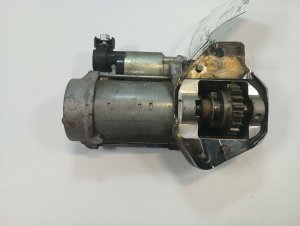


New Aftermarket Parts Available


The information in this article is provided for general reference and educational purposes only. Vehicle specifications, procedures, and part compatibility can vary by production date, trim level, and region. Always consult your vehicle's factory service manual and verify part numbers before purchasing or performing repairs. Safety-critical components such as airbags, seat belts, and braking systems should be installed by a qualified professional.
- Honda Accord:
- 🎬 Helpful Videos
- 🛍️ Shop This Part
- What's Unique About the 2012-2017 Honda Accord
- Symptoms You May Notice
- Most Likely Causes
- Rare But Worth Checking
- Diagnosis Steps
- Parts You'll Likely Need
- Technical Service Bulletins (TSBs) & Recalls
- Platform-Specific Known Issues
- Mechanic-Grade Diagnostic Values
- Scan Tool Commands That Help
- Wiring & Ground Locations
- Real Owner Repair Stories
- OEM Part Supersession History
- Model Year Variations Within This Range
- Diagnostic Flowchart
- Other Known Issues on This Vehicle
- Used vs. New Parts: Buying Guide for This Vehicle
- Real Owner Stories
- 2014 Honda Accord V6
- 2015 Honda Accord V6
- 2012 Honda Accord 4-Cylinder — ~125000 miles
- Related OBD-II Codes
- Frequently Asked Questions
- 🎟️ Get 5% Off