

P0606 on 2006-2012 Toyota RAV4: ECM Processor Fault or Something Else?
On the 2006-2012 RAV4 with the 2GR-FE V6, code P0606 almost never means the main computer (ECM) is bad. It's a notoriously misleading code usually triggered by a failing Air/Fuel Ratio (A/F) or Oxygen (O2) sensor. Replacing the correct sensor is a ~$150 DIY fix, versus a $1000+ unnecessary ECM replacement. Diagnosis is key to avoid this expensive mistake.
- Do NOT automatically replace the ECM for a P0606 code on this RAV4.
- The most likely cause is a faulty Air/Fuel Ratio (upstream) or Oxygen (downstream) sensor.
- Always check for other sensor-related trouble codes first; they are your biggest clue.
- Diagnose by graphing sensor data on a scan tool and checking for voltage drops or spikes.
- Using an OEM-brand sensor (like Denso) for replacement is highly recommended to ensure compatibility.
What's Unique About the 2006-2012 Toyota RAV4
For this generation of Toyota vehicles, the ECM's diagnostic logic is highly sensitive to voltage fluctuations from its sensors. An intermittent short or failure within an A/F or O2 sensor's heating circuit can send an electrical signal the ECM misinterprets as an internal processor failure, causing it to blame itself by setting a P0606 code. This is explicitly acknowledged in Toyota's own Technical Service Bulletin T-SB-0001-10 Rev1, which was updated specifically to include P0606 as a known side effect of sensor failure. This leads to one of the most common and expensive misdiagnoses for this vehicle, as documented in both official TSBs and countless owner complaints where the ECM was replaced needlessly.
Symptoms You May Notice
- Check Engine Light is on
- VSC (Vehicle Stability Control) and/or TRAC (Traction Control) and/or 4WD lights are on
- Vehicle enters 'limp mode' with reduced engine power
- Engine may stall, hesitate, or run rough
- Noticeable decrease in fuel economy
- Rough or jerky automatic transmission shifts
- Engine turns over but won't start in some cases
- Replacing the Engine Control Module (ECM) first. This is an extremely common and expensive mistake. As documented in owner complaints, forum threads, and even Toyota's own TSBs, a faulty sensor is the much more likely cause, and a new ECM will not fix the problem if the root cause is external.
Most Likely Causes
- Faulty Air/Fuel Ratio (A/F) or Oxygen (O2) Sensor 🔴 High Probability As documented in Toyota TSB T-SB-0001-10 Rev1, incorrect sensor operation is a known cause for this code. The ECM's self-diagnostics mistake erratic sensor voltage for an internal fault. This is the most common cause by a wide margin.
How to confirm: Scan for other codes; P0606 is often accompanied by sensor-specific codes like P0137, P0138, P0158, P2195, or P2197. Use a scan tool to graph the sensor's voltage in real-time. Look for erratic jumps, flat-lining, or dropouts, especially while wiggling the sensor's wiring harness. A technician on iATN confirmed this method, noting a voltage glitch on a scan tool when wiggling the B2S2 sensor wires.
Typical fix: Replace the faulty A/F or O2 sensor. The 3.5L V6 has four sensors (2 A/F, 2 O2). Diagnosis is key to replacing the correct one. Bank 1 is the firewall side, Bank 2 is the radiator side. Sensor 1 is upstream (A/F), Sensor 2 is downstream (O2).
Est. part cost: $80-$200 - Poor ECM Power or Ground Connection 🟡 Medium Probability Corrosion or looseness at the main ECM ground points or power connections can create unstable voltage, which the ECM can interpret as an internal failure. All modern ECUs are sensitive to grounding issues.
How to confirm: Visually inspect all ECM-related ground straps and power connections for corrosion or looseness. Perform a voltage drop test on the main power and ground circuits for the ECM to check for high resistance.
Typical fix: Clean all contact points with a wire brush until they are bright metal, apply dielectric grease, and re-secure the connections.
Est. part cost: $0-$10 - Failing Alternator or Weak Battery ⚪ Low Probability
How to confirm: With the engine off, a healthy battery should read above 12.4 volts (12.6V is ideal). With the engine running, the alternator should produce a steady voltage between 13.5 and 14.5 volts. Readings outside this range or a fluctuating voltage can cause the ECM to set false codes.
Typical fix: Replace the battery or alternator.
Est. part cost: $150-$400 - Faulty Engine Control Module (ECM) Very Low Probability
How to confirm: This should only be considered after all other possibilities (sensors, wiring, power/ground) have been exhaustively ruled out. The factory service manual for P0606 often has only one step: 'Replace ECM', which is dangerously misleading on this platform. This is the 'last resort' diagnosis.
Typical fix: Replace the ECM. This must be done by a professional or advanced DIYer as the new module needs to be programmed to the vehicle's VIN and keys.
Est. part cost: $800-$1200
Rare But Worth Checking
- Damaged Wiring Harness: A wire for an O2 sensor or the ECM itself could be rubbing against a bracket or the chassis, causing an intermittent short that triggers the code. A thorough visual inspection of the harnesses is worthwhile.
- Aftermarket LED Lighting: In some Toyota models, installing aftermarket LED tail lights has been known to cause a P0606 code. The different electrical load can send unexpected voltage feedback to the ECU, which it interprets as a fault.
Diagnosis Steps
- Scan for Codes: Use an OBD-II scanner. If P0606 appears with any other codes (especially for O2 or A/F sensors like P0138, P0158, P2195, P2197), diagnose those other codes first as per TSB T-SB-0001-10 Rev1.
- Check Freeze Frame Data: Analyze the freeze frame data for when the P0606 code was set. Look for abnormal voltage or impedance readings from any of the A/F or O2 sensors. A momentary spike or drop is a key clue.
- Inspect Power & Ground: Check that the battery terminals are clean and tight. Test the battery voltage (should be >12.4V off) and alternator output (should be 13.5V-14.5V running and stable).
- Inspect ECM Connections: Locate the ECM and inspect its main ground connections to the chassis. Ensure they are clean, tight, and free of corrosion. Key grounds are on the valve covers and cylinder heads.
- Live Data Graphing (The Key Step): Use a scanner to graph the voltage of all four A/F and O2 sensors. Wiggle the wiring harness for each sensor from the sensor to the main harness. If you see the voltage signal drop out, spike wildly, or flat-line, you have likely found the faulty component.
- Sensor Replacement: If a sensor is identified as faulty, replace it. Use a quality brand like Denso (the OEM supplier) to avoid issues with incompatible aftermarket parts. An offset 22mm oxygen sensor socket is highly recommended.
- Consider ECM Replacement: Only after confirming all sensors, wiring, and power/grounds are perfect should you consider replacing the ECM. This is the least likely cause and requires professional programming.
Parts You'll Likely Need
- Air/Fuel Ratio Sensor (Upstream, Bank 2 / Front)
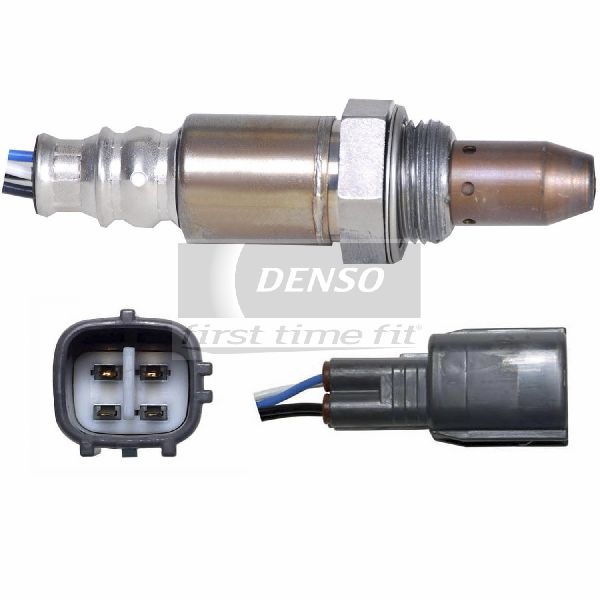
(OEM #Denso 234-9051)— The upstream A/F sensors (Sensor 1) are a common failure point. Bank 2 is on the radiator side of the engine and is generally easier to access than Bank 1.
Trusted brands: Denso
OEM price range: $150-$220
Aftermarket price range: $80-$150 - Air/Fuel Ratio Sensor (Upstream, Bank 1 / Rear)
(OEM #Denso 234-9049)— The upstream A/F sensors (Sensor 1) are a common failure point. Bank 1 is on the firewall side of the engine and is more difficult to access.
Trusted brands: Denso
OEM price range: $150-$220
Aftermarket price range: $80-$150 - Oxygen Sensor (Downstream)
(OEM #Denso 234-4261 (Confirm with VIN))— A failing downstream O2 sensor (Sensor 2) can also send erratic signals that trigger the P0606 code.
Trusted brands: Denso, NGK
OEM price range: $100-$180
Aftermarket price range: $50-$100
Related Codes That Often Appear With This One
- P0138 / P0158 — These codes for 'O2 Sensor Circuit High Voltage' for Bank 1 or Bank 2 are explicitly mentioned in TSB T-SB-0001-10 Rev1 as potential companions to P0606, strongly pointing to a sensor issue.
- P2195 / P2197 — These codes for 'A/F Sensor Signal Stuck Lean' for Bank 1 or Bank 2 are also cited in TSB T-SB-0001-10 Rev1 as a potential trigger for the P0606.
- P0137 — This code points to low voltage in the downstream O2 sensor circuit. A YouTube video shows a 2006 RAV4 owner successfully fixing both P0137 and P0606 by replacing the downstream O2 sensor.
- P0031, P0037, P0051, P0057 — These codes point specifically to faults in the heater circuits of the A/F and O2 sensors. A short or open in the heater is a well-documented trigger for a false P0606 on Toyotas.
Technical Service Bulletins (TSBs) & Recalls
- T-SB-0001-10 Rev1: 'MIL 'ON' DTC P0138, P0158 and/or P0606 Diagnostic Tips' - This is the key document. It was revised to add P0606, confirming that O2 sensor faults can cause the ECM processor code. It instructs technicians to diagnose any O2/AF sensor codes *before* addressing the P0606.
Platform-Specific Known Issues
- A known issue documented in Toyota TSB T-SB-0001-10 Rev1 explicitly links P0606 to incorrect Air Fuel Ratio Sensor or Oxygen Sensor operation.
- Owner complaint NHTSA ODI #10384313 documents a real-world case where a dealer replaced the ECM under warranty for a P0606, only for the code to return immediately, strongly indicating misdiagnosis.
- The 2GR-FE V6 engine has Bank 1 (rear, firewall side) and Bank 2 (front, radiator side). Accessing the Bank 1 sensors is significantly more difficult and may require removal of the intake plenum.
Mechanic-Grade Diagnostic Values
- A/F Sensor Heater Resistance — expected: 1.8 - 3.4 Ω at 20°C (68°F). Failure: Reading outside this range, or an open/infinite reading.
- Downstream O2 Sensor Heater Resistance — expected: 11 - 16 Ω at 20°C (68°F). Failure: Reading outside this range, or an open/infinite reading.
- O2 Sensor Heater Current (via advanced scan tool) — expected: Between 0.3 A and 2.0 A. Failure: Current below 0.3 A suggests an open circuit (triggers P0037/P0057); current above 2.0 A suggests a short circuit (triggers P0038/P0058).
- A/F Sensor Voltage (Live Data) — expected: Fluctuates, typically centered around 3.3V.. Failure: Voltage above 5.0V, flat-lining, or erratic spikes/drops when wiggling the harness.
- O2 Sensor Voltage (Live Data) — expected: Fluctuates between ~0.1V and ~0.9V.. Failure: Flat-lining at 0V or a high value, or erratic spikes/drops when wiggling the harness.
Hidden / Shadow Codes Worth Checking
- Mode $06 Data / Freeze Frame Data: This is not a specific code, but a diagnostic mode. Technicians have found that the key to diagnosing a false P0606 is to look at the freeze frame data for the moment the code was set. A momentary, out-of-range reading for an O2 sensor's resistance ('O2S Impedance') or voltage, lasting only a few frames of data, can trigger the P0606 without setting a persistent sensor code. (see via Requires an advanced OBD-II scan tool capable of viewing Mode $06 and detailed freeze frame records.)
Wiring & Ground Locations
- Engine to Chassis Grounds — There are two primary ground straps on top of the valve covers (one on the front, one on the rear) that connect the engine to the chassis near the strut towers.. A poor engine ground can cause unstable voltage references for all sensors, confusing the ECM.
- Engine Harness Grounds — There are grounding points for the main engine harness that attach to bosses on the side of the cylinder heads. One is located directly underneath the throttle body.. These are critical grounds for the sensors themselves. Corrosion or looseness here can directly cause the erratic signals that trigger a false P0606.
- ECM Ground (at ECM) — The ECM's own ground connection can be tested at its connector. Service information points to connector B30 for ground circuit checks.. A direct ground fault at the ECM itself will cause internal voltage monitoring to fail, correctly (in this case) setting a P0606.
- Battery to Chassis Ground — The main negative battery cable connects to the chassis, typically near the battery tray.. This is the primary ground for the entire vehicle's electrical system. Corrosion here can cause widespread, unpredictable issues, including false ECM codes.
Real Owner Repair Stories
- iATN Technician Post (Toyota with 2GR-FE engine (specific model not stated, but behavior matches RAV4 issue)) — MIL on with code P0606. Factory manual stated 'Replace ECM'.
❌ Tried (didn't work) Following the service manual's advice to replace the ECM was avoided due to experience.
✅ What actually fixed it Graphed the rear O2 sensors (B1S2 and B2S2) on a scan tool. While wiggling the wiring harness for the Bank 2 Sensor 2 (radiator side, downstream), a voltage glitch was observed on the graph. Replacing the B2S2 O2 sensor resolved the P0606 code permanently. - ToyotaNation Forum User (2007 Toyota Camry SE V6 (2GR-FE)) — Intermittent P0606 code, one stall.
❌ Tried (didn't work) Dealer replaced the ECM under extended warranty for $1186., The Check Engine Light with code P0606 returned the very same day.
✅ What actually fixed it The dealer, after the new ECM failed to fix the issue, diagnosed and replaced a faulty rear O2 sensor. This finally resolved the code. - YouTube video by 'Geks Authority' (2006 Toyota RAV4) — Check Engine, 4WD, and VSC lights all on.
✅ What actually fixed it The owner scanned the vehicle and found codes P0137 (O2 Sensor Circuit Low Voltage Bank 1 Sensor 2) and P0606. He replaced the downstream (Sensor 2) oxygen sensor, which fixed both codes and turned off all the warning lights.
When the Usual Fixes Don't Work
- While the overwhelming evidence points to external sensor or wiring faults, it is important to acknowledge that true ECM failure, while rare, is not impossible. If all external inputs (sensors), wiring, and power/ground circuits have been meticulously tested and confirmed to be in perfect working order, and the P0606 code persists, then the ECM itself becomes the final and most likely culprit. One owner on a forum noted that after replacing sensors, the code was ultimately resolved with an ECM replacement, but this is the exception, not the rule.
OEM Part Supersession History
89661-42F70, 89661-42F71, 89661-42F72→89661-42F73— Standard revision and update process by the manufacturer.
Heads up: When replacing an ECM, the part number must be an exact match or a verified compatible replacement for the original unit in the vehicle. Using a visually similar but functionally different ECM will not work.89661-42G00, 89661-42G01, 89661-42G02→89661-42G03— Standard revision and update process by the manufacturer.
Heads up: Different part number series exist for the same model year, likely due to variations in emissions (Federal/California) or features. VIN verification is mandatory.
Diagnostic Flowchart
Other Known Issues on This Vehicle
Issues unrelated to this code that are worth knowing about as an owner of this generation:
- Rupturing VVT-i Oil Line (Bank 1) 🔴 High — Common on 2006-2009 models with the original rubber/metal hose. Failure can lead to rapid oil loss and catastrophic engine failure. (Ref: Toyota Limited Service Campaign (LSC) 90K. The fix is to replace the original line with an all-metal line (Part No. 15772-31030).)
- Intermediate Steering Shaft Clunk 🟡 Low — Common on 2006-2008 models. Causes an audible clunk or pop from the steering column when turning. It is an annoyance but not typically a safety issue. (Ref: T-SB-0318-08 describes the issue and repair procedure, which involves replacing the intermediate shaft.)
- Water Pump Failure 🟠 Medium — Can occur on higher-mileage vehicles. A leak from the water pump weep hole is the first sign. Replacement on the V6 is labor-intensive.
- Excessive Oil Consumption 🟠 Medium — More prevalent on the 4-cylinder (2AZ-FE) but has been reported on some early V6 (2GR-FE) models. Often attributed to piston ring design.
- Rear Suspension Arm Failure (Recall) 🔴 High — Affects 2006-2011 models. Improperly tightened lock nuts on the rear tie rods could lead to rust, failure, and a sudden change in wheel alignment. (Ref: NHTSA Recalls 12V373000, 13V383000, 14V165000)
Used vs. New Parts: Buying Guide for This Vehicle
When a used part is the smart pick: A used ECM from a reputable recycler can be a cost-effective option IF the part number is an exact match and the seller can guarantee it is functional. For O2/A-F sensors, buying used is not recommended as their lifespan is finite and you have no way of knowing their remaining service life.
Donor-vehicle mileage cap: roughly under 100000 miles for the part to have meaningful remaining life.
What to inspect on the donor part:
- For an ECM, ensure there is no physical damage, corrosion, or water intrusion on the case or connectors.
- Confirm the donor vehicle had the exact same engine (2GR-FE) and model year.
- Ask the seller if the part number on the unit has been physically verified to match what you need.
OEM-only on this vehicle (don't cheap out):
- Engine Control Module (ECM): While remanufactured units from specialists like Flagship One or Flashmasters are viable, a random used ECM without VIN programming is a high-risk purchase. True OEM is the safest bet if not using a trusted remanufacturer.
- Air/Fuel Ratio Sensors: Due to their sensitivity and importance for fuel control, using OEM (Denso) is strongly advised to prevent performance issues or false codes.
Aftermarket brands forum-validated for this vehicle:
- Denso (for A/F and O2 sensors - they are the Original Equipment Manufacturer)
- NGK (for O2 sensors - widely regarded as a high-quality alternative to Denso).
Brands owners have reported issues with on this vehicle:
- Bosch: While a major brand, many Toyota enthusiasts and technicians report that Bosch sensors can sometimes cause inconsistent performance or premature failure on Toyota platforms.
- Unbranded/generic parts (e.g., from eBay/Amazon marketplaces or cheap online auto part stores): A forum user reported that a cheap O2 sensor from an online retailer did not fix the P0606 and caused an additional P0420 code, which was only resolved by using a quality part from a traditional auto parts store.
Real Owner Stories
Aggregated from forums and TSBs cited above. Mileages and costs reflect what owners reported in those sources.
2006 Toyota RAV4 3.5L V6
Symptoms: Check engine light on along with P0137 and P0606 codes.
What fixed it: Replacing the downstream oxygen sensor resolved all codes and warning lights.
Source hint: YouTube - Video Title: 'P0137 & P0606 fix | Toyota Rav4 | Oxygen sensor DIY'
2012 Toyota RAV4 3.5L V6
Symptoms: Dealer replaced the ECM for $1186, but the light returned immediately.
What fixed it: The dealer eventually found a bad O2 sensor was the actual cause.
Cost: $1186-$1200
Source hint: ToyotaNation Forum - Thread: 'P0606 Code' (Started May 23, 2012)
2006-2012 Toyota RAV4 3.5L V6
Symptoms: ECM was replaced under warranty for P0606, but the code returned immediately.
What fixed it: The report indicates the ECM replacement was a misdiagnosis, as the code returned.
Source hint: Owner complaint NHTSA ODI #10384313
2007-2017 Toyota Camry 3.5L 2GR-FE
Symptoms: Chasing a P0606 code that would not go away.
What fixed it: Identified a faulty aftermarket O2 sensor as the cause; replaced with a quality part.
Source hint: ToyotaNation Forum - Thread: 'P0606 Code' (Started May 23, 2012)
Related OBD-II Codes
Frequently Asked Questions
Does Toyota TSB T-SB-0001-10 Rev1 apply to my RAV4 V6?
Why are my VSC, TRAC, and 4WD lights on when the code is for the engine computer?
Which sensor should I check first on the 3.5L V6 to fix a P0606?
Is it true that the factory manual says I have to replace the ECM for this code?
Can I use any aftermarket O2 sensor to fix this issue?
How can I tell if a sensor is causing the P0606 without just replacing parts?
Helpful Videos

We Have This Part in Stock


The information in this article is provided for general reference and educational purposes only. Vehicle specifications, procedures, and part compatibility can vary by production date, trim level, and region. Always consult your vehicle's factory service manual and verify part numbers before purchasing or performing repairs. Safety-critical components such as airbags, seat belts, and braking systems should be installed by a qualified professional.
- Toyota RAV4:
- 🎬 Helpful Videos
- 🛍️ Shop This Part
- What's Unique About the 2006-2012 Toyota RAV4
- Symptoms You May Notice
- Most Likely Causes
- Rare But Worth Checking
- Diagnosis Steps
- Parts You'll Likely Need
- Related Codes That Often Appear With This One
- Technical Service Bulletins (TSBs) & Recalls
- Platform-Specific Known Issues
- Mechanic-Grade Diagnostic Values
- Hidden / Shadow Codes Worth Checking
- Wiring & Ground Locations
- Real Owner Repair Stories
- When the Usual Fixes Don't Work
- OEM Part Supersession History
- Diagnostic Flowchart
- Other Known Issues on This Vehicle
- Used vs. New Parts: Buying Guide for This Vehicle
- Real Owner Stories
- 2006 Toyota RAV4 3.5L V6
- 2012 Toyota RAV4 3.5L V6
- 2006-2012 Toyota RAV4 3.5L V6
- 2007-2017 Toyota Camry 3.5L 2GR-FE
- Related OBD-II Codes
- Frequently Asked Questions
- 🎟️ Get 5% Off