

OBD-II Code P2197: Engine Running Lean on Bank 2
What P2197 means, why it triggers, and how to fix it
- Code P2197 indicates Bank 2 is running lean (too much air, not enough fuel), and the upstream oxygen sensor is stuck reporting this imbalance.
- Vacuum leaks cause over 50% of P2197 codes, making a $150 professional smoke test the most cost-effective first diagnostic step.
- Driving more than 200 miles with an active P2197 code risks melting the catalytic converter, turning a minor repair into a $2,000+ replacement.
- Never replace the oxygen sensor without checking live data; if Bank 2 fuel trims exceed +15%, the sensor is working correctly and reporting a genuine air/fuel imbalance.
What Does P2197 Mean?

The Powertrain Control Module (PCM) detects too much oxygen in the exhaust on Bank 2. The engine is running 'lean'—getting too much air and not enough fuel. The Bank 2 Sensor 1 oxygen sensor signal is stuck indicating a lean condition the PCM cannot correct.
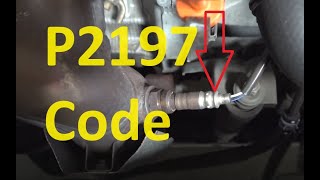
Technical definition: The SAE definition for P2197 is "O2 Sensor Signal Biased/Stuck Lean (Bank 2 Sensor 1) 🎬 Watch: A breakdown of common causes and fixes for P2197.". The sensor's voltage is stuck in a low-voltage state (below 0.45V for a narrowband sensor), signaling a persistent lean mixture that exceeds the PCM's fuel trim adjustment limits.
Can I Drive With P2197?
Yes, But With Caution. You can drive short distances, but diagnose and repair it promptly. Ignoring this code causes poor fuel economy, rough running, and failed emissions tests. A persistent lean condition burns hotter, causing severe internal engine damage like burned valves and melted catalytic converters. Driving over 200 miles risks turning a $50 vacuum leak repair into a $2,000 exhaust system replacement.
Common Causes

- Vacuum Leaks (Including PCV System) (Very Common) — Cracked vacuum hoses, deteriorated intake manifold gaskets, or a stuck-open PCV valve allow unmetered air into the engine. This is the most frequent cause of a lean condition.
- Exhaust Leaks (Common) — A leak in the exhaust manifold or pipes before the O2 sensor pulls outside oxygen into the exhaust stream. The sensor reads this extra oxygen and incorrectly reports a lean mixture.
- Faulty Oxygen (O2) Sensor (Common) — The Bank 2, Sensor 1 oxygen sensor fails due to carbon contamination or internal heater element failure, causing it to send a false, fixed lean signal to the computer.
- Fuel Delivery Issues (Less Common) — A weak fuel pump, clogged fuel filter, or dirty fuel injectors on Bank 2 starve the cylinders of fuel, creating a true lean condition.
- Dirty or Faulty Mass Airflow (MAF) Sensor (Rare) — A dirty MAF sensor under-reports incoming air, causing the computer to inject too little fuel. This usually triggers lean codes on both banks (P2195 and P2197).
- Wiring and Connector Issues (Rare) — Melted wiring, corroded pins, or a short in the O2 sensor's circuit mimics a failed sensor.
- Faulty Powertrain Control Module (PCM) (Very Rare) — The PCM itself fails or has software calibration issues, causing it to misinterpret the O2 sensor signal.
Symptoms
- Check Engine Light On — An illuminated Check Engine Light (Malfunction Indicator Lamp) on your dashboard.
- Rough or Unstable Idle — The engine runs rough, shakes, or stumbles at stops, especially after a cold start.
- Reduced Engine Power and Hesitation — The vehicle feels sluggish and hesitates during acceleration.
- Poor Fuel Economy — The vehicle burns more gas because the PCM dumps extra fuel to compensate for the perceived lean condition.
- Stalling — The engine stalls at low speeds or when coming to a complete stop.
- Engine Misfires (also visible on scanner) — The lean condition causes the engine to misfire, triggering secondary codes like P0300 or P0302.
Diagnostic Flowchart

Tap your situation to follow the diagnostic path that matches what you're seeing on this code.
Common Fixes & Costs
- Repairing a Vacuum Leak (e.g., PCV hose) — Parts: $10 - $75, Labor: $125 - $350, ~1.5 hr book time (DIY)
- Repairing an Exhaust Leak — Parts: $20 - $150 (gasket, putty), Labor: $150 - $400 (welding may be more), ~2 hr book time (Intermediate)
- Replacing Oxygen (O2) Sensor (Bank 2, Sensor 1) — Parts: $150 - $400, Labor: $125 - $250, ~1.2 hr book time (Intermediate)
- Replacing Mass Airflow (MAF) Sensor — Parts: $150 - $400, Labor: $50 - $150, ~0.7 hr book time (DIY)
- Replacing a Clogged or Faulty Fuel Injector — Parts: $100 - $500 (per injector), Labor: $200 - $500 (plus diagnostic time), ~3.5 hr book time (Professional)
- Diagnostic Service — Parts: $0, Labor: $155 - $195 (for initial diagnosis), ~1.5 hr book time (Professional)
DIY vs Professional
- Repairing a Vacuum Leak — Beginner:
Tools: Flashlight, pliers, screwdriver set, hose pick. - Replacing Oxygen (O2) Sensor — Beginner:
Tools: Jack and jack stands, safety glasses, penetrating oil, ratchet with extensions, specialized O2 sensor socket set (7/8" or 22mm), torque wrench. - Repairing an Exhaust Leak — Beginner:
Tools: Socket set, torque wrench, gasket scraper, new gaskets. If welding is needed, a welder and safety equipment are required. - Replacing Mass Airflow (MAF) Sensor — Beginner:
Tools: Screwdriver or Torx bit set, MAF sensor cleaner. - Replacing a Fuel Injector — Beginner:
Tools: Socket set, torque wrench, fuel line disconnect tools, new O-rings and seals.
Used vs. New Parts: Buying Guide
When a used part is worth it: Used parts for this repair are not recommended. Oxygen sensors are wear items with a finite lifespan, and a used sensor has limited life remaining or is faulty already. A new aftermarket or OEM sensor is a better investment.
Donor-vehicle mileage cap: roughly under 40000 miles for the part to have meaningful remaining life.
Donor quality checklist:
- Verify the donor vehicle had low mileage and was not scrapped for an engine or emissions-related failure.
- Match the part number exactly; sensors are calibrated for specific engines and years.
- Avoid sensors from rust-belt vehicles, as corrosion damages the housing and wiring.
Decision logic:
- If The part is an electronic sensor with a known wear-out failure mode, like an O2 sensor. → Buy new. The risk of premature failure and repeat labor costs with a used part outweighs the initial savings.
- If The vehicle is older (>150k miles) and the budget is extremely tight. → A used sensor from a low-mileage wreck is a gamble, but serves as a temporary solution. Expect a shorter lifespan.
- If The part is a simple mechanical component like a vacuum hose. → New is always preferred as used rubber is aged, but a used hose in good condition is acceptable if a new part is unavailable.
Warranty tradeoff: Used parts typically have a 30-day warranty at best. New aftermarket sensors come with a 1-year to limited lifetime warranty. New OEM parts carry a 1-2 year warranty.
Worst-case if a used part fails: $200 - $400 if a used sensor fails shortly after installation, primarily due to the cost of repeated diagnostic and labor charges.
What Happens If You Wait — Timeline
- 0-2 weeks: Check Engine Light (MIL) is on with code P2197 stored. Often no other noticeable symptoms. (MPG impact: 0-5%% · Added cost: $0)
- 2 weeks - 3 months: A consistent 5-10% drop in fuel economy. A slight rough idle becomes apparent. The vehicle automatically fails an emissions test. (MPG impact: 5-10%% · Added cost: $30 - $100 in wasted fuel)
- 3-6 months: A sustained lean condition causes higher combustion temperatures, overheating the catalytic converter's internal substrate and reducing its efficiency. (MPG impact: 10-15%% · Added cost: $1200 - $2800 (risk of catalytic converter damage requiring replacement))
- 6+ months: Extreme heat from the lean mixture causes severe internal engine damage, including burned exhaust valves or a melted catalytic converter substrate. (MPG impact: 15-25%% · Added cost: $2500 - $7000+ (cost of catalytic converter plus potential engine repairs))
Cost of Not Fixing It
- 0-1 month: Reduced fuel economy by 5-15%, rough idle, and hesitation. Failed emissions test. (Added cost: $20 - $80 in wasted fuel.)
- 1-6 months: A persistent lean condition causes higher combustion temperatures, overheating and damaging the catalytic converter substrate. (Added cost: $1200 - $2800 for catalytic converter replacement.)
- 6+ months: Extreme heat from a long-term lean condition burns exhaust valves, damages pistons, or blows a head gasket, leading to major internal engine damage. (Added cost: $2500 - $7000+ for engine repairs or replacement.)
Diagnosis Steps

- Read Codes, Freeze Frame, and Check TSBs
Use an OBD-II scanner to confirm P2197. Scrutinize freeze frame data for engine conditions when the code set. Note any other codes (e.g., P0174, P2195, P0300). Check manufacturer Technical Service Bulletins (TSBs) for known issues related to your specific vehicle year and model.
Tools: OBD-II Scanner, Online TSB Database (Beginner) - Analyze Live Data: Fuel Trims and O2 Voltage
Graph the voltage of Bank 2, Sensor 1. If it is stuck below 0.45V while Bank 1 switches normally, the fault is on Bank 2. Look at Short-Term (STFT) and Long-Term (LTFT) Fuel Trims. If the combined fuel trim for Bank 2 exceeds +15%, the PCM is adding fuel to correct a real lean condition, suggesting a vacuum leak or fuel issue, not a bad sensor.
Tools: OBD-II Scanner with Live Data (Intermediate) - Thorough Visual Inspection
Inspect the engine bay for cracked vacuum hoses, disconnected lines, or dry rot around the PCV valve and intake manifold. Check the exhaust manifold on Bank 2 for black soot marks indicating a pre-sensor exhaust leak. Inspect the O2 sensor wiring for melting or corrosion.
Tools: Flashlight, Inspection Mirror (Beginner) - Perform a Smoke Test
If live data shows high fuel trims but no leak is visible, a smoke test is the definitive method. A machine fills the intake or exhaust system with low-pressure smoke, revealing hairline cracks in gaskets or hoses.
Tools: Automotive Smoke Machine (Advanced) - [PRO TIP] Forced Rich Test (Propane Method)
Introduce a small amount of unlit propane into the intake system vacuum hose. While watching live data for Bank 2 Sensor 1, the voltage should immediately jump above 0.8V. If the voltage does not change, the sensor or its wiring is faulty. If it does change, the sensor is working, and you have a legitimate lean condition.
Tools: OBD-II Scanner with Live Data, Propane Torch (unlit) (Advanced) - Test Fuel Pressure
Connect a fuel pressure gauge to the fuel rail's test port. With the key on, engine off (KOEO), pressure should meet the manufacturer's specification (typically 35-60 PSI). A low reading points to a weak fuel pump or clogged filter.
Tools: Fuel Pressure Gauge, Vehicle-specific service manual (Advanced) - Test O2 Sensor Heater Circuit Resistance
Disconnect the O2 sensor connector. Using a multimeter set to Ohms (Ω), measure the resistance between the two heater circuit pins. A normal reading is typically between 2 and 30 Ohms. An infinite reading (OL) indicates an open circuit, requiring sensor replacement.
Tools: Multimeter, Vehicle-specific wiring diagram (Advanced) - Test the O2 Sensor Circuit and Waveform
Verify battery voltage on the heater circuit and a good ground. Check for continuity on the signal wire back to the PCM. Use an oscilloscope to view the sensor's waveform. A healthy sensor produces a fast-switching wave; a flat-lined pattern confirms it needs replacement.
Tools: Multimeter, Oscilloscope, Vehicle-specific wiring diagram (Advanced) - Test Fuel Injectors
If fuel pressure is good, focus on the injectors on Bank 2. Use a mechanic's stethoscope to listen to each injector; they should produce a consistent, sharp clicking sound. A silent injector is clogged or failing.
Tools: Mechanic's Stethoscope, Injector balance tester (Advanced)
When This Code Triggers (Freeze-Frame Conditions)
- Engine Coolant Temp: 180-200°F (The code sets when the engine is fully warmed up and operating in closed-loop fuel control.)
- RPM: 1500-2500 (Triggered during steady-state cruising or light acceleration, rarely at idle or heavy load.)
- Engine Load: 20-60% (The fault registers under a moderate and consistent engine load.)
- Vehicle Speed: 35-65 mph (Consistent highway or arterial road speeds are common conditions for this code.)
Related Codes
- P2195 — The identical code for Bank 1. Seeing both P2195 and P2197 indicates a global engine issue like a MAF sensor, low fuel pressure, or a large vacuum leak.
- P0174 — A general code for 'System Too Lean on Bank 2'. P0174 means fuel trims are maxed out, while P2197 means the sensor is stuck and no longer switching. They often appear together.
- P0171 — The general lean code for Bank 1. Seeing it with P2197 points to a problem affecting both sides of the engine.
- P2198 — The opposite code: 'O2 Sensor Signal Biased/Stuck Rich (Bank 2 Sensor 1)'. Seeing P2197 and P2198 together points to a confusing wiring issue, a short in the harness, or a failing PCM.
Climate & Environmental Factors
- Cold Climates: Cold temperatures make rubber and plastic components brittle and prone to cracking, increasing the likelihood of vacuum leaks. Metal exhaust components contract more when cold, exposing small cracks or bad gasket seals.
- High Altitude: At higher altitudes, the air is less dense. A pre-existing unmetered air leak becomes more pronounced, pushing the system beyond its correction threshold and triggering a lean code.
- High Humidity: High humidity accelerates corrosion on electrical connectors, including the O2 sensor harness, leading to poor signal quality or high resistance.
How to Talk to a Mechanic About This Code
Say this: "I have a P2197 code, indicating a stuck lean condition on Bank 2. I'd like to schedule a diagnostic. Please start by checking fuel trims and observing the live O2 sensor data to confirm if it's a real lean condition or a sensor failure. I'd also like you to check for vacuum or exhaust leaks before recommending a sensor replacement."
This signals you understand the common causes. It directs the technician toward a logical diagnostic process (checking data and for leaks) rather than just replacing the part associated with the code.
Avoid saying:
- 'Just fix whatever's wrong'
- 'My check engine light is on, can you look at it?' (too vague — invites upsell)
- 'Whatever you recommend'
- 'I think it's the O2 sensor, just replace it.'
Questions to ask before authorizing the repair:
- Did you perform a smoke test to check for vacuum and exhaust leaks?
- What were the long-term and short-term fuel trim readings for Bank 2 at idle and at 2500 RPM?
- Did you test the O2 sensor's response by creating a rich or lean condition? What was the result?
- Will you provide a printout of the freeze-frame data and the final diagnostic report?
- What is the warranty on this specific repair, covering both parts and labor?
Where to Take It: Dealer vs Independent vs Chain
- Dealer:
Recommended if the vehicle is under warranty or has a known TSB. Otherwise, a qualified independent shop is more cost-effective.
Best for: Vehicles still under powertrain or emissions warranty., Complex, manufacturer-specific issues (e.g., Ford Transit water leak TSB)., When you suspect a PCM software update is needed.
Downsides: Typically the highest labor rates., Quicker to replace parts than to diagnose elusive issues like intermittent vacuum leaks. (Typical cost: +50% vs. baseline) - Independent Shop:
Best fit for most situations. A good independent shop with experienced diagnosticians and a smoke machine effectively and affordably solves a P2197 code.
Best for: Out-of-warranty vehicles where cost is a factor., Diagnosing common and well-understood codes like P2197., Building a long-term relationship with a trusted mechanic.
Downsides: Quality and diagnostic capabilities vary greatly. Look for ASE certifications and good reviews., Lacks access to the very latest manufacturer-specific tools or software. (Typical cost: +0% vs. baseline) - Chain Shop:
Use with caution. Acceptable for a simple O2 sensor replacement if you are 100% certain that is the problem. AVOID for initial diagnosis, as they lack the advanced diagnostic experience to differentiate between a bad sensor and a vacuum/fuel issue.
Best for: Simple, straightforward part replacements when the diagnosis is certain.
Downsides: Technician skill and diagnostic equipment are inconsistent., Business model creates pressure for upselling unnecessary services (e.g., selling an O2 sensor without proper diagnosis). (Typical cost: -10% vs. baseline)
When to Walk Away From the Repair
If the estimated repair cost for the P2197 code (and any related necessary repairs) exceeds 40-50% of your car's private-party value, seriously consider selling or trading it in instead of repairing it.
- Car worth $4000, fix is $2000: Walk away. The repair cost is 50% of the car's value. It's not financially sound to invest this much into an older vehicle that has other issues.
- Car worth $12000, fix is $1800: Fix it. The repair cost is only 15% of the vehicle's value, which is well below the threshold.
- Car worth $2500, fix is $1500: Walk away. The repair cost is 60% of the car's value. This is a clear case where the repair is not worth the investment.
What Scan Tool You Need for This Code
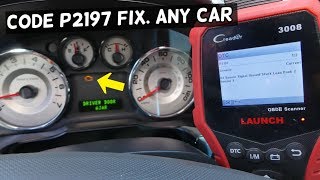
Minimum: A code reader that displays live data streams and freeze frame data. This is essential to see what the O2 sensor is doing in real-time and what the engine conditions were when the code was set.
A basic $20 code reader only gives you the P2197 code itself. It won't let you view the live O2 sensor voltage or fuel trims, which are the critical data points needed to determine if the sensor is bad or if it's correctly reporting a different problem (like a vacuum leak).
Budget: Bluetooth OBD2 Dongle (e.g., BlueDriver, BAFX) with a compatible smartphone app (e.g., Torque, OBD Fusion) (~$30) — Reads and clears codes, shows freeze frame data, and graphs live data for O2 sensor voltage and fuel trims. This is the minimum required to properly start diagnosing P2197.
Mid-range: Foxwell NT510 Elite (~$200) — Includes all the features of the budget pick but adds manufacturer-specific diagnostics and bi-directional controls (active tests). This allows you to command certain vehicle functions (like the fuel pump) to test their operation.
Professional: Autel MaxiCOM MK808 / MK808BT (~$450-600) — Offers full OE-level diagnostics for all systems, advanced bi-directional control, and a more professional interface. It performs a wide range of service functions and provides comprehensive data analysis.
Rent vs buy: For a one-time diagnosis, auto parts stores read your codes for free. However, they use basic readers and won't provide crucial live data. If you plan to do the diagnosis yourself, buying a budget-tier scanner is a worthwhile investment. Renting is not a common option for scanners with live data capabilities.
How to Clear the Code After You Fix It
- Use an OBD-II scan tool to clear the code.
- Perform a complete drive cycle to allow the readiness monitors to reset.
- Re-scan for any pending or current codes to confirm the fix.
Drive cycle (~20 minutes): A generic OBD-II drive cycle includes a cold start, a few minutes of idling, followed by mixed city/highway driving including steady speeds and acceleration. 1) Cold start and idle for 2-3 minutes. 2) Drive at a steady speed of around 55 mph for 5-10 minutes. 3) Perform several moderate accelerations and decelerations. 4) Allow the vehicle to cool down completely and repeat if necessary.
Readiness monitors affected: Oxygen Sensor Monitor, Catalyst Monitor, Heated Oxygen Sensor Monitor
Before emissions retest: drive at least 50 miles to fully set monitors.
Watch out for:
- Disconnecting the battery clears the code but resets all readiness monitors to 'Not Ready', causing an automatic emissions test failure.
- The code returns if the underlying issue (e.g., a vacuum leak) was not correctly identified and repaired.
- Not completing a full drive cycle before an emissions test results in a 'Not Ready' status and a failed test.
Will This Fail Emissions / State Inspection?
Yes — this code typically fails an OBD-II emissions inspection.
- California: An active P2197 code is an automatic failure of the smog check. All readiness monitors must be set to 'Ready', requiring a full drive cycle after repairs before re-testing.
- New York: The NYS DMV emissions inspection includes an OBD-II scan. An illuminated Check Engine Light and a P2197 code result in an automatic inspection failure.
- Texas: In counties requiring emissions testing, an illuminated Check Engine Light from code P2197 causes an automatic failure. Drive 50-100 miles to reset the readiness monitors before re-inspection.
Most Commonly Affected Vehicles

- Ford F-150, Explorer, Edge, Mustang, Transit (2004-2018) — Often caused by a deteriorated PCV vacuum hose elbow. On 2015-2018 Transits, a cowl leak allows water onto the engine, causing this code (see TSB 19-2091).
- Chevrolet / GMC Silverado, Tahoe, Sierra (2016-2023) — Premature failure of the upstream oxygen sensors is a very common cause for the P2197 code on these GM trucks.
- Toyota Tundra, Highlander, Tacoma, Sequoia (2005-2022) — Relates to a failing Air/Fuel (A/F) ratio sensor. On the 4.7L V8 Tundra, a failing sensor shows erratic voltage or a sine wave pattern on a scanner.
- BMW 3-Series, 5-Series, X3, X5 (2006-2013) — Vacuum leaks from brittle plastic components in the intake (intake boot) and crankcase ventilation (CCV) systems are an extremely frequent cause.
- Audi / Volkswagen A4, A6, Jetta, Passat (2005-2012) — Faulty fuel injectors and failures in the PCV system (oil separator) are common causes for this code.
- Nissan Titan, Rogue, Altima (2004-2015) — Appears due to failing upstream oxygen sensors or intake manifold gasket leaks. Bank 2 is the passenger side on these V-engines.
- Honda Pilot, Odyssey, Ridgeline (2015-2023) — Triggered by failing Air/Fuel ratio sensors or issues with fuel delivery. Some models were part of a recall for faulty low-pressure fuel pumps.
- Kia / Hyundai Optima, Sonata, Sorento (2008-2024) — Diagnosis involves checking for poor connections, loose sensor installation, or exhaust leaks before condemning the sensor.
Manufacturer-Specific Notes
- Ford: A common cause is the PCV vacuum hose elbow behind the intake manifold rotting from the inside out. TSB 17-2124 addresses P2197 on 3.5L GTDI engines by replacing the upstream O2 sensor.
- Ford Transit: On 2015-2018 models, a cowl panel design flaw allows rainwater to drip directly onto the engine and wiring harnesses. Ford issued TSB 19-2091 with an updated water deflector kit to fix this.
- Toyota: This code refers to an Air/Fuel (A/F) Ratio Sensor. A failing A/F sensor shows wild, rapid fluctuations or a sine-wave pattern on a scan tool, whereas a healthy one has a relatively stable voltage at idle.
- BMW/Audi/Volkswagen: Vacuum leaks from aging, brittle plastic parts in the intake and PCV/Crankcase Ventilation systems are extremely common and must be thoroughly checked with a smoke test before replacing sensors.
Real Owner Stories
2006 Ford Mustang V6 - The Misdiagnosis Trap
Check Engine Light with code P2197 was on. Owner assumed it was the O2 sensor.
What they tried:
- Replaced the Bank 2, Sensor 1 O2 sensor.
- Cleared the code, but it returned almost immediately (~10 miles), much faster than before (~200 miles).
- Searched for vacuum leaks using carb cleaner but found none.
Outcome: The new sensor made the code reappear faster, indicating the original sensor was compensating for a real issue. The root cause was an undiagnosed vacuum leak that visual inspection missed.
Lesson: Replacing the O2 sensor first is a common mistake. If a new sensor makes the code return faster, it strongly suggests the sensor is not the problem. A professional smoke test is required to find elusive vacuum leaks.
2008 Ford F-150 with 135k miles - A Long-Running Problem
Vehicle had a P0420 (catalyst efficiency) code for years. Recently, it started stalling and misfiring, and P2197 appeared.
What they tried:
- Replaced all 4 O2 sensors, but the codes remained.
- Replaced catalytic converters on both banks.
- After replacing cats, P0420 and P2195 went away, but P2197 remained.
Outcome: A key clue was a very loose PCV elbow on the valve cover, creating a significant vacuum leak. A persistent lean code that survives multiple part replacements is often caused by a simple, overlooked vacuum leak.
Lesson: Don't just throw parts at a code. Simple components like a loose PCV hose are the root cause and are much cheaper to fix than catalytic converters.
2010 Ford Explorer 4.0L - Both Banks Lean
Intermittent P2197 (Bank 2 Lean) and P2195 (Bank 1 Lean) codes, with occasional rough idle.
What they tried:
- Replaced both upstream O2 sensors with new Denso parts, but the codes returned.
- Cleaned the Mass Airflow (MAF) sensor.
Outcome: A smoke test revealed a large vacuum leak from the crimped seam of the EGR valve. This is an unusual failure point that visual inspection missed.
Lesson: When you have lean codes on both banks (P2197 and P2195), the problem is a 'global' issue affecting the whole engine. A smoke test is the definitive way to find it.
2015 Ford Transit - The Unusual Cause
P2197 code appeared on a 2015 Ford Transit.
What they tried:
- Initial diagnosis pointed towards a bad O2 sensor.
Outcome: The actual cause was a known issue where water leaks from the cowl area directly onto the engine, air filter, and wiring. Ford issued TSB 19-2091 for this specific problem.
Lesson: Always check for Technical Service Bulletins (TSBs). For 2015-2018 Ford Transits, the first diagnostic step for P2197 is checking for water in the engine bay.
How to Prevent This Code From Triggering
- Use Top Tier Detergent Gasoline (Every fill-up) — High-quality fuels contain detergents that prevent carbon deposits on fuel injectors, ensuring a consistent fuel supply and preventing lean conditions.
- Proactively Replace Oxygen Sensors (Every 80,000 - 100,000 miles) — Oxygen sensors are wear items. Replacing them proactively maintains fuel economy and prevents them from getting stuck and triggering codes like P2197.
- Inspect Vacuum Hoses and Intake Gaskets (During every oil change) — A quick visual inspection of accessible vacuum lines for cracks or loose connections catches potential vacuum leaks before they trigger a Check Engine Light.
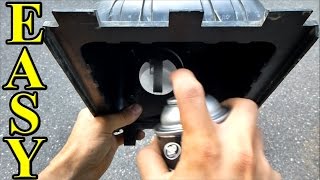
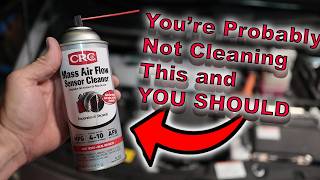
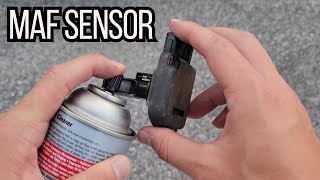
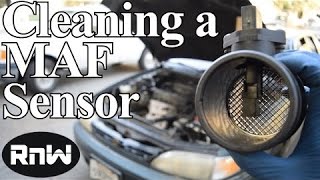
- Clean the Mass Airflow (MAF) Sensor (Every 30,000 miles or when changing the air filter) — Cleaning the delicate sensor wire with a dedicated MAF sensor cleaner spray ensures accurate airflow readings, preventing global lean conditions.
Frequently Asked Questions
What does 'Bank 2, Sensor 1' mean?
Bank 2 is the engine side without cylinder #1 (driver's side on Fords, passenger's side on Toyotas). Sensor 1 is the upstream oxygen sensor located before the catalytic converter.
How much does it cost to fix code P2197?
Costs range from $150 for a simple vacuum hose replacement to $650+ for a new OEM oxygen sensor installed. Professional diagnosis typically runs $150 to $200. Complex exhaust or fuel injector repairs push costs higher.
Can I fix P2197 myself?
Simple fixes like replacing a cracked vacuum hose or cleaning the MAF sensor are very DIY-friendly. Replacing an oxygen sensor is an intermediate job requiring a specialized O2 sensor socket. Diagnosing complex fuel or electrical issues is best left to a professional.
Will replacing the oxygen sensor definitely fix the code?
No, replacing the sensor is the most common misdiagnosis for P2197. The code means the sensor is reporting a lean condition, which is usually caused by a vacuum or exhaust leak. Always diagnose the root cause before replacing parts.
I replaced the O2 sensor and the code came back. What now?
The original sensor was likely reporting a real problem. Perform a smoke test to find hidden vacuum or exhaust leaks, test fuel pressure, and inspect the fuel injectors on Bank 2. Carefully inspect the wiring and connector to the new sensor for damage.
What's the difference between P2197 and P0174?
P0174 means the engine's fuel trim reached its maximum limit trying to correct a lean condition, but the O2 sensor is still switching. P2197 is more severe; it means the O2 sensor itself is no longer switching and is stuck reading lean.
Can a bad gas cap cause code P2197?
No. A loose or bad gas cap causes codes related to the EVAP system, such as P0455 or P0457, not an air-fuel mixture code like P2197.
Is an O2 sensor covered under warranty?
Emissions parts are covered by a 2-year/24,000-mile Federal Emissions Warranty, while major components like the PCM get 8-year/80,000-mile coverage. Oxygen sensor coverage under the 8/80 warranty varies by manufacturer. Always ask your dealer to check warranty eligibility before authorizing repairs.
Key Takeaways
- Code P2197 indicates Bank 2 is running lean (too much air, not enough fuel), and the upstream oxygen sensor is stuck reporting this imbalance.
- Vacuum leaks cause over 50% of P2197 codes, making a $150 professional smoke test the most cost-effective first diagnostic step.
- Driving more than 200 miles with an active P2197 code risks melting the catalytic converter, turning a minor repair into a $2,000+ replacement.
- Never replace the oxygen sensor without checking live data; if Bank 2 fuel trims exceed +15%, the sensor is working correctly and reporting a genuine air/fuel imbalance.
Helpful Videos


The information in this article is provided for general reference and educational purposes only. Vehicle specifications, procedures, and part compatibility can vary by production date, trim level, and region. Always consult your vehicle's factory service manual and verify part numbers before purchasing or performing repairs. Safety-critical components such as airbags, seat belts, and braking systems should be installed by a qualified professional.
- 🎬 Helpful Videos
- What Does P2197 Mean?
- Can I Drive With P2197?
- Common Causes
- Symptoms
- Diagnostic Flowchart
- Common Fixes & Costs
- DIY vs Professional
- Used vs. New Parts: Buying Guide
- What Happens If You Wait — Timeline
- Cost of Not Fixing It
- Diagnosis Steps
- When This Code Triggers (Freeze-Frame Conditions)
- Related Codes
- Climate & Environmental Factors
- How to Talk to a Mechanic About This Code
- Where to Take It: Dealer vs Independent vs Chain
- When to Walk Away From the Repair
- What Scan Tool You Need for This Code
- How to Clear the Code After You Fix It
- Will This Fail Emissions / State Inspection?
- Most Commonly Affected Vehicles
- Manufacturer-Specific Notes
- Real Owner Stories
- 2006 Ford Mustang V6 - The Misdiagnosis Trap
- 2008 Ford F-150 with 135k miles - A Long-Running Problem
- 2010 Ford Explorer 4.0L - Both Banks Lean
- 2015 Ford Transit - The Unusual Cause
- How to Prevent This Code From Triggering
- Frequently Asked Questions
- What does 'Bank 2, Sensor 1' mean?
- How much does it cost to fix code P2197?
- Can I fix P2197 myself?
- Will replacing the oxygen sensor definitely fix the code?
- I replaced the O2 sensor and the code came back. What now?
- What's the difference between P2197 and P0174?
- Can a bad gas cap cause code P2197?
- Is an O2 sensor covered under warranty?
- Key Takeaways
- 🎟️ Get 5% Off