

P0606 on 2007-2014 GMC Sierra 2500HD: ECM Failure or Just a Bad Battery?
On a 2007-2014 GMC Sierra 2500HD, code P0606 often points to a weak battery, bad grounds, or a failing alternator, not a failed Engine Control Module (ECM). Before spending over $1,000 on a new ECM, thoroughly test the entire charging and starting system, as a new battery (~$150-$350) and cleaning key ground connections (G103, G104, G108) often resolves the issue.
- P0606 is a critical code that makes the vehicle unsafe to drive due to the risk of stalling.
- DO NOT immediately replace the Engine Control Module (ECM). The most common cause on this truck is a simple electrical issue.
- Your first and most important diagnostic steps are to load test the battery and thoroughly inspect/clean all battery and ground connections.
- Check for official GM Technical Service Bulletins (TSBs), as several known issues can falsely trigger this code.
- If the ECM does need to be replaced, it must be programmed by a professional with the correct tools.
What's Unique About the 2007-2014 GMC Sierra 2500HD
On these GMT900 trucks, P0606 is notorious for being triggered by underlying electrical issues rather than outright module failure. The control modules are highly sensitive to voltage. GM has issued multiple Technical Service Bulletins (TSBs) advising technicians to investigate battery, charging, and even other sensor circuit issues before replacing the expensive ECM. For example, a low battery during cranking, a high voltage spike from a jump start, or even an open in the camshaft position sensor circuit can all incorrectly cause the ECM or another module like the EBCM to set a P0606 code.
Generation note: The 2007-2014 year range primarily covers the second generation (GMT900) Sierra HD. However, the 2007 model year was a transition, with early production models being the first generation 'Classic' (GMT800). While the causes are broadly similar, specific ground locations like G103, G104, and G108 are key points of failure on the GMT900 and may differ from the GMT800.
Symptoms You May Notice
- Check Engine Light (MIL) illuminated
- Engine stalling or shutting off while driving.
- Vehicle enters 'Reduced Engine Power' mode.
- No-start or intermittent start condition, sometimes with a 'click-click-click' sound.
- Service StabiliTrak / Service Brake System messages. [TSB #PIT6347B]
- Headlights flashing or other erratic electrical behavior. [TSB #24-NA-005]
- Erratic transmission shifting or RPM flares.
- Loss of power steering assist if the engine stalls.
- Replacing the Engine Control Module (ECM) without first performing a thorough test of the battery, alternator, and all major power and ground connections (especially G103, G104, and G108).
Most Likely Causes
- Weak or Failing Battery 🔴 High Probability Control modules in this era are highly sensitive to voltage. A battery that still has enough power to start the engine can dip low enough during cranking to cause a module to fail its self-test and trigger P0606. Even a physically loose battery post can cause enough instability to set the code. TSB #24-NA-050 directly links P0606 to low voltage events.
How to confirm: Perform a professional load test on the battery (a simple voltage check is not sufficient). Many auto parts stores do this for free. The battery should read above 12.4 volts at rest and maintain voltage under load. Check for any physical movement of the battery posts.
Typical fix: Replace the battery.
Est. part cost: $150-$350 - Loose or Corroded Battery Terminals & Ground Connections 🔴 High Probability Engine and chassis grounds on these trucks are known to corrode or loosen over time, creating electrical resistance that confuses control modules. Key locations to inspect are the G103 (front of passenger side cylinder head), G104 (rear of driver's side cylinder head), and the G108 braided strap from the engine block to the frame.
How to confirm: Visually inspect all main power and ground connections for looseness, swelling, or corrosion. Physically tug on the ground straps. Use a multimeter to perform a voltage drop test across the ground cables to check for hidden resistance; a reading over 0.2V indicates a problem.
Typical fix: Disconnect, clean all contact surfaces with a wire brush until they are bright metal, and securely tighten all connections. Replace corroded cables if necessary.
Est. part cost: $0-$100 - Failing Alternator 🟡 Medium Probability An alternator that is undercharging (low voltage) or overcharging (high voltage) creates an unstable power supply that can trigger a P0606 code. TSB #24-NA-050 also links high voltage states to this code.
How to confirm: With the engine running, use a multimeter to test the voltage at the battery terminals. A healthy alternator should produce a steady voltage, typically between 13.5 and 14.8 volts.
Typical fix: Replace the alternator.
Est. part cost: $200-$500 - Internal ECM/PCM Failure ⚪ Low Probability While this is the textbook definition of the code, it is far less common on this platform than the external electrical causes listed above. A true internal failure means the processor or memory on the circuit board has failed, which can sometimes be caused by internal solder joint cracks or component failure.
How to confirm: This is a diagnosis of exclusion. Only after the battery, alternator, all power/ground cables, and related wiring have been tested and confirmed to be in perfect working order should the ECM be condemned.
Typical fix: Replace the Engine Control Module (ECM) and have it professionally programmed to the vehicle's VIN.
Est. part cost: $400-$900
Rare But Worth Checking
- Open Camshaft Position Sensor Circuit: GM TSB #17-NA-132 specifically warns that an open in the cam sensor circuit can cause a P0606 to set during cranking *instead* of the correct cam sensor code. The bulletin explicitly states 'Do Not replace the Engine Control Module (ECM) for this condition.'
- Faulty Electronic Brake Control Module (EBCM): TSB #24-NA-050 notes that on some trucks, the P0606 code may set in the EBCM due to a voltage event, not the ECM. A new calibration was developed to make the EBCM diagnostics more robust. The fix is to address the voltage issue and clear the code with a scan tool, not replace the module.
- Damaged Wiring Harness: The main wiring harness can chafe against engine or chassis components, leading to shorts or open circuits that can trigger a P0606 code. On Duramax models, the injector wiring harness connector (X107) can also be a source of issues.
Diagnosis Steps
- Scan for all codes in all modules with a professional-grade scan tool. Note which module specifically set the P0606 (e.g., ECM, EBCM, TCM) and if any other codes like P0562 or P0563 are present.
- Perform a professional load test on the battery. A simple voltage check is insufficient.
- Inspect battery terminals and all main power and ground cables for any signs of corrosion, looseness, or damage. Clean and tighten as necessary.
- Locate and inspect the key engine ground points: G103 (front passenger cylinder head), G104 (rear driver cylinder head), and G108 (engine block to frame strap). Perform a voltage drop test on these grounds.
- With the engine running, measure the alternator's output voltage at the battery. It should be stable and within the 13.5-14.8 volt range.
- If TSB #17-NA-132 applies to your vehicle, inspect the camshaft position sensor and its circuit for opens or damage before suspecting the ECM.
- Check fuses related to the ECM, PCM, and other control modules in the underhood fuse block.
- If all electrical tests pass and no other causes are found, the issue may be the control module itself. ECM replacement requires professional programming.
Parts You'll Likely Need
- Vehicle Battery
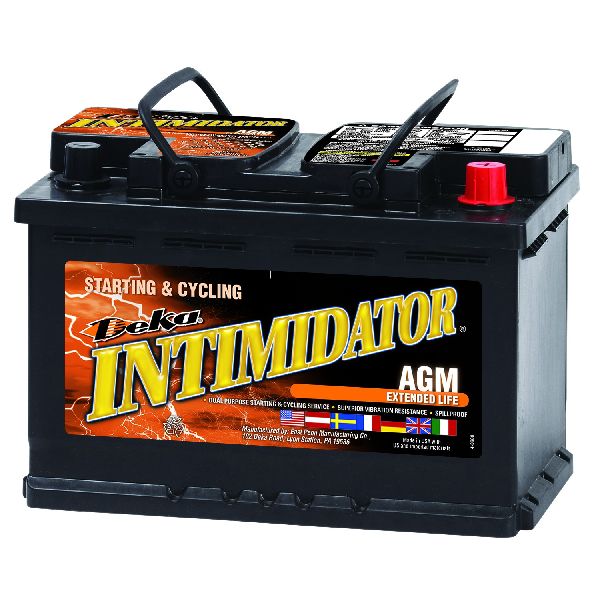
(OEM #ACDelco Gold 94RAGM (88865934) or 48AGM (varies by configuration))— A weak or failing battery is the most common trigger for a false P0606 code on this platform due to voltage instability during startup.
Trusted brands: ACDelco, Interstate, DieHard
OEM price range: $200-$400
Aftermarket price range: $150-$350 - Engine Control Module (ECM)
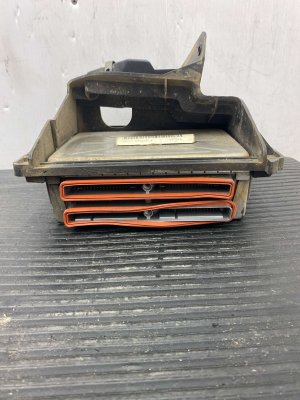
(OEM #Varies by engine. For 6.0L Gas: ACDelco 12642100. For 6.6L Duramax: ACDelco 12641369.)— This part is only needed if a true internal processor failure has occurred, after all other electrical and wiring causes have been definitively ruled out.
Trusted brands: ACDelco
OEM price range: $500-$1000+
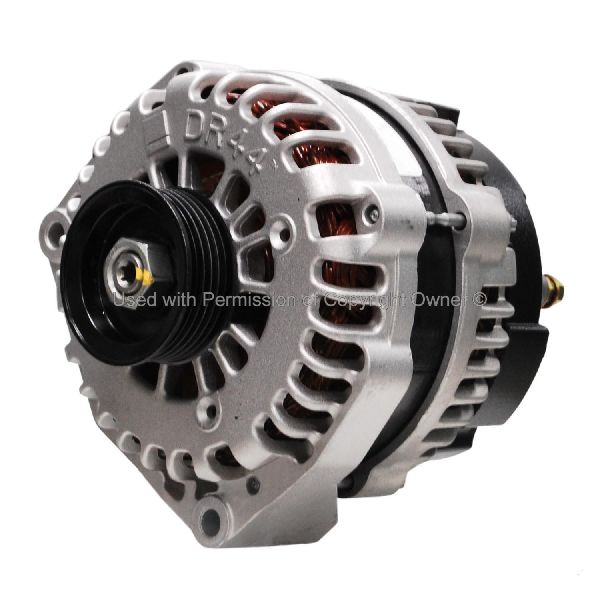
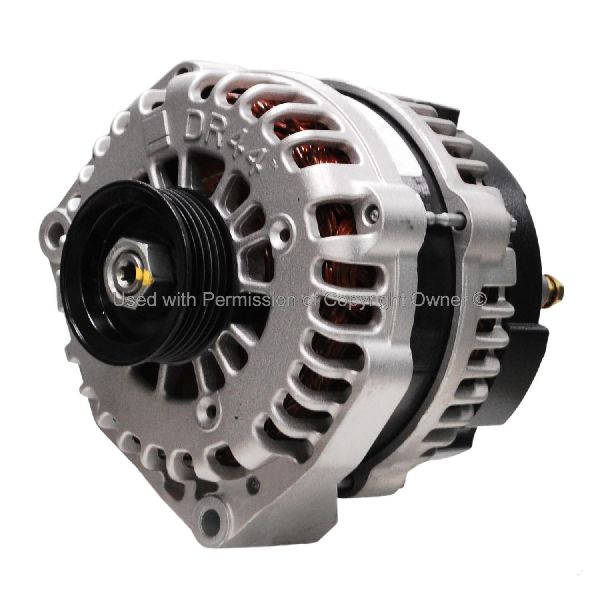
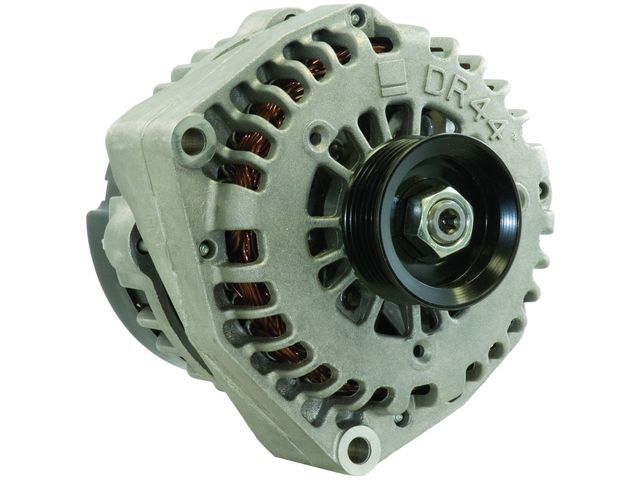
Aftermarket price range: $400-$900 - Alternator — A faulty alternator providing unstable, low, or high voltage can cause control modules to malfunction and set this code.
Trusted brands: ACDelco, Denso, Bosch
OEM price range: $300-$600
Aftermarket price range: $200-$500
Related Codes That Often Appear With This One
- P0562 — System Voltage Low. This code's presence strongly suggests the P0606 was triggered by a weak battery, failing alternator, or bad connection, as noted in TSB #24-NA-050.
- P0563 — System Voltage High. This code's presence points to a charging system problem, like a faulty alternator voltage regulator, causing voltage spikes that triggered the P0606, as noted in TSB #24-NA-050.
Technical Service Bulletins (TSBs) & Recalls
- 24-NA-050: Links P0606 in the EBCM to low/high voltage codes (P0562/P0563) and advises testing the battery before replacing the module.
- 17-NA-132: Warns that a camshaft position sensor circuit fault can set P0606 instead of the correct sensor code.
- PIT6347B: Mentions P0606 with ABS/StabiliTrak warnings and P0562, directing dealers to perform battery and connection testing.
- 24-NA-111: Provides repair information for a MIL set by P0606: Control Module Processor Performance.
- 24-NA-005: Connects P0606 in the Lighting Control Module with a concern of flashing headlamps.
Platform-Specific Known Issues
- TSB #24-NA-050: Specifically addresses P0606 setting in the Electronic Brake Control Module (EBCM) along with voltage codes P0562/P0563. It advises against replacing the module and points to low/high voltage events like jump-starts or a weak battery as the cause.
- TSB #17-NA-132: Warns that an open in the camshaft position
Mechanic-Grade Diagnostic Values
- Battery Voltage (Key Off, Engine Off) — expected: 12.4V - 12.6V. Failure: Below 12.4V. A reading where the difference from 12.6V is a multiple of 2.1V (e.g., 10.5V) strongly suggests a dead cell.
- Charging System Voltage (Engine Running at idle) — expected: 13.5V - 14.8V. Failure: Unstable voltage, or readings consistently below 13.5V or above 14.8V, indicates a faulty alternator or regulator.
- Voltage Drop Test (Main Grounds) — expected: < 0.2V. Failure: A reading higher than 0.2V between the negative battery post and a ground point (e.g., engine block, chassis) indicates high resistance in the ground cable or connection.
- Diesel Injector Resistance (Duramax) — expected: 0.4 - 0.8 Ohms between terminals. Failure: A reading outside this range, or any continuity between a terminal and the injector body, indicates a faulty injector which can cause a false P0606.
Scan Tool Commands That Help
- GDS2 / Techline Connect: Service Programming System (SPS) — This function is required to program a new or used replacement ECM to the vehicle. It downloads the correct calibration file and VIN. The vehicle will not start without this step.
- GDS2 / Tech2 / High-End Scan Tool: Vehicle Theft Deterrent (VTD) Relearn — This is a mandatory procedure after installing a different ECM. It syncs the anti-theft system with the new module. Without it, the engine will be disabled.
- GDS2 / Tech2 / High-End Scan Tool: Crankshaft Position (CKP) Variation Relearn — This procedure should be performed after ECM replacement to calibrate the new module to the specific crankshaft position sensor, preventing potential misfire codes.
Wiring & Ground Locations
- G103 — On the front of the passenger side cylinder head.. This is a primary ground point for the ECM. Corrosion or looseness here can cause unstable power to the module, triggering a false P0606.
- G104 — On the rear of the driver's side cylinder head.. This is another critical engine ground. A poor connection here can cause a variety of electrical issues, including the P0606 code.
- G108 — A braided ground strap that typically runs from the rear of the driver's side cylinder head (sharing a stud with G104) to the firewall.. This is the main ground connection between the engine and the vehicle's cab/body. A faulty G108 can cause widespread electrical havoc.
Real Owner Repair Stories
- GMTNation forum user (2008 GMC Sierra (GMT900 platform)) — In very cold weather, experienced a 'click, click, click' no-start, followed by limp mode and code P0606. Dash voltmeter was reading high (well over 14V).
❌ Tried (didn't work) Cleaning the badly corroded positive battery cable terminal initially seemed to work, but the problem returned.
✅ What actually fixed it The positive post on the old battery had internal play and was physically loose within the battery case. Replacing the battery and ensuring clean, tight cable connections permanently resolved all symptoms and the P0606 code.
OEM Part Supersession History
12612384 (Example for 2008 5.3L/6.0L)→12633238 (Example for 2010-2014)— Hardware and software updates to improve reliability and accommodate changes in vehicle hardware over the model years.
Heads up: E38 ECMs are not universally interchangeable even with the same service number. The Operating System (OS) must match the vehicle's year and hardware configuration. For example, a 2009 model may have a different throttle body than a 2008, making their ECM calibrations incompatible.
Model Year Variations Within This Range
- 2007: The 2007 model year was a split between the old GMT800 ('Classic') and new GMT900 platforms. While P0606 causes are similar, specific ground locations and ECM part numbers are different. Ensure you are using the correct wiring diagrams for your specific truck.
- 2009: Many 2009 GMT900 trucks received a new throttle body design. This requires a different internal calibration on the E38 ECM compared to 2008 models. Using an ECM with the wrong year's operating system can cause a no-start or drivability issues.
Diagnostic Flowchart
Other Known Issues on This Vehicle
Issues unrelated to this code that are worth knowing about as an owner of this generation:
- Cracked Dashboard 🟠 Medium — Very common across the entire GMT900 lineup, often appearing after 3-5 years regardless of mileage or sun exposure. Cracks typically form above the instrument cluster and around the passenger airbag opening. (Ref: No recall issued, but multiple class-action lawsuits have been filed alleging it is a safety hazard due to potential airbag interference.)
- Fuel Level Sensor Failure 🟠 Medium — Common failure, especially on vehicles over 100,000 miles. The fuel gauge becomes erratic, gets stuck on empty or full, or is completely inaccurate. (Ref: TSB 17-NA-204 applies to dual-tank models where a faulty sensor can cause the front tank to overfill. For single tank models, it's a common wear-and-tear repair.)
- Duramax (LMM) Injector Failure 🔴 High — While more reliable than the previous LB7 engine's injectors, the LMM (2007.5-2010) injectors can still fail, often after 100,000-150,000 miles. Symptoms include rough idle, hard starting, and smoke.
- Underhood Fuse Block Corrosion 🟠 Medium — The underhood fuse block/module is susceptible to moisture intrusion, leading to corrosion on the internal circuits and fuse contacts. This can cause a variety of electrical gremlins, including a no-start condition.
- Wheel Well Rust 🟠 Medium — The rear wheel well arches are a notorious spot for rust to form, especially in regions that use road salt. The design of the fender lip can trap moisture and debris.
Used vs. New Parts: Buying Guide for This Vehicle
When a used part is the smart pick: A used ECM from a junkyard can be a cost-effective option, but ONLY if you have a way to get it professionally reprogrammed. Many independent shops and mail-in services can do this for a fee, which is often cheaper than buying a new module from a dealer.
Donor-vehicle mileage cap: roughly under 150000 miles for the part to have meaningful remaining life.
What to inspect on the donor part:
- Verify the service number on the donor ECM matches your original part.
- Source the part from a vehicle of the exact same year, model, and engine to maximize compatibility.
- Inspect the connectors for any bent pins, corrosion, or physical damage.
- Avoid modules from vehicles with flood or fire damage.
OEM-only on this vehicle (don't cheap out):
- Engine Control Module (ECM) - While aftermarket options exist, using a new or remanufactured OEM (ACDelco) unit, or a properly matched used OEM unit, is highly recommended for compatibility and to avoid programming issues.
Aftermarket brands forum-validated for this vehicle:
- Alternators: Bosch (Remanufactured), Sinister Diesel (High-Output), XDP (High-Output).
- Batteries: Interstate, DieHard, ACDelco (OEM)
Brands owners have reported issues with on this vehicle:
- Unbranded, no-name 'remanufactured' ECMs from online marketplaces can be risky, as they may not be properly tested or may have programming limitations.
Real Owner Stories
Aggregated from forums and TSBs cited above. Mileages and costs reflect what owners reported in those sources.
2007-2014 GMC Sierra (GMT900 Platform)
Symptoms: Limp mode, a no-start condition in very cold weather, and a P0606 code.
What fixed it: Replacing the battery, which had a physically loose and corroded positive post causing voltage instability.
Source hint: GMTNation thread titled 'P0606 code and bad battery'
2007-2014 GMC Sierra 2500HD (Tuned)
Symptoms: P0606 code triggered by specific engine parameters or a hard braking event while towing.
What fixed it: Correcting fuel mapping in tables B1115 and B1116.
Source hint: DuramaxDiesels.com thread titled 'P0606'
Related OBD-II Codes
Frequently Asked Questions
My 2007-2014 GMC Sierra 2500HD is showing P0606 and P0562; does TSB #24-NA-050 apply to me?
Could a bad camshaft sensor be causing the P0606 code on my truck?
I'm seeing 'Service StabiliTrak' and 'Service Brake System' messages along with P0606. What should I check first?
My headlights are flashing and I have a P0606 code. Is this a known issue?
Where are the main ground points I should check on my Sierra 2500HD to fix this code?
Can a loose battery post really cause a P0606 processor code?
Used OEM Parts in Stock




New Aftermarket Parts Available



The information in this article is provided for general reference and educational purposes only. Vehicle specifications, procedures, and part compatibility can vary by production date, trim level, and region. Always consult your vehicle's factory service manual and verify part numbers before purchasing or performing repairs. Safety-critical components such as airbags, seat belts, and braking systems should be installed by a qualified professional.
- GMC Sierra 2500HD:
- 🛍️ Shop This Part
- What's Unique About the 2007-2014 GMC Sierra 2500HD
- Symptoms You May Notice
- Most Likely Causes
- Rare But Worth Checking
- Diagnosis Steps
- Parts You'll Likely Need
- Related Codes That Often Appear With This One
- Technical Service Bulletins (TSBs) & Recalls
- Platform-Specific Known Issues
- Mechanic-Grade Diagnostic Values
- Scan Tool Commands That Help
- Wiring & Ground Locations
- Real Owner Repair Stories
- OEM Part Supersession History
- Model Year Variations Within This Range
- Diagnostic Flowchart
- Other Known Issues on This Vehicle
- Used vs. New Parts: Buying Guide for This Vehicle
- Real Owner Stories
- 2007-2014 GMC Sierra (GMT900 Platform)
- 2007-2014 GMC Sierra 2500HD (Tuned)
- Related OBD-II Codes
- Frequently Asked Questions
- 🎟️ Get 5% Off