

P0606 on 2019-2024 Genesis G70: ECM/PCM Processor Fault Causes and Fixes
P0606 on a Genesis G70 indicates a serious internal fault in the engine's main computer (PCM). The most likely fix is replacing the PCM, which requires professional programming. Before replacement, a technician must rule out software glitches, charging system problems, or wiring and ground issues, as these can falsely trigger the code.
- P0606 is a critical fault code indicating the engine computer has failed its own internal self-test.
- Do not continue to drive the vehicle, as it may stall at any time.
- This is not a common, documented issue on the 2019-2024 Genesis G70, so diagnosis should follow standard procedure.
- While the PCM itself is the most likely cause, a thorough diagnosis must first rule out software, power, and ground issues.
- PCM replacement is a job for a professional dealership or qualified repair shop, as it requires programming.
What's Unique About the 2019-2024 Genesis G70
For the 2019-2024 Genesis G70, the P0606 code is not a widely documented, common failure. Extensive searches of owner forums like genesisg70forum.com and Reddit's r/GenesisG70 show no specific pattern or frequent complaints of this code for either the 2.0T or 3.3T engines. This suggests that when P0606 does appear, it's an isolated incident rather than a known systemic flaw. Diagnosis should follow general best practices, with special attention paid to the platform mate, the Kia Stinger, which shares identical powertrains and electronics and has some owner reports of P0606 leading to ECU replacement.
Symptoms You May Notice
- Check Engine Light is on
- Engine may not start or may be difficult to crank
- Engine stalling or shutting off while driving
- Vehicle enters 'limp mode' with reduced power
- Erratic automatic transmission shifting
- ABS or Traction Control lights may also illuminate
- Noticeable decrease in fuel economy
- Unpredictable or rough engine idle
- Replacing the PCM without performing a thorough diagnosis of the power supply, ground connections, and charging system first.
- Replacing sensors or other components without first checking for PCM software updates or verifying power/ground integrity.
Most Likely Causes
- Internal PCM Failure 🔴 High Probability Not specific to this vehicle, but this code is designed to report internal hardware or software corruption. This is the most common cause after all external factors are eliminated. 🎬 Watch: A detailed explanation of PCM processor faults and fixes.
How to confirm: This is a diagnosis of exclusion. A technician confirms this after verifying all other possible causes (power, grounds, software, external shorts) are not at fault.
Typical fix: Replace the Powertrain Control Module (PCM) and program it to the vehicle using a Genesis GDS tool.
Est. part cost: $800-$1500 - PCM Software Glitch or Outdated Calibration 🟡 Medium Probability Modern vehicles rely on complex software. Genesis has issued multiple TSBs for ECU software updates on this platform to fix various issues, indicating that software revisions are common.
How to confirm: A Genesis dealer or qualified shop can check for any available PCM software updates using a factory scan tool. TSBs like 21-EM-005H(1) for Hyundai/Genesis show a history of such updates.
Typical fix: Update the PCM software to the latest version.
Est. part cost: $0-$250 - Poor Power or Ground Connection to PCM ⚪ Low Probability Not a specific vehicle prone issue, but a universal cause for control module faults. Bad grounds can cause a host of unpredictable electrical problems.
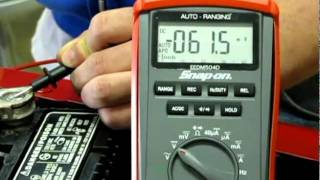
How to confirm: Visually inspect the PCM connectors for corrosion or damage. Use a multimeter to perform a voltage drop test on the PCM's main power and ground circuits against factory specifications. Check main engine-to-chassis ground straps for tightness and corrosion. 🎬 See how to perform professional PCM power and ground testing.
Typical fix: Clean or repair the affected wiring, connectors, or ground points. This may involve removing ground bolts, cleaning the contact surfaces to bare metal, and re-securing.
Est. part cost: $0-$100 - Charging System Fault (Alternator) ⚪ Low Probability Not a specific vehicle prone issue, but voltage fluctuations (over or under-voltage) can disrupt and damage sensitive electronics like the PCM.
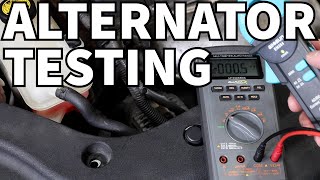
How to confirm: Test the battery and charging system. With the engine running, voltage should be stable, typically between 13.5 and 14.5 volts. 🎬 Watch: How to properly test your alternator and charging system. An over-voltage or under-voltage condition can trigger a P0606.
Typical fix: Replace the faulty alternator or repair the charging system wiring.
Est. part cost: $400-$800
Rare But Worth Checking
- Shorted External Component:
- Aftermarket ECU Tune:
Diagnosis Steps
- Scan the vehicle for all stored trouble codes. Note any other codes that may be present, as they could point to a root cause (e.g., a shorted sensor or communication error).
- Check for any available Technical Service Bulletins (TSBs) or software updates for the PCM. This is a critical first step. Genesis has issued several ECU updates for this platform.
- Perform a complete battery and charging system test. Ensure the battery is fully charged and the alternator is providing stable voltage (typically 13.5-14.5V with engine running).
- Visually inspect the PCM wiring harness and connectors for any signs of damage, corrosion, or loose connections. Pay close attention to the main engine and chassis ground points.
- Using a digital multimeter and the vehicle's wiring diagram, verify that the PCM is receiving proper voltage and has a solid ground connection at all specified pins. Perform a voltage drop test on the ground circuit.
- If other codes are present, diagnose and resolve them first, as an external component failure can sometimes trigger a P0606.
- If the vehicle has an aftermarket tune, flash the ECU back to the stock map and see if the code clears.
- If all external factors (software, power, ground, other codes) have been ruled out, the PCM is determined to be faulty.
- Replace the PCM. This must be done by a professional with the tools to program the new unit to the car's VIN and security system.
Parts You'll Likely Need
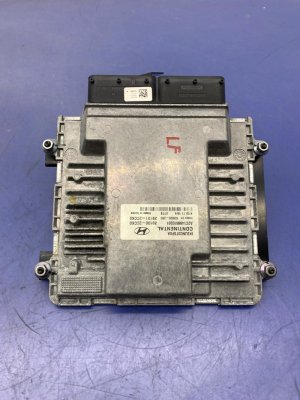
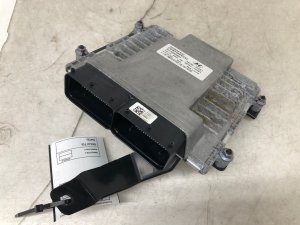
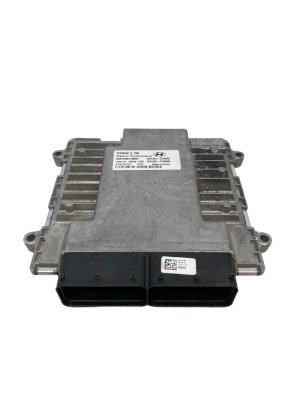
- Powertrain Control Module (PCM)
(OEM #Varies by year/engine. e.g., 39104-3LKN0 (3.3T), 39131-2CCK0 (2.0T). Always verify with VIN.)— This code specifically indicates an internal processor fault within the PCM itself. After ruling out external factors, PCM replacement is the required fix.
Trusted brands: Genesis OE
OEM price range: $800-$1500
Aftermarket price range: Not typically available, remanufactured units may exist.
Related Codes That Often Appear With This One
- P0461 (Fuel Level Sensor Circuit) if related to fuel system component shorts.
- U-series codes (e.g., U0109) indicating communication loss with other modules, like the Fuel Pump Control Module.
- P0601 (Internal Control Module Memory Check Sum Error), which is a closely related internal PCM fault.
Technical Service Bulletins (TSBs) & Recalls
- TSB 21-EM-005H(1) - While not for P0606 specifically, this TSB for various Hyundai/Genesis models regarding ECU software updates demonstrates a history of correcting logic issues via software flashes.
- TSB #25-GI-020G - Details the ECU update procedure for tablet-based Genesis Smart GDS systems, which is required for any software-related fix.
- Recall 24V-528 / Campaign 023G - Affects 2019-2023 G70 models and involves an ECM software update to prevent loss of power from a high-pressure fuel pump issue, showing the manufacturer's use of software flashes to fix powertrain problems.
Mechanic-Grade Diagnostic Values
- PCM Power & Ground Circuits (at PCM connector) — expected: Battery voltage (approx. 12.6V KOEO, 13.5-14.5V engine running) on all power pins; < 0.1V on all ground pins.. Failure: Voltage below specification or high resistance on ground circuits can cause the PCM processor to malfunction and falsely set a P0606.
- 5-Volt Reference Circuit (at any accessible sensor) — expected: ~5.0V with Key On, Engine Off.. Failure: No voltage or significantly lower/higher voltage indicates a potential internal PCM fault or a short in the wiring/sensor that could trigger a P0606.
Scan Tool Commands That Help
- Genesis GDS (Global Diagnostic System): ECU Update (Auto or Manual Mode) — This is a primary step to check for and apply any available software updates that may correct logic errors causing a false P0606. TSBs often require this procedure.
- Genesis GDS (Global Diagnostic System): S/W Management > Write VIN — This function is mandatory after installing a new or used replacement PCM. It programs the vehicle's VIN into the module, which is required for it to communicate with other vehicle systems and allow the engine to start.
- Genesis GDS (Global Diagnostic System): Variant Coding — After replacing a module, this function is used to configure the PCM for the specific options on the vehicle (e.g., transmission type, AWD/RWD). Incorrect coding can cause system malfunctions.
Wiring & Ground Locations
- Engine Control Module (ECM/PCM) — In the engine bay, on the driver's side, up against the firewall in a black plastic compartment.. This is the location of the module itself. Physical access is needed to inspect connectors for corrosion or damage and to perform pin-out testing of power and ground circuits.
- Main Engine Ground Strap — Typically runs from the engine block to the chassis frame rail on the driver's or passenger's side. Exact location can be confirmed with a service manual.. A loose or corroded main engine ground is a common cause of multiple, difficult-to-diagnose electrical issues, including module faults like P0606. Verifying this connection is a critical diagnostic step.
Model Year Variations Within This Range
- 2019-2021 vs 2022-2024: The G70 received a major facelift for the 2022 model year. While the core 3.3T and 2.0T engines remained, associated electronics and PCM part numbers may have changed. For example, a known 3.3T PCM part number is 39104-3LKN0, while a 2.0T part is 39131-2CCK0; these may be specific to pre-facelift models. Always verify the part number on the original unit before ordering a replacement.
Diagnostic Flowchart
Other Known Issues on This Vehicle
Issues unrelated to this code that are worth knowing about as an owner of this generation:
- Premature Brake Wear & Dust (Brembo) 🟡 Low — Very common on 3.3T models equipped with Brembo brakes. Owners report excessive brake dust and needing pads/rotors replaced sooner than expected, sometimes under 20,000 miles.
- Sunroof and Headliner Rattle 🟡 Low — A widely reported annoyance where the sunroof assembly or headliner develops creaks, pops, or rattles, especially in warm weather. (Ref: Dealers have performed fixes under warranty, sometimes involving lubrication or installing foam kits, with mixed success.)
- Fuel Door Actuator Failure 🟠 Medium — Common issue where the electronic actuator for the fuel door fails, causing the door to be stuck shut or fail to lock. (Ref: No TSB or recall, but it's a well-documented failure on owner forums. A manual release is located in the trunk.)
- Idle Stop & Go (ISG) Inconsistency 🟡 Low — Owners frequently report the ISG system being overly sensitive to battery state of charge or other parameters, leading it to not activate when expected. (Ref: Genesis has released ECU software updates (e.g., Event #865 for 2.0T) to improve ISG logic.)
Used vs. New Parts: Buying Guide for This Vehicle
When a used part is the smart pick: A used PCM is a viable cost-saving option ONLY if you have access to a specialized service that can clone your original PCM's data or a Genesis dealership/specialist willing to program a used unit. Without programming, a used PCM is a paperweight.
Donor-vehicle mileage cap: roughly under 100000 miles for the part to have meaningful remaining life.
What to inspect on the donor part:
- Verify the OEM part number on the used unit EXACTLY matches your original PCM.
- Ensure the donor vehicle had the same engine, transmission, and drivetrain (RWD/AWD).
- Inspect the connectors on the used PCM for any bent pins, corrosion, or physical damage.
- Purchase from a reputable salvage yard that offers a short-term warranty in case the unit is dead on arrival.
OEM-only on this vehicle (don't cheap out):
- Powertrain Control Module (PCM) - While a used OEM part is an option, brand-new aftermarket PCMs for this platform are not readily available or recommended. The repair must use either a new Genesis OE part or a properly matched used OE part.
Aftermarket brands forum-validated for this vehicle:
- For this specific fault, aftermarket parts are not a primary solution. However, some services specialize in ECU cloning, which can make a used part viable.
Brands owners have reported issues with on this vehicle:
- Avoid any generic or 'pre-programmed' aftermarket PCMs that do not come from a highly reputable vendor with specific guarantees for Genesis vehicles, as they are unlikely to work due to the immobilizer system.
Real Owner Stories
Aggregated from forums and TSBs cited above. Mileages and costs reflect what owners reported in those sources.
2018-2023 Kia Stinger 3.3T
Symptoms: The vehicle experienced a P0606 code along with P0108, P2106, P1291, and P2110, causing the car to enter limp mode.
What fixed it: A complete ECU replacement by the dealer resolved the issue.
Source hint: https://stingerforum.org/threads/p0606-p0108-p2106-p1291-p2110-limp-mode.16239/
Related OBD-II Codes
Frequently Asked Questions
Does Recall 24V-528 apply to my 2019-2023 Genesis G70 3.3T regarding power loss issues?
Can I use a used PCM from a salvage yard to fix a P0606 on my G70?
Is there a specific TSB for updating the ECU software on the Genesis G70?
Could my G70's Idle Stop & Go (ISG) issues be related to the PCM software?
Will an aftermarket tune cause a P0606 code on the 3.3L Twin-Turbo V6?
Are there common electrical grounds I should check on the G70 for this code?
Helpful Videos

We Have This Part in Stock




The information in this article is provided for general reference and educational purposes only. Vehicle specifications, procedures, and part compatibility can vary by production date, trim level, and region. Always consult your vehicle's factory service manual and verify part numbers before purchasing or performing repairs. Safety-critical components such as airbags, seat belts, and braking systems should be installed by a qualified professional.
- Genesis G70:
- 🎬 Helpful Videos
- 🛍️ Shop This Part
- What's Unique About the 2019-2024 Genesis G70
- Symptoms You May Notice
- Most Likely Causes
- Rare But Worth Checking
- Diagnosis Steps
- Parts You'll Likely Need
- Related Codes That Often Appear With This One
- Technical Service Bulletins (TSBs) & Recalls
- Mechanic-Grade Diagnostic Values
- Scan Tool Commands That Help
- Wiring & Ground Locations
- Model Year Variations Within This Range
- Diagnostic Flowchart
- Other Known Issues on This Vehicle
- Used vs. New Parts: Buying Guide for This Vehicle
- Real Owner Stories
- 2018-2023 Kia Stinger 3.3T
- Related OBD-II Codes
- Frequently Asked Questions
- 🎟️ Get 5% Off