

P0605 on 2016-2022 Honda Pilot: Internal PCM Error Causes and Fixes
The P0605 code on a 2016-2022 Honda Pilot indicates a critical internal error in the Powertrain Control Module (PCM). This is a rare code for this vehicle. Diagnosis involves checking the battery and grounds first, but the most likely fix is replacing the PCM, which is a costly repair best left to professionals.
- P0605 is a critical code indicating a PCM internal memory error; it is not a common fault on the 2016-2022 Honda Pilot.
- Driving is not recommended due to the risk of stalling or unpredictable engine behavior.
- Always check the battery, charging system, and all power/ground connections to the PCM before condemning the module.
- The most probable fix is replacing the PCM, a costly repair that requires professional programming.
- There are no known recalls or TSBs from Honda specifically for P0605 on this vehicle.
What's Unique About the 2016-2022 Honda Pilot
There is no evidence to suggest that the P0605 code is a common or recurring problem on the 2016-2022 Honda Pilot. Searches of owner forums like Piloteers.org and for Technical Service Bulletins (TSBs) do not show this as a prevalent issue. While Honda has issued TSBs for other software and fuel system-related problems on this platform, P0605 does not appear to be a known pattern failure. Therefore, an occurrence of this code should be treated as a general, albeit serious, electronic component failure rather than a specific model defect. Some owners have proactively upgraded the main battery ground wire, believing the factory 4-gauge wire to be insufficient, though this is not directly linked 🎬 Watch: How to perform a Honda Pilot grounding wire upgrade. to preventing P0605.
Symptoms You May Notice
- Check Engine Light is on
- Vehicle will not start or has an extended crank time
- Engine may stall unexpectedly or hesitate
- Noticeable decrease in engine performance and fuel economy
- Erratic or harsh transmission shifting
- Illumination of other warning lights, such as ABS or Traction Control
- Failure of other electronic systems like the radio or instrument cluster
- Replacing the PCM without first thoroughly testing the battery, alternator, and all related power and ground circuits.
Most Likely Causes
- Internal PCM Failure 🔴 High Probability
How to confirm: After confirming all power and ground circuits to the PCM are stable and free of corrosion or damage, and no software updates are available, the PCM is condemned by exclusion. A professional-grade scan tool may have a module self-test or ROM integrity test function.
Typical fix: Replace the Powertrain Control Module (PCM). The new module must be programmed by a dealer or a qualified shop with the proper equipment.
Est. part cost: $800-$1500 - Low Battery Voltage or Charging System Fault 🟡 Medium Probability
How to confirm: Test the battery's state of charge and health with a load tester. Check the alternator's output voltage with a multimeter; it should typically be between 13.5 and 14.5 volts with the engine running. Unstable voltage can corrupt PCM memory or cause self-test failures.
Typical fix: Replace the weak or failing battery. If the alternator is faulty, it will need to be replaced.
Est. part cost: $150-$600 - Poor Power or Ground Connections to PCM ⚪ Low Probability Some owners have noted the factory primary ground wire is a relatively small 4-gauge wire, which could be a point of failure over time.
How to confirm: Visually inspect all battery terminals, main ground straps, and the PCM wiring harness connectors for looseness, corrosion, or damage. The primary grounding strap location can be difficult to access, deep in the engine bay. Perform a voltage drop test on the power and ground circuits to the PCM to identify any excessive resistance.
Typical fix: Clean corroded terminals, tighten loose connections, or repair damaged wiring. Some owners have proactively installed a heavier gauge grounding wire.
Est. part cost: $10-$100
Rare But Worth Checking
- Failed PCM Software Update: If the code appeared immediately after a failed attempt to reflash or update the PCM software, the programming may be corrupted. A dealer may be able to recover it, but often the module is 'bricked' and requires replacement.
- Voltage Spikes: A sudden voltage spike, for example from improper jump-starting, can damage the internal circuitry of the PCM's ROM.
Diagnosis Steps
- Verify the code with a quality OBD-II scanner. Check for any other stored trouble codes, especially related processor faults like P0604, P0606, or P0607.
- Thoroughly inspect the battery, its terminals, and cables for corrosion or looseness. Load test the battery to confirm its health.
- With the engine running, test the alternator output to ensure it is providing stable and correct voltage (typically 13.5-14.5V).
- Inspect the PCM connectors for any signs of corrosion, moisture intrusion, bent pins, or damage.
- Locate and inspect the main engine and chassis ground connections. The primary ground strap is located low in the engine bay and can be hard to see. Ensure they are clean, tight, and free of corrosion.
- Check all relevant fuses for the PCM/ECM in the vehicle's fuse boxes.
- If a professional scan tool is available, attempt to check for any available software updates from Honda. A dealership may be required for this step.
- If all external wiring, power, and grounds are confirmed to be good, the issue is almost certainly an internal failure of the PCM.
- Confirm the diagnosis with a professional before ordering an expensive replacement part. Ask if a PCM reflash is a viable first step before replacement.
Parts You'll Likely Need
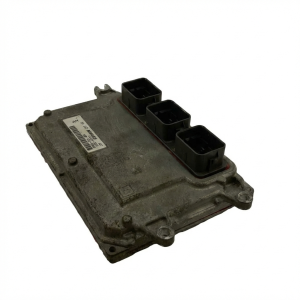
- Powertrain Control Module (PCM)
(OEM #37820-RLV-A85 (example for 2016 Pilot, VIN dependent))— This code indicates a fatal internal self-test failure of the PCM's memory. If external factors like power and ground are ruled out, the module itself has failed and must be replaced.
Trusted brands: Honda (OEM)
OEM price range: $470-$1446
Aftermarket price range: $600-$1000 (Remanufactured/Programmed)
Related Codes That Often Appear With This One
- P0604 - Internal Control Module Random Access Memory (RAM) Error
- P0606 - ECM/PCM Processor Fault
- P0607 - Control Module Performance
Mechanic-Grade Diagnostic Values
- PCM Power Supply (Backup Power) — expected: Battery Voltage. Failure: No voltage indicates an open in the wire or a blown fuse (e.g., fuse A14).
- PCM Power Supply (Ignition) — expected: Battery Voltage with ignition ON. Failure: No voltage indicates a wiring or relay circuit board issue.
- Sensor Reference Voltage — expected: Approximately 5.0 V. Failure: Voltage significantly lower than 5.0V (e.g., 2.0V) suggests a shorted sensor or a short in the wiring harness. No voltage could indicate an internal PCM fault if all external circuits are confirmed good.
Scan Tool Commands That Help
- Honda Diagnostic System (HDS) or equivalent (MVCI, VXDIAG): Replace ECM/PCM — This is a required function used after physically installing a new or used PCM. It initiates the process of writing the VIN and registering the immobilizer. 🎬 Watch: Step-by-step tutorial on programming a Honda PCM.
- Honda Diagnostic System (HDS) or equivalent: READ DATA (from old PCM) — Before removing the original PCM, this function is used to save vehicle-specific data like engine oil life and transmission data. This data is then written to the new PCM.
- Honda Diagnostic System (HDS) or equivalent: WRITE DATA (to new PCM) — After installing the new PCM, this function transfers the saved data (oil life, etc.) from the HDS tool into the new module.
- Honda Diagnostic System (HDS) or equivalent: Immobilizer Setup / Key Registration — This is a mandatory step after PCM replacement. The HDS is used to register the existing keys to the new PCM, allowing the engine to start. A special PCM code, obtained by the dealer, is often required.
- Honda Diagnostic System (HDS) or equivalent: CKP Pattern Learn Procedure — After a successful PCM replacement and engine start, this procedure should be performed to allow the new PCM to learn the specific pattern of the crankshaft position sensor, ensuring accurate misfire detection.
Wiring & Ground Locations
- PCM Connectors A, B, C — Typically located in the engine bay. Honda embosses the connectors with symbols for identification: Connector A (White) has a square, Connector B (Gray) has a triangle, and Connector C has a circle.. A P0605 code requires ruling out external connection issues. Inspecting these specific connectors for corrosion, moisture, or bent pins is a critical first step before condemning the PCM.
- PCM Power and Ground Pins — On the PCM connectors. Key pins include backup power (Connector A, Pin 5) and ignition power (Connector B, Pin 10). Ground pins are also present on the connectors (e.g., PG1, PG2).. Unstable power or a poor ground is a primary external cause for internal module errors like P0605. Voltage drop tests must be performed on these specific pins to confirm the PCM is receiving clean power and has a solid ground connection.
OEM Part Supersession History
37820-RLV-A41, 37820-RLV-A42, 37820-RLV-A43→37820-RLV-A44— Standard part revision and update by the manufacturer.37820-RLV-A91, 37820-RLV-A92, 37820-RLV-A93→37820-RLV-A94— Standard part revision and update by the manufacturer.→
Heads up: Part numbers are highly specific to VIN, trim (LX, EX, Touring, Elite), drivetrain (FWD/AWD), and transmission (6-speed/9-speed). A PCM for a 2017 Touring 9-speed (e.g., 37820-RLV-C53) is not interchangeable with a 2016 EX 6-speed (e.g., 37820-RLV-A22) without causing system malfunctions, even if it physically connects. Always verify the exact part number with a dealer using the vehicle's VIN.
Model Year Variations Within This Range
- 2019-2022: The 2019 mid-cycle refresh introduced significant electronic changes. The multimedia system was updated to a new unit with a volume knob, Apple CarPlay/Android Auto became more widely available, and the gauge cluster was replaced with a larger digital screen. For Touring and Elite trims, the 9-speed automatic transmission received hardware and software updates for smoother operation, including a default 2nd-gear start. These changes mean the PCM software and potentially hardware differ from the 2016-2018 models.
- 2016-2018: These earlier models of the third generation used a different infotainment system (notably lacking a volume knob) and had the earlier version of the 9-speed transmission software, which was sometimes criticized for rough shifting. The PCM programming reflects these differences.
Diagnostic Flowchart
Other Known Issues on This Vehicle
Issues unrelated to this code that are worth knowing about as an owner of this generation:
- ZF 9-Speed Transmission Behavior 🟠 Medium — Common on 2016-2020 Touring/Elite trims. Symptoms include rough/delayed shifting, hesitation, and juddering. Often addressed by software updates, but complaints persist. (Ref: Multiple software update TSBs were issued to improve shift logic.)
- Fuel Injector Failure 🔴 High — Affects 2016-2019 models, leading to misfires (P0300-P0306) and catalyst codes (P0420/P0430). Can cause engine hesitation or stalling. (Ref: Honda Service Bulletin 20-100 and 21-010 extended the warranty for fuel injectors to 10 years/150,000 miles.)
- Infotainment System Glitches 🟡 Low — Common across the generation. Symptoms include screen freezing/crashing, popping/crackling from speakers, and backup camera failure. (Ref: Honda Service Bulletin 23-047 addresses issues with the MOST bus network connectors causing these problems.)
- Auto Start/Stop System Failure 🟠 Medium — Frequently reported issue where the system fails to restart the engine, often requiring a full power cycle. Can be caused by a weak battery but is a persistent complaint.
- Connecting Rod Bearing Wear 🔴 High — Affects certain 2016, 2018, and 2019 models. Caused by an improper manufacturing process of the crankshaft. Can lead to catastrophic engine failure. (Ref: NHTSA Recall 23V-751 (Honda Campaign LKC) was issued to inspect and potentially replace the engine.)
Used vs. New Parts: Buying Guide for This Vehicle
When a used part is the smart pick: A used PCM is a viable option only if you have a clear plan for reprogramming. It can save significant money over a new OEM part, but the savings are quickly lost if you cannot get the vehicle to start. It makes the most sense for experienced DIYers with access to advanced scan tools or for those who use a mail-in cloning service.
Donor-vehicle mileage cap: roughly under 150000 miles for the part to have meaningful remaining life.
What to inspect on the donor part:
- Match the OEM part number EXACTLY, including the final digits which often denote revisions.
- Ensure the donor vehicle had the same engine, transmission (6-speed vs. 9-speed), and drivetrain (FWD vs. AWD).
- Visually inspect the used PCM's connectors for any signs of corrosion, water damage, or bent pins.
- Purchase from a reputable salvage yard with a warranty or return policy in case the unit is faulty.
OEM-only on this vehicle (don't cheap out):
- Powertrain Control Module (PCM) - While used OEM is an option, aftermarket 'new' units are generally not available. Remanufactured units are common but their quality can vary. For guaranteed compatibility and reliability, a new OEM part from a dealer is the safest choice.
Aftermarket brands forum-validated for this vehicle:
- Flagship One (FS1)
- Module Mechanics
Real Owner Stories
Aggregated from forums and TSBs cited above. Mileages and costs reflect what owners reported in those sources.
2019 Honda Pilot
Symptoms: The owner noted that the factory charging voltage was inconsistent and observed that the factory ground was a small 4-gauge wire.
What fixed it: Upgraded the factory ground wires to a heavier gauge, which improved charging voltage and general electrical stability.
Source hint: Reddit r/hondapilot / YouTube
Related OBD-II Codes
Frequently Asked Questions
Could the rough shifting in my 2016 Honda Pilot Touring be related to a PCM issue like P0605?
Is there a recall for the engine stalling issues on my 2019 Pilot?
I heard the ground wire on the 2016-2022 Pilot is weak; could this cause a P0605?
Will a software update fix P0605 on my Honda Pilot?
Can a bad battery trigger a P0605 code in this generation of Pilot?
Helpful Videos
We Have This Part in Stock



The information in this article is provided for general reference and educational purposes only. Vehicle specifications, procedures, and part compatibility can vary by production date, trim level, and region. Always consult your vehicle's factory service manual and verify part numbers before purchasing or performing repairs. Safety-critical components such as airbags, seat belts, and braking systems should be installed by a qualified professional.
- Honda Pilot:
- 🎬 Helpful Videos
- 🛍️ Shop This Part
- What's Unique About the 2016-2022 Honda Pilot
- Symptoms You May Notice
- Most Likely Causes
- Rare But Worth Checking
- Diagnosis Steps
- Parts You'll Likely Need
- Related Codes That Often Appear With This One
- Mechanic-Grade Diagnostic Values
- Scan Tool Commands That Help
- Wiring & Ground Locations
- OEM Part Supersession History
- Model Year Variations Within This Range
- Diagnostic Flowchart
- Other Known Issues on This Vehicle
- Used vs. New Parts: Buying Guide for This Vehicle
- Real Owner Stories
- 2019 Honda Pilot
- Related OBD-II Codes
- Frequently Asked Questions
- 🎟️ Get 5% Off