

P0605 on 2010-2013 Ford Transit Connect: Internal PCM ROM Error Causes and Fixes
This code means the Powertrain Control Module (PCM), your vehicle's main computer, has an internal memory error. The most common fix is replacing the PCM. Before replacement, verify battery health and all PCM power/ground connections. Expect to pay around $200-$500 for a remanufactured PCM and $650-$850 for a professional replacement, which requires programming.
- P0605 is a critical code indicating a failure in the main engine computer's memory.
- Before replacing the expensive PCM, always verify the battery is healthy and the PCM's power and ground connections are clean and secure, as voltage issues are a known cause.
- This is not a DIY-friendly repair. A replacement PCM must be professionally programmed to your van's VIN and security system.
- Symptoms like stalling, no-start, and poor performance are common and make the vehicle unsafe to drive.
- The most likely solution is a replacement PCM, with remanufactured units offering a cost-effective option, but ensure the part number and calibration code match your original unit.
What's Unique About the 2010-2013 Ford Transit Connect
For the first-generation North American Ford Transit Connect (2010-2013), the P0605 code is a straightforward but serious issue. The PCM is located in the engine bay near the firewall, where it is exposed to significant heat cycles and potential moisture intrusion if seals degrade, increasing the risk of internal electronic failure over time. There are no widespread, unique design flaws that make this vehicle especially prone to the code. Instead, the causes align with the universal possibilities: an internal hardware failure within the PCM, a voltage issue, or a corrupted software flash. The repair path almost always leads to replacing the PCM, as internal repairs are complex and often not feasible for most shops.
Symptoms You May Notice
- Check Engine Light is on
- Engine will not start or has a long crank time
- Engine stalls intermittently, especially when coming to a stop or at idle
- Noticeable loss of power and poor acceleration
- Rough or erratic idling
- Transmission may not shift properly or may enter a 'limp mode'
- ABS or Traction Control lights may also illuminate
- Failure to pass an emissions test
- Replacing sensors or other components when multiple, seemingly unrelated codes appear alongside P0605. The P0605 code often indicates the PCM itself is the source of the problem, causing it to incorrectly flag other components as faulty.
Most Likely Causes
- Failed Powertrain Control Module (PCM) 🔴 High Probability Internal components like the ROM chip can fail due to age, heat cycles, vibration, or manufacturing defects. This is the most common reason for a P0605 code after external factors are eliminated.
How to confirm: After confirming stable battery voltage (12.4V+ off, 13.2-14.8V running) and clean, secure connections at the PCM, the code itself points to an internal module fault. A professional scan tool may have a 'module self-test' function that can confirm the checksum error.
Typical fix: Replace the PCM with a new or remanufactured unit and program it to the vehicle.
Est. part cost: $200-$500 - Low Battery Voltage or Voltage Spikes 🟡 Medium Probability This model is noted to have issues with premature alternator failure, which can lead to unstable voltage. Low voltage during startup or spikes from a faulty charging system can corrupt the PCM's self-test process.
How to confirm: Test the battery and charging system. Battery voltage should be above 12.4V with the engine off and between 13.2V and 14.8V with the engine running. Check for significant voltage drops during cranking.
Typical fix: Charge or replace the battery. If the alternator is faulty, it will need to be replaced.
Est. part cost: $150-$400 - Poor Power or Ground Connections to PCM ⚪ Low Probability The PCM is located in the engine bay, making its connectors susceptible to corrosion from moisture and dirt over time.
How to confirm: Visually inspect the PCM connectors for corrosion, bent pins, or water intrusion. Use a multimeter to perform a voltage drop test on the main power and ground wires leading to the PCM to verify their integrity under load.
Typical fix: Clean the connectors with an electrical contact cleaner and apply dielectric grease. Repair any damaged wires or terminals.
Est. part cost: $5-$50
Rare But Worth Checking
- Corrupted Software from Failed Update: If the code appeared immediately after a programming attempt (reflash) was interrupted or failed, the PCM's software may be corrupted. Sometimes a reflash can fix it, but often the module is rendered unusable ('bricked').
- Aftermarket Engine Tuning: An aftermarket performance tune loaded onto the PCM can sometimes cause checksum errors or become corrupted, triggering a P0605 code. If a tuner was used, reverting the PCM to the stock factory program is a critical diagnostic step.
Diagnosis Steps
- Scan for all diagnostic trouble codes. Note any other codes present, but treat P0605 as the primary fault, as it can cause other codes to appear.
- Check and record freeze frame data if available.
- Clear the codes. If P0605 returns immediately upon key-on, it strongly suggests an internal hardware fault.
- Test the vehicle's battery to ensure it has a full charge (>12.4V) and is healthy.
- With the engine running, test the alternator output to ensure it's within the proper range (typically 13.2-14.8 volts). Unstable voltage can trigger PCM errors.
- If any aftermarket performance tuner is installed, remove it and flash the PCM back to its stock configuration.
- Disconnect the battery. Locate the PCM (in the engine bay, near the firewall) and carefully inspect its electrical connectors for any signs of corrosion, moisture, or damaged pins. Clean as necessary with electrical contact cleaner.
- Perform a voltage drop test on the PCM's main power and ground circuits to ensure solid connections.
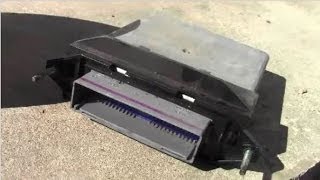
- If all external wiring, power, and grounds are confirmed to be good and the code persists, the PCM is condemned and must be replaced. 🎬 Watch this step-by-step guide to replacing your car's computer
Parts You'll Likely Need
- Powertrain Control Module (PCM)
(OEM #BT1Z-12A650-AC (supersedes BT1Z-12A650-AB))— This is the root cause of a P0605 code in the vast majority of cases after external factors are ruled out. Note: Multiple part numbers exist based on emission standards and vehicle options. The correct part must be matched using the VIN and the PCM's calibration code (often found on a sticker on the module itself).
Trusted brands: Motorcraft (OEM), Cardone (Remanufactured), Dorman (Remanufactured), Flagship One (FS1)
OEM price range: $450-$700
Aftermarket price range: $200-$500
Related Codes That Often Appear With This One
- U0100 — This code means 'Lost Communication With ECM/PCM'. If the PCM is failing internally, it may stop communicating with other modules on the vehicle's CAN bus network, triggering this code.
- P0340 — Camshaft Position Sensor Circuit Malfunction. A failing PCM can misinterpret signals from critical sensors or fail to process them correctly, leading to false sensor codes.
Platform-Specific Known Issues
- A technician documented a successful repair on a 2012 Transit Connect with P0605 by replacing the EPROM chip on the PCM board and reflashing it with the latest calibration using Ford's IDS software. This fixed the code when a simple reflash did not.
- The NHTSA has a record of a P0605 code on a Ford vehicle leading to a PCM replacement recommendation after other parts were replaced without success, highlighting the importance of diagnosing this code correctly. [ODI #763013]
Mechanic-Grade Diagnostic Values
- PCM Power Supply Voltage (Key On, Engine Off) — expected: 12.0V - 12.6V. Failure: Voltage below 12.0V can indicate a weak battery or wiring issue, potentially corrupting the PCM's self-test.
- PCM Power Supply Voltage (Engine Running) — expected: 13.2V - 14.8V. Failure: Voltage outside this range indicates a faulty charging system (alternator), which can cause voltage spikes or drops that damage the PCM.
- PCM Ground Circuit Resistance — expected: < 0.5 Ω (Ohms). Failure: Resistance higher than 0.5 Ω indicates a poor ground connection, which can cause intermittent and unpredictable PCM behavior.
- PCM Ground Circuit Voltage Drop — expected: < 0.5V. Failure: A voltage drop greater than 0.5V on the ground side while the circuit is under load points to high resistance that needs to be located and repaired.
Scan Tool Commands That Help
- Ford IDS (Integrated Diagnostic Software): Module Self-Test — To command the PCM to run its internal checksum verification process. A failure here directly confirms an internal module fault like P0605.
- Ford IDS (Integrated Diagnostic Software): Programmable Module Installation (PMI) — This is the primary function used when replacing a PCM. It allows the technician to download the configuration data from the old PCM (if possible) and transfer it to the new one, ensuring all vehicle options and the VIN are correct.
- Ford IDS (Integrated Diagnostic Software): Module Reprogramming (As-Built) — Used when the original PCM is completely dead and its data cannot be retrieved. The technician must manually enter the vehicle's 'As-Built' data (a code representing all factory options) to configure the new, blank PCM.
- Ford IDS (Integrated Diagnostic Software): PATS (Passive Anti-Theft System) Parameter Reset/Key Relearn — This is a mandatory step after PCM replacement. The security system must be initialized to recognize the existing vehicle keys, otherwise the engine will not start.
Wiring & Ground Locations
- PCM Power Fuse F28 — In the engine compartment power distribution box.. This 15A fuse provides one of the main power feeds to the PCM. A blown or loose fuse will cause a no-start and can set various PCM codes.
- PCM Ground Splices (G22, G37) — Wiring diagrams show multiple PCM ground circuits are spliced together and terminate at ground points on the left and right front fenders in the engine bay.. Corrosion or looseness at these primary ground points can cause a floating ground, leading to unstable PCM operation and codes like P0605.
- PCM Connectors (C175B, C175E, C175T) — These are the three main multi-pin connectors that plug into the PCM, located on the firewall in the engine bay.. All power, ground, and sensor signals pass through these connectors. They are a common point for corrosion, pin damage, or water intrusion that can directly cause a P0605. A visual inspection and pin-drag test are critical here.
Real Owner Repair Stories
- Ford Transit Forum thread 21 (2010 Ford Transit Connect) — Charge light on, dash flickering, headlights going off, juddering and cutting out on acceleration.
❌ Tried (didn't work) The owner initially focused on the numerous fault codes related to EGR, fuel pressure, and other systems.
✅ What actually fixed it The root cause was a faulty alternator (specifically, the blue signal wire was bad) which was causing unstable voltage. This unstable voltage was making the PCM set a cascade of false codes, including P0626 (Generator Field Terminal Circuit High). Fixing the alternator and charging system resolved all the electronic issues.
OEM Part Supersession History
BT1Z-12A650-AB→BT1Z-12A650-AC— Updated part revision from Ford, likely containing hardware or firmware improvements for reliability.
Heads up: While the newer part is backward compatible, it's critical to order by the vehicle's VIN and original calibration code (e.g., 'EJH2', 'VUR1') to ensure the correct software is pre-flashed or can be flashed.BT1A-12A650-AB / AC / BB / BC→Varies— These are common part numbers for 2012 models. They are often superseded by remanufactured units.
Heads up: When sourcing a used or remanufactured PCM, the hardware code (e.g., AS4A-12B684-CB) must also be considered for compatibility before programming.
Diagnostic Flowchart
Other Known Issues on This Vehicle
Issues unrelated to this code that are worth knowing about as an owner of this generation:
- 4F27E Automatic Transmission Failure 🔴 High — Commonly reported between 75,000 and 150,000 miles. Issues include harsh shifting, slipping, and complete failure often related to shift solenoids or internal wear.
- Sliding Door Mechanism Failure 🟠 Medium — The plastic cable carriers, door handles, and lock actuators are prone to breaking, causing the door to become stuck or not latch properly.
- Intake Manifold Runner Control (IMRC) Malfunction 🟠 Medium — The plastic swirl flaps inside the intake manifold or the control solenoid can fail, leading to a ticking noise, rough idle, loss of power, and code P2008.
- Premature Alternator Failure 🟠 Medium — Failures are frequently reported, leading to battery charging issues and potential for widespread electrical problems. A failing alternator can cause voltage spikes that may even contribute to a P0605 code.
- Faulty Cooling Fans 🔴 High — The cooling fan assembly or its control module can fail, leading to engine overheating, especially in traffic. This is sometimes preceded by a blown fuse. (Ref: TSB-10-18-10)
Used vs. New Parts: Buying Guide for This Vehicle
When a used part is the smart pick: A used PCM from a junkyard can be a cost-effective option IF you have access to Ford's IDS software or a professional who can perform the necessary reprogramming. Without programming, a used PCM will not work.
Donor-vehicle mileage cap: roughly under 150000 miles for the part to have meaningful remaining life.
What to inspect on the donor part:
- Match the OEM part number AND the calibration code/catch code sticker exactly (e.g., 'VUR1').
- Inspect the connectors on the donor PCM for any bent, corroded, or pushed-out pins.
- Ensure the donor vehicle has the same engine (2.0L) and transmission type.
- Avoid PCMs from vehicles with flood or fire damage.
OEM-only on this vehicle (don't cheap out):
- While remanufactured units are common, the Powertrain Control Module (PCM) itself is a component where OEM (Motorcraft) or a highly reputable remanufacturer (Cardone, Dorman) is strongly advised due to the complexity and high failure rate of poorly rebuilt units.
Aftermarket brands forum-validated for this vehicle:
- Cardone (Remanufactured)
- Dorman (Remanufactured)
- Flagship One (FS1) (Pre-programmed)
Brands owners have reported issues with on this vehicle:
- Unbranded, no-name sellers on platforms like eBay or Amazon unless they offer a lifetime warranty and pre-programming services with strong positive reviews.
Real Owner Stories
Aggregated from forums and TSBs cited above. Mileages and costs reflect what owners reported in those sources.
2012 Ford Transit Connect 2.0L
Symptoms: The primary symptom was the check engine light being on, which would cause the vehicle to fail an emissions test in Virginia. It was not giving any driveability concerns at the time.
What fixed it: The original Powertrain Control Module (PCM) was repaired on a bench by replacing the EPROM chip on the board, reflashing the module with the latest calibration, and performing a parameter reset and key relearn.
Source hint: Maic Salazar Diagnostics youtube_comment
2012 Ford Transit Connect 2.0L
Symptoms: Vehicle experienced stalling and displayed codes P0605 and P060C.
What fixed it: The discussion points towards PCM failure as the resolution for this combination of codes.
Source hint: https://www.fordtransitusaforum.com/threads/p0605-and-p060c-on-2012-tc.86314/
2010-2013 Ford Transit Connect 2.0L
Symptoms: A P0605 code led to a PCM replacement recommendation after other parts were replaced without success.
What fixed it: PCM replacement.
Source hint: NHTSA record [ODI #763013]
Related OBD-II Codes
Frequently Asked Questions
Can a failing alternator on my 2010-2013 Transit Connect cause the P0605 code?
My 2012 Transit Connect has P0605 but drives fine; do I still need to fix it?
Is there a specific TSB for engine overheating on my Transit Connect?
Where is the PCM located on the 2010-2013 Transit Connect if I need to check the connectors?
Will a simple software reflash fix the P0605 internal ROM error?
Could my aftermarket remote starter be related to the P0605 code?
Helpful Videos
We Have This Part in Stock


The information in this article is provided for general reference and educational purposes only. Vehicle specifications, procedures, and part compatibility can vary by production date, trim level, and region. Always consult your vehicle's factory service manual and verify part numbers before purchasing or performing repairs. Safety-critical components such as airbags, seat belts, and braking systems should be installed by a qualified professional.
- Ford Transit Connect:
- 🎬 Helpful Videos
- 🛍️ Shop This Part
- What's Unique About the 2010-2013 Ford Transit Connect
- Symptoms You May Notice
- Most Likely Causes
- Rare But Worth Checking
- Diagnosis Steps
- Parts You'll Likely Need
- Related Codes That Often Appear With This One
- Platform-Specific Known Issues
- Mechanic-Grade Diagnostic Values
- Scan Tool Commands That Help
- Wiring & Ground Locations
- Real Owner Repair Stories
- OEM Part Supersession History
- Diagnostic Flowchart
- Other Known Issues on This Vehicle
- Used vs. New Parts: Buying Guide for This Vehicle
- Real Owner Stories
- 2012 Ford Transit Connect 2.0L
- 2012 Ford Transit Connect 2.0L
- 2010-2013 Ford Transit Connect 2.0L
- Related OBD-II Codes
- Frequently Asked Questions
- 🎟️ Get 5% Off