

P0603 on 2007-2013 Nissan Altima: Keep Alive Memory (KAM) Error Causes and Fixes
On a 2007-2013 Nissan Altima, P0603 almost always means there's a problem with the battery or its connections. Before suspecting a bad engine computer (ECM), test the battery, clean the terminals, and check the main ground straps. This is usually a simple fix costing under $200 for a new battery.
- P0603 on your Altima is an electrical memory issue, not a mechanical failure.
- Do not replace the expensive engine computer (ECM). The problem is almost certainly the battery, its connections, or a main ground strap.
- Start your diagnosis by cleaning the battery terminals and main grounds, and having the battery's health professionally tested.
- A recent jump-start, battery replacement, or having the car sit for a long time can trigger this code and it may not indicate a current fault. Follow Nissan's reset procedure to confirm.
- The fix is usually simple and inexpensive, often just requiring battery maintenance or replacement.
What's Unique About the 2007-2013 Nissan Altima
For Nissan vehicles, including the Altima and its platform mates like the Rogue and Maxima, this code is very frequently triggered by simple power supply issues. Nissan even released a Technical Service Bulletin (NTB16-018D) for many of its models, stating that P0603 is often just the result of low battery voltage or a recent battery disconnection. This means that unlike many other codes that might point to a complex sensor failure, P0603 on an Altima strongly suggests starting with the most basic electrical checks, as the battery or a bad ground is the most likely culprit.
Generation note: The 2007-2013 year range covers the entire fourth generation of the Nissan Altima, known as the L32. This generation received a facelift for the 2010 model year, but the causes and fixes for a P0603 code are consistent across all years of this generation and are a known characteristic of Nissan vehicles from this era.
Symptoms You May Notice
- Check Engine Light is on
- Vehicle will not pass an emissions test because readiness monitors cannot be set.
- Rough or unstable idle
- Hesitation or sluggish acceleration
- Reduced fuel economy
- Engine may be hard to start or stalls intermittently
- Transmission may not shift as smoothly as usual
- Replacing the Engine Control Module (ECM). The ECM is rarely the cause of this code. Always rule out all power supply issues (battery, terminals, alternator, fuses, and ground straps) before even considering the ECM is faulty.
Most Likely Causes
- Weak, Failing, or Recently Disconnected Battery 🔴 High Probability This is the most common cause across all Nissan models. The ECM is sensitive to voltage drops that occur when a battery is old, weak, or has been recently disconnected for service or a jump-start. Nissan TSBs confirm this is the first thing to check.
How to confirm: Check the battery voltage with a multimeter; it should be above 12.4 volts with the engine off and between 13.2-14.5V when running. Get a load test performed on the battery; many auto parts stores offer this for free. Per Nissan TSBs, the voltage should be at least 11V with the ignition on (engine off).
Typical fix: If the battery is low, charge it fully. If it fails a load test, replace the battery.
Est. part cost: $120-$250 - Loose or Corroded Battery Terminals/Cables 🔴 High Probability Corrosion or loose connections create resistance, preventing the ECM from receiving a stable voltage, even if the battery itself is healthy. This is a frequent and simple point of failure. The terminal clamps themselves can develop hairline cracks or become stretched, preventing a tight fit even if they appear secure.
How to confirm: Visually inspect the battery terminals for white or greenish corrosion. Physically try to twist the terminal clamps; they should not move. A voltage drop test across the terminal post and the clamp should show less than 0.1V.
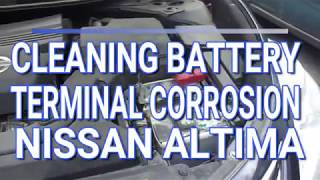
Typical fix: Disconnect the battery (negative first). Clean the terminals and cable clamps with a wire brush and a baking soda/water solution. 🎬 Watch: How to properly clean battery terminal corrosion. Reconnect securely (positive first). Replace the terminal clamp if it is cracked or will not tighten sufficiently.
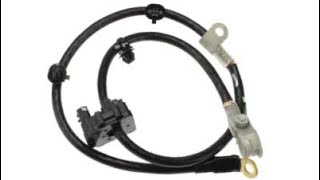
Est. part cost: $5-$25 - Corroded or Loose Main Ground Straps 🟡 Medium Probability The main ground straps from the battery to the chassis and from the engine to the firewall can corrode or loosen over time, causing intermittent voltage drops that trigger P0603 even with a good battery. There is a key ground point under the airbox that is often overlooked. 🎬 See how to replace a corroded battery ground cable.
How to confirm: Follow the main negative battery cable to where it bolts to the vehicle's body. Inspect this connection for rust and tightness. Also, locate and inspect the braided strap between the engine/transmission and the firewall. Check resistance from the strap to the chassis; it should be near zero ohms.
Typical fix: Remove the bolt, clean the contact point down to bare metal with a wire brush, and re-secure the ground strap tightly.
Est. part cost: $0-$20 - Failing Alternator 🟡 Medium Probability An alternator that isn't properly recharging the battery will lead to low system voltage, eventually triggering the P0603 code as the ECM's keep-alive power is lost.
How to confirm: With the engine running, check the voltage at the battery terminals. A healthy alternator should produce between 13.2 and 14.8 volts. If the voltage is low or fluctuates wildly, the alternator is suspect.
Typical fix: Replace the alternator.
Est. part cost: $200-$400
Rare But Worth Checking
- Blown Fuse or Faulty ECM Power Relay: A fuse or relay in the ECM's power supply circuit could fail, cutting off the keep-alive voltage. The ECM relay is often located in the Intelligent Power Distribution Module (IPDM E/R), which is a 'smart fuse box' in the engine bay. A fault in the IPDM itself is rare but possible.
- Damaged Wiring: A corroded or broken power wire to the ECM can interrupt the keep-alive memory circuit. This is rare without other signs of damage, corrosion, or after recent repair work where a wire may have been disturbed.
- Outdated ECM Software: In some cases, the original ECM software is overly sensitive to minor voltage fluctuations. A Nissan dealer can check if a software update is available, which can make the system less likely to trigger the code unnecessarily.
Diagnosis Steps
- Scan for codes but do not clear them yet. Note any other codes present, as they may point to a shared electrical issue.
- Visually inspect the battery terminals for corrosion and ensure the cable clamps are tight.
- Inspect the main ground straps: the one from the negative battery terminal to the chassis, and the one from the engine to the firewall. Ensure they are tight and free of corrosion.
- With the engine off, use a multimeter to measure the battery voltage. A healthy battery should read at least 12.4V.
- Have the battery professionally load-tested to confirm its health. This is often a free service at auto parts stores.
- Start the engine. Measure the voltage at the battery terminals again. The reading should be between 13.2V and 14.8V, indicating a functioning alternator.
- If the battery and alternator test good, inspect the main fuses and relays related to the ECM power supply in the IPDM (engine bay fuse box).
- If all power supply components are good, trace the wiring for the ECM's power and ground circuits, looking for damage or corrosion. Specifically, check for constant battery voltage at the ECM's backup power pin (e.g., Pin 121 on some models).
- After performing a repair (like replacing the battery or cleaning a ground), clear the code. To confirm the fix per Nissan's TSB procedure, turn the ignition ON for 1 second, then OFF for 10 seconds. Repeat this cycle 10 times. Then, turn the ignition ON and re-check for the code. If it has not returned as a '1st trip DTC', the issue is resolved.
- If the idle is unstable after the repair, perform an 'Idle Air Volume Learn' procedure using a compatible scan tool. 🎬 Watch: How to perform the idle air volume learn procedure.
- Only after exhausting all other possibilities should an ECM failure be considered.
Parts You'll Likely Need
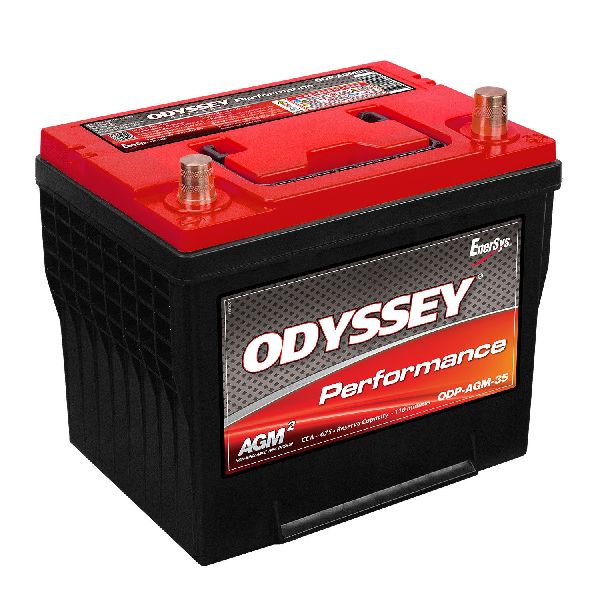
- Automotive Battery
(OEM #24410-JA10A (verify for specific year/engine))— This is the most frequent cause. The original battery is likely old and unable to hold a sufficient charge to maintain the ECM's keep-alive memory. Common aftermarket sizes are BCI Group 35 or 34.
Trusted brands: Interstate, DieHard, Duralast, Bosch, Optima
OEM price range: $180-$250
Aftermarket price range: $120-$220 - Battery Terminal Cleaner — Corroded terminals are the second most common cause, preventing good electrical contact even with a healthy battery.
Trusted brands: CRC, NOCO
OEM price range: $5-$15
Aftermarket price range: $5-$15
Technical Service Bulletins (TSBs) & Recalls
- NTB16-018D: While this TSB officially applies to the next-generation (2015-2018) Altima, it is highly relevant. It confirms from Nissan that P0603 is often caused by low battery voltage or battery terminal disconnections and advises against immediate ECM replacement. It provides a specific diagnostic procedure: after clearing the code, cycle the ignition ON (1 sec) and OFF (10 sec) ten times to confirm the fix.
- NTB21-027: This is another TSB for other Nissan models that reinforces the same diagnostic principle as NTB16-018D, further confirming this is a known Nissan-wide characteristic.
Platform-Specific Known Issues
- Appearance with Other Electrical Codes: On a 2007 Altima, one owner on Reddit reported P0603 appearing alongside P0335 (Crankshaft Position Sensor Circuit). This suggests that a systemic electrical issue, like a bad ground or failing alternator, can cause multiple seemingly unrelated codes to appear at once.
- Persistent Code After Battery Replacement: An owner of a 2011 Altima reported the code and drivability issues (shaking, erratic behavior) persisted even after installing a new battery. This points towards a less common but important cause, such as a faulty ground connection, damaged wiring, or an issue with the IPDM that was not resolved by the new battery alone.
Mechanic-Grade Diagnostic Values
- ECM Backup Power Pin Voltage — expected: Should be equal to battery voltage (12.0V+) at all times, even with the key off.. Failure: 0V or fluctuating voltage indicates a break in the circuit (fuse, wiring, IPDM) or a bad ground.
- ECM Ground Pin Resistance — expected: Less than 1.0 Ohm between the ECM connector's ground pins and a clean chassis ground point.. Failure: Resistance higher than 1.0 Ohm indicates a corroded or loose ground connection that needs to be located and cleaned.
- Voltage Drop Test at Battery Terminal — expected: Less than 0.1V (100mV) when measured between the battery post and the attached cable clamp.. Failure: A reading higher than 0.1V indicates high resistance from corrosion or a poor connection, even if it looks clean.
Scan Tool Commands That Help
- Nissan CONSULT or compatible advanced scan tool: Idle Air Volume Learn (IAVL) — This procedure is not for diagnosing P0603, but is often required *after* the power supply issue has been fixed. A power loss resets the learned idle position, which can cause a rough or unstable idle. Running the IAVL forces the ECM to relearn the correct throttle plate position for a smooth idle.
- Nissan CONSULT or compatible advanced scan tool: Self Diagnostic Result — Used to confirm if the P0603 code is stored as a '1st trip DTC' (current) or a stored past event. This helps determine if the fault is actively present.
Wiring & Ground Locations
- ECM Backup Power Pin — On the main ECM harness connector. For many L32 Altimas, this is Pin 121 (White wire). Always verify with a model-year specific wiring diagram.. This is the specific pin that supplies the Keep Alive Memory power. A direct voltage test here is the definitive way to confirm if the ECM is receiving the power it needs.
- Engine Ground Strap (Secondary) — Often found under the air filter housing, connecting the transmission or engine block to the chassis frame rail.. This is a commonly overlooked ground point. While the main battery ground may be clean, corrosion at this secondary location can cause intermittent voltage issues for the engine sensors and ECM, triggering P0603.
- IPDM E/R (Intelligent Power Distribution Module Engine Room) — Black box located in the engine compartment, near the battery and firewall. It contains non-serviceable relays.. The IPDM contains the internal relay that controls the backup power supply to the ECM. If this relay fails, the ECM loses its keep-alive power, directly causing a P0603.
Real Owner Repair Stories
- NissanForums user post (2010 Nissan Altima 2.5S) — P0603 code returned immediately after clearing, even with a new battery. Car had rough idle and poor throttle response.
❌ Tried (didn't work) Replacing the battery, Cleaning the main battery terminals
✅ What actually fixed it The positive battery terminal clamp had a hairline crack and was not clamping with enough force on the new battery's post. Replacing the positive terminal clamp for $15 resolved the issue completely. - Reddit r/MechanicAdvice user post (2012 Nissan Altima) — Persistent P0603, car would sometimes stall at lights. Readiness monitors would not set.
❌ Tried (didn't work) New battery installed, New alternator installed, Cleaned main battery ground to chassis
✅ What actually fixed it A secondary ground strap, located under the airbox and connecting the transmission to the chassis, was found to be severely corroded. After removing the airbox, cleaning the contact points to bare metal, and re-securing the strap, the code did not return. - AltimaForums.net user post (2008 Nissan Altima) — P0603 code appeared after a jump start. Car ran fine but Check Engine Light was on.
❌ Tried (didn't work) Clearing the code (it would return on the next key cycle)
✅ What actually fixed it The issue was resolved by performing the TSB procedure. The user disconnected the battery for 30 minutes to perform a hard reset, reconnected it, then cycled the ignition ON for 2 seconds and OFF for 10 seconds, ten times in a row. The code did not return after this procedure, indicating it was a 'ghost' code from the voltage spike/drop of the jump start.
When the Usual Fixes Don't Work
- In a significant number of documented cases, replacing the battery did not fix the P0603 code. For this specific vehicle, the next most likely culprits are the battery terminal clamps themselves not making a solid connection (due to stretching or cracks) or a secondary, less-visible ground strap (often under the airbox) being corroded. These two issues account for the majority of cases where a 'good battery' still results in a P0603.
OEM Part Supersession History
23710-JAxxx, 23710-JBxxx→Later revisions (e.g., JA00A -> JA00B -> JA00C)— Minor hardware revisions and software updates to address bugs or improve performance.
Heads up: When replacing an ECM, it must be programmed to the vehicle using a tool like Nissan CONSULT. The vehicle's immobilizer keys must be re-registered to the new ECM, otherwise the car will not start. A used ECM from another vehicle will not be plug-and-play.
Model Year Variations Within This Range
- 2007-2013: While the 2010 facelift introduced cosmetic and some feature changes, the underlying electrical architecture for the ECM power and ground supply remained fundamentally the same. The diagnostic procedure for P0603 is identical across the entire L32 generation. Minor variations in wiring color or pin locations may exist, always warranting a check of the year-specific service manual.
Diagnostic Flowchart
Used vs. New Parts: Buying Guide for This Vehicle
When a used part is the smart pick: Used parts are a smart choice for battery cables, ground straps, and battery terminal clamps. A used IPDM from a reputable salvage yard can also be a cost-effective solution. A used ECM is a viable option only if you have access to a professional who can program it to your vehicle.
Donor-vehicle mileage cap: roughly under 80000 miles for the part to have meaningful remaining life.
What to inspect on the donor part:
- For wiring/cables: Check for intact insulation, no green corrosion at the ends, and no signs of brittleness.
- For IPDM/ECM: Ensure the casing is not cracked and there are no signs of water intrusion or bent pins on the connectors.
- Look for vehicles from dry climates to minimize corrosion risk.
OEM-only on this vehicle (don't cheap out):
- Engine Control Module (ECM): While a used OEM unit can work if programmed, avoid aftermarket 'rebuilt' ECMs from unknown brands, as they often have quality control issues. A new OEM unit is the most reliable, albeit expensive, option.
Aftermarket brands forum-validated for this vehicle:
- Battery: Interstate, DieHard, Duralast Gold/Platinum, Optima
- Alternator: Denso (often the OEM supplier), Bosch (remanufactured)
Brands owners have reported issues with on this vehicle:
- No-name, unbranded ECMs or IPDMs from online marketplaces without a strong warranty and return policy.
Real Owner Stories
Aggregated from forums and TSBs cited above. Mileages and costs reflect what owners reported in those sources.
2011 Nissan Altima
Symptoms: Vehicle was shaking and exhibiting erratic behavior along with the P0603 code.
What fixed it: The issue persisted even after installing a new battery, indicating the cause was a more complex electrical problem such as a faulty ground connection, damaged wiring, or an issue with the IPDM.
Source hint: CarKiller Forum - 'Problems with P0603 on Nissan altima 2011'
2007 Nissan Altima
Symptoms: The P0603 code appeared at the same time as a P0335 (Crankshaft Position Sensor Circuit) code.
What fixed it: The source suggests the root cause for both codes was a systemic electrical issue, such as a bad ground or a failing alternator, that was affecting multiple vehicle systems.
Source hint: Reddit r/MechanicAdvice
Related OBD-II Codes
Frequently Asked Questions
I see TSB NTB16-018D mentioned, but it says it's for a newer 2015-2018 Altima. Does it apply to my 2011 model?
My 2009 Altima just threw a P0603 code. Should I replace the ECM?
What specific voltage readings should I look for when checking the battery and alternator on my Altima?
I replaced the battery in my 2012 Altima, but the P0603 code came back. What's a common thing to miss?
After replacing the battery and clearing the P0603 code on my Altima, the idle is now rough. What should I do?
Will my 2008 Altima pass an emissions test with a P0603 code active?
Helpful Videos


We Have This Part in Stock


The information in this article is provided for general reference and educational purposes only. Vehicle specifications, procedures, and part compatibility can vary by production date, trim level, and region. Always consult your vehicle's factory service manual and verify part numbers before purchasing or performing repairs. Safety-critical components such as airbags, seat belts, and braking systems should be installed by a qualified professional.
- Nissan Altima:
- 🎬 Helpful Videos
- 🛍️ Shop This Part
- What's Unique About the 2007-2013 Nissan Altima
- Symptoms You May Notice
- Most Likely Causes
- Rare But Worth Checking
- Diagnosis Steps
- Parts You'll Likely Need
- Technical Service Bulletins (TSBs) & Recalls
- Platform-Specific Known Issues
- Mechanic-Grade Diagnostic Values
- Scan Tool Commands That Help
- Wiring & Ground Locations
- Real Owner Repair Stories
- When the Usual Fixes Don't Work
- OEM Part Supersession History
- Model Year Variations Within This Range
- Diagnostic Flowchart
- Used vs. New Parts: Buying Guide for This Vehicle
- Real Owner Stories
- 2011 Nissan Altima
- 2007 Nissan Altima
- Related OBD-II Codes
- Frequently Asked Questions
- 🎟️ Get 5% Off