

P0603 on 2009-2014 Hyundai Genesis: Keep Alive Memory (KAM) Error Causes and Fixes
This code most often means there has been a power interruption to the engine computer, frequently caused by a weak or recently replaced battery, or loose/corroded terminals. Check the battery and connections first before suspecting a faulty Powertrain Control Module (PCM).
- P0603 is a memory error code, not a critical component failure code.
- Always check the battery, its connections, and its age first. This is the most common and cheapest fix.
- If you recently disconnected or replaced the battery, this code is expected. Simply clear it and drive.
- Do not assume the main computer (PCM) is bad. It is the least likely cause.
What's Unique About the 2009-2014 Hyundai Genesis
For the 2009-2014 Hyundai Genesis (both Sedan and Coupe), the P0603 code is not indicative of a widespread, unique platform flaw. Instead, its appearance is most commonly tied to universal automotive electrical issues. Owners often report this code appearing immediately after replacing the battery or jump-starting the vehicle, which temporarily interrupts the constant power supply required by the Keep Alive Memory. The electrical system's sensitivity to voltage drops from an aging battery, especially during engine cranking, is a primary trigger. Its platform-mate, the Hyundai Genesis Coupe (BK), exhibits the exact same sensitivity.
Symptoms You May Notice
- Check Engine Light is on.
- Rough or unstable idle.
- Hesitation during acceleration.
- Noticeable decrease in fuel economy.
- Harsh or erratic transmission shifting.
- Difficulty starting the engine in some cases.
- Illuminated ABS or traction control light in some instances.
- Replacing the PCM immediately. The vast majority of P0603 codes are caused by simple power supply issues, not a failed computer.
Most Likely Causes
- Weak or Failing Battery 🔴 High Probability Like most modern vehicles, the Genesis relies on a stable voltage supply. An aging battery that drops below the required voltage during engine cranking can cause the PCM to lose its KAM data. This is the most common trigger reported by owners.
How to confirm: Use a multimeter to test the battery voltage. A healthy, fully charged battery should read about 12.6 volts with the engine off and 13.5-14.5 volts with the engine running. Many auto parts stores will test your battery and charging system for free.
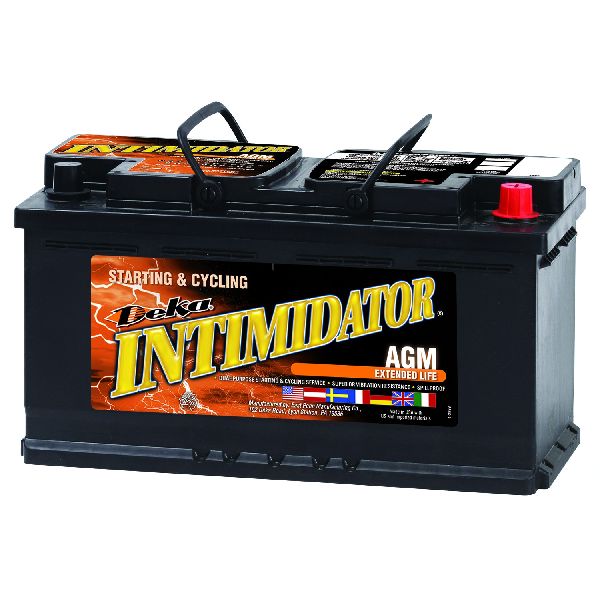
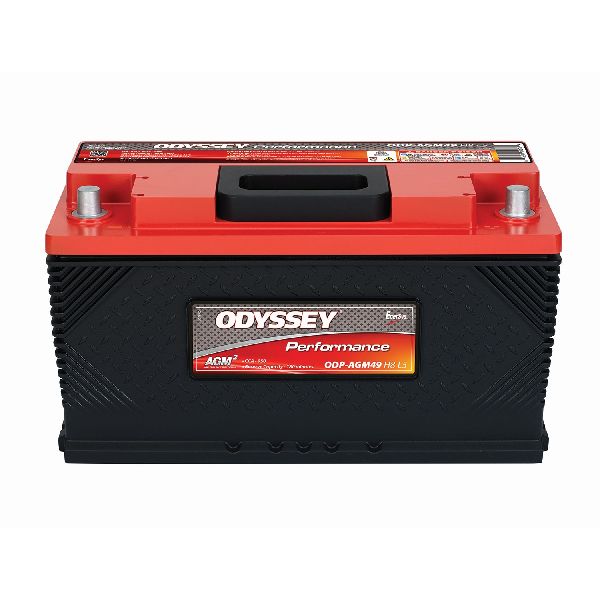
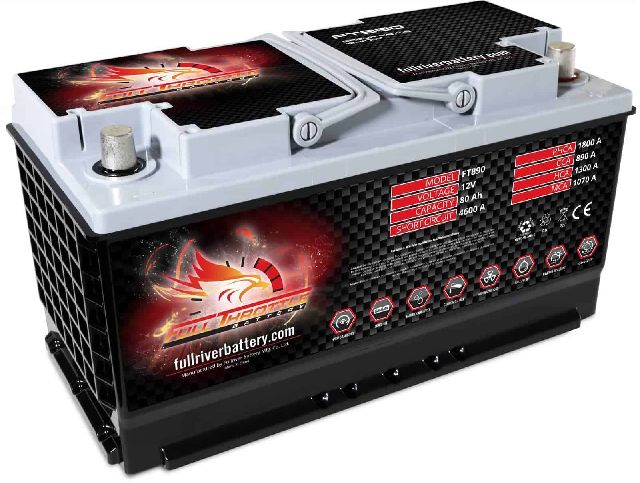
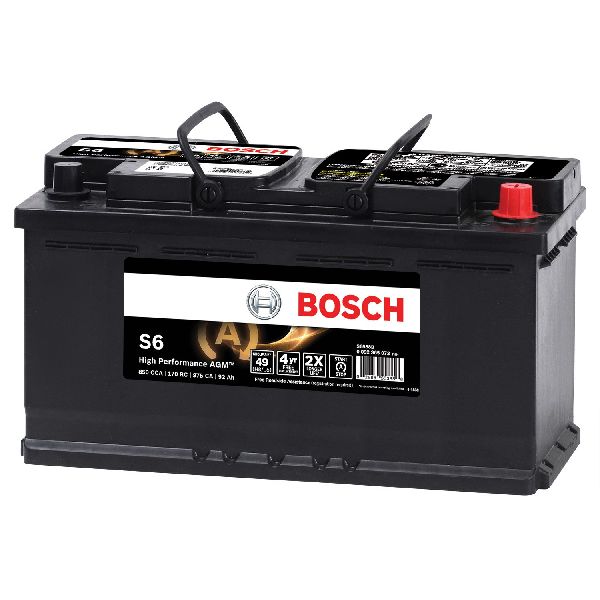
Typical fix: Replace the battery if it fails a load test or cannot hold a proper charge. The common battery group size for the V6 Genesis is 124R.
Est. part cost: $150-$300 - Loose or Corroded Battery Terminals 🔴 High Probability Battery terminals can corrode over time, creating resistance and causing intermittent power loss to the vehicle's electronics, including the PCM's memory.
How to confirm: Visually inspect the battery terminals and cable ends for any white or greenish buildup (corrosion) or looseness. Wiggle the connections by hand to check for movement.
Typical fix: Disconnect the battery (negative terminal first), clean the terminals and cable clamps with a wire brush and a baking soda/water solution, and reconnect securely (positive terminal first). Apply a dielectric grease or anti-corrosion spray.
Est. part cost: $5-$15 for a terminal cleaning kit - Recent Battery Disconnection or Replacement 🟡 Medium Probability The code is a normal consequence of disconnecting the power source. The PCM logs this code because its Keep Alive Memory was intentionally or unintentionally wiped during service, a jump-start, or replacement.
How to confirm: If the code appeared immediately after the battery was disconnected for service, jump-started, or replaced, this is almost certainly the cause.
Typical fix: Clear the code with an OBD-II scanner. The code should not return if the power supply is now stable. The PCM will relearn its adaptive settings over the next few drive cycles.
Est. part cost: $0 - Poor Ground Connections ⚪ Low Probability Corrosion or looseness is not limited to the battery terminals. The main engine-to-chassis ground strap can degrade over time, causing a host of intermittent and difficult-to-diagnose electrical gremlins, including KAM errors.
How to confirm: Locate the main ground straps between the engine block and the vehicle's chassis. Inspect them for fraying, corrosion, or looseness at the connection points.
Typical fix: Clean the contact points with a wire brush and ensure the bolts are tight. If the strap is heavily corroded or frayed, replace it.
Est. part cost: $20-$50 - Faulty Alternator ⚪ Low Probability An alternator that is failing may not provide a consistent voltage to charge the battery and power the vehicle's systems, leading to voltage drops that can trigger a P0603.
How to confirm: With the engine running, check the battery voltage with a multimeter. If the voltage is not consistently between 13.5 and 14.5 volts, the alternator is likely not charging correctly. Listen for whining noises from the alternator.
Typical fix: Replace the alternator.
Est. part cost: $250-$500
Rare But Worth Checking
- Faulty Powertrain Control Module (PCM): This is the 'last resort' diagnosis. A PCM can fail internally, preventing it from retaining memory, but this is uncommon. All other power and ground-related issues should be exhaustively checked first.
- Blown Fuse or Wiring Issue: A specific fuse often protects the PCM's memory circuit. If this fuse blows, or if there is a break in the power or ground wire to the PCM, the KAM will be lost.
- Aftermarket Engine Tuning: Performance tunes or chips that re-flash the PCM's software can sometimes cause conflicts with the Keep Alive Memory function, leading to a P0603 code. This is more common on the performance-oriented Genesis Coupe.
Diagnosis Steps
- Check if the battery has been recently disconnected, replaced, or if the vehicle was jump-started. If so, clear the code and see if it returns after a few drive cycles. This is the most common scenario.
- Inspect the battery terminals and cables for corrosion or looseness. Clean and tighten as necessary.
- Test the battery's state of charge and health. Use a multimeter to check the voltage with the engine off (should be ~12.6V) and running (should be 13.5-14.5V). A load test is the most definitive way to confirm battery health.
- Inspect main ground straps. Check the primary ground connection from the engine to the chassis for any signs of corrosion, damage, or looseness.
- If the battery and connections are good, check the fuses related to the PCM and engine controls. Consult the owner's manual or the fuse box diagram for the 'ECM' or 'Power' fuses.
- If the code persists, inspect the wiring harness for the PCM for any visible damage, loose connections, or signs of water intrusion.
- If you have an aftermarket tune, consider flashing back to the stock map to see if the code disappears.
- If all of the above checks pass, the issue may be an internal fault with the Powertrain Control Module (PCM), which may require professional diagnosis and potential replacement.
Parts You'll Likely Need
- Car Battery
(OEM #Commonly Group Size 124R for V6 models)— A weak or failing battery is the most frequent cause of the voltage drop that triggers a P0603 code.
Trusted brands: Interstate, DieHard, Duralast
OEM price range: $200-$350
Aftermarket price range: $150-$300 - Battery Terminal Cleaner — Used to fix the second most common cause: corroded battery terminals that interrupt the power supply to the PCM.
OEM price range: $5-$15
Aftermarket price range: $5-$15 - Engine Ground Strap — A corroded or loose ground strap can cause intermittent power issues that trigger a P0603 code.
Trusted brands: Standard Motor Products, Dorman
OEM price range: $30-$60
Aftermarket price range: $20-$50
Technical Service Bulletins (TSBs) & Recalls
- TSB 23-BD-002G / 20-BD-014H: While not related to P0603, these bulletins address a very common platform issue of moisture and condensation inside headlamp and tail lamp assemblies, which owners may encounter. The TSBs note that some condensation is normal and can be cleared by running the lamps, but water pooling indicates a leak.
Platform-Specific Known Issues
- Common Post-Battery Replacement Code: Numerous owner experiences across forums confirm that the P0603 code is extremely common and often expected after replacing the battery or having to jump-start the car. In these cases, the fix is simply to clear the code with a scanner, after which it does not return, confirming that no actual fault exists.
Mechanic-Grade Diagnostic Values
- Parasitic Current Draw — expected: Under 50 milliamps (mA) after all vehicle modules have entered sleep mode (this can take up to 30 minutes after turning the ignition off and closing all doors).. Failure: A sustained draw over 80-100mA suggests a module or component is not shutting down correctly, leading to a slow battery drain that can trigger a P0603 on startup.
Scan Tool Commands That Help
- Hyundai GDS (Global Diagnostic System): Reset Adaptive Values — This function is typically used after replacing a transmission or reprogramming the PCM/TCM. While not a direct fix for the P0603's root cause, it can be used to clear all learned data and force a complete relearn cycle after an underlying power supply issue has been definitively repaired.
Wiring & Ground Locations
- Primary ECU/PCM Ground — On the Genesis Coupe, there is a critical ground point on the chassis, often on the firewall or inner fender in the engine bay, where the ECU grounds.. A loose or corroded ECU ground can directly cause intermittent power loss and memory issues within the module, triggering a P0603 even with a good battery.
- Engine Block / Intake Manifold Ground — Additional grounds are located on the engine itself. On the Genesis Coupe, points on the intake manifold and engine mount are common locations for grounding straps.. These grounds ensure the entire engine block and its attached sensors have a stable connection to the chassis and battery negative. A poor connection here can cause electrical noise and voltage fluctuations.
- Starter Motor Ground — A ground connection is often made at one of the starter motor mounting bolts on the transmission bellhousing.. While primarily for the high current demands of the starter, a poor connection here can contribute to overall system grounding problems.
- Main Battery to Chassis Ground — The main negative battery cable connects directly to a point on the vehicle's chassis, typically near the battery itself.. This is the most fundamental ground connection for the entire vehicle. Corrosion or looseness at this single point can cause widespread, intermittent electrical faults, including P0603.
When the Usual Fixes Don't Work
- In cases where the P0603 code appears after a battery replacement and stubbornly returns immediately after being cleared with a scan tool, a 'hard reset' may be necessary. This involves disconnecting both battery terminals and holding the positive and negative cable ends together for 5-10 minutes. This drains any residual voltage from the capacitors in the vehicle's modules, forcing a complete reboot. This should be attempted before assuming the new battery is faulty or the PCM has failed.
Model Year Variations Within This Range
- 2013-2014: The 2013 model year marked a significant refresh. The Genesis Coupe (BK2) received revised 2.0T and 3.8L engines with more power, new front/rear styling, and a new 8-speed automatic transmission. The Genesis Sedan saw the 4.6L V8 dropped and gained an updated infotainment system with Blue Link. These changes mean PCMs and other electronic modules are generally not interchangeable between 2009-2012 and 2013-2014 models.
- 2009-2012: Early V8 Genesis Sedans (2012 and prior with the 5.0L engine) are noted by some owners to have potential oil consumption issues due to piston ring design. This was reportedly addressed for the 2013 model year. While unrelated to P0603, it's a critical distinction for vehicle ownership.
Diagnostic Flowchart
Other Known Issues on This Vehicle
Issues unrelated to this code that are worth knowing about as an owner of this generation:
- Manual Transmission Grind / Poor Shift Feel 🟠 Medium — Very common on earlier models (2010-2013), especially when cold. Often caused by poor quality OEM fluid and soft shifter/transmission mounts.
- Timing Chain Tensioner Wear / Cold Start Rattle 🔴 High — Common on both 2.0T and 3.8L engines, typically appearing after 80,000 miles. Presents as a brief, loud rattle upon cold startup as oil pressure builds. Failure to address can lead to jumped timing and catastrophic engine damage.
- Tail Light Gasket Leaks & Condensation 🟡 Low — Extremely common across all model years. The foam gaskets for the tail light assemblies degrade, allowing moisture to enter the housing and often the trunk. (Ref: TSB 23-BD-002G, 20-BD-014H)
- 2.0T Wastegate Actuator Rattle/Failure 🟠 Medium — Prevalent on the 2.0T engine, particularly the updated 2013+ models (BK2). The electronic wastegate actuator can fail or the linkage can rattle, causing boost control problems and CELs like P2261 or P2562.
- Brake Fluid / HECU Corrosion Recall 🔴 High — A recall (NHTSA Campaign 13V489000) was issued for 2009-2012 models because the original brake fluid could cause corrosion in the Hydraulic Electronic Control Unit (HECU), potentially reducing brake effectiveness. (Ref: Recall 13V489000)
Used vs. New Parts: Buying Guide for This Vehicle
When a used part is the smart pick: For a P0603 repair, obtaining a used engine ground strap from a salvage yard is a perfectly acceptable cost-saving measure, provided it is not frayed or corroded. A used Powertrain Control Module (PCM) is also a viable option to save significant money over a new unit.
Donor-vehicle mileage cap: roughly under 150000 miles for the part to have meaningful remaining life.
What to inspect on the donor part:
- For a used PCM, verify the part number exactly matches the original unit. It must come from a donor vehicle with the same year, engine, and transmission.
- Inspect the PCM connectors for any bent pins, corrosion, or signs of water damage.
- For ground straps, ensure the woven cable is intact with no broken strands and the metal eyelets are not corroded or damaged.
OEM-only on this vehicle (don't cheap out):
- While not strictly required, using an OEM or high-quality OEM-equivalent alternator is recommended if it is found to be the cause, as budget alternators can have inconsistent voltage regulation, potentially causing further electrical issues.
Brands owners have reported issues with on this vehicle:
- Be cautious with no-name, ultra-cheap online PCM repair services or pre-programmed modules. A common failure point is improper programming, which can cause more issues. It is safer to use a reputable rebuilder or have a used OEM unit programmed by a dealer.
Real Owner Stories
Aggregated from forums and TSBs cited above. Mileages and costs reflect what owners reported in those sources.
2009-2014 Hyundai Genesis
Symptoms: Check Engine Light with code P0603 appeared immediately after replacing the car's battery.
What fixed it: The code was cleared with an OBD-II scanner and it did not return, confirming there was no active fault.
Source hint: vehicle_specific_issues: Common Post-Battery Replacement Code
Hyundai Genesis Coupe
Symptoms: Moisture and water were leaking into the tail light housings and sometimes the trunk.
What fixed it: The owner used a DIY solution with weather stripping to create a new seal for the tail light assembly, as the original foam gaskets had failed.
Source hint: Reddit r/genesiscoupe/comments/b7wz8c/what_can_i_do_about_moisture_in_my_taillights/
Hyundai Genesis Coupe 6-speed manual
Symptoms: The manual transmission was grinding between shifts and had a generally sloppy, poor shift feel.
What fixed it: The owner reported significant improvement by replacing the OEM transmission fluid with a higher quality fluid and installing upgraded shifter and transmission mounts/bushings.
Source hint: Reddit r/genesiscoupe/comments/p4f9p4/how_to_improve_shifting_on_the_6speed_manual/
2010 Hyundai Genesis Coupe 3.8L — ~85000 miles
Symptoms: A loud rattle from the engine for a few seconds on a cold startup, which is a symptom of timing chain tensioner wear.
What fixed it: The source is a discussion of symptoms; the owner was seeking advice on how to confirm the issue. The typical fix for this known issue is replacing the timing chain tensioners.
Source hint: Reddit r/genesiscoupe/comments/157a82g/2010_bk1_38_how_do_i_know_if_im_having_timing/
Related OBD-II Codes
Frequently Asked Questions
I just replaced the battery in my 2011 Genesis and now the P0603 code is on. Did I break something?
Can a P0603 code on my Hyundai Genesis cause the transmission to shift harshly?
My battery tests fine, but the P0603 code keeps coming back. What should I check next on my Genesis?
Is the P0603 code also a common issue for the Hyundai Genesis Coupe?
Along with the Check Engine Light for P0603, my ABS and traction control lights are also on. Is this related?
What is the very first thing I should do when diagnosing a P0603 code?
We Have This Part in Stock


The information in this article is provided for general reference and educational purposes only. Vehicle specifications, procedures, and part compatibility can vary by production date, trim level, and region. Always consult your vehicle's factory service manual and verify part numbers before purchasing or performing repairs. Safety-critical components such as airbags, seat belts, and braking systems should be installed by a qualified professional.
- Hyundai Genesis:
- 🛍️ Shop This Part
- What's Unique About the 2009-2014 Hyundai Genesis
- Symptoms You May Notice
- Most Likely Causes
- Rare But Worth Checking
- Diagnosis Steps
- Parts You'll Likely Need
- Technical Service Bulletins (TSBs) & Recalls
- Platform-Specific Known Issues
- Mechanic-Grade Diagnostic Values
- Scan Tool Commands That Help
- Wiring & Ground Locations
- When the Usual Fixes Don't Work
- Model Year Variations Within This Range
- Diagnostic Flowchart
- Other Known Issues on This Vehicle
- Used vs. New Parts: Buying Guide for This Vehicle
- Real Owner Stories
- 2009-2014 Hyundai Genesis
- Hyundai Genesis Coupe
- Hyundai Genesis Coupe 6-speed manual
- 2010 Hyundai Genesis Coupe 3.8L — ~85000 miles
- Related OBD-II Codes
- Frequently Asked Questions
- 🎟️ Get 5% Off