

P0603 on 2004-2008 Ford F-150: Keep Alive Memory (KAM) Error Causes and Fixes
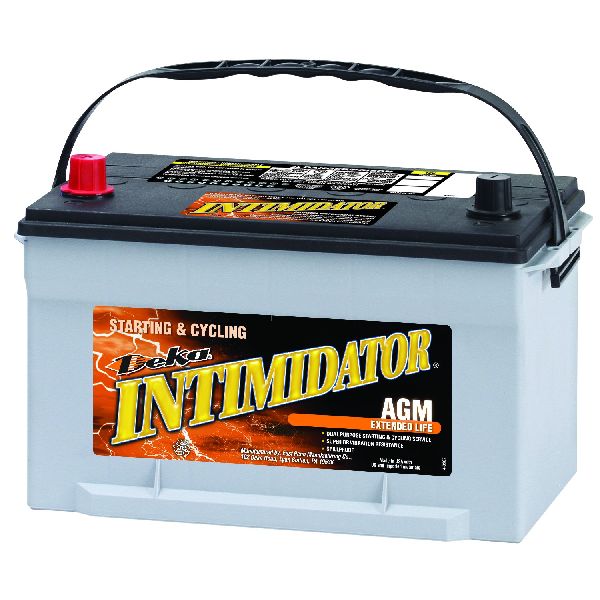
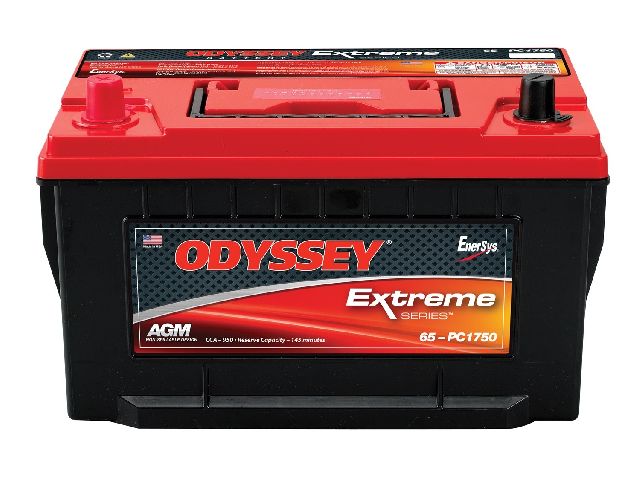
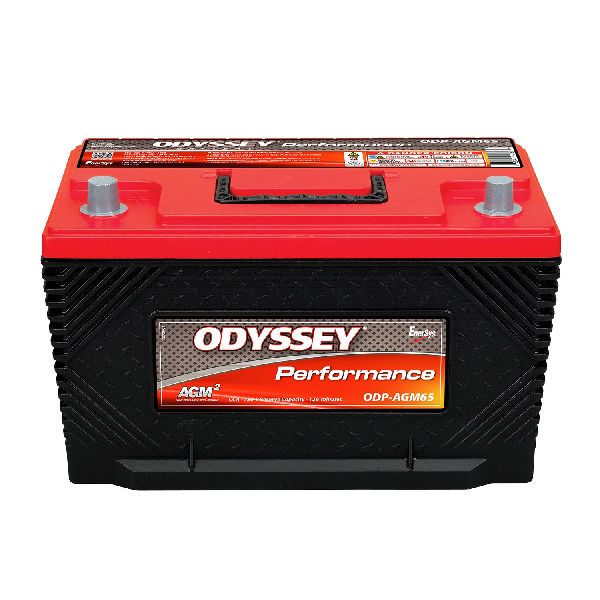
On a 2004-2008 F-150, P0603 almost always means a power supply problem. The most likely fix is replacing a weak battery or cleaning the battery terminals. A Group Size 65 battery is a common fit. Expect to spend $150-$250 for a new battery.
- Don't panic: P0603 is usually not a serious issue on this truck.
- Check your battery first. A weak battery or corroded terminals is the cause over 90% of the time.
- If you recently disconnected the battery, the code is normal and should clear on its own.
- Before suspecting an expensive PCM failure, thoroughly check the battery, alternator, and all related power and ground cables.
- The DIY difficulty for the most common fixes (battery/terminals) is very low, typically requiring only an 8mm wrench.
What's Unique About the 2004-2008 Ford F-150
For the 2004-2008 F-150, this code is extremely common and frequently not a sign of a serious failure. It often appears simply from disconnecting the battery for service, jump-starting the truck, or when an old battery finally gives out. It's also a known side effect of using aftermarket engine programmers or tuners (like SCT or Banks), which are popular with F-150 owners. While it can indicate a wiring or PCM fault, the cause is overwhelmingly related to a basic power supply issue.
🎬 Watch: Understanding the causes and fixes for the P0603 codeSymptoms You May Notice
- Check Engine Light is on
- Rough or unstable idle
- Hesitation during acceleration
- Harsh or erratic transmission shifting
- Difficulty starting the engine
- Slight decrease in fuel economy
- Engine stalling intermittently
- Odometer and factory gauges may be delayed in turning on for 30-45 seconds after key-on
- Replacing the PCM when the actual problem is a weak battery or a bad connection.
- Blaming a transmission problem for erratic shifting when it's actually the PCM operating on default values due to KAM loss.
Most Likely Causes
- Weak or Failing Battery 🔴 High Probability Batteries have a finite lifespan of 3-5 years. In a large truck with many electronics, a battery's voltage can drop just enough during cranking to erase the KAM without being completely dead. This is the most common trigger for P0603.
How to confirm: Test the battery with a multimeter. A healthy, fully charged battery should read around 12.6 volts with the engine off. A reading below 12.2V suggests it is weak and needs replacement. Most auto parts stores will test your battery for free.
Typical fix: Replace the vehicle's battery. The recommended size is Group 65.
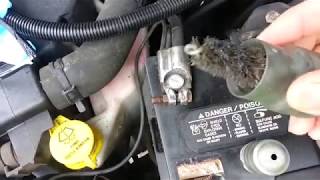
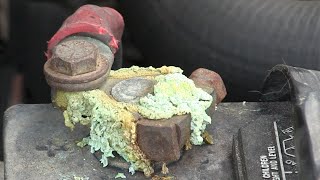
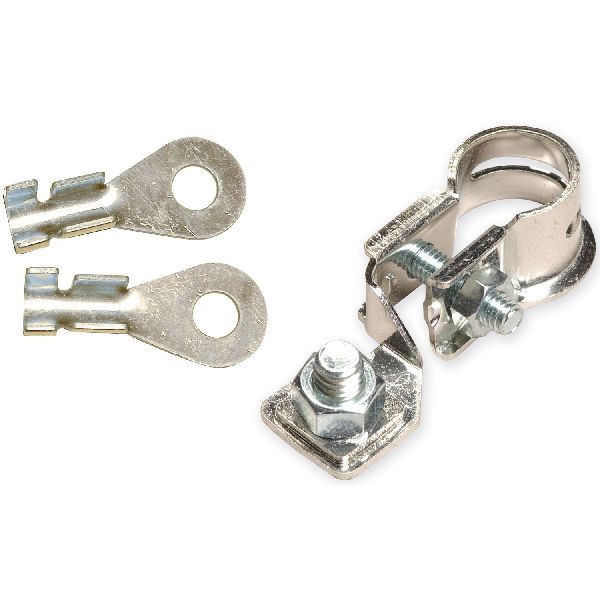
Est. part cost: $150-$250 - Loose or Corroded Battery Terminals 🔴 High Probability Battery terminals can develop corrosion (a white or blueish powder) over time, which interrupts the constant, low-amperage power feed required by the PCM's Keep Alive Memory.
How to confirm: Visually inspect the battery posts and cable ends. Check if the cable clamps can be twisted by hand; they should be tight and free of corrosion.
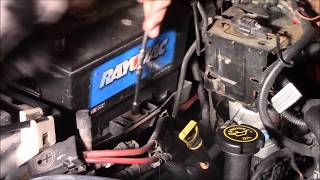
Typical fix: Disconnect the battery (negative first, using an 8mm wrench or socket) and clean the terminals and clamps with a wire brush and a mixture of baking soda and water. 🎬 See this step-by-step guide on cleaning your battery terminals Reconnect securely (positive first).
Est. part cost: $0-$10 - Recent Battery Disconnect or Jump-Start 🟡 Medium Probability
How to confirm: If the code appeared immediately after replacing the battery, disconnecting it for service, or after a jump-start, this is the cause. A user on Ford Truck Enthusiasts confirmed this exact scenario.
Typical fix: No fix is needed. Clear the code with a scanner. The code will often go away on its own after several drive cycles as the PCM relearns.
Est. part cost: $0 - Faulty Alternator / Charging System ⚪ Low Probability
How to confirm: With the engine running, test the battery voltage with a multimeter. It should be between 13.5 and 14.5 volts. If it's below 13.2V, fluctuating wildly, or excessively high, the alternator or voltage regulator is likely failing.
Typical fix: Replace the alternator.
Est. part cost: $200-$400 - Aftermarket Performance Tuner ⚪ Low Probability
How to confirm: The code appears after flashing a new tune to the PCM or is persistently present while a tuner is in use. Sometimes the tuner display itself may reset or go blank while driving.
Typical fix: This is often a 'ghost code' and can be ignored if the truck runs well. Some owners report it comes and goes. If drivability is poor, try reloading the tune or restore the stock tune and contact the tuner's manufacturer.
Est. part cost: $0
Rare But Worth Checking
- Blown Fuse: The PCM power supply is protected by fuses. A user on Reddit noted a 15A fuse from the battery to the ECM, and a main 120A fuse, which when blown, can cause this code and a no-start condition. Check the fuse box in the engine bay and behind the battery.
- Poor PCM Power/Ground Wires: A corroded or damaged wire providing power or ground to the PCM can cause an intermittent loss of KAM. Key ground locations on these trucks are on the fender near the battery, on the engine block, and behind the kick panels inside the cab. This can be difficult to track down.
- Faulty Powertrain Control Module (PCM): This is the least likely cause. The PCM itself can fail, but all other power and ground issues should be ruled out first. Physical inspection may sometimes reveal a burnt smell or visible damage on the module or its capacitors. Water intrusion is also a possible cause of failure.
Technical Service Bulletins (TSBs) & Recalls
While the 2004-2008 F-150 has specific power supply quirks, manufacturer bulletins for similar Ford platforms highlight that P0603 often appears alongside other codes. For instance, TSB Bulletin #TSB 21-2248 and TSB Bulletin #TSB 21-2055 note that an illuminated MIL with P0603 may be stored in the PCM along with misfire codes (P0300-P0308) or sensor circuit issues. Similarly, TSB Bulletin #TSB 20-2336 describes P0603 appearing with various powertrain codes, sometimes accompanied by a forced idle condition.
Diagnosis Steps
- Read the code with an OBD-II scanner. Note if P1000 is also present, which is normal after a memory reset.
- Ask yourself: Was the battery recently disconnected, replaced, or jump-started? If yes, this is likely the cause. Clear the code and see if it returns after a few days of driving.
- Visually inspect the battery terminals for corrosion and ensure the cable clamps are tight. An 8mm wrench is typically needed. Clean and tighten as needed.
- Test the battery voltage with the engine OFF. A reading below 12.4V indicates a weak battery that needs charging or replacement.
- Start the engine and test the charging system voltage at the battery. The reading should be stable and between 13.5V and 14.5V. If it's low or erratic, the alternator is likely failing.
- Inspect the main engine and chassis ground straps to ensure they are clean, tight, and not corroded. Pay attention to the ground on the fender near the battery and main body/frame grounds.
- Check fuses related to the PCM power supply. This may include a 15A fuse and other main fuses in the engine compartment fuse box.
- If you have an aftermarket tuner, consider if the code appeared after a recent re-flash. Try returning the truck to the stock tune to see if the code and any drivability issues disappear.
- If all the above steps check out, inspect the PCM and its connectors for damage, corrosion, or signs of water intrusion. A professional may be needed for further wiring diagnostics or PCM testing.
Parts You'll Likely Need
- Battery
(OEM #BXT-65-850 (Motorcraft Tested Tough MAX, Group Size 65, 850 CCA))— A weak battery is the most common cause for the P0603 code, as low voltage during cranking erases the PCM's Keep Alive Memory. Group Size 65 is a common, robust fit for this truck.
Trusted brands: Motorcraft, Interstate, DieHard, Duralast
OEM price range: $180-$250
Aftermarket price range: $150-$220 - Battery Terminal Cleaner — Used to remove corrosion from battery posts and cable clamps, which is a frequent cause of intermittent power loss to the PCM.
OEM price range: $5-$15
Aftermarket price range: $5-$15
Related Codes That Often Appear With This One
- P1000: This code simply means the OBD-II system readiness checks are not complete. It will almost always appear with P0603 after the battery has been disconnected or codes have been cleared, and it will disappear on its own after a full drive cycle.
Platform-Specific Known Issues
- Battery Group Size 59 vs. 65: Many 2004-2008 F-150s came from the factory with a smaller Group Size 59 battery. However, the battery tray is designed to accommodate the larger, more powerful Group Size 65 battery, which is listed as an option in the owner's manual and fits perfectly. Owners on forums confirm the Group 65 is a drop-in upgrade.
- Common Grounding Points: Poor grounds can cause intermittent power loss to the PCM. Key locations to check for corrosion or looseness on this platform include the body ground on the fender near the battery, the main engine block ground, and grounds located behind the interior kick panels by the driver's and passenger's feet.
Mechanic-Grade Diagnostic Values
- Battery Voltage, Engine Off — expected: ~12.6 Volts. Failure: Below 12.2V indicates a discharged or failing battery. Below 12.0V is a critical failure.
- Charging System Voltage, Engine Running at Idle — expected: 13.5 - 14.5 Volts. Failure: Voltage below 13.2V or above 14.8V, or fluctuating wildly, points to a faulty alternator or voltage regulator.
- Alternator AC Ripple Voltage — expected: < 50 mV (0.05V) AC. Failure: AC voltage reading above 100mV (0.1V) AC indicates failing alternator diodes.
- PCM Keep Alive Power (KAM) Pin Voltage — expected: Constant Battery Voltage (12V+). Failure: 0V or intermittent voltage indicates a broken wire, blown fuse, or poor connection between the battery and the PCM.
Wiring & Ground Locations
- G100 / G101 — Right-hand (passenger) side of the engine compartment, often on the fender apron near the battery area or on the rear of the engine block.. These are primary engine and chassis grounds. Corrosion or looseness here can cause a wide range of electrical issues, including intermittent power loss to the PCM.
- G104 — Left-hand (driver) side, front of the engine compartment.. Another key chassis ground point. It's critical to check all main grounds when diagnosing intermittent power-related codes.
- G200 / G201 — Inside the cab, behind the kick panels in the right-hand (G200) and left-hand (G201) front footwells.. These are major interior and body grounds. While less likely to cause P0603 than engine bay grounds, water leaks into the cab can corrode these points and cause bizarre electrical behavior.
- C175B — This is the main 46-pin connector for the Powertrain Control Module (PCM), located on the passenger side of the engine bay firewall.. This is the central connection point for the PCM. The Keep Alive Memory (KAM) power feed wire is in this connector. Any corrosion, moisture, or pushed-out pins in this connector can directly cause a P0603.
Real Owner Repair Stories
- Ford Truck Enthusiasts Forum User (Ford Powerstroke Diesel (similar electronics logic to F-150)) — P0603 code appeared, along with the aftermarket tuner's display screen going blank or rebooting while driving.
❌ Tried (didn't work) Clearing the code (it would return), Considering replacing the PCM
✅ What actually fixed it The user returned the Edge aftermarket tuner for a credit. The problem was resolved by removing the tuner, indicating the tuner itself was faulty or incompatible and was causing the KAM error, not the truck's PCM. - Ford Truck Enthusiasts Forum User (2004 F-150 6.0L Powerstroke) — P0603 code appeared after performing maintenance.
✅ What actually fixed it The user had disconnected the positive battery cable to remove the air filter housing. After reconnecting everything and clearing the code, it did not return. This confirms that a simple, temporary power interruption is a common and benign trigger for the code. - NHTSA ODI #10222074 — An owner reported that their vehicle would stall and then restart, with the problem recurring every few weeks. Despite having new batteries and a replaced camshaft sensor, the P0603 code persisted.
- NHTSA ODI #10349131 — A report describes a scan showing codes P0603 and P2285. In this instance, the technician found an injector to be shorted and replaced the ICP sensor and connector to correct the problem.
"I Checked Everything" — The Actual Cause
- This diagnostic pattern is not applicable for P0603. A smoke test is used to find vacuum or evaporative emissions leaks by forcing smoke into a sealed system. P0603 is a purely electrical code related to memory retention in a computer module, caused by power supply interruptions, not air leaks.
OEM Part Supersession History
Varies (e.g., 4L3A-12A650-NK, 5L3A-12A650-AAA)→Varies— PCMs for this generation are highly specific to the year, engine, transmission, and emissions calibration.
Heads up: A used PCM must match the original part number exactly. More importantly, due to the Ford PATS (Passive Anti-Theft System), a replacement PCM (even with a matching part number) will not allow the engine to start until it is programmed to the vehicle using a dealer-level scan tool (like Ford IDS) to sync it with the existing keys and other modules. It is not a plug-and-play part.
Model Year Variations Within This Range
- 2005-2008: The 4.2L V6 with a 5-speed manual or 4-speed automatic became the new base powertrain in 2005, replacing the 2004 model's V8-only lineup at launch.
- 2005: Some sources suggest the 2005 model year was more prone to alternator failures compared to later years in this generation.
- 2008: The 5.4L V8 engine received redesigned cylinder heads for models built after October 17, 2007, which resolved a notorious issue with spark plugs breaking during removal. This does not directly affect P0603 but is a critical mechanical difference. The 2008 models are also noted to have generally improved electrical system reliability, though issues with corroded grounds can still occur.
Diagnostic Flowchart
Used vs. New Parts: Buying Guide for This Vehicle
When a used part is the smart pick: A used Powertrain Control Module (PCM) from a salvage yard is a sensible choice to save significant money over a new or remanufactured unit, provided you follow the strict compatibility and programming requirements.
Donor-vehicle mileage cap: roughly under 150000 miles for the part to have meaningful remaining life.
What to inspect on the donor part:
- Verify the part number on the used PCM EXACTLY matches your original.
- Ensure the donor vehicle had the same engine (4.2L, 4.6L, or 5.4L) and transmission.
- Inspect the connector pins on the used PCM for any signs of corrosion, moisture, or physical damage.
- Obtain the VIN of the donor vehicle if possible, as it can sometimes help with programming.
OEM-only on this vehicle (don't cheap out):
- Powertrain Control Module (PCM) - While a used OEM unit is fine, aftermarket 'new' PCMs are almost always remanufactured OEM units anyway. Avoid no-name online sellers without a warranty and programming support.
Aftermarket brands forum-validated for this vehicle:
- For the most common fix (battery): Motorcraft, Interstate, DieHard, Duralast, and other major battery brands are all considered reliable choices.
Brands owners have reported issues with on this vehicle:
- Be cautious with very cheap, no-name aftermarket electronics (like HID kits or LED light bars) as they often lack proper RFI shielding and can be a source of electrical noise that may trigger P0603.
Real Owner Stories
Aggregated from forums and TSBs cited above. Mileages and costs reflect what owners reported in those sources.
2007 F150 4.6L
Symptoms: The truck was running rough and would randomly die. The P0603 code appeared intermittently along with P0191 and P0462, but the P0603 code went away on its own after a day.
What fixed it: The P0603 code resolved itself. The owner had previously replaced the Fuel Pump Driver Module (FPDM) to fix the other codes and running issues, suggesting the P0603 was a temporary symptom of the larger electrical/fuel system problem.
Source hint: Ford F150 Forum
2005 Ford F-150
Symptoms: The P0603 Check Engine Light code appeared immediately after the owner disconnected the truck's battery to perform other maintenance.
What fixed it: No repair was necessary. This was identified as a normal consequence of cutting power to the PCM, and the code was expected to clear on its own after a few drive cycles.
Source hint: ford-trucks.com - Thread: 'P0603 unhooking battery?' (Feb 26, 2015)
2006 Ford F-150
Symptoms: A persistent P0603 code was present after installing an aftermarket performance tune. Occasionally, the tuner's display screen would go blank or reset while driving.
What fixed it: The code was considered a 'ghost code' from the tuner and was ignored as the truck ran well. The recommended fix, if drivability was an issue, was to reload the tune or revert to the factory stock tune.
Source hint: f150forum.com - Corroborated that P0603 is very common and often linked to... aftermarket tuners by owners of 2004-2008 F-150s.
Related OBD-II Codes
Frequently Asked Questions
I just replaced the battery in my 2006 F-150 and now the P0603 code is on. Did I do something wrong?
My F-150 has an aftermarket tuner and the P0603 code is always present. Is this a serious problem?
What's the best replacement battery for a 2004-2008 F-150 to help prevent P0603?
Besides the battery terminals, are there other common electrical spots to check for P0603 on this truck?
How can I tell if my battery is weak or if the alternator is the cause of the P0603 code?
After clearing the P0603 code, I now have a P1000 code. Is this a new problem?
Helpful Videos


We Have This Part in Stock

The information in this article is provided for general reference and educational purposes only. Vehicle specifications, procedures, and part compatibility can vary by production date, trim level, and region. Always consult your vehicle's factory service manual and verify part numbers before purchasing or performing repairs. Safety-critical components such as airbags, seat belts, and braking systems should be installed by a qualified professional.
- Ford F-150:
- 🎬 Helpful Videos
- 🛍️ Shop This Part
- What's Unique About the 2004-2008 Ford F-150
- Symptoms You May Notice
- Most Likely Causes
- Rare But Worth Checking
- Technical Service Bulletins (TSBs) & Recalls
- Diagnosis Steps
- Parts You'll Likely Need
- Related Codes That Often Appear With This One
- Platform-Specific Known Issues
- Mechanic-Grade Diagnostic Values
- Wiring & Ground Locations
- Real Owner Repair Stories
- "I Checked Everything" — The Actual Cause
- OEM Part Supersession History
- Model Year Variations Within This Range
- Diagnostic Flowchart
- Used vs. New Parts: Buying Guide for This Vehicle
- Real Owner Stories
- 2007 F150 4.6L
- 2005 Ford F-150
- 2006 Ford F-150
- Related OBD-II Codes
- Frequently Asked Questions
- 🎟️ Get 5% Off