

P0602 on 2005-2009 Saab 9-7X: Control Module Programming Error Causes and Fixes
On a 2005-2009 Saab 9-7X, code P0602 means the Engine Control Module (ECM) has a programming error. This most commonly happens after replacing the ECM and not programming it to the vehicle's VIN. It can also be caused by a significant voltage drop. The fix is almost always reprogramming the ECM, which requires a professional with GM-specific tools like a Tech 2 or a J2534 device with a GM Techline Connect subscription.
- P0602 on a Saab 9-7X means the engine's main computer (ECM) is not programmed correctly.
- This is not a typical DIY repair. The fix requires expensive, specialized equipment to reprogram the ECM.
- The most common reason for this code is replacing the ECM and not having it professionally programmed to your vehicle's VIN.
- Before condemning the ECM, ensure the battery is strong and the terminals are clean. Low voltage can sometimes trigger this code.
- Do not drive the vehicle. A P0602 code indicates a critical failure in the engine's control system, which can lead to a stall or no-start condition at any time.
What's Unique About the 2005-2009 Saab 9-7X
The Saab 9-7X is mechanically a General Motors (GM) vehicle, based on the GMT360 platform shared with the Chevrolet Trailblazer and GMC Envoy. Therefore, its electronics and control systems are pure GM. For this platform, P0602 is very straightforward: it almost always points to a programming issue with the ECM, not a random hardware failure. This code commonly appears after someone replaces the ECM with a new or used unit and fails to perform the mandatory programming procedure, which pairs the module to the vehicle's specific VIN and options using GM's Service Programming System (SPS). Used ECMs can be reprogrammed to a new vehicle, but it requires the same professional process.
Symptoms You May Notice
- Check Engine Light is on
- Vehicle will not start or is very hard to start
- Engine stalls intermittently or runs rough
- Reduced engine performance or "limp mode"
- Harsh or incorrect transmission shifting
- Communication issues with other vehicle modules, possibly triggering U-codes
- Replacing other sensors or modules. 🎬 See why cheap parts can cause limp mode and communication codes. This code is very specific to the ECM's programming. Replacing parts like oxygen sensors or the transmission control module will not fix a P0602.
- Condemning the ECM as faulty before attempting a re-flash. In many cases, the hardware is fine, but the software is corrupted and can be restored.
Most Likely Causes
- ECM/PCM Replaced But Not Programmed 🔴 High Probability As a GM platform, the ECM must be programmed with the vehicle's VIN and specific calibration file upon installation. A used or new 'blank' module will trigger this code immediately because it hasn't been paired with the BCM and other modules. 🎬 Watch: How to perform the GM Passlock and VTD relearn procedure.
How to confirm: Use a professional scan tool to check the VIN stored in the ECM. If it is blank, incorrect, or doesn't match the vehicle, the module is not programmed. The vehicle may crank but will not start.
Typical fix: The ECM must be programmed using a J2534 pass-thru device and GM's Service Programming System (SPS) software, now called Techline Connect. This is typically done by a dealer or a qualified independent shop.
Est. part cost: $0 - Corrupted ECM Software 🟡 Medium Probability Software can become corrupted due to a failed programming attempt, a significant voltage drop (weak battery, especially during cranking), or a voltage spike (improper jump-start). GMT360 platform vehicles are known to be sensitive to low voltage conditions. Manufacturer Bulletin #05-06-04-060A notes that P0602 is among several control module codes that can be shared across multiple modules, often stemming from software-related issues.
How to confirm: If the original ECM suddenly sets this code without being replaced, software corruption is likely. This often happens after the battery has been disconnected for an extended period or has gone completely dead. The diagnostic process involves attempting to re-flash the existing software.
Typical fix: Attempt to reprogram (re-flash) the ECM with the latest GM calibration. If the re-flash is successful, the problem is solved. If it fails, the ECM itself is likely faulty.
Est. part cost: $0 - Faulty Engine Control Module (ECM) ⚪ Low Probability While less common than programming errors, the internal memory or processor of the ECM can fail, leading to this code. This is a diagnosis of exclusion after programming attempts fail.
How to confirm: This is diagnosed by exclusion. If reprogramming fails repeatedly, and all power and ground connections to the ECM are verified to be stable and clean, the module itself is condemned. This is often seen with other codes like P0601 (Internal Control Module Memory Check Sum Error).
Typical fix: Replace the Engine Control Module and program the new unit to the vehicle.
Est. part cost: $200-$500 - Poor Power or Ground Supply to ECM ⚪ Low Probability Voltage instability can cause memory and programming errors. This can be due to a weak battery, failing alternator, or corroded/loose battery terminals or ground straps. Key ground locations on the GMT360 platform, like G108 on the lower left side of the engine for the 5.3L V8, can cause erratic ECM behavior if compromised.
How to confirm: Test the battery and charging system. With the engine running, voltage should be stable between 13.5-14.8V. Perform a voltage drop test on the main ECM power and ground circuits; the drop should be less than 0.2 volts. Inspect ground G108 for corrosion.
Typical fix: Replace the weak battery, faulty alternator, or repair the compromised wiring/ground connection. After restoring stable voltage, the ECM may still need to be reprogrammed.
Est. part cost: $50-$400
Diagnosis Steps
- Connect a professional scan tool capable of reading manufacturer-specific data (e.g., GM Tech 2 or equivalent).
- Verify that P0602 is the primary code. Note any other codes, especially U-codes or other P060x codes.
- Access the 'Module ID' or 'ECU Information' screen for the Engine Control Module.
- Check the VIN stored in the module. If it is blank or does not match the vehicle's VIN, the module requires programming. This is the most common cause.
- If the VIN is correct, the next step is to attempt to reprogram (re-flash) the ECM with the latest factory software. This requires a J2534 pass-thru device and a subscription to GM's Techline Connect service.
- CRITICAL: Before reprogramming, ensure the vehicle battery is fully charged and connected to a stable battery maintainer (not a simple charger) capable of supplying clean voltage (13.2-14.2V) regardless of load. Voltage drops or spikes during programming can permanently damage ('brick') the module.
- If reprogramming fails, inspect the ECM connectors for bent pins, corrosion, or looseness. Check the main power and ground wires to the ECM for integrity, paying special attention to known ground points like G108.
- If wiring is good and reprogramming repeatedly fails, the ECM is defective and must be replaced. The new ECM will also require programming. 🎬 Watch this guide on GM key relearning after an ECM replacement.
Parts You'll Likely Need
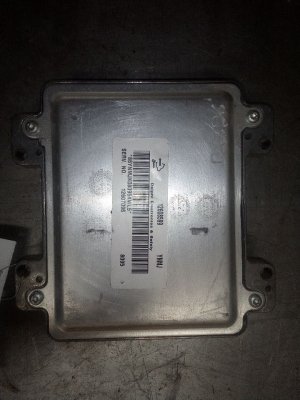
- Engine Control Module (ECM/PCM)
(OEM #Varies by engine and year. Examples: ACDelco 12578554 (2005 5.3L V8), ACDelco 12597521 (2006 4.2L I6), ACDelco 12636660 (2007 5.3L V8). Always verify with VIN.)— This part is only needed if the original ECM is internally damaged and cannot be reprogrammed. In most cases, the 'fix' is a service (reprogramming) rather than a part.
Trusted brands: ACDelco (OEM)
OEM price range: $300-$500
Aftermarket price range: $200-$400
Related Codes That Often Appear With This One
- P0601, P0603, P0604, P0605 — These are all internal control module memory or performance error codes. They often appear together, pointing to a general failure or corruption within the ECM.
- U0100 — This code means 'Lost Communication With ECM/PCM'. If the ECM has a critical internal programming error (P0602), it may not be able to communicate on the vehicle's network, causing other modules to report it as missing.
Technical Service Bulletins (TSBs) & Recalls
- GM TSB #05-06-04-060A provides information to technicians regarding control module Diagnostic Trouble Codes (DTCs) including P0601, P0602, P0603, and P0604, which are known software-related issues that can be shared across multiple modules.
Platform-Specific Known Issues
- Multiple ECM Types: The Saab 9-7X used different ECMs depending on the engine: the P12 PCM for the 4.2L I6, the E40 ECM for the 2005 5.3L/6.0L V8s, and the E67 ECM for 2006-2009 V8s. While the part numbers differ, the P0602 code and its resolution (programming) are identical across all of them.
Mechanic-Grade Diagnostic Values
- Module Programming Battery Voltage — expected: 13.2V - 14.2V, stable. Failure: Voltage below 12.5V or any significant fluctuation, spike, or drop during the process.
- ECM Power Supply Voltage Drop — expected: < 0.2 Volts. Failure: A reading higher than 0.2V indicates excessive resistance in the power feed circuit to the ECM.
- ECM Ground Circuit Voltage Drop — expected: < 0.1 Volts. Failure: A reading higher than 0.1V indicates high resistance in the ground circuit, which can cause unstable module operation.
Scan Tool Commands That Help
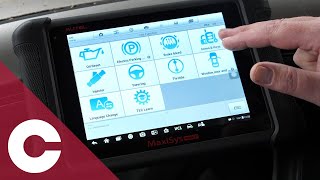
- Tech 2 / Techline Connect: Service Programming System (SPS) — This is the primary function required to fix P0602. It is used to load the correct VIN-specific software and calibrations onto a new, used, or corrupted ECM.
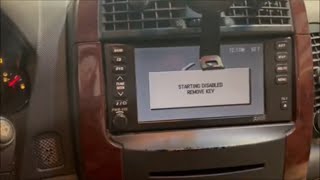
- Tech 2 / Techline Connect: VIN Relearn / Immobilizer Relearn — After successfully programming the ECM, a security relearn procedure is often required to synchronize the ECM with the Body Control Module (BCM) and Theft Deterrent Module (TDM). Without this, the vehicle will typically crank but not start due to the anti-theft system.
- Tech 2 / Techline Connect: Read Module ID / ECU Information — This is the first diagnostic step to verify the VIN stored in the ECM. A blank or incorrect VIN immediately confirms a programming issue is the cause of P0602.
Wiring & Ground Locations
- G108 — On the lower left (driver's) side of the engine block, near the oil filter housing (for the 5.3L V8).. This is a primary engine and ECM ground. Corrosion or looseness here can cause unstable ECM operation, leading to software corruption or failed programming attempts.
- G102 / G103 — On the left front of the engine compartment, on the wheelhouse or frame rail, typically near the battery.. These are main chassis and battery ground points. A poor connection here affects the entire electrical system, including the stability of the voltage supplied to the ECM.
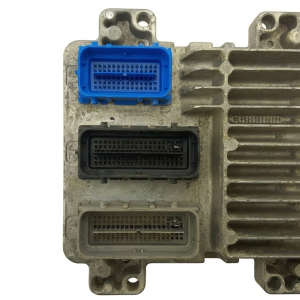
- ECM Connector C1 (P12 - 4.2L I6) — The 'Blue' connector on the P12 PCM.. Pin 20 is the main battery positive voltage feed. Pin 19 is ignition voltage. Pins 4 and 5 are grounds. These pins must be tested for stable power and clean ground before condemning the ECM.
- ECM Connector C1 (E40/E67 - V8) — The primary connector on the V8 ECMs (pinouts vary slightly but power/ground locations are similar).. Key pins for voltage drop testing are the main battery positive feeds (e.g., C1 Pin 20 on some E40s) and ground pins (e.g., C1 Pin 1 on some E40s). Verifying stable voltage and ground directly at the ECM connector is crucial if programming fails.
Real Owner Repair Stories
- Snap-on Diagnostics Product Forums (2002 Chevrolet Trailblazer (mechanically identical platform)) — Attempting to update PCM software for an idle control issue.
❌ Tried (didn't work) The initial reflash attempt failed mid-process, erasing the module and leaving it 'bricked' with about 10% of the data written., Subsequent attempts also failed, loading only a few thousand bytes before erroring out.
✅ What actually fixed it The technician had a used backup PCM on hand. The original PCM was deemed to have a weak EEPROM chip that could not handle the reflash process. Swapping to the used PCM and successfully programming it resolved the no-start condition caused by the failed flash.
OEM Part Supersession History
12602044, 12605843 (E67 ECM)→19210737, 12636660— Internal hardware and software revisions for improved reliability and compatibility.
Heads up: While many E67 part numbers are physically interchangeable, the internal hardware and base software can differ. Always use a part number specified for the vehicle's VIN or a validated supersession. Using an incorrect service number may cause programming failures or operational issues.
Model Year Variations Within This Range
- 2005: V8 models (5.3L and 6.0L) used the E40 ECM, which is a Generation IV controller designed for a 24x crankshaft reluctor wheel.
- 2006-2009: V8 models switched to the E67 ECM. The E67 is a more advanced controller designed for a 58x crankshaft reluctor wheel and has more inputs/outputs. The 4.2L I6 engine used the P12 PCM across all years, which has different connectors and pinouts from the V8 ECMs.
Diagnostic Flowchart
Used vs. New Parts: Buying Guide for This Vehicle
When a used part is the smart pick: A used ECM from a junkyard is a very cost-effective option for this repair, provided you have access to a professional with the correct GM programming tools (Tech 2 or a J2534 device with a Techline Connect subscription). The part itself is just a container for software; a used one can be completely erased and reprogrammed with your vehicle's VIN and calibration files.
Donor-vehicle mileage cap: roughly under 150000 miles for the part to have meaningful remaining life.
What to inspect on the donor part:
- Ensure the donor vehicle is the exact same year, model, and engine. While some cross-compatibility exists, it complicates programming.
- Inspect the connector pins on the used ECM for any signs of corrosion, bending, or damage.
- Source from a reputable salvage yard that offers a short warranty period in case the module is internally faulty and fails to program.
- Avoid modules from flood-damaged or heavily wrecked vehicles, as internal damage is more likely.
OEM-only on this vehicle (don't cheap out):
- Engine Control Module (ECM/PCM). While remanufactured units from reputable sources like Cardone or pre-programmed units from specialists like FS1 can be good, cheap, no-name aftermarket ECMs from online marketplaces are a significant risk and often fail to program or have a short lifespan. Stick with OEM (new or used) or a top-tier remanufacturer.
Aftermarket brands forum-validated for this vehicle:
- ACDelco (OEM)
- Cardone (Remanufactured)
- FS1 Inc / Flagship One (Often sold pre-programmed)
Brands owners have reported issues with on this vehicle:
- Unbranded or generic "plug and play" modules from eBay/Amazon that promise no programming is needed. For this platform, VIN and security programming is mandatory.
Real Owner Stories
Aggregated from forums and TSBs cited above. Mileages and costs reflect what owners reported in those sources.
2006 Chevrolet Trailblazer
Symptoms: After replacing the ECM, the engine would only crank but would not start.
What fixed it: The community confirmed that the new ECM had to be programmed by a dealer or a shop with the proper tools, and a security relearn was also required.
Source hint: GMTNation Forum: New ecm but won't start
Chevrolet Trailblazer
Symptoms: The vehicle would not start after the battery was replaced.
What fixed it: A common suggestion was that power loss caused the PCM to lose its learned values for the throttle body, which required a cleaning and a relearn procedure to resolve the no-start condition.
Source hint: GMTNation Forum: trailblazer won't start after changing battery
Related OBD-II Codes
Frequently Asked Questions
I just replaced the ECM in my 2007 Saab 9-7X and now it only cranks but won't start. What's wrong?
My 9-7X started running rough and threw a P0602 after the battery went completely dead. Is the ECM bad?
Is there a specific TSB for code P0602 on the Saab 9-7X?
My mechanic suspects a bad ground is causing my P0602. Is there a common failure point on these trucks?
Does the P0602 diagnosis differ between the 4.2L I6 and the 5.3L V8 engines in the 9-7X?
What is the most critical precaution when a shop is reprogramming my ECM to fix a P0602?
Helpful Videos

We Have This Part in Stock




The information in this article is provided for general reference and educational purposes only. Vehicle specifications, procedures, and part compatibility can vary by production date, trim level, and region. Always consult your vehicle's factory service manual and verify part numbers before purchasing or performing repairs. Safety-critical components such as airbags, seat belts, and braking systems should be installed by a qualified professional.
- Saab 9-7X:
- 🎬 Helpful Videos
- 🛍️ Shop This Part
- What's Unique About the 2005-2009 Saab 9-7X
- Symptoms You May Notice
- Most Likely Causes
- Diagnosis Steps
- Parts You'll Likely Need
- Related Codes That Often Appear With This One
- Technical Service Bulletins (TSBs) & Recalls
- Platform-Specific Known Issues
- Mechanic-Grade Diagnostic Values
- Scan Tool Commands That Help
- Wiring & Ground Locations
- Real Owner Repair Stories
- OEM Part Supersession History
- Model Year Variations Within This Range
- Diagnostic Flowchart
- Used vs. New Parts: Buying Guide for This Vehicle
- Real Owner Stories
- 2006 Chevrolet Trailblazer
- Chevrolet Trailblazer
- Related OBD-II Codes
- Frequently Asked Questions
- 🎟️ Get 5% Off