

P0602 on 2011-2018 Porsche Cayenne: Control Module Programming Error Guide
P0602 on a 2011-2018 Porsche Cayenne indicates a programming error within the engine control module (DME). This is a serious fault, often caused by unstable battery voltage, a failed programming attempt, or water damage to the DME. The fix almost always requires professional diagnosis with a Porsche-specific tool (PIWIS) to reprogram or replace the DME.
- P0602 is a critical error in your Cayenne's engine computer (DME) and should be addressed immediately.
- Do not drive the vehicle, as it can stall or lose power without warning.
- Before condemning the expensive DME, always test the battery, alternator, and ground connections thoroughly, as unstable voltage is a leading cause.
- Repair requires professional-level tools to reprogram or replace the DME; this is not a DIY-friendly fix.
- Check the cowl drain plugs under the windshield wipers to ensure they are clear to prevent water from damaging the DME.
What's Unique About the 2011-2018 Porsche Cayenne
The 2011-2018 Cayenne (generation E2/958) uses a sophisticated Bosch or Siemens DME that is highly integrated with the vehicle's security and other control modules. A unique and well-documented issue on this platform is the DME's location in the cowl area (under the windshield wipers), which is highly susceptible to water damage if the cowl drains become clogged with leaves and debris. This water intrusion can pool in the plenum, submerge the DME, and lead to corrosion and critical electrical faults, including the P0602 code. This may be misdiagnosed as a simple software glitch when it is actually a hardware failure caused by water.
Symptoms You May Notice
- Check Engine Light is on
- Vehicle will not start, but may crank
- Engine stalls intermittently or runs roughly
- Reduced engine power or "limp mode"
- Erratic or harsh automatic transmission shifting
- Decrease in fuel economy
- Multiple other warning lights on the dashboard due to communication loss with other modules
- Cooling fans running constantly, even with the engine off
- Replacing sensors (like oxygen or camshaft sensors) without first checking for DME communication.
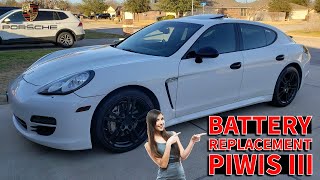
- Assuming the battery is good just because the engine cranks. 🎬 Watch this step-by-step guide for replacing your Cayenne's battery A low voltage condition under load can be sufficient to corrupt the DME's startup check.
- Replacing the DME without first cleaning the cowl drains, leading to repeat failure of the new unit.
Most Likely Causes
- Water Damage to DME from Clogged Cowl Drains 🔴 High Probability The 958 Cayenne's cowl/plenum drains are notoriously prone to clogging with leaves and debris. When they clog, rainwater fills the chamber where the DME is located, leading to water intrusion, connector corrosion, and internal failure of the module. This is a widely discussed failure point in owner forums.
How to confirm: Visually inspect the cowl area under the plastic covers for standing water or debris. Remove the DME and check its casing and electrical connectors for any signs of moisture, white/green corrosion, or water lines. A DIY guide for cleaning the drains involves removing the front wheel arch liners to access the rubber drain plugs. 🎬 Watch: How to clear every water drain port on your Cayenne
Typical fix: If corrosion is present, the DME almost always needs to be replaced. The wiring harness connector must also be inspected and cleaned or replaced. The cowl drains must be cleared and modified (by cutting the restrictive tips) to prevent recurrence.
Est. part cost: $1200-$2500 (DME) + Labor - Unstable Battery Voltage or Bad Ground 🟡 Medium Probability Modern Porsches are extremely sensitive to voltage. A weak battery, failing alternator, or poor ground connection can cause voltage spikes or drops during startup or operation, which can corrupt the DME's memory. Replacing the battery without using a memory saver or properly registering the new battery with a diagnostic tool can also trigger this fault.
How to confirm: Test the battery with a digital load tester. With the engine running, use a multimeter to check the alternator output at the battery terminals; it should be stable between 13.5 and 14.8 volts. Inspect the main engine and chassis ground straps for corrosion or looseness. Check if the battery was recently replaced without being coded to the vehicle.
Typical fix: Replace the weak battery and/or failing alternator. Clean or replace corroded ground straps. A new battery must be 'registered' or 'coded' to the vehicle's gateway module using a tool like PIWIS or a high-end bidirectional scanner to ensure the charging system works correctly. 🎬 See how to properly register a new battery using PIWIS After stabilizing voltage, the DME may need to be reprogrammed.
Est. part cost: $250-$700 - Failed or Interrupted DME Programming 🟡 Medium Probability This can happen if a software update at a dealership or independent shop is interrupted (e.g., by a voltage drop from a weak battery maintainer), or if an aftermarket tuning file is improperly loaded. Disconnecting the battery during a flash process is a common way to trigger this code.
How to confirm: This is diagnosed by attempting to communicate with the DME using a Porsche-specific scan tool (PIWIS). The tool can verify the software version and check if the VIN is programmed correctly. If the VIN is missing or the software is invalid, this is the cause.
Typical fix: The DME must be reprogrammed (re-flashed) with the correct factory software using a PIWIS tester connected to a stable power supply. This must be done by a qualified Porsche technician or specialist.
Est. part cost: $0 (if only labor) - Faulty Engine Control Module (DME) ⚪ Low Probability Internal failure of the DME's memory chips or processor can occur due to age, heat cycles, or voltage stress, independent of water damage. However, this is less common than water-induced failure.
How to confirm: This is a process of elimination. If the battery, charging system, all power/ground connections to the DME are confirmed to be good, and the cowl area is dry, and reprogramming the module fails, the DME itself is condemned.
Typical fix: The DME must be replaced with a new or remanufactured unit, which then needs to be programmed to the vehicle's VIN and security system by a professional.
Est. part cost: $1200-$2500
Rare But Worth Checking
- Faulty DME Power Relay: While less common for a P0602 code specifically, a failing main power relay for the DME can cause intermittent power loss, leading to symptoms like a no-start or stalling that can be confused with an internal DME fault. One owner found a faulty relay caused a no-start and multiple fault codes. It's a relatively inexpensive part to check before replacing the entire DME.
Diagnosis Steps
- Read all fault codes from all vehicle modules using a Porsche-specific scanner (PIWIS). Note any communication (U-codes) or other module errors.
- Crucially, inspect the cowl/plenum chamber for water. Remove the plastic covers at the base of the windshield and check for standing water, leaves, or debris. This is the most common failure point.
- If water is found, remove the DME and inspect the module and its connectors for any signs of corrosion or moisture. If present, the DME is likely damaged beyond repair.
- Perform a full health check of the electrical system. Load test the battery and verify the alternator output is stable (typically 13.5-14.8V). A weak battery can corrupt programming even if it can crank the engine.
- Inspect all power and ground connections at the battery, chassis, and the DME itself. Ensure they are clean, tight, and free of corrosion.
- Check the DME power relay to ensure it is providing consistent power.
- If all electrical inputs are good and there is no water damage, attempt to reprogram (re-flash) the DME with the latest factory software using a PIWIS tester. A stable, high-amperage power supply is mandatory during this process.
- If reprogramming fails or the code returns immediately, the DME is faulty and requires replacement. The new DME will need to be coded to the car's VIN and immobilizer system.
Parts You'll Likely Need
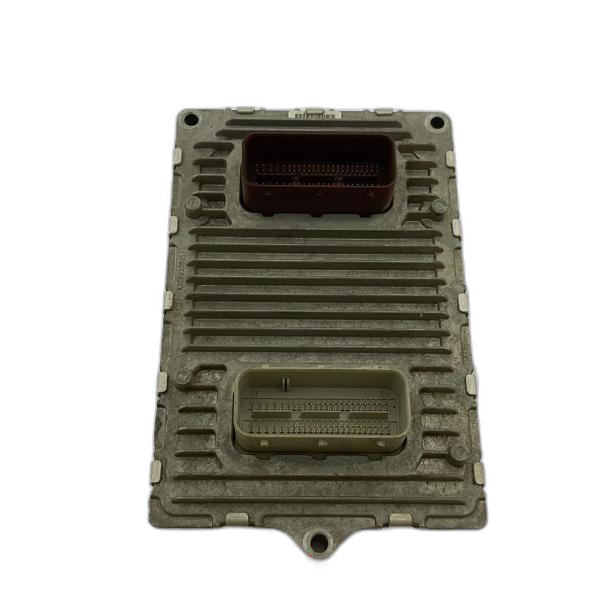
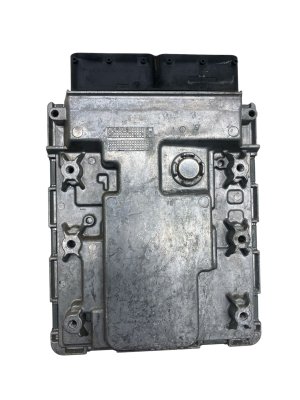
- Engine Control Module (DME)
(OEM #7P5906033 / 95861860400 (Varies by engine/year, VIN-specific))— This is the root cause if it has suffered water damage or internal failure and cannot be reprogrammed.
Trusted brands: Bosch, Siemens, Genuine Porsche
OEM price range: $2000-$2500
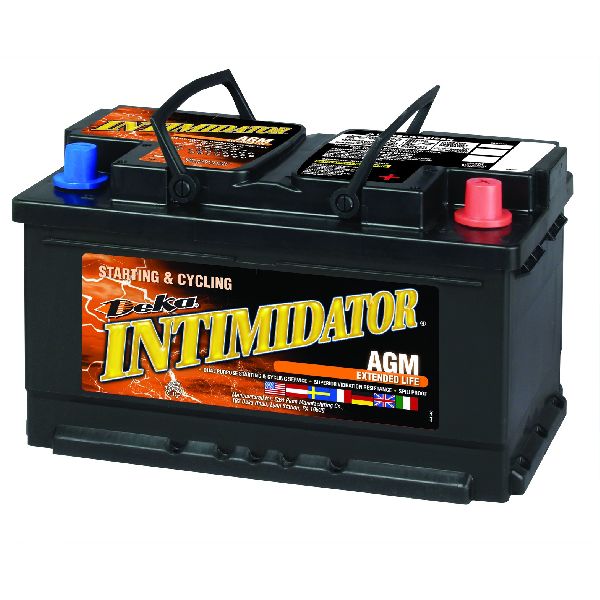
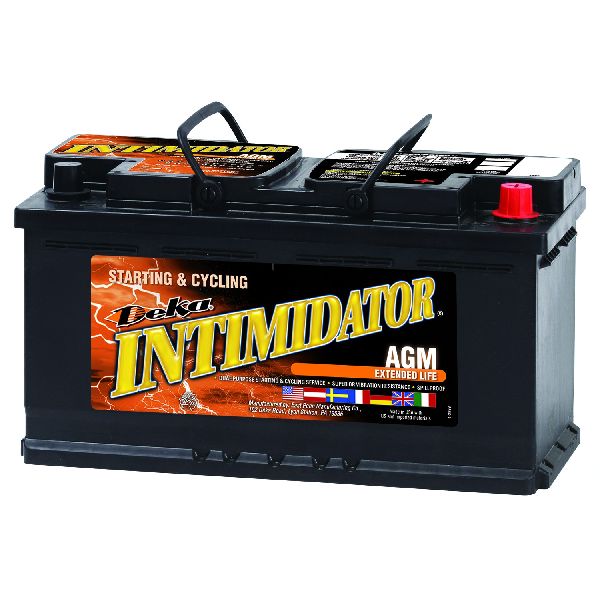
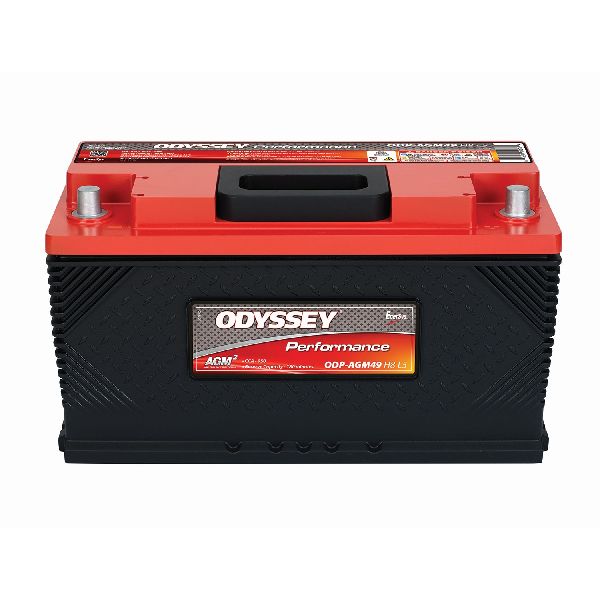
Aftermarket price range: $800-$1500 (Remanufactured/Repair Service) - AGM Battery — A weak or failing battery is a primary cause of voltage instability that can corrupt the DME's programming, triggering a P0602 code. Must be registered to the vehicle upon installation.
Trusted brands: Varta, Bosch, Interstate
OEM price range: $400-$600
Related Codes That Often Appear With This One
- P0601, P0603, P0604, P0605 — These are all internal control module memory errors. They point to different types of memory failures (ROM, KAM, RAM) and often indicate a faulty DME.
- U0100 — This code means 'Lost Communication With ECM/PCM.' It often appears with P0602 because if the DME's software is corrupt or the module is damaged (e.g., by water), it cannot communicate properly with other modules on the vehicle's CAN network.
Platform-Specific Known Issues
- Water damage to the DME due to clogged cowl panel drains is a known, widespread issue on the 958 Cayenne platform. This can cause a variety of electrical problems, including P0602. Owners strongly recommend preventative cleaning of these drains at least once a year.
- Sunroof drains are another common source of water leaks, which can damage electronics in the rear of the vehicle, like the audio amplifier, but are less likely to cause a P0602 code.
Mechanic-Grade Diagnostic Values
- Vehicle Voltage During DME Programming — expected: Stable between 13.5 and 14.5 volts.. Failure: Voltage dropping below 13.5V or spiking above 14.5V can corrupt the programming sequence and brick the module.
- DME Main Relay Voltage (Key On, Engine Off) — expected: Approximately +12V at pins 30 (battery feed) and 86 (switched power), and +12V at pin 87 (output to DME). Pin 85 should show ground.. Failure: Low or no voltage at pin 87 indicates a faulty relay or a problem in the power feed or trigger circuit.
- Live Data: Battery Voltage at Idle — expected: 13.5V - 14.8V. Failure: Voltage below this range indicates a charging system fault (alternator); voltage above may indicate a faulty voltage regulator. Both can cause DME errors.
Hidden / Shadow Codes Worth Checking
- P160A00: Control Unit Fault, often related to a checksum error after a failed or improper cloning/programming attempt. (see via May appear on a professional scan tool (like PIWIS or advanced aftermarket tools) after attempting to write data to the DME.)
Scan Tool Commands That Help
- Porsche PIWIS Tester: Automatic Programming — This is the primary function used to re-flash a new or existing DME. It's found under the DME -> 'Coding/programming' menu. It automatically handles programming and coding for the DME and often the transmission control unit simultaneously.
- Porsche PIWIS Tester: Adaptations — After a successful DME programming and coding session, various adaptations must be performed. The PIWIS guides the technician through adapting each function one by one to ensure all systems are correctly calibrated to the new software.
- Porsche PIWIS Tester: VAL (Vehicle Analysis Log) — While not a repair command, creating a VAL before and after programming is standard procedure to document all module states and faults. This helps track if the programming resolved the initial issues.
Wiring & Ground Locations
- Main Chassis Ground — In the driver's footwell, in front of the driver's seat, accessible through a small carpet door.. A poor main ground connection can cause widespread, intermittent electrical issues and voltage fluctuations that can lead to DME data corruption and a P0602 code.
- Wiring Harness Splices — In the wiring harness bundle that runs through the driver's side footwell, under the carpet near the dead pedal.. These factory splices are not waterproof and are a known failure point when water enters the cabin from clogged drains. Corrosion here can interrupt power or CAN bus signals to the DME, mimicking an internal module fault.
- General Ground Wires — Throughout the vehicle, identifiable by their brown insulation, per German vehicle standards.. Any compromised ground, especially the main engine-to-chassis strap or DME-specific grounds, can cause the voltage instability that triggers a P0602.
Real Owner Repair Stories
- Rennlist Forum User (2014 Porsche Cayenne GTS) — Check Engine Light was on.
❌ Tried (didn't work) The initial diagnosis pointed to a faulty O2 sensor.
✅ What actually fixed it Upon starting the O2 sensor repair, the Porsche dealer discovered the DME had significant water damage from clogged cowl drains. The actual required fix was a complete DME replacement for ~$2,000, as the O2 sensor code was merely a symptom of the failing control unit. - Rennlist Forum User (2011-2018 Porsche Cayenne with Burmester Audio) — Water-damaged audio amplifier, leading to no sound.
❌ Tried (didn't work) Installing a used amplifier with a slightly different part number (ending in 'N' instead of 'T') resulted in some speakers not working.
✅ What actually fixed it The replacement module's part number had to match the original exactly, including the final letter suffix (7PP035223T). After installing the correct part, a full power cycle of the system (disconnecting and reconnecting the main amp harness) was required for the car to recognize all components (like the subwoofer). This highlights the critical nature of exact part number matching and system resets for Porsche electronics.
OEM Part Supersession History
7PP035223N (Example for an amplifier)→7PP035223T (Example for an amplifier)— Revision update for functionality or hardware changes.
Heads up: On sensitive Porsche modules, part numbers including the final suffix letter must often be matched exactly. Installing a module with a different suffix, even if it physically fits, can lead to partial or complete functional failure.
Model Year Variations Within This Range
- 2011-2014 (958.1) vs. 2015-2018 (958.2): The 958.2 facelift introduced significant changes, including different engines for some trims (e.g., the Cayenne S changed from a naturally aspirated V8 to a twin-turbo V6). This means the DME hardware and software are different and not interchangeable between these sub-generations. The exterior styling, steering wheel, and infotainment (PCM) were also updated.
Diagnostic Flowchart
Used vs. New Parts: Buying Guide for This Vehicle
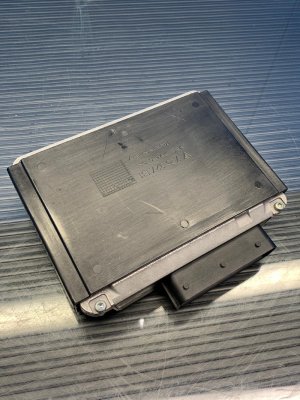
When a used part is the smart pick: A used DME is a cost-effective option ONLY if your original DME is still electronically readable. It is not a plug-and-play part. You must use a specialized 'cloning' service to read the immobilizer data, VIN, and software from your original module and write it to a donor module with an identical part number.
Donor-vehicle mileage cap: roughly under 150000 miles for the part to have meaningful remaining life.
What to inspect on the donor part:
- Part number MUST match your original DME exactly, including any suffix letters.
- Guaranteed to be from a vehicle that was not flood-damaged.
- Inspect the connectors for any bent pins, corrosion, or signs of water intrusion.
- Purchase from a reputable seller who guarantees the module is readable and functional for cloning.
OEM-only on this vehicle (don't cheap out):
- Engine Control Module (DME) if your original unit is completely dead and unreadable (e.g., severe water damage, internal short). In this case, cloning is impossible, and only a new dealer-supplied module programmed online with PIWIS will work.
Aftermarket brands forum-validated for this vehicle:
- For the repair itself, only Genuine Porsche, Bosch, or Siemens DMEs are applicable. For cloning services, companies specializing in German automotive electronics are recommended.
Brands owners have reported issues with on this vehicle:
- Avoid any used DME sold 'as-is' without a guarantee that it is functional and ready for cloning.
Real Owner Stories
Aggregated from forums and TSBs cited above. Mileages and costs reflect what owners reported in those sources.
2011-2018 Porsche Cayenne
Symptoms: DME problem resulting from water damage.
What fixed it: The owner was quoted for a new DME replacement.
Cost: $2000-$2000
Source hint: Rennlist - 'help 958 Cayenne DME problem/replacement'
2012 Cayenne
Symptoms: Vehicle had a no-start condition.
What fixed it: Other owners suggested the cause was likely related to battery voltage sensitivity and recommended checking or replacing the battery, even if it seemed to be okay.
Source hint: 6SpeedOnline - 'Help! 2012 Cayenne won't start'
2012 Cayenne S
Symptoms: The vehicle would not start immediately after having a new battery installed.
What fixed it: The issue was identified as being related to the need for proper programming or 'coding' of the new battery to the vehicle's systems, which had not been performed.
Source hint: Reddit - r/Porsche - '2012 Cayenne S would not start after putting in new battery'
Related OBD-II Codes
Frequently Asked Questions
I keep hearing about clogged drains on my 958 Cayenne. Which specific drains are responsible for causing the P0602 code?
My mechanic confirmed my DME is fried from water damage. How do I prevent this from happening again after it's replaced?
I just replaced the battery in my Cayenne and now it won't start and shows a P0602 code. What happened?
My shop wants to try reprogramming the DME to fix the P0602. What does that process involve?
Could an aftermarket engine tune cause a P0602 error on my Cayenne?
My cooling fans are running constantly, even with the engine off. Is this related to the P0602 code?
Helpful Videos
Used OEM Parts in Stock


New Aftermarket Parts Available


The information in this article is provided for general reference and educational purposes only. Vehicle specifications, procedures, and part compatibility can vary by production date, trim level, and region. Always consult your vehicle's factory service manual and verify part numbers before purchasing or performing repairs. Safety-critical components such as airbags, seat belts, and braking systems should be installed by a qualified professional.
- Porsche Cayenne:
- 🎬 Helpful Videos
- 🛍️ Shop This Part
- What's Unique About the 2011-2018 Porsche Cayenne
- Symptoms You May Notice
- Most Likely Causes
- Rare But Worth Checking
- Diagnosis Steps
- Parts You'll Likely Need
- Related Codes That Often Appear With This One
- Platform-Specific Known Issues
- Mechanic-Grade Diagnostic Values
- Hidden / Shadow Codes Worth Checking
- Scan Tool Commands That Help
- Wiring & Ground Locations
- Real Owner Repair Stories
- OEM Part Supersession History
- Model Year Variations Within This Range
- Diagnostic Flowchart
- Used vs. New Parts: Buying Guide for This Vehicle
- Real Owner Stories
- 2011-2018 Porsche Cayenne
- 2012 Cayenne
- 2012 Cayenne S
- Related OBD-II Codes
- Frequently Asked Questions
- 🎟️ Get 5% Off