

P0601 on 2011-2016 Chevrolet Cruze: Internal Control Module Failure Guide
On a 2011-2016 Chevy Cruze, code P0601 almost always indicates a fatal internal error in a control module, most commonly the Engine Control Module (ECM) or Transmission Control Module (TCM). The only reliable fix is to replace the faulty module, which requires professional programming. Expect costs to range from $500 to over $1300, depending on the module and labor.
- P0601 means a control module has failed an internal self-test and is considered faulty.
- On a 2011-2016 Cruze, the fault can be in the Engine Control Module (ECM) OR the Transmission Control Module (TCM).
- Diagnosis is critical: a scan tool must be used to see which module logged the code before replacing parts.
- If code P0700 is also present, the TCM is the most likely culprit.
- This is not a DIY repair. The replacement module must be professionally programmed to the car's VIN.
- Always check the battery, charging system, and especially the negative battery cable (TSB 14311B) before condemning an expensive module.
What's Unique About the 2011-2016 Chevrolet Cruze
For the first-generation Chevrolet Cruze, the P0601 code is not exclusively for the Engine Control Module (ECM). As documented in GM Technical Service Bulletin #PIP4653E, this code can also be set by the Transmission Control Module (TCM). This is a critical distinction, as drivers experiencing transmission-related symptoms (like harsh shifting or getting stuck in gear) alongside a P0601 code may have a faulty TCM, not an ECM. Diagnosis must confirm which module is storing the fault before any parts are replaced. The presence of code P0700 alongside P0601 is a very strong indicator that the TCM is the source of the fault.
Generation note: The 2011-2016 year range primarily covers the first-generation Chevrolet Cruze. However, in 2016, Chevrolet sold both the first-gen model as the "Cruze Limited" and introduced the all-new second-generation Cruze. This guide is specific to the first-generation platform and its direct powertrain relatives.
Symptoms You May Notice
- Check Engine Light is on
- Vehicle will not start (engine may crank but not fire)
- Engine stalling intermittently or while driving
- Reduced engine power and sluggish acceleration
- Vehicle enters 'limp mode' with limited speed and RPM
- Harsh or erratic transmission shifting (if TCM is at fault)
- Unpredictable instrument cluster behavior or warning lights (e.g., Service Traction System, Stabilitrac) due to voltage issues that can sometimes trigger a false P0601.
- Replacing the ECM when the TCM is the actual cause. It is critical to use a scan tool that can identify which module stored the code.
- Replacing other engine components like sensors or spark plugs. A P0601 is an internal module fault and is almost never caused by an external sensor.
- Condemning a control module before thoroughly checking and verifying the integrity of its power supply, ground connections, and the negative battery cable.
Most Likely Causes
- Failed Engine Control Module (ECM) 🔴 High Probability Control modules can fail due to age, heat cycles, and internal component degradation. This is the most common cause for a P0601 code when no other codes are present and the fault is confirmed to be in the ECM.
How to confirm: After verifying power and ground to the ECM are good, a professional scan tool is used to confirm the fault is isolated to the ECM. An attempt to re-flash the software may be made, but failure to do so points to hardware failure. Sometimes a burnt smell can be detected near the module.
Typical fix: Replace the Engine Control Module (ECM) and program it to the vehicle.
Est. part cost: $250-$700 - Failed Transmission Control Module (TCM) 🟡 Medium Probability As noted in TSB #PIP4653E, the TCM on these vehicles is a known point for setting P0601. Forum discussions confirm owners have had TCMs fail with this code, often accompanied by a P0700 code. The TCM (also called a TEHCM) is located inside the transmission side cover and is subject to heat and vibration.
How to confirm: Use a professional scan tool to see which module logged the P0601 code. If it's the TCM, and especially if a P0700 (Transmission Control System Malfunction) is also present, the TCM is the likely culprit.
Typical fix: Replace the Transmission Control Module (TCM) and program it. This involves removing the transmission side cover.
Est. part cost: $300-$800 - Low Battery Voltage or Charging System Issues ⚪ Low Probability This is particularly relevant for the Cruze due to a known issue with the negative battery cable. TSB 14311B addresses an insufficient crimp on the negative battery terminal, which can cause fluctuating voltage and trigger a host of electrical issues, including false module codes. While less likely to be the root cause, it's a critical first check.
How to confirm: Test the battery's health and the alternator's output. A healthy system should have a static voltage of ~12.6V and a running voltage of ~13.7-14.7V. Inspect the negative battery cable for looseness or corrosion at both ends.
Typical fix: Replace the weak battery, faulty alternator, or defective negative battery cable per TSB 14311B.
Est. part cost: $150-$500
Rare But Worth Checking
- Wiring Harness Issues: A damaged wire or poor ground connection to the ECM or TCM can mimic module failure. While less common than outright module failure, it's a crucial check before spending money on a new computer. Check for corrosion, chafing, or loose pins at the module connectors. On one forum, a user reported that coolant leaking from a throttle body heater hose dripped onto transmission wiring, causing intermittent P0601 and P0700 codes that were resolved by fixing the leak and cleaning the connections.
- Blown Fuses: A blown fuse for the ECM or PCM can cause a no-start and may be associated with a P0601 code. Specifically, in the under-hood fuse box, fuses F2 and F10 have been identified as being related to the engine computer.
Diagnosis Steps
- Connect a professional scan tool to determine which module (ECM or TCM) has stored the P0601 code. This is the most important first step.
- Check for other DTCs. If P0700 is present, focus on the TCM.
- Inspect the battery and charging system. Ensure voltage is stable and within the correct range (12.6V static, 13.7-14.7V running).
- Thoroughly inspect the negative battery cable for looseness or corrosion at the terminal and ground points, as per TSB 14311B.
- Visually inspect the wiring harness and connectors for the identified faulty module. Look for any signs of damage, corrosion, fluid contamination (oil/coolant), or loose connections.
- Check all fuses related to the ECM/PCM, particularly F2 and F10 in the engine bay fuse box.
- Using a multimeter, verify that the module is receiving proper power and has a solid ground connection according to the factory service manual.
- If power and grounds are good, a professional may attempt to re-flash the module's software. This has a low chance of success but is sometimes required before condemnation.
- If the code persists after all other checks, replace the faulty control module (ECM or TCM).
- Program the new module to the vehicle using specialized equipment. This step is mandatory.
Parts You'll Likely Need
- Engine Control Module (ECM)
(OEM #12668866 (service number, multiple may apply))— This is the most frequent cause of a P0601 code when the fault is logged by the engine computer.
Trusted brands: ACDelco (GM Genuine)
OEM price range: $400-$700
Aftermarket price range: $220-$500 - Transmission Control Module (TCM)
(OEM #55574324 (supersedes 55574325))— This is the likely cause if the P0601 code is stored in the TCM, especially if accompanied by a P0700 code.
Trusted brands: ACDelco (GM Genuine)
OEM price range: $500-$800
Aftermarket price range: $300-$600
Related Codes That Often Appear With This One
- P0700 — P0700 (Transmission Control System Malfunction) is a general code set by the ECM when it receives a fault signal from the TCM. If you see P0601 and P0700 together, it strongly suggests the P0601 fault is located within the Transmission Control Module.
Technical Service Bulletins (TSBs) & Recalls
- PIP4653E: Notes that DTCs P0601, P0603, P0604, P062F or P1621 can be stored in the Transmission Control Module (TCM) and provides diagnostic guidance.
- 05-06-04-060A: An informational bulletin that lists P0601 as a control module DTC that can be shared across multiple modules.
- 14311B: Special Coverage for a faulty negative battery cable with an insufficient crimp, which can cause low/fluctuating voltage to vehicle electronics. This is a critical check for any electrical fault on this platform.
Platform-Specific Known Issues
- The primary vehicle-specific issue for the 2011-2016 Cruze is that the P0601 code can originate from either the ECM or the TCM, a fact confirmed by GM TSB #PIP4653E. This can lead to misdiagnosis if a technician automatically assumes the ECM is at fault without checking which module set the code.
- A faulty negative battery cable, covered under Special Coverage Adjustment 14311B, can cause widespread electrical issues and potentially trigger false module codes. This should be inspected early in the diagnosis.
Mechanic-Grade Diagnostic Values
- ECM Power and Ground Verification (2011 1.8L model, similar for 1.4L) — expected: Connector X1: Ground at pins 20 and 35. Connector X2: Ground at pins 1, 3, and 5. Connector X2: 12V+ at pins 2, 4, and 6.. Failure: Absence of ground or 12V+ at these specific pins indicates a wiring or fuse issue, not necessarily a failed ECM.
- Alternator Output Voltage — expected: Approximately 13.5V to 14.7V with the engine running.. Failure: Voltage significantly below or above this range indicates a charging system problem that can cause various electrical faults, including false module codes.
Scan Tool Commands That Help
- GDS2 (Global Diagnostic System 2): Module Diagnostics / Read DTC Information — This is the first step to determine *which* module (ECM or TCM) has stored the P0601 code, which is critical on the Cruze. TSB PIP4653E specifically calls for using GDS2 or a Tech 2 to verify the fault location before reprogramming.
- SPS (Service Programming System): Module Reprogramming — This function is mandatory after installing a new or used ECM or TCM. It loads the correct VIN, security information, and software calibration into the module. Failure to perform SPS programming will result in a no-start or other major functional errors.
- IO Terminal / Bench Programming Tools: ECM/TCM Cloning — Used by specialized shops to read the full data (including immobilizer) from the original module and write it to a used (donor) module. This can be a workaround if a new module is unavailable or too expensive, but it requires the original module to be at least partially readable.
Wiring & Ground Locations
- ECM Connectors X1 & X2 — The ECM is located in the engine bay, typically near the battery. It has two large multi-pin connectors, labeled X1 and X2.. These are the main connection points for the ECM. Verifying power and ground at specific pins on these connectors is a fundamental step to rule out a wiring issue before condemning the module.
- G103 / G105 / G107 — These are primary engine bay ground points. G103 is often on the cowl above the brake booster. G105 can be behind the cooling fan relays. G107 is typically on the engine block, under the starter motor.. The ECM and TCM rely on clean, solid ground connections. A corroded or loose ground at one of these locations can cause intermittent, difficult-to-diagnose electrical problems, including module communication errors that could be misinterpreted as a P0601 internal failure.
- TCM Connector — The TCM (TEHCM) is located inside the transmission, accessible after removing the side cover. Its connector is internal.. While not easily accessible, fluid intrusion into the transmission case can damage the TCM and its connections. This location also makes it susceptible to heat and vibration, contributing to failure.
Real Owner Repair Stories
- Reddit user in r/MechanicAdvice (2011 Chevrolet Cruze) — Intermittent P0601 and P0700 codes, slight jump when accelerating after coasting.
❌ Tried (didn't work) Initial mechanic quote for a remanufactured transmission ($3700).
✅ What actually fixed it The user found coolant leaking from a throttle body heater hose, which was dripping down onto the transmission and its wiring. Replacing the heater hose and O-ring and cleaning the connections resolved all symptoms and codes.
OEM Part Supersession History
Multiple older numbers→12668866 (Common Service Number)— Revisions and updates to the ECM hardware and software.
Heads up: The service number 12668866 is widely cited for 2012-2016 Cruze models, but it is critical to verify the exact part number and calibration needed for the specific vehicle's VIN before ordering.
Model Year Variations Within This Range
- 2016: In 2016, Chevrolet sold two different cars named 'Cruze'. The 'Cruze Limited' was a continuation of the first generation (2011-2015) body style, and this guide applies to it. The all-new 'Cruze' was the second generation model with different architecture and parts. When sourcing parts for a 2016, it is critical to distinguish between the 'Limited' (Gen 1) and the new model (Gen 2).
Diagnostic Flowchart
Other Known Issues on This Vehicle
Issues unrelated to this code that are worth knowing about as an owner of this generation:
- PCV System Failure (Intake Manifold & Valve Cover) 🔴 High — Extremely common. The check valve in the intake manifold fails, and/or the diaphragm in the valve cover tears. Often occurs between 60k-100k miles. (Ref: Special Coverage 19-NA-129 covers the valve cover diaphragm for some 2015-2016 models. TSB PIP5197 addresses related diagnostic codes.)
- Coolant Leaks (Water Pump, Thermostat Housing, Hoses) 🔴 High — Very common. The plastic water pump and thermostat housing are prone to cracking and leaking. Water pumps often fail prematurely, sometimes as early as 30k-60k miles.
- Negative Battery Cable Failure 🟠 Medium — Common enough to warrant a special coverage program. Can occur at any mileage within the 10yr/120k mile window. (Ref: TSB 14311B / Special Coverage Adjustment)
- Transmission Failure / Harsh Shifting 🟠 Medium — Reported by many owners, particularly on earlier (2011-2012) models. Can manifest as hard shifts, slipping, or complete failure. (Ref: Multiple recalls for shift linkage and park lock levers, but not for internal failure.)
- Oil Leaks (Valve Cover Gasket, Crankshaft Seals) 🟠 Medium — Often a direct result of failed PCV system creating excess crankcase pressure, forcing oil past seals.
Used vs. New Parts: Buying Guide for This Vehicle
When a used part is the smart pick: A used ECM or TCM is a viable option only if you have access to specialized cloning services or a technician experienced with GM's Global A architecture. Since the modules are VIN-locked, a simple swap will not work. Cloning the data from the old module to the used one is the most common method for DIY or independent shops.
Donor-vehicle mileage cap: roughly under 100000 miles for the part to have meaningful remaining life.
What to inspect on the donor part:
- Verify the part number on the donor module matches the original EXACTLY.
- Inspect connectors for any bent, corroded, or pushed-out pins.
- Check the module case for any signs of physical damage, water intrusion, or being previously opened.
- Obtain the VIN of the donor car to cross-reference its original configuration if possible.
OEM-only on this vehicle (don't cheap out):
- Engine Control Module (ECM)
- Transmission Control Module (TCM)
Aftermarket brands forum-validated for this vehicle:
- ACDelco (GM Genuine Remanufactured)
Brands owners have reported issues with on this vehicle:
- Unknown/unbranded modules from online marketplaces without a warranty and a clear programming/cloning plan. A P0601 code in a replacement TCM right after installation is a strong sign the module is faulty or was not properly programmed.
Real Owner Stories
Aggregated from forums and TSBs cited above. Mileages and costs reflect what owners reported in those sources.
2011-2012 Chevrolet Cruze 1.4L Turbo
Symptoms: Hard shifts, slipping, or complete transmission failure; Check Engine Light on with P0601 and P0700 codes.
What fixed it: Replacement of the Transmission Control Module (TCM/TEHCM) located inside the transmission side cover.
Source hint: r/MechanicAdvice on Reddit: Multiple threads corroborate that P0601 on a Cruze, when paired with P0700, points directly to a failed TCM.
2011-2016 Chevrolet Cruze 1.4L Turbo
Symptoms: Unpredictable instrument cluster behavior, warning lights like Service Traction System and Stabilitrac, and potential false module codes.
What fixed it: Replacement of the negative battery cable due to an insufficient crimp at the terminal.
Source hint: TSB 14311B / Special Coverage Adjustment
Related OBD-II Codes
Frequently Asked Questions
My 2012 Cruze has a P0601 and a P0700 code; does this mean I need a new engine computer?
Is there a special coverage for electrical issues that might cause a false P0601 on my Cruze?
Can I just swap in a used ECM from a salvage yard to fix the P0601 code?
Which fuses should I check first for an ECM related P0601 on a 1.4L Turbo Cruze?
Does the P0601 code always mean the hardware is physically broken?
Are there other GM vehicles that have this same P0601 issue with the 1.4L LUV engine?
Helpful Videos
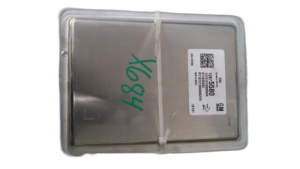
Used OEM Parts in Stock



New Aftermarket Parts Available



The information in this article is provided for general reference and educational purposes only. Vehicle specifications, procedures, and part compatibility can vary by production date, trim level, and region. Always consult your vehicle's factory service manual and verify part numbers before purchasing or performing repairs. Safety-critical components such as airbags, seat belts, and braking systems should be installed by a qualified professional.
- Chevrolet Cruze:
- 🎬 Helpful Videos
- 🛍️ Shop This Part
- What's Unique About the 2011-2016 Chevrolet Cruze
- Symptoms You May Notice
- Most Likely Causes
- Rare But Worth Checking
- Diagnosis Steps
- Parts You'll Likely Need
- Related Codes That Often Appear With This One
- Technical Service Bulletins (TSBs) & Recalls
- Platform-Specific Known Issues
- Mechanic-Grade Diagnostic Values
- Scan Tool Commands That Help
- Wiring & Ground Locations
- Real Owner Repair Stories
- OEM Part Supersession History
- Model Year Variations Within This Range
- Diagnostic Flowchart
- Other Known Issues on This Vehicle
- Used vs. New Parts: Buying Guide for This Vehicle
- Real Owner Stories
- 2011-2012 Chevrolet Cruze 1.4L Turbo
- 2011-2016 Chevrolet Cruze 1.4L Turbo
- Related OBD-II Codes
- Frequently Asked Questions
- 🎟️ Get 5% Off