

P0563 on 2014-2018 Mazda 3: High System Voltage Causes and Fixes
P0563 means your Mazda 3's electrical system is overcharging. On standard models, this is almost always a failing alternator. If your car has the optional i-ELOOP system, the expensive regenerative braking capacitor is a likely culprit. Expect to pay $400-$700 for an alternator replacement or over $1,500 for an i-ELOOP capacitor replacement at a dealership.
- P0563 means the system voltage is too high, which is a serious issue that can damage electronics.
- The first and most important diagnostic step is to identify if your Mazda 3 has the optional i-ELOOP system, as this completely changes the list of likely causes.
- For standard models, a faulty alternator is the #1 cause. For i-ELOOP models, a failing capacitor is a very common and expensive cause.
- Do not replace the battery until you have confirmed the charging system is repaired; otherwise, the new battery will be quickly destroyed by the overcharging.
- Checking the voltage at the battery with the engine running is a simple, definitive test. A reading over 15.0V confirms an overcharging problem.
What's Unique About the 2014-2018 Mazda 3
The key difference for the 2014-2018 Mazda 3 is the optional i-ELOOP regenerative braking system. Standard models use a conventional alternator, where P0563 almost always points to a failed internal voltage regulator. However, models equipped with i-ELOOP use a complex system with a variable-voltage alternator (12V-25V), a large capacitor for storing energy, and a DC-DC converter. On these cars, voltage instability and codes like P0563 can be caused by a failing capacitor, a common issue as these vehicles age, which is a much more expensive repair than a standard alternator.
Symptoms You May Notice
- Check Engine Light is on
- Battery or charging system warning light is illuminated on the dashboard
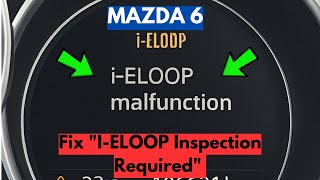
- On i-ELOOP models, the 'i-ELOOP Inspection Required' message may appear on the center display
- Headlights and interior lights are unusually bright or flickering erratically
- Engine RPMs fluctuate or dip at idle, even before a warning light appears (common pre-failure symptom on i-ELOOP models)
- Swollen or leaking battery with a potential sulfur (rotten egg) smell
- Erratic behavior from electronic accessories like the radio, climate control, or power windows
- Engine may stall or have difficulty starting
- i-STOP system is disabled and will not function
- Replacing the battery without testing the charging system first. A high voltage code is caused by overcharging, which damages the battery. The battery is the symptom, not the root cause.
- On i-ELOOP models, replacing the alternator when the capacitor is the actual cause. This is a costly mistake as the variable-voltage alternator is expensive and the problem will persist.
Most Likely Causes
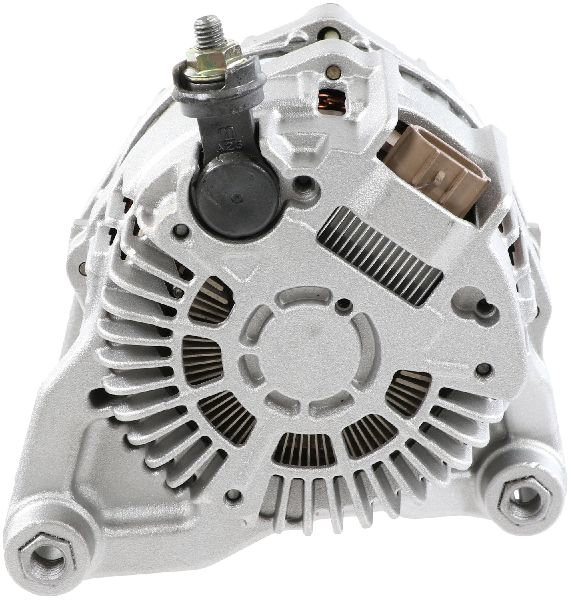
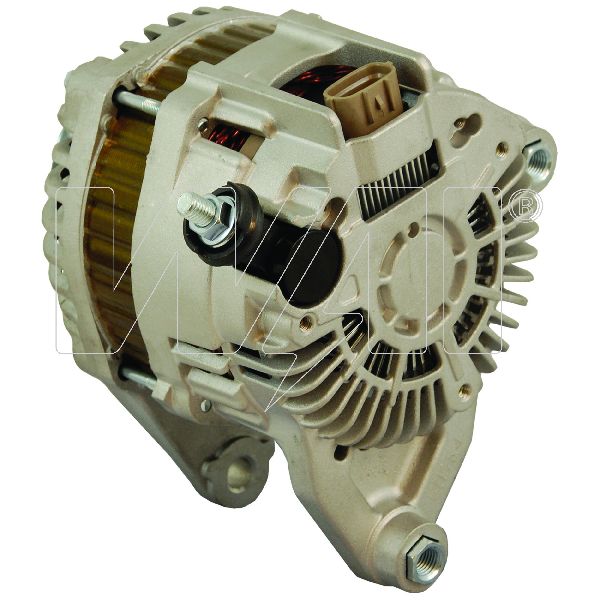
- Faulty Alternator 🔴 High Probability This is the most common cause for all vehicles without the i-ELOOP system. The internal voltage regulator fails, causing the alternator to continuously produce maximum output.
How to confirm: With the engine running, use a multimeter to measure the voltage across the battery terminals. A reading consistently above 15.0 volts points to a faulty alternator.
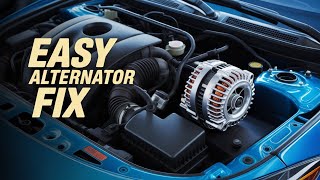
Typical fix: Replace the entire alternator assembly. 🎬 Watch this DIY Mazda 3 alternator replacement guide The voltage regulator is internal and not serviced separately. The OEM part number for the 2.0L/2.5L non-i-ELOOP alternator is typically PE01-18-300 or a successor.
Est. part cost: $250-$500 - Failing i-ELOOP Capacitor 🔴 High Probability This applies only to models with i-ELOOP. The capacitor is a widely known failure point, especially after 6-7 years, leading to voltage instability. Hot climates can accelerate degradation. The failure is so common that it is a major point of discussion on owner forums.
How to confirm: Diagnosis is more complex. A professional will use a Mazda-specific scan tool to check for i-ELOOP codes like P1794 ('Capacitor Circuit Malfunction'). Many owners on forums like Mazda3Revolution report that temporarily disconnecting the capacitor's electrical connector causes the system to revert to a stable (though less efficient) alternator-only mode, which can help isolate the capacitor as the faulty component.
Typical fix: Replace the i-ELOOP capacitor assembly. The most common OEM part number is B45A-67-UN0 (or G46L-67-ZC0A for later models). After replacement, the system must be reconfigured using a dealer tool, as outlined in Mazda TSB 01-012/17.
Est. part cost: $1000-$2000 - Corroded or Loose Battery Terminals/Grounds 🟡 Medium Probability
How to confirm: Visually inspect the battery terminals for white or blue-green corrosion. Check that the main engine and body ground straps are clean, tight, and free of corrosion. A poor connection can cause the voltage sensor to read incorrectly, tricking the alternator into overcharging.
Typical fix: Clean the battery terminals and posts with a wire brush. Secure or replace any corroded or broken ground straps.
Est. part cost: $5-$50 - Failing Battery ⚪ Low Probability The specific Q85 (AGM) battery required for i-ELOOP models is sensitive. While a failing battery is usually the victim of overcharging, a severely degraded battery can contribute to electrical instability in the complex i-ELOOP system.
How to confirm: Perform a load test on the battery using a tester compatible with AGM batteries. A simple voltage check is insufficient.
Typical fix: Replace the battery with the correct OEM-spec Q85 or T110 AGM battery. This should only be done after confirming the charging system is working correctly, otherwise the new battery will also be damaged.
Est. part cost: $150-$300
Rare But Worth Checking
- Faulty Powertrain Control Module (PCM): This is very rare. The PCM's internal voltage sensing circuit can fail, causing it to misread the system voltage. All other possibilities should be exhausted before condemning the PCM.
- Faulty i-ELOOP DC-DC Converter: On i-ELOOP models, the DC-DC converter, which steps down the capacitor's voltage for the car's 12V systems, can also fail and cause charging system issues. It is sometimes replaced along with the capacitor as a precaution.
Diagnosis Steps
- First, determine if your vehicle is equipped with the i-ELOOP system. Look for an 'i-ELOOP' badge on the trunk, a status screen in the infotainment system, or the large silver capacitor assembly in the engine bay, typically located under the driver's side headlight.
- Scan for any other trouble codes. A code like P1794 is a near-certain confirmation of an i-ELOOP system fault.
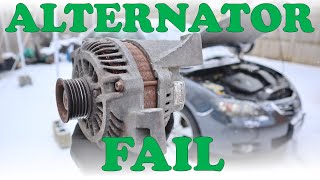
- With the engine running, use a digital multimeter to measure the DC voltage 🎬 See how to diagnose and test a failing alternator directly at the battery terminals.
- If the voltage is consistently above 15.0V on a non-i-ELOOP model, the alternator has almost certainly failed and needs replacement.
- If the voltage is fluctuating wildly or high on an i-ELOOP model, the capacitor is the primary suspect. As a diagnostic step discussed in forums, you can (at your own risk) turn off the car, disconnect the main electrical connector to the capacitor, and restart. If the voltage stabilizes to a normal 14.4-14.8V (with warning lights on), it strongly suggests the capacitor is faulty.
- Thoroughly inspect all battery cables, terminals, and major ground straps for corrosion, damage, or looseness. Clean and tighten as necessary.
- If the battery is swollen, leaking, or fails a load test, it must be replaced, but only AFTER the overcharging cause is found and fixed.
- If an i-ELOOP capacitor is replaced, ensure the workshop performs the 'i-ELOOP System Re-Configuration Procedure' as specified in Mazda TSB 01-012/17 to prevent immediate re-failure.
- If all other components test good, the issue could be a rare wiring fault or a problem with the PCM.
Parts You'll Likely Need
- Alternator (Standard)
(OEM #PE01-18-300)— For non-i-ELOOP models, this is the most common failure. The internal voltage regulator fails, causing the overcharging condition.
Trusted brands: Denso (OEM), Bosch, Mazda OE
OEM price range: $500-$700
Aftermarket price range: $250-$450 - i-ELOOP Capacitor
(OEM #B45A-67-UN0 / G46L-67-ZC0A)— For i-ELOOP equipped models, this is a very common point of failure that causes voltage instability and can trigger a P0563 code.
Trusted brands: Mazda OE
OEM price range: $1500-$2500
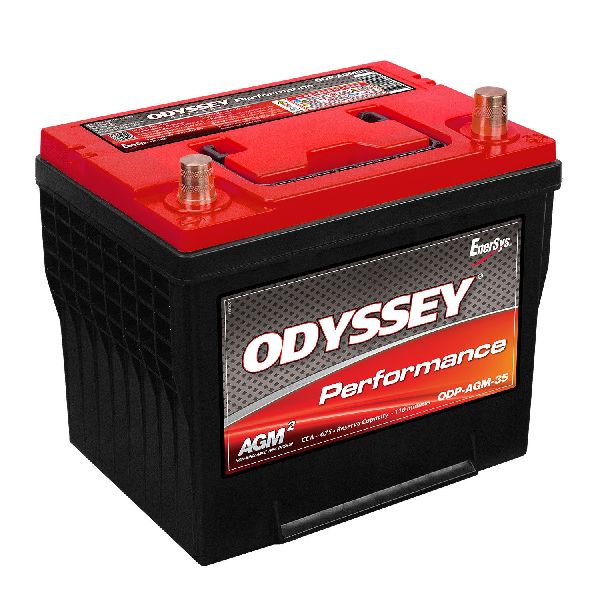
Aftermarket price range: N/A - Battery (AGM Type, Q85/T110) — The original battery is often damaged by the overcharging condition and may need to be replaced along with the faulty charging component. Mazda 3s with i-stop or i-ELOOP require a specific Q85 or T110 EFB/AGM battery.
Trusted brands: Panasonic (OEM), Deka, Optima
OEM price range: $250-$400
Aftermarket price range: $200-$300
Related Codes That Often Appear With This One
- P1794 — This is a Mazda-specific code for a 'Capacitor Circuit Malfunction' and is a strong indicator that the P0563 code is a symptom of a failing i-ELOOP system.
- P0C7B — This code for 'Capacitor Voltage Sensor Circuit Range/Performance' also points directly to a problem with the i-ELOOP capacitor or its related wiring.
Technical Service Bulletins (TSBs) & Recalls
- TSB 01-001/14: Addresses PCM recalibration for 'i-ELOOP Inspection Required' warnings, often triggered by software glitches or temporary low-voltage states, not necessarily a hard failure.
- TSB 01-012/17: This is a critical procedure for 'i-ELOOP System Re-Configuration'. It must be performed with a Mazda diagnostic tool after replacing the capacitor or DC-DC converter to initialize the new component, otherwise the repair may not be successful.
Platform-Specific Known Issues
- The i-ELOOP capacitor has a widely reported tendency to fail after about 6-7 years of service, with failures being more common in hotter climates. Symptoms include flickering lights and engine RPM fluctuations at idle before any warning lights appear.
- A thread on Mazda3Revolution.com titled '2014 i-ELOOP Failure' details one owner's experience with a dealer diagnosis costing over $2,000 for a capacitor replacement, corroborating the high cost of this repair.
- A Reddit user in r/mazda3 described the exact symptoms of flickering lights and
Mechanic-Grade Diagnostic Values
- System Voltage (DTC P0563 Trigger Condition) — expected: 13.2V - 14.8V (Engine Running). Failure: Voltage detected above 18V for 6 out of 10 seconds.
- Standard Alternator Output (Non-i-ELOOP) — expected: 13.5V - 14.7V (Engine Idling). Failure: Consistently above 15.0V.
- i-ELOOP Alternator Output (Variable Voltage) — expected: Fluctuates between ~12V and ~25V depending on load and deceleration.. Failure: Unstable voltage, or high voltage (e.g., >15V) at the battery when the capacitor is failing. Disconnecting the capacitor may cause voltage to stabilize in a normal range (~14.5V) as a diagnostic clue.
- Battery Resting Voltage — expected: ~12.6V (Healthy, Engine Off). Failure: Below 12.4V indicates a weak or discharged battery.
- Mazda IDS Scan Tool PID (i-ELOOP Status) — expected: ON. Failure: OFF. This indicates the system is not active, which could be due to a fault or programming.
Hidden / Shadow Codes Worth Checking
- P1794:00: Capacitor (i-ELOOP) system: Capacitor (i-ELOOP) malfunction. This is a primary code indicating a direct fault with the capacitor itself. (see via Mazda IDS (dealer tool) or advanced OBD-II scanners like FORScan or OBDLink MX+.)
- P2502:00: Generator system: Malfunction in voltage generated by generator. This code can appear alongside P1794 after driving in the rain on early (2014) models, pointing to a specific issue addressed by a PCM reprogram in TSB 01-001/14. (see via Mazda IDS (dealer tool) or advanced OBD-II scanners.)
Scan Tool Commands That Help
- Mazda IDS: i-ELOOP System Re-Configuration Procedure — This procedure is mandatory after replacing the i-ELOOP capacitor or the Q85/T110 battery. It involves a specific sequence of depressing the accelerator pedal to make the warning lights flash, which re-initializes the system. Failure to perform this can lead to persistent faults.
- FORScan: IC Module Configuration: Address 720-04-25 — If the i-ELOOP display is missing from the infotainment screen after a repair, it may have been disabled in the Instrument Cluster (IC) module. This address can be edited using FORScan to re-enable the feature. Note that modifying block 4 requires recalculating and writing the checksum in address 720-04-01.
Wiring & Ground Locations
- i-ELOOP Capacitor — In the engine bay, typically located under the driver's side headlight assembly, appearing as a large silver metal box.. This is the primary failure point on i-ELOOP models that causes voltage instability and can trigger P0563.
- DC-DC Converter — Also located in the engine bay, often near the capacitor. It's another critical component of the i-ELOOP system.. This module steps down the high voltage from the capacitor to 12V for the vehicle's systems. A failure here can cause charging system DTCs.
- Main Engine/Chassis Ground — Follow the main negative battery cable to where it bolts to the chassis. Additional ground straps connect the engine block to the chassis.. A poor ground connection can cause the PCM to read system voltage incorrectly, leading it to believe there is an overcharging condition when there isn't one.
Real Owner Repair Stories
- Reddit user in r/mazda (2017 Mazda 6 GL 2.5L with i-ELOOP) — Engine idle RPM fluctuating, car vibrating when stopped, pulsating interior lights, i-stop flickering above 3k RPM. A workshop diagnosed unstable voltage that stabilized when the i-ELOOP capacitor was disconnected.
❌ Tried (didn't work) The user was considering driving without repair, but was concerned about potential stalling.
✅ What actually fixed it The user posted an update: "Guys i changed the capacitor to a new one, car is fixed! no rpm issues anymore." - Mazdas247 forum user (2017 Mazda 6 2.5 Wagon with i-ELOOP) — Unstable system voltage, i-STOP and i-ELOOP systems were non-functional, and the i-ELOOP animation was missing from the fuel economy monitor.
❌ Tried (didn't work) Initially suspected the previous owner had coded the systems off to hide a fault.
✅ What actually fixed it First, the unstable voltage was fixed by replacing the i-ELOOP capacitor. Second, the missing infotainment animation was restored by using FORScan to edit the Instrument Cluster module configuration at address 720-04-25 and updating the corresponding checksum.
OEM Part Supersession History
B45A-67-UN0→G46L-67-ZC0A— Likely an internal revision to improve reliability or address the known failure mode of the original capacitor.Multiple TSBs (01-016/13, 01-002/14, 01-007/16)→01-012/17— Consolidated and updated service information regarding the Q-85/T-110 battery and related i-ELOOP procedures.
Heads up: Using outdated procedures from older TSBs may result in improper diagnosis or failure to correctly re-initialize the i-ELOOP system after a battery or capacitor replacement.
Model Year Variations Within This Range
- 2014: Early 2014 Mazda3 vehicles (VINs lower than JM1 BM ** 162663) were subject to TSB 01-001/14 for warning messages and DTCs P1794 and P2502 appearing after driving in the rain. The fix was a PCM reprogram, suggesting a software logic issue rather than a hardware failure.
- 2017-2018: A minor facelift for the 2017 model year included a new grille and steering wheel, but the core powertrain and i-ELOOP system architecture remained the same as the 2014-2016 models. The later capacitor part number (G46L-67-ZC0A) is more commonly associated with these later years.
Diagnostic Flowchart
Other Known Issues on This Vehicle
Issues unrelated to this code that are worth knowing about as an owner of this generation:
- Infotainment 'Ghost Touch' and Delamination 🟠 Medium — Extremely common across the entire generation. The touchscreen begins to register phantom inputs, making the system unusable. Caused by digitizer failure. (Ref: Mazda created a warranty extension program (SSP93 in the US) to address this, but it has since expired for most vehicles. A repair kit is available.)
- Leaking/Failing Drive Belt Tensioner 🟠 Medium — A common failure point. The hydraulic tensioner leaks oil, losing its ability to keep the serpentine belt tight, resulting in rattling or chirping noises from the engine bay. (Ref: TSB 01-007/16 was issued acknowledging oil leakage and noise from the auto tensioner.)
- Seized Rear Brake Calipers 🟡 Low — Frequently reported. The parking brake mechanism within the rear calipers can seize, causing the brake to drag, leading to rapid pad and rotor wear on one or both rear wheels. (Ref: Recall 1217F was issued for parking brake actuator corrosion on some models.)
- Excessive Oil Consumption (2.5T Engine) 🔴 High — Primarily affects 2021 models with the 2.5L Turbo engine, which can include late-production 2018 vehicles, but is a significant issue for the Skyactiv-G family. Caused by faulty valve stem seals. (Ref: TSB 01-012/21 and its revisions address this issue, involving replacement of the exhaust valve seals.)
Used vs. New Parts: Buying Guide for This Vehicle
When a used part is the smart pick: A used alternator from a low-mileage donor vehicle is a reasonable cost-saving measure for non-i-ELOOP models. The part is robust and not known for premature failure.
Donor-vehicle mileage cap: roughly under 70000 miles for the part to have meaningful remaining life.
What to inspect on the donor part:
- Check for a clean, corrosion-free housing.
- Ensure the pulley spins freely without noise or roughness, which would indicate bad bearings.
- Verify the donor vehicle was not in a front-end collision that could have damaged the alternator.
- Ask the salvage yard if they have tested the output, if possible.
OEM-only on this vehicle (don't cheap out):
- i-ELOOP Capacitor
Aftermarket brands forum-validated for this vehicle:
- Denso (OEM for alternator)
- Bosch (Alternator)
Brands owners have reported issues with on this vehicle:
- No-name, unbranded online marketplace alternators (often have poor quality internal voltage regulators).
- For the i-ELOOP capacitor, aftermarket options are virtually non-existent and should be avoided. Given the high failure rate and sensitivity of the system, a used capacitor is a significant gamble and not recommended by forum veterans.
Real Owner Stories
Aggregated from forums and TSBs cited above. Mileages and costs reflect what owners reported in those sources.
2014 Mazda 3 i-ELOOP
Symptoms: The owner experienced a system failure that led to a dealer diagnosis of a faulty capacitor.
What fixed it: Replacement of the i-ELOOP capacitor assembly.
Cost: $2,000-$2,500
Source hint: Mazda3Revolution Forum - '2014 i-ELOOP Failure P1794'
2014-2016 Mazda 3 BM — ~80000 miles
Symptoms: Flickering lights and engine RPM fluctuations at idle; system failure after about 6-7 years of use in a hot climate.
What fixed it: Replacement of the capacitor.
Source hint: MyCarForum - 'Mazda 3 BM capacitor change...'
2014-2018 Mazda 3 SkyActiv-G
Symptoms: i-ELOOP System Malfunction light and 'i-ELOOP Inspection Required' message on the center display.
What fixed it: Replacing either the special Q85 battery or the capacitor itself.
Source hint: Reddit (r/mazda) - 'How can i get this fixed without going to a dealership? i-ELOOP System Malfunction'
Related OBD-II Codes
Frequently Asked Questions
My 2014 Mazda 3 is showing an 'i-ELOOP Inspection Required' message along with P0563. Is there a software fix for this?
I'm replacing the capacitor on my SkyActiv-G model myself. Is it a simple plug-and-play repair?
Can I use a standard lead-acid battery in my i-ELOOP equipped Mazda 3 to save money?
My headlights are flickering and the RPMs dip at idle, but I don't have a check engine light yet. Is this related to P0563?
Is the i-ELOOP capacitor failure common on the 2.5L Mazda 3?
Helpful Videos
Used OEM Parts in Stock


New Aftermarket Parts Available


The information in this article is provided for general reference and educational purposes only. Vehicle specifications, procedures, and part compatibility can vary by production date, trim level, and region. Always consult your vehicle's factory service manual and verify part numbers before purchasing or performing repairs. Safety-critical components such as airbags, seat belts, and braking systems should be installed by a qualified professional.
- Mazda 3:
- 🎬 Helpful Videos
- 🛍️ Shop This Part
- What's Unique About the 2014-2018 Mazda 3
- Symptoms You May Notice
- Most Likely Causes
- Rare But Worth Checking
- Diagnosis Steps
- Parts You'll Likely Need
- Related Codes That Often Appear With This One
- Technical Service Bulletins (TSBs) & Recalls
- Platform-Specific Known Issues
- Mechanic-Grade Diagnostic Values
- Hidden / Shadow Codes Worth Checking
- Scan Tool Commands That Help
- Wiring & Ground Locations
- Real Owner Repair Stories
- OEM Part Supersession History
- Model Year Variations Within This Range
- Diagnostic Flowchart
- Other Known Issues on This Vehicle
- Used vs. New Parts: Buying Guide for This Vehicle
- Real Owner Stories
- 2014 Mazda 3 i-ELOOP
- 2014-2016 Mazda 3 BM — ~80000 miles
- 2014-2018 Mazda 3 SkyActiv-G
- Related OBD-II Codes
- Frequently Asked Questions
- 🎟️ Get 5% Off