

P0563 on 2011-2017 Hyundai Accent: System Voltage High Causes and Fixes
This code indicates your car's electrical system is overcharging, with voltage exceeding 16.9V. The most common cause is a failing alternator with a bad internal voltage regulator. Expect to pay $250-$500 for a replacement alternator, which is a DIY-friendly fix (2/5 difficulty).
- P0563 means your Accent's charging system is producing dangerously high voltage.
- The most likely culprit is a failed internal voltage regulator, which requires replacing the entire alternator.
- Before replacing the alternator, always test it with a multimeter and thoroughly inspect all battery/alternator cables and ground connections for corrosion or damage.
- Pay special attention to a known wiring harness chafe point near the transmission bracket, as this can cause similar electrical faults.
What's Unique About the 2011-2017 Hyundai Accent
The 2011-2017 Accent (generation RB) uses a modern charging system where the voltage regulator is built directly into the alternator. While the design is straightforward, owner experiences suggest that diagnosing charging issues can sometimes be tricky. Problems can stem not just from the alternator itself, but also from poor grounds or wiring, which can mimic alternator failure. A known issue on this platform is a wiring harness bracket attached to the transmission that can chafe through the harness sheathing over time, causing electrical shorts and runnability problems. It's crucial to confirm the alternator is truly the fault before replacing it.
Symptoms You May Notice
- Check Engine Light is on
- Battery or charging system warning light is illuminated on the dashboard
- Headlights and interior lights may flicker, or appear unusually bright
- Erratic operation of electrical accessories like the radio or power windows
- The engine may stall intermittently
- A burning smell from the battery due to overheating or boiling electrolyte
- Random reboots of the PCM/ECU that may cause the engine to stall briefly before restarting
- Erratic behavior of dashboard gauges
- Replacing the battery without testing the alternator. A new battery will soon be damaged by an overcharging alternator.
- Replacing the alternator without checking wiring and grounds first. A bad ground or a chafed wiring harness can mimic the symptoms of a failed alternator, leading to unnecessary replacement.
Most Likely Causes
- Failing Alternator / Internal Voltage Regulator 🔴 High Probability The voltage regulator is integrated into the alternator. When it fails in the 'closed' position, it allows the alternator to produce maximum voltage continuously, causing an overcharge condition. This is the most common failure mode that triggers P0563.
How to confirm: With the engine running, use a multimeter to measure the voltage directly at the battery terminals. A reading that is consistently above 15.0V, and especially one that climbs towards 16V or higher, confirms an overcharging alternator. Normal charging voltage should be between 13.5V and 14.8V.
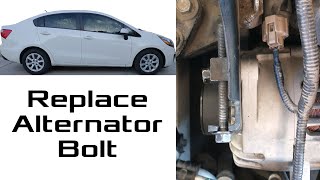
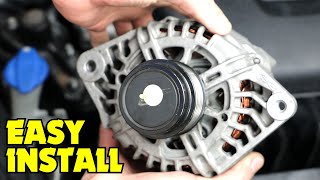
Typical fix: Replace the entire alternator assembly. 🎬 See this step-by-step guide to replacing the Accent alternator. While it is technically possible to replace just the internal regulator/brush pack, it is often not cost-effective and most mechanics replace the complete unit.
Est. part cost: $200-$450 - Poor Ground Connection or Damaged Wiring 🟡 Medium Probability Corrosion on ground straps or main power cables can create high resistance, confusing the system and leading to charging errors. Specifically for this generation, a wiring harness bracket on the transmission is known to chafe through the harness over time, which can ground out circuits and cause various electrical issues.
How to confirm: Perform a voltage drop test on the main power and ground cables. Visually inspect all connections at the battery, alternator, engine block, and chassis for looseness, corrosion, or damage. Any significant voltage drop (over 0.2V) or visible corrosion indicates a problem. Pay close attention to the wiring harness near the transmission for any signs of chafing against its mounting bracket.
Typical fix: Clean the corroded terminals with a wire brush and ensure all connections are tight. Repair any chafed wiring with electrical tape or heat shrink tubing and secure the harness away from the sharp bracket. Replace any severely damaged or frayed cables.
Est. part cost: $5-$50 - Failing Battery ⚪ Low Probability An old or internally shorted battery may not be able to properly accept or buffer the charge from the alternator. The charging system may overcompensate for this, leading to a high voltage condition.
How to confirm: Have the battery professionally load-tested at an auto parts store. A battery that fails a load test, even if it holds a surface charge, should be replaced.
Typical fix: Replace the battery.
Est. part cost: $120-$200
Rare But Worth Checking
- Faulty Powertrain Control Module (PCM): This is very rare. Before condemning the PCM, all other possibilities (alternator, wiring, grounds, battery) must be exhaustively ruled out. A faulty PCM might incorrectly interpret a normal voltage as high.
Diagnosis Steps
- Scan for any other stored trouble codes to see if other systems are affected.
- With the engine off, check the battery voltage with a multimeter. It should be around 12.4-12.6V.
- Start the engine. Measure the voltage at the battery terminals again. Normal charging voltage is between 13.5V and 14.8V.
- If the voltage is 15.0V or higher and climbing, the alternator's voltage regulator has likely failed. The alternator needs to be replaced.
- If the voltage is high but erratic, turn on all electrical accessories (headlights, blower fan, rear defroster) to apply a load. If the voltage stabilizes, it could point to a connection issue. If it remains high or spikes, the alternator is still the primary suspect.
- Turn off the vehicle and disconnect the battery. Thoroughly inspect, clean, and tighten all connections, including the main battery terminals, the large wire on the alternator, and the main engine/chassis ground straps.
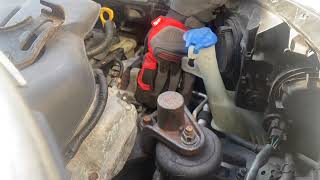
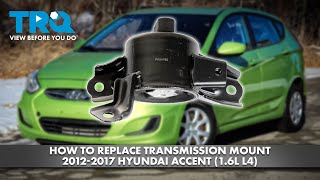
- Specifically inspect the engine wiring harness where it is secured to a bracket on the transmission. 🎬 Watch: How to access the transmission area to check wiring. Look for any signs of rubbing, chafing, or exposed wires and repair as needed.
- If all wiring and the alternator test good, have the battery professionally load-tested to rule it out.
- Only after confirming the alternator, wiring, and battery are all in perfect condition should a faulty PCM be considered.
Parts You'll Likely Need
- Alternator
(OEM #37300-2B760)— This is the most frequent cause of P0563, as the internal voltage regulator fails and causes the system to overcharge. This part number also fits some Hyundai Veloster models.
Trusted brands: Valeo (OEM supplier), Denso, Bosch, Hyundai Genuine
OEM price range: $350-$840
Aftermarket price range: $200-$350
Technical Service Bulletins (TSBs) & Recalls
- While no TSB directly addresses P0563 for this model, Hyundai has issued TSBs for other models concerning high voltage systems and charging issues, such as TSB 23-HC-001H for Sonata Hybrids, indicating a pattern of addressing charging system faults via service bulletins. Always have a dealer check for the latest TSBs related to the charging system for your specific VIN.
Platform-Specific Known Issues
- Wiring Harness Chafing: A video from 1A Auto highlights a common problem spot on the 4th generation Accent where the engine wiring harness is secured to a bracket on the transmission. The zip tie can break, allowing the harness to rub against the metal bracket, wearing through the insulation and causing shorts or grounding issues that can lead to various electrical problems, including charging system faults.
Mechanic-Grade Diagnostic Values
- System Voltage (Engine Running) — expected: 13.2V to 14.8V. Failure: Consistently above 15.0V, spiking to 16V or higher.
- System Voltage (Engine Off) — expected: 12.4V to 12.6V. Failure: Below 12.4V indicates a discharged or weak battery.
- DTC Trigger Threshold (P0563) — expected: Voltage > 17V for 0.2 seconds. Failure: N/A - This is the condition that sets the code. 🎬 Watch: A quick overview of the P0563 high voltage code.
- Main Power/Ground Cable Voltage Drop — expected: Less than 0.2V. Failure: A reading higher than 0.2V indicates excessive resistance in the cable or at the connection points.
Scan Tool Commands That Help
- Hyundai GDS (Global Diagnostic System): DTC Read & Clear — Used to confirm P0563, check for other related codes, and clear the code after repairs are complete.
- Hyundai GDS (Global Diagnostic System): Live Data / Data Stream — To monitor 'System Voltage' or 'Battery Voltage' in real-time as reported by the ECM. This allows a technician to see the voltage the computer is seeing, which can help differentiate between an actual over-voltage event and a faulty ECM sensor.
Wiring & Ground Locations
- Alternator Connector — On the back of the alternator assembly.. This multi-pin connector provides the signal from the ECM to the voltage regulator. A short video for a Hyundai Accent shows a three-wire setup: a blue wire to the instrument cluster, and green and grey wires that go to the ECM, which may route through a battery sensor. A poor connection or damaged wire here can disrupt voltage regulation.
- Alternator B+ Terminal — The large post on the back of the alternator, covered by a rubber boot.. This is the main output cable that carries charging current to the battery and the rest of the vehicle. A loose or corroded connection here will cause significant charging problems, though typically low voltage (P0562) rather than high voltage.
- Main Engine Ground — A braided strap or thick wire connecting the engine block or cylinder head directly to the chassis/firewall.. The alternator is grounded to the engine block. If the engine itself has a poor ground connection to the chassis, it can create electrical potential differences and confuse the voltage regulator, potentially leading to overcharging.
- Battery Negative to Chassis Ground — The main cable from the battery's negative terminal to a bare metal point on the vehicle's frame or inner fender.. This is the primary ground for the entire electrical system. Corrosion or a loose connection here can cause a wide range of electrical issues, including charging system faults.
- 125A Multi-Fuse — In the under-hood fuse box, connected to the positive battery terminal.. This is the main fuse for the alternator circuit. While a blown fuse here would cause a no-charge condition (P0562), a loose or corroded connection at this fuse block could introduce high resistance and potentially contribute to erratic voltage readings.
Real Owner Repair Stories
- Hyundai Forums thread 'Charging system malfunction' (2009 Hyundai Accent (similar MC generation, but relevant principle)) — Battery light on at startup, turns off after revving engine. Voltage spikes to 16V and stays there, causing lights to flicker.
❌ Tried (didn't work) The owner removed the new, remanufactured alternator and had it tested at a parts store, where it passed the test.
✅ What actually fixed it The forum consensus was that despite passing a bench test, the remanufactured alternator was faulty or incompatible. The fix was to replace the faulty remanufactured alternator with another one. This highlights that aftermarket parts can be bad out of the box.
When the Usual Fixes Don't Work
- In one documented case on a similar Hyundai, a user replaced a faulty alternator with a remanufactured unit which also proved to be defective, causing a 16V spike despite passing a bench test at a parts store. This underscores that if P0563 appears after an alternator replacement, the 'new' part itself is a primary suspect, even if it tests good off the car.
OEM Part Supersession History
37300-2B760→37300-2B760RU (Remanufactured)— Standard practice to offer a lower-cost, factory-remanufactured option.
Heads up: The OEM part is made by Valeo. While many aftermarket brands exist, quality can vary significantly. Some forum users report issues with non-OEM brands failing prematurely or causing voltage regulation issues right out of the box.
Diagnostic Flowchart
Used vs. New Parts: Buying Guide for This Vehicle
When a used part is the smart pick: A used OEM (Valeo) alternator from a low-mileage, accident-damaged donor vehicle can be a cost-effective and reliable alternative to a new aftermarket part. Given that the failure mode is electronic (voltage regulator), a used part is a calculated risk, but often better than a low-quality remanufactured unit.
Donor-vehicle mileage cap: roughly under 80000 miles for the part to have meaningful remaining life.
What to inspect on the donor part:
- Verify the donor vehicle's mileage.
- Inspect the alternator pulley for smooth, quiet rotation (indicates good bearings).
- Check the electrical connector and B+ post for any signs of corrosion, melting, or damage.
- Ensure the part comes from a vehicle that was not in a flood or fire.
Aftermarket brands forum-validated for this vehicle:
- Valeo (OEM supplier)
- Denso (Often cited as a top-tier reliable aftermarket brand)
Brands owners have reported issues with on this vehicle:
- Unbranded or 'white-box' remanufactured units from chain auto parts stores can be a gamble, as evidenced by forum posts where they fail out of the box or shortly after installation.
Real Owner Stories
Aggregated from forums and TSBs cited above. Mileages and costs reflect what owners reported in those sources.
2017 Hyundai Accent SE
Symptoms: A frustrating series of intermittent no-start and electrical gremlins, including the key fob not working and lights turning on and off by themselves.
What fixed it: The cause was suspected to be a slowly dying alternator, which is a classic precursor to a P0563 event.
Source hint: Reddit r/Hyundai - 'Having Electrical (?) Problems - 2017 Hyundai Accent SE'
2013 Hyundai Accent
Symptoms: Erratic charging behavior.
What fixed it: The owner was advised by a former Hyundai tech to perform a voltage drop test, indicating the likely fix was related to repairing poor wiring or ground connections.
Source hint: Reddit r/MechanicAdvice
Hyundai Accent (similar era to 2011-2017)
Symptoms: A hard-to-diagnose intermittent charging problem.
What fixed it: The problem was not fixed by two new alternators or a new battery, suggesting the root cause was a more complex electrical or computer issue.
Source hint: Reddit r/Cartalk
Related OBD-II Codes
Frequently Asked Questions
I heard there's a common wiring issue on these Accents. Where should I look first for a P0563 code?
What voltage should I see on my multimeter when testing the alternator on my 2011-2017 Accent?
The voltage regulator failed on my Accent's alternator. Can I just replace the regulator?
My headlights and dashboard lights are flickering and seem way too bright. Is this related to P0563?
My battery is old. Could it be the reason I'm getting a P0563 high voltage code?
Are there any official Hyundai TSBs for the P0563 code on my Accent?
I'm looking for a used alternator. What other cars use the same one as my Accent?
Helpful Videos
We Have This Part in Stock



The information in this article is provided for general reference and educational purposes only. Vehicle specifications, procedures, and part compatibility can vary by production date, trim level, and region. Always consult your vehicle's factory service manual and verify part numbers before purchasing or performing repairs. Safety-critical components such as airbags, seat belts, and braking systems should be installed by a qualified professional.
- Hyundai Accent:
- 🎬 Helpful Videos
- 🛍️ Shop This Part
- What's Unique About the 2011-2017 Hyundai Accent
- Symptoms You May Notice
- Most Likely Causes
- Rare But Worth Checking
- Diagnosis Steps
- Parts You'll Likely Need
- Technical Service Bulletins (TSBs) & Recalls
- Platform-Specific Known Issues
- Mechanic-Grade Diagnostic Values
- Scan Tool Commands That Help
- Wiring & Ground Locations
- Real Owner Repair Stories
- When the Usual Fixes Don't Work
- OEM Part Supersession History
- Diagnostic Flowchart
- Used vs. New Parts: Buying Guide for This Vehicle
- Real Owner Stories
- 2017 Hyundai Accent SE
- 2013 Hyundai Accent
- Hyundai Accent (similar era to 2011-2017)
- Related OBD-II Codes
- Frequently Asked Questions
- 🎟️ Get 5% Off