

OBD-II Code P0626: Generator Field Control Circuit High
What P0626 means, why it triggers, and how to fix it
- P0626 triggers when the Powertrain Control Module (PCM) detects voltage in the alternator's field control circuit exceeding manufacturer specifications, indicating uncontrolled charging.
- Always check for Technical Service Bulletins (TSBs) before replacing parts; 2019-2022 Ram 2500/3500 trucks frequently resolve this code with a $100-$200 PCM software update.
- Test the battery voltage with the engine running; a reading above 15.0 volts confirms a dangerous overcharge condition that requires immediate alternator replacement to prevent module damage.
- Do not drive with an active P0626 code, as sustained voltage spikes easily destroy the PCM and ABS modules, adding $1,000 to $2,000+ to your repair bill.
- Verify the integrity of the field control circuit wiring and ground straps using a multimeter, as a simple $50 wiring short perfectly mimics a $600 alternator failure.
What Does P0626 Mean?

P0626 means the Powertrain Control Module (PCM) detects a problem with the charging system. Specifically, the voltage in the alternator's field control circuit is higher than the manufacturer's specified range, or the circuit is open. The PCM uses this circuit to command the alternator's output by controlling its internal magnetic field. A high voltage reading indicates the alternator's charging rate is uncontrolled, leading to an undercharged, dead, or overcharged battery.
Technical definition: Generator Field/F Terminal Circuit High. 🎬 Watch: A quick overview of the P0626 code and its meaning. The Powertrain Control Module (PCM) detects that voltage in the generator's field control circuit is above the expected range for the commanded state, or the circuit is open. The PCM uses this Pulse Width Modulated (PWM) signal circuit to monitor and actively control alternator output.
Can I Drive With P0626?
Yes, But With Caution. Yes, but only for a short trip to a repair shop. A charging system fault leaves you stranded with a dead battery at any moment. Continuing to drive risks overcharging the battery (causing it to swell or leak flammable gas) and sends voltage spikes that destroy sensitive electronics like the Powertrain Control Module (PCM), adding $1,000-$2,000+ to the repair bill.
Common Causes

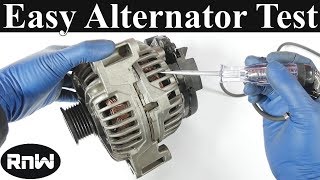
- Faulty Alternator (Very Common) — The alternator itself is the most frequent culprit. 🎬 See how an alternator works and how to test it properly. An internal failure of the voltage regulator, rectifier diodes, or field coil causes a short to power or an open circuit.
- Damaged or Corroded Wiring (Common) — The generator field control wire running from the PCM to the alternator is chafed, melted, pinched, or corroded. A short to a power source or a break (open) in this wire causes the PCM to see an abnormally high voltage reading.
- Loose or Corroded Connectors (Common) — A bad connection at the alternator or PCM disrupts the signal. Corrosion, moisture intrusion, pushed-out pins, or a loose-fitting connector are the primary culprits.
- Poor Ground Connection (Common) — A weak, loose, or corroded ground connection at the alternator, PCM, or main chassis introduces unwanted resistance, skewing the voltage reading and causing the PCM to interpret the signal as high.
- PCM Software Anomaly (Less Common) — In newer models (especially Ram trucks), software glitches misinterpret normal operating parameters and trigger P0626 erroneously. A PCM software update (reflash) is the required fix.
- Failing or Weak Battery (Less Common) — A weak or failing battery places excessive strain on the alternator. In some systems, this causes erratic voltage behavior in the control circuit. A bad battery is frequently misdiagnosed as a bad alternator.
- Blown Fuse or Fusible Link (Rare) — A blown fuse providing power to a related part of the charging system causes unexpected voltage readings in the monitor circuit.
- Faulty Powertrain Control Module (PCM) (Rare) — An internal failure of the PCM driver circuit that controls the alternator causes it to send or read an incorrect voltage signal. Consider this only after exhausting all other possibilities.
Symptoms

- Battery or Charging System Warning Light On — The battery icon on your dashboard illuminates steadily or flashes to indicate a charging system fault.
- Dimming, Flickering, or Overly Bright Lights — Headlights, interior lights, or dashboard lights dim, flicker, or shine excessively bright due to unstable voltage from the alternator.
- Engine Stalling or Difficulty Starting — If the battery fails to charge, the engine stalls while driving or refuses to start because of a dead battery.
- Erratic Electronic Accessories — The radio, power windows, or other electronics act up, reset, or stop working intermittently due to unstable system voltage.
- Swollen or Leaking Battery with a Burning Smell — In an overcharging condition, the battery overheats and boils the internal electrolyte. This causes the battery case to swell and release flammable hydrogen gas that smells like rotten eggs or sulfur.
- Harsh or Erratic Transmission Shifting — Modern automatic transmissions rely on precise voltage for solenoid operation. Unstable voltage from a charging system fault causes noticeable, harsh shifting.
Diagnostic Flowchart
Tap your situation to follow the diagnostic path that matches what you're seeing on this code.
Common Fixes & Costs
- Replacing the Alternator
— Parts: $300-$700, Labor: $150-$300, ~1.8 hr book time
(Intermediate)
Ram 2500/3500 (6.7L Cummins): OEM {'brand': 'Mopar', 'numbers': ['04801768AE', '56029707AC', '04801313AE']} (Alt: {'brands': ['Denso', 'Bosch'], 'notes': 'Ensure amperage (180A, 220A) matches the original unit. Denso and Bosch are highly-rated aftermarket options.'})
Ram Promaster City (2.4L): OEM {'brand': 'Mopar', 'numbers': ['56029624AC', 'R6029624AB (Reman)']} (Alt: {'brands': ['Carquest Premium (Part: 11554A)', 'Bosch (Part: AL6557X)', 'TYC'], 'notes': 'Aftermarket prices range from $190 to $480.'})
Ford F-Series (5.0L): OEM {'brand': 'Motorcraft', 'numbers': ['GL-8673 (200A)', 'GL-8647 (220A)']} (Alt: {'brands': ['Denso', 'ACDelco'], 'notes': 'Verify amperage based on vehicle options (e.g., cooled seats). Motorcraft parts come with a 2-year unlimited mileage warranty.'}) - Repairing Wiring or Connectors — Parts: $10-$50, Labor: $100-$350, ~1.5 hr book time (Intermediate)
- Updating/Reflashing the PCM — Parts: $0, Labor: $100-$200, ~1 hr book time (Professional)
- Replacing the Battery
— Parts: $150-$300, Labor: $50-$100, ~0.5 hr book time
(DIY)
Ram 2500/3500 (6.7L Cummins): OEM {'brand': 'Mopar', 'numbers': ['BCI Group Size H7 or H8']} (Alt: {'brands': [], 'notes': 'Dual battery system requires replacing both batteries at the same time.'})
Ram Promaster City (2.4L): OEM {'brand': 'Mopar', 'numbers': ['BCI Group Size 48 (H6)']} (Alt: {'brands': [], 'notes': ''})
Ford F-Series (5.0L): OEM {'brand': 'Motorcraft', 'numbers': ['BCI Group Size 94R (H7)']} (Alt: {'brands': [], 'notes': ''}) - Cleaning or Repairing Ground Straps — Parts: $5-$30, Labor: $50-$150, ~0.8 hr book time (DIY)
- Replacing the Powertrain Control Module (PCM)
— Parts: $600-$1200, Labor: $150-$300, ~1.5 hr book time
(Professional)
All: OEM {'brand': 'Varies (Mopar, Motorcraft, etc.)', 'numbers': []} (Alt: {'brands': ['Flagship One', 'Solo Auto'], 'notes': "Part numbers are VIN-specific. Replacement requires programming to the vehicle. Order a unit matched to the vehicle's VIN and calibration."})
DIY vs Professional
- Replacing the Battery — Beginner:
Tools: Wrench set or socket set, terminal cleaning brush, safety glasses. - Cleaning or Repairing Ground Straps — Beginner:
Tools: Wrench set, wire brush, sandpaper, safety glasses. - Repairing Wiring or Connectors — Beginner:
Tools: Multimeter, wire strippers, crimpers, heat shrink tubing, soldering iron (optional), vehicle-specific wiring diagram. - Replacing the Alternator — Beginner:
Tools: Socket set, wrench set, serpentine belt tool or breaker bar, pry bar. - Updating/Reflashing the PCM — Beginner:
Tools: Professional-grade scan tool with J2534 pass-thru device, stable power supply, manufacturer's software subscription. - Replacing the Powertrain Control Module (PCM) — Beginner:
Tools: Basic hand tools for removal, plus specialized tools for programming the new module to the vehicle (including key programming and VIN entry).
Used vs. New Parts: Buying Guide
When a used part is worth it: A used OEM alternator from a low-mileage, accident-damaged donor vehicle is a good value, especially for older cars where the cost of a new part is high relative to the vehicle's value. It is often more reliable than a cheap, new, no-name aftermarket part.
Donor-vehicle mileage cap: roughly under 80000 miles for the part to have meaningful remaining life.
Donor quality checklist:
- Verify the donor vehicle's mileage is under 80,000 miles.
- Ensure the salvage yard offers a warranty (30-90 days is typical).
- Visually inspect the part for corrosion, damage, or signs of excessive wear. Ask if it has been tested.
- Match the part number exactly, as amperage and mounting vary even on the same model.
Decision logic:
- If Vehicle is newer or you plan to keep it long-term → Buy a new or remanufactured alternator from a reputable brand (OEM, Denso, Bosch). The longer warranty and higher reliability are worth the cost.
- If Vehicle is older (>150K miles) and you're on a tight budget → A quality used OEM or a remanufactured store-brand unit with a lifetime warranty is a reasonable choice.
- If The labor to replace the alternator is high due to poor access → Buy the highest quality new or remanufactured part you can afford to avoid paying for the same labor twice if the part fails prematurely.
Warranty tradeoff: Used parts typically have a 30-90 day warranty that covers the part only, not labor. Remanufactured parts often come with a 1-year to limited lifetime warranty. New OEM parts have a 1-2 year warranty.
Worst-case if a used part fails: $300-$600 (Cost of repeat labor to install a replacement part, plus potential towing fees if the used part fails while driving.)
What Happens If You Wait — Timeline
- 0-2 weeks: Check Engine Light / Battery Light is on. The code is stored in the PCM. In most cases, there are no other noticeable symptoms. The fault is intermittent. (MPG impact: 0%% · Added cost: $0)
- 2 weeks - 2 months: Symptoms become frequent. You notice flickering headlights or dimming interior lights. The battery is stressed by inconsistent charging (over or under), and you experience an occasional hard start. (MPG impact: 0-5%% · Added cost: $0-$50 (Wasted fuel, reduced battery life))
- 2-4 months: The battery sustains permanent damage. In an overcharge scenario, it swells or leaks acid. In an undercharge scenario, it is too weak to start the car, leaving you stranded. The risk of stalling while driving increases. (MPG impact: 5-10%% · Added cost: $200-$500 (Cost of a new battery and potential towing fees))
- 4+ months: Catastrophic failure risk. Sustained over-voltage spikes permanently destroy sensitive and expensive electronics, most notably the Powertrain Control Module (PCM). The vehicle is unreliable and unsafe to drive. (MPG impact: 10-15%% · Added cost: $1,200-$3,000+ (Cost for PCM replacement and programming, plus potential damage to other electronic modules.))
Cost of Not Fixing It
- Immediate (0-1 month): Risk of being stranded due to a dead battery. Potential for unpredictable stalling. Noticeable flickering lights and erratic accessory behavior. (Added cost: $100-$300 (Towing, diagnostic fees))
- Short Term (1-3 months): Permanent damage to the battery from overcharging, causing it to swell, leak acid, and require replacement. Increased likelihood of blowing fuses or damaging headlight and other bulbs frequently. (Added cost: $200-$500 (New battery, bulbs, fuses))
- Long Term (3+ months): Catastrophic failure of sensitive electronics. Voltage spikes from the faulty alternator destroy the Powertrain Control Module (PCM), ABS module, or other computers, leading to extremely expensive repairs. (Added cost: $1,200-$3,000+ (PCM replacement and programming, other module replacements))
Diagnosis Steps

- Read Codes and Review Freeze Frame Data
Use an OBD-II scanner to confirm the P0626 code. Document any related codes and analyze the freeze-frame data, which shows the vehicle's conditions (voltage, RPM, etc.) at the exact moment the fault triggered.
Tools: OBD-II Scanner (Beginner) - Check for Technical Service Bulletins (TSBs)
Before opening the hood, check for TSBs related to P0626 for your specific make and model. The fix is often a simple PCM software update performed by a dealer, a widely known issue on Ram and Chrysler models.
Tools: Online Service Information Access (Intermediate) - Test the Battery and Charging System Output
Test the battery's state of charge. A healthy battery sits above 12.4V at rest. With the engine running, use a multimeter to check voltage at the battery terminals. A healthy charging system reads between 13.5 and 14.8 volts. A reading above 15.0V confirms a dangerous overcharge condition.
Tools: Multimeter, Battery Tester (Beginner) - Perform a Comprehensive Visual Inspection
Inspect battery terminals for corrosion or looseness. Check the battery case for swelling or leaks. Visually trace the wiring harness from the alternator to the PCM, looking for melting, chafing, or corrosion. Verify all ground straps are clean and tight.
Tools: Flashlight, Wrench set, Wire brush (Beginner) - Inspect Fuses and Relays
Locate and inspect all fuses and fusible links related to the charging circuit in the vehicle's fuse box. A blown fuse causes unexpected circuit behavior.
Tools: Multimeter, Vehicle-specific repair manual (Intermediate) - PRO TIP: Perform a Field Circuit Integrity Test
To check for a short-to-power in the wiring, disconnect the alternator's electrical connector. Turn the ignition to the 'On' position (engine off). Use a multimeter to probe the generator field control circuit pin on the harness-side connector. If you measure any voltage (it should be near 0V), a short to power exists in the wiring harness.
Tools: Multimeter, Vehicle-specific wiring diagram (Advanced) - PRO TIP: Analyze the Field Control Signal
Use an oscilloscope to backprobe the field control wire at the alternator. With the engine running, you should see a square wave (Pulse Width Modulated signal). The duty cycle changes as you add electrical loads (headlights, A/C). A flat line at battery voltage indicates an open circuit or failed PCM driver. A flat line at 0V points to a short to ground.
Tools: Oscilloscope, Back-probe kit, Vehicle-specific repair manual (Advanced) - PRO TIP: Test Alternator Field Coil Resistance
With the alternator disconnected, use a multimeter set to Ohms to measure resistance of the field coil through the alternator's F-terminal pin and the alternator case (ground). A typical reading is between 2.5 and 5.0 Ohms. A reading of infinity (OL) indicates an open coil, while near zero Ohms indicates a shorted coil. Either condition requires alternator replacement.
Tools: Multimeter, Vehicle-specific repair manual (Advanced) - PRO TIP: Check for AC Voltage (Ripple)
A failing diode in the alternator's rectifier leaks AC voltage into the DC electrical system, disrupting modules. Set your multimeter to AC Volts. With the engine running at 1500 RPM and headlights on, measure across the battery terminals. A healthy alternator produces less than 0.5 Volts (500mV) of AC ripple. Higher readings indicate a failing rectifier.
Tools: Multimeter with AC Volts setting (Advanced) - Test the Alternator
If the wiring and PCM signal are good, the alternator's internal voltage regulator failed. Remove the alternator and have it bench-tested at an auto parts store or repair shop to confirm.
Tools: Alternator test bench (or professional service) (Advanced)
When This Code Triggers (Freeze-Frame Conditions)
- Engine RPM: 1500-2500 RPM (During steady-state cruise or light acceleration, not typically at idle.)
- System Voltage: >15.0 Volts (The PCM detects the voltage in the field circuit is inappropriately high for the commanded state.)
- Engine Load: 20-50% (Often occurs under normal driving loads, not necessarily during high-demand situations.)
- Vehicle Speed: 30-60 MPH (The fault is frequently registered during city or highway cruising speeds.)
Related Codes
- P0625 — 'Generator Field/F Terminal Circuit Low'. This is the direct opposite code. P0626 sets for a high voltage or open circuit condition, while P0625 sets when the circuit is shorted to ground. Both point to a fault in the same circuit.
- P0562 — 'System Voltage Low'. This code is a common companion to P0626. A fault in the alternator's control circuit (P0626) prevents the alternator from charging correctly, causing overall system voltage to drop and triggering P0562. P0626 is the 'cause' code, while P0562 is the 'effect' code.
- P0620 — 'Generator Control Circuit Malfunction'. This is a general fault code for the alternator control circuit. P0626 is a specific version indicating voltage was too high. You see P0620 for an intermittent error, while P0626 sets when a specific high-voltage threshold is breached.
- P0606 — 'PCM Processor Fault'. This code appears alongside P0626 if the root cause is a failure of the internal driver circuit within the Powertrain Control Module itself. Seeing both codes together strongly suggests the PCM is the problem.
Climate & Environmental Factors
- Humidity and Road Salt: High humidity, especially in coastal areas or regions that use road salt in winter, significantly accelerates corrosion. This degrades wiring insulation and causes corrosion on the alternator terminals, connector pins, and ground connections, leading to the high resistance or open circuit conditions that trigger P0626.
- Extreme Cold: Extreme cold weather places a higher load on the entire electrical system. The battery's chemical efficiency drops, requiring the alternator to work harder at startup. This increased demand exposes a weak or failing alternator, triggering a fault code like P0626 that remains hidden in milder temperatures.
- High Under-Hood Temperatures: Alternators generate significant heat. In hot climates or on vehicles with tightly packed engine bays, high ambient and under-hood temperatures accelerate the thermal breakdown of the internal voltage regulator and diodes, leading to premature failure.
How to Talk to a Mechanic About This Code
Say this: "I have a P0626 code, and I'd like to schedule a diagnostic. Before we replace the alternator, please perform a full charging system test. Specifically, check for TSBs, test the battery, and verify the integrity of the field control circuit wiring, grounds, and connectors."
This signals you've done your research and understand the alternator isn't the only possible cause. It directs the technician to perform a thorough diagnosis, preventing them from replacing the most expensive part by default. It specifically addresses common misdiagnoses like bad wiring or software issues.
Avoid saying:
- 'My battery light is on, I think I need a new alternator.'
- 'Just fix whatever's wrong, I'm sure it's simple.'
- 'My car won't stay running, can you just put a new alternator in it?'
Questions to ask before authorizing the repair:
- Did you test the battery and did it pass a load test?
- What was the voltage reading on the field control circuit at the alternator connector?
- Did you check for any Technical Service Bulletins for my vehicle related to this code?
- If the alternator needs replacement, what is the warranty on the part and your labor?
- Can you confirm the replacement part is the correct amperage and from a reputable brand?
Where to Take It: Dealer vs Independent vs Chain
- Dealer:
Recommended if you own a vehicle with a known TSB for a PCM reflash. For other vehicles out of warranty, it should be a second choice after a trusted independent shop.
Best for: Vehicles known for software-related P0626 issues (e.g., 2019-2022 Ram trucks)., Vehicles still under a powertrain or extended warranty., Complex electrical issues where manufacturer-specific diagnostic tools are essential.
Downsides: Significantly higher labor rates (1.5-2x vs. independent shops)., May default to expensive component replacement (like the PCM) without exhausting simpler wiring checks. (Typical cost: +50% vs. baseline) - Independent Shop:
Best fit for the majority of P0626 cases. A good independent shop with strong electrical diagnostic skills accurately diagnoses and repairs this code, often at a much lower cost than a dealer.
Best for: Most out-of-warranty vehicles., Standard alternator replacements, wiring repairs, and ground strap cleaning., Building a long-term relationship with a mechanic you trust.
Downsides: Shop quality and diagnostic skill vary greatly; vetting is crucial., May lack access to the latest manufacturer software for PCM updates. (Typical cost: +0% vs. baseline) - Chain Shop:
AVOID for initial diagnosis. The risk of misdiagnosis (e.g., selling you an alternator when the issue is a bad wire) is very high. Only use for a simple part swap if you are 100% certain what the problem is.
Best for: Simple battery replacement or having an alternator bench-tested (if they offer the service).
Downsides: High pressure to upsell and a tendency to replace parts without a full diagnosis., Technician skill varies dramatically; complex electrical diagnosis is a significant risk., Often use lower-quality remanufactured parts that fail prematurely. (Typical cost: -10% vs. baseline)
When to Walk Away From the Repair
If the estimated repair cost exceeds 40-50% of the car's private-party value (check KBB or Edmunds), seriously consider selling or trading in the vehicle instead of repairing it.
- Car worth $4000, fix is $900: Fix it. The repair cost is well below the 50% threshold and restores a critical function.
- Car worth $3000, fix is $1800: Walk away. The repair requires replacing the PCM, and the cost is over 50% of the car's value. It is not a sound investment.
- Car worth $8000, fix is $3500: Borderline. If the high cost is due to a PCM replacement and the car has other pending issues (high mileage, needs tires), it is time to walk away. Get a second opinion before deciding.
What Scan Tool You Need for This Code

Minimum: A scanner that reads and clears codes, and displays live data PIDs (Parameter IDs) for the charging system.
A $20 code reader only gives you the 'P0626' code, leaving you guessing between a bad alternator, wiring, or PCM. To properly diagnose, you must see live system voltage, and on some vehicles like Fords, the specific 'GENMON' PID, which basic readers cannot show.
Budget: BlueDriver Pro / Xtool A30M (~$90) — Connects to your smartphone and provides access to live data, including charging system voltage and other relevant PIDs. This is enough to see if the voltage is out of spec (e.g., over 15V), which is a key first diagnostic step.
Mid-range: Foxwell NT510 Elite / Xtool D7 (~$300) — These offer bidirectional controls. This allows you to command the alternator's field circuit to test its response, helping differentiate a wiring/PCM issue from a faulty alternator without removing parts. They also offer more manufacturer-specific data.
Professional: Autel MaxiCOM MK808 / Launch X431 series (~$500-1200) — Provides full bidirectional control, comprehensive OEM-level diagnostics, and sometimes oscilloscope functionality. These tools perform advanced functions like PCM programming or coding if the module itself is the ultimate point of failure.
Rent vs buy: For a one-time check, auto parts stores like AutoZone read your codes for free. However, they do not provide the live data needed for a real diagnosis. If you plan to do any serious DIY work, buying a budget pick like the BlueDriver is a worthwhile investment.
How to Clear the Code After You Fix It
- Reconnect the battery if it was disconnected for the repair.
- Use an OBD-II scan tool to manually clear all diagnostic trouble codes.
- Perform a complete drive cycle to allow the vehicle's readiness monitors to run and reset.
Drive cycle (~20 minutes): Start the vehicle from a cold start (sitting for at least 3 hours). Idle for 2-3 minutes. Drive in mixed city/highway conditions for 15-20 minutes, including steady cruising and some stop-and-go. Allow the vehicle to cool down completely.
Readiness monitors affected: Comprehensive Component Monitor (CCM), Catalyst Monitor, Evaporative System Monitor
Before emissions retest: drive at least 50 miles to fully set monitors.
Watch out for:
- Simply disconnecting the battery clears the code but fails to reset the readiness monitors, causing an automatic failure at an emissions testing station.
- If the underlying fault (e.g., bad wiring, faulty alternator) is not properly fixed, the code returns within the first few drive cycles.
Will This Fail Emissions / State Inspection?
Yes — this code typically fails an OBD-II emissions inspection.
- California: A P0626 code causes an automatic failure of the smog check. The Check Engine Light must be off, and all required readiness monitors must be set to 'Ready' before the vehicle can be tested.
- New York: The NYS vehicle inspection includes an OBD-II scan. An active P0626 code and illuminated Check Engine Light results in an immediate inspection failure.
- Texas: In counties requiring emissions testing, a vehicle with an active P0626 code fails the inspection. After repairs, a complete drive cycle must be performed to set the readiness monitors before a re-test.
Most Commonly Affected Vehicles
- Ram 2500/3500 (6.7L Cummins) (2019-2022) — A widely known issue addressed by multiple Technical Service Bulletins (e.g., TSB 18-019-20, 18-056-22). The fix is a PCM software update to correct a false P0626 code trigger. Do this before replacing parts.
- Ram Promaster City (2.4L) (2015-2020) — On these models with the 2.4L Multiair engine, the alternator is the root cause in the vast majority of cases.
- Fiat 500X & Toro (2.4L) (2015-2020) — Shares the same 2.4L Multiair engine and charging system as the Ram Promaster City, making a faulty alternator the most probable cause.
- Ford F-Series, Flex, Explorer (2011-2014) — These models use a PCM-controlled 'smart charge' system. The field control circuit is called the GENMON (Generator Monitor) circuit. A GENMON duty cycle reading of 98% or higher on a scan tool specifically indicates a P0626 fault.
- Hyundai Sonata, Elantra, Tucson (2009-2012) — Often misdiagnosed. Many owner and technician reports indicate a failing battery is the true root cause, but the alternator is replaced unnecessarily. Always test the battery thoroughly.
- Kia Rio, Sportage, Ceed, Sedona (2009-2014) — Similar to Hyundai, these vehicles suffer from wiring issues near the alternator. A broken or corroded wire in the alternator connector pigtail is a common point of failure.
- Chevrolet / GM Silverado, Cruze, Equinox (2010-2018) — This generic code appears across many GM models. While it stems from wiring, it most frequently points to a failed internal voltage regulator, requiring alternator replacement.
- Chrysler/Dodge/Jeep Various with 2.4L/3.6L (2011-2020) — In modern Chrysler products, the PCM directly regulates voltage without a traditional internal regulator in the alternator. Checking wiring integrity and PCM function is critical.
Manufacturer-Specific Notes
- Ram/Chrysler/Dodge/Jeep: On many modern models, the PCM is the voltage regulator. For some trucks (like the 2019-2022 Ram 3500), a PCM software update (reflash) is a required first step for a P0626 diagnosis, as specified in Technical Service Bulletins (TSBs). A recall (S68 / NHTSA 16V739000) was issued for 220-amp alternators on 2007-2013 Ram 2500/3500/Chassis Cab models for sudden failure, which leads to a stall or fire.
- Ford: Ford refers to the generator field control circuit as the GENMON (Generator Monitor) circuit in its service literature. On scan tools, a GENMON duty cycle reading of 98% or higher is a definitive indicator for this specific code.
- Hyundai/Kia: These vehicles are prone to having a failing battery misdiagnosed as a faulty alternator. Additionally, the small wires in the alternator connector pigtail are a known weak point for corrosion and breaks.
- General Motors (GM): On many GM vehicles, the alternator uses a 2-pin connector where one wire is the field control (F-terminal) and the other is the 'L-terminal' for the dash light. A fault in either leads to charging issues, but P0626 specifically points to the field control circuit.
Real Owner Stories
2016 Ford F-150 5.0L at 120K KMs
Sudden 'Service Charging System' warning light appeared. Owner replaced the battery first, but the light returned. Then replaced the alternator with a remanufactured unit.
What they tried:
- Replaced battery with a new, non-AGM Motomaster unit.
- Replaced alternator with a remanufactured Remy 240A unit from RockAuto.
Outcome: The P0626 code appeared *after* the alternator replacement, along with the original P0620 and P065B codes. The issue persisted, pointing to either a faulty remanufactured alternator, an incorrect part for the application, or an underlying wiring harness problem.
Lesson: Replacing parts without a full diagnosis is costly. Even if an alternator is new or remanufactured, it can be faulty out of the box or the wrong part entirely, causing new codes to appear.
2009 Hyundai Sonata 2.4L at 154K miles
After replacing the original Valeo alternator with a remanufactured unit from a local auto parts store, a pending P0626 code appeared that could not be cleared.
What they tried:
- Replaced original alternator with a store-brand remanufactured unit.
- Cleared codes with an OBD scanner and disconnected the battery for 20 minutes.
Outcome: The pending P0626 code kept returning after every drive cycle, even with no Check Engine Light. This suggests the PCM detected a subtle incompatibility or fault with the aftermarket alternator's control circuit.
Lesson: On many modern vehicles, especially with PCM-controlled charging, using a high-quality OEM (e.g., Valeo) or top-tier remanufactured alternator is critical. A cheaper unit charges the battery but fails to communicate correctly with the PCM, leading to persistent codes.
2020 Ram 3500 6.7L Cummins
Battery light came on and a P0626 code was stored. The owner was aware of common software issues on these trucks from online forums.
What they tried:
- Checked for Technical Service Bulletins (TSBs) before replacing any parts.
Outcome: The owner took the truck to a dealership, referencing TSB 18-019-20. The dealer performed a PCM software update. The code cleared and did not return. Total cost was one hour of labor (~$150) instead of $800+ for a new alternator.
Lesson: Always check for TSBs, especially on newer vehicles known for specific issues. A 10-minute search online saves hundreds or thousands of dollars by pointing to a simple software fix instead of an expensive hardware replacement.
How to Prevent This Code From Triggering
- Regularly Clean Battery Terminals and Connections (Every 12 months or during oil changes) — Prevents corrosion buildup that creates high resistance. This resistance forces the alternator to work harder to charge the battery, increasing strain and shortening its life.
- Inspect Serpentine Belt for Wear and Tension (Inspect every oil change; replace per owner's manual (typically 60,000-100,000 miles)) — A glazed, cracked, or loose belt slips on the alternator pulley, preventing it from spinning at the correct speed. This leads to undercharging and strains the alternator's bearings.
- Address Engine Fluid Leaks Promptly (As soon as noticed) — Leaking oil from a valve cover or coolant from a hose drips onto and into the alternator. These fluids contaminate the brushes and electronics, causing premature failure.
- Have the Battery Load-Tested Annually (Annually, especially before winter) — A weak or failing battery cannot hold a proper charge, forcing the alternator to run at maximum output continuously. This constant high load is a primary cause of alternator failure.
- Avoid Jump-Starting Other Cars with Your Engine Running (Always) — Connecting to another car's dead battery creates a significant voltage surge and load that damages the sensitive voltage regulator inside your alternator.
Frequently Asked Questions
Can I drive my car with a P0626 code?
It is highly inadvisable. While the car runs briefly, you risk being stranded with a dead battery. An overcharging condition destroys the battery and expensive electronic modules, turning a moderate repair into a massive bill.
What are common mistakes when diagnosing P0626?
The most common mistake is replacing the alternator without a full diagnosis. Technicians overlook simpler causes like a corroded ground wire, a bad battery, a blown fuse, or a needed PCM software update. Always perform a full circuit test before buying expensive parts.
Can a bad alternator damage the PCM?
Yes. A failing alternator produces excessive voltage (over 15 volts) or introduces AC voltage (ripple) into the DC system. This electrical noise and over-voltage permanently damages the sensitive driver circuits inside the Powertrain Control Module (PCM).
Why is the P0626 code still on after replacing the alternator?
This means the alternator was not the root cause. The problem is an underlying wiring issue (short to power), a poor ground connection, a faulty PCM, or a defective replacement alternator. Remanufactured alternators frequently fail out of the box.
How much does it cost to fix a P0626 code?
Costs vary based on the root cause. A wiring repair or PCM software update costs $100-$350. Replacing an alternator costs $450-$1,000, while a faulty PCM requires $800-$2,000+ including programming.
Is it the battery or the alternator?
While a bad battery contributes to the code, P0626 specifically points to a fault in the alternator's control circuit. The cause is usually a faulty alternator, damaged wiring, or the PCM. However, a comprehensive diagnosis always includes testing battery health first.
What is the 'F Terminal' on an alternator?
The 'F' stands for 'Field'. This specific pin on the alternator receives the Pulse Width Modulated (PWM) control signal from the PCM. By regulating voltage on this terminal, the PCM controls the alternator's internal magnetic field and electrical output.
Key Takeaways
- P0626 triggers when the Powertrain Control Module (PCM) detects voltage in the alternator's field control circuit exceeding manufacturer specifications, indicating uncontrolled charging.
- Always check for Technical Service Bulletins (TSBs) before replacing parts; 2019-2022 Ram 2500/3500 trucks frequently resolve this code with a $100-$200 PCM software update.
- Test the battery voltage with the engine running; a reading above 15.0 volts confirms a dangerous overcharge condition that requires immediate alternator replacement to prevent module damage.
- Do not drive with an active P0626 code, as sustained voltage spikes easily destroy the PCM and ABS modules, adding $1,000 to $2,000+ to your repair bill.
- Verify the integrity of the field control circuit wiring and ground straps using a multimeter, as a simple $50 wiring short perfectly mimics a $600 alternator failure.
Helpful Videos

The information in this article is provided for general reference and educational purposes only. Vehicle specifications, procedures, and part compatibility can vary by production date, trim level, and region. Always consult your vehicle's factory service manual and verify part numbers before purchasing or performing repairs. Safety-critical components such as airbags, seat belts, and braking systems should be installed by a qualified professional.
- 🎬 Helpful Videos
- What Does P0626 Mean?
- Can I Drive With P0626?
- Common Causes
- Symptoms
- Diagnostic Flowchart
- Common Fixes & Costs
- DIY vs Professional
- Used vs. New Parts: Buying Guide
- What Happens If You Wait — Timeline
- Cost of Not Fixing It
- Diagnosis Steps
- When This Code Triggers (Freeze-Frame Conditions)
- Related Codes
- Climate & Environmental Factors
- How to Talk to a Mechanic About This Code
- Where to Take It: Dealer vs Independent vs Chain
- When to Walk Away From the Repair
- What Scan Tool You Need for This Code
- How to Clear the Code After You Fix It
- Will This Fail Emissions / State Inspection?
- Most Commonly Affected Vehicles
- Manufacturer-Specific Notes
- Real Owner Stories
- 2016 Ford F-150 5.0L at 120K KMs
- 2009 Hyundai Sonata 2.4L at 154K miles
- 2020 Ram 3500 6.7L Cummins
- How to Prevent This Code From Triggering
- Frequently Asked Questions
- Can I drive my car with a P0626 code?
- What are common mistakes when diagnosing P0626?
- Can a bad alternator damage the PCM?
- Why is the P0626 code still on after replacing the alternator?
- How much does it cost to fix a P0626 code?
- Is it the battery or the alternator?
- What is the 'F Terminal' on an alternator?
- Key Takeaways
- 🎟️ Get 5% Off