

P0524 on 2011-2018 Subaru Forester 2.5L: Low Oil Pressure Causes and Fixes
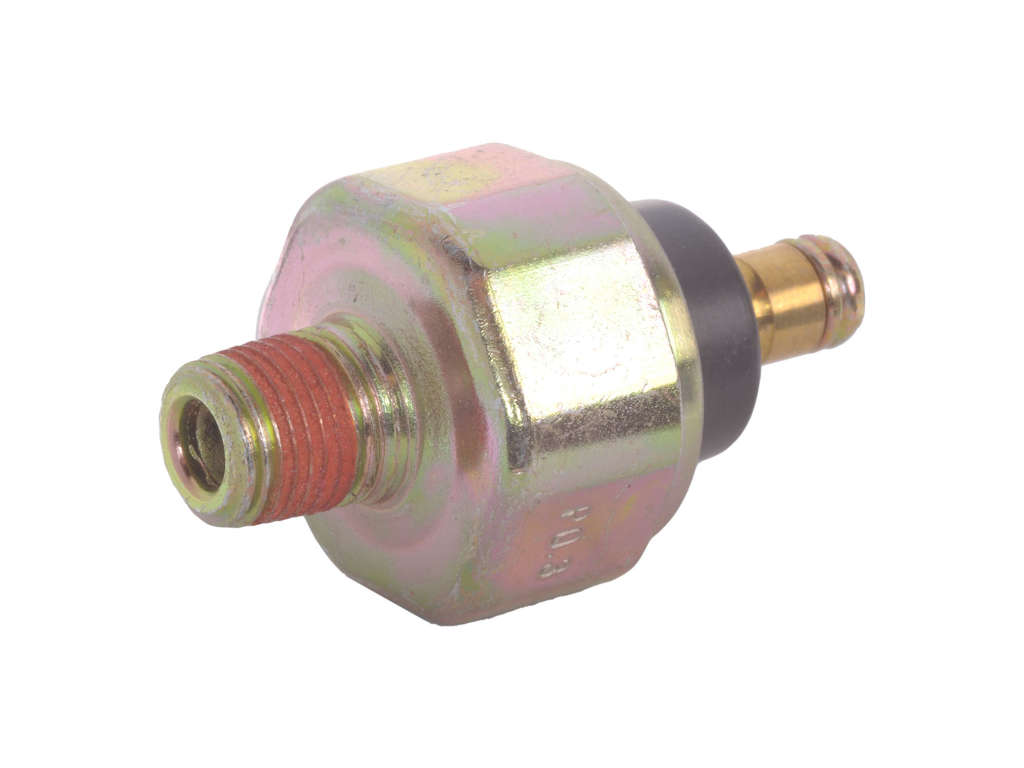
P0524 means dangerously low oil pressure. On a 2011-2018 Forester, this is most often due to either excessive oil consumption (a known issue) leading to a low oil level, or a faulty oil pressure switch. First, check your dipstick immediately. If the oil level is good, the oil pressure switch is the next likely culprit, costing about $25-$45 for the part. Do not drive the vehicle until the cause is identified.
- P0524 is a CRITICAL code. Do not drive the vehicle until it is diagnosed.
- The first and most important step is to check the engine oil dipstick. Low oil is the most common cause on this specific vehicle.
- If the oil level is correct, the oil pressure switch is the next most likely failure. It is an inexpensive part and a relatively easy DIY replacement.
- When replacing the oil pressure switch, it is absolutely essential to NOT overtighten it. The torque spec is very low (10-12 ft-lbs) to avoid cracking the engine block.
- Be sure to order the correct switch for your Forester's generation: 25240AA060 for 2011-2013 (SH) and the updated 25240KA051 for 2014-2018 (SJ).
What's Unique About the 2011-2018 Subaru Forester
The Subaru Forester's FB25B engine from this era has two well-documented weak points that directly lead to code P0524. First, models from 2011-2014 are particularly known for excessive oil consumption due to defective piston rings, making a low oil level the most probable cause. This issue was the subject of a class-action lawsuit (Yaegar v. Subaru of America, Inc.). Second, the oil pressure switch itself is a common failure item across the entire year range; it can either start leaking oil or fail internally, sending false low-pressure signals. Because of these two high-probability causes, diagnosis is often more straightforward than on other vehicles.
Generation note: This range covers two Forester generations: the SH (2011-2013) and the SJ (2014-2018). Both use the FB25B engine. The excessive oil consumption issue is more prevalent in the earlier SH generation models and early SJ models (approx. 2011-2014). The oil pressure switch is a common failure on both, but different part numbers are used. The SH generation typically uses part number 25240AA060, while the SJ generation uses an updated switch, part number 25240KA051.
Symptoms You May Notice
- Red oil pressure warning light on the dashboard (may be flickering or solid).
- Check Engine Light illuminated.
- Engine making unusual noises (ticking, knocking, or grinding).
- Reduced engine power or sluggish performance.
- Burning oil smell if the pressure switch is leaking onto the exhaust.
- Engine may stall or shut down to protect itself.
- Replacing the oil pump before verifying the actual oil pressure with a mechanical gauge.
- Assuming the engine is failing before checking for a simple low oil level or replacing the inexpensive oil pressure switch.
- Replacing the engine without first performing an oil consumption test as outlined by Subaru, especially on 2011-2014 models under the extended warranty.
Most Likely Causes
- Low Engine Oil Level 🔴 High Probability Early FB25B engines (esp. 2011-2014) are known for high oil consumption due to issues with piston rings, which was the subject of a class-action lawsuit and a warranty extension program (TSB 02-157-14R). Some owners reported losing over a quart of oil in 3,000 miles.
How to confirm: Check the engine oil level using the dipstick after letting the engine sit for a few minutes. If it is below the 'low' mark, this is the immediate cause of the low pressure reading.
Typical fix: Top off the engine with the correct viscosity oil (typically 0W-20 synthetic) to the full mark. Monitor consumption closely. If consumption is excessive (e.g., more than a quart every 1,200 miles), an oil consumption test at a dealership may be necessary. The lawsuit settlement extended the powertrain warranty to 8 years/100,000 miles for this issue, which could result in a new engine short block.
Est. part cost: $20-$40 for a 5-quart jug of oil - Faulty Engine Oil Pressure Switch 🔴 High Probability The switch is a known failure point. It can fail internally, sending an incorrect signal, or develop a physical leak. Subaru issued a TSB (02-162-15R) for 2015-2016 models due to faulty switches, announcing a redesigned part with nickel-plated contacts for better durability.
How to confirm: If the oil level is correct, the next step is to verify actual oil pressure with a mechanical gauge. If pressure is within spec (10+ PSI at idle, 30+ PSI at 3000 RPM), the switch is bad. A visual inspection may also reveal oil leaking from the switch body itself, often spraying onto the oil filter and surrounding components. The switch can be tested with a multimeter; it should show continuity (near zero ohms) with the engine off and an open circuit (OL) when the engine is running and has pressure.
Typical fix: Replace the oil pressure switch. This is a DIY-friendly job requiring a 24mm deep socket. CRITICAL: Do not overtighten the new switch. It uses tapered pipe threads and threads into aluminum. The torque spec is very low, around 1.1 ft-lbs for some models, or hand-tight plus a quarter turn. Overtightening can crack the engine block. Applying a liquid gasket like Three Bond 1324 to the threads is recommended.
Est. part cost: $25-$45 - Clogged or Incorrect Oil Filter ⚪ Low Probability Using a low-quality or incorrect aftermarket oil filter can lead to flow restriction, filter collapse, or bypass valve issues, causing a pressure drop. It's a known issue on Subarus that non-OEM filters can cause pressure inconsistencies.
How to confirm: Check the brand and condition of the oil filter. If it's not a reputable brand (like Subaru OEM, Wix, or Tokyo Roki) or if the oil change is overdue, it could be the cause.
Typical fix: Perform an oil and filter change using a high-quality OEM or equivalent filter and the manufacturer-specified oil.
Est. part cost: $10-$20 for a filter
Rare But Worth Checking
- Failing Oil Pump: While not common, if the oil level is full and a new pressure switch doesn't resolve the code (and a mechanical gauge confirms low pressure), the oil pump may be worn or failing.
- Worn Internal Engine Components: On very high-mileage engines, worn main bearings or camshaft bearings can cause excessive clearances, leading to a drop in overall oil pressure that the pump cannot overcome.
- Clogged Oil Pickup Tube/Strainer: Sludge from infrequent oil changes or debris from a previous engine failure can clog the oil pickup tube strainer in the oil pan, starving the oil pump and causing low pressure.
Diagnosis Steps
- IMMEDIATELY turn off the engine and check the oil level on the dipstick. If low, top it off with the correct oil (0W-20 synthetic) and see if the light and code clear. If they do, monitor for oil consumption.
- If the oil level is full, inspect the oil pressure switch for any signs of oil leakage. The switch is located on the top of the engine, near the oil filter. Oil spray on the filter or alternator belt is a strong indicator of a leaking switch.
- To definitively diagnose, connect a mechanical oil pressure gauge in place of the switch.
- Start the engine and let it warm up to operating temperature (around 176°F / 80°C).
- Check the pressure at idle. It should be 10 PSI (71 kPa) or more.
- Increase engine speed to 3,000 RPM. The pressure should be 30 PSI (206 kPa) or more.
- If pressure readings are within spec, the oil pressure switch is faulty and must be replaced.
- If pressure readings are below spec, a more serious mechanical issue is present (e.g., failing oil pump, clogged oil pickup tube, or worn engine bearings) and requires further investigation.
Parts You'll Likely Need
- Engine Oil Pressure Switch (2014-2018 SJ Forester)
(OEM #25240KA051)— This is the updated part for the SJ generation, designed to be more durable with nickel-plated contacts to prevent false signals. It's a very common failure point.
Trusted brands: Subaru (OEM), Standard Motor Products, NTK
OEM price range: $30-$45
Aftermarket price range: $15-$30 - Engine Oil Pressure Switch (2011-2013 SH Forester)
(OEM #25240AA060)— This is the standard part for the SH generation. It is prone to leaking or failing internally, causing a false P0524 code.
Trusted brands: Subaru (OEM), Beck/Arnley, FAE
OEM price range: $25-$35
Aftermarket price range: $10-$25
Related Codes That Often Appear With This One
- P0520 — P0520 indicates a fault in the oil pressure sensor's circuit (e.g., a short or open), while P0524 indicates the pressure reading itself is too low. They can appear together if the sensor has failed electrically, sending an invalid signal.
Technical Service Bulletins (TSBs) & Recalls
- 02-157-14R: Details the warranty extension (8yr/100k miles) and procedure for addressing excessive engine oil consumption, which may involve replacing the engine short block.
- 02-162-15R: Announces a design change to the oil pressure switch (part no. 25240KA051) with nickel-plated internal contacts for improved durability, affecting 2015-2016 models and superseding older parts.
- 02-187-21: Outlines the updated procedure and specifications for testing engine oil pressure at idle and 3000 RPM.
Platform-Specific Known Issues
- Excessive Oil Consumption: Early FB25 engines (2011-2014) may consume significant amounts of oil due to defective piston rings. Subaru acknowledged this in TSB 02-157-14R and extended the powertrain warranty to 8 years/100,000 miles for this specific problem as part of a class-action lawsuit settlement.
- Leaking Oil Pressure Switch: The switch is known to develop external oil leaks, which can drip or spray onto the oil filter and alternator belt, causing a burning smell and making a mess in the engine bay, in addition to contributing to oil loss.
Mechanic-Grade Diagnostic Values
- Oil Pressure Switch Continuity (Engine OFF) — expected: Continuity present (near 0 Ω). Failure: Open circuit (OL) reading indicates a failed switch.
- Oil Pressure Switch Continuity (Engine ON and at operating temp) — expected: No continuity / Open circuit (OL). Failure: Continuity present (near 0 Ω) indicates a failed switch that is stuck closed.
- Mechanical Oil Pressure at Idle (Engine at 176°F / 80°C) — expected: ≥ 10 PSI (71 kPa). Failure: Pressure below 10 PSI indicates a mechanical issue (e.g., oil pump, worn bearings).
- Mechanical Oil Pressure at 3,000 RPM (Engine at 176°F / 80°C) — expected: ≥ 30 PSI (206 kPa). Failure: Pressure below 30 PSI indicates a mechanical issue (e.g., oil pump, worn bearings).
Wiring & Ground Locations
- Oil Pressure Switch Connector — On top of the engine block, typically to the right of the alternator and near the oil filter. It is a single-pin connector with a plastic release tab.. This is the primary connection point to test the switch and the harness. A corroded pin or damaged wire at this connector will cause a P0520 (circuit fault) or could potentially mimic a P0524 if the connection is intermittent.
Real Owner Repair Stories
- YouTube user 'G MONEY' (Subaru Forester (year not specified, but FB engine family)) — Significant oil leak on the driver's side of the engine bay, coating components in oil.
❌ Tried (didn't work) Replacing the valve cover gasket, twice.
✅ What actually fixed it The oil pressure switch itself was leaking externally, spraying oil around the area and mimicking a valve cover gasket leak. Replacing the faulty oil pressure switch resolved the leak. - Car Talk Community user 'VOLVO-V70' (2012 Subaru Forester) — Excessive oil consumption from new (1 qt every 2000 miles), which worsened after the first attempted fix.
❌ Tried (didn't work) First new short block installed by the dealer under warranty; oil consumption became even worse.
✅ What actually fixed it The owner had to be persistent with the dealership, documenting the continued oil usage. A total of three short blocks were installed under warranty before the issue was resolved with a properly assembled engine.
OEM Part Supersession History
25240KA050→25240KA051— Updated part for SJ-generation Foresters (2014+). The TSB 02-162-15R for the 2015-2016 models mentions a redesigned part with nickel-plated contacts for better durability and prevention of false signals.
Heads up: While they may be physically interchangeable, it is always recommended to use the part number specified for the vehicle's generation (25240AA060 for SH, 25240KA051 for SJ) to match the ECU's expected characteristics.
Model Year Variations Within This Range
- 2011-2014: These model years are significantly more prone to excessive oil consumption due to piston ring design. The primary cause of P0524 is very likely a low oil level. Diagnosis should start here, and owners should be aware of the class-action lawsuit and warranty extension (TSB 02-157-14R).
- 2015-2016: These model years were the specific subject of TSB 02-162-15R regarding faulty oil pressure switches. While the switch can fail on any year, Subaru explicitly called out these years for a redesigned part, making a faulty switch an even higher probability cause than on other years.
Diagnostic Flowchart
Other Known Issues on This Vehicle
Issues unrelated to this code that are worth knowing about as an owner of this generation:
- Premature Wheel Bearing Failure 🟠 Medium — Common for rear wheel bearings to become noisy and fail between 50,000 and 100,000 miles. Failures under 50k miles are also reported. (Ref: Subaru has had warranty extensions for this issue on other models, but no specific recall for the Forester. Some owners report getting it covered under powertrain warranty.)
- Lineartronic CVT Transmission Problems 🔴 High — Issues like shuddering, hesitation, stalling, and noise are most common in earlier models (approx. 2012-2017). Problems can arise before 100,000 miles. (Ref: Subaru extended the CVT warranty to 10 years/100,000 miles for many affected models, including the Forester.)
- A/C Compressor Clutch Failure 🟠 Medium — The A/C compressor, particularly the clutch assembly, is a high-failure item. Symptoms include loud grinding/squealing noises when the A/C is on, intermittent cooling, or total failure. Some compressors are reportedly noisy even when new.
- Cracked Windshields 🟡 Low — Many owners of the SJ generation (2014-2018) report that the windshields are prone to cracking easily from small impacts.
Used vs. New Parts: Buying Guide for This Vehicle
When a used part is the smart pick: For the common causes of P0524, buying used parts is not recommended. The primary culprits are a low oil level (consumable) or a faulty oil pressure switch, which is an inexpensive electronic part that should always be purchased new.
What to inspect on the donor part:
- If, in the rare case of a confirmed oil pump failure, a used pump is considered, it should only be from a low-mileage vehicle with a known history and no signs of engine sludge or catastrophic failure.
OEM-only on this vehicle (don't cheap out):
- Engine Oil Pressure Switch: While known-good aftermarket brands exist, the cost of an OEM switch is low, and given its critical function and history of issues, using the latest-revision Subaru OEM part (25240KA051 or 25240AA060) is the safest choice.
- Oil Pump: Due to the critical nature of this part and the immense labor required for replacement, a new OEM oil pump is strongly recommended over used or aftermarket alternatives to ensure reliability and prevent catastrophic engine failure.
Aftermarket brands forum-validated for this vehicle:
- Oil Filters: Wix, Tokyo Roki (often the OEM supplier), NAPA Gold.
- Oil Pressure Switches: NTK, Standard Motor Products (SMP), Beck/Arnley.
Brands owners have reported issues with on this vehicle:
- Unnamed, low-cost oil filters should be avoided as they are a known cause of oil pressure issues on Subaru engines.
Real Owner Stories
Aggregated from forums and TSBs cited above. Mileages and costs reflect what owners reported in those sources.
2011-2014 Subaru Forester FB25B 2.5L — ~85000 miles
Symptoms: The red oil pressure light started flickering, then stayed on solid with the Check Engine Light. The dipstick showed the engine was extremely low on oil, despite being changed 3,000 miles ago.
What fixed it: Topping off the oil temporarily cleared the light. The underlying cause was excessive oil consumption, which was addressed by the dealership under the warranty extension detailed in TSB 02-157-14R.
Cost: $20-$40 for a 5-quart jug of oil
Source hint: TSB 02-157-14R
2015 Subaru Forester FB25B 2.5L — ~95000 miles
Symptoms: The oil pressure light and Check Engine Light came on, but the oil level was perfectly full. I noticed a burning oil smell and saw oil residue sprayed on the top of the oil filter.
What fixed it: The oil pressure switch was found to be leaking externally. Replacing the faulty switch with the updated part (25240KA051) resolved the leak and cleared the code.
Cost: $25-$45
Source hint: subaruforester.org
Related OBD-II Codes
Frequently Asked Questions
My 2013 Forester is burning a lot of oil and threw a P0524 code. Is this covered by a recall?
I have a 2015 Forester and the oil pressure light is on. Is the sensor a known problem for my year?
My oil level is full, but the P0524 code and oil light are on. What's the most likely cause?
What are the correct oil pressure specifications for the 2.5L FB25B engine?
I'm replacing the oil pressure switch myself. Are there any special instructions?
I see oil sprayed on my oil filter and alternator belt. Could this be related to the P0524 code?
We Have This Part in Stock


The information in this article is provided for general reference and educational purposes only. Vehicle specifications, procedures, and part compatibility can vary by production date, trim level, and region. Always consult your vehicle's factory service manual and verify part numbers before purchasing or performing repairs. Safety-critical components such as airbags, seat belts, and braking systems should be installed by a qualified professional.
- Subaru Forester:
- 🛍️ Shop This Part
- What's Unique About the 2011-2018 Subaru Forester
- Symptoms You May Notice
- Most Likely Causes
- Rare But Worth Checking
- Diagnosis Steps
- Parts You'll Likely Need
- Related Codes That Often Appear With This One
- Technical Service Bulletins (TSBs) & Recalls
- Platform-Specific Known Issues
- Mechanic-Grade Diagnostic Values
- Wiring & Ground Locations
- Real Owner Repair Stories
- OEM Part Supersession History
- Model Year Variations Within This Range
- Diagnostic Flowchart
- Other Known Issues on This Vehicle
- Used vs. New Parts: Buying Guide for This Vehicle
- Real Owner Stories
- 2011-2014 Subaru Forester FB25B 2.5L — ~85000 miles
- 2015 Subaru Forester FB25B 2.5L — ~95000 miles
- Related OBD-II Codes
- Frequently Asked Questions
- 🎟️ Get 5% Off