

P0524 on 2016-2017 Ford Explorer 3.5L EcoBoost: Engine Oil Pressure Too Low Causes and Fixes
On a 2016-2017 Explorer with the 3.5L EcoBoost, P0524 is most often caused by a faulty oil pressure sensor that leaks oil into its own electrical connector. Before anything else, check your oil level. If the level is good, replacing the sensor (Ford P/N: BL3Z-9F924-B, Motorcraft P/N: SW-7670), a ~$30 part, is the most likely fix.
- P0524 is a critical code. Do not drive the vehicle; pull over immediately.
- The first and easiest check is the engine oil level. Always start there.
- The most likely cause on a 2016-2017 Explorer 3.5L EcoBoost is a faulty oil pressure sensor that has leaked oil into its connector.
- Before assuming a major engine problem, verify the true oil pressure with a mechanical gauge.
- When replacing the sensor, always use electrical contact cleaner to thoroughly clean the wiring harness connector.
What's Unique About the 2016-2017 Ford Explorer
For this specific Explorer and its platform mates (F-150, Flex, Taurus SHO), the P0524 code is very frequently a sensor issue rather than a true mechanical failure. Ford issued a Special Service Message (SSM 46526) acknowledging that on the 3.5L GTDI engine, the oil pressure sensor can fail, leak oil internally into its own connector, and send false low-pressure signals to the computer. While actual low pressure from a failing oil pump is possible, it's much rarer than this well-documented sensor failure.
Symptoms You May Notice
- Red oil pressure warning light illuminated on the dashboard 🎬 Watch: This video shows the easy fix for low pressure warnings.
- Check Engine Light is on
- Vehicle may enter 'limp mode,' limiting engine RPM and power
- Engine making unusual ticking, grinding, or knocking noises (in cases of actual low pressure)
- Engine may stall or shut down
- Replacing the oil pump before verifying actual pressure with a mechanical gauge. The sensor is a far more common failure point and much cheaper to replace.
- Replacing the PCM. While a faulty PCM is theoretically possible, it is extremely unlikely to be the cause of this specific code.
Most Likely Causes
- Faulty Engine Oil Pressure Sensor (Switch) 🔴 High Probability This is a widely documented failure point. Per Ford's own TSB (SSM 46526), the sensor can leak oil internally, contaminating the electrical connector and causing false low-pressure readings. The sensor's location below the oil fill cap also makes it susceptible to contamination from sloppy oil changes.
How to confirm: After verifying the oil level is correct, inspect the oil pressure sensor's electrical connector for any signs of engine oil. If oil is present in the connector, the sensor is faulty and must be replaced. A user on explorerforum.com noted, 'Pulled the connector... and sure enough it was full of oil.' This is a textbook confirmation.
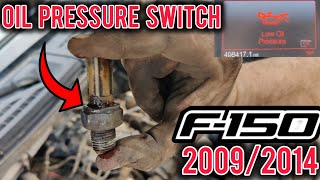
Typical fix: Replace the engine oil pressure sensor and thoroughly clean the electrical connector pigtail 🎬 See this walkthrough for replacing the oil pressure switch. with electrical contact cleaner. Ensure no oil residue remains. Some owners recommend replacing the pigtail harness as well if it is saturated with oil.
Est. part cost: $20-$50 - Low Engine Oil Level 🟡 Medium Probability All engines consume some oil, and leaks can develop over time. A recall (16S46) for the 2017 3.5L EcoBoost for leaking turbo oil supply tubes highlights a potential source for accelerated oil loss.
How to confirm: Check the engine oil level using the dipstick. Let the vehicle sit on a level surface for at least 15 minutes before checking for an accurate reading.
Typical fix: Top off the oil to the correct level. If the oil is old or very dirty, perform a complete oil and filter change using the manufacturer-specified oil type and viscosity.
Est. part cost: $50-$90 - Incorrect Oil Viscosity or Clogged Oil Filter ⚪ Low Probability The 3.5L EcoBoost's variable cam timing (VCT) system is sensitive to oil pressure and viscosity. Using oil that is too thick or too thin, or using a low-quality oil filter that is restrictive, can impede oil flow and trigger a low-pressure code.
How to confirm: Verify the oil viscosity used during the last oil change against the manufacturer's specification (found in the owner's manual). Check service records for the type of oil filter used. Using a non-Motorcraft filter is sometimes cited in forums as a contributing factor.
Typical fix: Perform an oil and filter change using the correct Ford-specified full synthetic oil (typically SAE 5W-30) and a high-quality filter (Motorcraft is recommended).
Est. part cost: $50-$90
Rare But Worth Checking
- Failing Oil Pump: While rare, a mechanical failure of the oil pump will cause a genuine and catastrophic loss of oil pressure. If the sensor has been replaced and a mechanical gauge confirms low pressure, the oil pump is a likely suspect.
- Clogged Oil Pump Pickup Tube: Sludge from infrequent oil changes or debris from other failing components (like timing chain guides) can clog the pickup tube screen in the oil pan, starving the oil pump and causing low pressure.
- Worn Engine Bearings: On very high-mileage engines, excessive clearance in the main and rod bearings can cause a drop in overall oil pressure, though this is typically a gradual failure accompanied by other symptoms like engine knock.
Diagnosis Steps
- Immediately check the engine oil level and condition. If low, top off and see if the code clears. If the oil is very old or dirty, change the oil and filter.
- If the oil level is correct, the next step is CRITICAL: verify the actual engine oil pressure using a mechanical pressure gauge. This requires removing the oil pressure sensor and installing the gauge in its place.
- If mechanical pressure is good (typically above 10-15 PSI at hot idle), the problem is in the sensor circuit. Inspect the sensor's electrical connector for oil contamination.
- If the connector is oily, replace the oil pressure sensor (Ford P/N BL3Z-9F924-B) and thoroughly clean the connector with electrical contact cleaner. This is the most common resolution.
- If mechanical pressure is genuinely low, the problem is more severe. Further diagnosis will be required to inspect the oil pump, pickup tube, and internal engine bearings. This should be performed by a professional.
- Inspect the wiring harness leading to the sensor for any visible damage, though this is less common than the sensor itself failing.
Parts You'll Likely Need
- Engine Oil Pressure Sensor/Switch
(OEM #BL3Z-9F924-B (Ford), SW-7670 (Motorcraft))— This is the most common failure part for this code on this engine, often leaking internally and contaminating its own connector, as noted in Ford TSB SSM 46526.
Trusted brands: Motorcraft, Standard Motor Products (SMP)
OEM price range: $30-$50
Aftermarket price range: $15-$35 - Engine Oil and Filter — Resolves issues caused by low oil level or incorrect oil viscosity. The 3.5L EcoBoost requires a specific full synthetic oil (SAE 5W-30) for proper operation.
Trusted brands: Motorcraft, Mobil 1, Pennzoil
OEM price range: $60-$90
Aftermarket price range: $40-$70
Related Codes That Often Appear With This One
- P0011 — The Variable Camshaft Timing (VCT) system is hydraulically operated by engine oil. A low oil pressure condition can prevent the system from operating correctly, leading to camshaft timing-related codes.
- P0021 — Similar to P0011, this code relates to the VCT system on the opposite engine bank. If oil pressure is low system-wide, both banks can be affected.
Technical Service Bulletins (TSBs) & Recalls
- SSM 46526: Addresses low oil pressure indications (P0521-P0524) on 3.5L GTDI engines due to liquid contamination in the oil pressure sensor connector, recommending sensor replacement. Explicitly states not to use dielectric grease in the connector.
Platform-Specific Known Issues
- Recall 16S46 was issued for some 2017 Ford Explorers with the 3.5L GTDI engine due to improperly brazed turbocharger oil supply tubes that could leak oil. A significant leak could lead to low oil levels and trigger P0524.
Mechanic-Grade Diagnostic Values
- Engine Oil Pressure (Mechanical Gauge) — expected: Minimum 15 psi (103 kPa) at hot idle; Minimum 29 psi (200 kPa) at 2000 RPM.. Failure: Pressure reading below the minimum specification at a given RPM indicates a mechanical oiling system problem (pump, pickup, bearings).
- Oil Pressure Sensor Signal Voltage (Key On, Engine Off) — expected: Approximately 0.5V.. Failure: A reading of 0V or 5V could indicate a short or open in the wiring or a failed sensor.
Wiring & Ground Locations
- G104 — Right side of engine compartment.. This is a primary engine compartment ground point. A corroded or loose connection here can cause erratic sensor readings for multiple engine components, including the oil pressure sensor circuit.
- G105 — Top right side of the engine.. A ground point located directly on the engine. Verifying its integrity is crucial when diagnosing sensor circuit faults that could be affected by poor engine-to-chassis grounding.
- Oil Pressure Sensor Connector (C103) — Located on the oil filter housing, below the oil fill cap. It is a 3-pin connector.. This is the direct connection to the sensor and the most common point of failure due to oil contamination wicking from the failed sensor. The connector pigtail part number is often WPT-1135.
Real Owner Repair Stories
- Ford Truck Enthusiasts Forum (2017 F-150 3.5L EcoBoost) — Recurring low oil pressure warning and P0524 code, especially after 10,000 miles of driving.
❌ Tried (didn't work) Replacing the oil pressure sending unit four separate times.
✅ What actually fixed it The root cause was a cracked driver's side valve cover leaking oil down onto the oil pressure sensor wiring harness. The oil contaminated the connector, causing the new sensors to fail prematurely. The ultimate fix was to replace the valve cover and the oil-saturated wiring harness/pigtail.
Model Year Variations Within This Range
- 2016 vs 2017: The 2016 model year used the first-generation (Gen1) 3.5L EcoBoost. The 2017 model year introduced the heavily redesigned second-generation (Gen2) 3.5L EcoBoost, which featured a new dual-injection system (port and direct), new turbochargers, and a different cam drive system. While the P0524 sensor failure is common to both, internal mechanical causes could differ between generations.
Diagnostic Flowchart
Other Known Issues on This Vehicle
Issues unrelated to this code that are worth knowing about as an owner of this generation:
- Internal Water Pump Failure 🔴 High — Common failure point, often cited between 80,000-120,000 miles. When the pump's internal seal fails, it leaks coolant directly into the engine oil, leading to catastrophic engine failure if not caught immediately.
- Power Transfer Unit (PTU) Overheating/Failure 🔴 High — Very common on AWD models. The PTU fluid is cooked by adjacent exhaust components, and with no factory drain plug, the fluid breaks down, leading to gear and bearing failure. Symptoms include a burning smell, grinding, or whining. (Ref: No recall, but it is a widely known issue. Aftermarket solutions with drain plugs exist.)
- Timing Chain Stretch & Phaser Rattle 🟠 Medium — Primarily affects earlier 3.5L EcoBoost engines but can still occur. Causes a distinct rattle for a few seconds on a cold start. If ignored, can lead to jumped timing and engine damage. (Ref: Multiple TSBs exist, such as TSB 18-2305 and 21-2119, which update procedures and parts for replacing timing chains and VCT phasers.)
- Cracked Exhaust Manifolds 🟡 Low — The cast iron manifolds are prone to cracking from thermal stress, causing an exhaust leak tick that is most noticeable when the engine is cold.
Used vs. New Parts: Buying Guide for This Vehicle
When a used part is the smart pick: For this specific repair, buying used parts is not recommended. The primary failure part, the oil pressure sensor, is an inexpensive electronic component with a known high failure rate. A used sensor has an unknown history and is likely to fail sooner, if not immediately.
What to inspect on the donor part:
- Not applicable as used parts are not recommended for this repair.
OEM-only on this vehicle (don't cheap out):
- Engine Oil Pressure Sensor
Aftermarket brands forum-validated for this vehicle:
- Standard Motor Products (SMP)
Brands owners have reported issues with on this vehicle:
- Anonymous, no-name brands from online marketplaces.
- Some owner reviews have noted premature failure of certain store-brand parts like Duralast for this specific sensor.
Real Owner Stories
Aggregated from forums and TSBs cited above. Mileages and costs reflect what owners reported in those sources.
2016 Explorer Sport 3.5L EcoBoost
Symptoms: The vehicle threw a P0524 Low Oil Pressure code. Upon inspection, the owner pulled the sensor connector and found it was full of oil.
What fixed it: Replaced the oil pressure sensor and cleaned the electrical connector.
Source hint: explorerforum.com thread titled '2016 Explorer Sport 3.5 Ecoboost - P0524 Low Oil Pressure'
2017 Ford F-150 3.5L EcoBoost
Symptoms: Low oil pressure code P0524. The owner noted that oil had wicked up the wiring harness from the sending unit.
What fixed it: The owner had to replace the sending unit and the harness pigtail because oil had saturated the original connector, causing a repeat failure.
Source hint: ford-trucks.com thread regarding 2017 F-150 3.5L EcoBoost
Related OBD-II Codes
Frequently Asked Questions
Does SSM 46526 apply to my 2016 Ford Explorer with the 3.5L EcoBoost?
Is there a recall for my 2017 Explorer 3.5L EcoBoost that could cause a P0524 code?
Should I use dielectric grease when replacing the oil pressure sensor (BL3Z-9F924-B)?
Can a non-Motorcraft oil filter cause low oil pressure codes on the 3.5L EcoBoost?
What is the recommended oil viscosity to prevent P0524 on my Explorer Sport?
Is the internal water pump failure related to the P0524 code?
Helpful Videos
We Have This Part in Stock






The information in this article is provided for general reference and educational purposes only. Vehicle specifications, procedures, and part compatibility can vary by production date, trim level, and region. Always consult your vehicle's factory service manual and verify part numbers before purchasing or performing repairs. Safety-critical components such as airbags, seat belts, and braking systems should be installed by a qualified professional.
- Ford Explorer:
- 🎬 Helpful Videos
- 🛍️ Shop This Part
- What's Unique About the 2016-2017 Ford Explorer
- Symptoms You May Notice
- Most Likely Causes
- Rare But Worth Checking
- Diagnosis Steps
- Parts You'll Likely Need
- Related Codes That Often Appear With This One
- Technical Service Bulletins (TSBs) & Recalls
- Platform-Specific Known Issues
- Mechanic-Grade Diagnostic Values
- Wiring & Ground Locations
- Real Owner Repair Stories
- Model Year Variations Within This Range
- Diagnostic Flowchart
- Other Known Issues on This Vehicle
- Used vs. New Parts: Buying Guide for This Vehicle
- Real Owner Stories
- 2016 Explorer Sport 3.5L EcoBoost
- 2017 Ford F-150 3.5L EcoBoost
- Related OBD-II Codes
- Frequently Asked Questions
- 🎟️ Get 5% Off