

P0522 on 2010-2015 Chevrolet Camaro: Engine Oil Pressure Sensor Circuit Low Voltage Causes and Fixes
P0522 on a 2010-2015 Camaro almost always points to a failed engine oil pressure sensor. It's a common failure item. Replacing the sensor, which costs about $25-$50 for an aftermarket part or $85 for an OEM part (ACDelco P/N 12673134), usually resolves the issue. The sensor is located in a very tight spot on the lower driver's side of the engine block, making replacement challenging but possible for a DIYer with patience and a special 1-1/16" or 27mm oil pressure switch socket.
- P0522 on a 2010-2015 Camaro is a serious code that should be addressed immediately.
- The most likely cause is a failed engine oil pressure sensor, a common problem for this car.
- Always check your oil level first. If it's normal and the engine isn't making noise, the problem is likely the sensor or its wiring.
- Do not drive the vehicle until you've confirmed it's a sensor issue and not actual low oil pressure, as this could lead to severe engine damage.
- The sensor replacement can be a DIY job, but its location is challenging to access.
What's Unique About the 2010-2015 Chevrolet Camaro
The 3.6L V6 engine, both the earlier LLT (2010-2011) and the later LFX (2012-2015), is known for having the oil pressure sensor fail. Owners on forums like Camaro5 frequently report this code, with symptoms like the oil pressure gauge dropping to zero or maxing out. The sensor is located on the lower left (driver's) side of the engine block, near the oil filter, making it notoriously difficult to access without removing other components. Many owners manage to replace it by feel, working in a tight space, often after removing the air intake for better access.
Generation note: The 2010-2015 model years cover the fifth-generation Camaro. However, the V6 engine changed from the 3.6L LLT (2010-2011) to the 3.6L LFX (2012-2015). The P0522 code and its primary cause—a faulty oil pressure sensor—are common to both engine versions within this generation, as well as many other GM vehicles using the same family of engines.
Symptoms You May Notice
- Check Engine Light is on
- Low oil pressure warning light is on
- Oil pressure gauge reads zero or an erratic value (e.g., maxed out)
- Engine may make ticking or knocking noises if actual oil pressure is low
- In some GM vehicles, this can trigger a "Reduced Engine Power" message
- Slight oil leak from the failed sensor itself.
- Replacing the oil pump without first verifying actual oil pressure with a mechanical gauge.
- Replacing the PCM, which is rarely the cause of this specific code.
Most Likely Causes
- Faulty Engine Oil Pressure Sensor 🔴 High Probability The sensor is a very common failure point on this platform, as reported by numerous owners and mechanics. Heat and vibration contribute to its failure over time, and oil can seep into the electrical connector, causing a bad connection.
How to confirm: After verifying the oil level is correct and the engine sounds normal, testing the sensor's circuit with a multimeter is the next step. However, given the high failure rate, low part cost, and difficult access, many owners and shops opt to replace it as the primary diagnostic step.
Typical fix: Replace the engine oil pressure sensor and the small filter screen beneath it if accessible.
Est. part cost: $25-$85 - Low Engine Oil Level or Incorrect Oil 🟡 Medium Probability
How to confirm: Check the engine oil dipstick on a level surface after the engine has been off for a few minutes. Ensure the oil level is within the specified range and that the correct viscosity oil (as per the owner's manual, typically 5W-30 dexos-approved) was used.
Typical fix: Add the correct type and amount of engine oil.
Est. part cost: $10-$50 - Wiring or Connector Issue ⚪ Low Probability The sensor's location can make its wiring susceptible to heat damage or oil contamination from a leaking sensor. A pinched or corroded wire can cause a short or open circuit, leading to the low voltage reading.
How to confirm: Visually inspect the wiring harness and connector leading to the oil pressure sensor for any signs of damage, corrosion, or oil saturation. Test for the 5-volt reference signal and ground at the connector with a multimeter.
Typical fix: Repair or replace the damaged section of the wiring harness or the connector pigtail.
Est. part cost: $5-$100
Rare But Worth Checking
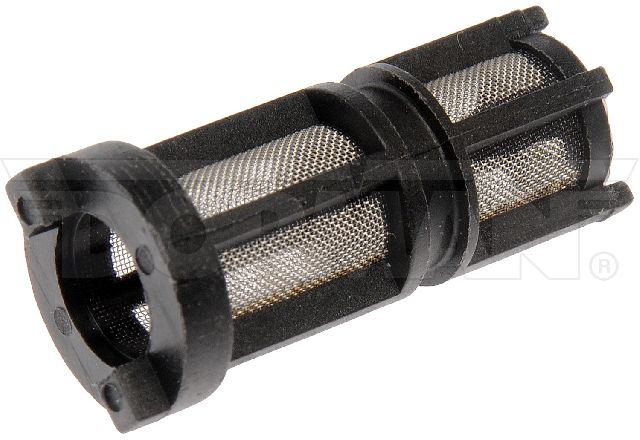
- Clogged Oil Pressure Sensor Filter Screen: Some GM engines have a small, cone-shaped filter screen located in the oil passage directly beneath the sensor. This screen can become clogged with sludge or debris, restricting oil flow to the sensor and causing false low readings. If you replace the sensor, it's wise to check and replace this inexpensive filter as well. The GM part number for this screen is often 12585328.
- Failing Oil Pump or Internal Engine Wear: This is the worst-case scenario. If the oil level is correct but the engine is noisy (ticking, knocking), a mechanical gauge should be used to verify actual oil pressure. If it's low, it indicates a serious mechanical problem like a failing oil pump or worn engine bearings, which is not a common issue on the LFX engine but is a possibility.
Diagnosis Steps
- IMMEDIATELY check the engine oil level and condition. If the level is low, top it off and see if the code clears. If the oil is very dirty or sludgy, an oil change is needed.
- If the oil level is correct, listen for any unusual engine noises like ticking, knocking, or rattling. If you hear any, do not run the engine. This could signify a true low oil pressure condition requiring professional diagnosis.
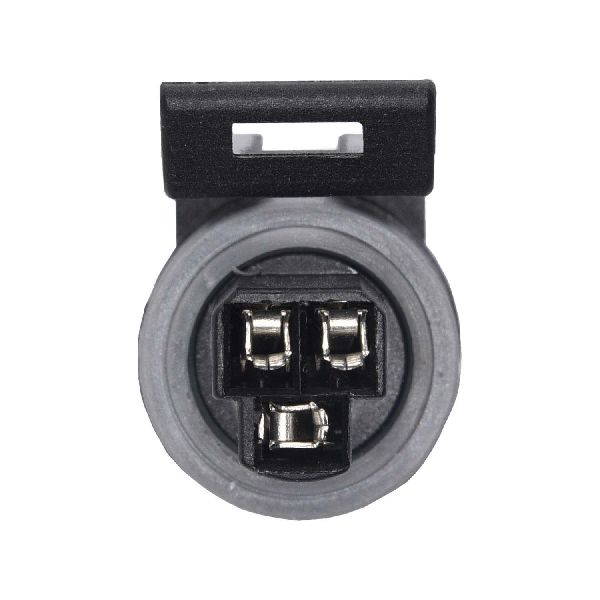
- If the oil level is good and the engine sounds normal, the issue is most likely electrical. Inspect the oil pressure sensor's wiring and connector for damage, corrosion, or loose connections. The connector has a gray safety tab that must be lifted before it can be unplugged.
- Using a multimeter, check for a 5-volt reference signal and a good ground at the sensor's electrical connector. If these are missing, trace the wiring back to the PCM.
- If the wiring is intact, the oil pressure sensor is the most likely culprit. Replace the sensor. A special deep socket (typically 1-1/16" or 27mm) is required for removal and installation. It is also recommended to replace the small filter screen underneath the sensor at the same time.
- For absolute certainty before replacing parts, use a mechanical oil pressure gauge to test the actual engine oil pressure. This will definitively separate a sensor/electrical problem from a mechanical engine problem.
- After the repair, clear the code with a scan tool and perform a drive cycle to ensure the issue is resolved.
Parts You'll Likely Need
- Engine Oil Pressure Sensor
(OEM #12673134)— This sensor is the most common cause of code P0522 on the 2010-2015 Camaro. It fails frequently due to heat and vibration.
Trusted brands: ACDelco (OEM), Dorman, Standard Motor Products
OEM price range: $70-$90
Aftermarket price range: $25-$50 - Oil Pressure Sensor Filter Screen
(OEM #12585328)— This small screen under the sensor can get clogged with sludge, causing a false low-pressure reading. It is best practice to replace it when replacing the sensor.
Trusted brands: ACDelco (OEM), Dorman
OEM price range: $5-$10
Aftermarket price range: $3-$7 - Oil Pressure Switch Socket — A special deep socket, either 1-1/16 inch or 27mm, is required to remove and install the sensor due to its shape and location. A standard deep socket will not fit.
Trusted brands: Lisle (P/N 13250), OEMTOOLS
Aftermarket price range: $10-$20
Related Codes That Often Appear With This One
- P0521 — P0521 indicates an 'Engine Oil Pressure Sensor/Switch Range/Performance' issue. It often appears with P0522 when the sensor is failing and providing erratic readings that are out of the expected performance range.
- P0523 — P0523 indicates 'Engine Oil Pressure Sensor/Switch Circuit High Voltage'. Seeing this code along with P0522 strongly suggests an electrical fault in the sensor or its circuit, causing the voltage to swing between extremes (open and shorted).
- P0641 — P0641 is for 'Sensor Reference Voltage 'A' Circuit/Open'. The oil pressure sensor shares a 5-volt reference circuit with other sensors (like MAP, Cam Position, and A/C pressure). A short in any sensor on this circuit, including the oil pressure sensor, can pull the voltage down for all of them, triggering a P0641 and causing multiple sensor-related codes.
Technical Service Bulletins (TSBs) & Recalls
- PIT5677E
- PIT5677
Platform-Specific Known Issues
- The location of the oil pressure sensor on the 3.6L V6 is notoriously difficult to access. It is on the lower driver's side of the engine block, tucked behind the A/C compressor and near the oil filter housing. Access is typically achieved from the top after removing the air intake assembly, using long extensions and a swivel joint for the socket.
- Some owners have reported receiving a faulty replacement sensor, requiring a second replacement to fix the issue. It's recommended to use a quality brand like ACDelco.
- A YouTube video by 'WE NOT LAZY' titled 'Camaro 5th Gen Oil Pressure Sensor' provides a visual guide for the V6, showing the difficult access and the process of removing the air intake to reach the sensor.
Mechanic-Grade Diagnostic Values
- Engine Oil Pressure Sensor Signal Voltage — expected: Less than 0.5V with key on, engine off.. Failure: A reading of 0V or a value significantly different from the expected <0.5V suggests a circuit or sensor fault.
- 5-Volt Reference Circuit at Sensor Connector — expected: Approximately 5.0V with key on, engine off.. Failure: No voltage or low voltage indicates a wiring issue or a problem with the PCM's 5V reference supply.
- Jumpered 5V Reference to Signal Wire — expected: Scan tool should read 5.0V.. Failure: If voltage is not 5.0V, there is a fault in the signal circuit wiring back to the PCM.
Wiring & Ground Locations
- Engine Oil Pressure Sensor Connector — On the lower driver's side of the engine block, near the oil filter housing.. This is a 3-pin oval connector that provides the 5V reference, low reference (ground), and signal return to the PCM. Oil contamination or heat damage here will directly cause P0522.
- G107 — On the left rear of the 3.6L LLT engine.. This is a primary engine ground point. A loose or corroded connection here can cause erratic sensor readings and various electrical faults, including P0522.
- G108 — On the left side of the 3.6L LLT engine.. Another critical engine ground. Poor contact at this location can disrupt the low reference signal for multiple sensors, including the oil pressure sensor.
Real Owner Repair Stories
- Camaro5 Forum user 'carlc376' (2010 Chevrolet Camaro V6) — Low oil pressure at startup, codes P0521 and P0522.
❌ Tried (didn't work) Replacing the original oil pressure sensor with a new, aftermarket sensor.
✅ What actually fixed it The new replacement sensor was also faulty. Replacing it a second time with another sensor from a different brand permanently resolved the codes. - Camaro5 Forum user 'AL-ZL1' (Chevrolet Camaro (modified)) — Oil pressure gauge needle was erratic, reading either 0 or 70 (max). Codes P0522 and later P0521 were present. No unusual engine noise.
❌ Tried (didn't work) Logging pressure with HP Tuners, which showed illogical values (60 psi with engine off).
✅ What actually fixed it The final resolution was replacing the oil pressure sensor, which was suspected to be bad or have a damaged harness from a recent supercharger installation.
When the Usual Fixes Don't Work
- While replacing the oil pressure sensor is the most common fix, it's not foolproof. A documented case on a Camaro forum showed that a brand-new aftermarket sensor was defective out of the box. The P0522 code persisted until the new, faulty sensor was replaced with another new sensor from a different, more reputable brand. This highlights the importance of using high-quality parts, as a failed part replacement can lead to a misdiagnosis of a more complex wiring or PCM issue.
OEM Part Supersession History
12621649, 12616646→12673134— Standard part evolution, likely for improved reliability or manufacturing process.12596951, 12621234→12673134— Part consolidation and design updates by GM.
Model Year Variations Within This Range
- 2010-2011 (LLT) vs 2012-2015 (LFX): The V6 engine was updated in 2012 from the LLT to the LFX. The LFX features a composite intake manifold (vs. aluminum on LLT), integrated exhaust manifolds in the cylinder heads, and uses a Delphi ECM (vs. Bosch on LLT). However, for the P0522 code, the cause (faulty sensor), the part itself, and its difficult location on the lower driver's side of the block remain consistent between both engine versions.
Diagnostic Flowchart
Other Known Issues on This Vehicle
Issues unrelated to this code that are worth knowing about as an owner of this generation:
- Timing Chain Stretch (LLT Engine) 🔴 High — Very common on 2010-2011 models with the 3.6L LLT engine, often appearing between 50,000 and 100,000 miles. Less common on the 2012+ LFX engine. (Ref: GM issued special coverage adjustments for other vehicles with this engine but not explicitly for the Camaro, causing owner frustration. The primary trouble code is P0008.)
- Catalytic Converter Failure 🟠 Medium — Failures are reported with some regularity, often triggering codes P0420 or P0430. Replacement can be expensive.
- Radio and Electrical Glitches (2013-2015) 🟡 Low — Owners of 2013-2015 models report issues with the radio turning on/off, speaker popping, and loss of climate controls or turn signal sounds.
- Key Stuck in Ignition (2014-2015 Auto) 🟡 Low — A known issue on 2014-2015 models with automatic transmissions where the key can become stuck in the ignition after shutting the car off. (Ref: A recall was issued for a different ignition switch issue, but this 'key stuck' problem was an unintended consequence of the fix.)
Used vs. New Parts: Buying Guide for This Vehicle
When a used part is the smart pick: For this specific repair, using a used part is never recommended. The primary failure component, the oil pressure sensor, is an electronic part with a high failure rate that degrades with heat and time. A used sensor has an unknown history and is likely to fail soon, if it works at all.
What to inspect on the donor part:
- Not applicable, as used parts are not advised for this repair.
OEM-only on this vehicle (don't cheap out):
- Engine Oil Pressure Sensor
Aftermarket brands forum-validated for this vehicle:
- ACDelco (OEM)
- Standard Motor Products (SMP)
- Dorman
Brands owners have reported issues with on this vehicle:
- Unnamed or 'white-box' ultra-low-cost brands from online marketplaces. A documented repair story shows a new aftermarket sensor being faulty out of the box, emphasizing the risk of using low-quality parts for this critical sensor.
Real Owner Stories
Aggregated from forums and TSBs cited above. Mileages and costs reflect what owners reported in those sources.
2012 Chevrolet Camaro SS V8
Symptoms: The oil pressure gauge was swinging erratically from 0 to max, and the car threw both P0522 and P0523 codes simultaneously.
What fixed it: The issue was identified as either a failed sensor or damaged wiring resulting from a recent supercharger installation.
Source hint: Camaro5.com - Thread 'Oil Pressure Sensor Problem ?'
2010-2015 Chevrolet Camaro 3.6L V6
Symptoms: The owner struggled with the physical removal of the sensor connector, noting the 'working blind' nature of the repair due to the sensor's location.
What fixed it: Used a mirror to locate the press-tab on the connector to successfully unplug it.
Source hint: Camaro5.com - Thread 'Oil pressure sensor'
2010-2015 Chevrolet Camaro 3.6L V6
Symptoms: The owner noted a lack of DIY information for the V6 model and had to figure out how to reach the sensor in a very tight space.
What fixed it: Removed the air intake assembly to gain access to the sensor from the top of the engine bay.
Source hint: YouTube - 'Camaro 5th Gen Oil Pressure Sensor' by WE NOT LAZY
Related OBD-II Codes
Frequently Asked Questions
Where is the oil pressure sensor located on the 3.6L LFX V6 Camaro?
Do I need any special tools to replace the sensor on my 2010-2015 Camaro?
Are there any Technical Service Bulletins (TSBs) related to oil pressure issues for this vehicle?
Can a P0522 code cause my Camaro to lose power?
What brand of replacement sensor is recommended for the LFX engine?
Should I replace anything else while I am changing the oil pressure sensor?
Is the P0522 code related to the timing chain issues common in early 5th Gen Camaros?
Used OEM Parts in Stock

New Aftermarket Parts Available


The information in this article is provided for general reference and educational purposes only. Vehicle specifications, procedures, and part compatibility can vary by production date, trim level, and region. Always consult your vehicle's factory service manual and verify part numbers before purchasing or performing repairs. Safety-critical components such as airbags, seat belts, and braking systems should be installed by a qualified professional.
- Chevrolet Camaro:
- 🛍️ Shop This Part
- What's Unique About the 2010-2015 Chevrolet Camaro
- Symptoms You May Notice
- Most Likely Causes
- Rare But Worth Checking
- Diagnosis Steps
- Parts You'll Likely Need
- Related Codes That Often Appear With This One
- Technical Service Bulletins (TSBs) & Recalls
- Platform-Specific Known Issues
- Mechanic-Grade Diagnostic Values
- Wiring & Ground Locations
- Real Owner Repair Stories
- When the Usual Fixes Don't Work
- OEM Part Supersession History
- Model Year Variations Within This Range
- Diagnostic Flowchart
- Other Known Issues on This Vehicle
- Used vs. New Parts: Buying Guide for This Vehicle
- Real Owner Stories
- 2012 Chevrolet Camaro SS V8
- 2010-2015 Chevrolet Camaro 3.6L V6
- 2010-2015 Chevrolet Camaro 3.6L V6
- Related OBD-II Codes
- Frequently Asked Questions
- 🎟️ Get 5% Off