

P0521 on 2019 GMC Sierra 2500/3500 6.0L: Oil Pressure Sensor or Sticking Oil Pump?
On this specific truck, P0521 is often caused by a sticking oil pump relief valve, a serious issue detailed in GM TSB 20-NA-161. While it can still be a faulty oil pressure sensor (~$50), you must verify actual oil pressure with a mechanical gauge before replacing parts to avoid catastrophic engine damage. If pressure is low, the TSB outlines a repair path that starts with inspecting the #1 main bearing and may lead to oil pump or full engine replacement.
- For a 2019 Sierra 2500/3500 with the 6.0L V8, P0521 is a critical code that should be addressed immediately.
- DO NOT assume it's just a bad sensor. A sticking oil pump is a known, documented issue (TSB 20-NA-161) for this specific truck.
- The first and most important step is to verify the true engine oil pressure with a mechanical gauge.
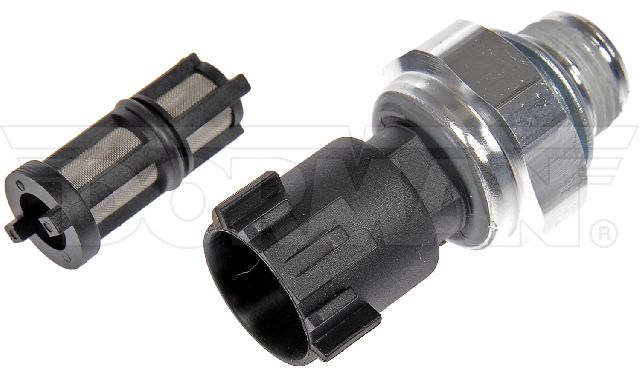
- If the oil pressure is confirmed to be good, then replace the oil pressure sensor and the small filter screen underneath it.
- If the oil pressure is low, the truck needs immediate professional service for a likely oil pump replacement to prevent catastrophic engine failure.
What's Unique About the 2019-2019 GMC Sierra 2500/3500
While on many GM V8s P0521 is just a bad sensor, that's a dangerous assumption for the 2019 6.0L engine. GM issued Technical Service Bulletin 20-NA-161 (which superseded preliminary bulletin PIP5630) specifically for this truck, identifying a sticking oil pressure relief valve inside the oil pump as a primary cause. This elevates a major mechanical failure to a high-probability cause, making a proper diagnosis far more critical than on other vehicles where a sensor swap is the common fix.
Symptoms You May Notice
- Check Engine Light is on
- Low Oil Pressure warning light or message on the driver information center (DIC)
- Oil pressure gauge reading abnormally low or high, or fluctuating erratically
- Engine may stall
- Engine noise (in cases of true low oil pressure)
- Immediately replacing the oil pressure sensor without first verifying the actual oil pressure with a mechanical gauge. On this specific truck, this is a risky assumption due to the known oil pump issue outlined in TSB 20-NA-161.
- Replacing the oil pressure sensor but failing to also replace the small filter screen located underneath it. A clogged screen will cause the new sensor to read incorrectly.
Most Likely Causes
- Sticking Oil Pump Pressure Relief Valve 🔴 High Probability This specific issue is identified for the 2019 6.0L engine in GM Technical Service Bulletin 20-NA-161. The valve inside the pump can stick, causing incorrect oil pressure. This TSB was created specifically because this became a known issue on this platform.
How to confirm: Confirm actual oil pressure is low (below 24 PSI at 1,000 RPM when hot) using a mechanical gauge. If pressure is low, TSB 20-NA-161 directs inspection of the #1 main bearing. If the bearing is undamaged, the oil pump is replaced. If damaged but not spun, the crankshaft and bearings are also replaced. If spun, a full engine replacement is required.
Typical fix: Replace the engine oil pump assembly (GM P/N 12696357). In severe cases, this may also require replacing the crankshaft, bearings, or the entire engine.
Est. part cost: $150-$400 for the pump, potentially thousands for engine work. - Faulty Engine Oil Pressure Sensor 🟡 Medium Probability These sensors are a common failure item on many GM V8 engines due to their location at the back of the engine, under the cowl and behind the intake manifold, where they are exposed to high heat and vibration. Access is very difficult.
How to confirm: After verifying with a mechanical gauge that the actual oil pressure is normal, the sensor is the next logical part to suspect. Forum users strongly advise using only genuine ACDelco/GM sensors, as aftermarket versions are reported to fail frequently.
Typical fix: Replace the oil pressure sensor. This requires a special deep socket (1-1/16" or 27mm), a swivel adapter, and long extensions. Due to the difficult access, many owners climb into the engine bay to reach it.
Est. part cost: $40-$90 - Clogged Oil Pressure Sensor Filter Screen 🟡 Medium Probability A small, thimble-shaped screen is located in the block directly under the sensor. It is notorious for getting clogged with oil sludge or debris, especially if oil changes are neglected or from normal engine wear. This restricts oil from reaching the sensor, causing a false low reading.
How to confirm: When the oil pressure sensor is removed, the screen can be inspected and pulled out with a pick or a coarse-threaded screw (like a 5/16" bolt). If it's clogged, it's a likely contributor to the problem.
Typical fix: Remove and replace the filter screen. It is highly recommended to replace this screen anytime the sensor is replaced.
Est. part cost: $5-$15 - Incorrect or Failed Oil Filter ⚪ Low Probability GM has issued service bulletins (like PIP5276) for various V8 engines regarding low oil pressure caused by using incorrect or aftermarket oil filters whose internal bypass valves may not meet GM specifications. In some documented cases, simply switching from an aftermarket filter to a genuine ACDelco filter resolved the P0521 code.
How to confirm: Check the brand and part number of the currently installed oil filter. If it is not a genuine ACDelco filter, this could be the cause.
Typical fix: Perform an oil change using the correct viscosity oil and a new, genuine ACDelco oil filter (e.g., UPF48R P/N 12694692 as mentioned in related bulletins).
Est. part cost: $40-$80
Rare But Worth Checking
- Wiring Harness or Connector Issue: The wiring to the sensor can become damaged from heat or chafing, and the connector pins can corrode. A visual inspection and check for opens/shorts is always a good idea before replacing parts.
- Worn Internal Engine Components: In high-mileage engines, worn crankshaft bearings or a failing oil pump pickup tube O-ring can cause a genuine low oil pressure condition. This is a worst-case scenario that a mechanical gauge test would reveal. A bad pickup tube O-ring was the confirmed fix for low pressure in at least one documented forum case.
Diagnosis Steps
- IMMEDIATELY check the engine oil level and condition. If low, top it off and see if the code clears.
- DO NOT replace any parts yet. Connect a mechanical oil pressure gauge to the engine. The port is where the oil pressure sensor is located, at the top rear of the engine block.
- Start the engine and let it reach normal operating temperature. Compare the mechanical gauge reading to GM's specification: minimum 24 PSI at 1,000 RPM.
- If oil pressure is GOOD (at or above spec): The problem is likely electrical or sensor-related. Inspect the oil pressure sensor connector for corrosion or damage. If the wiring looks good, the most likely fix is to replace both the oil pressure sensor and the small filter screen underneath it. Use genuine GM/ACDelco parts.
- If oil pressure is LOW (below spec): This indicates a serious mechanical problem. First, try changing the oil and installing a new ACDelco oil filter to rule out a filter issue. If pressure remains low, refer to GM TSB 20-NA-161. The vehicle needs professional service to inspect the #1 main bearing and likely replace the oil pump. Continuing to drive will cause catastrophic engine failure.
Parts You'll Likely Need
- Engine Oil Pump
(OEM #12696357)— Identified in GM TSB 20-NA-161 as a primary cause for P0521 on this vehicle due to a sticking pressure relief valve. This is the required repair if mechanical oil pressure is confirmed to be low.
Trusted brands: ACDelco (OEM), Melling
OEM price range: $200-$400
Aftermarket price range: $150-$300 - Engine Oil Pressure Sensor
(OEM #12673134)— This is the most common fix if mechanical oil pressure is confirmed to be good. The sensor provides the pressure reading to the ECM. Aftermarket sensors are known to be unreliable.
Trusted brands: ACDelco, Delphi, NTK
OEM price range: $60-$90
Aftermarket price range: $40-$70 - Valve Lifter Oil Filter (Sensor Screen)
(OEM #12585328)— This small screen below the sensor often gets clogged with sludge, causing the sensor to read incorrectly. It should always be replaced with the sensor.
Trusted brands: ACDelco, Dorman
OEM price range: $10-$15
Aftermarket price range: $5-$10
Related Codes That Often Appear With This One
- P06DE — This code relates to the engine oil pressure control solenoid valve being stuck on. TSB #22-NA-056 and #18-NA-246 link P0521 and P06DE together as part of a common issue, often pointing to problems within the oiling system like a failing oil pump.
- P0522 — This code indicates 'Engine Oil Pressure Sensor/Switch Circuit Low Voltage'. It can appear with P0521 if there is an electrical fault in the sensor circuit or the sensor itself fails electronically.
Technical Service Bulletins (TSBs) & Recalls
- 20-NA-161: Information on Engine Low Oil Pressure Indicator on the Driver Information Center (DIC) - DTC P0521 Set. This is the key document for this issue, pointing to a sticking oil pump relief valve as a primary cause and outlining the diagnostic path.
- PIP5630: The initial Preliminary Information bulletin that first documented the oil pump/main bearing issue on 2019 6.0L engines before being superseded by TSB 20-NA-161.
- PIP5276G: Mentions P0521 and low oil pressure messages on related V8 engines, pointing to issues with aftermarket oil filters causing false low pressure readings.
- 22-NA-056 / 18-NA-246: Service bulletins for other GMC models that group P0521 with other codes like P0172 and P06DE, indicating related system faults.
Platform-Specific Known Issues
- TSB 20-NA-161: GM issued this bulletin specifically for the 2019 6.0L L96/LC8 engine, noting that P0521 can be caused by a sticking oil pressure relief valve in the oil pump, a more severe issue than a simple sensor failure. The TSB provides a detailed diagnostic tree based on the condition of the #1 main bearing.
- TSB PIP5630: This was the preliminary information bulletin that preceded 20-NA-161, first identifying the potential for a sticking oil pump relief valve or damaged #1 main bearing.
Mechanic-Grade Diagnostic Values
- ECM Trigger Condition for P0521 — expected: The difference between ECM-predicted oil pressure and actual sensor-reported pressure is within a specific range.. Failure: The ECM flags the code when the actual pressure is >7.3 PSI higher or >6.8 PSI lower than predicted for more than 4 seconds.
- Oil Pressure Sensor 5V Reference Circuit — expected: 4.8-5.2 Volts DC between the 5V reference circuit pin at the sensor connector and a known good ground.. Failure: Voltage outside this range indicates a problem with the ECM or the wiring. Less than 4.8V could be a short to ground or open; more than 5.2V suggests a short to voltage.
- Oil Pressure Sensor Low Reference Circuit — expected: Less than 1.0 Ohm of resistance between the low reference circuit pin at the sensor connector and the negative battery terminal.. Failure: Resistance higher than 1.0 Ohm indicates a poor ground connection or a break in the ground wire, which can cause erratic sensor readings.
- Oil Pressure vs. Voltage (Example from GM Calibration File) — expected: The sensor is not perfectly linear. Example values: 1.25V ≈ 165.5 kPa (24 PSI), 2.5V ≈ 441.25 kPa (64 PSI), 4.375V ≈ 855 kPa (124 PSI).. Failure: Readings that deviate significantly from the expected voltage-to-pressure curve after confirming true mechanical pressure.
Wiring & Ground Locations
- Oil Pressure Sensor Connector — Top-rear of the engine block, behind the intake manifold, under the cowl. It is a 3-pin oval-shaped connector.. This is the primary connection point for the sensor. The pins are: Pin 1 - Low Reference (Ground), Pin 2 - 5V Reference, Pin 3 - Signal. Damage or corrosion here directly causes sensor codes.
- G103 / G104 — Primary engine-to-chassis grounds, typically found on the back of the cylinder heads where ground straps from the chassis or battery connect.. The ECM and its sensors, including the oil pressure sensor, rely on a clean, solid ground path to function correctly. A poor ground here can introduce electrical noise and cause incorrect readings.
- G114 (Engine Harness Ground) — On 2019+ GM trucks, this ground point for the engine harness is a known area for issues. GM issued bulletin PIE0548 regarding loose connections at G114 on the 1500 series, which can cause various electrical faults.. A loose engine harness ground can affect all sensors connected to it, including the oil pressure sensor, leading to intermittent or false codes like P0521.
Real Owner Repair Stories
- GM-Trucks.com forum user (2011 Chevrolet Silverado 1500 5.3L (similar V8 architecture and issue)) — Recurring P0521 code, even after replacing the oil pressure sensor and the screen underneath it.
❌ Tried (didn't work) Replacing the oil pressure sensor, Cleaning/replacing the filter screen under the sensor
✅ What actually fixed it The problem was finally resolved by changing the brand of oil filter. The user had been using various filters (including K&N and a standard ACDelco PF48E) that repeatedly led to the code. Switching to a specific, recommended Mobil 1 filter (M1-113) or the updated ACDelco UPF48R, which have different internal bypass valve specifications, permanently fixed the low-pressure reading and the P0521 code. - Chevy Silverado and GMC Sierra Forum user (2011 L96 6.0L V8) — Low oil pressure confirmed with a mechanical gauge (below 20 PSI at idle).
❌ Tried (didn't work) Replacing oil pressure sensor with a genuine GM part, Replacing oil pump pickup tube O-ring, Replacing oil pump with a Melling M295HV
✅ What actually fixed it The user's thread concluded with the diagnosis of worn internal engine bearings being the cause of the true low oil pressure, as all external and common internal fixes did not resolve the issue. The final resolution discussed was an engine rebuild or replacement. This highlights a worst-case scenario where P0521 indicates a terminal mechanical problem.
OEM Part Supersession History
12696357→12710303— Standard part evolution and revision by the manufacturer.
Heads up: The new part number 12710303 is the direct replacement and should be used for repairs.12621234, 12596951→12673134— Standard part evolution and revision by the manufacturer for improved reliability or manufacturing.
Heads up: 12673134 is the current OEM replacement sensor and is recommended over prior versions.
Diagnostic Flowchart
Other Known Issues on This Vehicle
Issues unrelated to this code that are worth knowing about as an owner of this generation:
- 6L90 Torque Converter Failure 🔴 High — Failures can occur as early as 70,000-80,000 miles, becoming more common before 120,000 miles, especially under heavy use.
- Exhaust Manifold Bolt Breakage 🟠 Medium — The bolts, particularly those closest to the firewall, are prone to breaking due to heat cycles, causing an exhaust leak and a ticking noise when cold.
- Frame Wax Coating Peeling/Flaking 🟡 Low — The protective wax coating applied to the frame at the factory is known to peel off in large sheets, exposing the frame to the elements and accelerating surface rust. This is a widespread cosmetic issue.
- HVAC Blower Motor Resistor Failure 🟡 Low — A common failure item causing the fan to only work on the highest setting or not at all. It's a relatively frequent and inexpensive fix.
- Overheating in Cold Temperatures (Recall) 🔴 High — A recall (NHTSA #14V793000) was issued for some 2015 models (and related platforms) with the 6.0L engine where exhaust components could overheat at idle in cold weather, creating a fire risk. (Ref: 14V793000)
Used vs. New Parts: Buying Guide for This Vehicle
When a used part is the smart pick: For this specific repair, using used parts is generally not recommended. The primary causes are either a known-problem oil pump or a high-failure-rate electronic sensor. The risk of a used part failing again shortly after installation is high.
Donor-vehicle mileage cap: roughly under 30000 miles for the part to have meaningful remaining life.
What to inspect on the donor part:
- For an oil pump, there are no reliable external cues. Its internal condition is unknown.
- For a sensor, check for physical damage, but internal electronic failure cannot be seen.
- Verify the donor vehicle was not in a severe front-end collision that could have damaged engine components.
OEM-only on this vehicle (don't cheap out):
- Engine Oil Pressure Sensor: Forum and mechanic consensus is overwhelming. Aftermarket sensors, particularly from brands like Dorman, have a very high rate of premature failure, often causing the code to return within weeks or months. Use only genuine ACDelco sensors.
- Engine Oil Pump: Given that a sticking relief valve is a known issue documented in a TSB for this specific engine, installing a used pump with unknown history is extremely risky. A new OEM (ACDelco) pump is the only way to ensure the problem is resolved.
Aftermarket brands forum-validated for this vehicle:
- Melling (Oil Pump): Melling is a reputable aftermarket manufacturer of oiling system components and is often considered an OEM-quality equivalent or upgrade (e.g., high-volume pumps).
Brands owners have reported issues with on this vehicle:
- Dorman (Oil Pressure Sensor): Frequently cited in forums for failing quickly after installation, sometimes within days or weeks, leading to repeated repairs.
Real Owner Stories
Aggregated from forums and TSBs cited above. Mileages and costs reflect what owners reported in those sources.
2019 GMC Sierra 2500 6.0L V8
Symptoms: Low oil pressure warning light on the driver information center (DIC) and a P0521 code set.
What fixed it: Following TSB 20-NA-161, the oil pump was replaced after confirming low pressure with a mechanical gauge. In some cases, inspection of the #1 main bearing is required.
Source hint: TSB 20-NA-161
2019 GMC Sierra 6.0L V8
Symptoms: Low oil pressure messages appearing on the dash after an oil change.
What fixed it: Switching from an aftermarket oil filter to a genuine ACDelco oil filter.
Source hint: gmtrucks.com - 'Replace your tiny oil filter if you give yourself “low oil pressure”'
2019 Chevrolet Silverado 2500 6.0L V8
Symptoms: The oil pressure gauge was reading abnormally low or fluctuating erratically.
What fixed it: Replacement of the oil pressure sensor and the small filter screen located underneath it in the engine block.
Source hint: Common causes and diagnosis steps for GM V8 platform
Related OBD-II Codes
Frequently Asked Questions
Does TSB 20-NA-161 apply to my 2019 GMC Sierra 2500 with the 6.0L V8?
My 2019 Sierra 3500 shows P0521; should I use an aftermarket oil filter?
What is the specific oil pressure requirement for the 2019 6.0L engine to pass diagnosis?
Is there a specific part number for the oil pump if TSB 20-NA-161 confirms it is sticking?
Why is the oil pressure sensor so expensive to replace on this truck?
Should I replace the small screen under the sensor on my L96 V8?
Helpful Videos
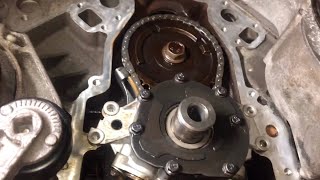
Used OEM Parts in Stock


New Aftermarket Parts Available


The information in this article is provided for general reference and educational purposes only. Vehicle specifications, procedures, and part compatibility can vary by production date, trim level, and region. Always consult your vehicle's factory service manual and verify part numbers before purchasing or performing repairs. Safety-critical components such as airbags, seat belts, and braking systems should be installed by a qualified professional.
- GMC Sierra 2500/3500:
- 🎬 Helpful Videos
- 🛍️ Shop This Part
- What's Unique About the 2019-2019 GMC Sierra 2500/3500
- Symptoms You May Notice
- Most Likely Causes
- Rare But Worth Checking
- Diagnosis Steps
- Parts You'll Likely Need
- Related Codes That Often Appear With This One
- Technical Service Bulletins (TSBs) & Recalls
- Platform-Specific Known Issues
- Mechanic-Grade Diagnostic Values
- Wiring & Ground Locations
- Real Owner Repair Stories
- OEM Part Supersession History
- Diagnostic Flowchart
- Other Known Issues on This Vehicle
- Used vs. New Parts: Buying Guide for This Vehicle
- Real Owner Stories
- 2019 GMC Sierra 2500 6.0L V8
- 2019 GMC Sierra 6.0L V8
- 2019 Chevrolet Silverado 2500 6.0L V8
- Related OBD-II Codes
- Frequently Asked Questions
- 🎟️ Get 5% Off